SUBMITTEDTO :-Supandeep singhhallan
jaskamalsinghgill
SUBMITTEDBY:-NAVNEETKAUR
B.PHARMA
I would like to express my special thanks of
gratitude to my teachers as well as our principal
(G.S Roy) who gave me the golden opportunity to
do this wonderful project on the topic which also
helped me in doing a lot of Research and i came
to know about so many new things I am really
thankful to them.
Secondly i would also like to thank my parents
and friends who helped me a lot in finalizing this
project within the limited time frame.
 Chronic exposure to excess glucorticoids results in
diverse manifestations of Cushing's disease ,
including debilitating morbidities and increased
mortality. Genetic and molecular mechanisms
responsible for excess cortisol secretion by primary
adrenal lesions and adrenocorticotropic hormone
(ACTH) secretion from corticotroph or ectopic
tumours have been identified. New biochemical and
imaging diagnostic approaches and progress in
surgical and radiotherapy techniques have improved
the management of patients. The therapeutic goal is
to normalise tissue exposure to cortisol to reverse
increased morbidity and mortality. Optimum
treatment consisting of selective and complete
resection of the causative tumour is necessay to
allow eventual normalisation of the hypothalamic-
pituitary-adrenal axis, maintenance of pituitary
function, and avoidance of tumour recurrence. The
development of new drugs offers clinicians several
choices to treat patients with residual cortisol
excess. However, for patients affected by this
challenging syndrome, the long-term effects and
comorbidities associated with hypercortisolism need
ongoing care
This is to certify that the project entitled
‘PHARMACOTHERAPY ON CAUSING DISEASE ‘
submitted by “NAVNEET KAUR" in partial fulfillment
of the requirements for the award of B.PHARM"
at the “B.I.S Institution" is an authentic work
carried out by him under my supervision and
guidance.
To the best of my knowledge, the matter embodied
in the project has not been submitted to any other
University / Institute for the award of any Degree
G.S ROY(Principal )
Supandeep singh hallan
Jaskamal singh gill
(Supervisor)
B.I.S COLLEGE OF PHARMACAY GAGRA(MOGA)
The project has not formed the basis for the aIl
hereby declare that the project entitled ‘
pharmacotherapy of cushing’s disease
submitted for the
“B.I.SCOLLEGE GAGRA MOGA " is my original
work and ward of any degree, associateship,
fellowship or any other similar titles.
NAVNEET KAUR
 Cushing's disease is a cause of Cushing's
syndrome characterised by increased secretion
of adrenocorticotropic hormone (ACTH) from
the anterior
pituitary (secondary hypercortisolism). This is
most often as a result of a
pituitary adenoma (specifically pituitary
basophilism) or due to excess production of
hypothalamus CRH (Corticotropin releasing
hormone) (tertiary
hypercortisolism/hypercorticism) that stimulates
the synthesis of cortisol by the adrenal glands.
Pituitary adenomas are responsible for 80% of
endogenous Cushing's syndrome,[3] when
excluding Cushing's syndrome from exogenously
administered corticosteroids.
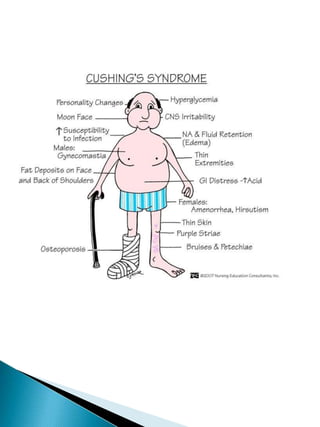
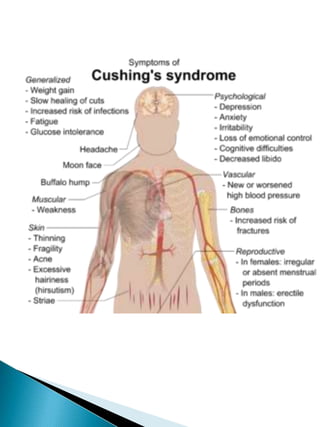
 Weight gain and fat deposits
The most common symptom of Cushing's syndrome
is weight gain, particularly on the chest, stomach
and face. This happens because cortisol causes
fat to be redistributed to these areas.
People with Cushing's syndrome tend to have:
very slim arms and legs compared with their chest
and stomach
deposits of fat on the back of the neck and
shoulders,
a red, puffy and rounded face
 Skin changes
Symptoms that affect the skin include:
thin skin that bruises easily because cortisol causes
proteins in the skin to break down and tiny blood
vessels to become weak
reddish-purple stretch marks on the thighs,
stomach, buttocks, arms, legs or breasts because
cortisol makes the skin fragile
spots on the face, chest or shoulders
darkened skin on the neck
swelling of the legs due to a build-up of fluid
(oedema)
heavy sweating
bruises, cuts, scratches and insect bites can take a
long time to heal
 Symptoms in men
Additional symptoms in men include:
decreased interest in sex
erectile dysfunction- not being able to get or
maintain an erection
infertility
 Symptoms in women
Additional symptoms in women include:
excessive facial and/or body hair (hirsutism)
irregular periods or absent periods
Symptoms in children
Children who develop Cushing's syndrome may
experience delayed or missing growth.
 Bones and muscles
People with Cushing's syndrome often have
muscle weakness in their hips, shoulders, arms
and legs.
Too much cortisol can also cause brittle bones
(osteoporosis). This may lead to an affected
bone breaking when doing normal, every day
activities, such as bending and lifting.
 Mental health
Depression can be a common symptom in
Cushing's syndrome. It's also common to feel
unusually tired all the time, which can
contribute to feelings of depression.
Many people with Cushing's syndrome will also
experience rapid mood swings and have
emotional reactions that seem inappropriate,
such as laughing or crying for no apparent
reason.
 Other symptoms
 Other symptoms of Cushing's syndrome include:
 kidney stones
 high blood pressure (hypertension)
 an increase in blood sugar levels
 These types of symptoms often go unnoticed and
are only detected during medical scans and tests
Iatrogenic Cushing's syndrome
Most cases of Cushing's syndrome are related to the use of
corticosteroid medication.
Corticosteroids have two main uses. They:
reduce inflammation in the body; this can be useful for treating
conditions such as asthma, and skin conditions such as atopic
eczema
suppress the immune system, which can be useful for treating
conditions, such as rheumatoid arthritis and lupus, where the
immune system mistakenly attacks healthy tissue
Corticosteroids are available in a number of different forms,
including tablets (oral corticosteroids), sprays and inhalers
(inhaled corticosteroids), creams and lotions (topical
corticosteroids) and injections.
To help prevent side effects, corticosteroids are usually prescribed
at the lowest possible effective dose. However, in people with
severe symptoms that fail to respond to other forms of
treatment, the only effective alternative is to prescribe a long-
term course of high-dose corticosteroids.
Corticosteroids contain a synthetic version of the cortisol hormone,
so cortisol levels can build up over time, triggering Cushing's
syndrome. People who misuse corticosteroids or take a higher
than recommended dose are also at risk of developing Cushing's
syndrome.
The risk of developing Cushing's syndrome is higher in people who
take oral corticosteroids, although the condition can also affect
those who misuse inhaled or topical corticosteroids.
Endogenous Cushing's syndrome
Endogenous Cushing's syndrome is much less common than
iatrogenic Cushing's syndrome. It's caused by your body
producing more cortisol than you actually need.
The most common cause of endogenous Cushing's syndrome is a
tumour (an abnormal growth of cells) which develops in the
pituitary gland.
The pituitary gland is a pea-sized gland in your brain. It doesn't
produce cortisol, it produces another hormone called
adrenocorticotropin hormone (ACTH). ACTH stimulates two
small organs that lie above the kidneys, known as the adrenal
glands. The adrenal glands release cortisol into the blood.
The tumour can disrupt the normal workings of your pituitary gland
so that it produces excessive levels of ACTH, which cause the
adrenal glands to produce too much cortisol.
This type of endogenous Cushing's syndrome is known as
Cushing's disease. It's responsible for 70% of all endogenous
cases and it's five times more likely to develop in women than in
men.
A less common cause of endogenous Cushing's syndrome is where
a tumour develops inside one of the adrenal glands. This
accounts for around 1 in 10 cases of the condition.
Another less common cause is known as ectopic ACTH syndrome.
This is where a tumour develops inside the lung and starts to
produce the ACTH hormone. This type of Cushing's syndrome is
more common in men.
Tumours that develop inside the pituitary or adrenal gland are
usually non-cancer. Other than the symptoms of Cushing's
syndrome, they don't usually pose a serious threat to health.
Tumours that develop inside the lung can sometimes be
cancerous. It's unclear why these tumours develop.
 Benign -
Benign refers to a condition that should not become
life-threatening. If a tumour is described as
benign, it is not cancerous.
 Blood –
Blood supplies oxygen to the body and removes
carbon dioxide. It is pumped around the body by
the heart.
 Brain –
The brain controls thought, memory and emotion. It
sends messages to the body controlling
movement, speech and the senses.
 Dose –
Dose is a measured quantity of a medicine to be
taken at any one time.
 Immune system –
This is the body's defence system, which helps
protect it from disease, bacteria and viruses
 Insulin –
Insulin is a hormone released by the pancreas which
helps control blood sugar levels.
 Kidneys –
The kidneys are a pair of bean-shaped organs
which are located at the back of the abdomen.
They remove waste and extra fluid from the
blood and pass them out of the body as urine.
 Malignant –
Malignant is a term used to describe a life-
threatening or worsening condition. In the case
of tumours, malignant means cancerous.
 Pituitary gland –
The pituitary gland is a pea-sized gland which
hangs below the brain. It produces hormones.
 Making a successful diagnosis of Cushing's
syndrome can often be challenging, particularly
when the symptoms are mild.
 As Cushing's syndrome shares symptoms with
other, more common conditions, such as
an underactive thyroid gland and high blood
pressure (hypertension), you may be referred
for a number of different tests. As a result, it
could take several months before a diagnosis is
confirmed.
 Medication history As corticosteroid use is the
leading cause of Cushing's syndrome, your GP
will ask you if you have been taking any
medication.
 You should give your GP a complete list of all
the medication you're taking, including tablets,
creams and lotions, plus any natural remedies.
This is because some natural remedies contain
steroids.
 Testing for cortisol
 You'll probably need to have one or more
of the following tests, which can be used
to measure the levels of cortisol in your
body:
 urine test
 blood test
 saliva test - this is most accurate when it's
carried out in the middle of the night, so
you may be asked to stay in hospital
overnight
 You may also be given a medication called
dexamethasone before being asked to take
a blood test. If you're otherwise healthy,
taking dexamethasone should decrease
your cortisol levels. If your cortisol levels
are unaffected, it could be due to
Cushing's syndrome.
 None of the above tests are completely
accurate or reliable, but if you have one or
more abnormal results, you will usually be
referred to a doctor who specialises in
treating hormonal conditions (an
endocrinologist). They should be able to
confirm or rule out a diagnosis of
Cushing's syndrome.
 Determining the underlying cause
 Once a diagnosis of Cushing's syndrome has been
confirmed, it will be necessary to determine the
underlying cause (unless you're currently taking
corticosteroids because this will be the cause), to
decide on your course of treatment.
 The first stage is to determine whether your
Cushing's syndrome is the result of high levels of
the adrenocorticotropin hormone (ACTH) in your
blood. If so, this would suggest that there's a
tumour in your pituitary gland or, less commonly,
your lungs.
 Low levels of ACTH would suggest that there's a
tumour in one of your adrenal glands.
 A suspected tumour can usually be confirmed by
taking a computer tomography (CT) or MRI scan
of the location. During a CT/MRI scan, the
scanner takes a series of pictures and a computer
assembles them into a detailed image of different
parts of the body.
 Occasionally, despite having a CT/MRI
scan, it can be difficult to determine where
the tumour is located. In such
circumstances, a further test, known as
petrosal sinus sampling, may be
recommended.
 A sample of blood is taken from the veins
of your pituitary gland and your forearm
and the level of ACTH in both samples is
compared. If the level is higher in the
pituitary vein, the cause is probably a
tumour in your pituitary gland. If levels are
similar, the cause is probably a tumour
elsewhere in your lungs. Further X-rays
and CT/MRI scans of your chest may be
carried out to check the tissues of your
lungs.
 It can take a considerable amount of time before
investigations are complete and a full diagnosis is
made. Repeated X-rays and scans are sometimes
needed.
 In the meantime, your doctor may decide to treat
your Cushing's syndrome with medication such as
metyrapone to reduce the amount of cortisol. If
this is the case, you'll have to stay in hospital for
a few days so that you can be monitored while
taking the tablets.
 You may also be given a special type of X-ray,
known as a DEXA scan, which can be used to
check for any weakening of your bones
(osteoporosis)
 Blood supplies oxygen to the body and removes
carbon dioxide. It is pumped around the body by
the heart.
 Blood test sample of blood is taken from a vein
using a needle and is examined in a laboratory.
 DoseDose is a measured quantity of a medicine to
be taken at any one time
 Lungs are a pair of organs in the chest that
control breathing. They remove carbon dioxide
from the blood and replace it with oxygen.
 Magnetic resonance imaging (MRI)MRI uses
magnets and radio waves to take detailed pictures
of inside the body.
 Pituitary glandThe pituitary gland is a pea-sized
gland that hangs below the brain and produces
hormones.
 X-ray is a painless way of producing pictures of
inside the body using radiation.
 The treatment of Cushing's syndrome will
depend on the cause of the high levels of cortisol.
If you have iatrogenic Cushing's syndrome that's
caused by taking corticosteroids, you'll need to
gradually reduce then stop your dose of
corticosteroid medication.
 If you have endogenous Cushing's syndrome
that's caused by tumours, you have the following
treatment options:
 Corticosteroids
 the symptoms of that condition are under control.
If you've only been taking corticosteroids for a few
days, it may be possible to safely stop the dose
straight away. However, most people with
Cushing's syndrome have been taking high-dose
corticosteroids for some time so it's not safe to
stop the dose.
 This is because if you've been taking
corticosteroids for a long time, your body may
stop producing natural steroids. So if you
suddenly stop taking your medication you may
have symptoms such as:
 fatigue
 weight loss
 feeling sick
 dizziness
 being sick
 diarrhoea
 Another factor is the condition for which you've
been prescribed your medication in the first place.
In some cases, there may be an effective non-
steroidal treatment. However, if this is not the
case you may be advised to cotaking
corticosteroids until
 ntinue
 There's no 'one size fits all' plan for withdrawing
treatment with corticosteroids. However, the
following steps are recommended for most
people:
 Reduce the dosage from a high dose to a medium
dose or a medium-high dose.
 Then switch to an even lower dose or,
alternatively, only take your medication every
other day.
 Then, after a number of weeks or months, have a
blood test to see whether your body is now
producing natural steroids.
 If, after the steps described above, your body is
producing natural steroids, it should be safe to
withdraw treatment. If your body isn't producing
natural steroids, continuing a low-dose treatment
may be recommended for another four to six
weeks before being tested again.
 The time that it takes for someone to safely
withdraw from taking corticosteroids can range
from a few months to more than a year. You may
need additional treatment during this time to
compensate for some of the symptoms of
Cushing's syndrome, such as medication to lower
your bloodpressure.
 Cortisol-inhibiting medications
 Cortisol-inhibiting medications are designed to
block the adverse effects of cortisol. They tend to
be used only on a short-term basis as a
preparation for surgery. Sometimes they're used
for a short time after surgery or radiotherapy in
order to make these types of treatment more
effective.
 Occasionally, however, cortisol-inhibiting drugs
are used on a long-term basis in people who are
unwilling or unable to have surgery. Ketoconazole
and metyrapone are two widely used cortisol-
inhibiting drugs.
 Side effects of ketoconazole include:
 drowsiness
 headaches
 feeling sick
 irregular periods
 lack of interest in sex
 swelling of breasts in men
 Side effects of metyrapone include:
 high blood pressure (hypertension)
 acne
 excessive hair growth on your face and skin
 As ketoconazole can cause breast growth in
men, metyrapone is usually recommended.
Similarly, because metyrapone can cause
excessive hair growth, women are usually
advised to take ketoconazole.
 Surgery
 Surgery may be needed to remove or destroy a
tumour in the pituitary gland or the adrenal
gland.
Removing a tumour from the lungs is much more
challenging and may not be possible.
 Pituitary surgery
 Under general anaesthetic, the surgeon will
remove your pituitary tumour through your nostril
or an opening that's made behind your upper lip,
just above your front teeth.
 This approach allows the surgeon to reach your
pituitary gland without having to operate on the
main part of your head. This reduces the risk of
complications, such as infection.
 This type of surgery has a good track record of
success. Around four out of five people's
symptoms are completely cured.
 Adrenal gland surgery
 In most cases, only one of your adrenal glands
will need to be removed. This is usually done
using laparoscopic (keyhole) surgery, in which
the surgeon makes a small incision in your
abdomen and passes tiny instruments through
the incision to remove the adrenal gland. The
advantage of this approach is that you'll feel
less pain after surgery and have minimal
scarring.
 This type of surgery also has a good record of
success. Two out of three people's symptoms
are completely cured
 The lungs
 In many cases, the tumour is located deep inside
the lung so it's not possible to safely remove or
destroy it without seriously damaging the lungs.
An alternative approach is to use cortisol-
inhibiting medication or completely remove the
adrenal glands, which will stop the production of
cortisol.
 Radiotherapy
 If pituitary surgery proves unsuccessful,
radiotherapy is an additional treatment where
high-energy waves can be used to shrink the
tumour.
 A type of radiotherapy known as stereotactic
radiosurgery (SRS) is increasingly being used to
treat pituitary tumours. SRS involves using a
series of movable frames to hold your head in a
precise location. Then a computer sends energy
rays to the exact location of the pituitary tumour.
 This new approach minimises the chances of
accidental damage to other parts of the brain. It
usually takes just one session to perform.
 SRS is only available at a number of specialised
centres so it's likely that you'll have to travel from
your home to receive treatment. There may also
be a waiting list until treatment becomes
available. The results of SRS are good, with 3 out
of 4 people experiencing a complete cure from
their symptoms.
 Treatment failure
 If pituitary surgery, adrenal gland surgery and/or
radiotherapy fail to achieve a cure, it may be
recommended that both of your adrenal glands be
surgically removed so that they can no longer
produce cortisol.
 This treatment option may be highly
recommended if your symptoms of Cushing's
syndrome put your long-term health at risk, such
as poorly controlled high blood pressure.
 Complications of surgery
 Loss of hormonal function
 The surgeon will try to save as much pituitary or adrenal
gland as possible to preserve their normal functions of
producing hormones. However, in some cases, this is
not possible, particularly if a tumour is quite large.
 People who have had their entire adrenal gland removed
will lose normal hormonal function. Those undergoing
radiotherapy have a significant risk of losing normal
hormonal function.
 If you lose normal hormonal function, you'll have to take
synthetic versions of the hormones that the affected
glands used to make. This is sometimes referred to as
hydrocortisone replacement therapy (not to be confused
with hormone replacement therapy, which is used to
treat the symptoms of the menopause).
 Hydrocortisone comes in tablet form. Most people need
to take one or two tablets a day. In some cases, your
glands may recover normal function after a few months,
so treatment can be stopped. Other people may need to
take hydrocortisone for the rest of their life.
 Most people tolerate hydrocortisone well, but it can take
some time to work out what's the most appropriate dose
for you. During this time you may have some Cushing
syndrome-like side effects, such as weight gain and
thinning of your skin.
Project

Project

  • 1.
  • 2.
    I would liketo express my special thanks of gratitude to my teachers as well as our principal (G.S Roy) who gave me the golden opportunity to do this wonderful project on the topic which also helped me in doing a lot of Research and i came to know about so many new things I am really thankful to them. Secondly i would also like to thank my parents and friends who helped me a lot in finalizing this project within the limited time frame.
  • 3.
     Chronic exposureto excess glucorticoids results in diverse manifestations of Cushing's disease , including debilitating morbidities and increased mortality. Genetic and molecular mechanisms responsible for excess cortisol secretion by primary adrenal lesions and adrenocorticotropic hormone (ACTH) secretion from corticotroph or ectopic tumours have been identified. New biochemical and imaging diagnostic approaches and progress in surgical and radiotherapy techniques have improved the management of patients. The therapeutic goal is to normalise tissue exposure to cortisol to reverse increased morbidity and mortality. Optimum treatment consisting of selective and complete resection of the causative tumour is necessay to allow eventual normalisation of the hypothalamic- pituitary-adrenal axis, maintenance of pituitary function, and avoidance of tumour recurrence. The development of new drugs offers clinicians several choices to treat patients with residual cortisol excess. However, for patients affected by this challenging syndrome, the long-term effects and comorbidities associated with hypercortisolism need ongoing care
  • 4.
    This is tocertify that the project entitled ‘PHARMACOTHERAPY ON CAUSING DISEASE ‘ submitted by “NAVNEET KAUR" in partial fulfillment of the requirements for the award of B.PHARM" at the “B.I.S Institution" is an authentic work carried out by him under my supervision and guidance. To the best of my knowledge, the matter embodied in the project has not been submitted to any other University / Institute for the award of any Degree G.S ROY(Principal ) Supandeep singh hallan Jaskamal singh gill (Supervisor) B.I.S COLLEGE OF PHARMACAY GAGRA(MOGA)
  • 5.
    The project hasnot formed the basis for the aIl hereby declare that the project entitled ‘ pharmacotherapy of cushing’s disease submitted for the “B.I.SCOLLEGE GAGRA MOGA " is my original work and ward of any degree, associateship, fellowship or any other similar titles. NAVNEET KAUR
  • 6.
     Cushing's diseaseis a cause of Cushing's syndrome characterised by increased secretion of adrenocorticotropic hormone (ACTH) from the anterior pituitary (secondary hypercortisolism). This is most often as a result of a pituitary adenoma (specifically pituitary basophilism) or due to excess production of hypothalamus CRH (Corticotropin releasing hormone) (tertiary hypercortisolism/hypercorticism) that stimulates the synthesis of cortisol by the adrenal glands. Pituitary adenomas are responsible for 80% of endogenous Cushing's syndrome,[3] when excluding Cushing's syndrome from exogenously administered corticosteroids.
  • 9.
     Weight gainand fat deposits The most common symptom of Cushing's syndrome is weight gain, particularly on the chest, stomach and face. This happens because cortisol causes fat to be redistributed to these areas. People with Cushing's syndrome tend to have: very slim arms and legs compared with their chest and stomach deposits of fat on the back of the neck and shoulders, a red, puffy and rounded face
  • 10.
     Skin changes Symptomsthat affect the skin include: thin skin that bruises easily because cortisol causes proteins in the skin to break down and tiny blood vessels to become weak reddish-purple stretch marks on the thighs, stomach, buttocks, arms, legs or breasts because cortisol makes the skin fragile spots on the face, chest or shoulders darkened skin on the neck swelling of the legs due to a build-up of fluid (oedema) heavy sweating bruises, cuts, scratches and insect bites can take a long time to heal
  • 11.
     Symptoms inmen Additional symptoms in men include: decreased interest in sex erectile dysfunction- not being able to get or maintain an erection infertility  Symptoms in women Additional symptoms in women include: excessive facial and/or body hair (hirsutism) irregular periods or absent periods Symptoms in children Children who develop Cushing's syndrome may experience delayed or missing growth.
  • 12.
     Bones andmuscles People with Cushing's syndrome often have muscle weakness in their hips, shoulders, arms and legs. Too much cortisol can also cause brittle bones (osteoporosis). This may lead to an affected bone breaking when doing normal, every day activities, such as bending and lifting.  Mental health Depression can be a common symptom in Cushing's syndrome. It's also common to feel unusually tired all the time, which can contribute to feelings of depression. Many people with Cushing's syndrome will also experience rapid mood swings and have emotional reactions that seem inappropriate, such as laughing or crying for no apparent reason.
  • 13.
     Other symptoms Other symptoms of Cushing's syndrome include:  kidney stones  high blood pressure (hypertension)  an increase in blood sugar levels  These types of symptoms often go unnoticed and are only detected during medical scans and tests
  • 14.
    Iatrogenic Cushing's syndrome Mostcases of Cushing's syndrome are related to the use of corticosteroid medication. Corticosteroids have two main uses. They: reduce inflammation in the body; this can be useful for treating conditions such as asthma, and skin conditions such as atopic eczema suppress the immune system, which can be useful for treating conditions, such as rheumatoid arthritis and lupus, where the immune system mistakenly attacks healthy tissue Corticosteroids are available in a number of different forms, including tablets (oral corticosteroids), sprays and inhalers (inhaled corticosteroids), creams and lotions (topical corticosteroids) and injections. To help prevent side effects, corticosteroids are usually prescribed at the lowest possible effective dose. However, in people with severe symptoms that fail to respond to other forms of treatment, the only effective alternative is to prescribe a long- term course of high-dose corticosteroids. Corticosteroids contain a synthetic version of the cortisol hormone, so cortisol levels can build up over time, triggering Cushing's syndrome. People who misuse corticosteroids or take a higher than recommended dose are also at risk of developing Cushing's syndrome. The risk of developing Cushing's syndrome is higher in people who take oral corticosteroids, although the condition can also affect those who misuse inhaled or topical corticosteroids.
  • 15.
    Endogenous Cushing's syndrome EndogenousCushing's syndrome is much less common than iatrogenic Cushing's syndrome. It's caused by your body producing more cortisol than you actually need. The most common cause of endogenous Cushing's syndrome is a tumour (an abnormal growth of cells) which develops in the pituitary gland. The pituitary gland is a pea-sized gland in your brain. It doesn't produce cortisol, it produces another hormone called adrenocorticotropin hormone (ACTH). ACTH stimulates two small organs that lie above the kidneys, known as the adrenal glands. The adrenal glands release cortisol into the blood. The tumour can disrupt the normal workings of your pituitary gland so that it produces excessive levels of ACTH, which cause the adrenal glands to produce too much cortisol. This type of endogenous Cushing's syndrome is known as Cushing's disease. It's responsible for 70% of all endogenous cases and it's five times more likely to develop in women than in men. A less common cause of endogenous Cushing's syndrome is where a tumour develops inside one of the adrenal glands. This accounts for around 1 in 10 cases of the condition. Another less common cause is known as ectopic ACTH syndrome. This is where a tumour develops inside the lung and starts to produce the ACTH hormone. This type of Cushing's syndrome is more common in men. Tumours that develop inside the pituitary or adrenal gland are usually non-cancer. Other than the symptoms of Cushing's syndrome, they don't usually pose a serious threat to health. Tumours that develop inside the lung can sometimes be cancerous. It's unclear why these tumours develop.
  • 16.
     Benign - Benignrefers to a condition that should not become life-threatening. If a tumour is described as benign, it is not cancerous.  Blood – Blood supplies oxygen to the body and removes carbon dioxide. It is pumped around the body by the heart.
  • 17.
     Brain – Thebrain controls thought, memory and emotion. It sends messages to the body controlling movement, speech and the senses.  Dose – Dose is a measured quantity of a medicine to be taken at any one time.
  • 18.
     Immune system– This is the body's defence system, which helps protect it from disease, bacteria and viruses  Insulin – Insulin is a hormone released by the pancreas which helps control blood sugar levels.
  • 19.
     Kidneys – Thekidneys are a pair of bean-shaped organs which are located at the back of the abdomen. They remove waste and extra fluid from the blood and pass them out of the body as urine.  Malignant – Malignant is a term used to describe a life- threatening or worsening condition. In the case of tumours, malignant means cancerous.
  • 20.
     Pituitary gland– The pituitary gland is a pea-sized gland which hangs below the brain. It produces hormones.
  • 21.
     Making asuccessful diagnosis of Cushing's syndrome can often be challenging, particularly when the symptoms are mild.  As Cushing's syndrome shares symptoms with other, more common conditions, such as an underactive thyroid gland and high blood pressure (hypertension), you may be referred for a number of different tests. As a result, it could take several months before a diagnosis is confirmed.  Medication history As corticosteroid use is the leading cause of Cushing's syndrome, your GP will ask you if you have been taking any medication.  You should give your GP a complete list of all the medication you're taking, including tablets, creams and lotions, plus any natural remedies. This is because some natural remedies contain steroids.
  • 22.
     Testing forcortisol  You'll probably need to have one or more of the following tests, which can be used to measure the levels of cortisol in your body:  urine test  blood test  saliva test - this is most accurate when it's carried out in the middle of the night, so you may be asked to stay in hospital overnight  You may also be given a medication called dexamethasone before being asked to take a blood test. If you're otherwise healthy, taking dexamethasone should decrease your cortisol levels. If your cortisol levels are unaffected, it could be due to Cushing's syndrome.  None of the above tests are completely accurate or reliable, but if you have one or more abnormal results, you will usually be referred to a doctor who specialises in treating hormonal conditions (an endocrinologist). They should be able to confirm or rule out a diagnosis of Cushing's syndrome.
  • 23.
     Determining theunderlying cause  Once a diagnosis of Cushing's syndrome has been confirmed, it will be necessary to determine the underlying cause (unless you're currently taking corticosteroids because this will be the cause), to decide on your course of treatment.  The first stage is to determine whether your Cushing's syndrome is the result of high levels of the adrenocorticotropin hormone (ACTH) in your blood. If so, this would suggest that there's a tumour in your pituitary gland or, less commonly, your lungs.  Low levels of ACTH would suggest that there's a tumour in one of your adrenal glands.  A suspected tumour can usually be confirmed by taking a computer tomography (CT) or MRI scan of the location. During a CT/MRI scan, the scanner takes a series of pictures and a computer assembles them into a detailed image of different parts of the body.
  • 24.
     Occasionally, despitehaving a CT/MRI scan, it can be difficult to determine where the tumour is located. In such circumstances, a further test, known as petrosal sinus sampling, may be recommended.  A sample of blood is taken from the veins of your pituitary gland and your forearm and the level of ACTH in both samples is compared. If the level is higher in the pituitary vein, the cause is probably a tumour in your pituitary gland. If levels are similar, the cause is probably a tumour elsewhere in your lungs. Further X-rays and CT/MRI scans of your chest may be carried out to check the tissues of your lungs.
  • 25.
     It cantake a considerable amount of time before investigations are complete and a full diagnosis is made. Repeated X-rays and scans are sometimes needed.  In the meantime, your doctor may decide to treat your Cushing's syndrome with medication such as metyrapone to reduce the amount of cortisol. If this is the case, you'll have to stay in hospital for a few days so that you can be monitored while taking the tablets.  You may also be given a special type of X-ray, known as a DEXA scan, which can be used to check for any weakening of your bones (osteoporosis)
  • 26.
     Blood suppliesoxygen to the body and removes carbon dioxide. It is pumped around the body by the heart.  Blood test sample of blood is taken from a vein using a needle and is examined in a laboratory.  DoseDose is a measured quantity of a medicine to be taken at any one time
  • 27.
     Lungs area pair of organs in the chest that control breathing. They remove carbon dioxide from the blood and replace it with oxygen.  Magnetic resonance imaging (MRI)MRI uses magnets and radio waves to take detailed pictures of inside the body.
  • 28.
     Pituitary glandThepituitary gland is a pea-sized gland that hangs below the brain and produces hormones.  X-ray is a painless way of producing pictures of inside the body using radiation.
  • 29.
     The treatmentof Cushing's syndrome will depend on the cause of the high levels of cortisol. If you have iatrogenic Cushing's syndrome that's caused by taking corticosteroids, you'll need to gradually reduce then stop your dose of corticosteroid medication.  If you have endogenous Cushing's syndrome that's caused by tumours, you have the following treatment options:
  • 30.
     Corticosteroids  thesymptoms of that condition are under control. If you've only been taking corticosteroids for a few days, it may be possible to safely stop the dose straight away. However, most people with Cushing's syndrome have been taking high-dose corticosteroids for some time so it's not safe to stop the dose.  This is because if you've been taking corticosteroids for a long time, your body may stop producing natural steroids. So if you suddenly stop taking your medication you may have symptoms such as:  fatigue  weight loss  feeling sick  dizziness  being sick  diarrhoea  Another factor is the condition for which you've been prescribed your medication in the first place. In some cases, there may be an effective non- steroidal treatment. However, if this is not the case you may be advised to cotaking corticosteroids until  ntinue
  • 31.
     There's no'one size fits all' plan for withdrawing treatment with corticosteroids. However, the following steps are recommended for most people:  Reduce the dosage from a high dose to a medium dose or a medium-high dose.  Then switch to an even lower dose or, alternatively, only take your medication every other day.  Then, after a number of weeks or months, have a blood test to see whether your body is now producing natural steroids.  If, after the steps described above, your body is producing natural steroids, it should be safe to withdraw treatment. If your body isn't producing natural steroids, continuing a low-dose treatment may be recommended for another four to six weeks before being tested again.
  • 32.
     The timethat it takes for someone to safely withdraw from taking corticosteroids can range from a few months to more than a year. You may need additional treatment during this time to compensate for some of the symptoms of Cushing's syndrome, such as medication to lower your bloodpressure.
  • 33.
     Cortisol-inhibiting medications Cortisol-inhibiting medications are designed to block the adverse effects of cortisol. They tend to be used only on a short-term basis as a preparation for surgery. Sometimes they're used for a short time after surgery or radiotherapy in order to make these types of treatment more effective.  Occasionally, however, cortisol-inhibiting drugs are used on a long-term basis in people who are unwilling or unable to have surgery. Ketoconazole and metyrapone are two widely used cortisol- inhibiting drugs.
  • 34.
     Side effectsof ketoconazole include:  drowsiness  headaches  feeling sick  irregular periods  lack of interest in sex  swelling of breasts in men  Side effects of metyrapone include:  high blood pressure (hypertension)  acne  excessive hair growth on your face and skin  As ketoconazole can cause breast growth in men, metyrapone is usually recommended. Similarly, because metyrapone can cause excessive hair growth, women are usually advised to take ketoconazole.
  • 35.
     Surgery  Surgerymay be needed to remove or destroy a tumour in the pituitary gland or the adrenal gland. Removing a tumour from the lungs is much more challenging and may not be possible.  Pituitary surgery  Under general anaesthetic, the surgeon will remove your pituitary tumour through your nostril or an opening that's made behind your upper lip, just above your front teeth.  This approach allows the surgeon to reach your pituitary gland without having to operate on the main part of your head. This reduces the risk of complications, such as infection.  This type of surgery has a good track record of success. Around four out of five people's symptoms are completely cured.
  • 36.
     Adrenal glandsurgery  In most cases, only one of your adrenal glands will need to be removed. This is usually done using laparoscopic (keyhole) surgery, in which the surgeon makes a small incision in your abdomen and passes tiny instruments through the incision to remove the adrenal gland. The advantage of this approach is that you'll feel less pain after surgery and have minimal scarring.  This type of surgery also has a good record of success. Two out of three people's symptoms are completely cured
  • 37.
     The lungs In many cases, the tumour is located deep inside the lung so it's not possible to safely remove or destroy it without seriously damaging the lungs. An alternative approach is to use cortisol- inhibiting medication or completely remove the adrenal glands, which will stop the production of cortisol.
  • 38.
     Radiotherapy  Ifpituitary surgery proves unsuccessful, radiotherapy is an additional treatment where high-energy waves can be used to shrink the tumour.  A type of radiotherapy known as stereotactic radiosurgery (SRS) is increasingly being used to treat pituitary tumours. SRS involves using a series of movable frames to hold your head in a precise location. Then a computer sends energy rays to the exact location of the pituitary tumour.  This new approach minimises the chances of accidental damage to other parts of the brain. It usually takes just one session to perform.  SRS is only available at a number of specialised centres so it's likely that you'll have to travel from your home to receive treatment. There may also be a waiting list until treatment becomes available. The results of SRS are good, with 3 out of 4 people experiencing a complete cure from their symptoms.
  • 39.
     Treatment failure If pituitary surgery, adrenal gland surgery and/or radiotherapy fail to achieve a cure, it may be recommended that both of your adrenal glands be surgically removed so that they can no longer produce cortisol.  This treatment option may be highly recommended if your symptoms of Cushing's syndrome put your long-term health at risk, such as poorly controlled high blood pressure.
  • 40.
     Complications ofsurgery  Loss of hormonal function  The surgeon will try to save as much pituitary or adrenal gland as possible to preserve their normal functions of producing hormones. However, in some cases, this is not possible, particularly if a tumour is quite large.  People who have had their entire adrenal gland removed will lose normal hormonal function. Those undergoing radiotherapy have a significant risk of losing normal hormonal function.  If you lose normal hormonal function, you'll have to take synthetic versions of the hormones that the affected glands used to make. This is sometimes referred to as hydrocortisone replacement therapy (not to be confused with hormone replacement therapy, which is used to treat the symptoms of the menopause).  Hydrocortisone comes in tablet form. Most people need to take one or two tablets a day. In some cases, your glands may recover normal function after a few months, so treatment can be stopped. Other people may need to take hydrocortisone for the rest of their life.  Most people tolerate hydrocortisone well, but it can take some time to work out what's the most appropriate dose for you. During this time you may have some Cushing syndrome-like side effects, such as weight gain and thinning of your skin.