CURVILINEAR
MOTION
The motion of an object along
a curved path is called
a curvilinear motion.
Curvilinear motion
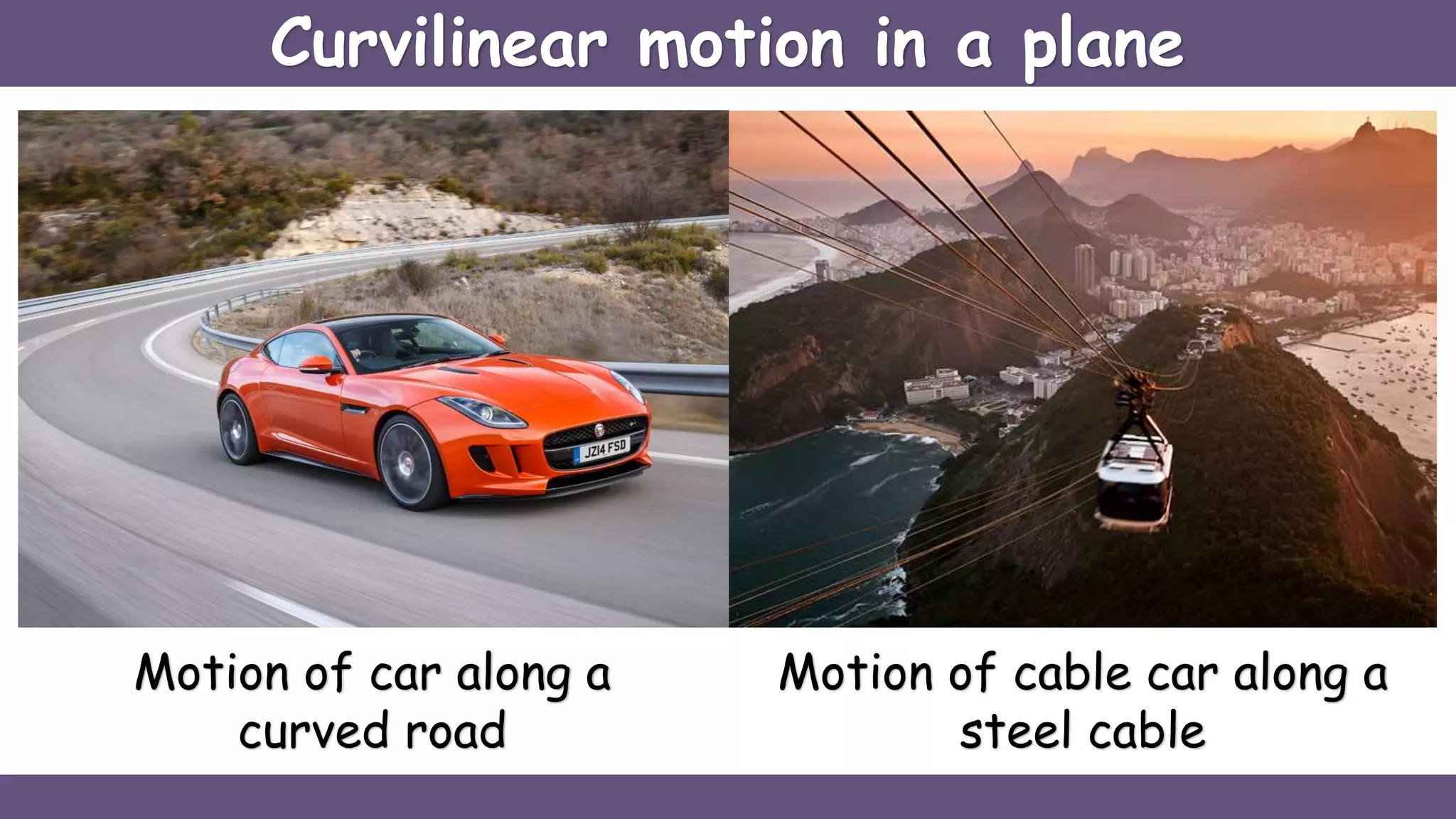
Motion of car along a
curved road
Motion of cable car along a
steel cable
Curvilinear motion in a plane
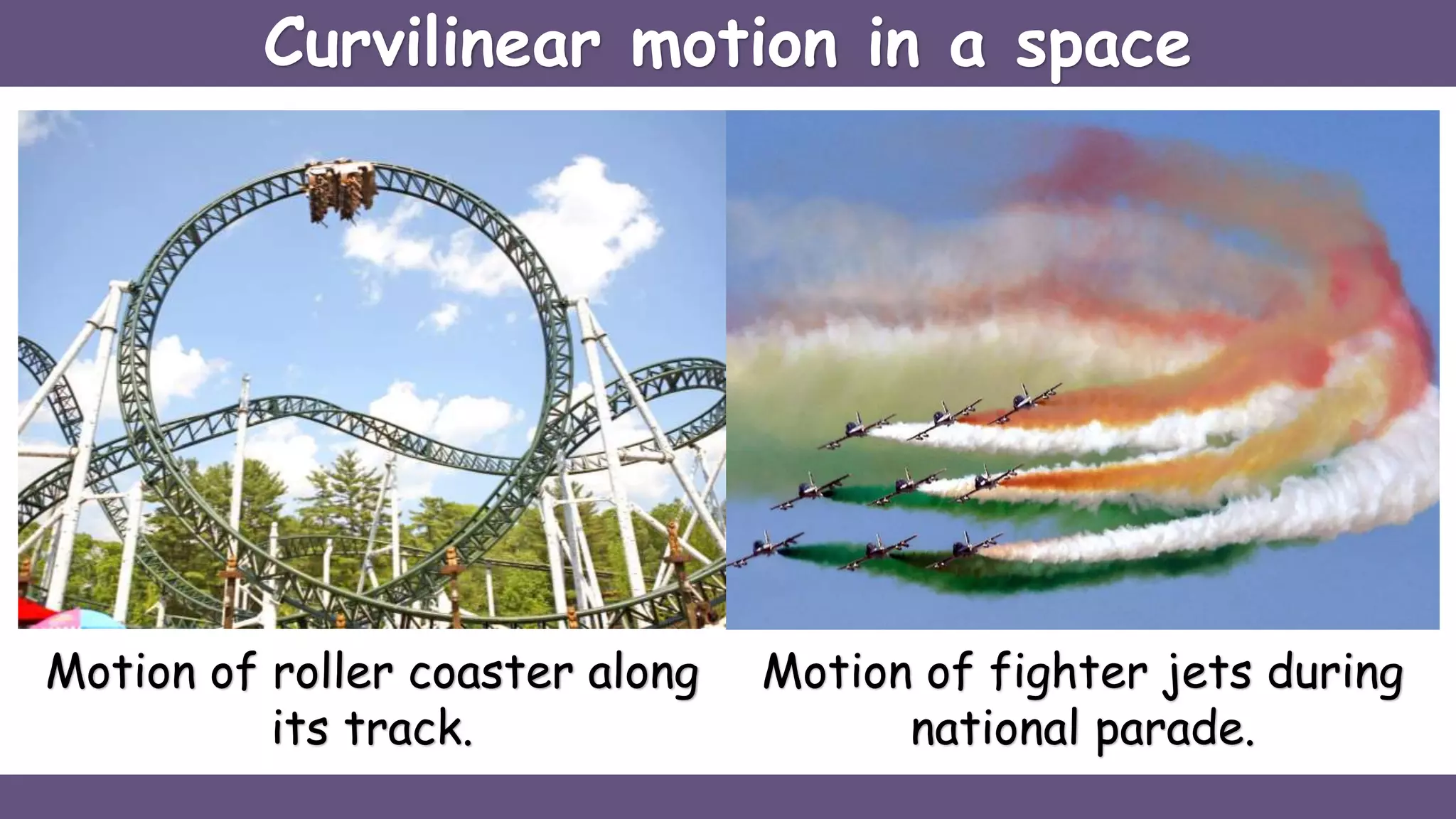
Motion of roller coaster along
its track.
Motion of fighter jets during
national parade.
Curvilinear motion in a space
Position
r
𝑥 𝑖O
𝑥
𝑦
𝑦 𝑗
A r = 𝑥 𝑖 + 𝑦 𝑗
The position of particle at point A
in vector form is represented as,
The distance of particle from
origin is
r = 𝑥2 + 𝑦2
Particle′s path
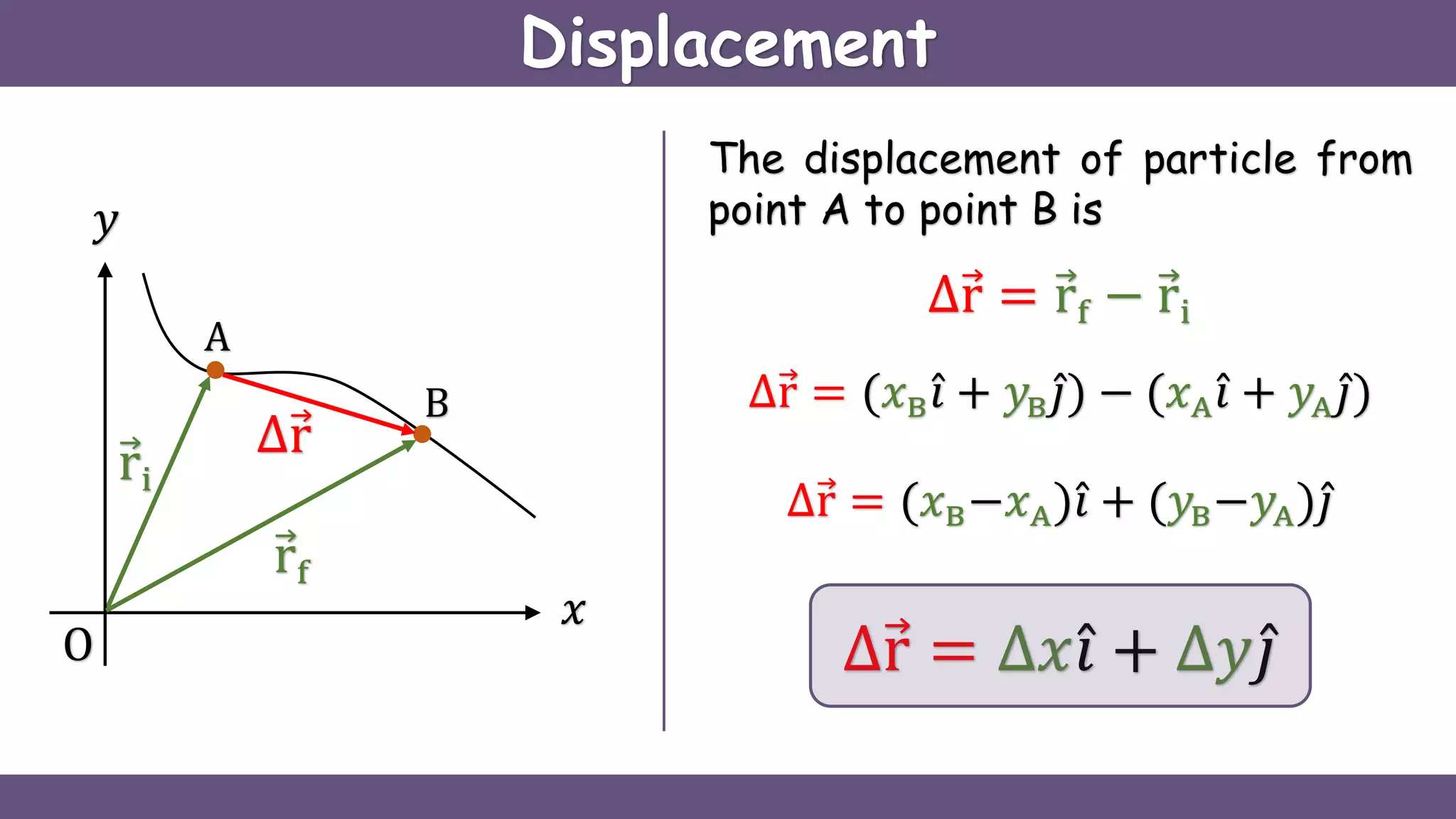
Displacement
ri
O
𝑥
𝑦
A
B
rf
∆r
The displacement of particle from
point A to point B is
∆r = rf − ri
∆r = (𝑥B 𝑖 + 𝑦B 𝑗) − (𝑥A 𝑖 + 𝑦A 𝑗)
∆r = (𝑥B−𝑥A) 𝑖 + (𝑦B−𝑦A) 𝑗
∆r = ∆𝑥 𝑖 + ∆𝑦 𝑗
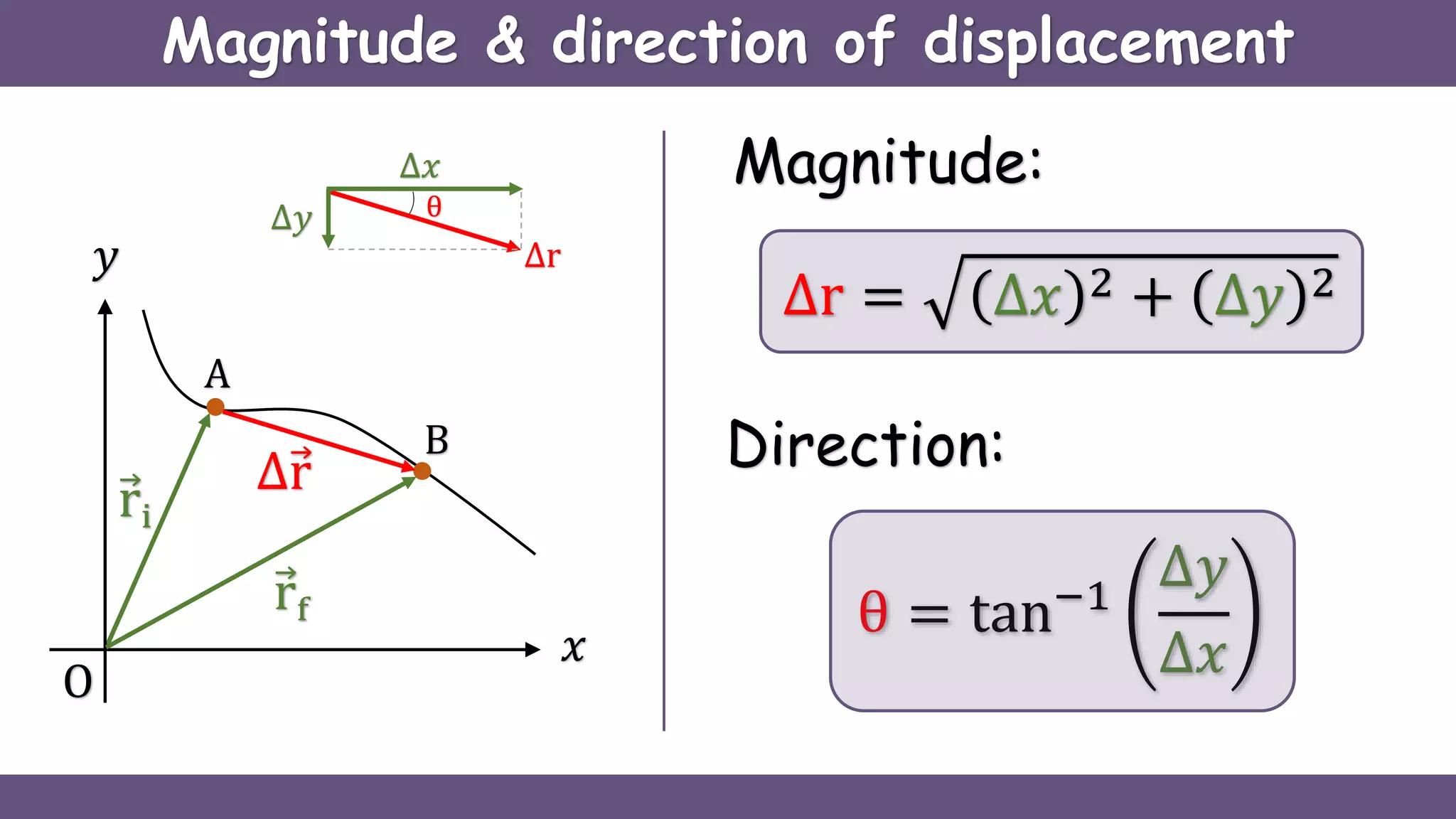
Magnitude & direction of displacement
ri
O
𝑥
𝑦
A
B
rf
∆r
Magnitude:
∆r
∆𝑥
∆𝑦 θ
∆r = ∆𝑥 2 + ∆𝑦 2
Direction:
θ = tan−1
∆𝑦
∆𝑥
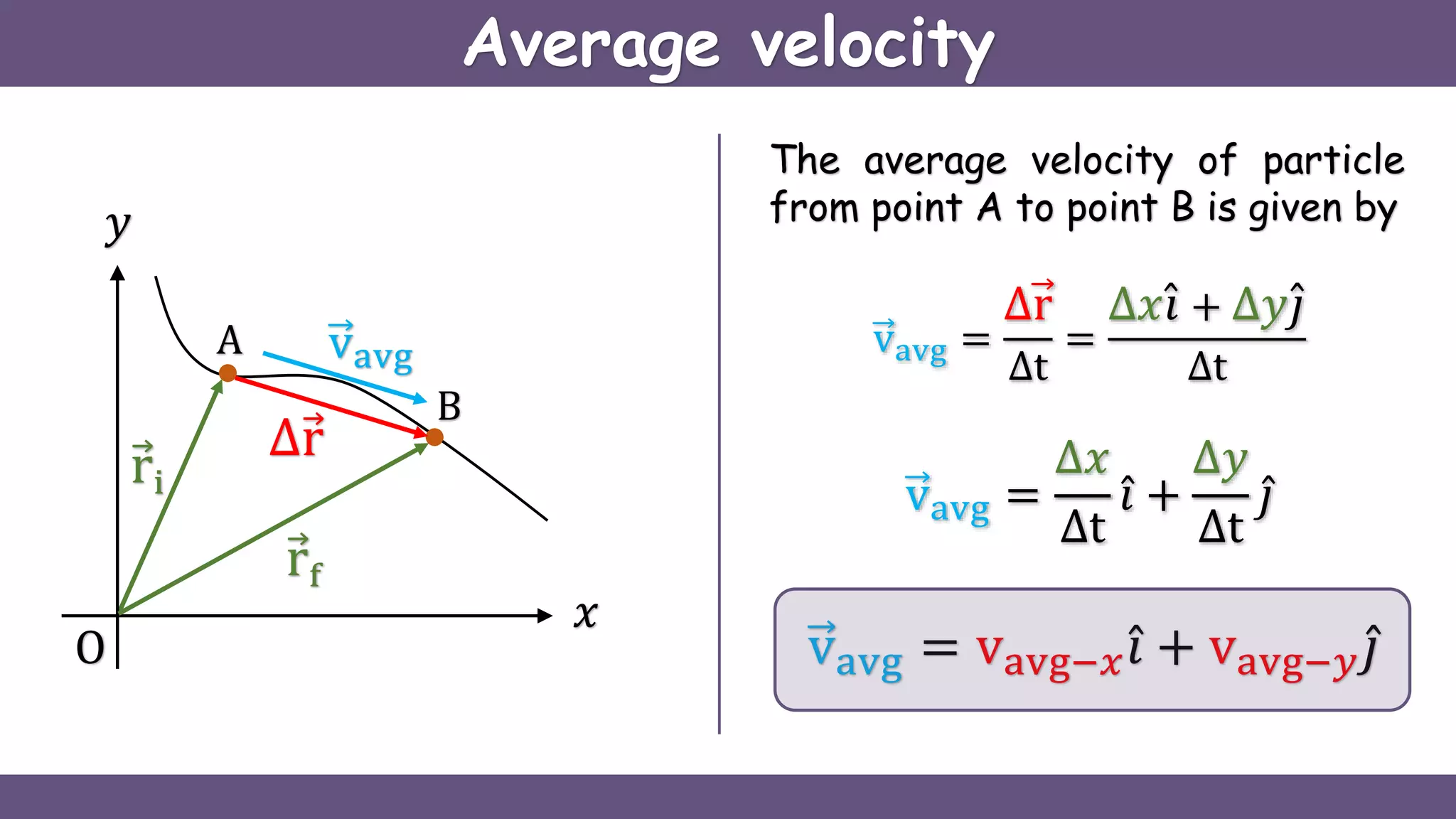
Average velocity
ri
O
𝑥
𝑦
A
B
rf
∆r
The average velocity of particle
from point A to point B is given by
vavg vavg =
∆r
∆t
=
∆𝑥 𝑖 + ∆𝑦 𝑗
∆t
vavg =
∆𝑥
∆t
𝑖 +
∆𝑦
∆t
𝑗
vavg = vavg−𝑥 𝑖 + vavg−𝑦 𝑗
Magnitude & direction of average velocity
ri
O
𝑥
𝑦
A
B
rf
∆r
vavg
Magnitude:
vavg = vavg−𝑥
2
+ vavg−𝑦
2
Direction:
θ = tan−1
vavg−𝑦
vavg−𝑥
vavg
vavg−𝑥
vavg−𝑦 θ
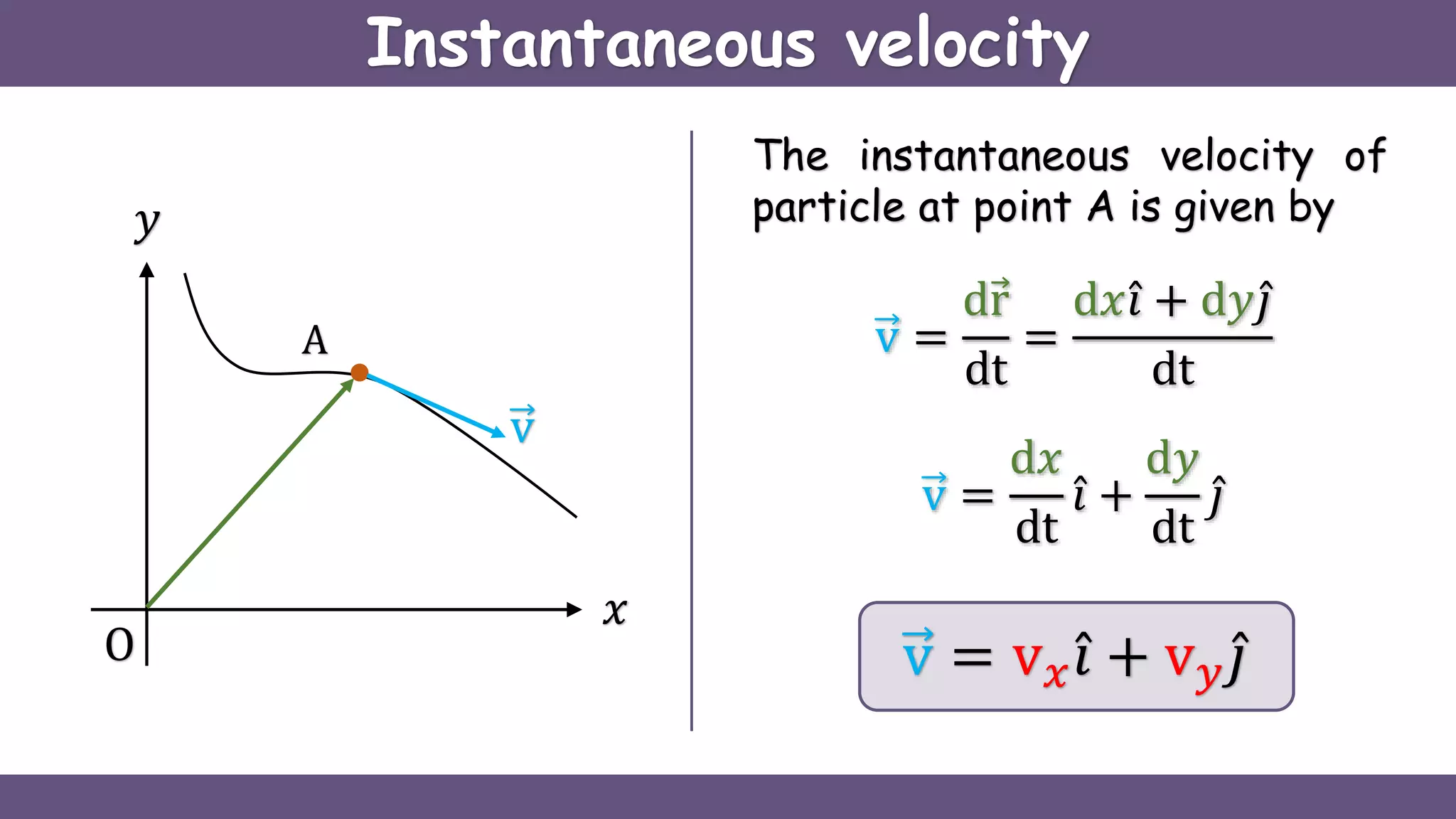
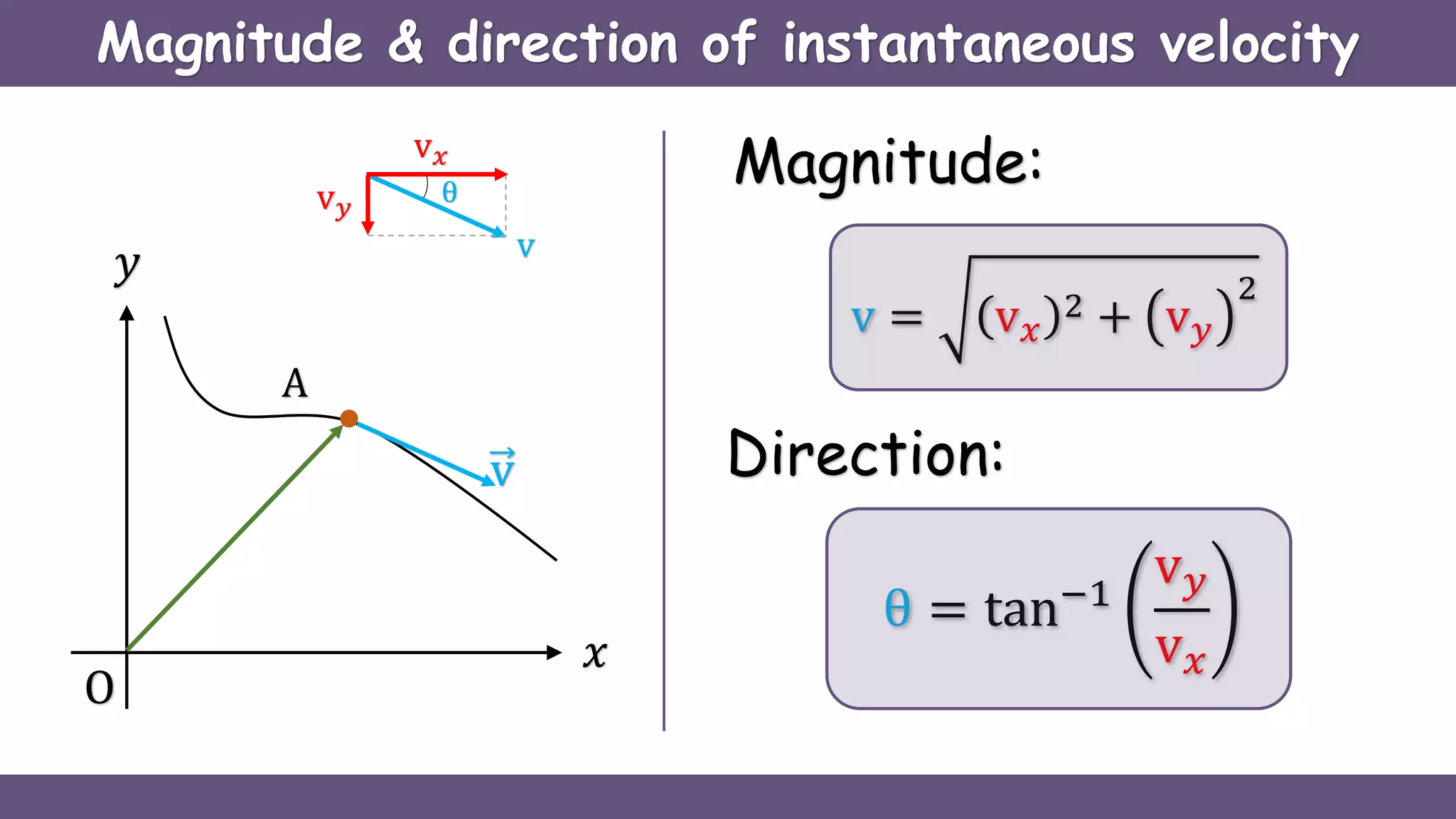
Instantaneous velocity
O
𝑥
𝑦
A
The instantaneous velocity of
particle at point A is given by
v
v =
dr
dt
=
d𝑥 𝑖 + d𝑦 𝑗
dt
v =
d𝑥
dt
𝑖 +
d𝑦
dt
𝑗
v = v 𝑥 𝑖 + v 𝑦 𝑗
v = v 𝑥
2 + v 𝑦
2
Magnitude & direction of instantaneous velocity
Magnitude:
v
v 𝑥
v 𝑦
θ
Direction:
θ = tan−1
v 𝑦
v 𝑥
O
𝑥
𝑦
A
v
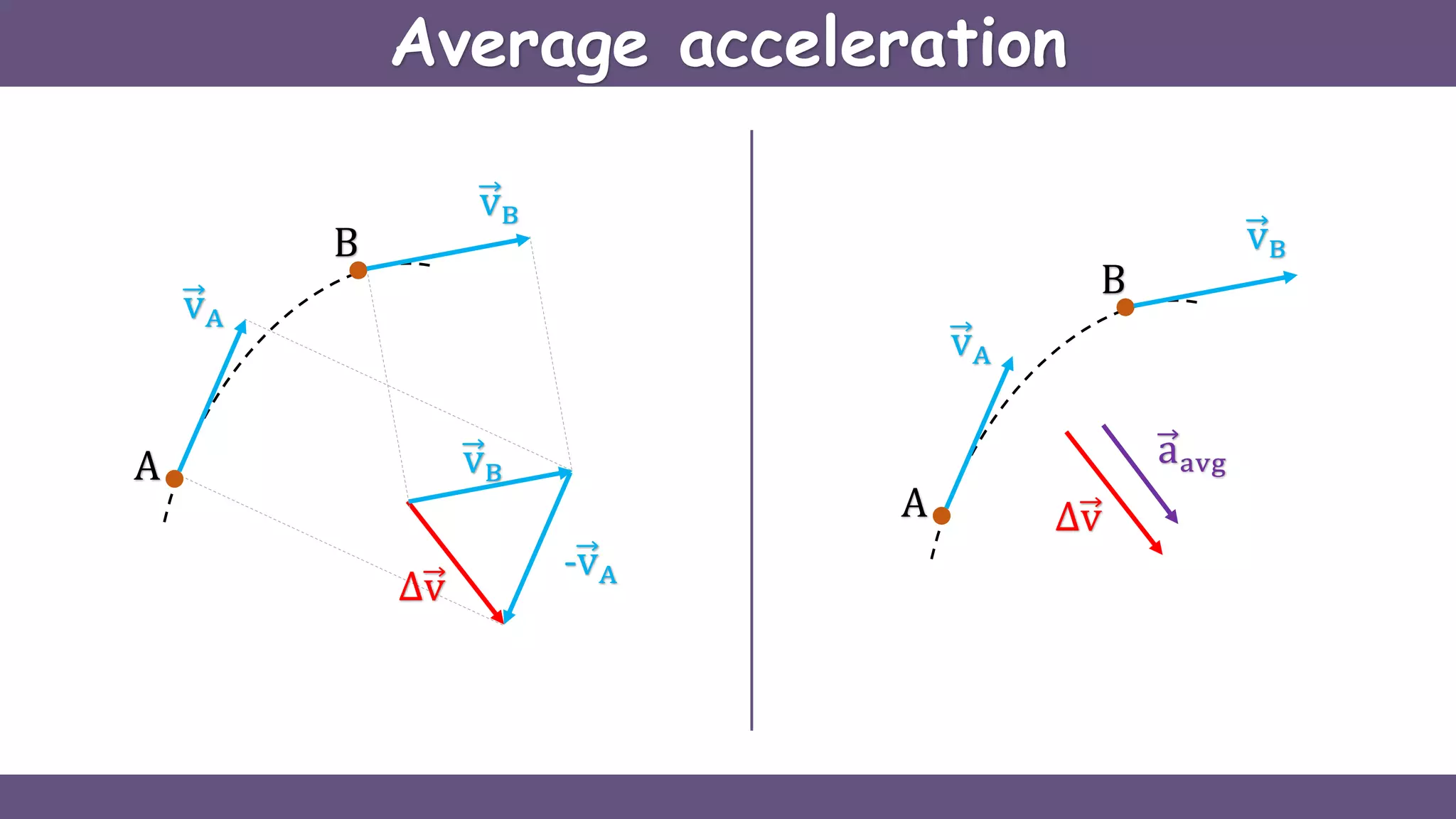
Average acceleration
vA
A
B
∆v
vB
vB
-vA
vA
A
B
∆v
vB
aavg
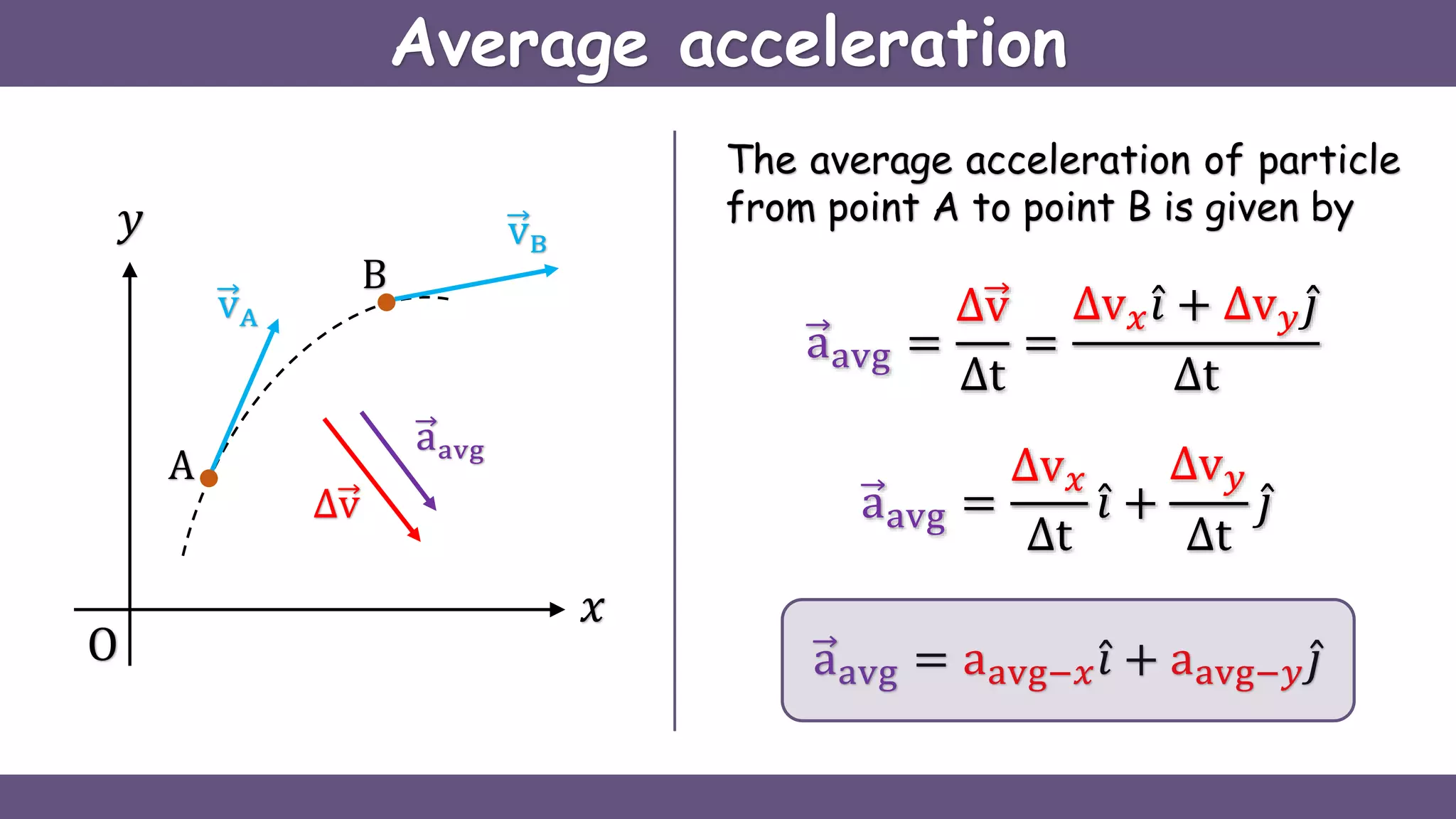
Average acceleration
vA
A
B
vB
O
𝑦
𝑥
The average acceleration of particle
from point A to point B is given by
aavg =
∆v
∆t
=
∆v 𝑥 𝑖 + ∆v 𝑦 𝑗
∆t
aavg =
∆v 𝑥
∆t
𝑖 +
∆v 𝑦
∆t
𝑗
aavg = aavg−𝑥 𝑖 + aavg−𝑦 𝑗
∆v
aavg
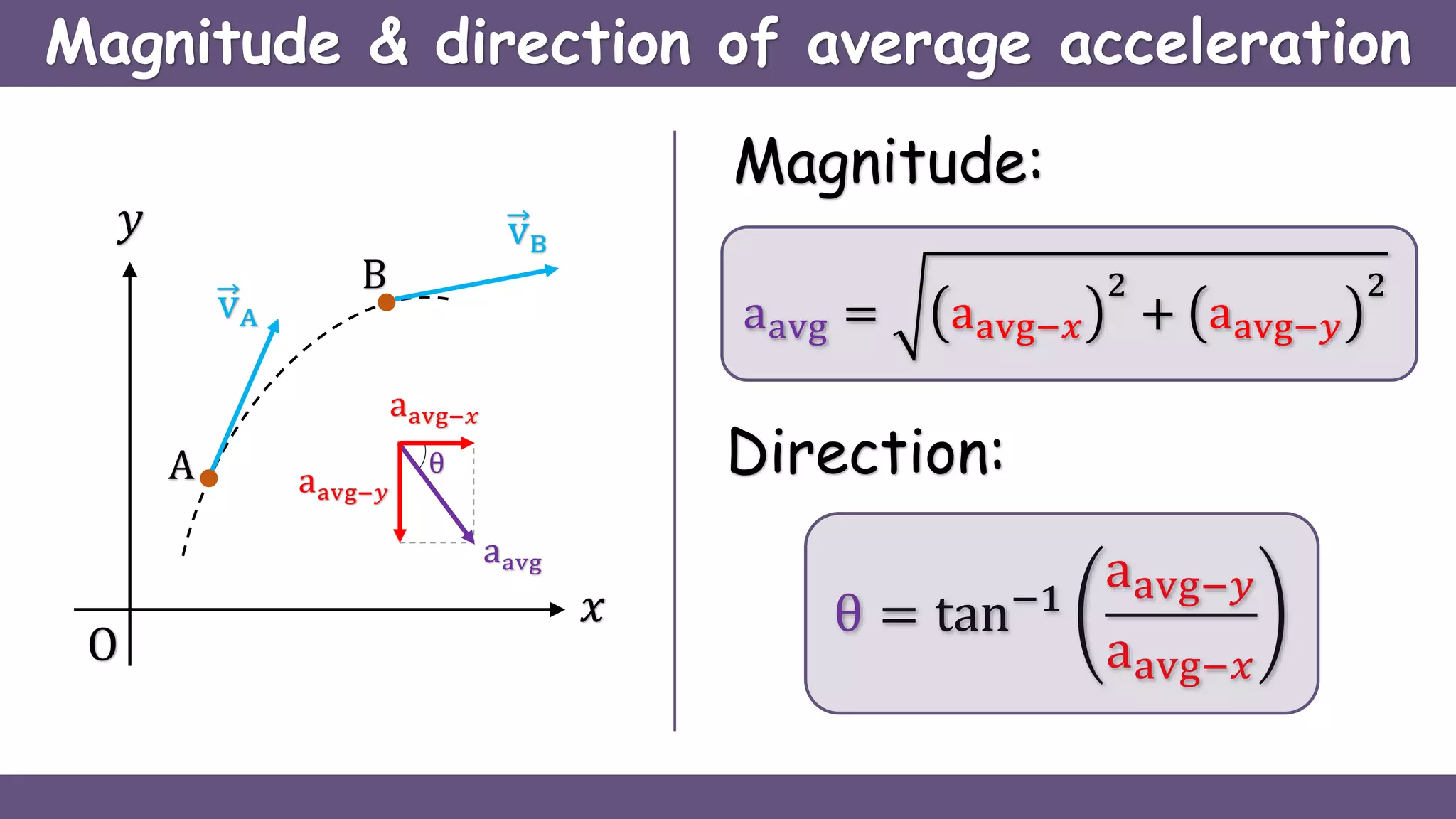
Magnitude & direction of average acceleration
vA
A
B
vB
O
𝑦
𝑥
aavg
aavg−𝑥
aavg−𝑦
Magnitude:
aavg = aavg−𝑥
2
+ aavg−𝑦
2
Direction:
θ = tan−1
aavg−𝑦
aavg−𝑥
θ
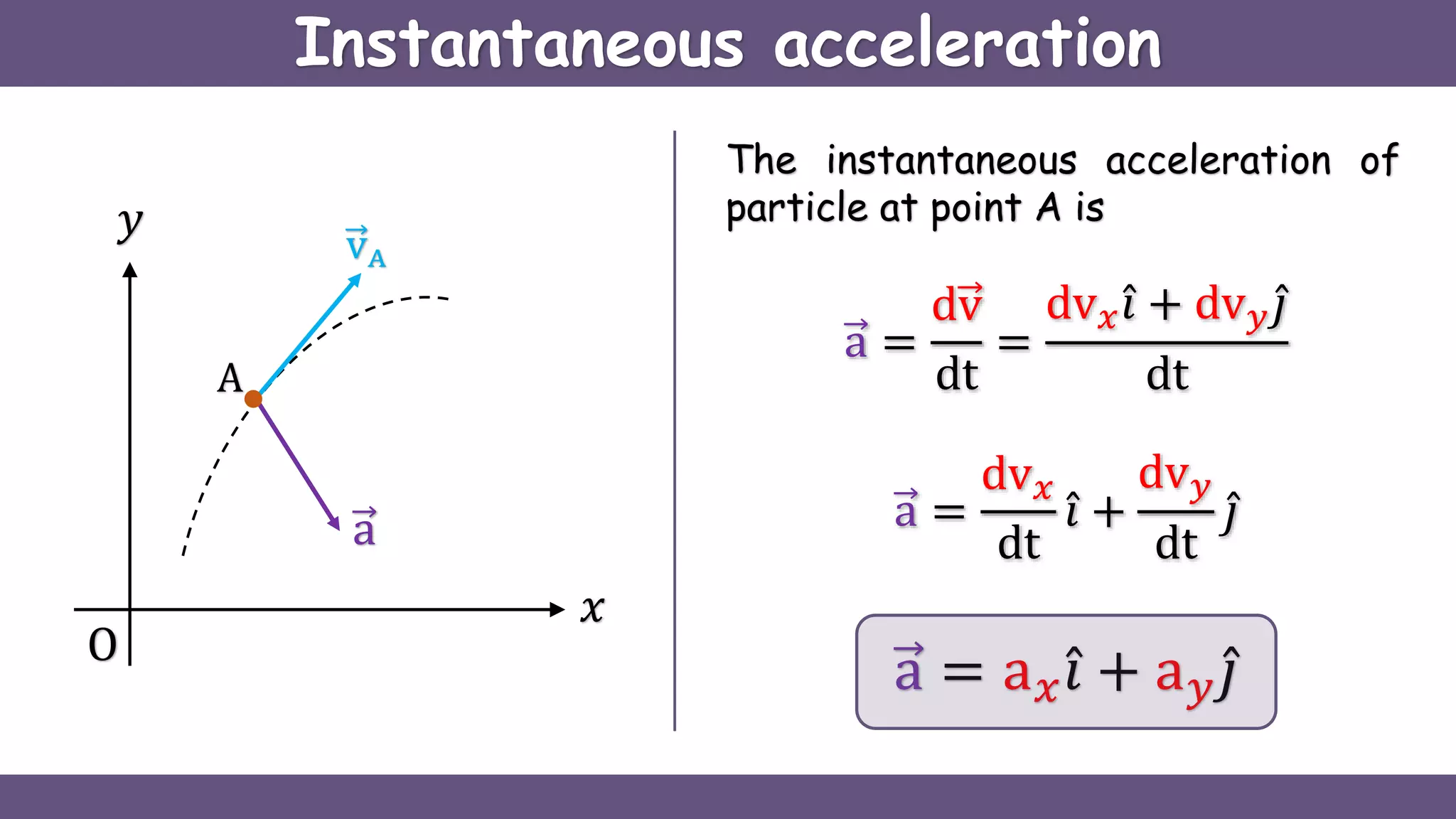
Instantaneous acceleration
vA
A
O
𝑦
𝑥
a
The instantaneous acceleration of
particle at point A is
a =
dv
dt
=
dv 𝑥 𝑖 + dv 𝑦 𝑗
dt
a =
dv 𝑥
dt
𝑖 +
dv 𝑦
dt
𝑗
a = a 𝑥 𝑖 + a 𝑦 𝑗
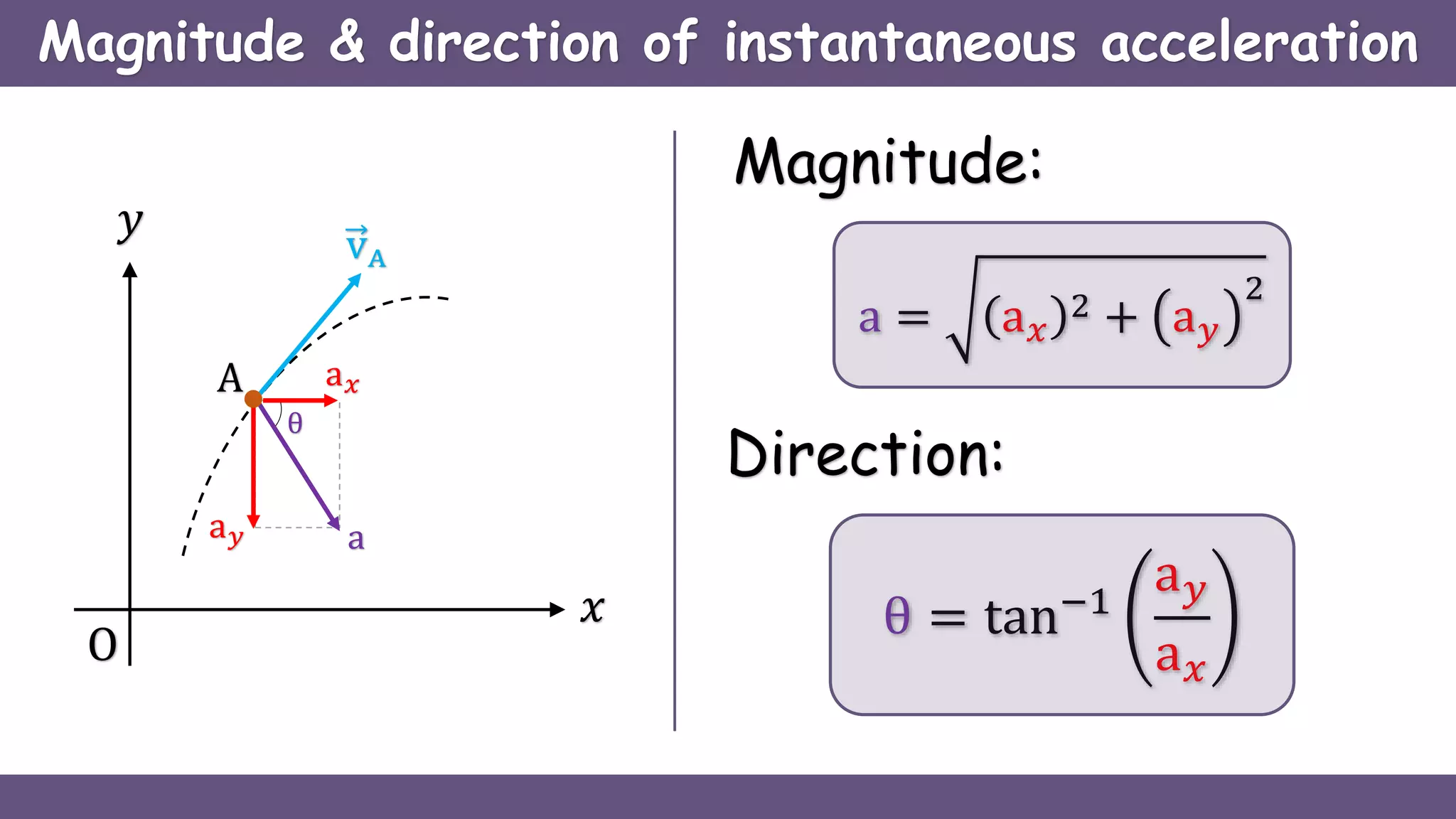
Magnitude & direction of instantaneous acceleration
vA
A
O
𝑦
𝑥
a
a 𝑥
a 𝑦
θ
a = a 𝑥
2 + a 𝑦
2
Magnitude:
Direction:
θ = tan−1
a 𝑦
a 𝑥
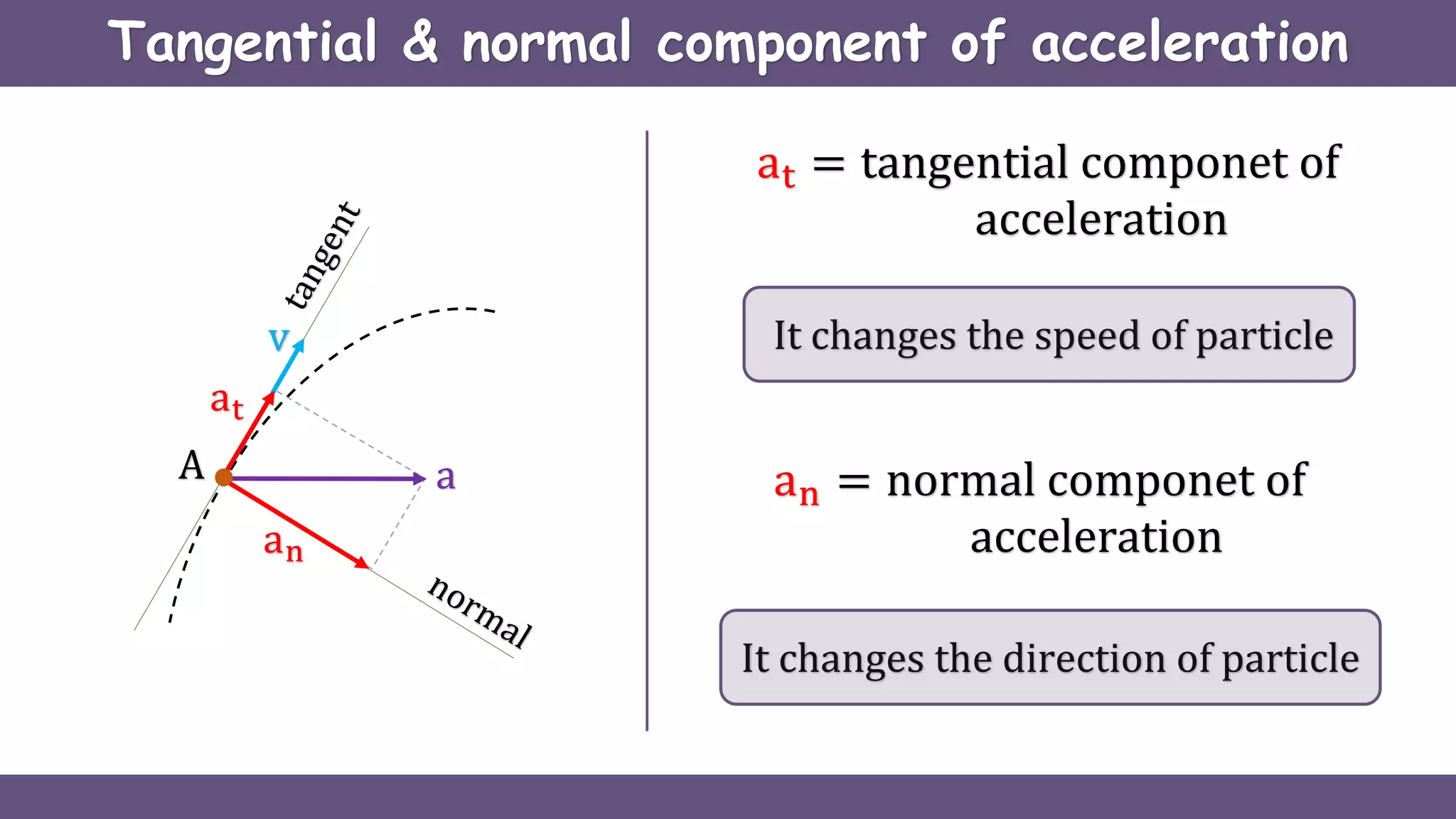
Tangential & normal component of acceleration
a
at
an
at = tangential componet of
acceleration
It changes the speed of particle
an = normal componet of
acceleration
It changes the direction of particle
v
A
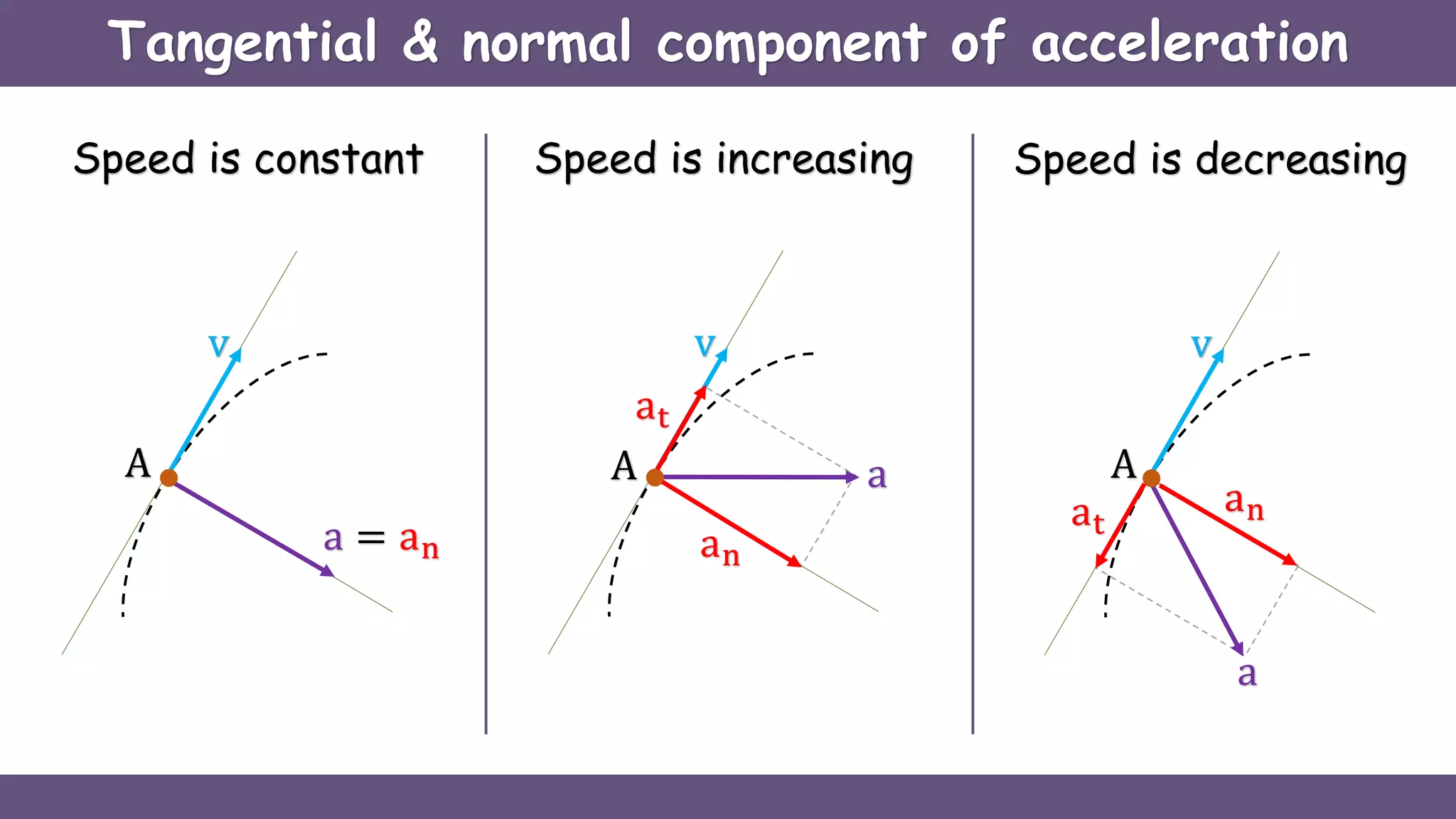
Tangential & normal component of acceleration
Speed is constant Speed is increasing Speed is decreasing
v
a = an
v
a
at
an
v
a
at
an
A A A
Thank
you

Curvilinear motion of a particle

  • 1.
  • 2.
    The motion ofan object along a curved path is called a curvilinear motion. Curvilinear motion
  • 3.
    Motion of caralong a curved road Motion of cable car along a steel cable Curvilinear motion in a plane
  • 4.
    Motion of rollercoaster along its track. Motion of fighter jets during national parade. Curvilinear motion in a space
  • 5.
    Position r 𝑥 𝑖O 𝑥 𝑦 𝑦 𝑗 Ar = 𝑥 𝑖 + 𝑦 𝑗 The position of particle at point A in vector form is represented as, The distance of particle from origin is r = 𝑥2 + 𝑦2 Particle′s path
  • 6.
    Displacement ri O 𝑥 𝑦 A B rf ∆r The displacement ofparticle from point A to point B is ∆r = rf − ri ∆r = (𝑥B 𝑖 + 𝑦B 𝑗) − (𝑥A 𝑖 + 𝑦A 𝑗) ∆r = (𝑥B−𝑥A) 𝑖 + (𝑦B−𝑦A) 𝑗 ∆r = ∆𝑥 𝑖 + ∆𝑦 𝑗
  • 7.
    Magnitude & directionof displacement ri O 𝑥 𝑦 A B rf ∆r Magnitude: ∆r ∆𝑥 ∆𝑦 θ ∆r = ∆𝑥 2 + ∆𝑦 2 Direction: θ = tan−1 ∆𝑦 ∆𝑥
  • 8.
    Average velocity ri O 𝑥 𝑦 A B rf ∆r The averagevelocity of particle from point A to point B is given by vavg vavg = ∆r ∆t = ∆𝑥 𝑖 + ∆𝑦 𝑗 ∆t vavg = ∆𝑥 ∆t 𝑖 + ∆𝑦 ∆t 𝑗 vavg = vavg−𝑥 𝑖 + vavg−𝑦 𝑗
  • 9.
    Magnitude & directionof average velocity ri O 𝑥 𝑦 A B rf ∆r vavg Magnitude: vavg = vavg−𝑥 2 + vavg−𝑦 2 Direction: θ = tan−1 vavg−𝑦 vavg−𝑥 vavg vavg−𝑥 vavg−𝑦 θ
  • 10.
    Instantaneous velocity O 𝑥 𝑦 A The instantaneousvelocity of particle at point A is given by v v = dr dt = d𝑥 𝑖 + d𝑦 𝑗 dt v = d𝑥 dt 𝑖 + d𝑦 dt 𝑗 v = v 𝑥 𝑖 + v 𝑦 𝑗
  • 11.
    v = v𝑥 2 + v 𝑦 2 Magnitude & direction of instantaneous velocity Magnitude: v v 𝑥 v 𝑦 θ Direction: θ = tan−1 v 𝑦 v 𝑥 O 𝑥 𝑦 A v
  • 12.
  • 13.
    Average acceleration vA A B vB O 𝑦 𝑥 The averageacceleration of particle from point A to point B is given by aavg = ∆v ∆t = ∆v 𝑥 𝑖 + ∆v 𝑦 𝑗 ∆t aavg = ∆v 𝑥 ∆t 𝑖 + ∆v 𝑦 ∆t 𝑗 aavg = aavg−𝑥 𝑖 + aavg−𝑦 𝑗 ∆v aavg
  • 14.
    Magnitude & directionof average acceleration vA A B vB O 𝑦 𝑥 aavg aavg−𝑥 aavg−𝑦 Magnitude: aavg = aavg−𝑥 2 + aavg−𝑦 2 Direction: θ = tan−1 aavg−𝑦 aavg−𝑥 θ
  • 15.
    Instantaneous acceleration vA A O 𝑦 𝑥 a The instantaneousacceleration of particle at point A is a = dv dt = dv 𝑥 𝑖 + dv 𝑦 𝑗 dt a = dv 𝑥 dt 𝑖 + dv 𝑦 dt 𝑗 a = a 𝑥 𝑖 + a 𝑦 𝑗
  • 16.
    Magnitude & directionof instantaneous acceleration vA A O 𝑦 𝑥 a a 𝑥 a 𝑦 θ a = a 𝑥 2 + a 𝑦 2 Magnitude: Direction: θ = tan−1 a 𝑦 a 𝑥
  • 17.
    Tangential & normalcomponent of acceleration a at an at = tangential componet of acceleration It changes the speed of particle an = normal componet of acceleration It changes the direction of particle v A
  • 18.
    Tangential & normalcomponent of acceleration Speed is constant Speed is increasing Speed is decreasing v a = an v a at an v a at an A A A
  • 19.