Sudharman Raman
Assistant Professor
CBS - Kanjikode
 Work Study
 Method Study
 Work measurement
 Work Study = study of human work
Definition,
British Standard 3138 :1969
“ A management service based on those
techniques, particularly method study and work
measurement, which are used in the examination
of human work in all its contexts and which lead
to the systematic investigation of all the resources
and factors that affect the efficiency and economy
of the situation being viewed, in order to bring
improvement”
In simple, it is a procedure to understand and
determine the activities of people, plant and
machineries, identifying the factors that affect their
efficiency and achieving economy through their
optimum utilization.
Follow…
Choose the process or job
Record all relevant facts
Analyze critically
Develop the new plan
Measure the work content
Define the new method
Install the new method
Maintain the new method
 Method study is a method for examining ,
recording, and analyzing the existing way of
doing work and proposing a method for
improving the efficiency of a system.
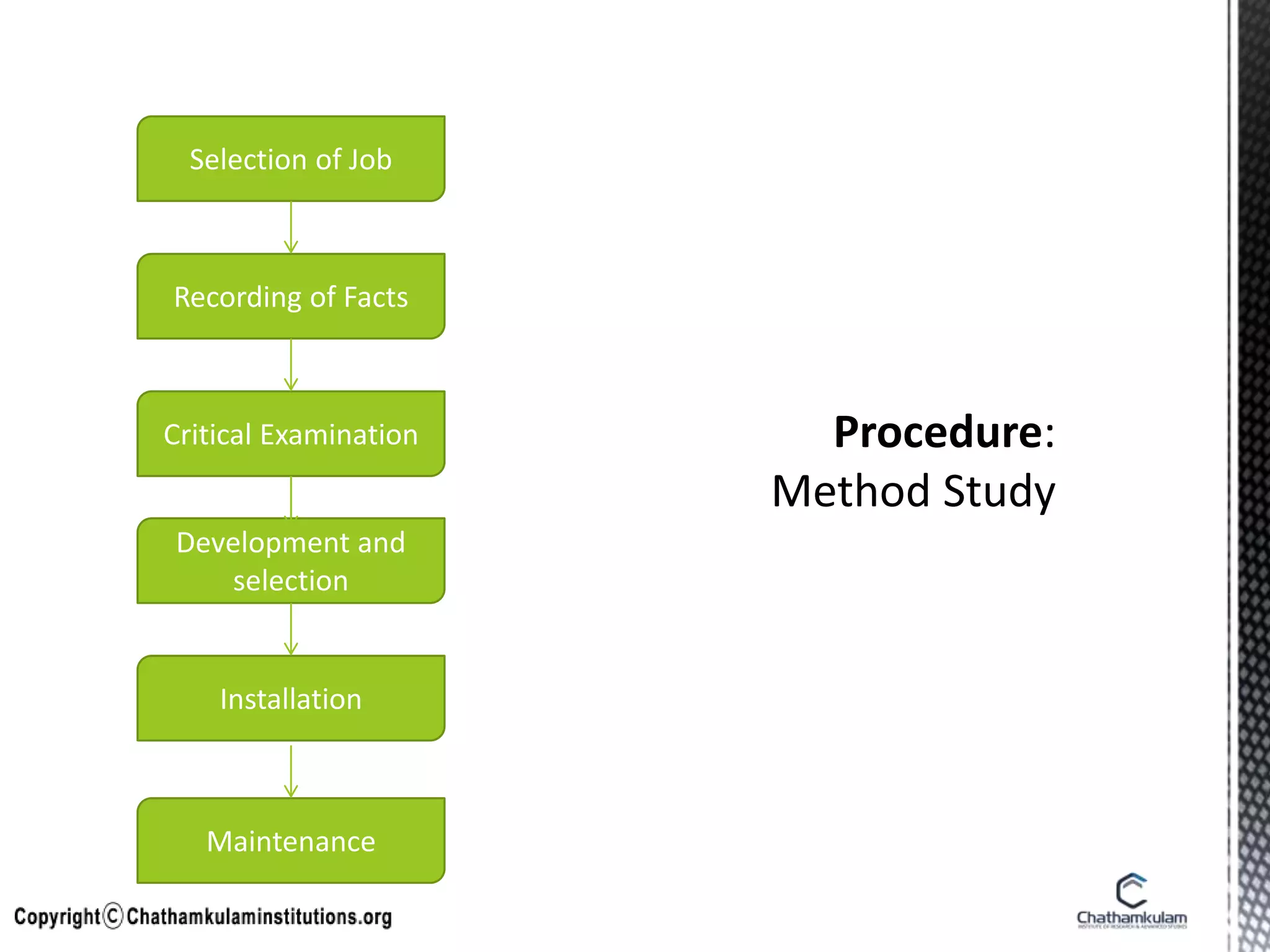
Selection of Job
Recording of Facts
Critical Examination
Development and
selection
Installation
Maintenance
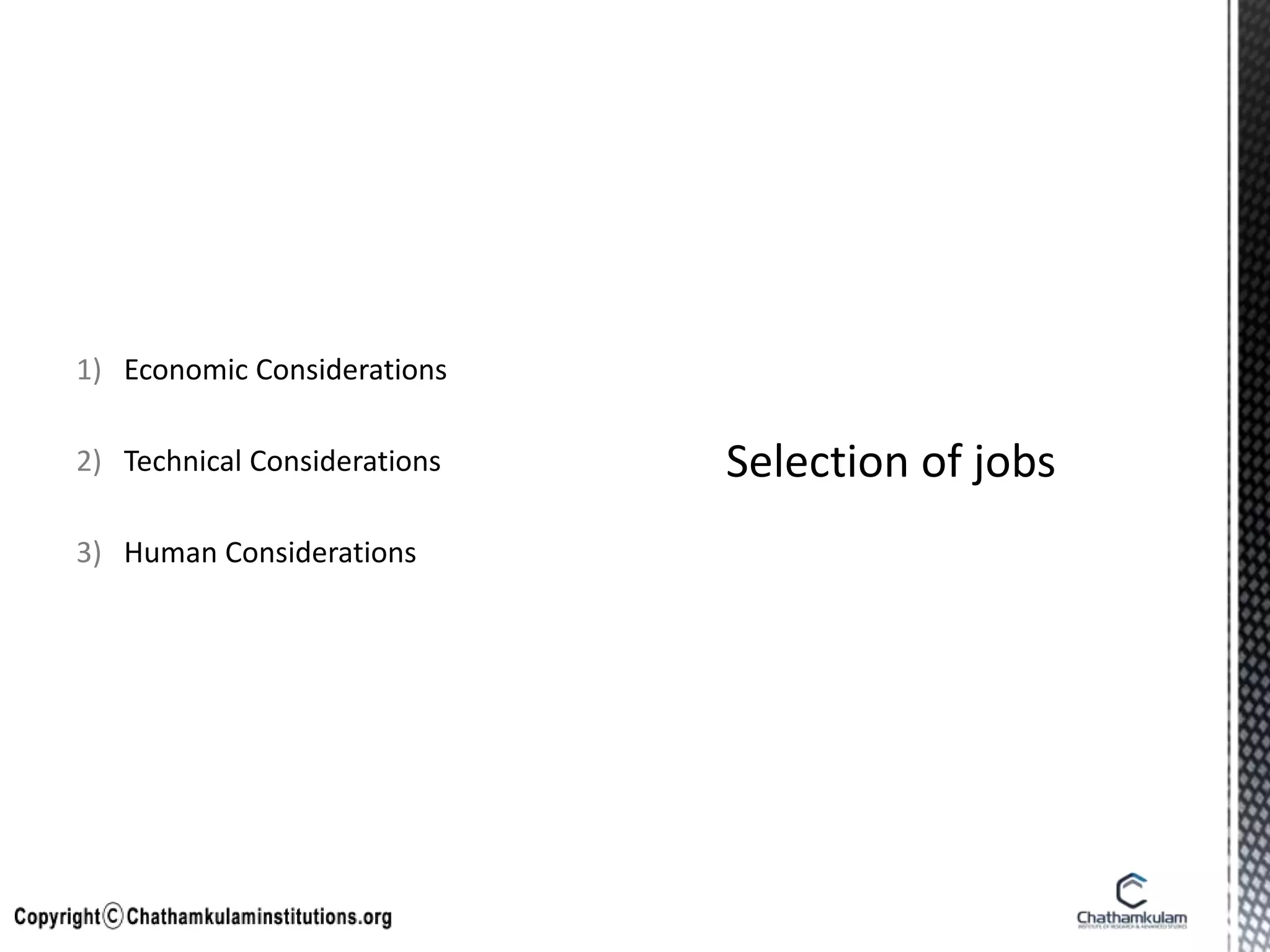
1) Economic Considerations
2) Technical Considerations
3) Human Considerations
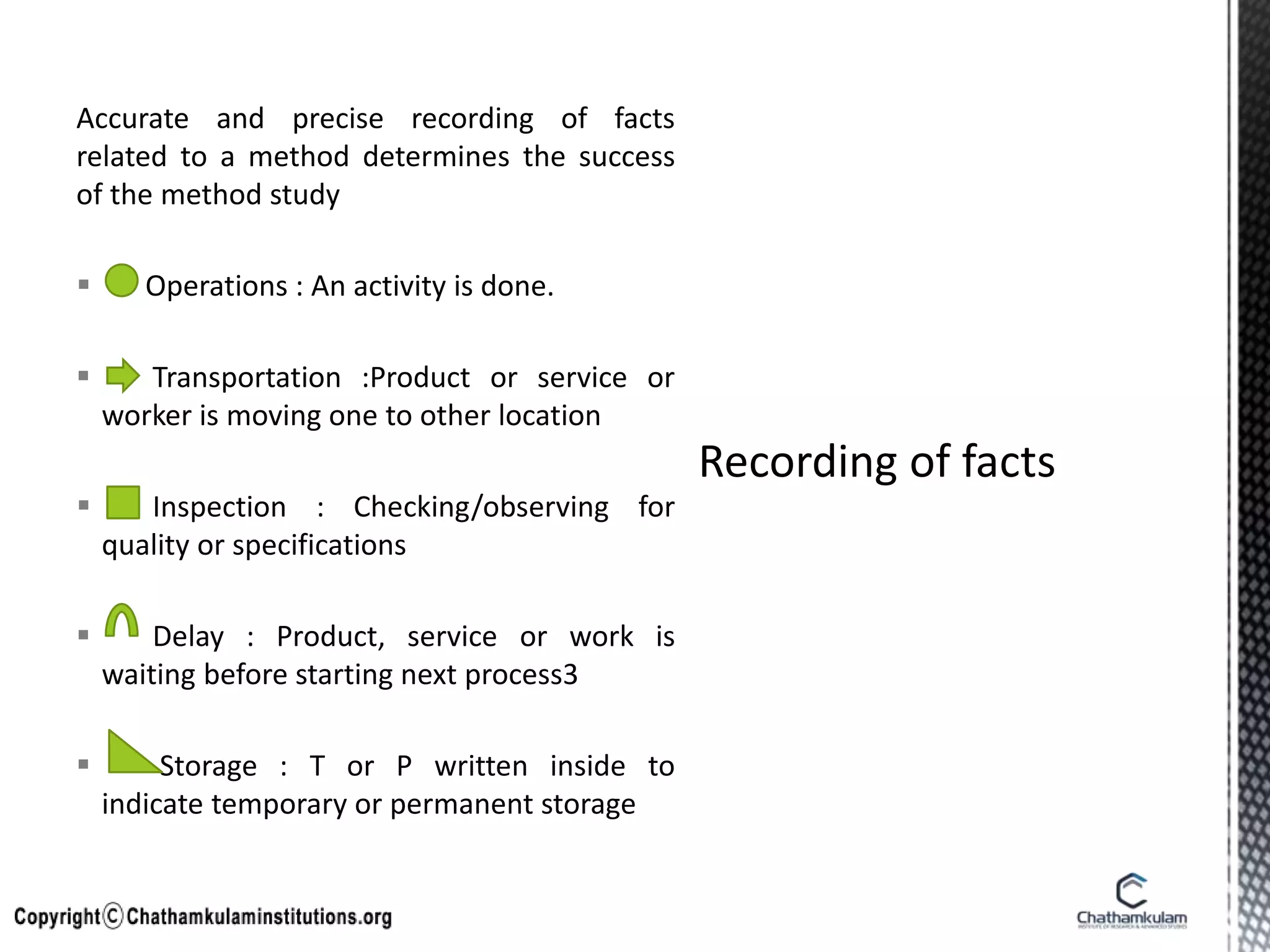
Accurate and precise recording of facts
related to a method determines the success
of the method study
 Operations : An activity is done.
 Transportation :Product or service or
worker is moving one to other location
 Inspection : Checking/observing for
quality or specifications
 Delay : Product, service or work is
waiting before starting next process3
 Storage : T or P written inside to
indicate temporary or permanent storage
 Purpose
 Place
 Sequence
 Person
 Means
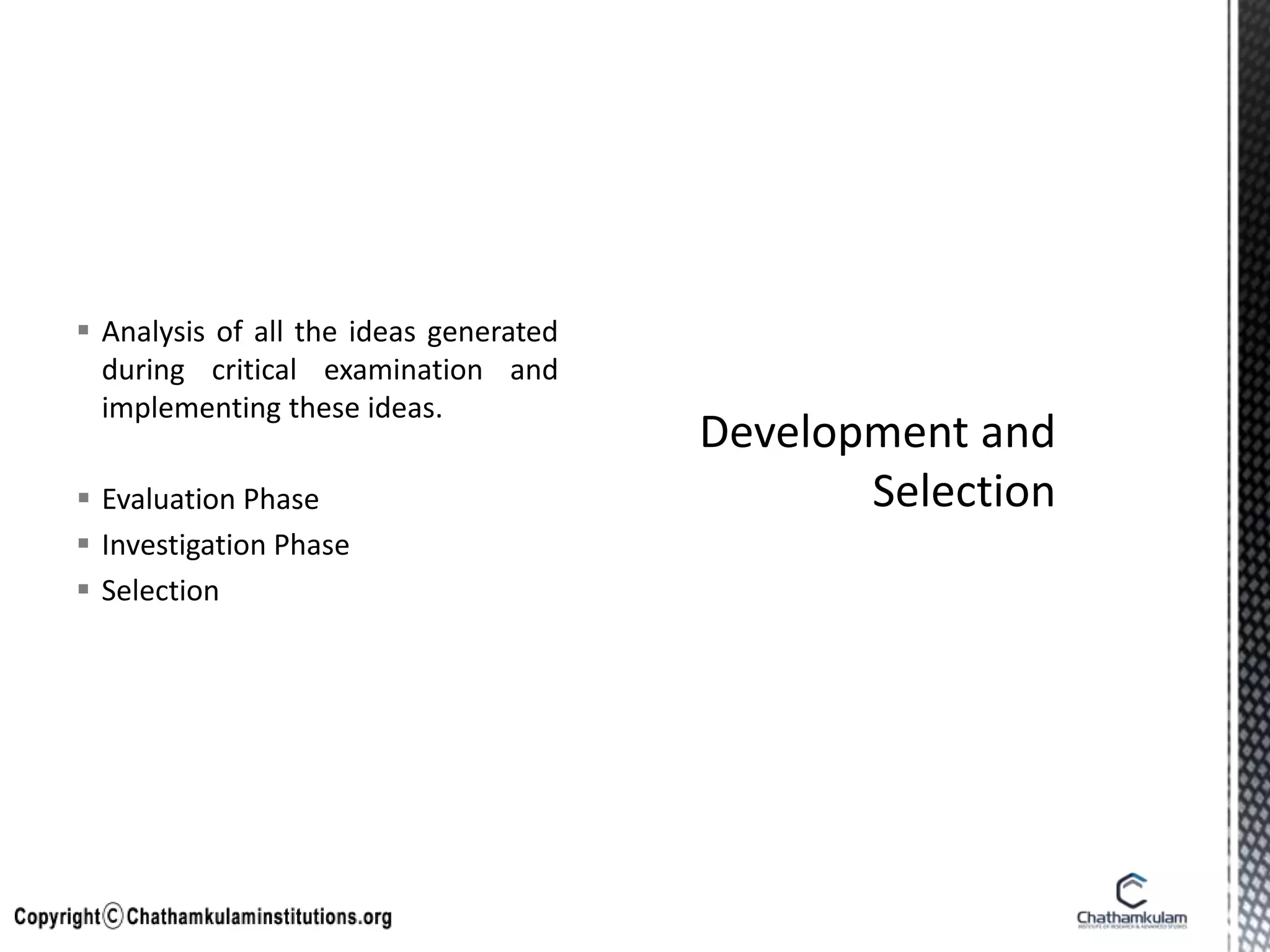
 Analysis of all the ideas generated
during critical examination and
implementing these ideas.
 Evaluation Phase
 Investigation Phase
 Selection
 Implementation of the proposed
method.
 A demonstration of the proposed
method can be held to clear
misconceptions and
apprehensions.
 Training for employees
 A feedback mechanism is needed to
inform the concerned authorities about
the results of the monitoring process.
 Review the results
 Performance appraisal
 A technique to find out the time required to
do any activity, at a predetermined level of
performance by a qualified worker.
 Objectives
1. To establish the standard time
2. To fix salary and incentives
3. To estimate labour and machine
requirements
4. To estimate the costs centers
5. To establish performance standards for
employees
6. To identify training needs
I. Time study
II. Work Sampling
III. Standard data
IV. Predetermined motion time
studies (PMTS)
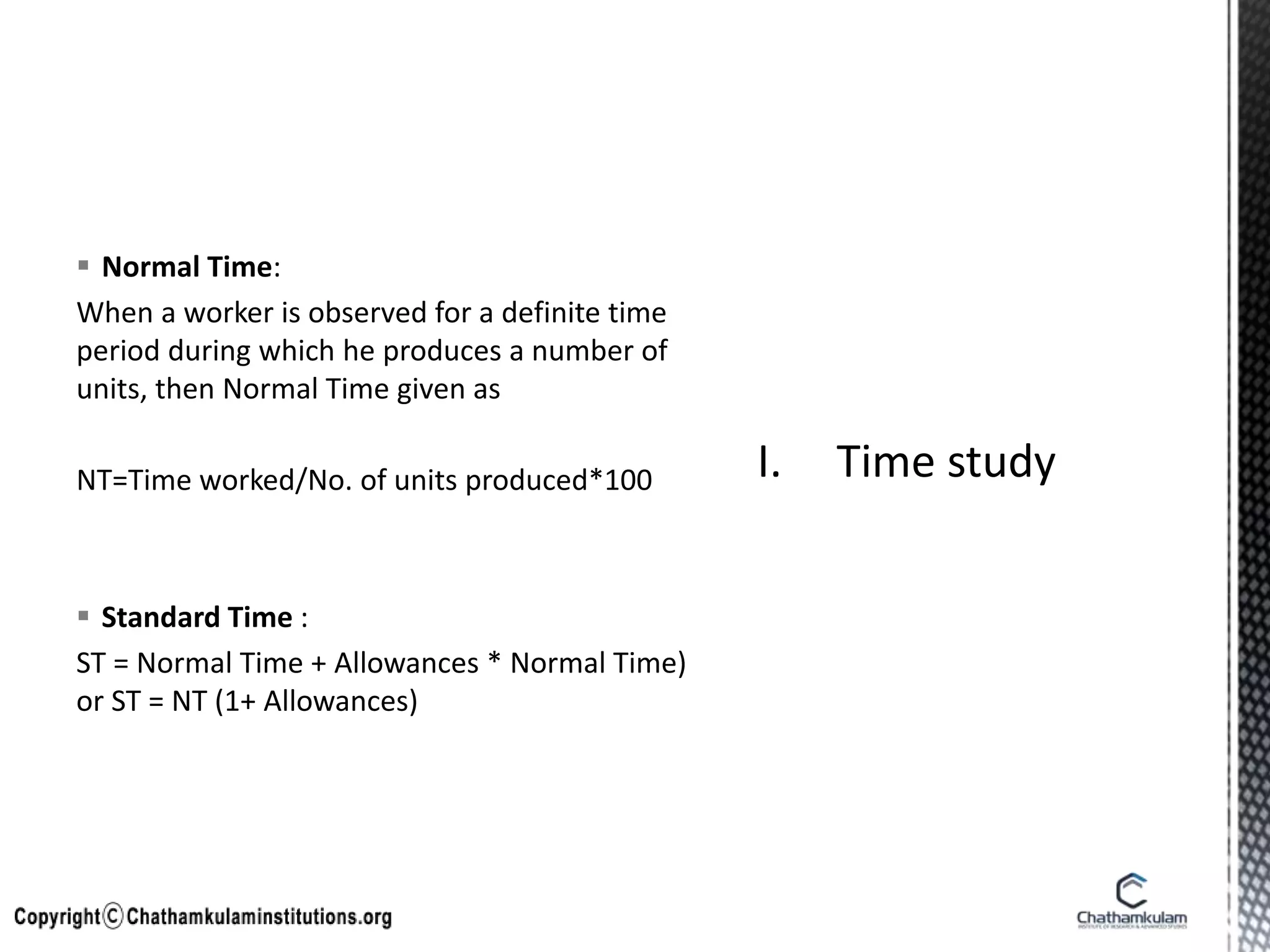
 This method of work measurement is generally
used when the work is repetitive.
 Its used to determine the time required for the
performance of the worker.
 Normal Time = Observed Performance time per
unit * performance rating
(a task is completed by a worker in two minutes,
and if it is estimated that he is performing 30 per
cent faster than normal, then the performance
rating of the operation is said to be 1.3 times or
120 per cent of the normal.
Thus, the normal time for the task will be
2 minutes * 1.2=2.4 minutes.
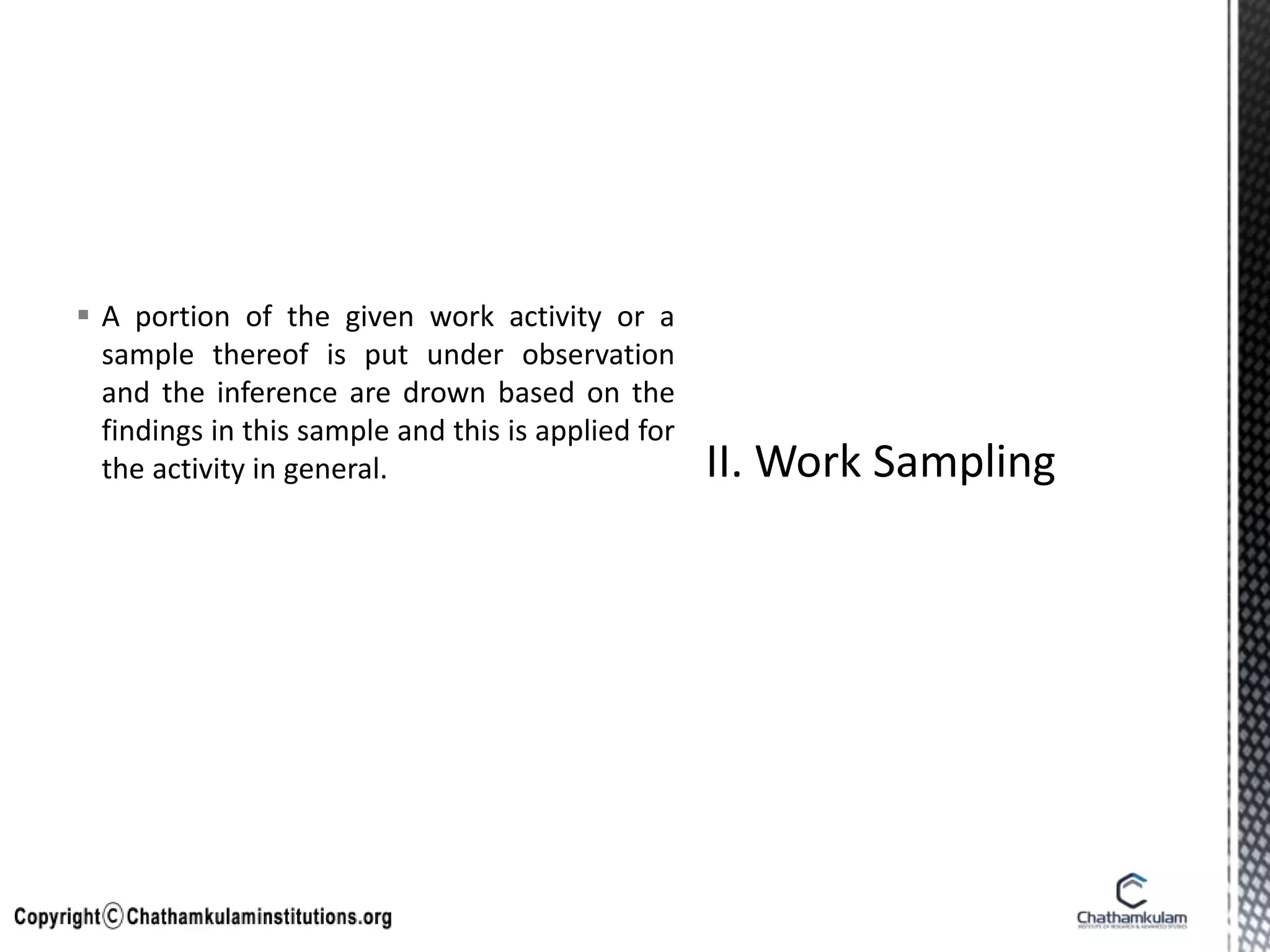
 Normal Time:
When a worker is observed for a definite time
period during which he produces a number of
units, then Normal Time given as
NT=Time worked/No. of units produced*100
 Standard Time :
ST = Normal Time + Allowances * Normal Time)
or ST = NT (1+ Allowances)
 A portion of the given work activity or a
sample thereof is put under observation
and the inference are drown based on the
findings in this sample and this is applied for
the activity in general.
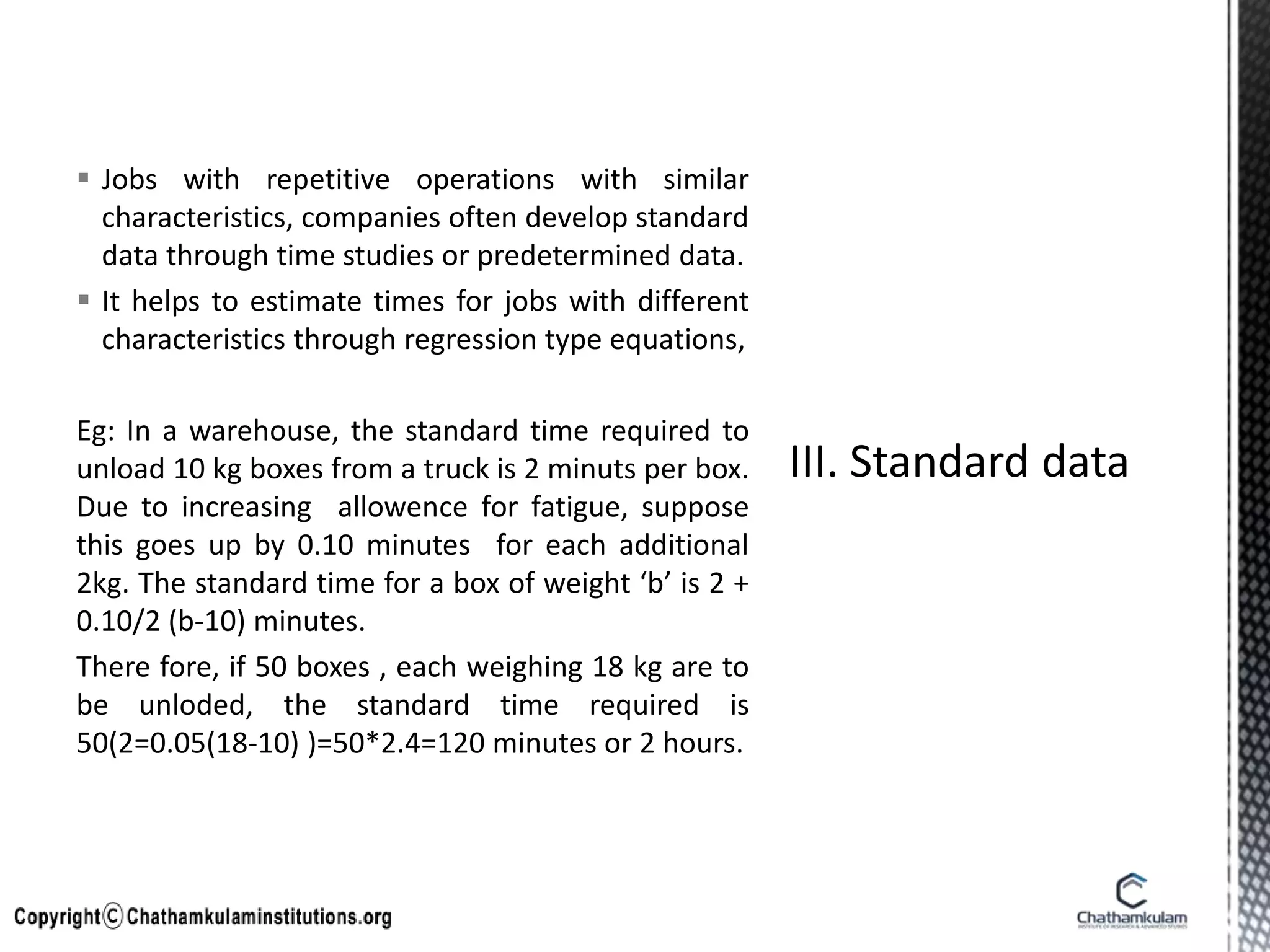
 Jobs with repetitive operations with similar
characteristics, companies often develop standard
data through time studies or predetermined data.
 It helps to estimate times for jobs with different
characteristics through regression type equations,
Eg: In a warehouse, the standard time required to
unload 10 kg boxes from a truck is 2 minuts per box.
Due to increasing allowence for fatigue, suppose
this goes up by 0.10 minutes for each additional
2kg. The standard time for a box of weight ‘b’ is 2 +
0.10/2 (b-10) minutes.
There fore, if 50 boxes , each weighing 18 kg are to
be unloded, the standard time required is
50(2=0.05(18-10) )=50*2.4=120 minutes or 2 hours.
 An alternative to time study is that
use of standard times for work
elements that have been
predetermined from long periods
of observation and analysis.
 Define various set of motions
Motion Time Systems
1. Methods Time Measurement
(MTM) system
2. Time Measurement Units (TMUs)
Cu mba operation managment module 4 calicut university

Cu mba operation managment module 4 calicut university

  • 1.
  • 2.
     Work Study Method Study  Work measurement
  • 3.
     Work Study= study of human work Definition, British Standard 3138 :1969 “ A management service based on those techniques, particularly method study and work measurement, which are used in the examination of human work in all its contexts and which lead to the systematic investigation of all the resources and factors that affect the efficiency and economy of the situation being viewed, in order to bring improvement”
  • 4.
    In simple, itis a procedure to understand and determine the activities of people, plant and machineries, identifying the factors that affect their efficiency and achieving economy through their optimum utilization. Follow… Choose the process or job Record all relevant facts Analyze critically Develop the new plan Measure the work content Define the new method Install the new method Maintain the new method
  • 5.
     Method studyis a method for examining , recording, and analyzing the existing way of doing work and proposing a method for improving the efficiency of a system.
  • 6.
    Selection of Job Recordingof Facts Critical Examination Development and selection Installation Maintenance
  • 7.
    1) Economic Considerations 2)Technical Considerations 3) Human Considerations
  • 8.
    Accurate and preciserecording of facts related to a method determines the success of the method study  Operations : An activity is done.  Transportation :Product or service or worker is moving one to other location  Inspection : Checking/observing for quality or specifications  Delay : Product, service or work is waiting before starting next process3  Storage : T or P written inside to indicate temporary or permanent storage
  • 9.
     Purpose  Place Sequence  Person  Means
  • 10.
     Analysis ofall the ideas generated during critical examination and implementing these ideas.  Evaluation Phase  Investigation Phase  Selection
  • 11.
     Implementation ofthe proposed method.  A demonstration of the proposed method can be held to clear misconceptions and apprehensions.  Training for employees
  • 12.
     A feedbackmechanism is needed to inform the concerned authorities about the results of the monitoring process.  Review the results  Performance appraisal
  • 13.
     A techniqueto find out the time required to do any activity, at a predetermined level of performance by a qualified worker.  Objectives 1. To establish the standard time 2. To fix salary and incentives 3. To estimate labour and machine requirements 4. To estimate the costs centers 5. To establish performance standards for employees 6. To identify training needs
  • 14.
    I. Time study II.Work Sampling III. Standard data IV. Predetermined motion time studies (PMTS)
  • 15.
     This methodof work measurement is generally used when the work is repetitive.  Its used to determine the time required for the performance of the worker.  Normal Time = Observed Performance time per unit * performance rating (a task is completed by a worker in two minutes, and if it is estimated that he is performing 30 per cent faster than normal, then the performance rating of the operation is said to be 1.3 times or 120 per cent of the normal. Thus, the normal time for the task will be 2 minutes * 1.2=2.4 minutes.
  • 16.
     Normal Time: Whena worker is observed for a definite time period during which he produces a number of units, then Normal Time given as NT=Time worked/No. of units produced*100  Standard Time : ST = Normal Time + Allowances * Normal Time) or ST = NT (1+ Allowances)
  • 17.
     A portionof the given work activity or a sample thereof is put under observation and the inference are drown based on the findings in this sample and this is applied for the activity in general.
  • 18.
     Jobs withrepetitive operations with similar characteristics, companies often develop standard data through time studies or predetermined data.  It helps to estimate times for jobs with different characteristics through regression type equations, Eg: In a warehouse, the standard time required to unload 10 kg boxes from a truck is 2 minuts per box. Due to increasing allowence for fatigue, suppose this goes up by 0.10 minutes for each additional 2kg. The standard time for a box of weight ‘b’ is 2 + 0.10/2 (b-10) minutes. There fore, if 50 boxes , each weighing 18 kg are to be unloded, the standard time required is 50(2=0.05(18-10) )=50*2.4=120 minutes or 2 hours.
  • 19.
     An alternativeto time study is that use of standard times for work elements that have been predetermined from long periods of observation and analysis.  Define various set of motions Motion Time Systems 1. Methods Time Measurement (MTM) system 2. Time Measurement Units (TMUs)