



GUEST LECTURE ON
Dr. R. Muthukrishnaveni
Assistant Professor of Commerce
Research Supervisor
Saiva Bhanu Kshatriya College
Aruppukottai
Organised by
Department of Economics
Virudhunagar Hindu Nadars’ Senthikumara Nadar College
Virudhunagar
Cashless Economy
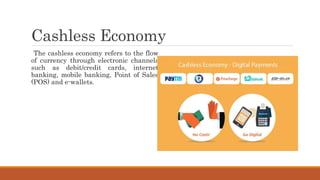
The cashless economy refers to the flow
of currency through electronic channels
such as debit/credit cards, internet
banking, mobile banking, Point of Sales
(POS) and e-wallets.
Government Initiatives for
Cashless Economy
The government is taking several steps
to overcome challenges and establish a
cashless economy. Let's understand more
about these initiatives:
Demonetization
Pradhan Mantri Jan Dhan Yojana
Direct Benefit Transfer (DBT)
Unified Payment Interface (UPI)
Aadhar Enabled Payment System
(AEPS)
Financial Literacy Centres
Digital Currency
Digital Currency
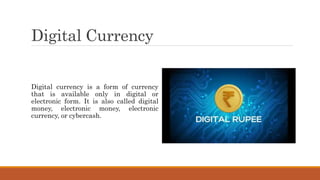
Digital currency is a form of currency
that is available only in digital or
electronic form. It is also called digital
money, electronic money, electronic
currency, or cybercash.
Central Bank Digital Currency
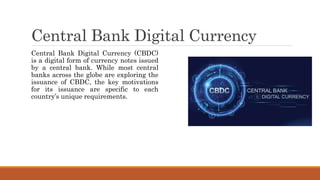
Central Bank Digital Currency (CBDC)
is a digital form of currency notes issued
by a central bank. While most central
banks across the globe are exploring the
issuance of CBDC, the key motivations
for its issuance are specific to each
country’s unique requirements.
Central Bank Digital Currency
On 1st November 2022, the Reserve
Bank of India (RBI) launched the
Central Bank Digital Currency pilot for
the wholesale segment, also known as
CBDC-W. A similar pilot project for retail
users, or CBDC-R, was launched on Dec
1st 2022 , and is now available to the
common public in a limited manner
It is called as digital rupee or e₹
Digital Rupee
The money will be in virtual form just
like other cryptocurrencies but the
digital rupee will not be decentralized, it
will be regulated by the Reserve Bank of
India (RBI). The digital rupee will be
completely legal and acceptable to the
Indian Government.
Digital Rupee
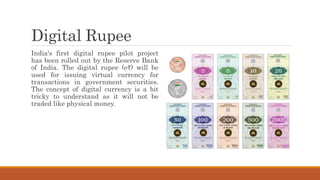
India's first digital rupee pilot project
has been rolled out by the Reserve Bank
of India. The digital rupee (e₹) will be
used for issuing virtual currency for
transactions in government securities.
The concept of digital currency is a bit
tricky to understand as it will not be
traded like physical money.
Digital Rupee
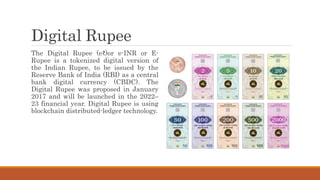
The Digital Rupee (e₹)or e-INR or E-
Rupee is a tokenized digital version of
the Indian Rupee, to be issued by the
Reserve Bank of India (RBI) as a central
bank digital currency (CBDC). The
Digital Rupee was proposed in January
2017 and will be launched in the 2022–
23 financial year. Digital Rupee is using
blockchain distributed-ledger technology.
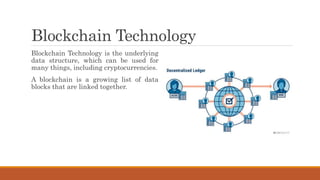
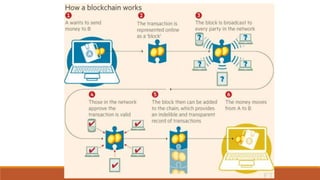
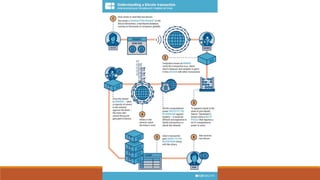
Blockchain Technology
Blockchain Technology is the underlying
data structure, which can be used for
many things, including cryptocurrencies.
A blockchain is a growing list of data
blocks that are linked together.
Is digital rupee a cryptocurrency?
Digital rupee is the electronic form of cash, which will be used for buying and selling
goods and services. Unlike cryptos, we cannot treat it as an asset class and invest in
it.
cryptocurrency is a digital asset. The name originates from the fact that all of its
transactions are highly encrypted, making the exchanges highly secure. It is
decentralized in nature, unlike traditional currencies, which are managed and
controlled by a central authority.
Examples of payment cryptocurrencies include Bitcoin, Litecoin, Monero, Dogecoin,
and Bitcoin Cash.
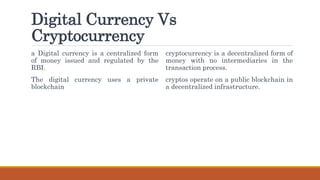
Digital Currency Vs
Cryptocurrency
a Digital currency is a centralized form
of money issued and regulated by the
RBI.
The digital currency uses a private
blockchain
cryptocurrency is a decentralized form of
money with no intermediaries in the
transaction process.
cryptos operate on a public blockchain in
a decentralized infrastructure.
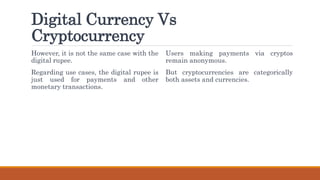
Digital Currency Vs
Cryptocurrency
However, it is not the same case with the
digital rupee.
Regarding use cases, the digital rupee is
just used for payments and other
monetary transactions.
Users making payments via cryptos
remain anonymous.
But cryptocurrencies are categorically
both assets and currencies.
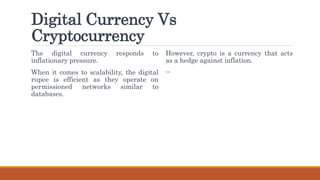
Digital Currency Vs
Cryptocurrency
The digital currency responds to
inflationary pressure.
When it comes to scalability, the digital
rupee is efficient as they operate on
permissioned networks similar to
databases.
However, crypto is a currency that acts
as a hedge against inflation.
--
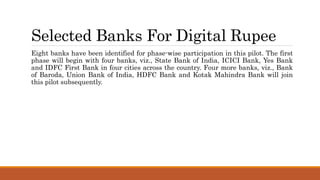
Selected Banks For Digital Rupee
Eight banks have been identified for phase-wise participation in this pilot. The first
phase will begin with four banks, viz., State Bank of India, ICICI Bank, Yes Bank
and IDFC First Bank in four cities across the country. Four more banks, viz., Bank
of Baroda, Union Bank of India, HDFC Bank and Kotak Mahindra Bank will join
this pilot subsequently.
Selected Cities
The pilot would initially cover four cities, viz., Mumbai, New Delhi, Bengaluru and
Bhubaneswar and later extend to Ahmedabad, Gangtok, Guwahati, Hyderabad,
Indore, Kochi, Lucknow, Patna and Shimla. The scope of pilot may be expanded
gradually to include more banks, users and locations as needed.
Main Features of Digital Rupee
CBDC is a sovereign currency that central banks issue in accordance with their
monetary policy.
On the balance sheet of the central bank, it is listed as a liability.
All individuals, businesses, and governmental organizations must recognize it as a
legitimate form of payment, legal tender, and safe place to hold money.
CBDC is freely convertible into cash and money from commercial banks.
Holders of CBDC do not need to have a bank account because it is fungible legal
money
CBDC is anticipated to reduce the price of issuing currency and the cost of
transactions.
Categories of CBDC
There are two categories of Central Bank Digital Currency: general purpose or retail
(CBDC-R) and wholesale. According to the RBI report dated October 7, 2022,
“CBDC can be classified into two broad types viz. general purpose or retail (CBDC-R) and
wholesale (CBDC-W).
Retail CBDC would be potentially available for use by all viz. private sector, non-
financial consumers, and businesses
While wholesale CBDC is designed for restricted access to select financial institutions.
While Wholesale CBDC is intended for the settlement of interbank transfers and related
wholesale transactions
Forms of CBDC
The structure of CBDC can be either "token-based" or "account-based.“
Token-based CBDC
A token-based CBDC is a bearer instrument, similar to banknotes, meaning that
whoever is in possession of the tokens at any one time is assumed to be their owner.
Account-based CBDC
An account-based system, in contrast, would necessitate keeping track of all CBDC
holders' transactions and balances as well as identifying who is the rightful owner of
any monetary amounts.
Conclusion
As most businesses in the post-pandemic era now prefer online
transactions over cash, introducing the digital rupee would be one
step toward a cashless economy. Risks such as money laundering
or theft would easily be negated this way. Since cash moves from
one person to another easily, the government can now keep track
of it. With the usage of the digital rupee, corruption, and human
errors would also decrease drastically.
There is no direct comparison between the digital rupee and
cryptocurrency, as both serve different purposes. The digital rupee
is a step ahead of taking India towards the digital revolution.
There are many interesting benefits of digital forms of currency.
Conclusion
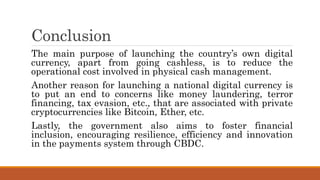
The main purpose of launching the country’s own digital
currency, apart from going cashless, is to reduce the
operational cost involved in physical cash management.
Another reason for launching a national digital currency is
to put an end to concerns like money laundering, terror
financing, tax evasion, etc., that are associated with private
cryptocurrencies like Bitcoin, Ether, etc.
Lastly, the government also aims to foster financial
inclusion, encouraging resilience, efficiency and innovation
in the payments system through CBDC.
crypto_erupee.pptx
crypto_erupee.pptx

crypto_erupee.pptx

  • 1.
    GUEST LECTURE ON Dr.R. Muthukrishnaveni Assistant Professor of Commerce Research Supervisor Saiva Bhanu Kshatriya College Aruppukottai Organised by Department of Economics Virudhunagar Hindu Nadars’ Senthikumara Nadar College Virudhunagar
  • 2.
    Cashless Economy The cashlesseconomy refers to the flow of currency through electronic channels such as debit/credit cards, internet banking, mobile banking, Point of Sales (POS) and e-wallets.
  • 3.
    Government Initiatives for CashlessEconomy The government is taking several steps to overcome challenges and establish a cashless economy. Let's understand more about these initiatives: Demonetization Pradhan Mantri Jan Dhan Yojana Direct Benefit Transfer (DBT) Unified Payment Interface (UPI) Aadhar Enabled Payment System (AEPS) Financial Literacy Centres Digital Currency
  • 4.
    Digital Currency Digital currencyis a form of currency that is available only in digital or electronic form. It is also called digital money, electronic money, electronic currency, or cybercash.
  • 5.
    Central Bank DigitalCurrency Central Bank Digital Currency (CBDC) is a digital form of currency notes issued by a central bank. While most central banks across the globe are exploring the issuance of CBDC, the key motivations for its issuance are specific to each country’s unique requirements.
  • 6.
    Central Bank DigitalCurrency On 1st November 2022, the Reserve Bank of India (RBI) launched the Central Bank Digital Currency pilot for the wholesale segment, also known as CBDC-W. A similar pilot project for retail users, or CBDC-R, was launched on Dec 1st 2022 , and is now available to the common public in a limited manner It is called as digital rupee or e₹
  • 7.
    Digital Rupee The moneywill be in virtual form just like other cryptocurrencies but the digital rupee will not be decentralized, it will be regulated by the Reserve Bank of India (RBI). The digital rupee will be completely legal and acceptable to the Indian Government.
  • 8.
    Digital Rupee India's firstdigital rupee pilot project has been rolled out by the Reserve Bank of India. The digital rupee (e₹) will be used for issuing virtual currency for transactions in government securities. The concept of digital currency is a bit tricky to understand as it will not be traded like physical money.
  • 9.
    Digital Rupee The DigitalRupee (e₹)or e-INR or E- Rupee is a tokenized digital version of the Indian Rupee, to be issued by the Reserve Bank of India (RBI) as a central bank digital currency (CBDC). The Digital Rupee was proposed in January 2017 and will be launched in the 2022– 23 financial year. Digital Rupee is using blockchain distributed-ledger technology.
  • 10.
    Blockchain Technology Blockchain Technologyis the underlying data structure, which can be used for many things, including cryptocurrencies. A blockchain is a growing list of data blocks that are linked together.
  • 13.
    Is digital rupeea cryptocurrency? Digital rupee is the electronic form of cash, which will be used for buying and selling goods and services. Unlike cryptos, we cannot treat it as an asset class and invest in it. cryptocurrency is a digital asset. The name originates from the fact that all of its transactions are highly encrypted, making the exchanges highly secure. It is decentralized in nature, unlike traditional currencies, which are managed and controlled by a central authority. Examples of payment cryptocurrencies include Bitcoin, Litecoin, Monero, Dogecoin, and Bitcoin Cash.
  • 14.
    Digital Currency Vs Cryptocurrency aDigital currency is a centralized form of money issued and regulated by the RBI. The digital currency uses a private blockchain cryptocurrency is a decentralized form of money with no intermediaries in the transaction process. cryptos operate on a public blockchain in a decentralized infrastructure.
  • 15.
    Digital Currency Vs Cryptocurrency However,it is not the same case with the digital rupee. Regarding use cases, the digital rupee is just used for payments and other monetary transactions. Users making payments via cryptos remain anonymous. But cryptocurrencies are categorically both assets and currencies.
  • 16.
    Digital Currency Vs Cryptocurrency Thedigital currency responds to inflationary pressure. When it comes to scalability, the digital rupee is efficient as they operate on permissioned networks similar to databases. However, crypto is a currency that acts as a hedge against inflation. --
  • 17.
    Selected Banks ForDigital Rupee Eight banks have been identified for phase-wise participation in this pilot. The first phase will begin with four banks, viz., State Bank of India, ICICI Bank, Yes Bank and IDFC First Bank in four cities across the country. Four more banks, viz., Bank of Baroda, Union Bank of India, HDFC Bank and Kotak Mahindra Bank will join this pilot subsequently.
  • 18.
    Selected Cities The pilotwould initially cover four cities, viz., Mumbai, New Delhi, Bengaluru and Bhubaneswar and later extend to Ahmedabad, Gangtok, Guwahati, Hyderabad, Indore, Kochi, Lucknow, Patna and Shimla. The scope of pilot may be expanded gradually to include more banks, users and locations as needed.
  • 19.
    Main Features ofDigital Rupee CBDC is a sovereign currency that central banks issue in accordance with their monetary policy. On the balance sheet of the central bank, it is listed as a liability. All individuals, businesses, and governmental organizations must recognize it as a legitimate form of payment, legal tender, and safe place to hold money. CBDC is freely convertible into cash and money from commercial banks. Holders of CBDC do not need to have a bank account because it is fungible legal money CBDC is anticipated to reduce the price of issuing currency and the cost of transactions.
  • 20.
    Categories of CBDC Thereare two categories of Central Bank Digital Currency: general purpose or retail (CBDC-R) and wholesale. According to the RBI report dated October 7, 2022, “CBDC can be classified into two broad types viz. general purpose or retail (CBDC-R) and wholesale (CBDC-W). Retail CBDC would be potentially available for use by all viz. private sector, non- financial consumers, and businesses While wholesale CBDC is designed for restricted access to select financial institutions. While Wholesale CBDC is intended for the settlement of interbank transfers and related wholesale transactions
  • 21.
    Forms of CBDC Thestructure of CBDC can be either "token-based" or "account-based.“ Token-based CBDC A token-based CBDC is a bearer instrument, similar to banknotes, meaning that whoever is in possession of the tokens at any one time is assumed to be their owner. Account-based CBDC An account-based system, in contrast, would necessitate keeping track of all CBDC holders' transactions and balances as well as identifying who is the rightful owner of any monetary amounts.
  • 22.
    Conclusion As most businessesin the post-pandemic era now prefer online transactions over cash, introducing the digital rupee would be one step toward a cashless economy. Risks such as money laundering or theft would easily be negated this way. Since cash moves from one person to another easily, the government can now keep track of it. With the usage of the digital rupee, corruption, and human errors would also decrease drastically. There is no direct comparison between the digital rupee and cryptocurrency, as both serve different purposes. The digital rupee is a step ahead of taking India towards the digital revolution. There are many interesting benefits of digital forms of currency.
  • 23.
    Conclusion The main purposeof launching the country’s own digital currency, apart from going cashless, is to reduce the operational cost involved in physical cash management. Another reason for launching a national digital currency is to put an end to concerns like money laundering, terror financing, tax evasion, etc., that are associated with private cryptocurrencies like Bitcoin, Ether, etc. Lastly, the government also aims to foster financial inclusion, encouraging resilience, efficiency and innovation in the payments system through CBDC.