GOVERNMENT GUIDELINES TO FRAMING CSR POLICY
R. MUTHU KRISHNAVENI, M.Com.,M.Phil., P.G.D.CA.,
Ph.D. Scholar & Assistant professor in commerce,
S.B.K. College, Aruppukottai
The 21st century is characterized by unprecedented challenges
and opportunities, arising from globalization, the desire for inclusive
development and the imperatives of climate change. Indian business,
which is today viewed globally as a responsible component of the
ascendancy of India, is poised now to take on a leadership role in the
challenges of our times. It is recognized the world over that integrating
social, environmental and ethical responsibilities into the governance
of businesses ensures their long-term success, competitiveness and
sustainability. This approach also reaffirms the view that businesses are
an integral part of society, and have a critical and active role to play in
the sustenance and improvement of healthy ecosystems, in fostering
social inclusiveness and equity, and in upholding the essentials of
ethical practices and good governance. This also makes business sense
as companies with effective CSR, have image of socially responsible
companies, achieve sustainable growth in their operations in the long
run and their products and services are preferred by the customers.
CSR is not philanthropy and CSR activities are purely
voluntary - what companies will like to do beyond any
statutory requirement or obligation. To provide companies
with guidance in dealing with the abovementioned
expectations, while working closely within the framework of
national aspirations and policies, following Voluntary
Guidelines for Corporate Social Responsibility have been
developed. While the guidelines have been prepared for the
Indian context, enterprises that have a trans-national
presence would benefit from using these guidelines for their
overseas operations as well. Since the guidelines are voluntary
and not prepared in the nature of a prescriptive road-map,
they are not intended for regulatory or contractual use.
 Drinking Water Facility
Education
Electricity Facility
Solar Lighting System
Health and Family Welfare
Irrigation Facilities
Sanitation and Public Health
Pollution Control
Animal Care
Promotion of Sports and Games
Promotion of Art and Culture
Environment friendly technologies
Promotion of livelihood for economically weaker sections through
forward and backward linkages
Relief to victims of Natural Calamities like eartl}-quake,. cyclone,
drought & flood situation in any part of the country
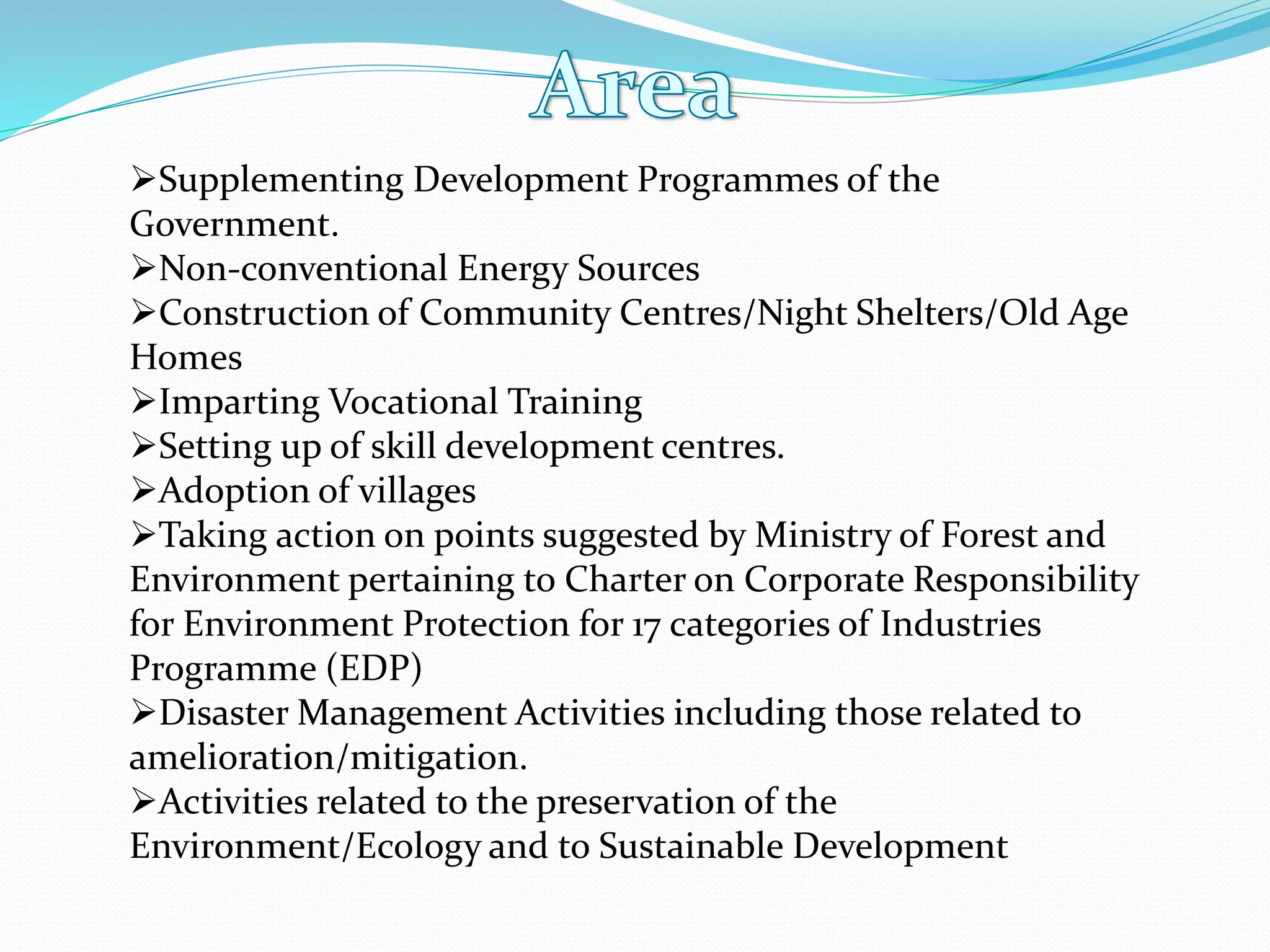
Supplementing Development Programmes of the
Government.
Non-conventional Energy Sources
Construction of Community Centres/Night Shelters/Old Age
Homes
Imparting Vocational Training
Setting up of skill development centres.
Adoption of villages
Taking action on points suggested by Ministry of Forest and
Environment pertaining to Charter on Corporate Responsibility
for Environment Protection for 17 categories of Industries
Programme (EDP)
Disaster Management Activities including those related to
amelioration/mitigation.
Activities related to the preservation of the
Environment/Ecology and to Sustainable Development
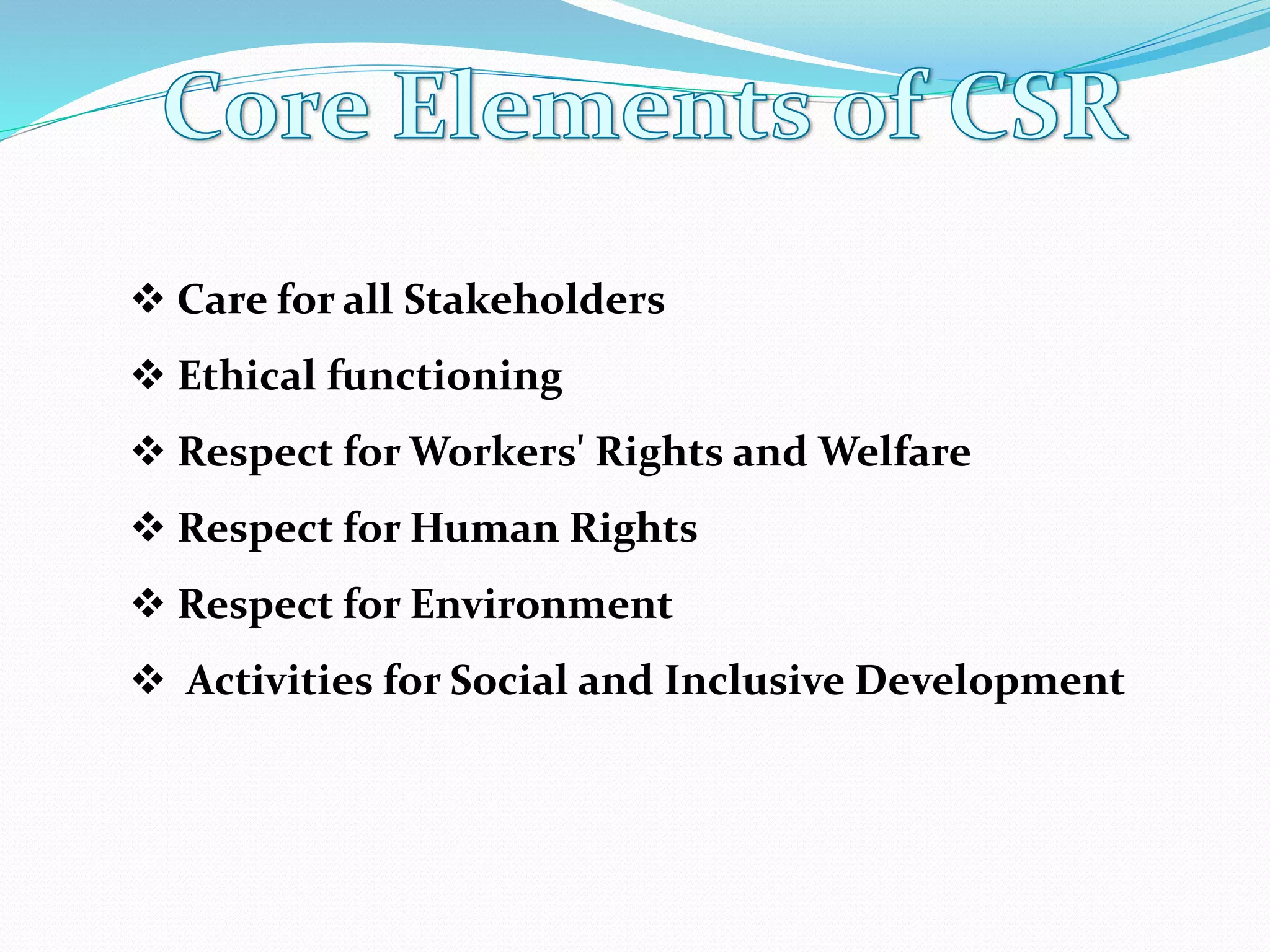
 Care for all Stakeholders
 Ethical functioning
 Respect for Workers' Rights and Welfare
 Respect for Human Rights
 Respect for Environment
 Activities for Social and Inclusive Development
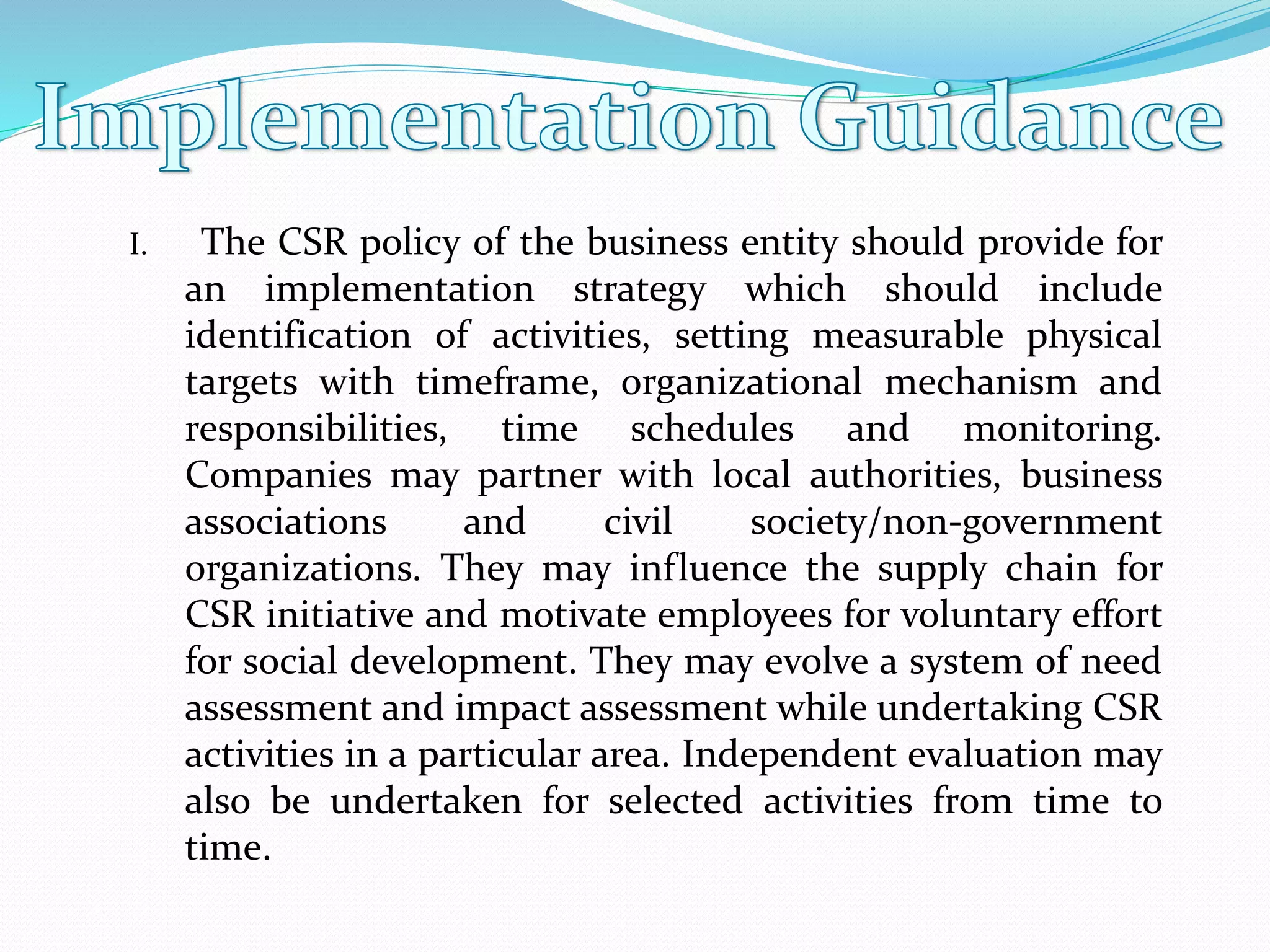
I. The CSR policy of the business entity should provide for
an implementation strategy which should include
identification of activities, setting measurable physical
targets with timeframe, organizational mechanism and
responsibilities, time schedules and monitoring.
Companies may partner with local authorities, business
associations and civil society/non-government
organizations. They may influence the supply chain for
CSR initiative and motivate employees for voluntary effort
for social development. They may evolve a system of need
assessment and impact assessment while undertaking CSR
activities in a particular area. Independent evaluation may
also be undertaken for selected activities from time to
time.
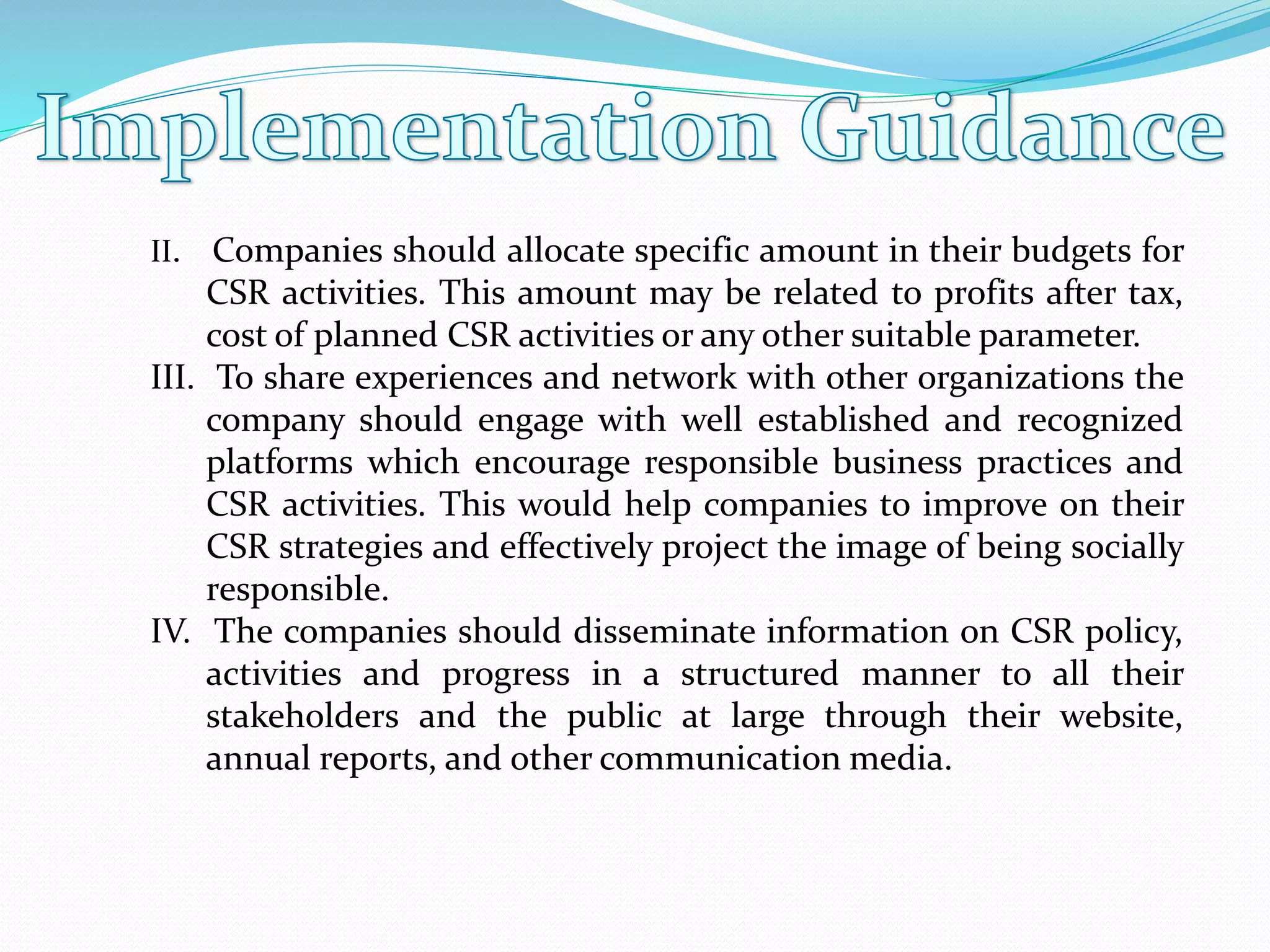
II. Companies should allocate specific amount in their budgets for
CSR activities. This amount may be related to profits after tax,
cost of planned CSR activities or any other suitable parameter.
III. To share experiences and network with other organizations the
company should engage with well established and recognized
platforms which encourage responsible business practices and
CSR activities. This would help companies to improve on their
CSR strategies and effectively project the image of being socially
responsible.
IV. The companies should disseminate information on CSR policy,
activities and progress in a structured manner to all their
stakeholders and the public at large through their website,
annual reports, and other communication media.
CSR is an important tool for a developing economy to
ensure that the growth is evenly distributed amongst all. By
helping to increase the quality of living of our society as a
whole. Each business entity should formulate a CSR policy
to guide its strategic planning and provide a roadmap for its
CSR initiatives, whichshould be an integral part of overall
business policy and aligned with its business goals.

Presentation1.pptx

  • 1.
    GOVERNMENT GUIDELINES TOFRAMING CSR POLICY R. MUTHU KRISHNAVENI, M.Com.,M.Phil., P.G.D.CA., Ph.D. Scholar & Assistant professor in commerce, S.B.K. College, Aruppukottai
  • 2.
    The 21st centuryis characterized by unprecedented challenges and opportunities, arising from globalization, the desire for inclusive development and the imperatives of climate change. Indian business, which is today viewed globally as a responsible component of the ascendancy of India, is poised now to take on a leadership role in the challenges of our times. It is recognized the world over that integrating social, environmental and ethical responsibilities into the governance of businesses ensures their long-term success, competitiveness and sustainability. This approach also reaffirms the view that businesses are an integral part of society, and have a critical and active role to play in the sustenance and improvement of healthy ecosystems, in fostering social inclusiveness and equity, and in upholding the essentials of ethical practices and good governance. This also makes business sense as companies with effective CSR, have image of socially responsible companies, achieve sustainable growth in their operations in the long run and their products and services are preferred by the customers.
  • 3.
    CSR is notphilanthropy and CSR activities are purely voluntary - what companies will like to do beyond any statutory requirement or obligation. To provide companies with guidance in dealing with the abovementioned expectations, while working closely within the framework of national aspirations and policies, following Voluntary Guidelines for Corporate Social Responsibility have been developed. While the guidelines have been prepared for the Indian context, enterprises that have a trans-national presence would benefit from using these guidelines for their overseas operations as well. Since the guidelines are voluntary and not prepared in the nature of a prescriptive road-map, they are not intended for regulatory or contractual use.
  • 4.
     Drinking WaterFacility Education Electricity Facility Solar Lighting System Health and Family Welfare Irrigation Facilities Sanitation and Public Health Pollution Control Animal Care Promotion of Sports and Games Promotion of Art and Culture Environment friendly technologies Promotion of livelihood for economically weaker sections through forward and backward linkages Relief to victims of Natural Calamities like eartl}-quake,. cyclone, drought & flood situation in any part of the country
  • 5.
    Supplementing Development Programmesof the Government. Non-conventional Energy Sources Construction of Community Centres/Night Shelters/Old Age Homes Imparting Vocational Training Setting up of skill development centres. Adoption of villages Taking action on points suggested by Ministry of Forest and Environment pertaining to Charter on Corporate Responsibility for Environment Protection for 17 categories of Industries Programme (EDP) Disaster Management Activities including those related to amelioration/mitigation. Activities related to the preservation of the Environment/Ecology and to Sustainable Development
  • 6.
     Care forall Stakeholders  Ethical functioning  Respect for Workers' Rights and Welfare  Respect for Human Rights  Respect for Environment  Activities for Social and Inclusive Development
  • 7.
    I. The CSRpolicy of the business entity should provide for an implementation strategy which should include identification of activities, setting measurable physical targets with timeframe, organizational mechanism and responsibilities, time schedules and monitoring. Companies may partner with local authorities, business associations and civil society/non-government organizations. They may influence the supply chain for CSR initiative and motivate employees for voluntary effort for social development. They may evolve a system of need assessment and impact assessment while undertaking CSR activities in a particular area. Independent evaluation may also be undertaken for selected activities from time to time.
  • 8.
    II. Companies shouldallocate specific amount in their budgets for CSR activities. This amount may be related to profits after tax, cost of planned CSR activities or any other suitable parameter. III. To share experiences and network with other organizations the company should engage with well established and recognized platforms which encourage responsible business practices and CSR activities. This would help companies to improve on their CSR strategies and effectively project the image of being socially responsible. IV. The companies should disseminate information on CSR policy, activities and progress in a structured manner to all their stakeholders and the public at large through their website, annual reports, and other communication media.
  • 9.
    CSR is animportant tool for a developing economy to ensure that the growth is evenly distributed amongst all. By helping to increase the quality of living of our society as a whole. Each business entity should formulate a CSR policy to guide its strategic planning and provide a roadmap for its CSR initiatives, whichshould be an integral part of overall business policy and aligned with its business goals.