Downloaded 612 times
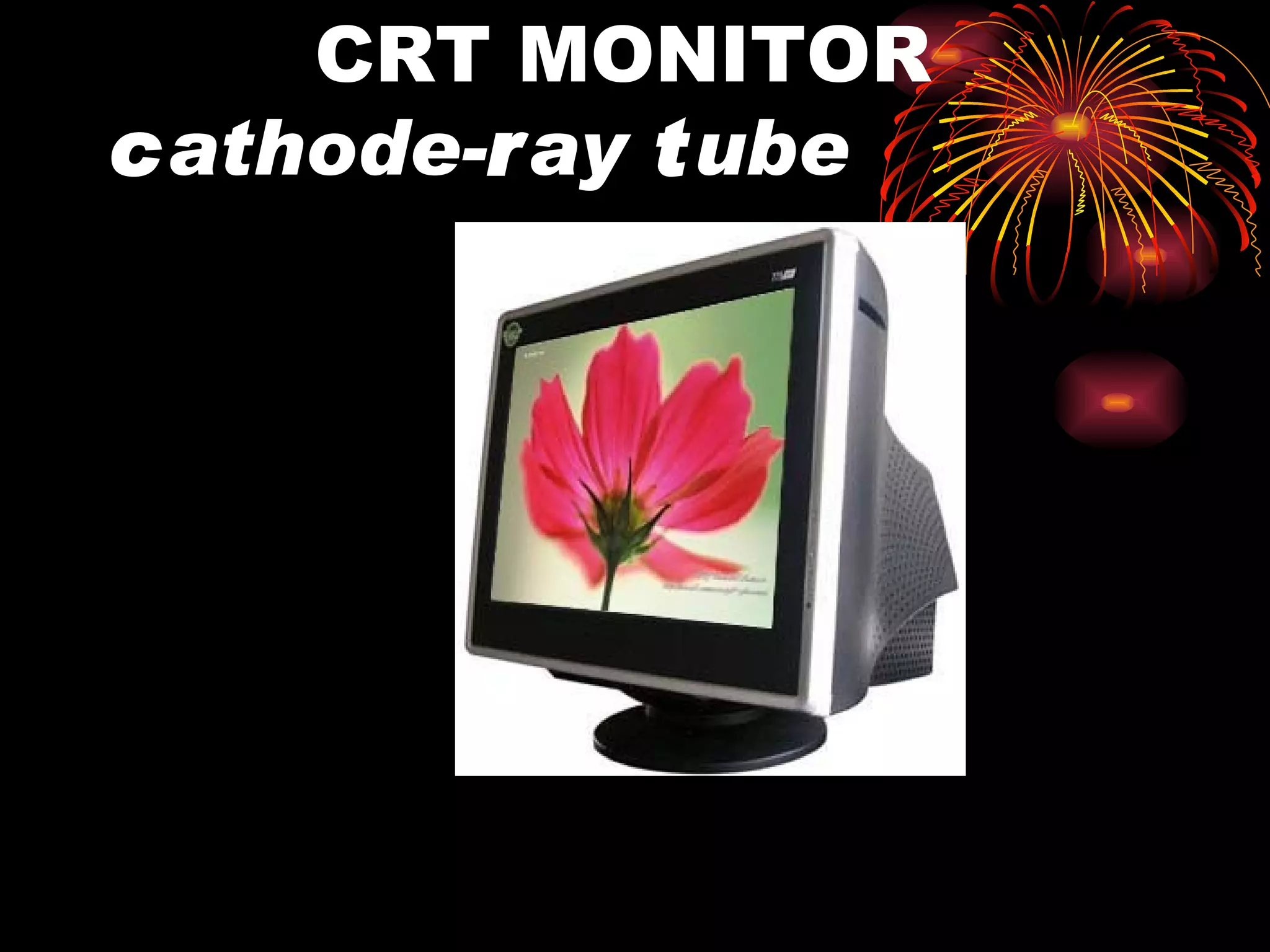
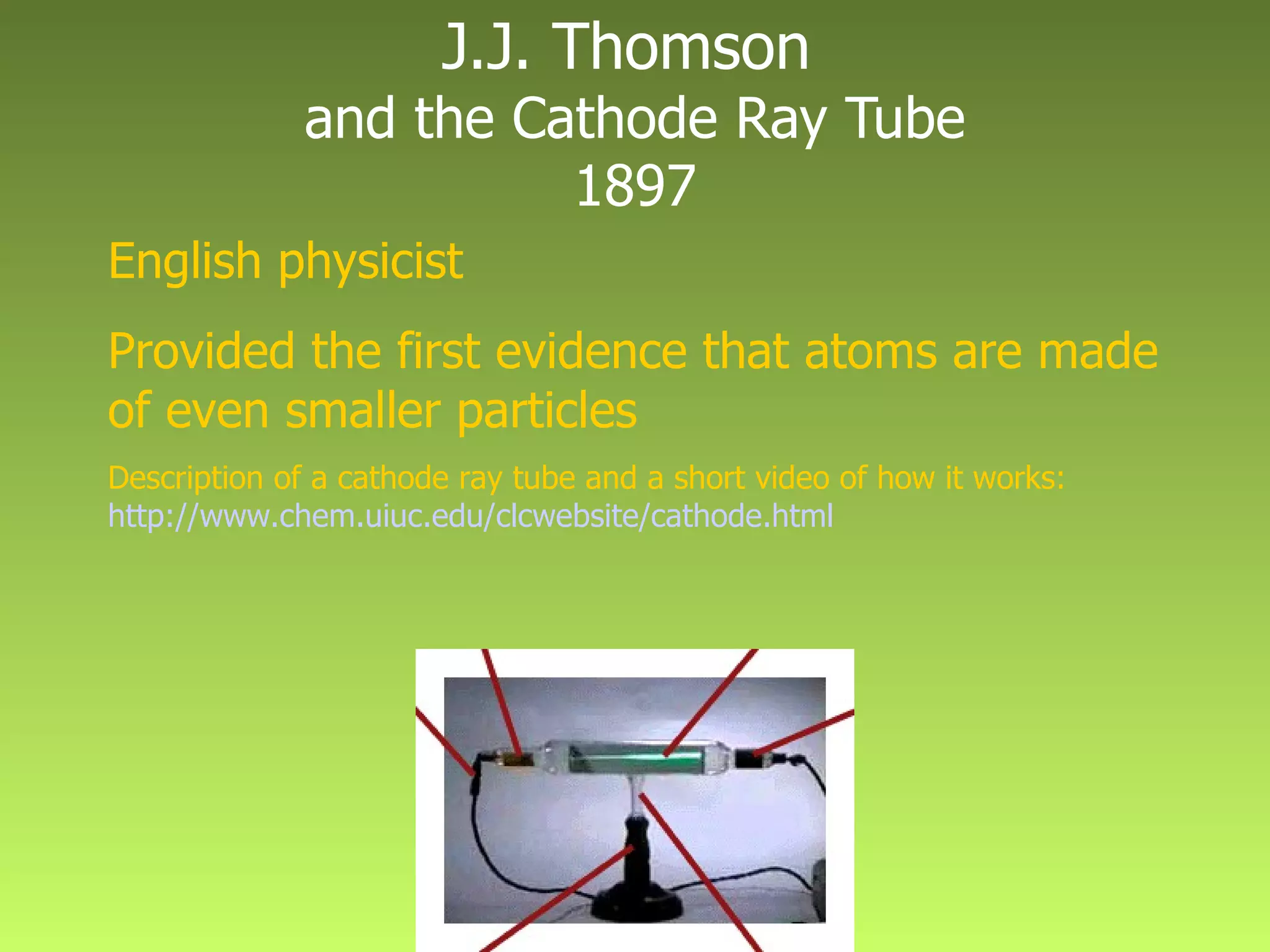
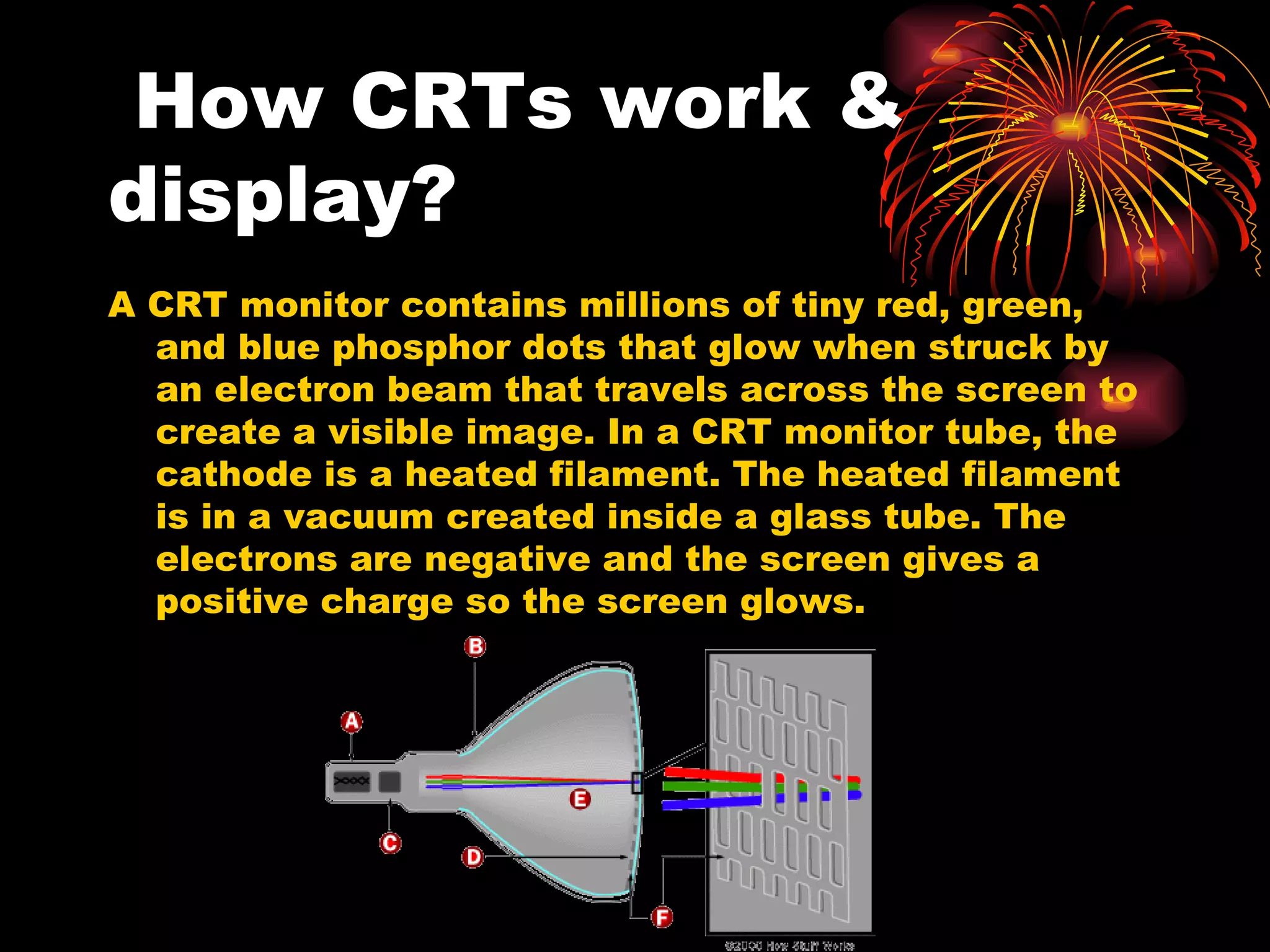
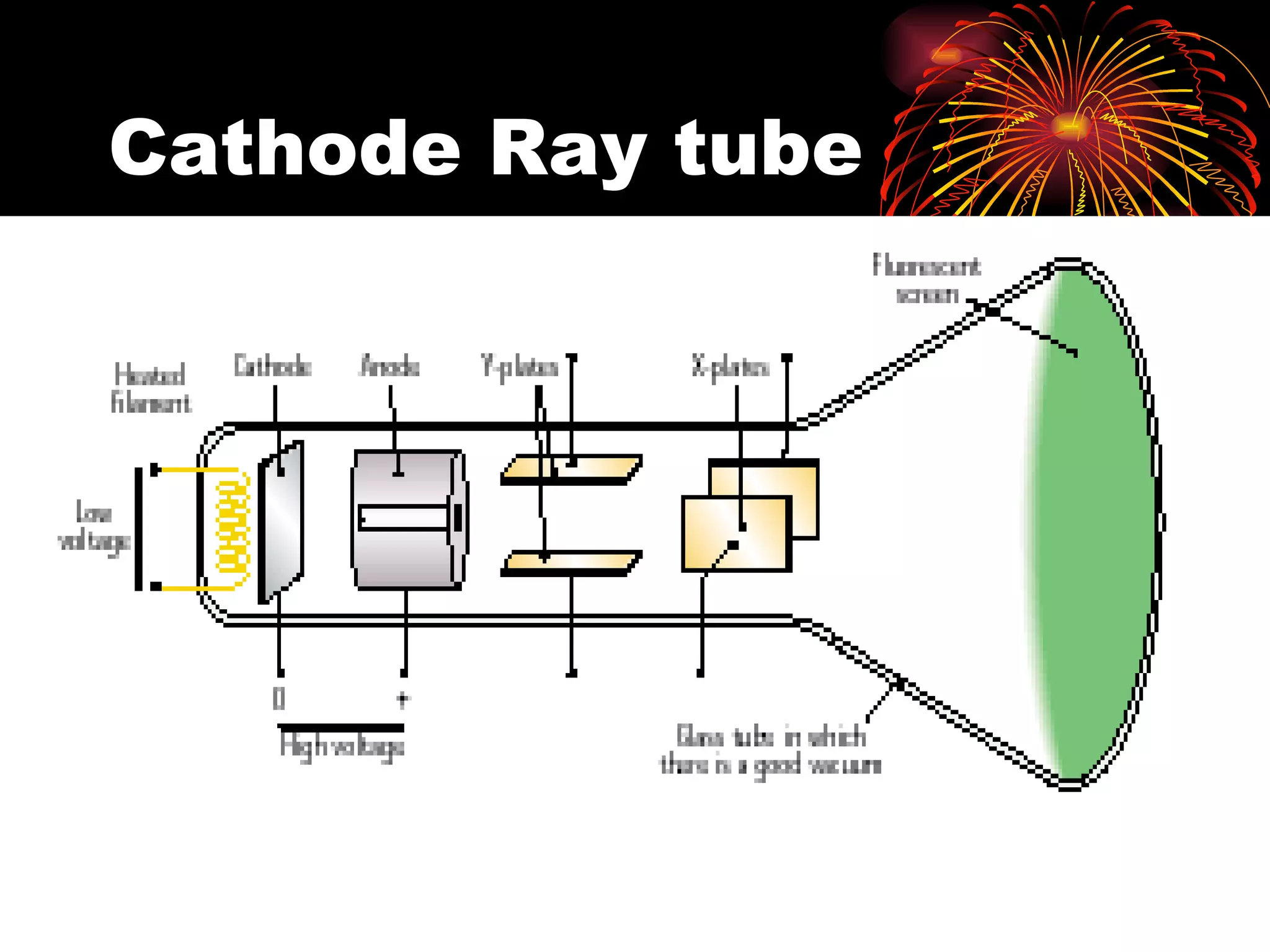
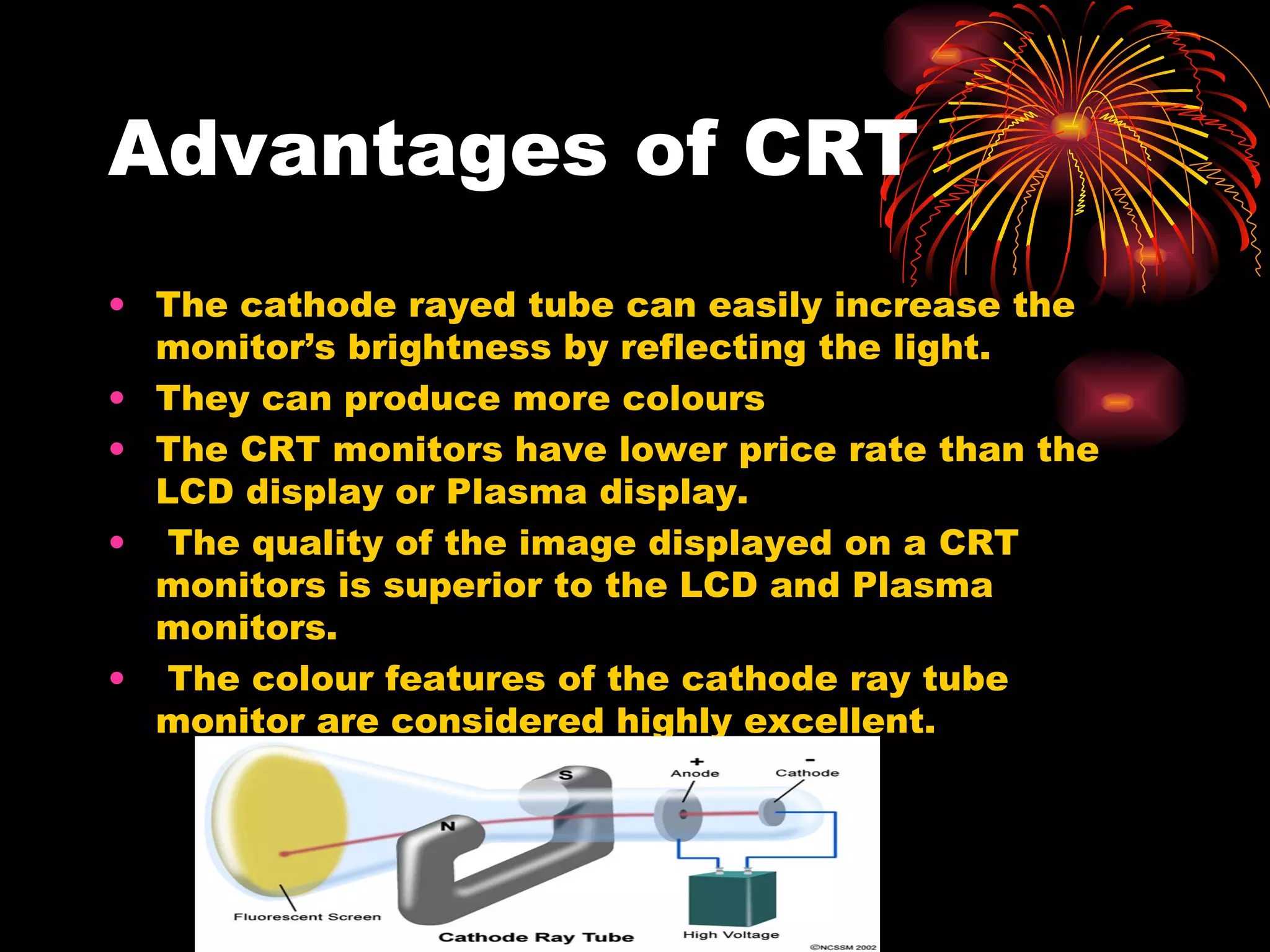


The document summarizes the cathode ray tube (CRT) monitor. It describes how CRTs work by using an electron gun to shoot a beam of electrons at phosphor dots on the inside of the glass screen, which glow different colors to create a visible image. The cathode ray tube contains a heated filament that emits electrons, which are accelerated toward the screen by a voltage difference and controlled by electric fields to scan across pixels in lines to display images or waveforms. While CRTs provided better image quality than early LCDs, they also had disadvantages like large size, potential health risks from radiation and magnetic fields, and being heavy.


