What is cathode ray tube?
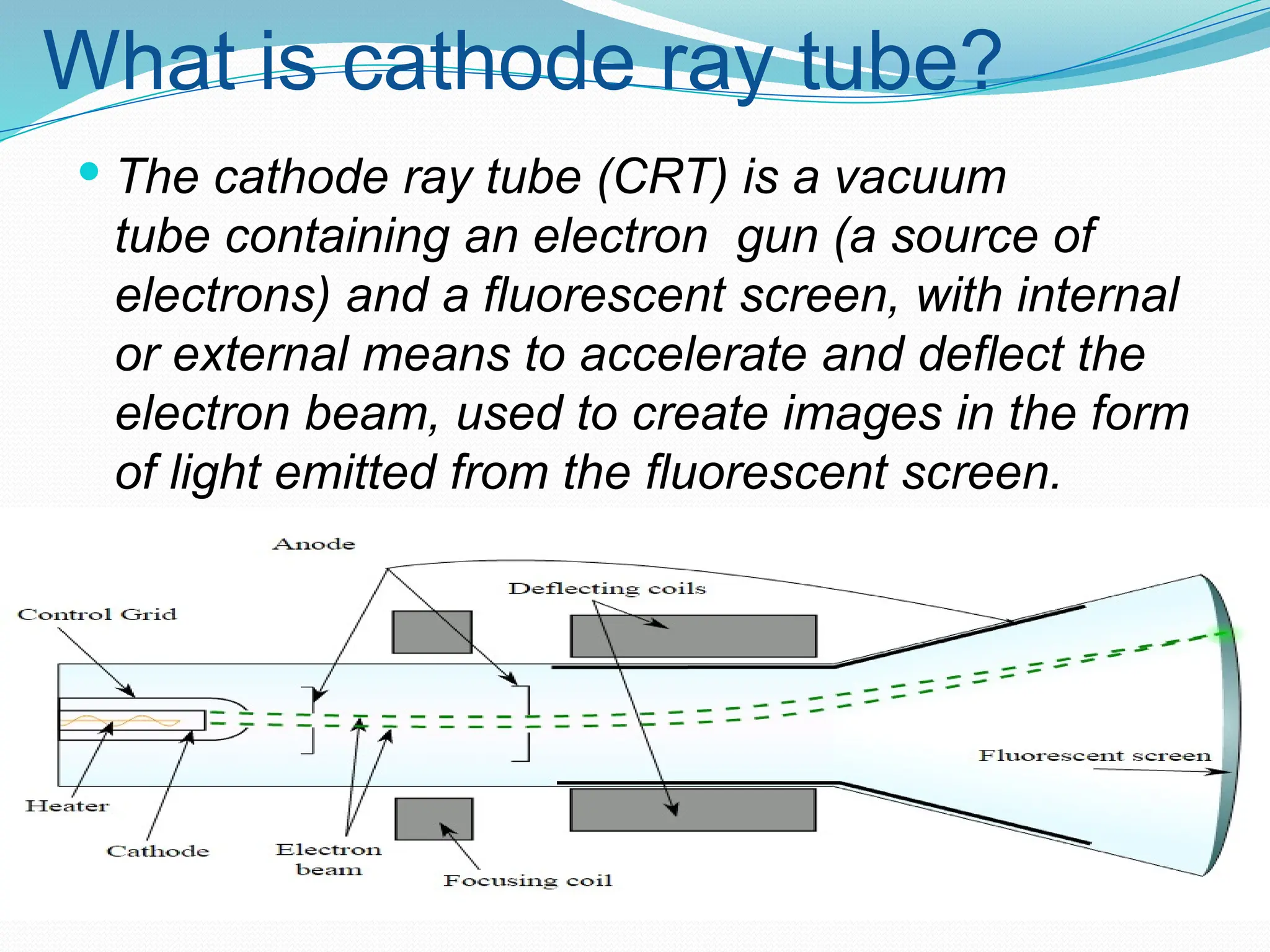
 The cathode ray tube (CRT) is a vacuum
tube containing an electron gun (a source of
electrons) and a fluorescent screen, with internal
or external means to accelerate and deflect the
electron beam, used to create images in the form
of light emitted from the fluorescent screen.
Features
The features of a CRT can be split into 4 main
sections:
 Electron gun.
 Deflection system.
 Fluorescent screen.
 Glass Tube & Base.
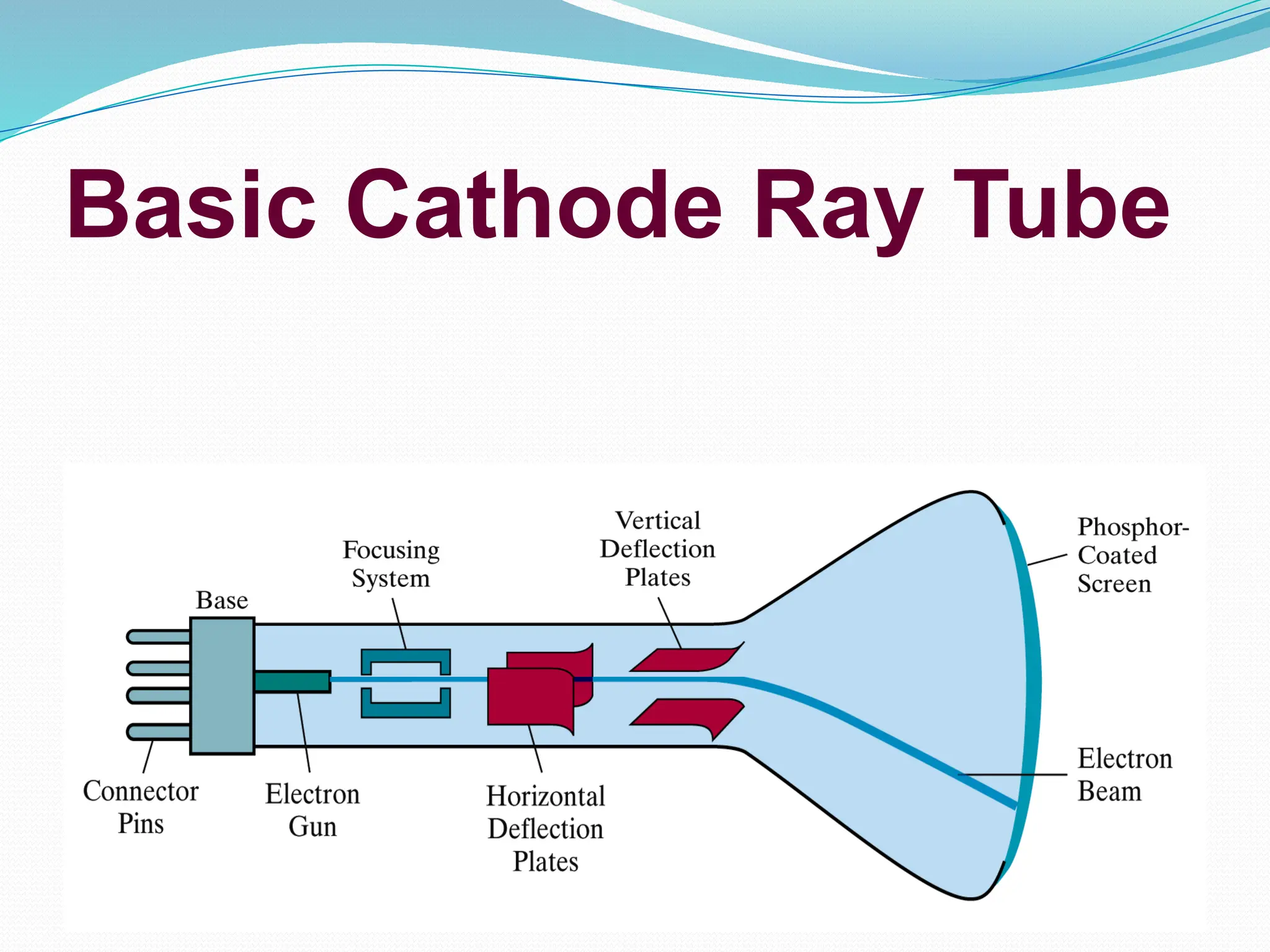
Basic Cathode Ray Tube
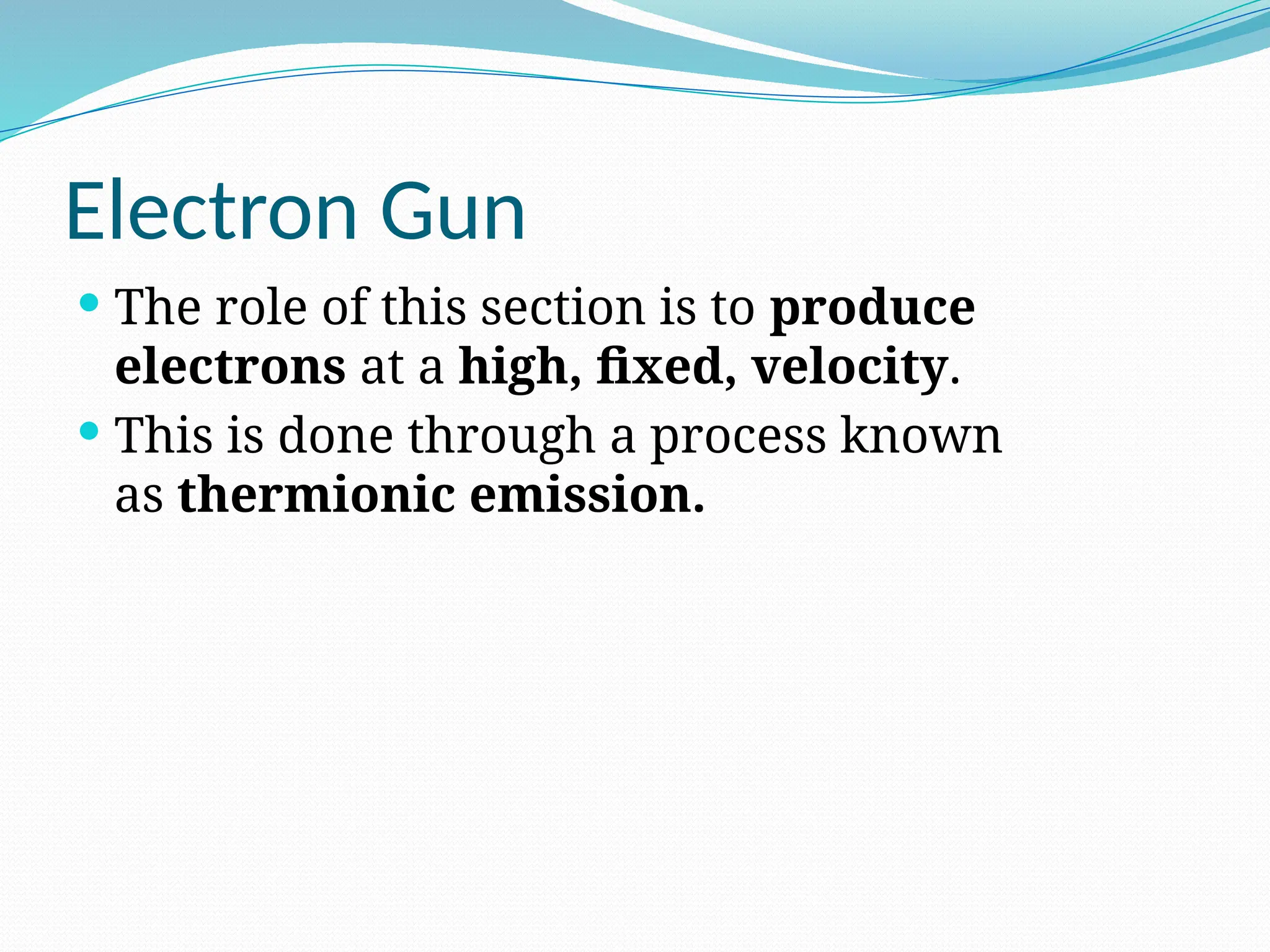
Electron Gun
 The role of this section is to produce
electrons at a high, fixed, velocity.
 This is done through a process known
as thermionic emission.
Deflection system
 It consists of Two PERPENDICULAR
sets of Electric/Magnetic fields.
 This allows control over both horizontal and
vertical axes.
 By controlling the Voltage applied to the fields, it
is possible to vary the deflection
through Electrostatic force/Motor effect.
Fluorescent screen
 The role of this part is to display where the electrons
are hitting the CRT.
 It is a screen coated with a material that emits light
when struck by electrons.
 Zinc sulfide or Phosphorus are two commonly used
materials.
Glass Tube and Base:
 The whole assembly is protected in a conical highly evacuated
glass tube.
 Glass tube is a long, clear tube. The CRT uses an evacuated
glass envelope which is large, deep , fairly heavy, and
relatively fragile.
 Inside the tube's neck is an assembly that produces a stream of
electrons. Electrical connections to these internal components
are made through metal pins that extend out through the back
of the tube's neck, usually in a circular formation.
 Vacuum is created inside the glass tube 0.001Pa to 133 nPa.
How CRTs work & display?
 A CRT monitor contains millions of tiny red, green,
and blue phosphor dots that glow when struck by an
electron beam that travels across the screen to create
a visible image. In a CRT monitor tube, the cathode is
a heated filament. The heated filament is in a
vacuum created inside a glass tube. The electrons are
negative and the screen gives a positive charge so the
screen glows.
 A CRT TV works by having the electron beam
"scan" the screen at an rate faster than our eyes
can perceive.
 The images we see are actually made from many
fluorescent dots.
 The fluorescence caused by the beam striking the screen
lasts a bit longer so that the next scan can be made
without the previous image disappearing.
 It scans twice each time, first filling in the odd "holes"
then the even ones.
 Each scan is about 1/50 of a second.
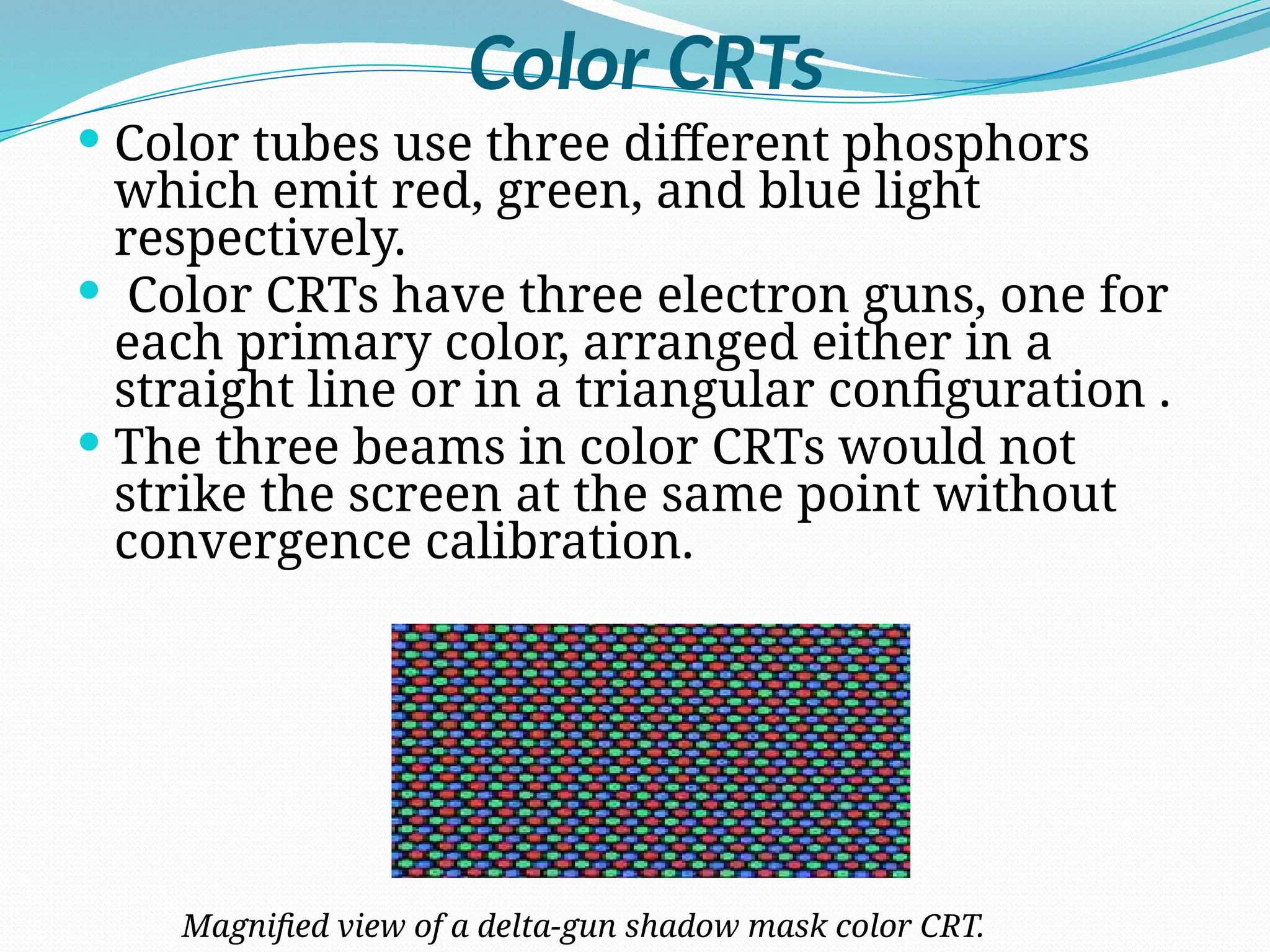
Color CRTs
 Color tubes use three different phosphors
which emit red, green, and blue light
respectively.
 Color CRTs have three electron guns, one for
each primary color, arranged either in a
straight line or in a triangular configuration .
 The three beams in color CRTs would not
strike the screen at the same point without
convergence calibration.
Magnified view of a delta-gun shadow mask color CRT.
Cathode Ray Oscilloscopes
 A Cathode Ray Oscilloscope (CRO) is a
diagnostic device that allows one to "see"
voltage.
 It is essential a Cathode Ray Tube with two
perpendicular sets of deflecting electric
plates.
 The vertical set is where an input voltage is
plugged in for the oscilloscope to display.
 However, the horizontal set is connected to
a "sweep generator"
 This is what provides a constant, but
adjustable, time base for the sweeping.
 It essentially creates a "saw tooth
voltage."
 This is what causes the image to be
animated, and measured with a linear
Application of Crt
 In televisions
 In computer monitors
 As a display device in radar
 In cathode ray oscilloscope
Advantages of CRT
 The cathode rayed tube can easily increase
the monitor’s brightness by reflecting the
light.
 can produce more colours.
 The quality of the image displayed on a CRT
monitors is superior to the LCD and Plasma
monitors.
 The colour features of the cathode ray tube
monitor are considered highly excellent.
Disadvantages of CRT
 monitors causes a health hazard to the
functioning of living cells.
 CRTs emit a small amount of X-ray radiation
which can result in a health hazard.
 Constant refreshing of CRT monitors can
result a headache.
 CRTs operate at very high voltage which can
overheat system or result in an implosion.
References:
 [1]https://learn.digilentinc.com/Documents/Digital/
DC06_VGAController/CRT_Monitor.svg
 [2] http//www.slideshare.com
 [3]http://nsb.wikidot.com/pl-9-4-1-9
 [4]http://electronics.howstuffworks.com/tv3.htm
cathode ray tube in computer graphics.pptx

cathode ray tube in computer graphics.pptx

  • 1.
    What is cathoderay tube?  The cathode ray tube (CRT) is a vacuum tube containing an electron gun (a source of electrons) and a fluorescent screen, with internal or external means to accelerate and deflect the electron beam, used to create images in the form of light emitted from the fluorescent screen.
  • 2.
    Features The features ofa CRT can be split into 4 main sections:  Electron gun.  Deflection system.  Fluorescent screen.  Glass Tube & Base.
  • 3.
  • 4.
    Electron Gun  Therole of this section is to produce electrons at a high, fixed, velocity.  This is done through a process known as thermionic emission.
  • 5.
    Deflection system  Itconsists of Two PERPENDICULAR sets of Electric/Magnetic fields.  This allows control over both horizontal and vertical axes.  By controlling the Voltage applied to the fields, it is possible to vary the deflection through Electrostatic force/Motor effect.
  • 6.
    Fluorescent screen  Therole of this part is to display where the electrons are hitting the CRT.  It is a screen coated with a material that emits light when struck by electrons.  Zinc sulfide or Phosphorus are two commonly used materials.
  • 7.
    Glass Tube andBase:  The whole assembly is protected in a conical highly evacuated glass tube.  Glass tube is a long, clear tube. The CRT uses an evacuated glass envelope which is large, deep , fairly heavy, and relatively fragile.  Inside the tube's neck is an assembly that produces a stream of electrons. Electrical connections to these internal components are made through metal pins that extend out through the back of the tube's neck, usually in a circular formation.  Vacuum is created inside the glass tube 0.001Pa to 133 nPa.
  • 8.
    How CRTs work& display?  A CRT monitor contains millions of tiny red, green, and blue phosphor dots that glow when struck by an electron beam that travels across the screen to create a visible image. In a CRT monitor tube, the cathode is a heated filament. The heated filament is in a vacuum created inside a glass tube. The electrons are negative and the screen gives a positive charge so the screen glows.
  • 9.
     A CRTTV works by having the electron beam "scan" the screen at an rate faster than our eyes can perceive.  The images we see are actually made from many fluorescent dots.  The fluorescence caused by the beam striking the screen lasts a bit longer so that the next scan can be made without the previous image disappearing.  It scans twice each time, first filling in the odd "holes" then the even ones.  Each scan is about 1/50 of a second.
  • 10.
    Color CRTs  Colortubes use three different phosphors which emit red, green, and blue light respectively.  Color CRTs have three electron guns, one for each primary color, arranged either in a straight line or in a triangular configuration .  The three beams in color CRTs would not strike the screen at the same point without convergence calibration. Magnified view of a delta-gun shadow mask color CRT.
  • 11.
    Cathode Ray Oscilloscopes A Cathode Ray Oscilloscope (CRO) is a diagnostic device that allows one to "see" voltage.  It is essential a Cathode Ray Tube with two perpendicular sets of deflecting electric plates.  The vertical set is where an input voltage is plugged in for the oscilloscope to display.  However, the horizontal set is connected to a "sweep generator"  This is what provides a constant, but adjustable, time base for the sweeping.  It essentially creates a "saw tooth voltage."  This is what causes the image to be animated, and measured with a linear
  • 12.
    Application of Crt In televisions  In computer monitors  As a display device in radar  In cathode ray oscilloscope
  • 13.
    Advantages of CRT The cathode rayed tube can easily increase the monitor’s brightness by reflecting the light.  can produce more colours.  The quality of the image displayed on a CRT monitors is superior to the LCD and Plasma monitors.  The colour features of the cathode ray tube monitor are considered highly excellent.
  • 14.
    Disadvantages of CRT monitors causes a health hazard to the functioning of living cells.  CRTs emit a small amount of X-ray radiation which can result in a health hazard.  Constant refreshing of CRT monitors can result a headache.  CRTs operate at very high voltage which can overheat system or result in an implosion.
  • 15.
    References:  [1]https://learn.digilentinc.com/Documents/Digital/ DC06_VGAController/CRT_Monitor.svg  [2]http//www.slideshare.com  [3]http://nsb.wikidot.com/pl-9-4-1-9  [4]http://electronics.howstuffworks.com/tv3.htm