
Cross Drainage Works
Prepared by:-
Brijlata Sharma
Assistant professor
Define cross drainage work?
Definition: A cross drainage work is a
structure carrying the discharge from
a natural stream across a canal
intercepting the stream.
It is generally a very costly item and
should be avoided by:-
•Diverting one stream into another.
•Changing the alignment of the canal so
that it crosses below the junction of
two streams.
Selection of Site for a Cross
Drainage Structure
1 The canal and the drain should cross each other
at a right angle. Acute or obtuse angle crossing
should be avoided.
2 There should be sufficient straight reaches of
canal and
drain on both the upstream and the downstream
sides.
3 A sufficient reach of drain on the upstream should
be
stable and uniform.
TYPES OF CROSS DRAINAGE
WORKS
Depending upon levels and discharge, cross drainage
works may be grouped into following types:-
A. Canal crossing over a Drain
An Aqueduct
Siphon Aqueduct
B. Canal crossing under a Drain
Super passage
Siphon
C. Canal crossing a Drain at the same level
Level crossing
Drainage Inlet and Outlet
Selection of the Type of Cross
Drainage Structure
A. When the bed level of canal is sufficiently above
the highest flood level of the drain, an aqueduct is
constructed.
B. When the highest flood level of the drain is
higher than the bed level of the canal, the aqueduct
should be designed as siphon aqueduct.
C. When the bed level of the drain is sufficiently
higher than the full supply level of canal, cross
drainage work will be a super passage.
D. When the full supply level of the canal is above
the bed level of the drain, cross drainage work will
be a siphon.
E. If the bed levels of canal and drain are at the
same level, cross drainage structure is known as a
level crossing.
A. Canal crossing over a Drain
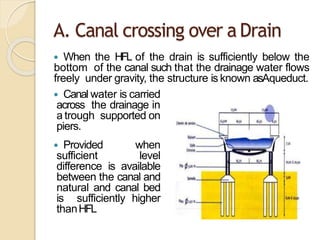
 When the HFL of the drain is sufficiently below the
bottom of the canal such that the drainage water flows
freely under gravity, the structure is known asAqueduct.
 Canal water is carried
across the drainage in
a trough supported on
piers.
 Provided when
sufficient level
difference is available
between the canal and
natural and canal bed
is sufficiently higher
thanHFL
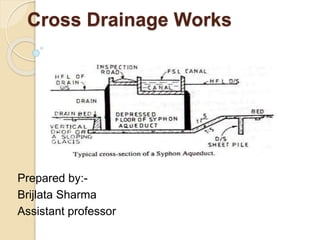
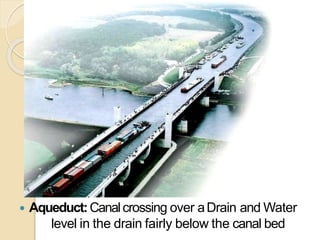
 Aqueduct:Canalcrossing over aDrain and Water
level in the drain fairly below the canal bed
SiphonAqueduct:
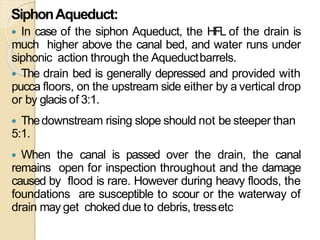
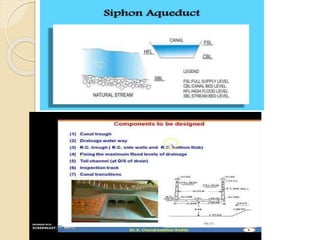
 In case of the siphon Aqueduct, the HFL of the drain is
much higher above the canal bed, and water runs under
siphonic action through the Aqueductbarrels.
 The drain bed is generally depressed and provided with
pucca floors, on the upstream side either by a vertical drop
or by glacis of 3:1.
 Thedownstream rising slope should not be steeper than
5:1.
 When the canal is passed over the drain, the canal
remains open for inspection throughout and the damage
caused by flood is rare. However during heavy floods, the
foundations are susceptible to scour or the waterway of
drain may get choked due to debris, tressetc
B.Canal crossing under a Drain
Super passage
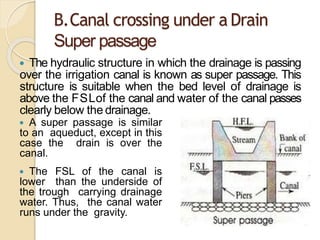
 The hydraulic structure in which the drainage is passing
over the irrigation canal is known as super passage. This
structure is suitable when the bed level of drainage is
above the FSLof the canal and water of the canal passes
clearly below the drainage.
 A super passage is similar
to an aqueduct, except in this
case the drain is over the
canal.
 The FSL of the canal is
lower than the underside of
the trough carrying drainage
water. Thus, the canal water
runs under the gravity.
CanalSiphon
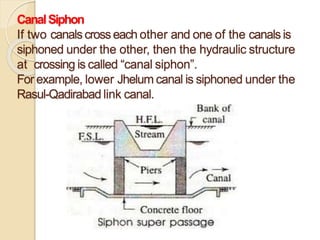
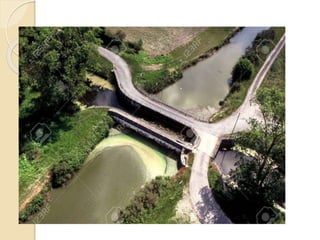
If two canals crosseach other and one of the canalsis
siphoned under the other, then the hydraulic structure
at crossing is called “canal siphon”.
For example, lower Jhelum canal is siphoned under the
Rasul-Qadirabad link canal.
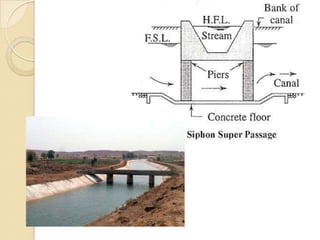
 In case of siphon the FSL of the canal is much
above the bed level of the drainage trough, so that
the canal runs under the siphonicaction.
 The canal bed is lowered and a ramp is provided
at the exit so that the trouble of silting is
minimized.
 It is reverse of an siphon aqueduct.
 In the above two types, the inspection road
cannot be provided along the canal and a separate
bridge is required for roadway. For economy, the
canal may be flumed but the drainage trough is
neverflumed.
Thefactors which affect the selection of
suitable type of cross drainage works are:
 Relativebed levels and water drainage.
 Size of the canal anddrainage.
Cross drainage works

Cross drainage works

  • 1.
    Cross Drainage Works Preparedby:- Brijlata Sharma Assistant professor
  • 2.
    Define cross drainagework? Definition: A cross drainage work is a structure carrying the discharge from a natural stream across a canal intercepting the stream. It is generally a very costly item and should be avoided by:- •Diverting one stream into another. •Changing the alignment of the canal so that it crosses below the junction of two streams.
  • 3.
    Selection of Sitefor a Cross Drainage Structure 1 The canal and the drain should cross each other at a right angle. Acute or obtuse angle crossing should be avoided. 2 There should be sufficient straight reaches of canal and drain on both the upstream and the downstream sides. 3 A sufficient reach of drain on the upstream should be stable and uniform.
  • 4.
    TYPES OF CROSSDRAINAGE WORKS Depending upon levels and discharge, cross drainage works may be grouped into following types:- A. Canal crossing over a Drain An Aqueduct Siphon Aqueduct B. Canal crossing under a Drain Super passage Siphon C. Canal crossing a Drain at the same level Level crossing Drainage Inlet and Outlet
  • 5.
    Selection of theType of Cross Drainage Structure A. When the bed level of canal is sufficiently above the highest flood level of the drain, an aqueduct is constructed. B. When the highest flood level of the drain is higher than the bed level of the canal, the aqueduct should be designed as siphon aqueduct. C. When the bed level of the drain is sufficiently higher than the full supply level of canal, cross drainage work will be a super passage. D. When the full supply level of the canal is above the bed level of the drain, cross drainage work will be a siphon. E. If the bed levels of canal and drain are at the same level, cross drainage structure is known as a level crossing.
  • 6.
    A. Canal crossingover a Drain  When the HFL of the drain is sufficiently below the bottom of the canal such that the drainage water flows freely under gravity, the structure is known asAqueduct.  Canal water is carried across the drainage in a trough supported on piers.  Provided when sufficient level difference is available between the canal and natural and canal bed is sufficiently higher thanHFL
  • 7.
     Aqueduct:Canalcrossing overaDrain and Water level in the drain fairly below the canal bed
  • 8.
    SiphonAqueduct:  In caseof the siphon Aqueduct, the HFL of the drain is much higher above the canal bed, and water runs under siphonic action through the Aqueductbarrels.  The drain bed is generally depressed and provided with pucca floors, on the upstream side either by a vertical drop or by glacis of 3:1.  Thedownstream rising slope should not be steeper than 5:1.  When the canal is passed over the drain, the canal remains open for inspection throughout and the damage caused by flood is rare. However during heavy floods, the foundations are susceptible to scour or the waterway of drain may get choked due to debris, tressetc
  • 10.
    B.Canal crossing undera Drain Super passage  The hydraulic structure in which the drainage is passing over the irrigation canal is known as super passage. This structure is suitable when the bed level of drainage is above the FSLof the canal and water of the canal passes clearly below the drainage.  A super passage is similar to an aqueduct, except in this case the drain is over the canal.  The FSL of the canal is lower than the underside of the trough carrying drainage water. Thus, the canal water runs under the gravity.
  • 12.
    CanalSiphon If two canalscrosseach other and one of the canalsis siphoned under the other, then the hydraulic structure at crossing is called “canal siphon”. For example, lower Jhelum canal is siphoned under the Rasul-Qadirabad link canal.
  • 14.
     In caseof siphon the FSL of the canal is much above the bed level of the drainage trough, so that the canal runs under the siphonicaction.  The canal bed is lowered and a ramp is provided at the exit so that the trouble of silting is minimized.  It is reverse of an siphon aqueduct.  In the above two types, the inspection road cannot be provided along the canal and a separate bridge is required for roadway. For economy, the canal may be flumed but the drainage trough is neverflumed.
  • 15.
    Thefactors which affectthe selection of suitable type of cross drainage works are:  Relativebed levels and water drainage.  Size of the canal anddrainage.