Cross- Drainage works
Yash Jasani (D16CL140)
Manish Gohil (D16CL147)
Meet Maniya (D16Cl156)
Content
• Introduction
• Necessity of CD works
• Types of CD works
• Selection of types of CD work
Definition
In an Irrigation project, when the network of main
canals, branch canals, distributaries, etc. are
provided, then these canals may have to cross the
natural drainages like rivers, streams, nallahs , etc.
at different points. The crossing of the canals with
such obstacle cannot be avoided. So, suitable
structures must be constructed at the crossing
point for the easy flow of water of the canal and
drainage, in the respective directions. These
structures are known as cross-drainage works.
In order to reduce cross drainage work, the artificial
canal are generally aligned along the ridge line call
watershed.
Necessity of Cross Drainage Works
• The water-shed canals do not cross natural drainage. But in actual
orientation of the canal network, this ideal condition may not be
available and the obstacles like natural drainages may be present
across the canal. So, the cross drainage works must be provided.
• At the crossing point, the water of the canal and the drainage get
intermixed. So, for the smooth running of the canal with its design
discharge the cross drainage works are required.
• The site condition of the crossing point may be such that without any
suitable structure, the water of the canal and drainage can not be
diverted to their natural directions. So, the cross drainage works must
be provided to maintain their natural direction of flow.
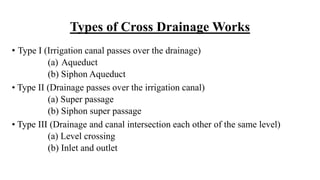
Types of Cross Drainage Works
• Type I (Irrigation canal passes over the drainage)
(a) Aqueduct
(b) Siphon Aqueduct
• Type II (Drainage passes over the irrigation canal)
(a) Super passage
(b) Siphon super passage
• Type III (Drainage and canal intersection each other of the same level)
(a) Level crossing
(b) Inlet and outlet
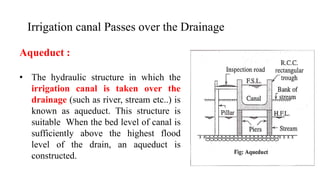
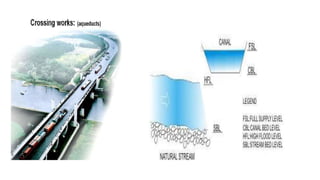
Irrigation canal Passes over the Drainage
Aqueduct :
• The hydraulic structure in which the
irrigation canal is taken over the
drainage (such as river, stream etc..) is
known as aqueduct. This structure is
suitable When the bed level of canal is
sufficiently above the highest flood
level of the drain, an aqueduct is
constructed.
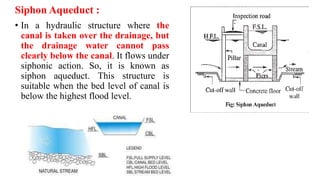
Siphon Aqueduct :
• In a hydraulic structure where the
canal is taken over the drainage, but
the drainage water cannot pass
clearly below the canal. It flows under
siphonic action. So, it is known as
siphon aqueduct. This structure is
suitable when the bed level of canal is
below the highest flood level.
Drainage Passes Over the irrigation Canal.
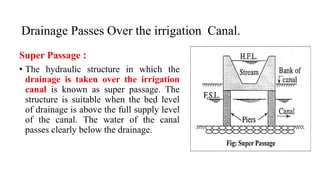
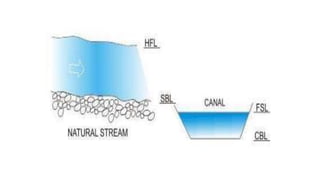
Super Passage :
• The hydraulic structure in which the
drainage is taken over the irrigation
canal is known as super passage. The
structure is suitable when the bed level
of drainage is above the full supply level
of the canal. The water of the canal
passes clearly below the drainage.
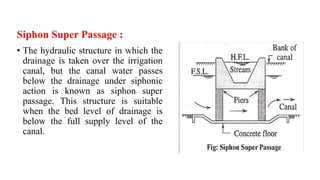
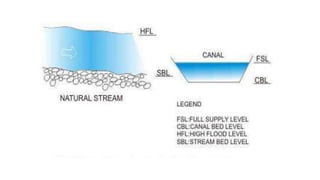
Siphon Super Passage :
• The hydraulic structure in which the
drainage is taken over the irrigation
canal, but the canal water passes
below the drainage under siphonic
action is known as siphon super
passage. This structure is suitable
when the bed level of drainage is
below the full supply level of the
canal.
Drainage and Canal Intersect each other at the
same level.
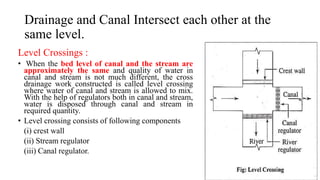
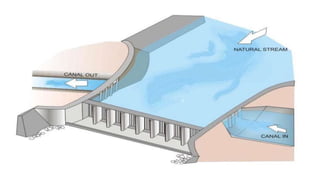
Level Crossings :
• When the bed level of canal and the stream are
approximately the same and quality of water in
canal and stream is not much different, the cross
drainage work constructed is called level crossing
where water of canal and stream is allowed to mix.
With the help of regulators both in canal and stream,
water is disposed through canal and stream in
required quantity.
• Level crossing consists of following components
(i) crest wall
(ii) Stream regulator
(iii) Canal regulator.
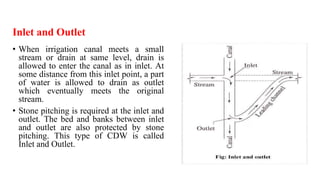
Inlet and Outlet
• When irrigation canal meets a small
stream or drain at same level, drain is
allowed to enter the canal as in inlet. At
some distance from this inlet point, a part
of water is allowed to drain as outlet
which eventually meets the original
stream.
• Stone pitching is required at the inlet and
outlet. The bed and banks between inlet
and outlet are also protected by stone
pitching. This type of CDW is called
Inlet and Outlet.
Selection of Type of Cross Drainage Work
(i) Relative Bed Level
According to the relative bed levels of the canal and the river or drainage, the type of
cross drainage work are generally selected which has been discussed earlier. But some
problems may come at the crossing point.
The following points should be remembered while recommending the type of work
(a) The crossing should be at right angle to each other,
(b) Well defined cross-section of the river or drainage should be available.
(c) At the crossing point the drainage should be straight for a considerable length.
(d) The width of the drainage should be narrow as far as possible. Considering the above
points The C/s can be shifted to the downstream or upstream.
• Availability of Suitable Foundation
For the construction of cross drainage works suitable foundation is required. By
boring test, if suitable foundation is not available, then the type of cross drainage
work should be selected to site Condition.
• Economic Consideration
The cost of construction of cross drainage works should be justified with respect
to the project cost and overall benefits of the project. So, the type of works should
be selected considering the economical point of view.
• Discharge of the drainage
Practically the discharge of the drainage is very uncertain in rainy season. So, the
structure should be carefully selected so that it may not be destroyed due to
unexpected heavy discharge of the river or drainage.
• Construction of Problems
Different types of constructional problems may arise at the site such as sub soil
water, construction materials, communication, availability of land etc. So the type
of works should be selected according to the site condition.
• Position of water table and availability of dewatering
equipment
• Permissible head loss in canal
• Availability of funds
Cross drainage work

Cross drainage work

  • 1.
    Cross- Drainage works YashJasani (D16CL140) Manish Gohil (D16CL147) Meet Maniya (D16Cl156)
  • 2.
    Content • Introduction • Necessityof CD works • Types of CD works • Selection of types of CD work
  • 3.
    Definition In an Irrigationproject, when the network of main canals, branch canals, distributaries, etc. are provided, then these canals may have to cross the natural drainages like rivers, streams, nallahs , etc. at different points. The crossing of the canals with such obstacle cannot be avoided. So, suitable structures must be constructed at the crossing point for the easy flow of water of the canal and drainage, in the respective directions. These structures are known as cross-drainage works. In order to reduce cross drainage work, the artificial canal are generally aligned along the ridge line call watershed.
  • 4.
    Necessity of CrossDrainage Works • The water-shed canals do not cross natural drainage. But in actual orientation of the canal network, this ideal condition may not be available and the obstacles like natural drainages may be present across the canal. So, the cross drainage works must be provided. • At the crossing point, the water of the canal and the drainage get intermixed. So, for the smooth running of the canal with its design discharge the cross drainage works are required. • The site condition of the crossing point may be such that without any suitable structure, the water of the canal and drainage can not be diverted to their natural directions. So, the cross drainage works must be provided to maintain their natural direction of flow.
  • 5.
    Types of CrossDrainage Works • Type I (Irrigation canal passes over the drainage) (a) Aqueduct (b) Siphon Aqueduct • Type II (Drainage passes over the irrigation canal) (a) Super passage (b) Siphon super passage • Type III (Drainage and canal intersection each other of the same level) (a) Level crossing (b) Inlet and outlet
  • 6.
    Irrigation canal Passesover the Drainage Aqueduct : • The hydraulic structure in which the irrigation canal is taken over the drainage (such as river, stream etc..) is known as aqueduct. This structure is suitable When the bed level of canal is sufficiently above the highest flood level of the drain, an aqueduct is constructed.
  • 8.
    Siphon Aqueduct : •In a hydraulic structure where the canal is taken over the drainage, but the drainage water cannot pass clearly below the canal. It flows under siphonic action. So, it is known as siphon aqueduct. This structure is suitable when the bed level of canal is below the highest flood level.
  • 9.
    Drainage Passes Overthe irrigation Canal. Super Passage : • The hydraulic structure in which the drainage is taken over the irrigation canal is known as super passage. The structure is suitable when the bed level of drainage is above the full supply level of the canal. The water of the canal passes clearly below the drainage.
  • 11.
    Siphon Super Passage: • The hydraulic structure in which the drainage is taken over the irrigation canal, but the canal water passes below the drainage under siphonic action is known as siphon super passage. This structure is suitable when the bed level of drainage is below the full supply level of the canal.
  • 13.
    Drainage and CanalIntersect each other at the same level. Level Crossings : • When the bed level of canal and the stream are approximately the same and quality of water in canal and stream is not much different, the cross drainage work constructed is called level crossing where water of canal and stream is allowed to mix. With the help of regulators both in canal and stream, water is disposed through canal and stream in required quantity. • Level crossing consists of following components (i) crest wall (ii) Stream regulator (iii) Canal regulator.
  • 15.
    Inlet and Outlet •When irrigation canal meets a small stream or drain at same level, drain is allowed to enter the canal as in inlet. At some distance from this inlet point, a part of water is allowed to drain as outlet which eventually meets the original stream. • Stone pitching is required at the inlet and outlet. The bed and banks between inlet and outlet are also protected by stone pitching. This type of CDW is called Inlet and Outlet.
  • 16.
    Selection of Typeof Cross Drainage Work (i) Relative Bed Level According to the relative bed levels of the canal and the river or drainage, the type of cross drainage work are generally selected which has been discussed earlier. But some problems may come at the crossing point. The following points should be remembered while recommending the type of work (a) The crossing should be at right angle to each other, (b) Well defined cross-section of the river or drainage should be available. (c) At the crossing point the drainage should be straight for a considerable length. (d) The width of the drainage should be narrow as far as possible. Considering the above points The C/s can be shifted to the downstream or upstream.
  • 17.
    • Availability ofSuitable Foundation For the construction of cross drainage works suitable foundation is required. By boring test, if suitable foundation is not available, then the type of cross drainage work should be selected to site Condition. • Economic Consideration The cost of construction of cross drainage works should be justified with respect to the project cost and overall benefits of the project. So, the type of works should be selected considering the economical point of view. • Discharge of the drainage Practically the discharge of the drainage is very uncertain in rainy season. So, the structure should be carefully selected so that it may not be destroyed due to unexpected heavy discharge of the river or drainage. • Construction of Problems Different types of constructional problems may arise at the site such as sub soil water, construction materials, communication, availability of land etc. So the type of works should be selected according to the site condition.
  • 18.
    • Position ofwater table and availability of dewatering equipment • Permissible head loss in canal • Availability of funds