CROSS-CULTURE COMMUNICATION
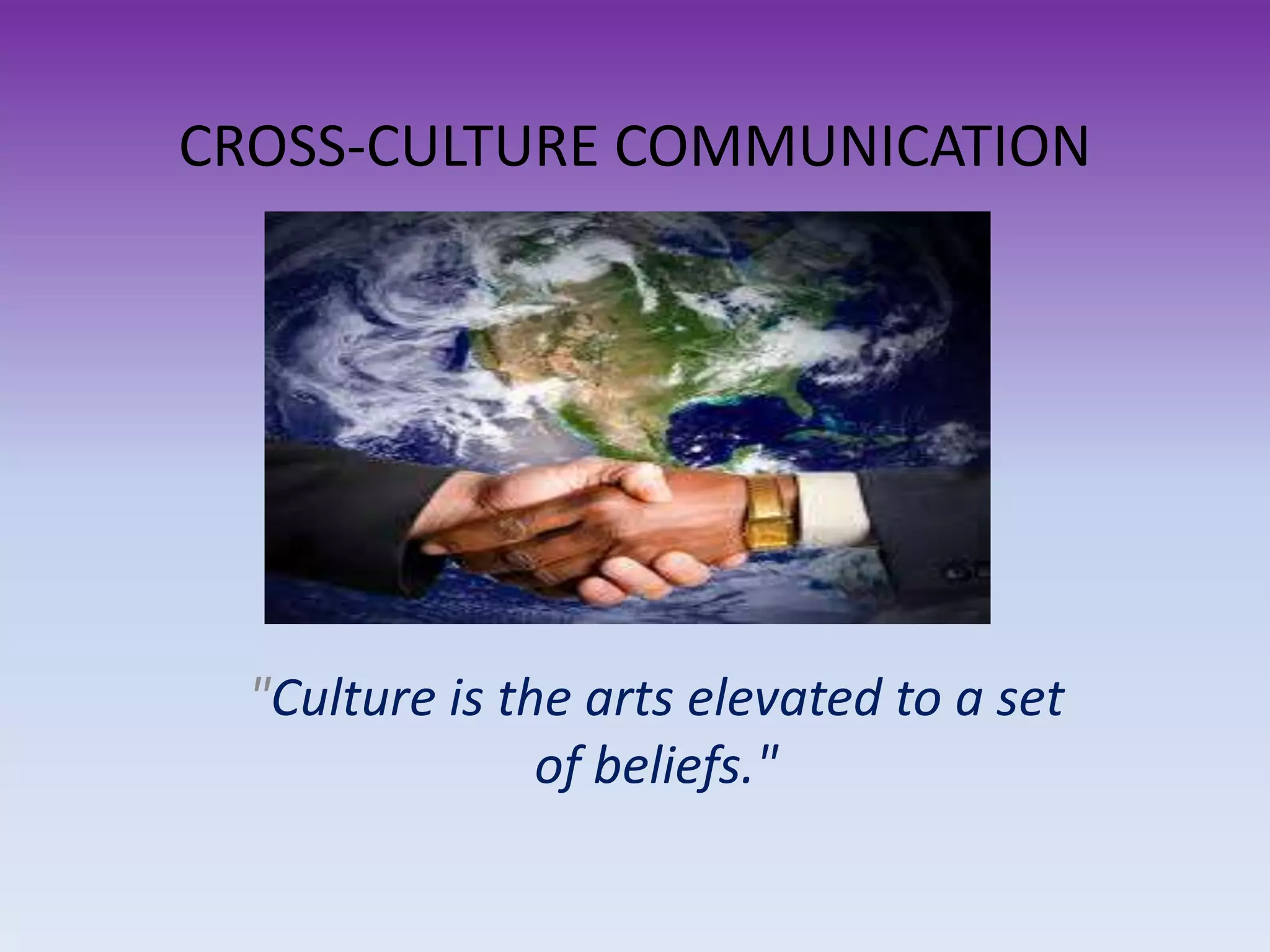
"Culture is the arts elevated to a set
of beliefs."
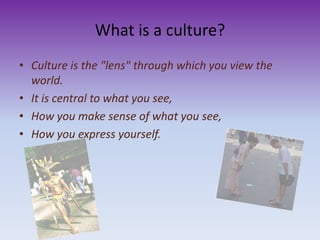
What is a culture?
• Culture is the "lens" through which you view the
world.
• It is central to what you see,
• How you make sense of what you see,
• How you express yourself.
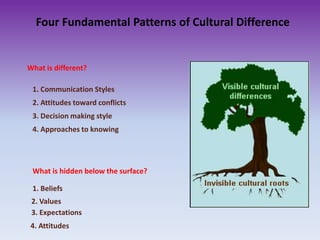
What is different?
1. Communication Styles
2. Attitudes toward conflicts
3. Decision making style
4. Approaches to knowing
What is hidden below the surface?
1. Beliefs
2. Values
3. Expectations
4. Attitudes
Four Fundamental Patterns of Cultural Difference
CODES USED IN COMMUNICATION
Verbal Communication
 Words
 Voice
Non-Verbal Communication
 Gestures
 Postures
 Facial Expressions
 Eye Contact
 Vocal Characteristics
 Personal Appearance
 Touch
Cross Culture Communication
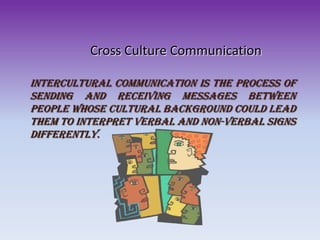
Intercultural Communication is the process of
sending and receiving messages between
people whose cultural background could lead
them to interpret verbal and non-verbal signs
differently.
Why Cross Culture
Communication is important ?
◦ Business Opportunities
◦ Job Opportunities
◦ Improves the contribution of employees in a diverse workforce
◦ Sharing of views and ideas
◦ Talent improvisation
◦ An understanding of diverse market
Globalization: Cross border movement of people, goods and data brings more
and more cultures into contact with one another and increases the potential of
cross culture communication.
TEN Pre-cautions in Cultural Communication
1. Slow Down
2. Separate Questions
3. Avoid Negative Questions
4. Take Turns
5. Write it down
6. Be Supportive
7. Check Meanings
8. Avoid Slangs
9. Watch the humour
10. Maintain Etiquette
Success Rate
will Increase
Success Rate
will Increase
Cross cluture commuction

Cross cluture commuction

  • 1.
    CROSS-CULTURE COMMUNICATION "Culture isthe arts elevated to a set of beliefs."
  • 2.
    What is aculture? • Culture is the "lens" through which you view the world. • It is central to what you see, • How you make sense of what you see, • How you express yourself.
  • 3.
    What is different? 1.Communication Styles 2. Attitudes toward conflicts 3. Decision making style 4. Approaches to knowing What is hidden below the surface? 1. Beliefs 2. Values 3. Expectations 4. Attitudes Four Fundamental Patterns of Cultural Difference
  • 4.
    CODES USED INCOMMUNICATION Verbal Communication  Words  Voice Non-Verbal Communication  Gestures  Postures  Facial Expressions  Eye Contact  Vocal Characteristics  Personal Appearance  Touch
  • 5.
    Cross Culture Communication InterculturalCommunication is the process of sending and receiving messages between people whose cultural background could lead them to interpret verbal and non-verbal signs differently.
  • 6.
    Why Cross Culture Communicationis important ? ◦ Business Opportunities ◦ Job Opportunities ◦ Improves the contribution of employees in a diverse workforce ◦ Sharing of views and ideas ◦ Talent improvisation ◦ An understanding of diverse market Globalization: Cross border movement of people, goods and data brings more and more cultures into contact with one another and increases the potential of cross culture communication.
  • 7.
    TEN Pre-cautions inCultural Communication 1. Slow Down 2. Separate Questions 3. Avoid Negative Questions 4. Take Turns 5. Write it down 6. Be Supportive 7. Check Meanings 8. Avoid Slangs 9. Watch the humour 10. Maintain Etiquette
  • 8.