Data collection, storage and access.
A presentation by - Amruthraaj, Miral and Vishwas
Contents
1) Data vs Information
2) Define the database functions
3) Define the information requirements
4) Identify the information sources
5) Storing the information right
6) Populating the database right
7) Maintaining the database right
8) Big Data
9) Case Study
2
Data vs. Information
What’s the difference?
1
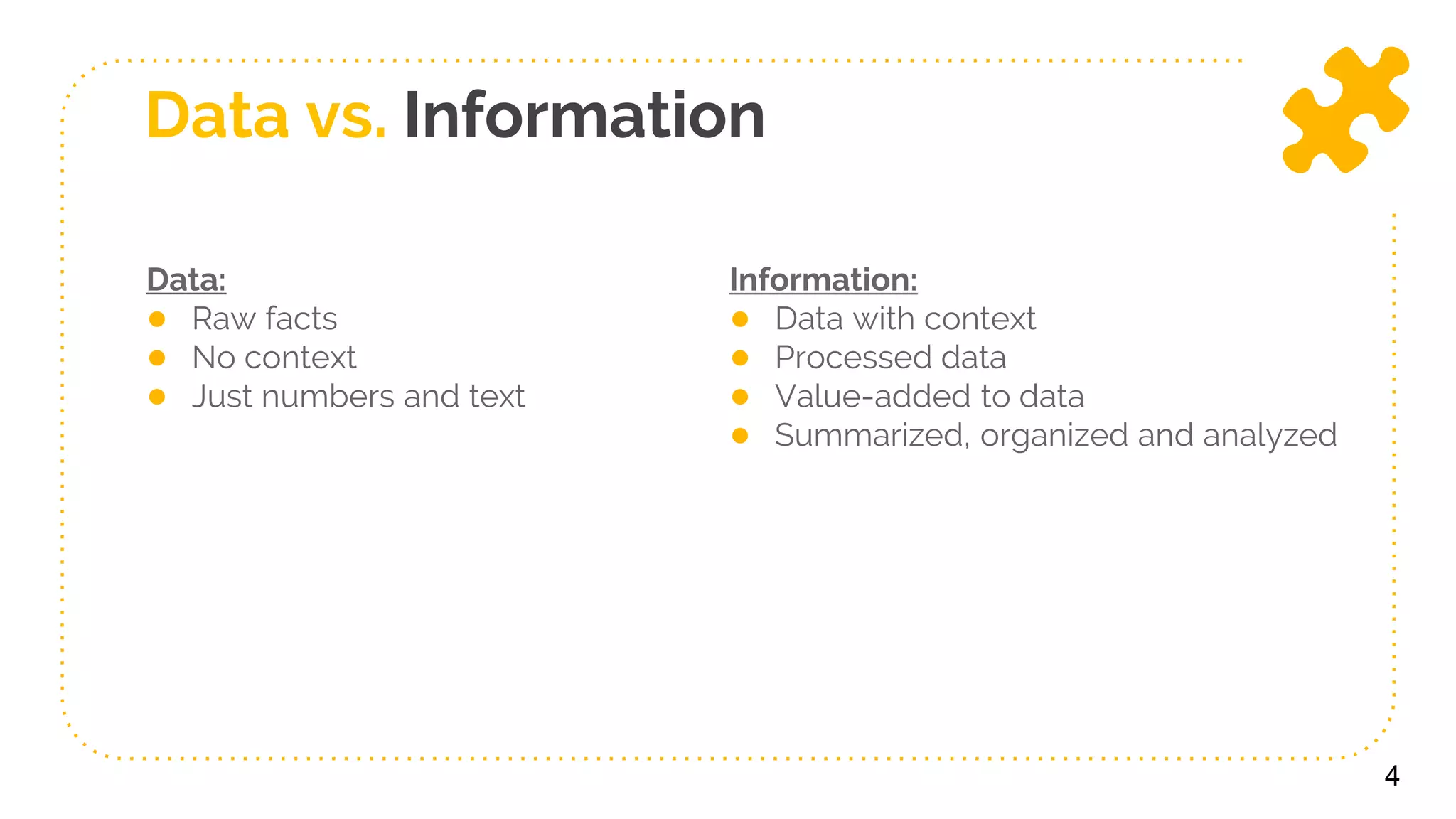
Data:
● Raw facts
● No context
● Just numbers and text
Information:
● Data with context
● Processed data
● Value-added to data
● Summarized, organized and analyzed
4
Data vs. Information
Data Collection
How do you do it best!
2
Define the
database
functions
6
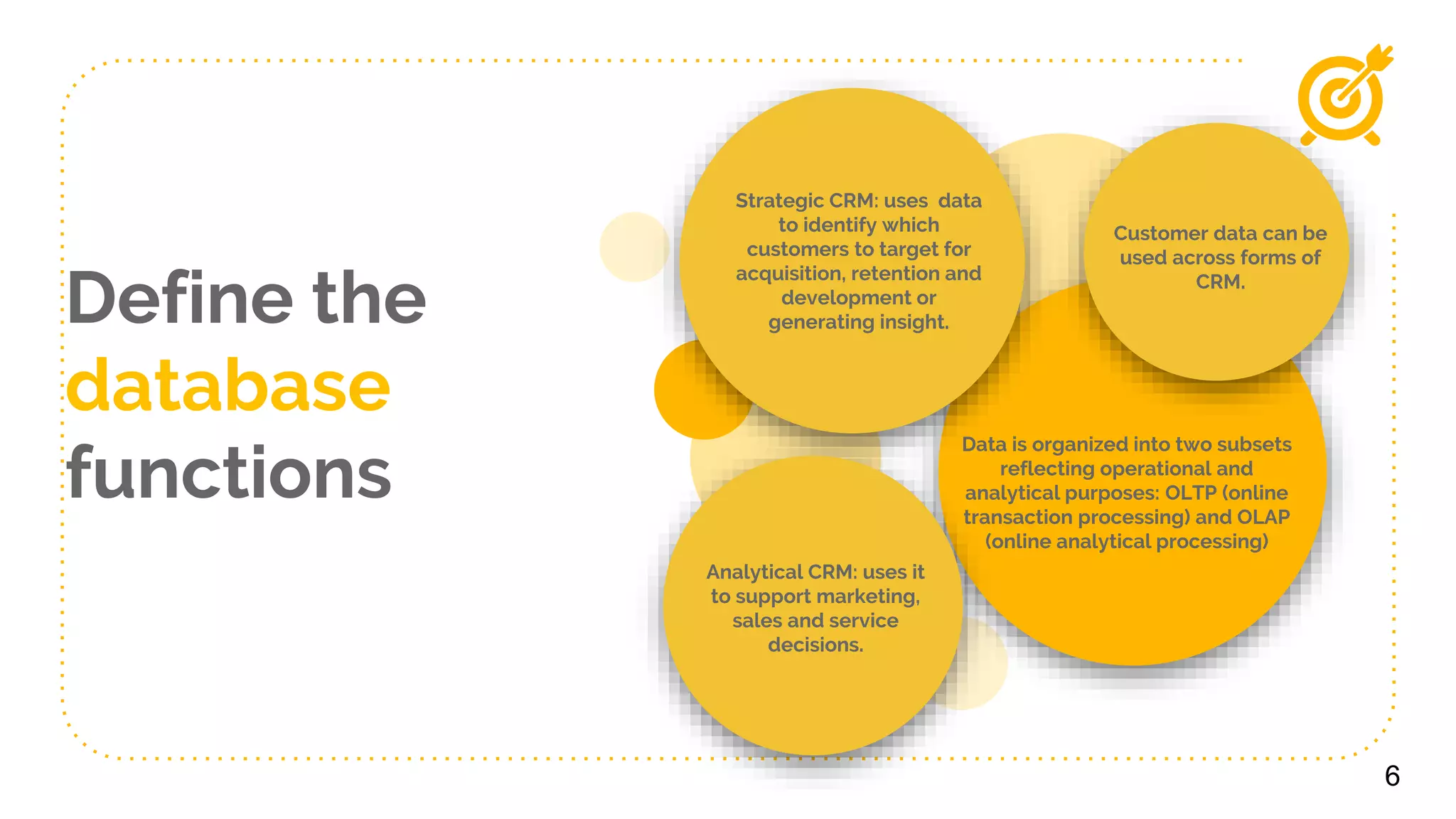
Data is organized into two subsets
reflecting operational and
analytical purposes: OLTP (online
transaction processing) and OLAP
(online analytical processing)
Strategic CRM: uses data
to identify which
customers to target for
acquisition, retention and
development or
generating insight.
Analytical CRM: uses it
to support marketing,
sales and service
decisions.
Customer data can be
used across forms of
CRM.
Define the information requirements
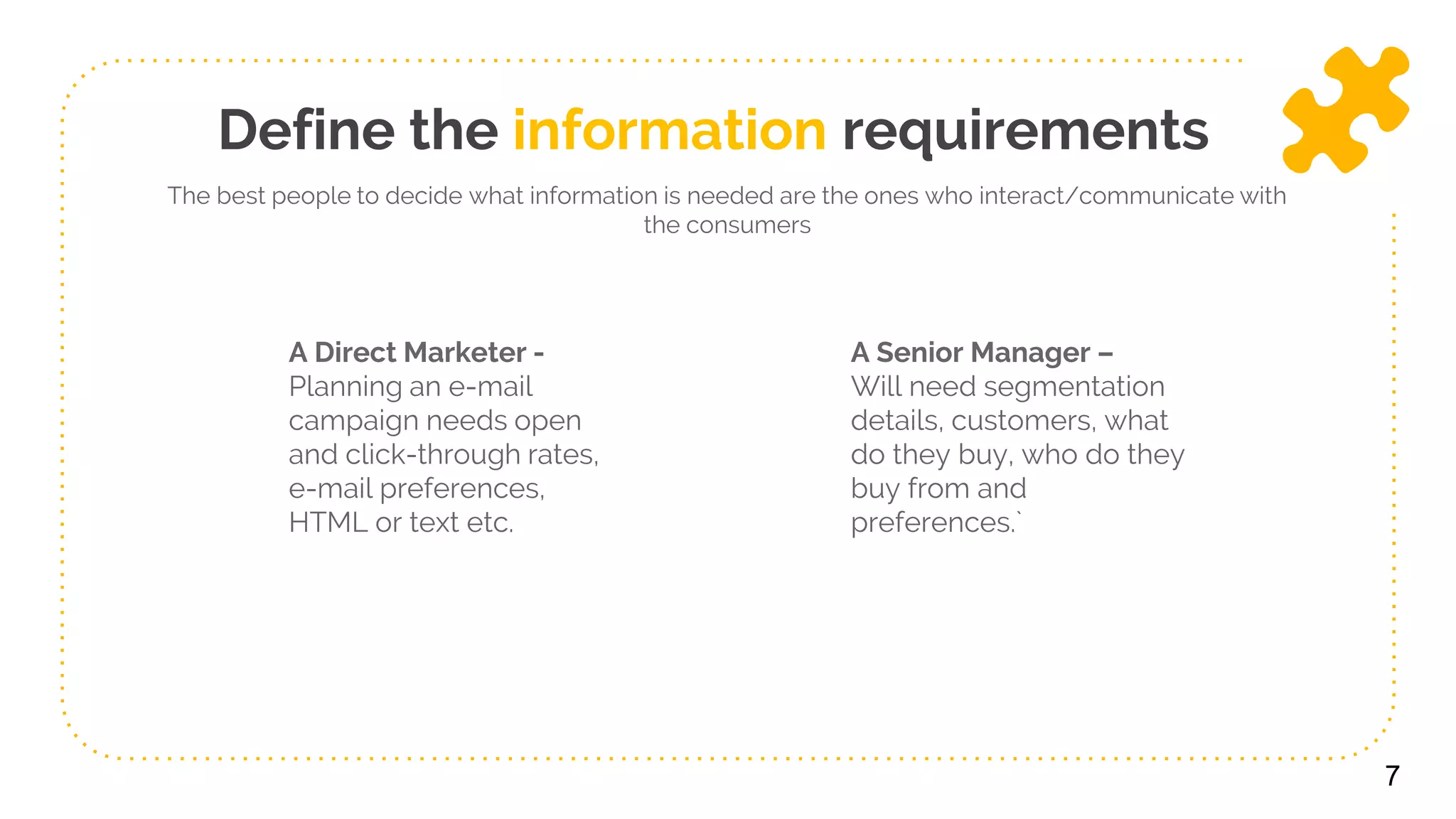
A Direct Marketer -
Planning an e-mail
campaign needs open
and click-through rates,
e-mail preferences,
HTML or text etc.
A Senior Manager –
Will need segmentation
details, customers, what
do they buy, who do they
buy from and
preferences.`
7
The best people to decide what information is needed are the ones who interact/communicate with
the consumers
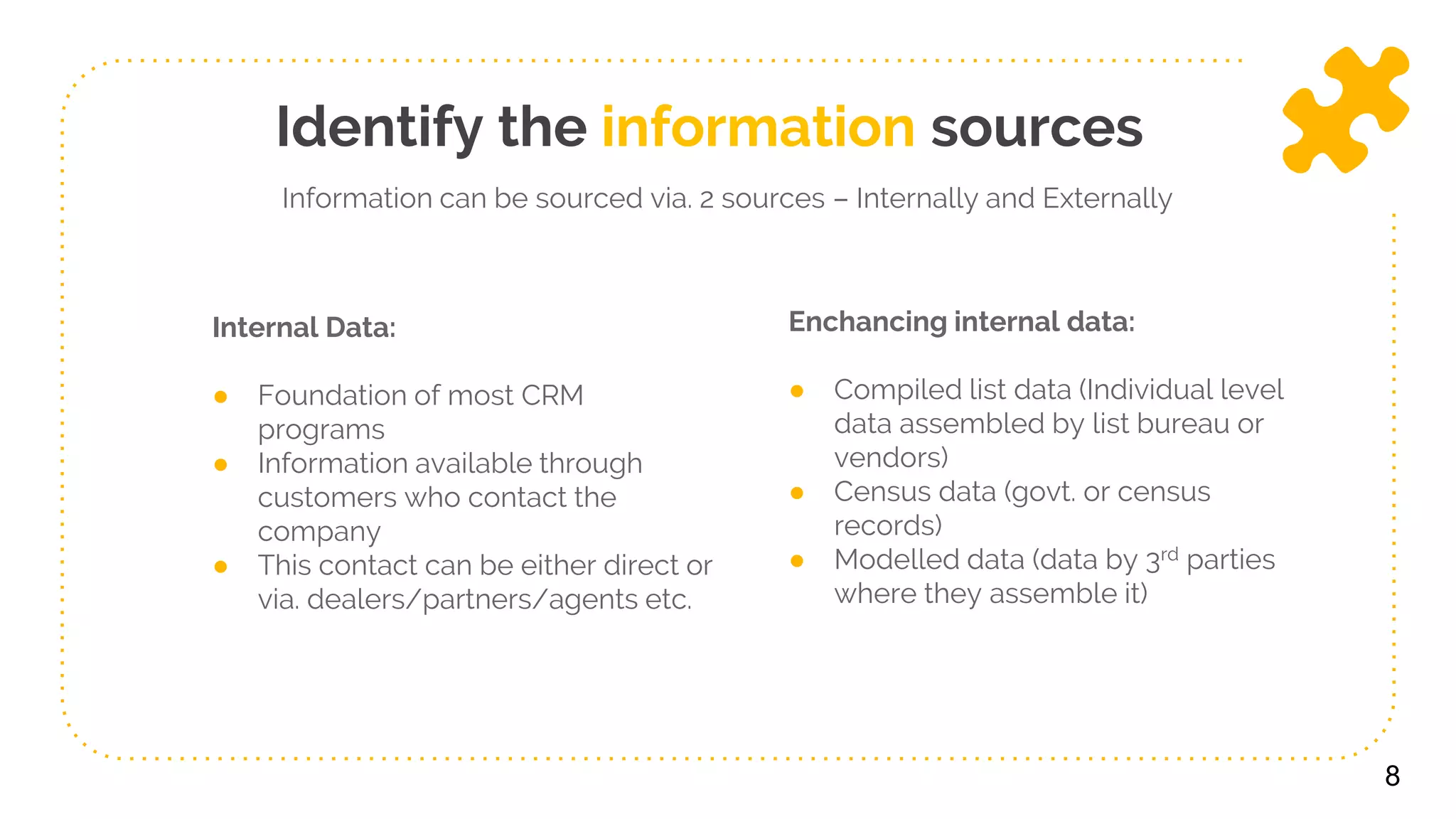
Internal Data:
● Foundation of most CRM
programs
● Information available through
customers who contact the
company
● This contact can be either direct or
via. dealers/partners/agents etc.
Enchancing internal data:
● Compiled list data (Individual level
data assembled by list bureau or
vendors)
● Census data (govt. or census
records)
● Modelled data (data by 3rd parties
where they assemble it)
8
Identify the information sources
Information can be sourced via. 2 sources – Internally and Externally
Data Storage
Taking you through the secure ways and options available!
3
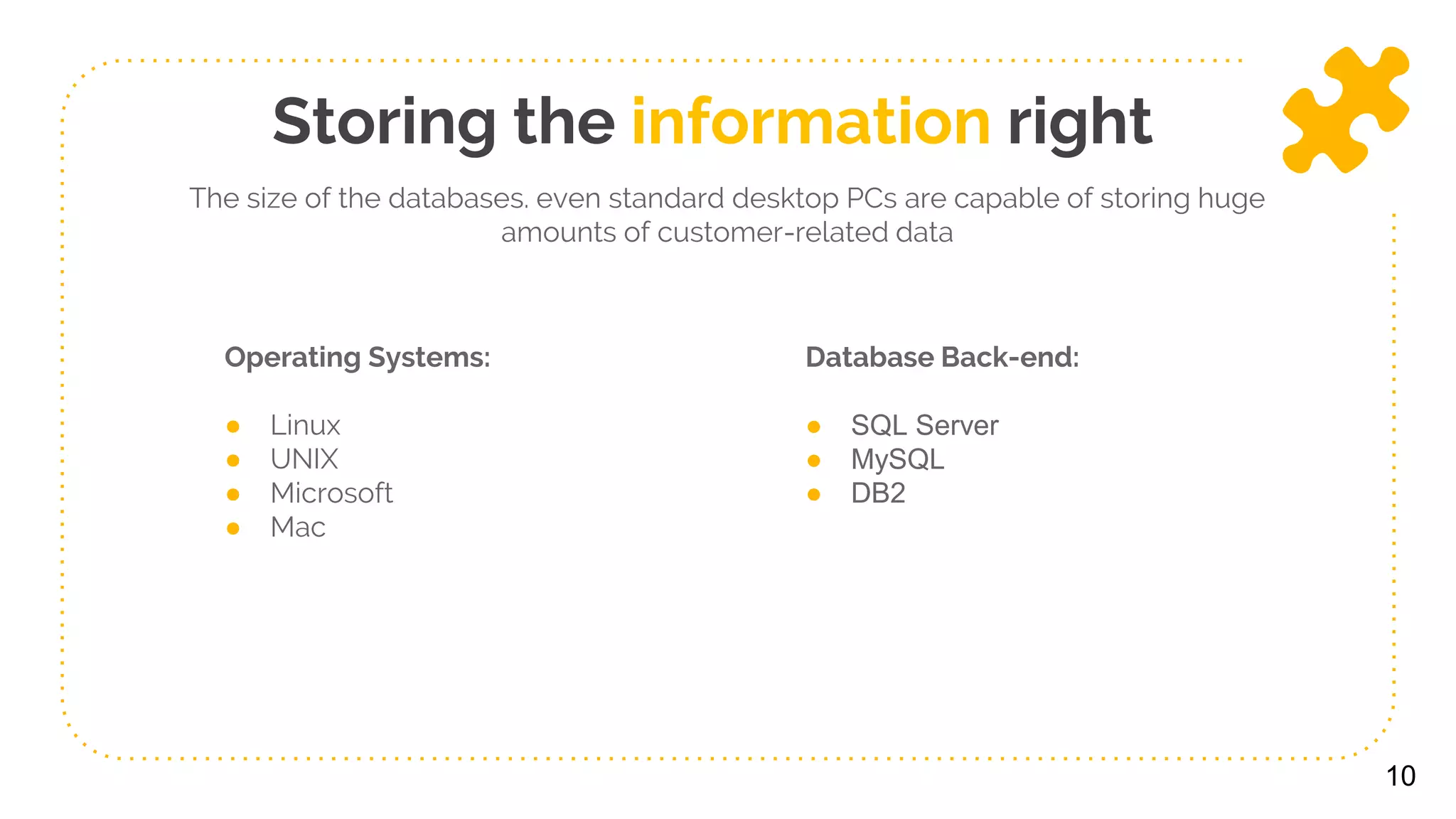
Operating Systems:
● Linux
● UNIX
● Microsoft
● Mac
Database Back-end:
● SQL Server
● MySQL
● DB2
10
Storing the information right
The size of the databases. even standard desktop PCs are capable of storing huge
amounts of customer-related data
11
Populating the database right
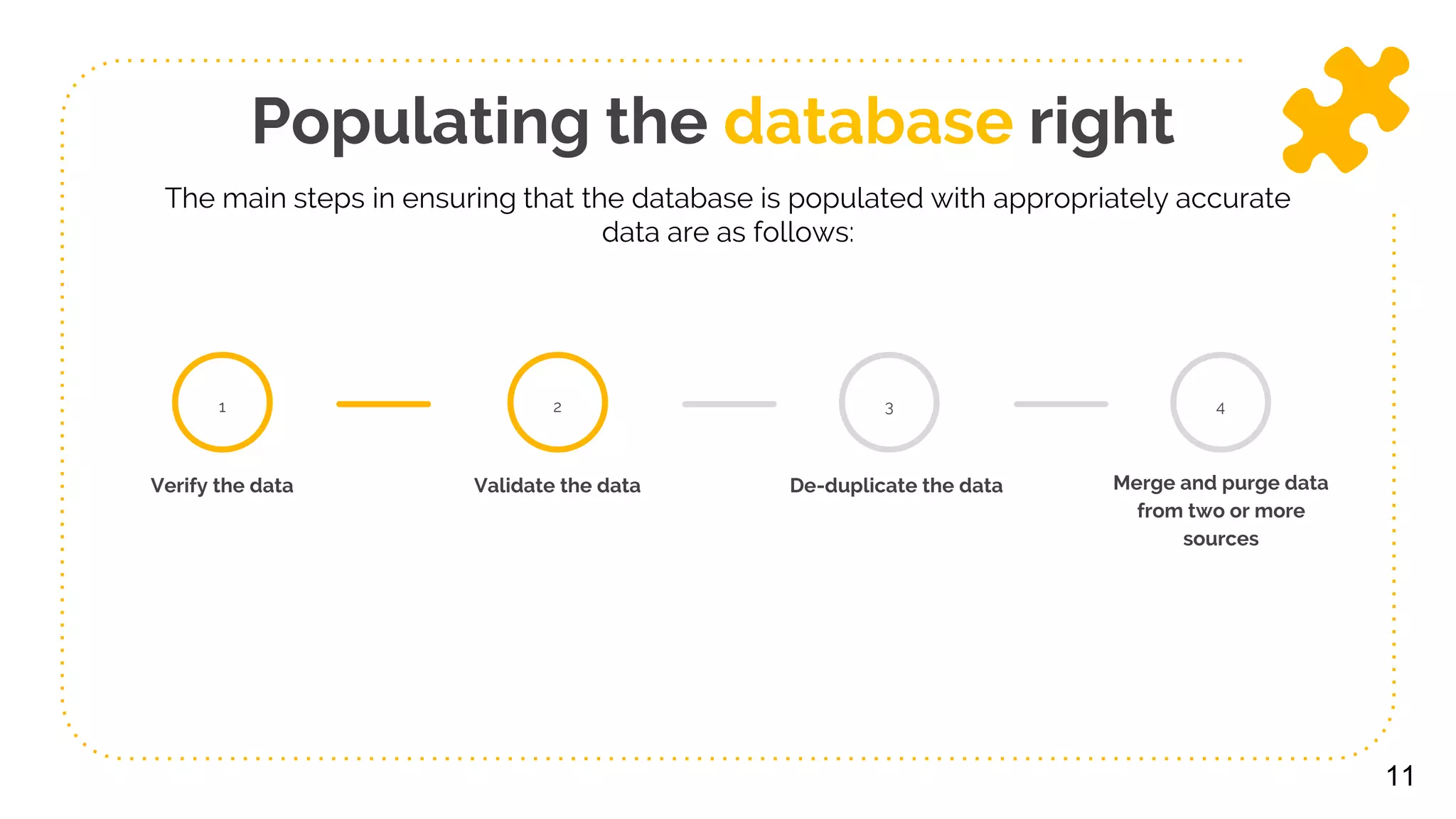
The main steps in ensuring that the database is populated with appropriately accurate
data are as follows:
1
Verify the data Validate the data
2
De-duplicate the data
3
Merge and purge data
from two or more
sources
4
12
Maintaining the database right
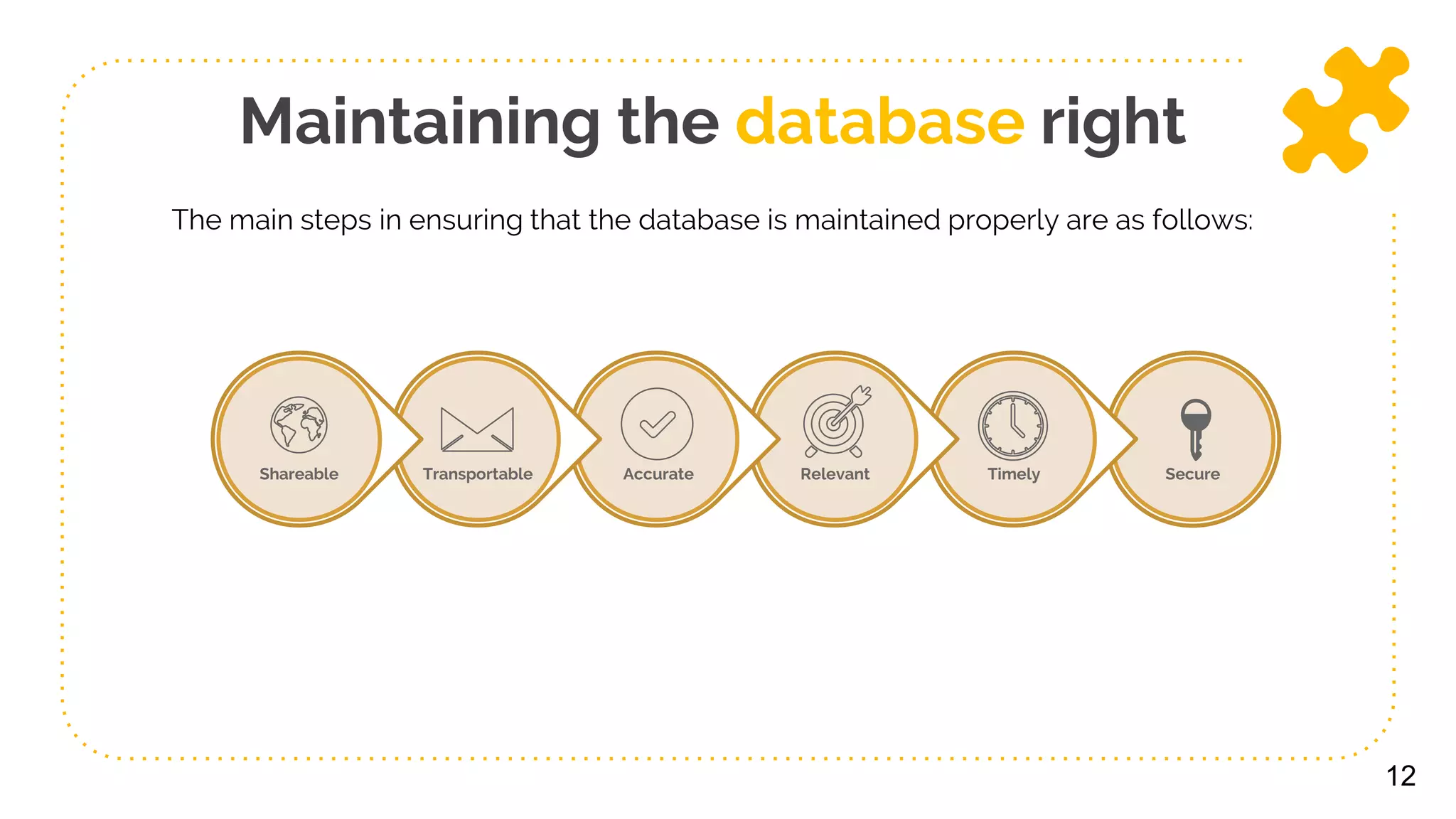
The main steps in ensuring that the database is maintained properly are as follows:
SecureTimelyRelevantAccurateTransportableShareable
🔑
Data Access
Anywhere, anytime, anyhow.
4
14
Accessing the database right
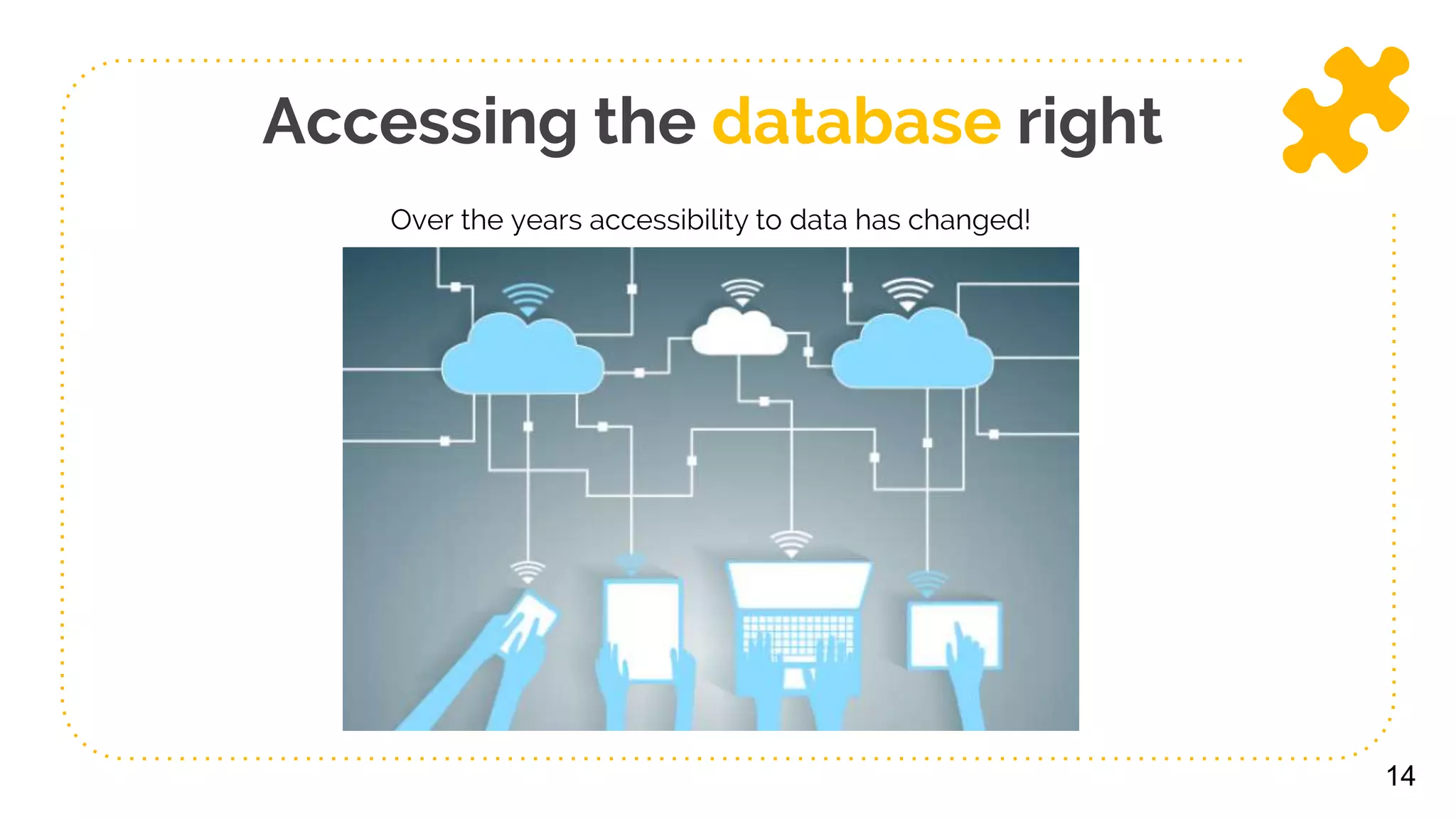
Over the years accessibility to data has changed!
Big Data
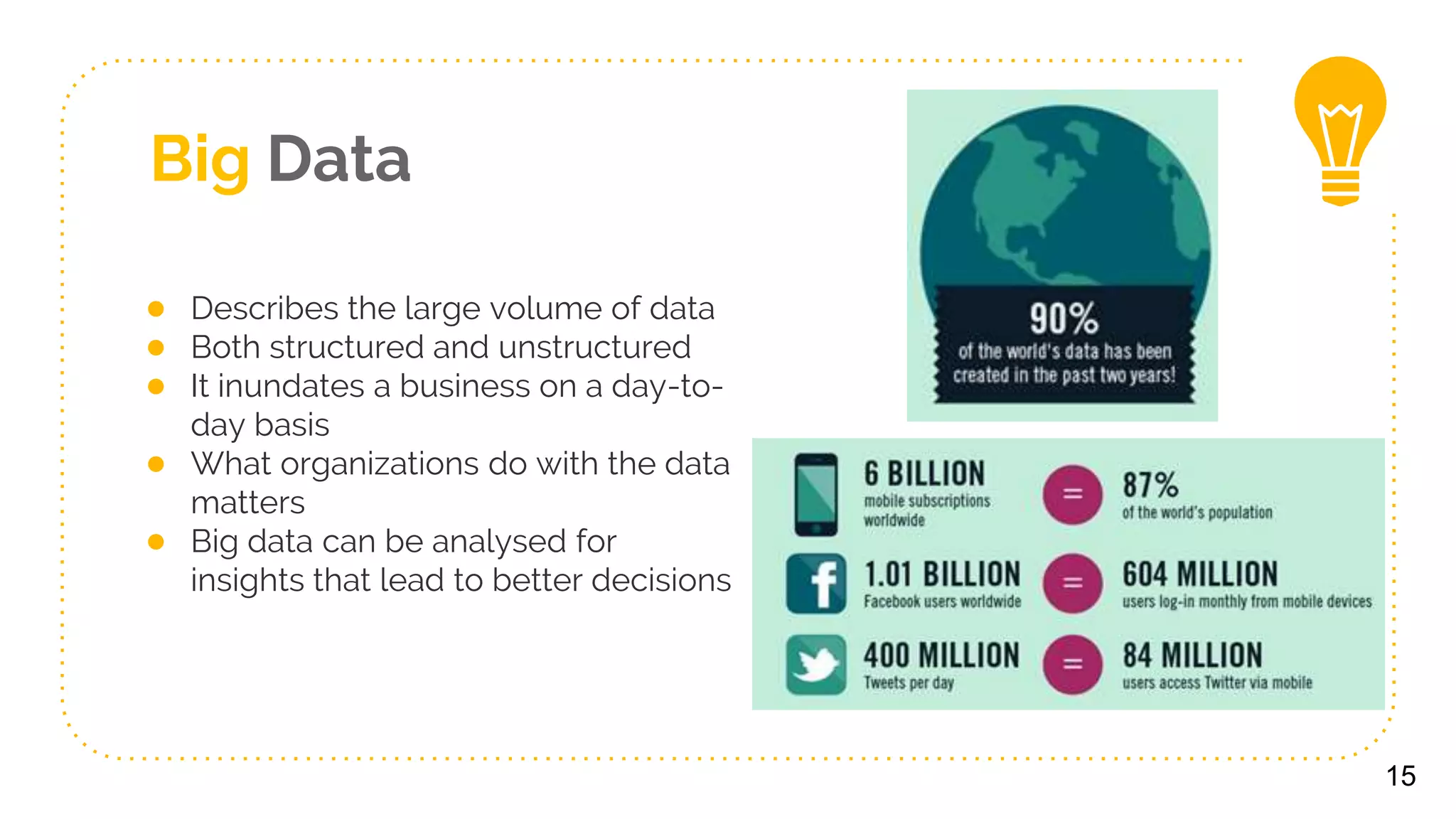
● Describes the large volume of data
● Both structured and unstructured
● It inundates a business on a day-to-
day basis
● What organizations do with the data
matters
● Big data can be analysed for
insights that lead to better decisions
15
Any questions?

CRM - Data Collection, Storage and Acces.

  • 1.
    Data collection, storageand access. A presentation by - Amruthraaj, Miral and Vishwas
  • 2.
    Contents 1) Data vsInformation 2) Define the database functions 3) Define the information requirements 4) Identify the information sources 5) Storing the information right 6) Populating the database right 7) Maintaining the database right 8) Big Data 9) Case Study 2
  • 3.
  • 4.
    Data: ● Raw facts ●No context ● Just numbers and text Information: ● Data with context ● Processed data ● Value-added to data ● Summarized, organized and analyzed 4 Data vs. Information
  • 5.
    Data Collection How doyou do it best! 2
  • 6.
    Define the database functions 6 Data isorganized into two subsets reflecting operational and analytical purposes: OLTP (online transaction processing) and OLAP (online analytical processing) Strategic CRM: uses data to identify which customers to target for acquisition, retention and development or generating insight. Analytical CRM: uses it to support marketing, sales and service decisions. Customer data can be used across forms of CRM.
  • 7.
    Define the informationrequirements A Direct Marketer - Planning an e-mail campaign needs open and click-through rates, e-mail preferences, HTML or text etc. A Senior Manager – Will need segmentation details, customers, what do they buy, who do they buy from and preferences.` 7 The best people to decide what information is needed are the ones who interact/communicate with the consumers
  • 8.
    Internal Data: ● Foundationof most CRM programs ● Information available through customers who contact the company ● This contact can be either direct or via. dealers/partners/agents etc. Enchancing internal data: ● Compiled list data (Individual level data assembled by list bureau or vendors) ● Census data (govt. or census records) ● Modelled data (data by 3rd parties where they assemble it) 8 Identify the information sources Information can be sourced via. 2 sources – Internally and Externally
  • 9.
    Data Storage Taking youthrough the secure ways and options available! 3
  • 10.
    Operating Systems: ● Linux ●UNIX ● Microsoft ● Mac Database Back-end: ● SQL Server ● MySQL ● DB2 10 Storing the information right The size of the databases. even standard desktop PCs are capable of storing huge amounts of customer-related data
  • 11.
    11 Populating the databaseright The main steps in ensuring that the database is populated with appropriately accurate data are as follows: 1 Verify the data Validate the data 2 De-duplicate the data 3 Merge and purge data from two or more sources 4
  • 12.
    12 Maintaining the databaseright The main steps in ensuring that the database is maintained properly are as follows: SecureTimelyRelevantAccurateTransportableShareable 🔑
  • 13.
  • 14.
    14 Accessing the databaseright Over the years accessibility to data has changed!
  • 15.
    Big Data ● Describesthe large volume of data ● Both structured and unstructured ● It inundates a business on a day-to- day basis ● What organizations do with the data matters ● Big data can be analysed for insights that lead to better decisions 15
  • 16.

Editor's Notes

  • #5 Facts and statistics collected together for reference or analysis. What is conveyed or represented by a particular arrangement or sequence of things.
  • #7 OLTP has to be up to date and accurate (e.g. Customer invoice details) /OLAP is good for less current data
  • #8 Key Takeaway – Data designed basis the data needs can be used for both analytical/operational purposes and also helps in comprehensive solutions across departments
  • #9 Key Takeaway: There are instances when such data has massive duplication errors but as tedious as maintaining it is the benefits of it outweigh the challenges of collecting and segregating it .
  • #11 The number and location of users. Many CRM applications are quite simple, but in an increasingly global marketplace the hardware may need very careful specification and periodic review. For example, hardware might need to enable a geographically dispersed, multi-lingual user group to access real-time data for operational CRM purposes, 24/7.
  • #12 As noted earlier, operational CRM applications generally need more accurate and contemporary data than analytical applications.
  • #13 data should be shareable, transportable, accurate, relevant, timely and secure
  • #16 Describes the large volume of data Both structured and unstructured It inundates a business on a day-to-day basis What organizations do with the data matters Big data can be analysed for insights that lead to better decisions