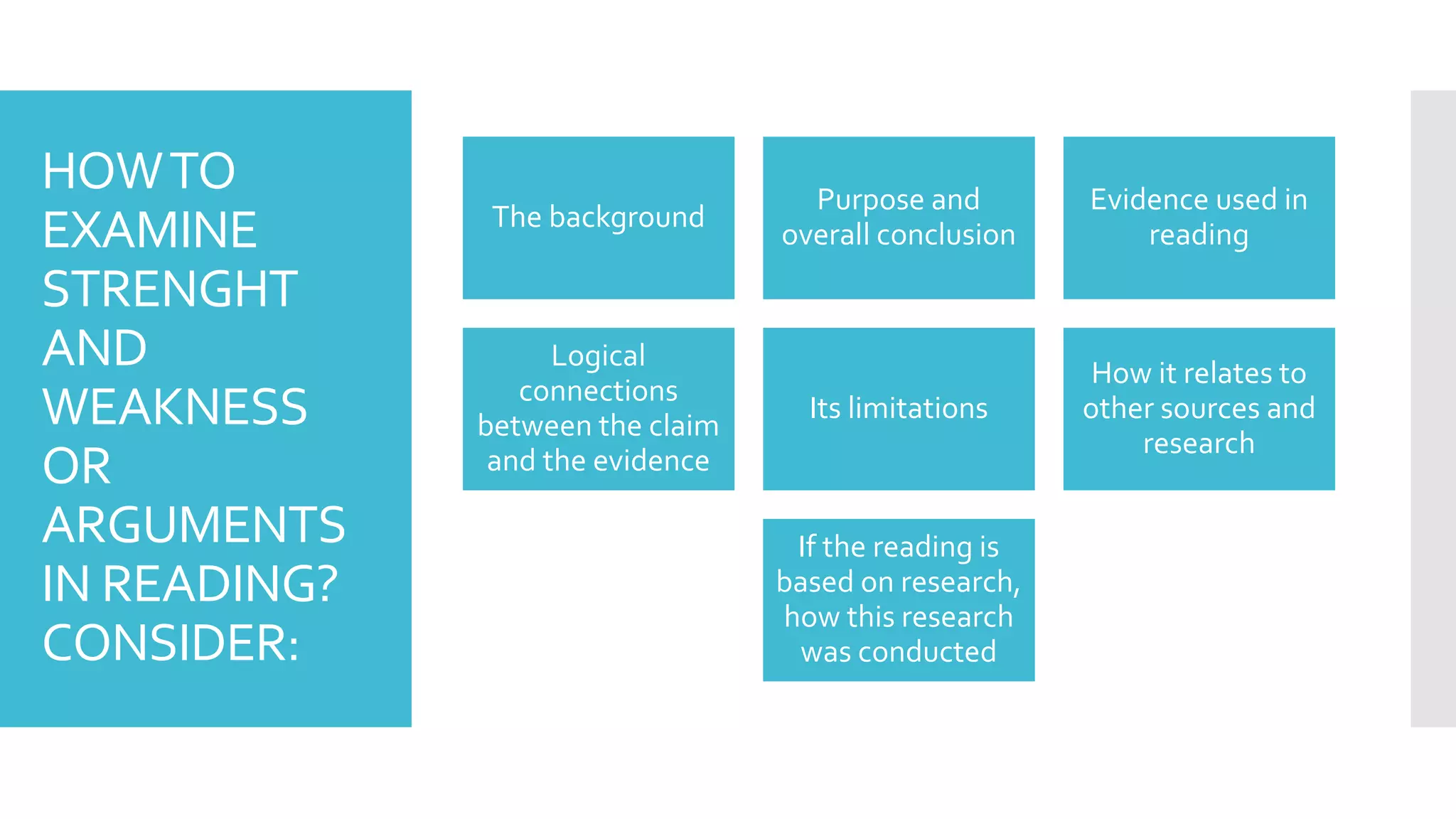
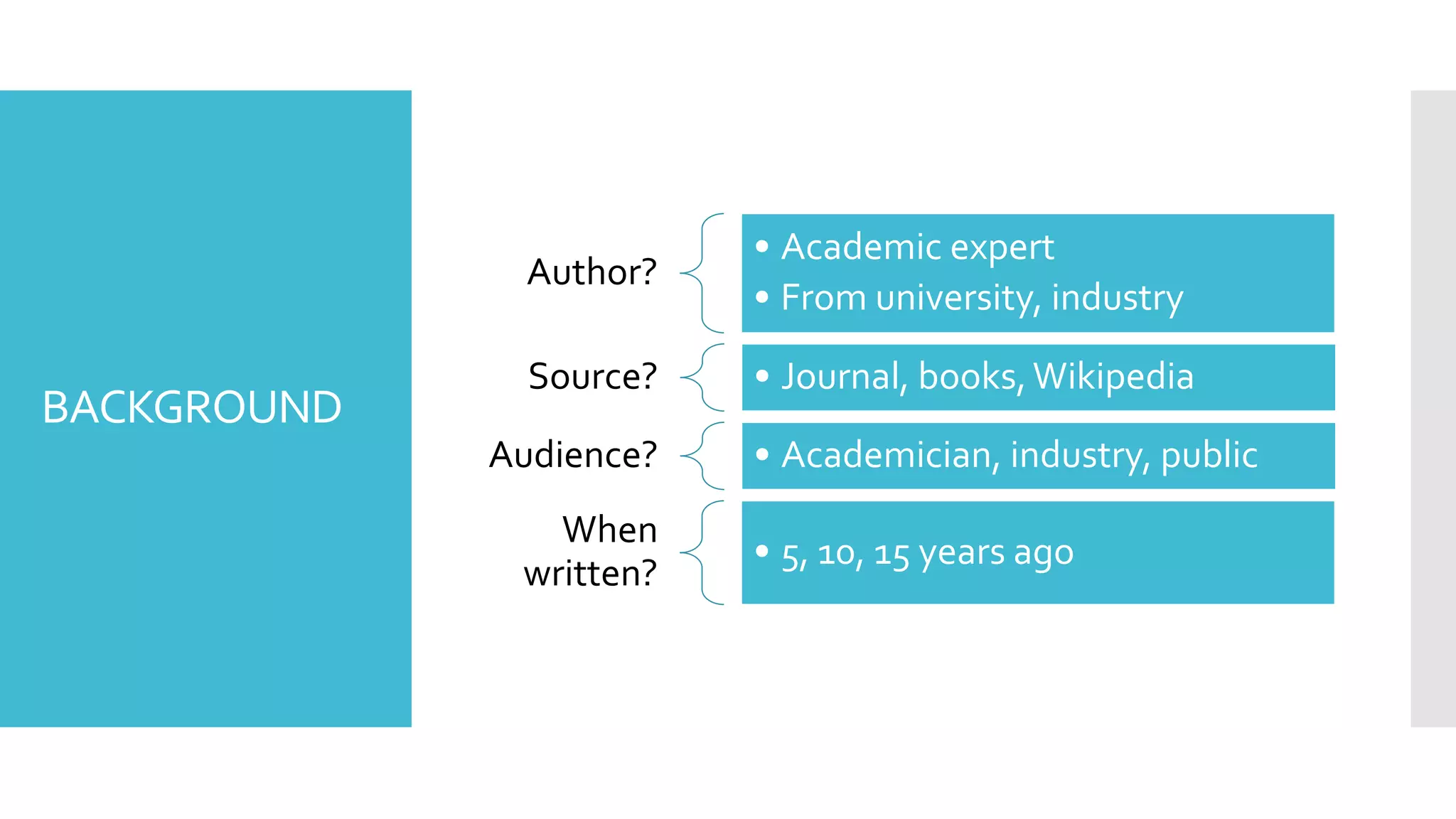
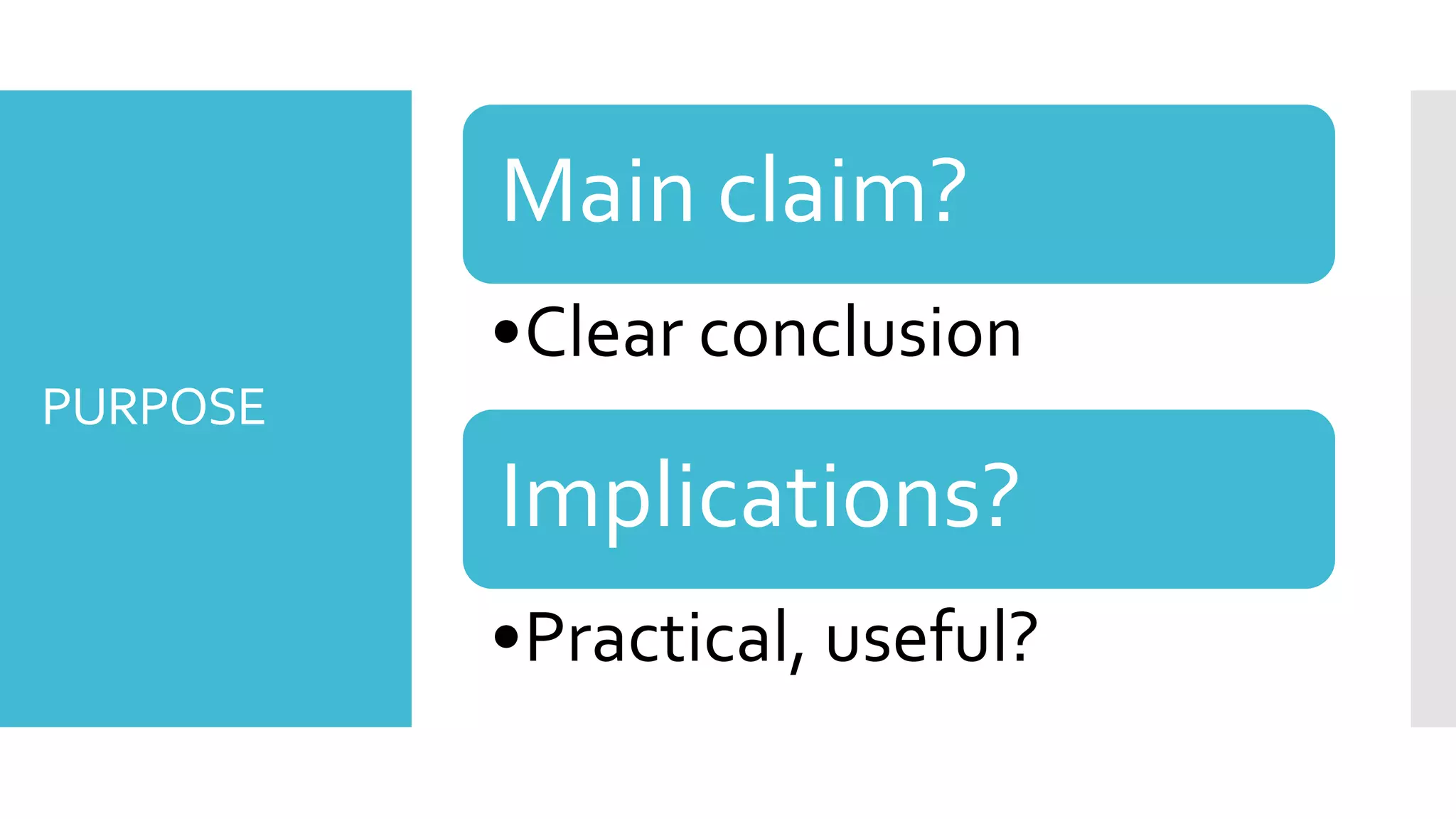
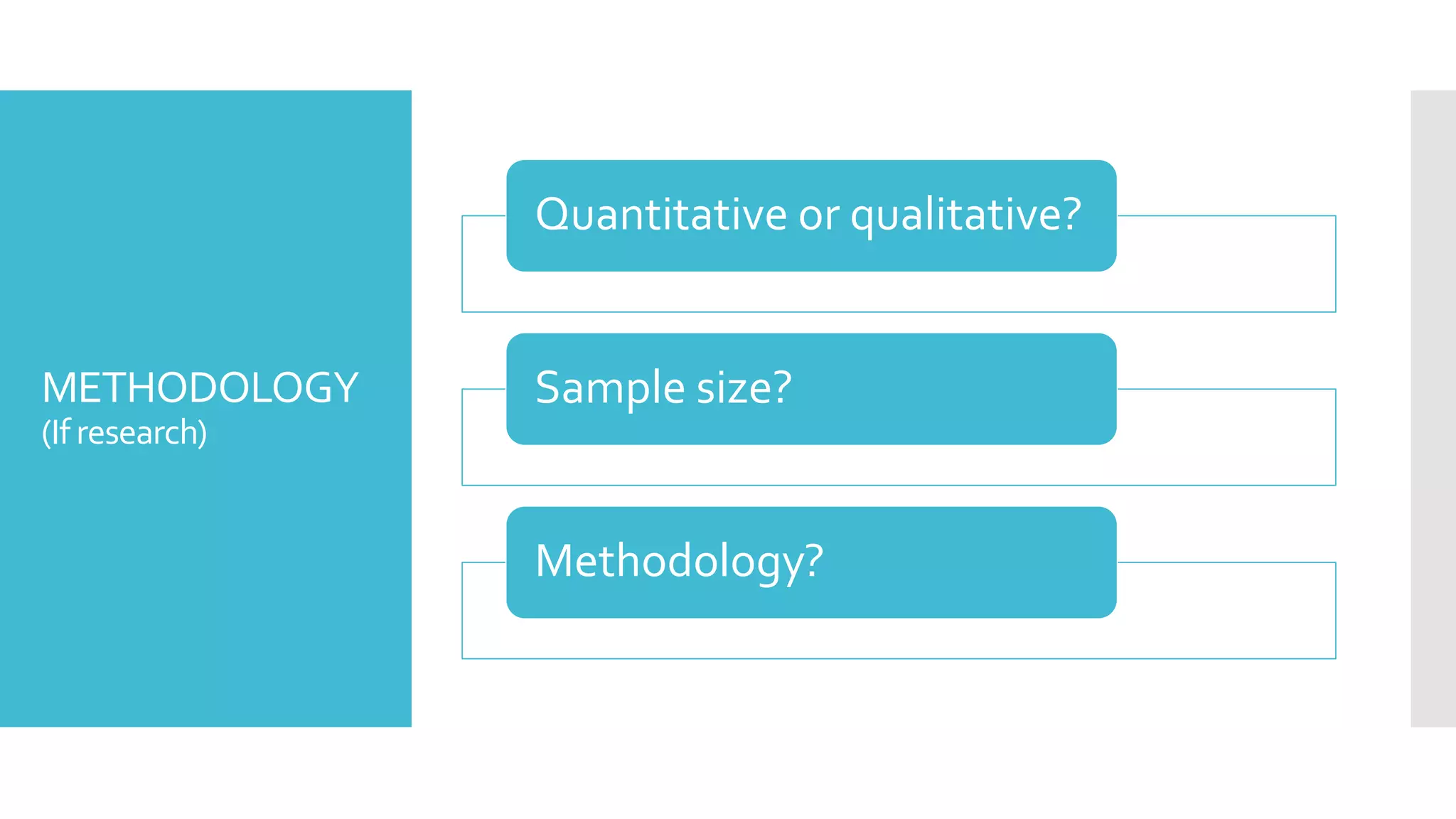
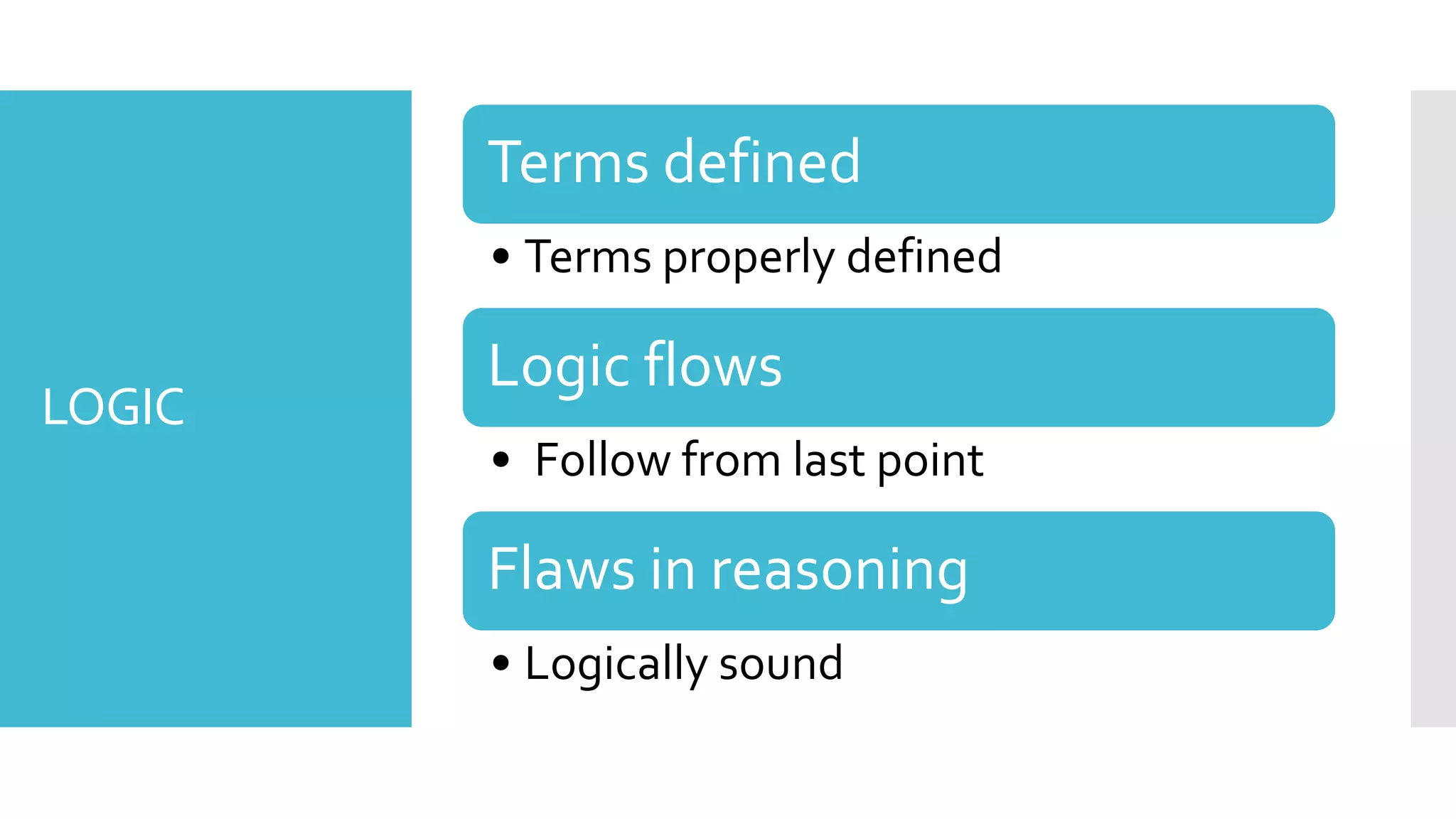
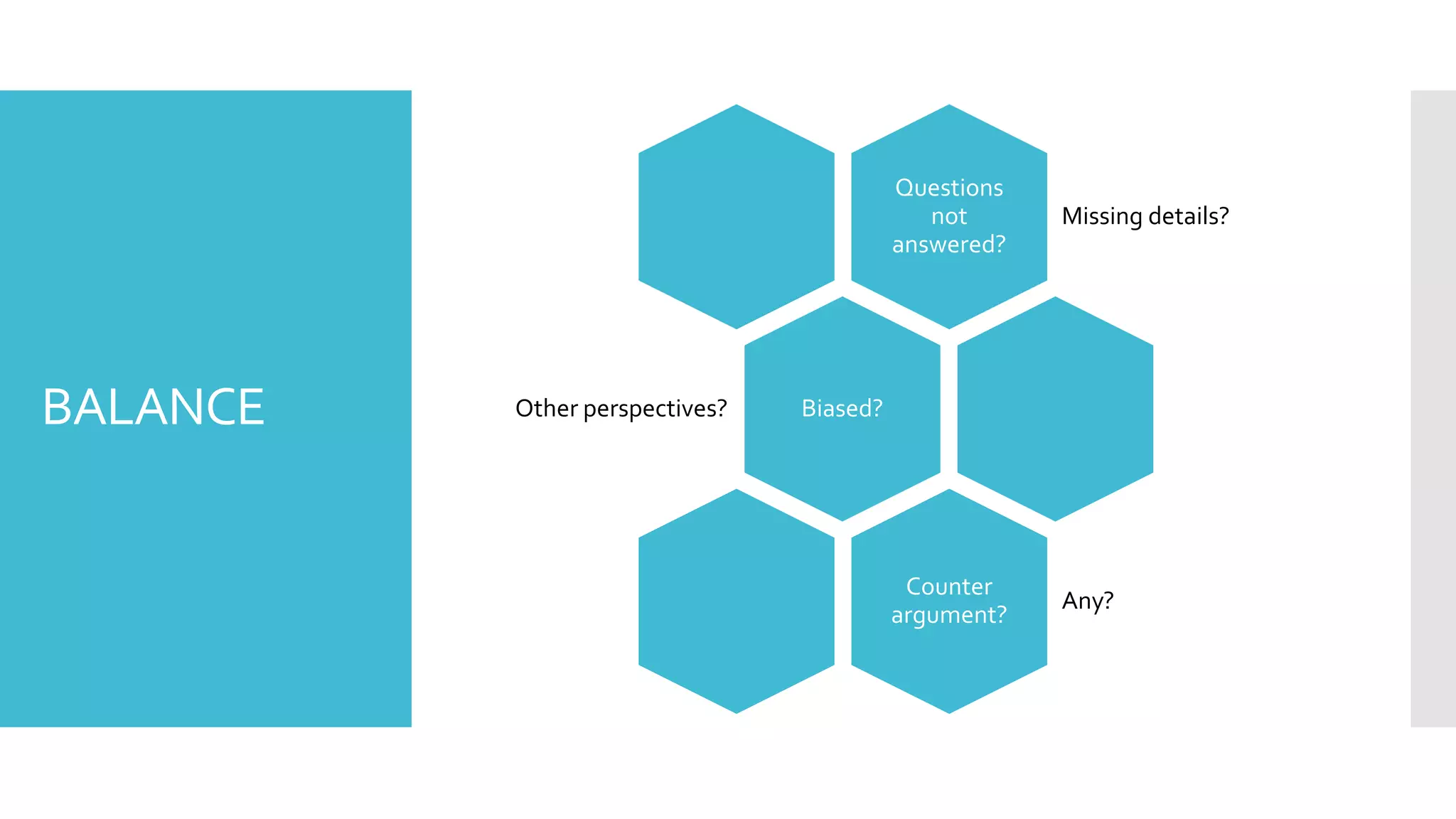
Critical reading involves carefully evaluating a text to identify its strengths and weaknesses by examining how well it presents and supports its arguments. It requires considering factors like the author's background and intended audience, the purpose and conclusions of the reading, the evidence used and whether logical connections are made between claims and evidence. It also involves assessing limitations, how the reading relates to other research, and for research-based readings, examining the methodology. Critical reading is useful for writing critiques or reviews by analyzing elements like definitions, logic, balance and addressing counterarguments.
WHAT DOES
IT INVOLVE?
Carefully considering and evaluating the reading
Identifying the reading's strengths and implications
Identifying the reading's weaknesses and flaws
Looking at the 'big picture' and deciding how the reading fits into
the greater academic context (the understandings presented in
other books and articles on this topic)
4.
CRITICAL
READING
In brief,you are actively responding to the reading.
Critical reading is useful at all stages of academic study, but is
particularly important when writing an article critique or
a literature review.
5.
CRITICAL
READING
Critical readingoften involves asking questions about the reading.
In particular, you are examining the strengths and weaknesses of
the reading's argument.
BACKGROUND
Author?
• Academic expert
•From university, industry
Source? • Journal, books,Wikipedia
Audience? • Academician, industry, public
When
written?
• 5, 10, 15 years ago