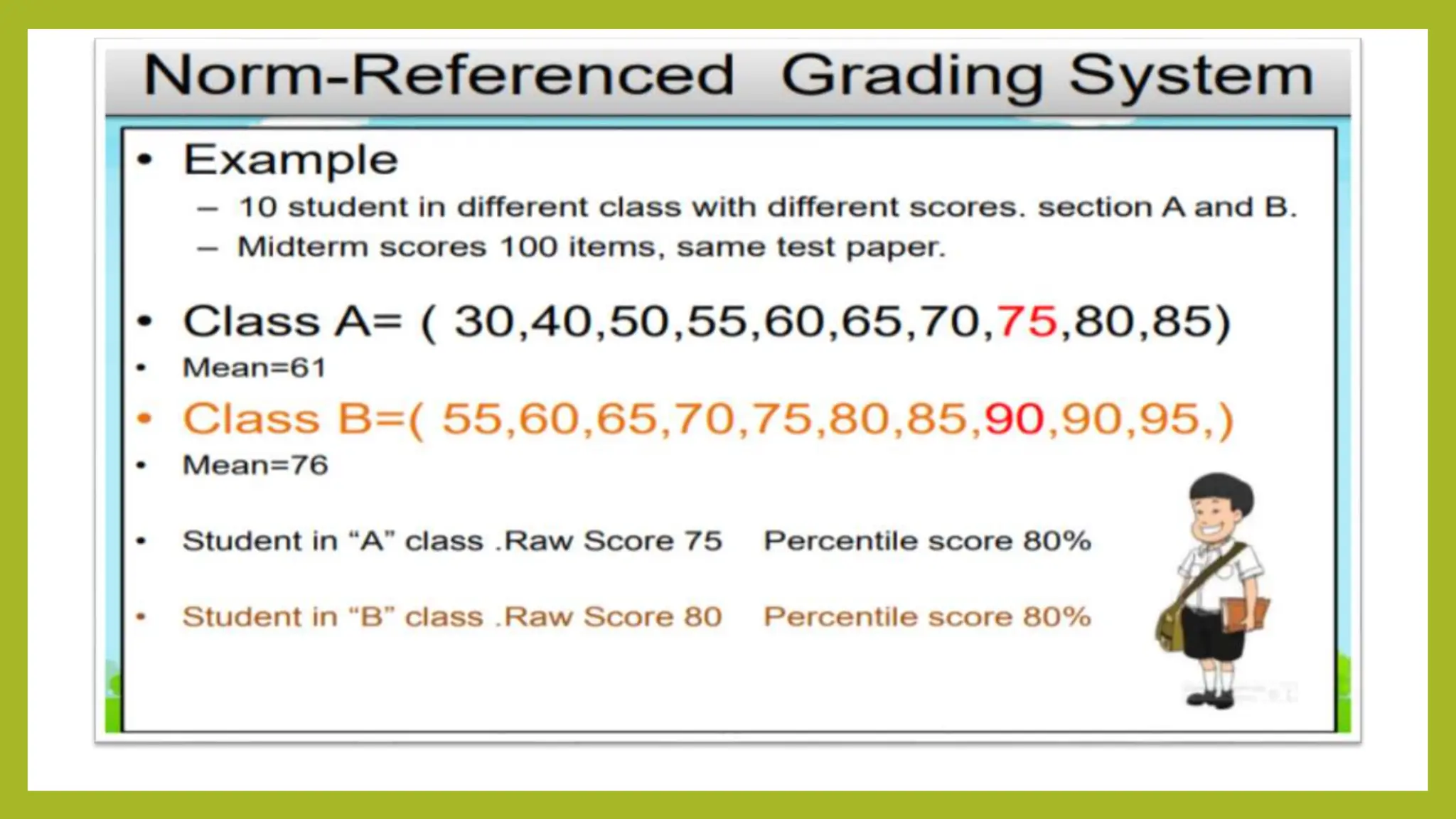
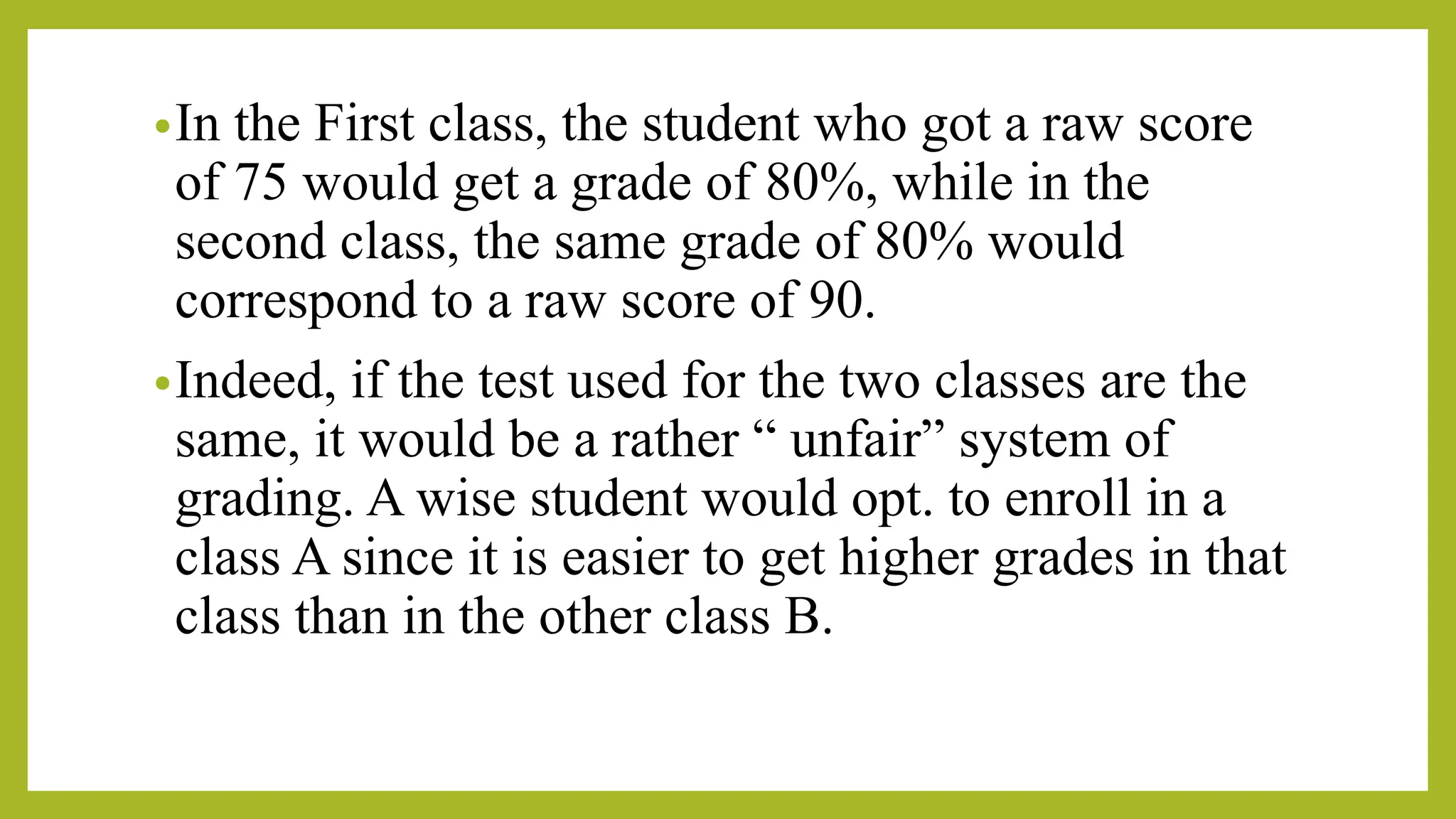
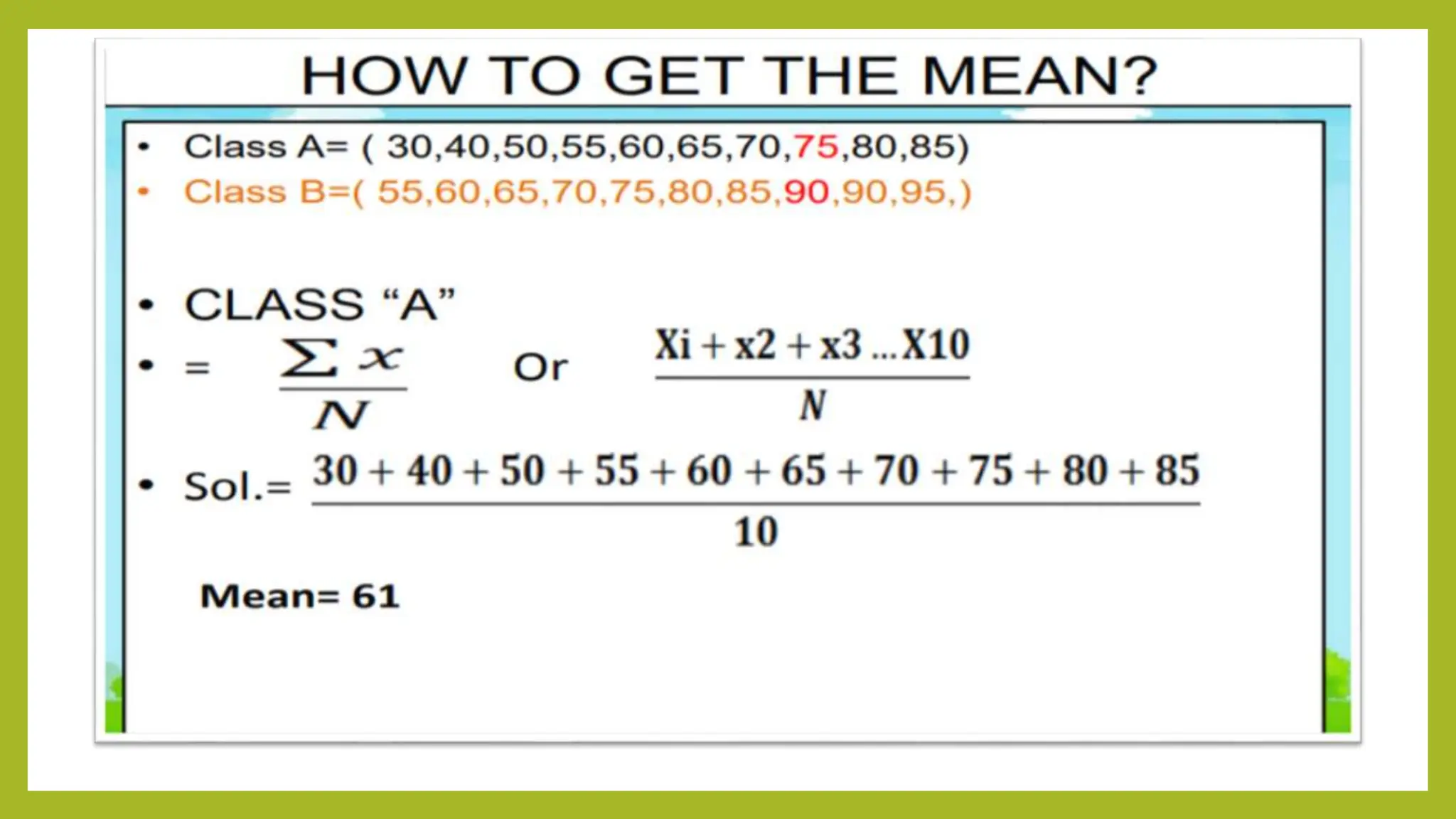
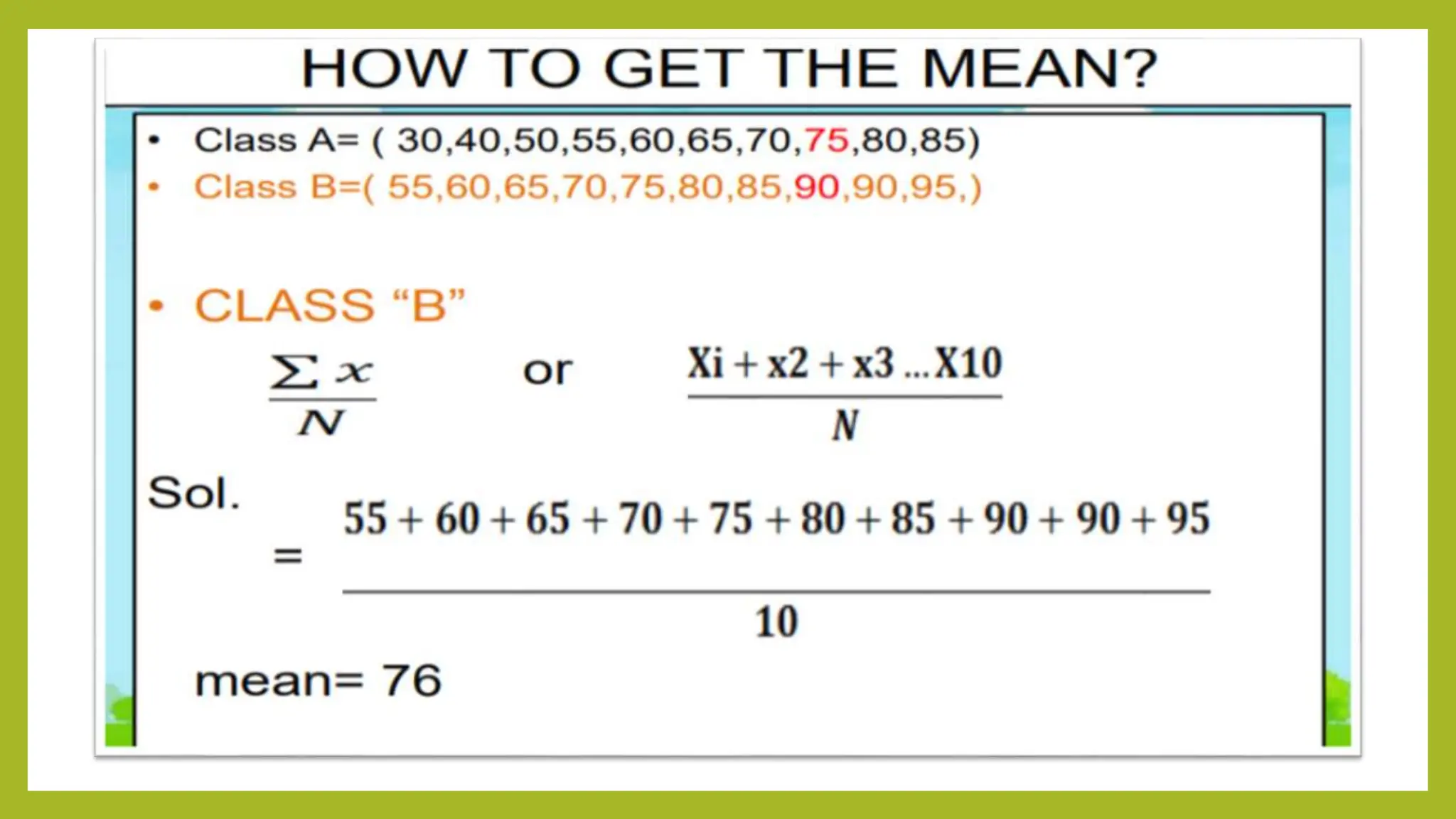
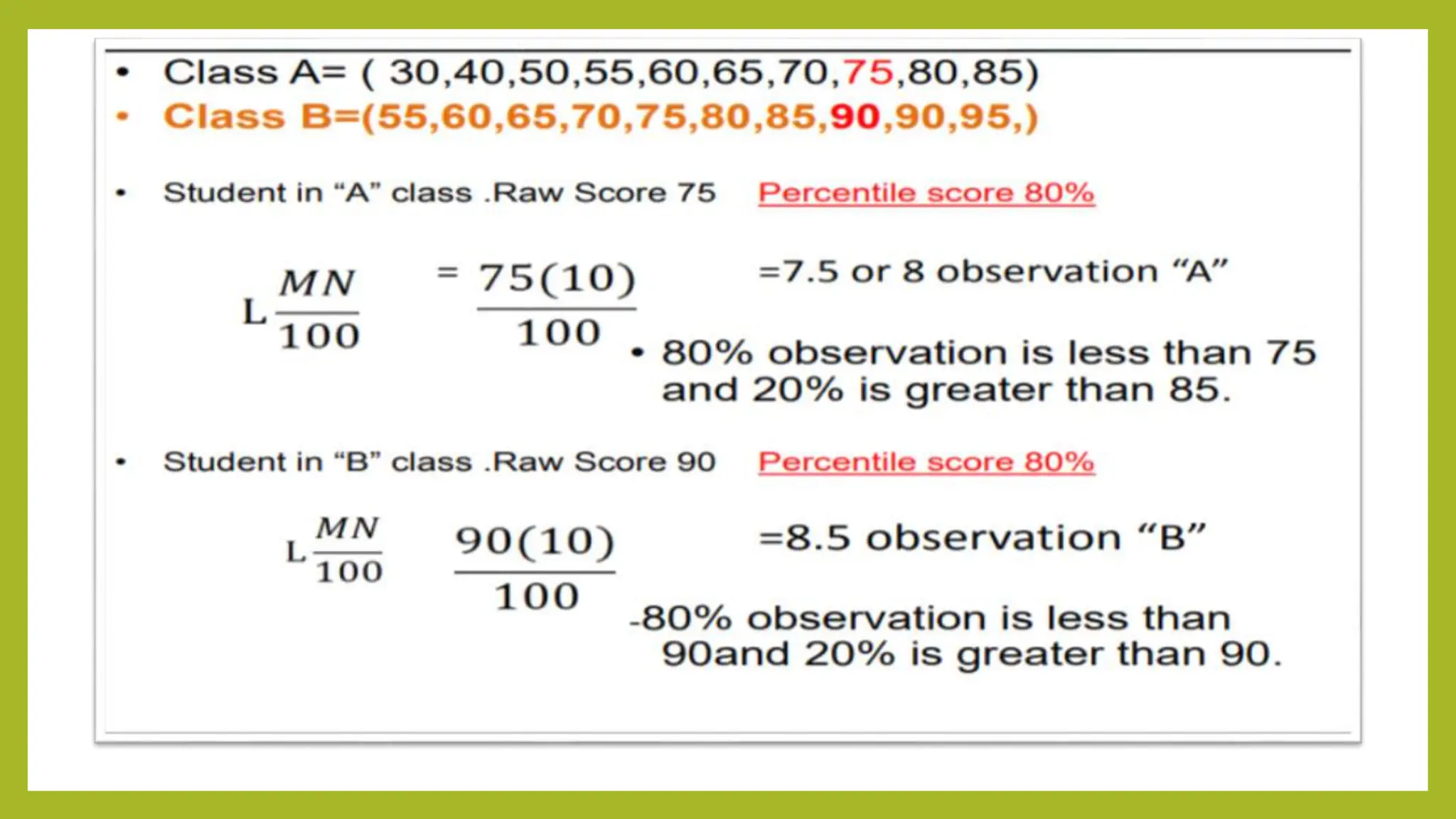
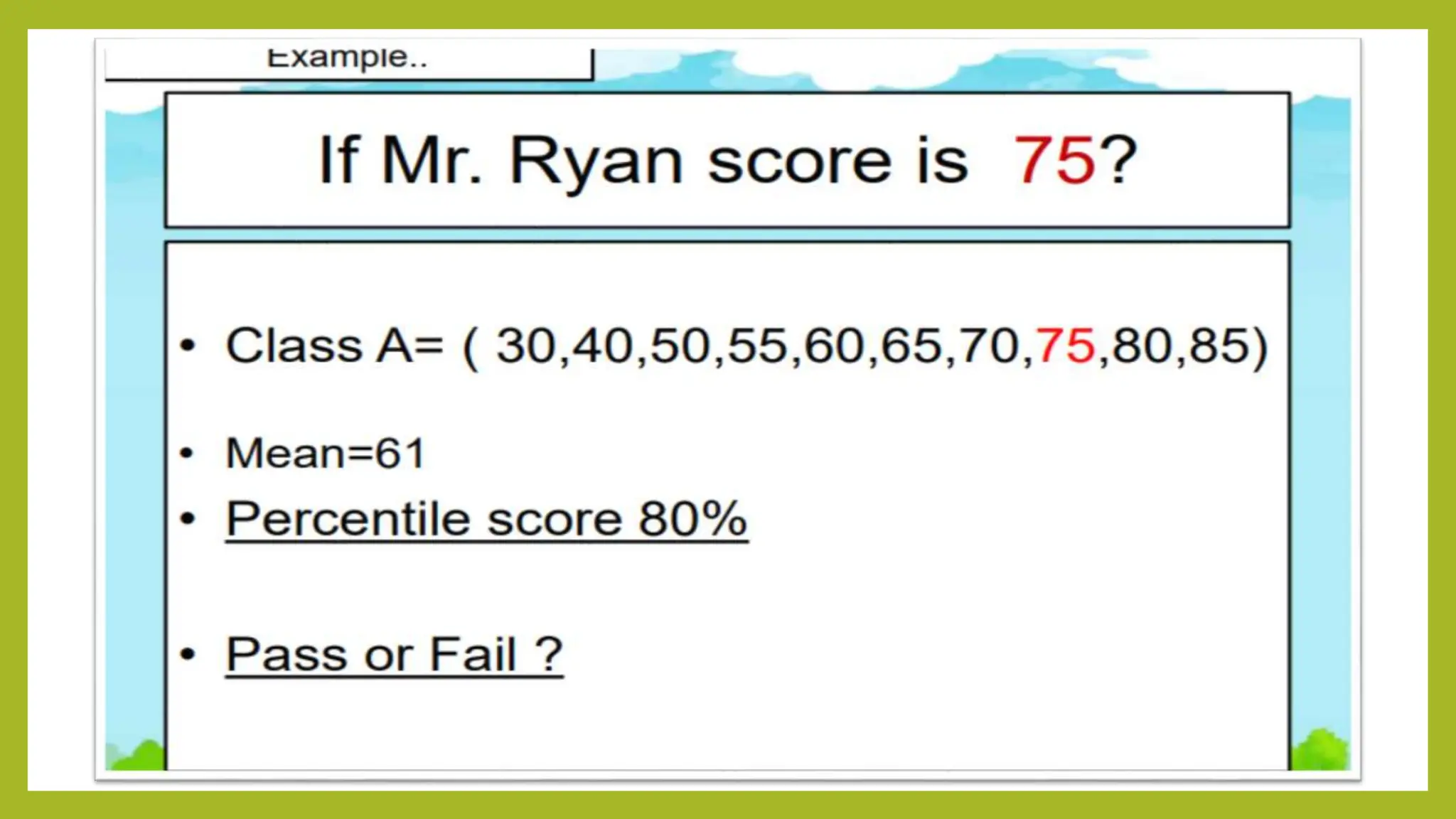
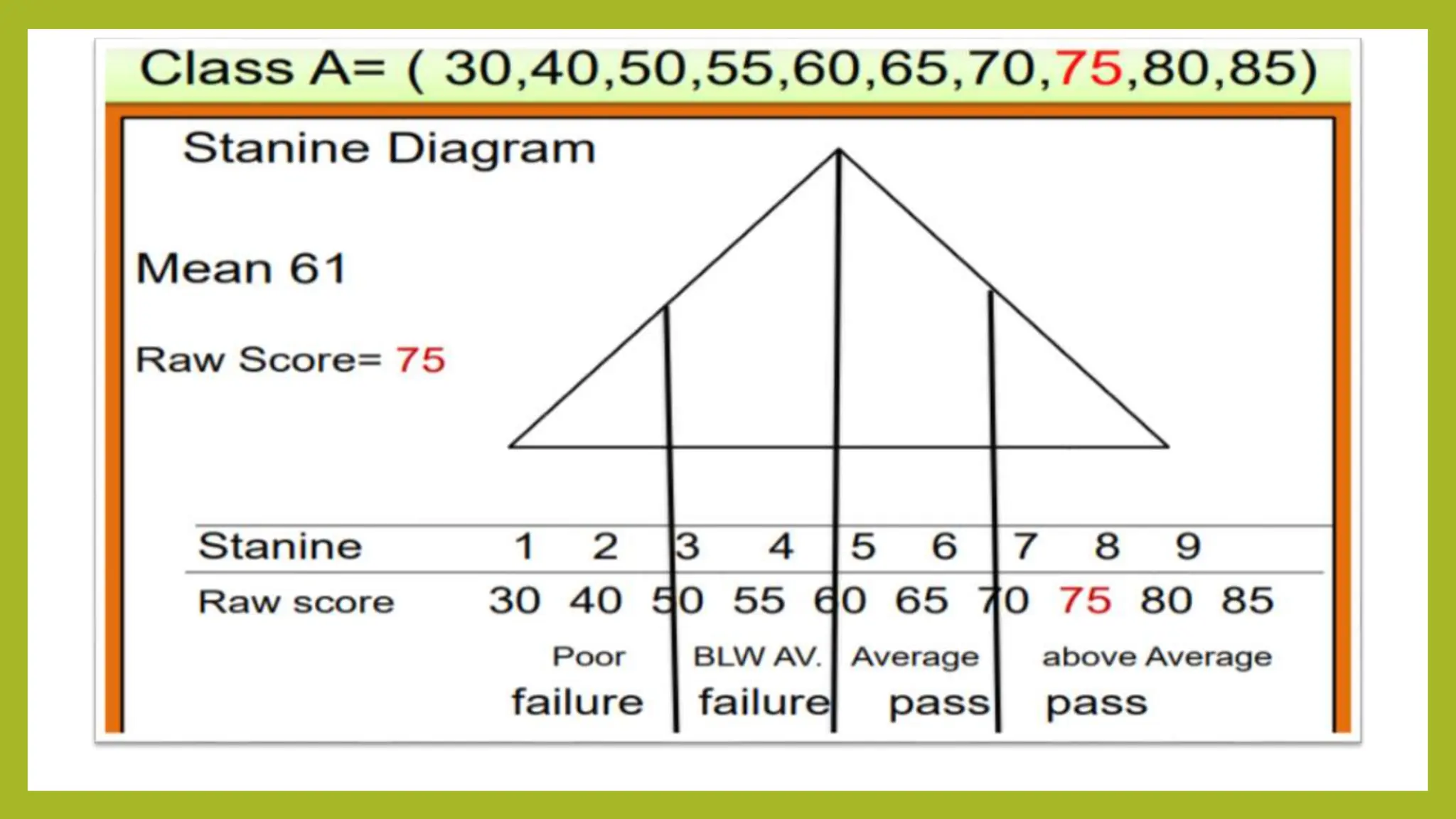
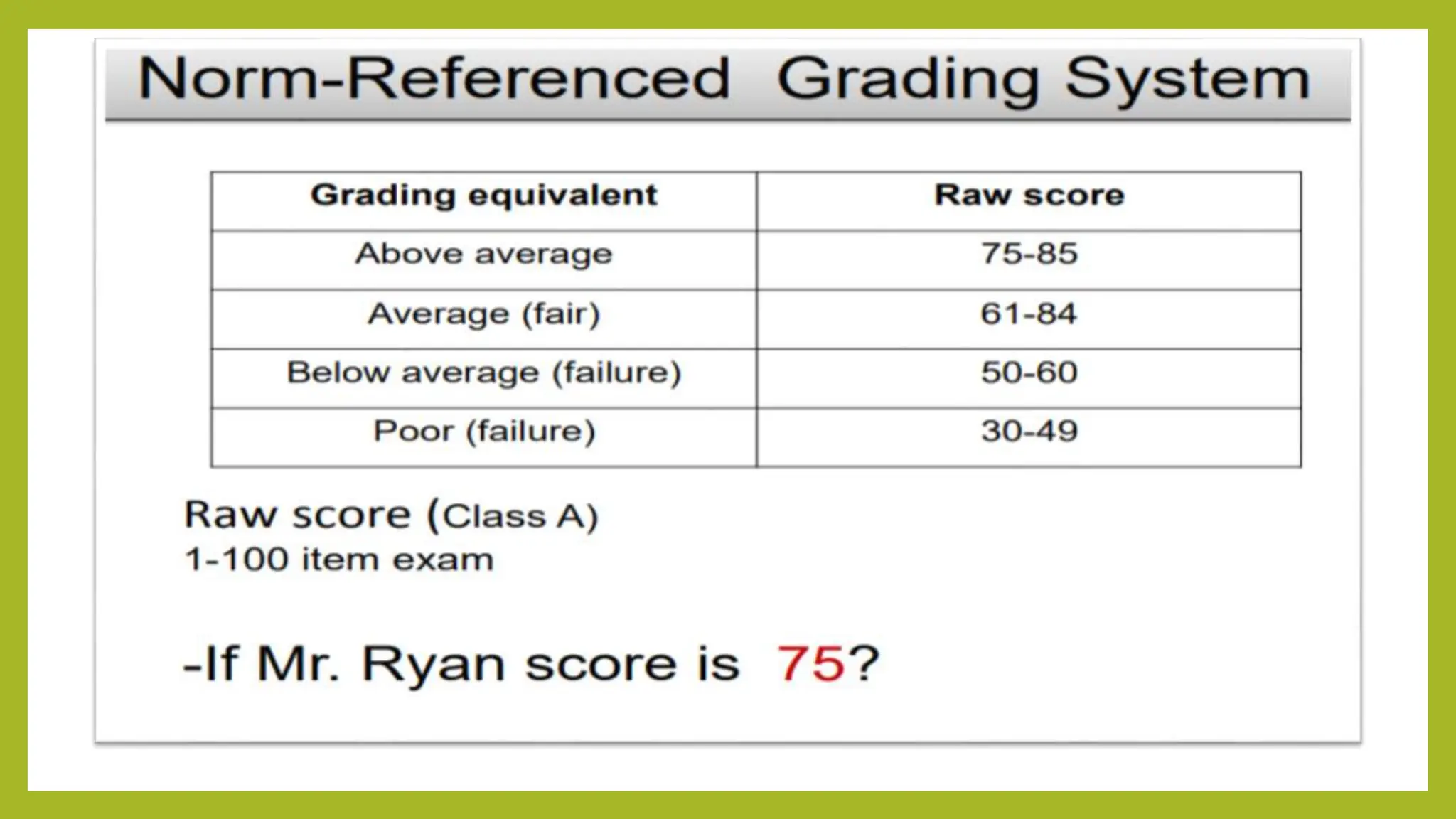
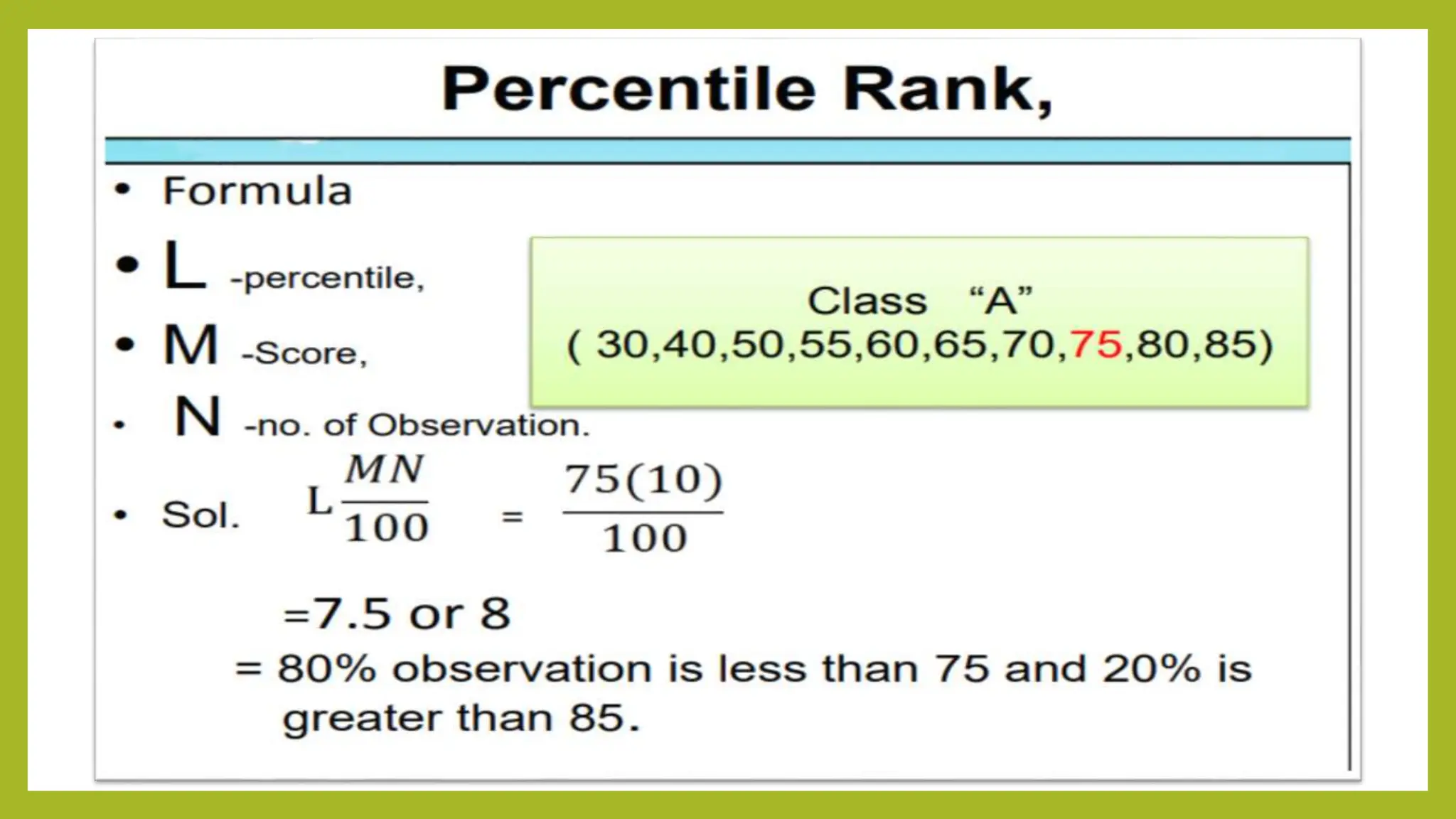
•In the First class, the student who got a raw score
of 75 would get a grade of 80%, while in the
second class, the same grade of 80% would
correspond to a raw score of 90.
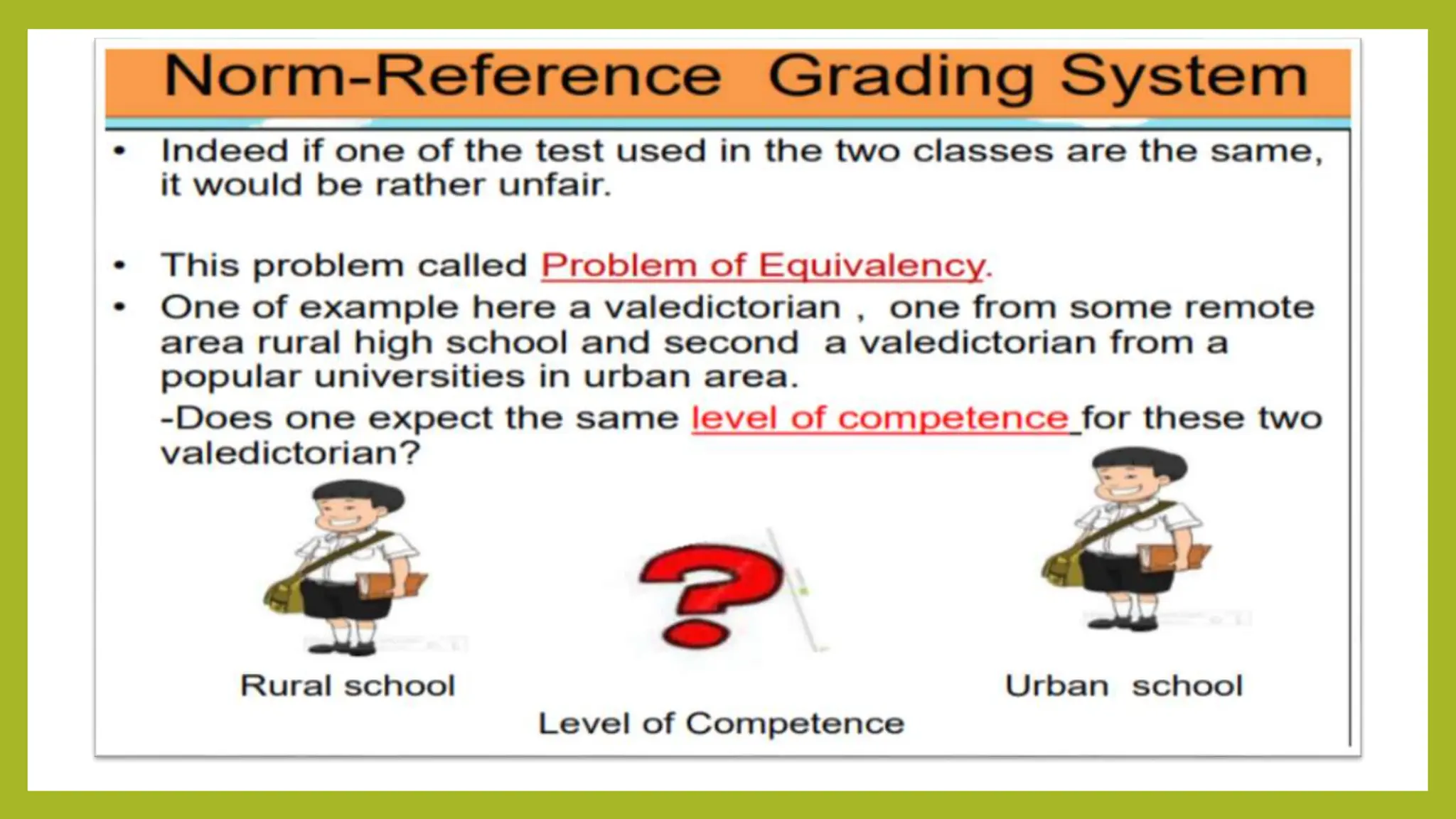
•Indeed, if the test used for the two classes are the
same, it would be a rather “ unfair” system of
grading. A wise student would opt. to enroll in a
class A since it is easier to get higher grades in that
class than in the other class B.
Criterion-Referenced Grading
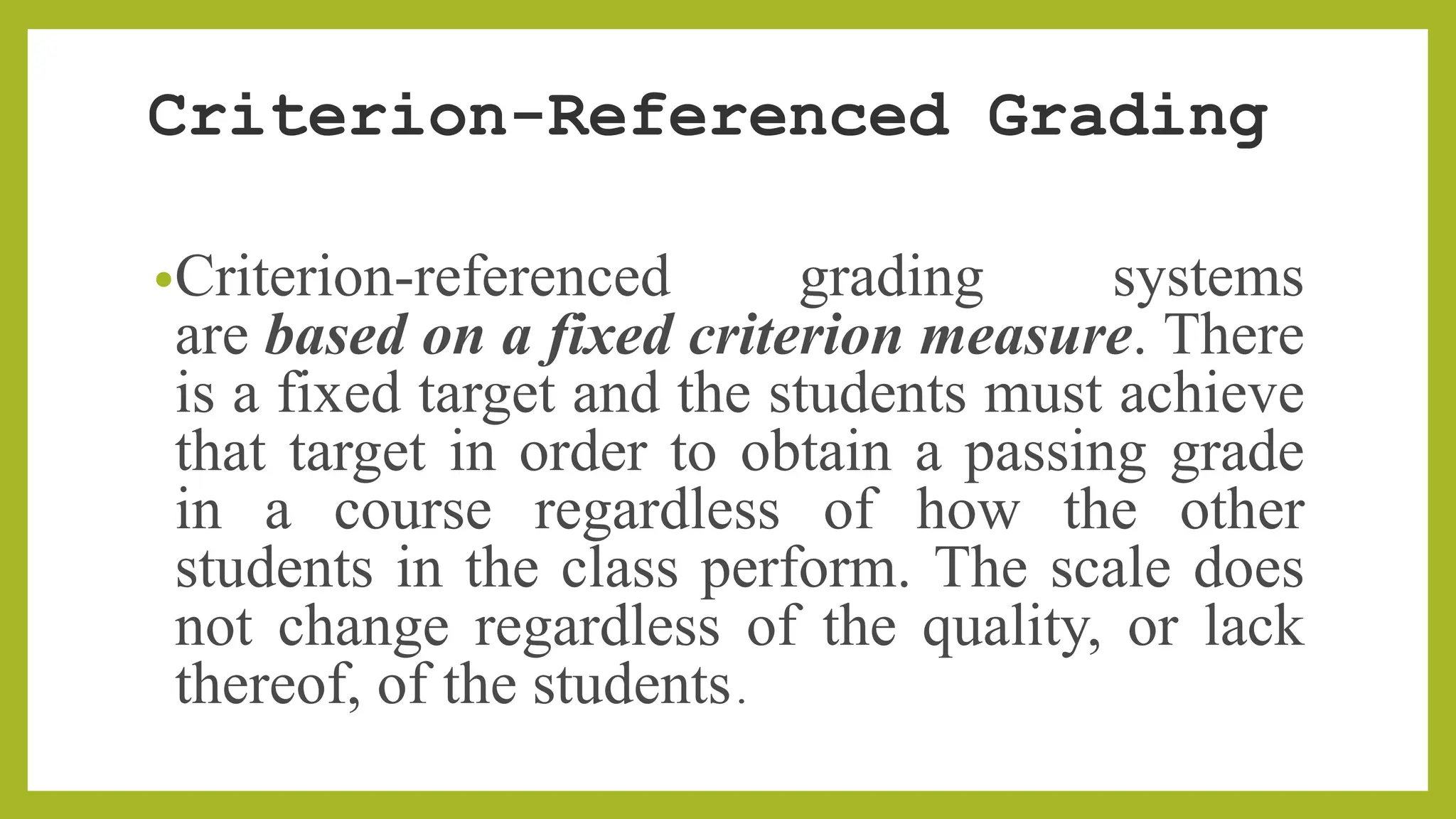
•Criterion-referenced grading systems
are based on a fixed criterion measure. There
is a fixed target and the students must achieve
that target in order to obtain a passing grade
in a course regardless of how the other
students in the class perform. The scale does
not change regardless of the quality, or lack
thereof, of the students.
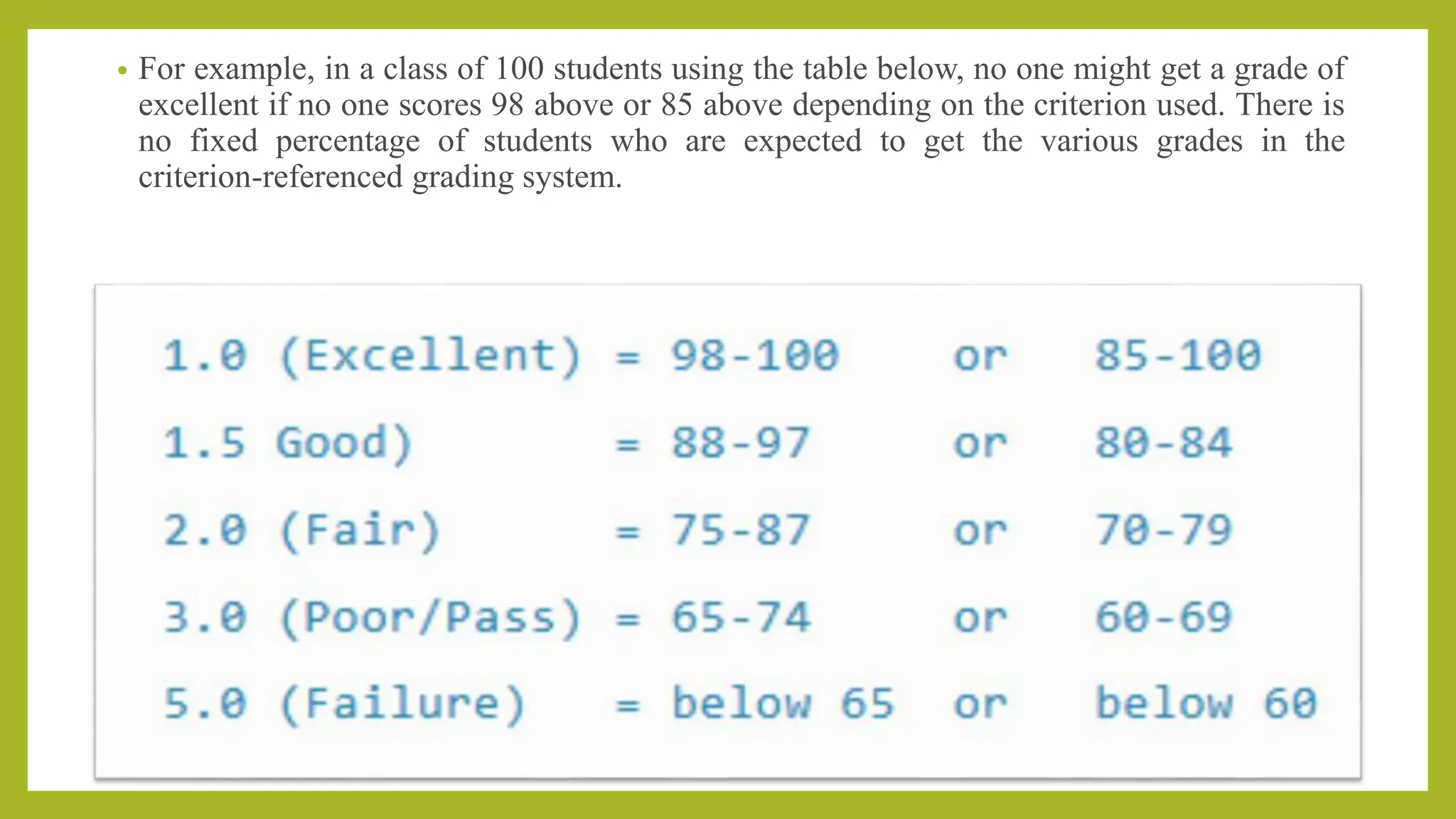
• For example, in a class of 100 students using the table below, no one might get a grade of
excellent if no one scores 98 above or 85 above depending on the criterion used. There is
no fixed percentage of students who are expected to get the various grades in the
criterion-referenced grading system.
•Criterion-referenced systems are often used in
situations where the teachers are agreed on the
meaning of a ” standard of performance” in a
subject but the quality of the students is unknown
or uneven; where the work involves student
collaboration or teamwork; and where there is no
external driving factor such as needing to
systematically reduce a pool of eligible students.
•Note that in a criterion-referenced grading
system, students can help a fellow student in
group work without necessarily worrying
about lowering his grade in that course. This
is because the criterion-referenced grading
system does not require the mean (of the
class) as basis for distributing grades among
the students.
•It is therefore an ideal system to use in
collaborative group work. When students are
evaluated based on predefined criteria, they are
freed to collaborate with one another and with
the instructor. With criterion-referenced grading,
a rich learning environment is to everyone’s
advantage, so students are rewarded for finding
ways to help each other, and for contributing to
class and small group discussions
•Since the criterion measure used in criterion-referenced
grading is a measure that ultimately rests with the teacher, it
is logical to ask:
What prevents teachers who use criterion-referenced grading
from setting the performance criteria so low that everyone
can pass with ease?
Ans: First, the criterion should not be based on only one teacher’s
opinion or standard. It should be collaboratively arrived at. A group of
teachers teaching the same subject must set the criterion together.
Second, once the criterion is established, it must be made public and
open to public scrutiny so that it does not become arbitrary and subject
to the whim and caprices of the teacher.

Criterion-Referenced Grading and Norm Grading system

  • 5.
    •In the Firstclass, the student who got a raw score of 75 would get a grade of 80%, while in the second class, the same grade of 80% would correspond to a raw score of 90. •Indeed, if the test used for the two classes are the same, it would be a rather “ unfair” system of grading. A wise student would opt. to enroll in a class A since it is easier to get higher grades in that class than in the other class B.
  • 16.
    Criterion-Referenced Grading •Criterion-referenced gradingsystems are based on a fixed criterion measure. There is a fixed target and the students must achieve that target in order to obtain a passing grade in a course regardless of how the other students in the class perform. The scale does not change regardless of the quality, or lack thereof, of the students.
  • 17.
    • For example,in a class of 100 students using the table below, no one might get a grade of excellent if no one scores 98 above or 85 above depending on the criterion used. There is no fixed percentage of students who are expected to get the various grades in the criterion-referenced grading system.
  • 18.
    •Criterion-referenced systems areoften used in situations where the teachers are agreed on the meaning of a ” standard of performance” in a subject but the quality of the students is unknown or uneven; where the work involves student collaboration or teamwork; and where there is no external driving factor such as needing to systematically reduce a pool of eligible students.
  • 19.
    •Note that ina criterion-referenced grading system, students can help a fellow student in group work without necessarily worrying about lowering his grade in that course. This is because the criterion-referenced grading system does not require the mean (of the class) as basis for distributing grades among the students.
  • 20.
    •It is thereforean ideal system to use in collaborative group work. When students are evaluated based on predefined criteria, they are freed to collaborate with one another and with the instructor. With criterion-referenced grading, a rich learning environment is to everyone’s advantage, so students are rewarded for finding ways to help each other, and for contributing to class and small group discussions
  • 21.
    •Since the criterionmeasure used in criterion-referenced grading is a measure that ultimately rests with the teacher, it is logical to ask: What prevents teachers who use criterion-referenced grading from setting the performance criteria so low that everyone can pass with ease? Ans: First, the criterion should not be based on only one teacher’s opinion or standard. It should be collaboratively arrived at. A group of teachers teaching the same subject must set the criterion together. Second, once the criterion is established, it must be made public and open to public scrutiny so that it does not become arbitrary and subject to the whim and caprices of the teacher.