Lifespan Development- EDUC 600
November 1, 2014
Pamela Noble, MBA
The Psychological Impact of Trauma on the Family Unit
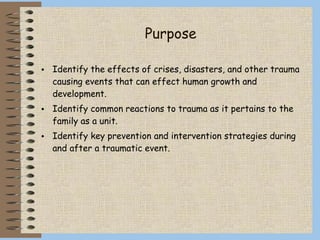
Purpose
• Identify the effects of crises, disasters, and other trauma
causing events that can effect human growth and
development.
• Identify common reactions to trauma as it pertains to the
family as a unit.
• Identify key prevention and intervention strategies during
and after a traumatic event.
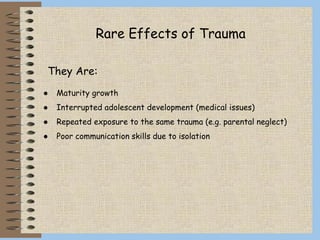
Rare Effects of Trauma
They Are:
● Maturity growth
● Interrupted adolescent development (medical issues)
● Repeated exposure to the same trauma (e.g. parental neglect)
● Poor communication skills due to isolation
*
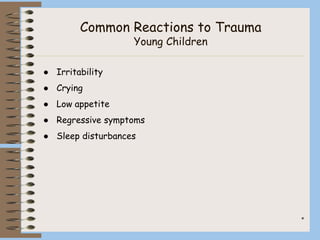
Common Reactions to Trauma
Young Children
● Irritability
● Crying
● Low appetite
● Regressive symptoms
● Sleep disturbances
*
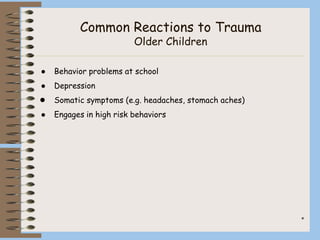
Common Reactions to Trauma
Older Children
● Behavior problems at school
● Depression
● Somatic symptoms (e.g. headaches, stomach aches)
● Engages in high risk behaviors
*
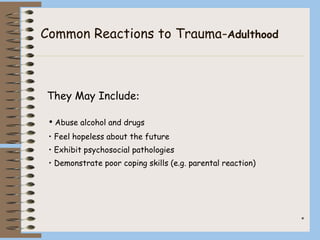
• Abuse alcohol and drugs
• Feel hopeless about the future
• Exhibit psychosocial pathologies
• Demonstrate poor coping skills (e.g. parental reaction)
They May Include:
Common Reactions to Trauma-Adulthood
*
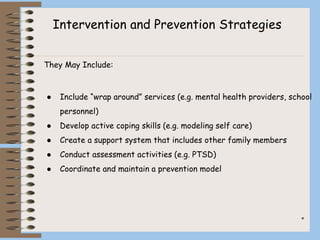
They May Include:
● Include “wrap around” services (e.g. mental health providers, school
personnel)
● Develop active coping skills (e.g. modeling self care)
● Create a support system that includes other family members
● Conduct assessment activities (e.g. PTSD)
● Coordinate and maintain a prevention model
Intervention and Prevention Strategies
Conclusion
A traumatic event is defined as an experience that causes physical,
emotional psychological distress or harm. It is an event that is per-
ceived and experience as a threat to one’s safety or to the stability
of one’s world. God said “when the righteous cry for help, the Lord
hears and delivers them out of their troubles. The Lord is near to
the brokenhearted and saves the crushed into spirit. Many are the
afflictions of the righteous, but the lord delivers him out of all of
them. He keeps all his bones; not one of them is broken.” Psalms 34:17-20
Reference:
www.nim.nih.gov/medlineplus/ency/article/001924.htm

Crisis intervention powerpoint pn2.0

  • 1.
    Lifespan Development- EDUC600 November 1, 2014 Pamela Noble, MBA The Psychological Impact of Trauma on the Family Unit
  • 2.
    Purpose • Identify theeffects of crises, disasters, and other trauma causing events that can effect human growth and development. • Identify common reactions to trauma as it pertains to the family as a unit. • Identify key prevention and intervention strategies during and after a traumatic event.
  • 3.
    Rare Effects ofTrauma They Are: ● Maturity growth ● Interrupted adolescent development (medical issues) ● Repeated exposure to the same trauma (e.g. parental neglect) ● Poor communication skills due to isolation
  • 4.
    * Common Reactions toTrauma Young Children ● Irritability ● Crying ● Low appetite ● Regressive symptoms ● Sleep disturbances
  • 5.
    * Common Reactions toTrauma Older Children ● Behavior problems at school ● Depression ● Somatic symptoms (e.g. headaches, stomach aches) ● Engages in high risk behaviors
  • 6.
    * • Abuse alcoholand drugs • Feel hopeless about the future • Exhibit psychosocial pathologies • Demonstrate poor coping skills (e.g. parental reaction) They May Include: Common Reactions to Trauma-Adulthood
  • 7.
    * They May Include: ●Include “wrap around” services (e.g. mental health providers, school personnel) ● Develop active coping skills (e.g. modeling self care) ● Create a support system that includes other family members ● Conduct assessment activities (e.g. PTSD) ● Coordinate and maintain a prevention model Intervention and Prevention Strategies
  • 8.
    Conclusion A traumatic eventis defined as an experience that causes physical, emotional psychological distress or harm. It is an event that is per- ceived and experience as a threat to one’s safety or to the stability of one’s world. God said “when the righteous cry for help, the Lord hears and delivers them out of their troubles. The Lord is near to the brokenhearted and saves the crushed into spirit. Many are the afflictions of the righteous, but the lord delivers him out of all of them. He keeps all his bones; not one of them is broken.” Psalms 34:17-20
  • 9.