Presented by:
Carolyn G. Carlisle PhD, LPC
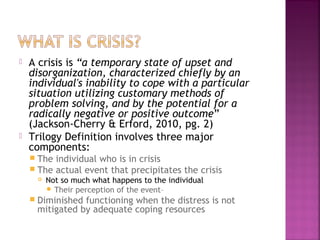
 A crisis is “a temporary state of upset and
disorganization, characterized chiefly by an
individual's inability to cope with a particular
situation utilizing customary methods of
problem solving, and by the potential for a
radically negative or positive outcome”
(Jackson-Cherry & Erford, 2010, pg. 2)
 Trilogy Definition involves three major
components:
 The individual who is in crisis
 The actual event that precipitates the crisis
 Not so much what happens to the individual
 Their perception of the event–
 Diminished functioning when the distress is not
mitigated by adequate coping resources
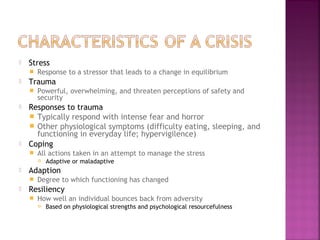
 Stress
 Response to a stressor that leads to a change in equilibrium
 Trauma
 Powerful, overwhelming, and threaten perceptions of safety and
security
 Responses to trauma
 Typically respond with intense fear and horror
 Other physiological symptoms (difficulty eating, sleeping, and
functioning in everyday life; hypervigilence)
 Coping
 All actions taken in an attempt to manage the stress
 Adaptive or maladaptive
 Adaption
 Degree to which functioning has changed
 Resiliency
 How well an individual bounces back from adversity
 Based on physiological strengths and psychological resourcefulness
 Brief therapeutic intervention with the goal
to return the client to their level of
functioning before the crisis designed to:
 Decrease suffering/symptoms
 Then refer to long term therapy if needed
 Triage client problems
 Resource and referral
 May or may not include clinical diagnosis
 Capitalize on client strengths and protective
factors that will facilitate coping
 Prevention
 May prevent full blown crisis or diminish the severity
 Assessment
 the stressor event
 the person experiencing the crisis
 the meaning of the event to the person in crisis
 Reactions of others that impact the person
experiencing the crisis
 Important to assess risk factors
 Some of which may have been present prior to the
crisis
 Intervention
 Treatment plan
 Resource and referral
 Termination
 Short term nature of crisis intervention can present
termination issues
Interviewing the client
Psychosocial history
Perception of the event
Presenting symptoms
Risks for self harm
Coping resources available to client
Support system available to client
 Direct observations of the client during the
interview
 Present to person, place, time, and circumstance?
 Represents their level of contact with reality
 Level of fear, anxiety, despair, sense of
hopelessness?
 Affective Intervention:
 Need to establish rapid rapport with the client
 Help the client to express and manage feelings resulting from the crisis
 Cognitive Intervention:
 Help the client understand the connections between the traumatic
event and their response to it
 Clarifying the problem
 Identify factors involved
 Helping the client to intellectually understand the crisis
 Initiate coping strategies
 Help the client to change their perceptions surrounding the trauma
 Environmental intervention:
 Help the client to access support
 From family, friends, community resources
 VOCA grant
 All three of these approaches will be used at some point
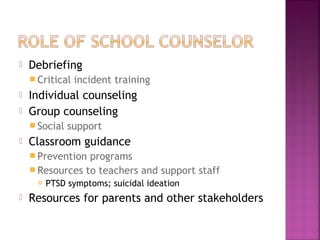
 Debriefing
 Critical incident training
 Individual counseling
 Group counseling
 Social support
 Classroom guidance
 Prevention programs
 Resources to teachers and support staff
 PTSD symptoms; suicidal ideation
 Resources for parents and other stakeholders
 Assistant clients in understanding the ways crisis
has affected their life
 Cognitively
 Behaviorally
 Emotionally
 Monitor and assess the severity of the trauma
 Make referrals as needed
 Provide specific crisis intervention strategies
 Specific treatment plan
 Safety planning
 Coping skills development and stress inoculators
 Provide client with resources
 Prepare client to deal with future crises
 Will help eliminate symptoms
 May people report extreme personal growth
subsequent to a crisis
 Effective intervention is the key to positive
outcomes
 Jackson-Cherry, L; & Erford, B.(2010), Crisis
Intervention. Pearson, New York, New York.
 Information from a website- ksu.edu

Crisis intervention smca 01072016

  • 1.
    Presented by: Carolyn G.Carlisle PhD, LPC
  • 2.
     A crisisis “a temporary state of upset and disorganization, characterized chiefly by an individual's inability to cope with a particular situation utilizing customary methods of problem solving, and by the potential for a radically negative or positive outcome” (Jackson-Cherry & Erford, 2010, pg. 2)  Trilogy Definition involves three major components:  The individual who is in crisis  The actual event that precipitates the crisis  Not so much what happens to the individual  Their perception of the event–  Diminished functioning when the distress is not mitigated by adequate coping resources
  • 3.
     Stress  Responseto a stressor that leads to a change in equilibrium  Trauma  Powerful, overwhelming, and threaten perceptions of safety and security  Responses to trauma  Typically respond with intense fear and horror  Other physiological symptoms (difficulty eating, sleeping, and functioning in everyday life; hypervigilence)  Coping  All actions taken in an attempt to manage the stress  Adaptive or maladaptive  Adaption  Degree to which functioning has changed  Resiliency  How well an individual bounces back from adversity  Based on physiological strengths and psychological resourcefulness
  • 4.
     Brief therapeuticintervention with the goal to return the client to their level of functioning before the crisis designed to:  Decrease suffering/symptoms  Then refer to long term therapy if needed  Triage client problems  Resource and referral  May or may not include clinical diagnosis  Capitalize on client strengths and protective factors that will facilitate coping  Prevention  May prevent full blown crisis or diminish the severity
  • 5.
     Assessment  thestressor event  the person experiencing the crisis  the meaning of the event to the person in crisis  Reactions of others that impact the person experiencing the crisis  Important to assess risk factors  Some of which may have been present prior to the crisis  Intervention  Treatment plan  Resource and referral  Termination  Short term nature of crisis intervention can present termination issues
  • 6.
    Interviewing the client Psychosocialhistory Perception of the event Presenting symptoms Risks for self harm Coping resources available to client Support system available to client  Direct observations of the client during the interview  Present to person, place, time, and circumstance?  Represents their level of contact with reality  Level of fear, anxiety, despair, sense of hopelessness?
  • 7.
     Affective Intervention: Need to establish rapid rapport with the client  Help the client to express and manage feelings resulting from the crisis  Cognitive Intervention:  Help the client understand the connections between the traumatic event and their response to it  Clarifying the problem  Identify factors involved  Helping the client to intellectually understand the crisis  Initiate coping strategies  Help the client to change their perceptions surrounding the trauma  Environmental intervention:  Help the client to access support  From family, friends, community resources  VOCA grant  All three of these approaches will be used at some point
  • 8.
     Debriefing  Criticalincident training  Individual counseling  Group counseling  Social support  Classroom guidance  Prevention programs  Resources to teachers and support staff  PTSD symptoms; suicidal ideation  Resources for parents and other stakeholders
  • 9.
     Assistant clientsin understanding the ways crisis has affected their life  Cognitively  Behaviorally  Emotionally  Monitor and assess the severity of the trauma  Make referrals as needed  Provide specific crisis intervention strategies  Specific treatment plan  Safety planning  Coping skills development and stress inoculators  Provide client with resources  Prepare client to deal with future crises  Will help eliminate symptoms
  • 10.
     May peoplereport extreme personal growth subsequent to a crisis  Effective intervention is the key to positive outcomes
  • 11.
     Jackson-Cherry, L;& Erford, B.(2010), Crisis Intervention. Pearson, New York, New York.  Information from a website- ksu.edu