CRISIS COMMUNICATION AND
ITS IMPLICATIONS FOR
ORGANISATIONS
Group 5:
Kushagra Sharma
(057)
Neha Dalal (070)
Paras Sharma (077)
Prodyot Parashar
(083)
Raj Kumar Singh
(089)
"It takes 20 years to build a
reputation and five minutes to ruin it.”
-Warren Buffett
Bloodbath in Indian Stock
Markets
Investors in Indian markets lost more
than 16 trillion Rupees in just 2 days !
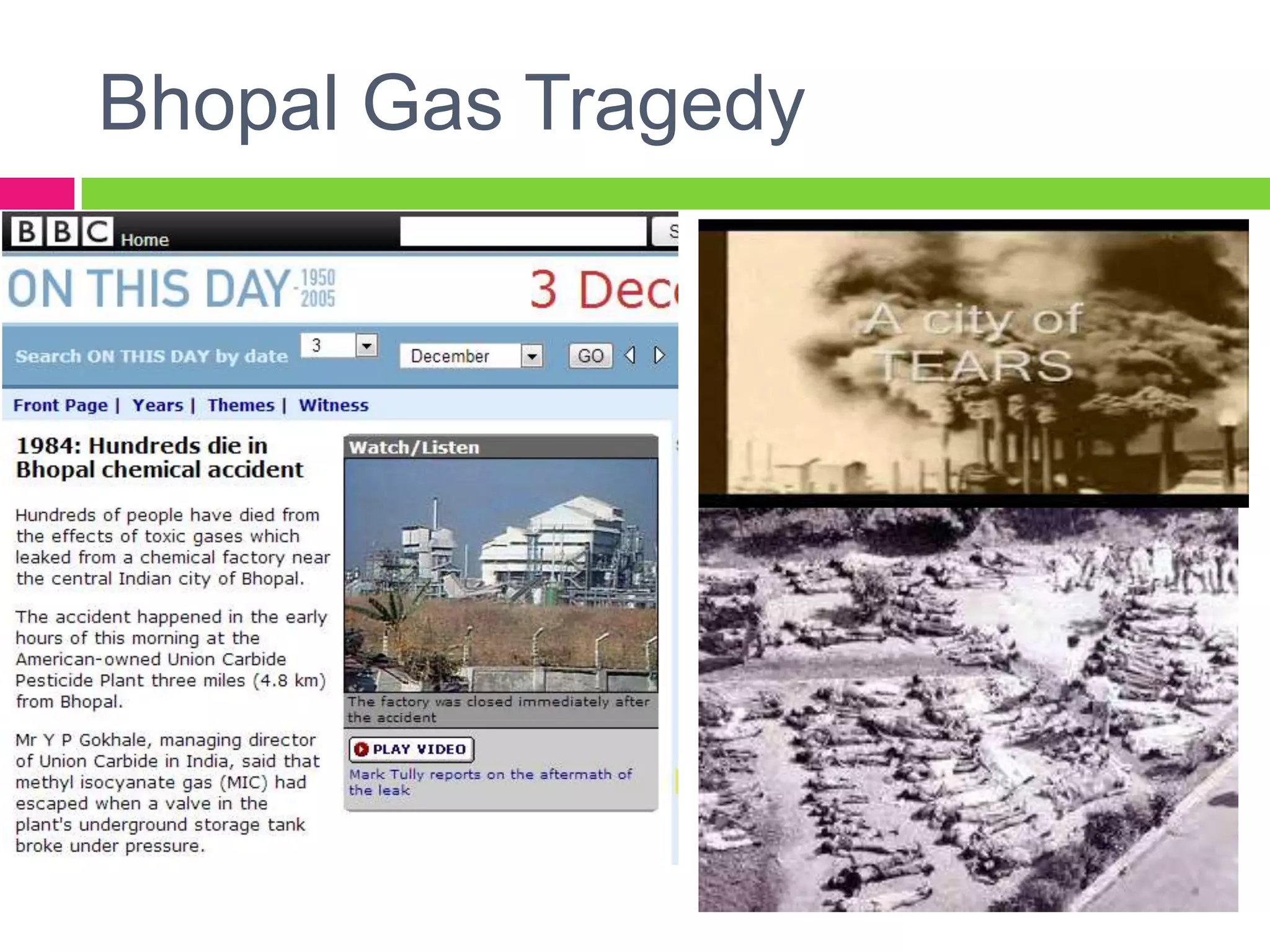
Bhopal Gas Tragedy
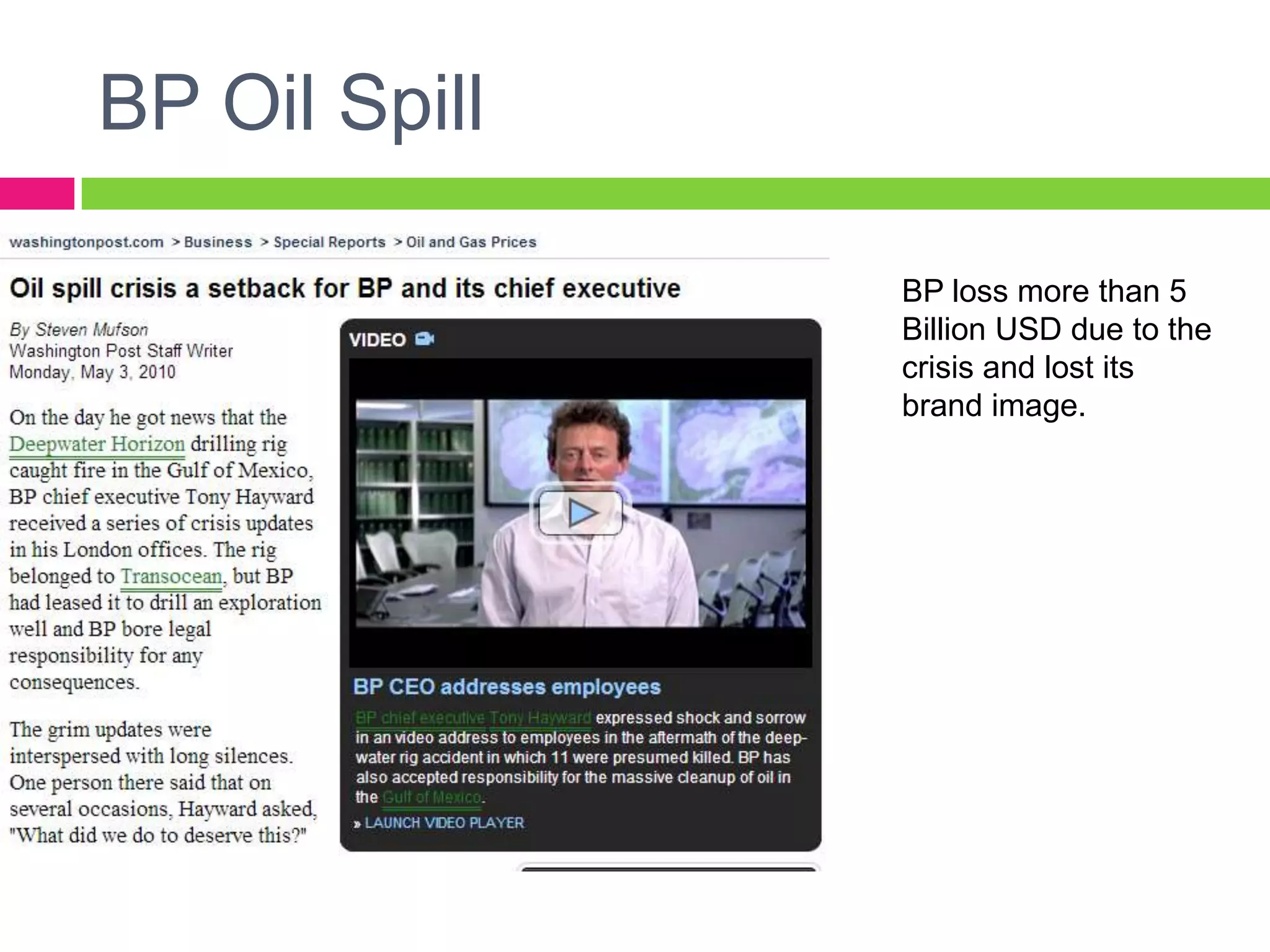
BP Oil Spill
BP loss more than 5
Billion USD due to the
crisis and lost its
brand image.
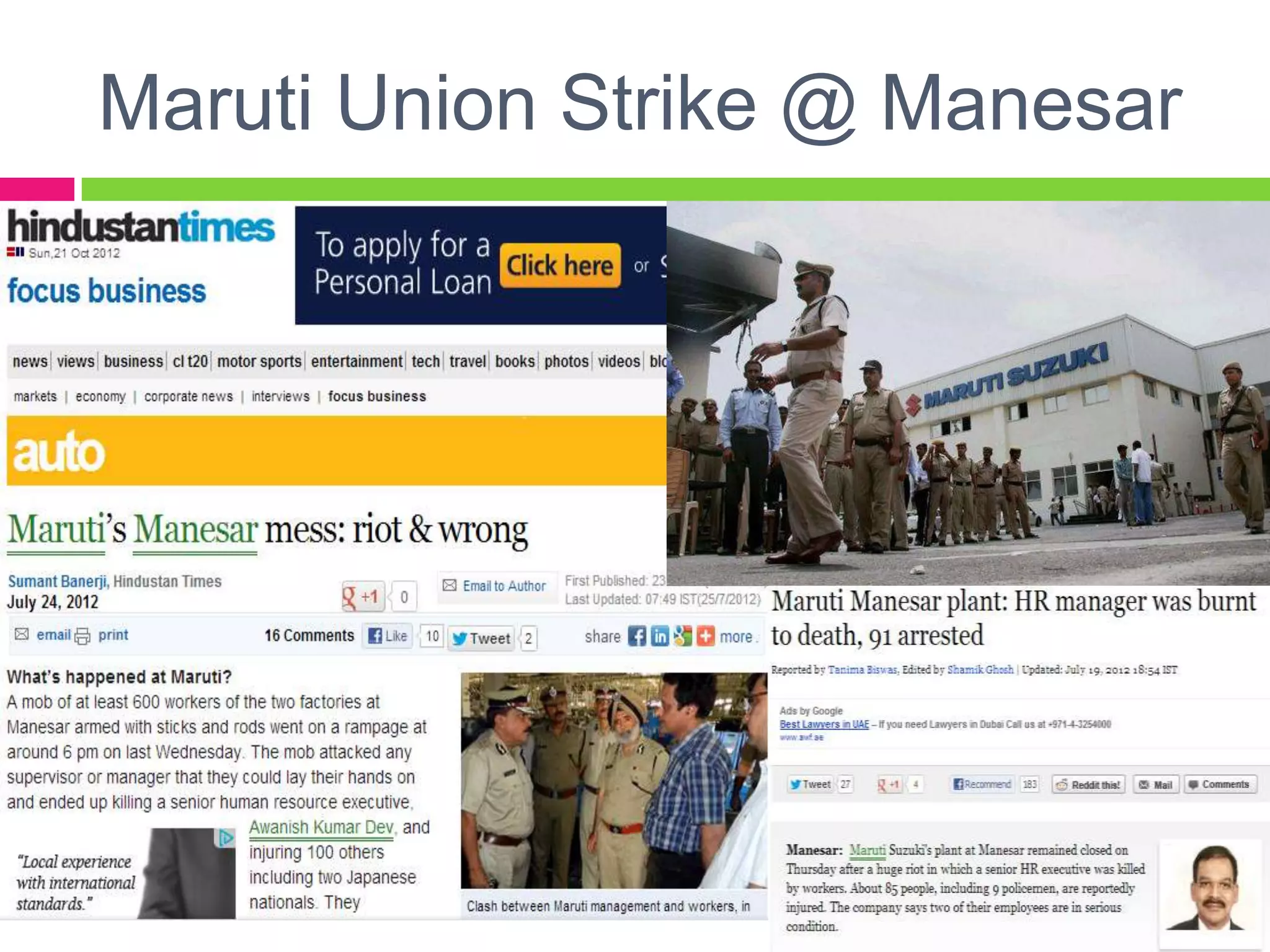
Maruti Union Strike @ Manesar
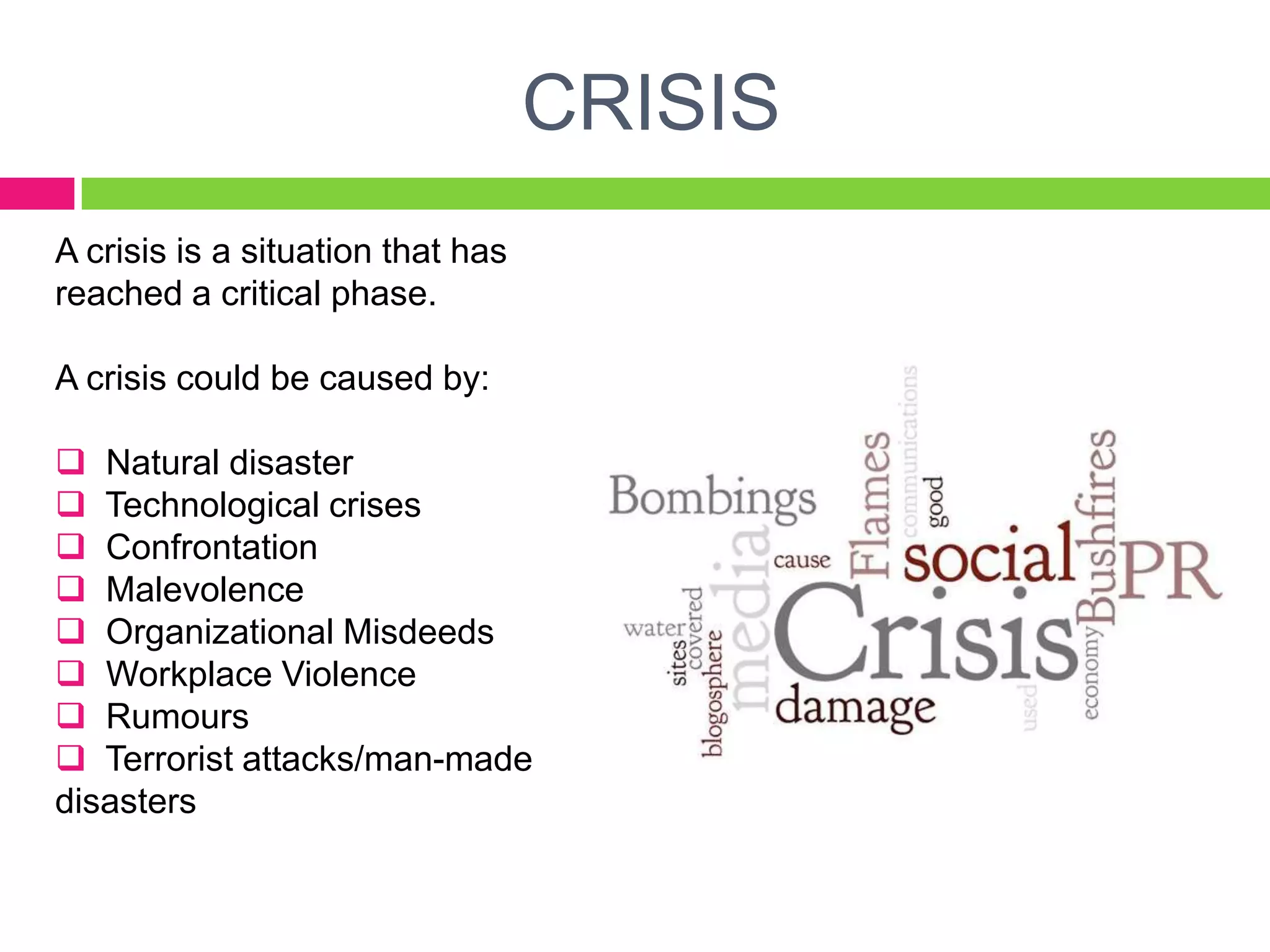
CRISIS
A crisis is a situation that has
reached a critical phase.
A crisis could be caused by:
 Natural disaster
 Technological crises
 Confrontation
 Malevolence
 Organizational Misdeeds
 Workplace Violence
 Rumours
 Terrorist attacks/man-made
disasters
COMMON FEATURES OF A
CRISIS
 The situation materialises unexpectedly
 Decisions are required urgently
 There is sense of loss of control
 Pressures build over time
 Reputation suffers
 Communications are increasingly difficult to manage
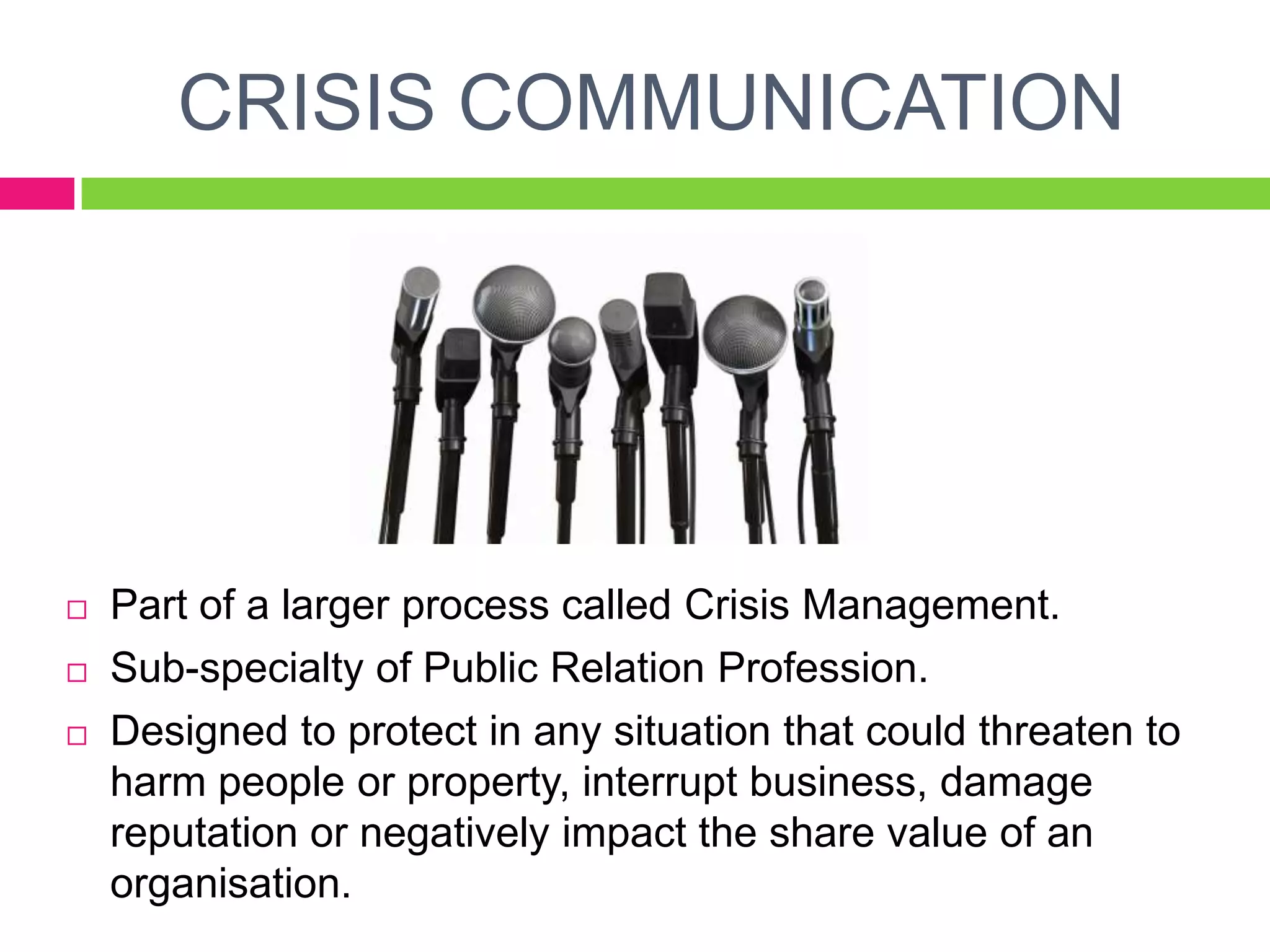
CRISIS COMMUNICATION
 Part of a larger process called Crisis Management.
 Sub-specialty of Public Relation Profession.
 Designed to protect in any situation that could threaten to
harm people or property, interrupt business, damage
reputation or negatively impact the share value of an
organisation.
WHY CRISIS
COMMUNICATION?
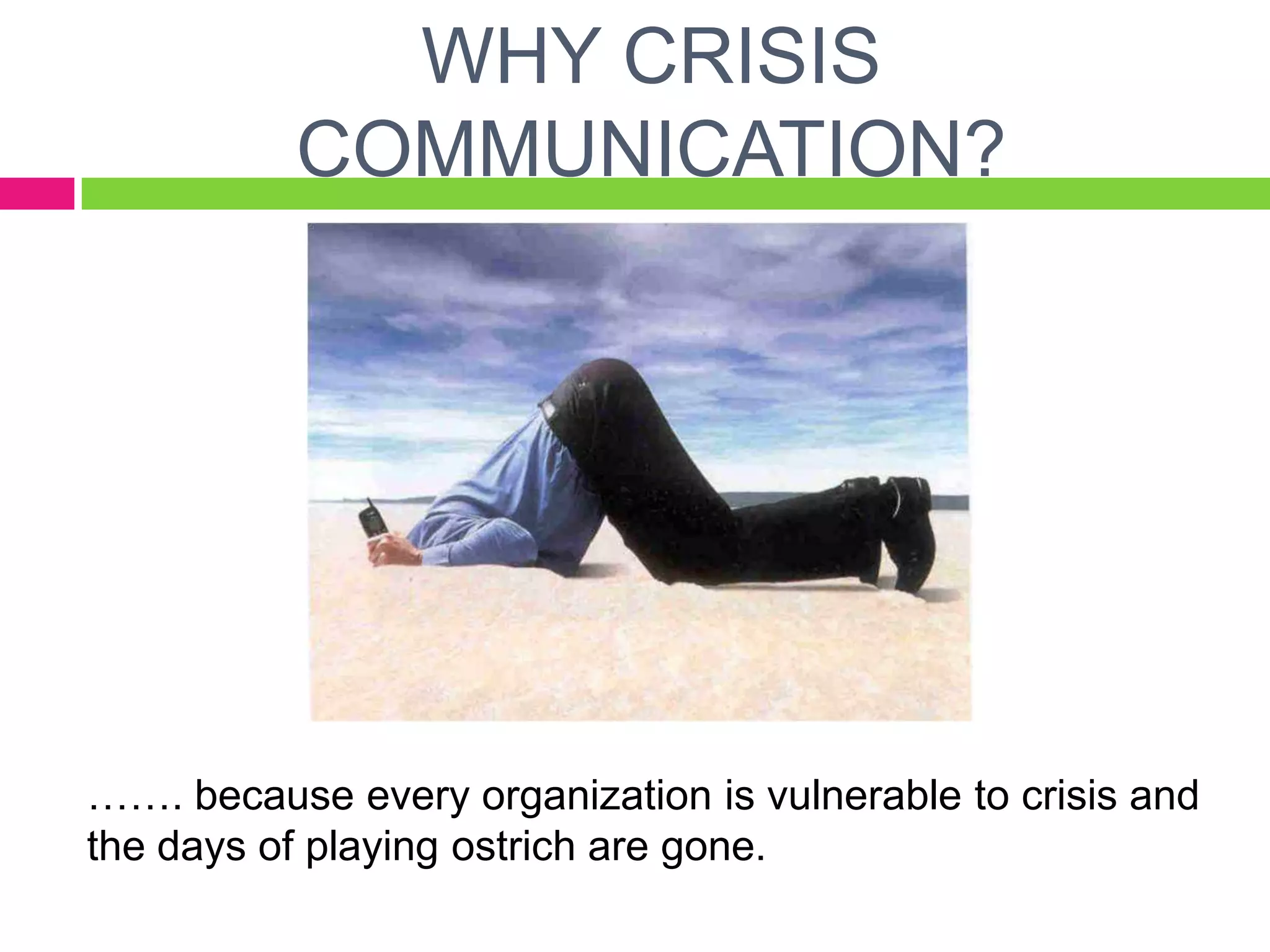
……. because every organization is vulnerable to crisis and
the days of playing ostrich are gone.
 Organizations that do not communicate quickly
make it worse for themselves
 The crisis response itself changes the crisis
 Buying bad news rarely works
 Reputation suffers
 Financial instability may occur
Cont..
CHALLENGES TO THE
ORGANISATION
 Investigation from a Govt. Agency
 Criminal allegation and lawsuits
 Media Enquiry leading to loss of reputation and
credibility
 Loss of legal, ethical and financial standing of entity
 Violation of environmental regulations
 Operational viability
CRISIS MANAGEMENT MODEL
CRISIS MANAGEMENT
MODEL
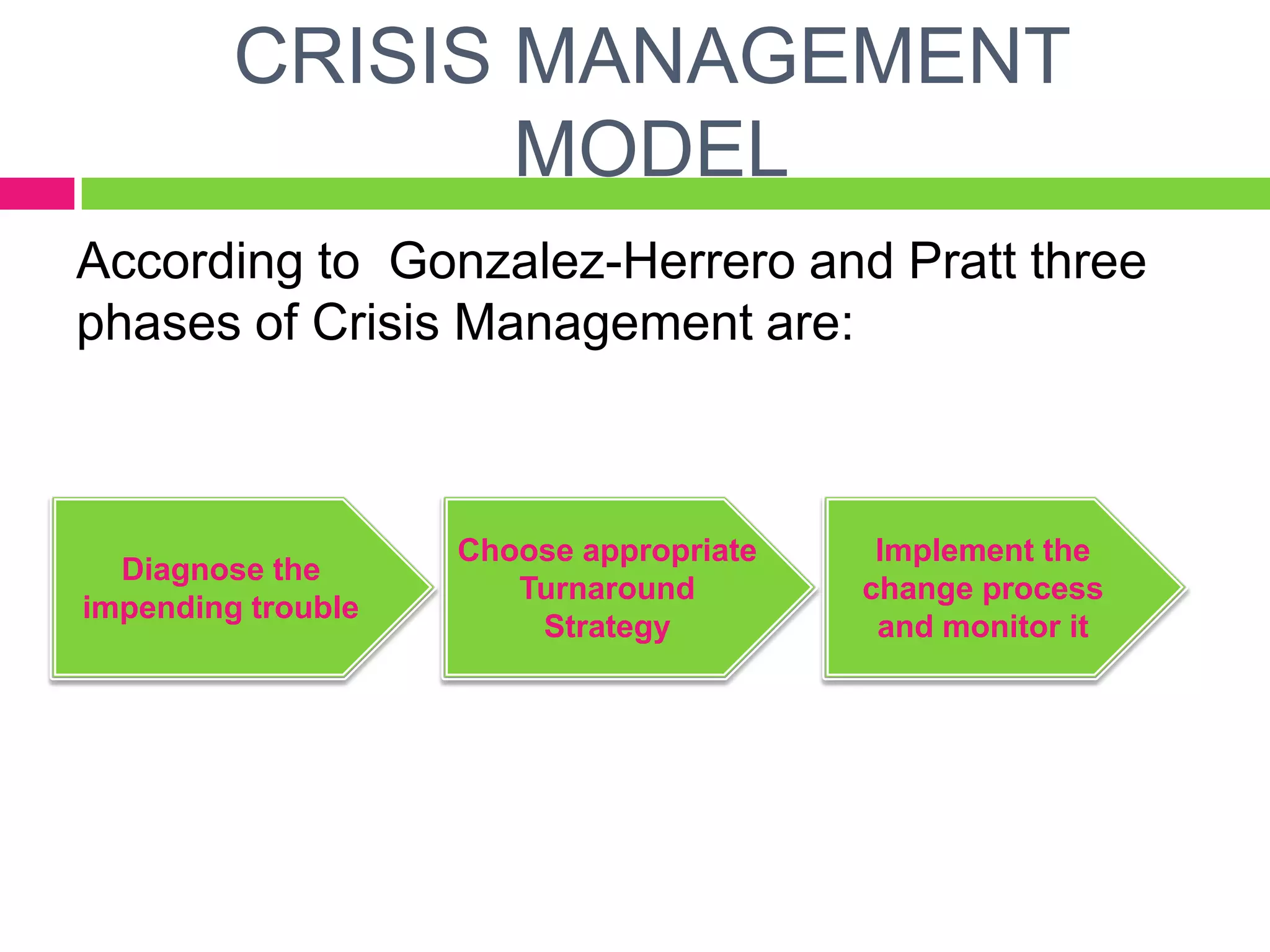
According to Gonzalez-Herrero and Pratt three
phases of Crisis Management are:
Diagnose the
impending trouble
Choose appropriate
Turnaround
Strategy
Implement the
change process
and monitor it
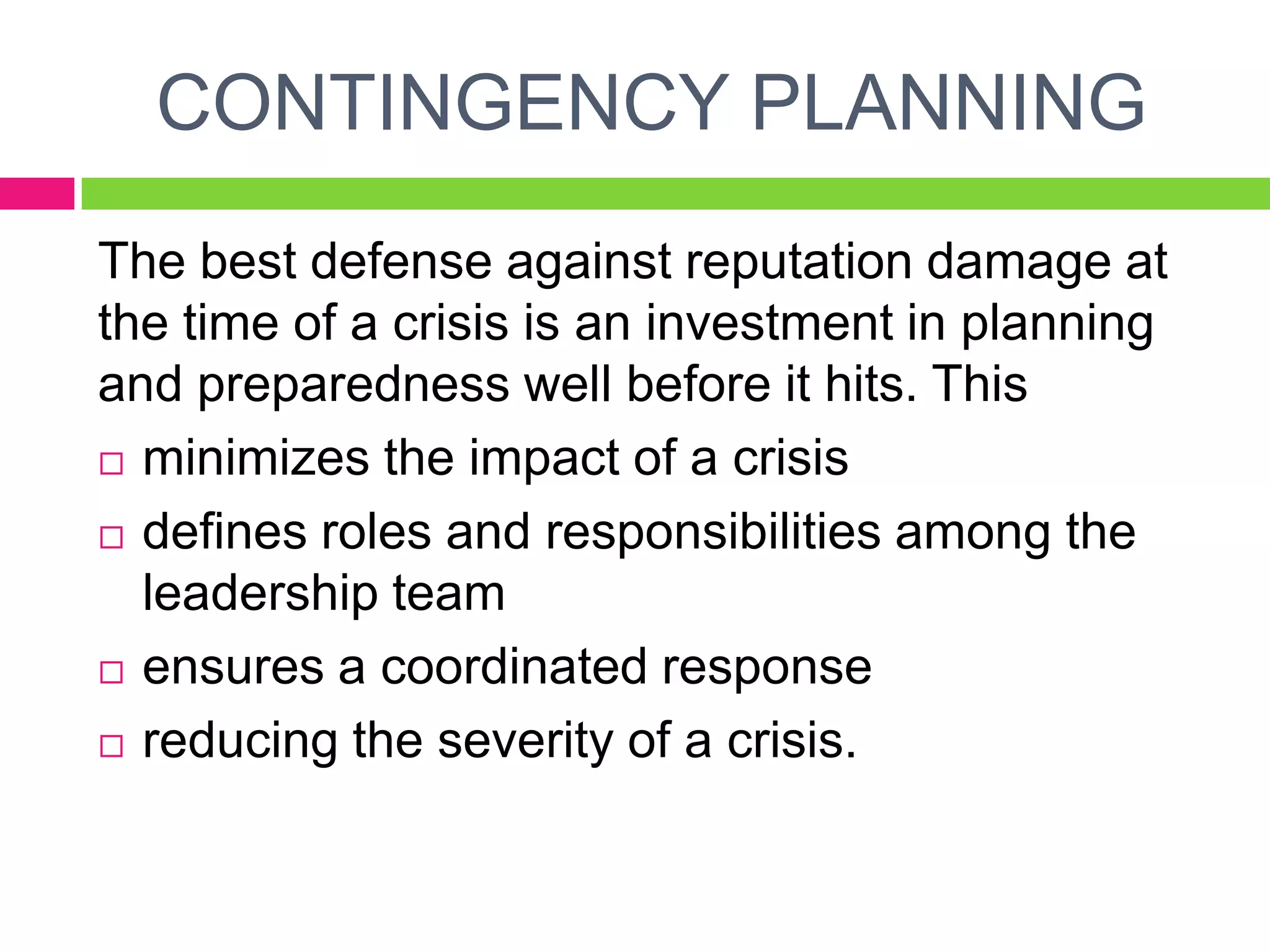
The best defense against reputation damage at
the time of a crisis is an investment in planning
and preparedness well before it hits. This
 minimizes the impact of a crisis
 defines roles and responsibilities among the
leadership team
 ensures a coordinated response
 reducing the severity of a crisis.
CONTINGENCY PLANNING
CRISIS TEAM
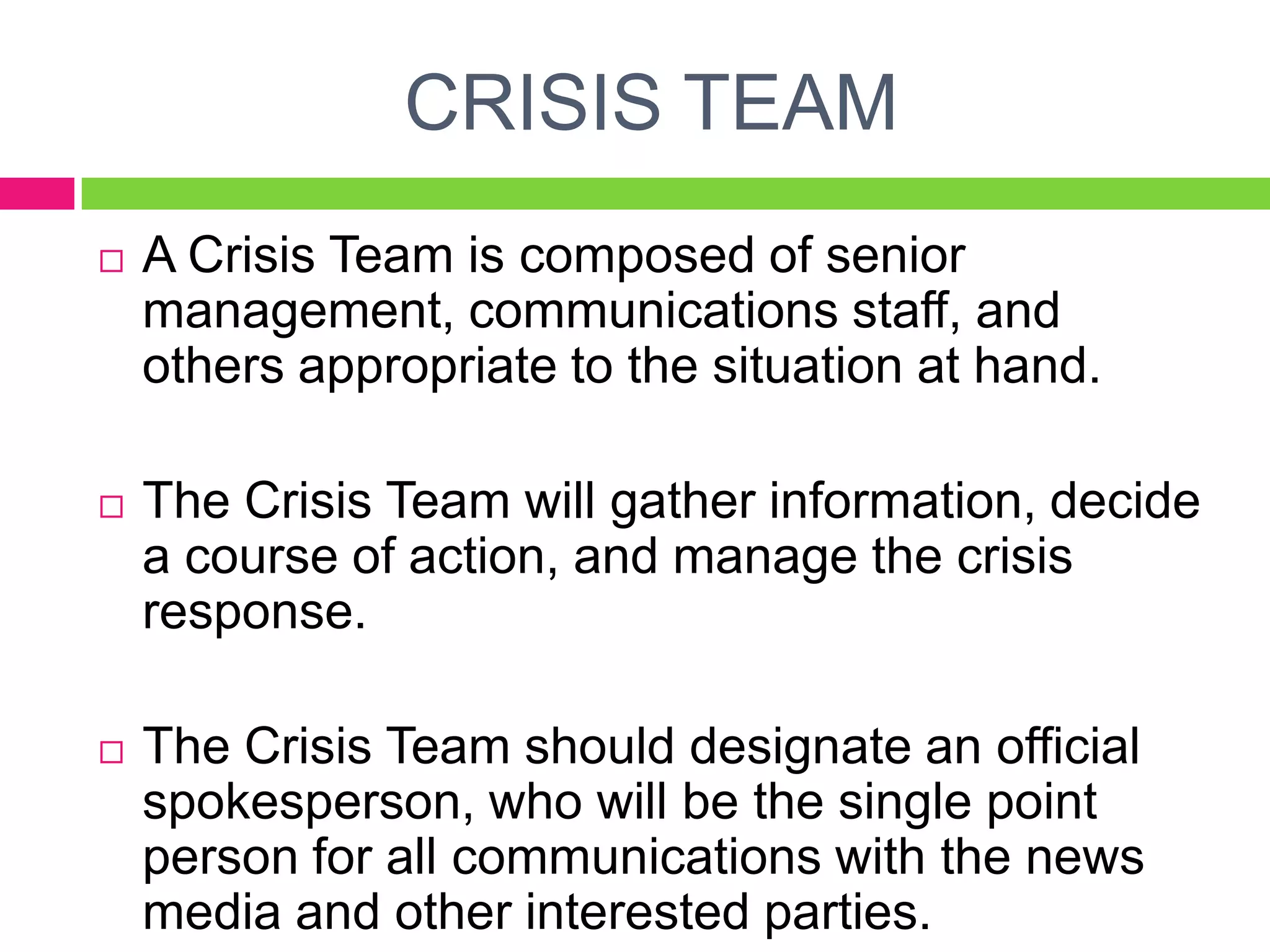
 A Crisis Team is composed of senior
management, communications staff, and
others appropriate to the situation at hand.
 The Crisis Team will gather information, decide
a course of action, and manage the crisis
response.
 The Crisis Team should designate an official
spokesperson, who will be the single point
person for all communications with the news
media and other interested parties.
CRISIS IDENTIFICATION
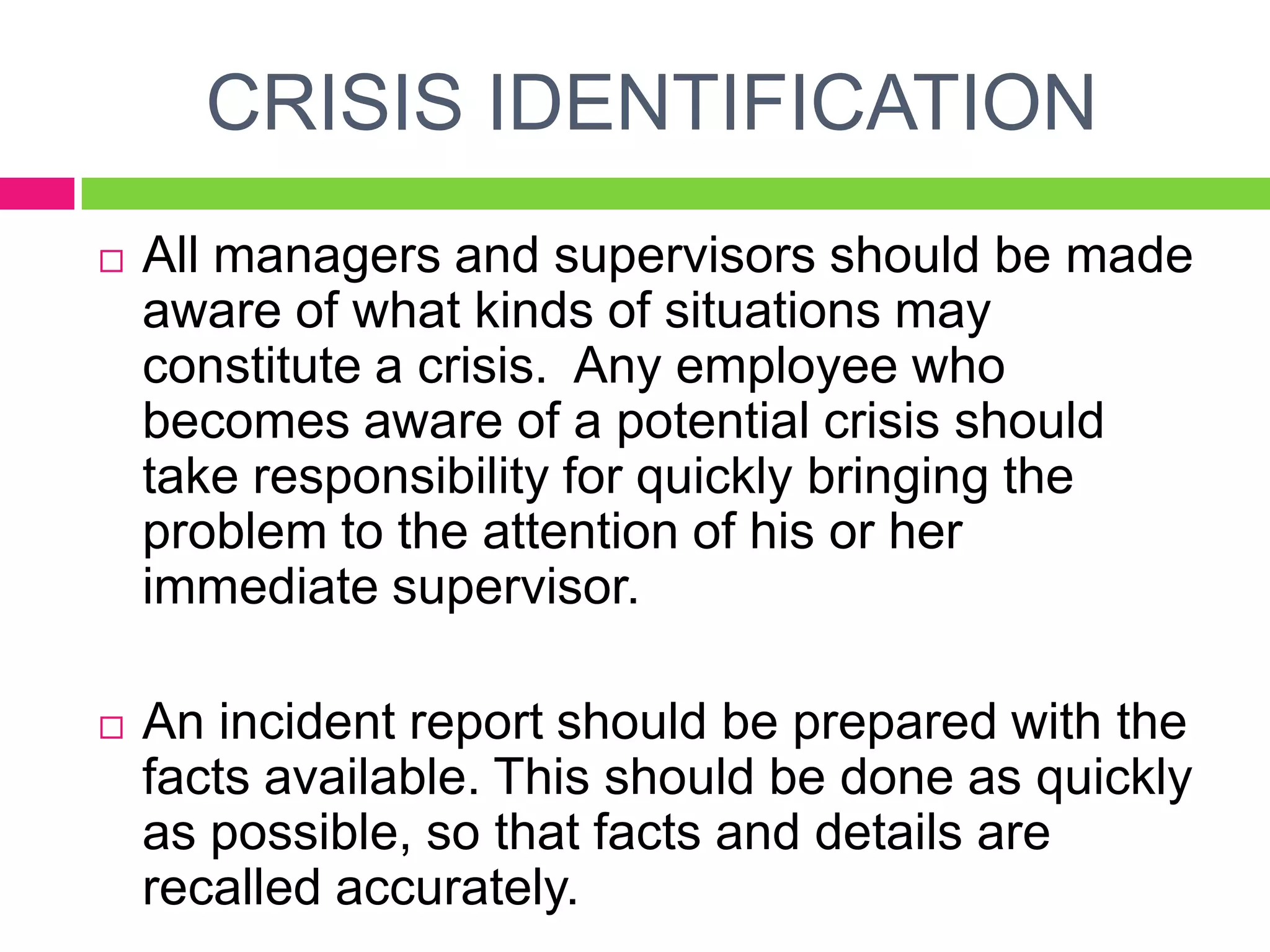
 All managers and supervisors should be made
aware of what kinds of situations may
constitute a crisis. Any employee who
becomes aware of a potential crisis should
take responsibility for quickly bringing the
problem to the attention of his or her
immediate supervisor.
 An incident report should be prepared with the
facts available. This should be done as quickly
as possible, so that facts and details are
recalled accurately.
CRISIS RESPONSE
As the Crisis Team begins to address the
situation, keep these points in mind:
 Take responsibility
 Show compassion
 Speak with one voice
 Be responsive to the media and track inquiries
 Seek resolution
MANAGING COMMUNICATION IN
A CRISIS
An effective crisis communication strategy will
typically consider achieving most, if not all, of the
following objectives:
 Maintain connectivity
 Be readily accessible to the news media
 Show empathy for the people involved
 Allow distributed access
 Streamline communication processes
 Maintain information security
 Ensure uninterrupted audit trails
 Deliver high volume communications
 Support multi-channel communications
 Remove dependencies on paper based processes
COMMUNICATION PLAN
For effective communication to take place,
three questions need to be addressed while
preparing the communication plan:
 WHO is the audience?
 WHAT is the message that needs to be put across?
 HOW is this message to be communicated?
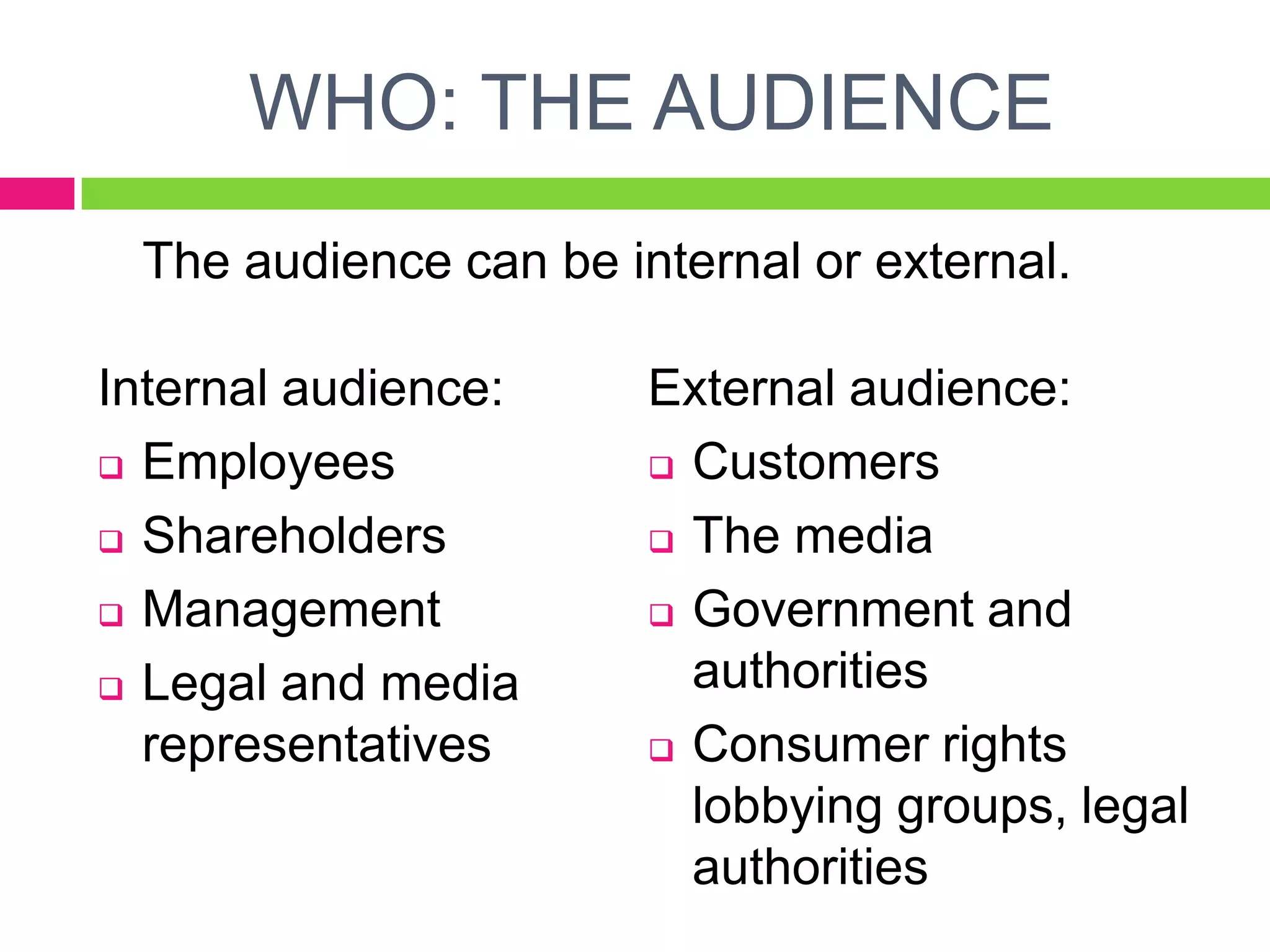
WHO: THE AUDIENCE
The audience can be internal or external.
Internal audience:
 Employees
 Shareholders
 Management
 Legal and media
representatives
External audience:
 Customers
 The media
 Government and
authorities
 Consumer rights
lobbying groups, legal
authorities
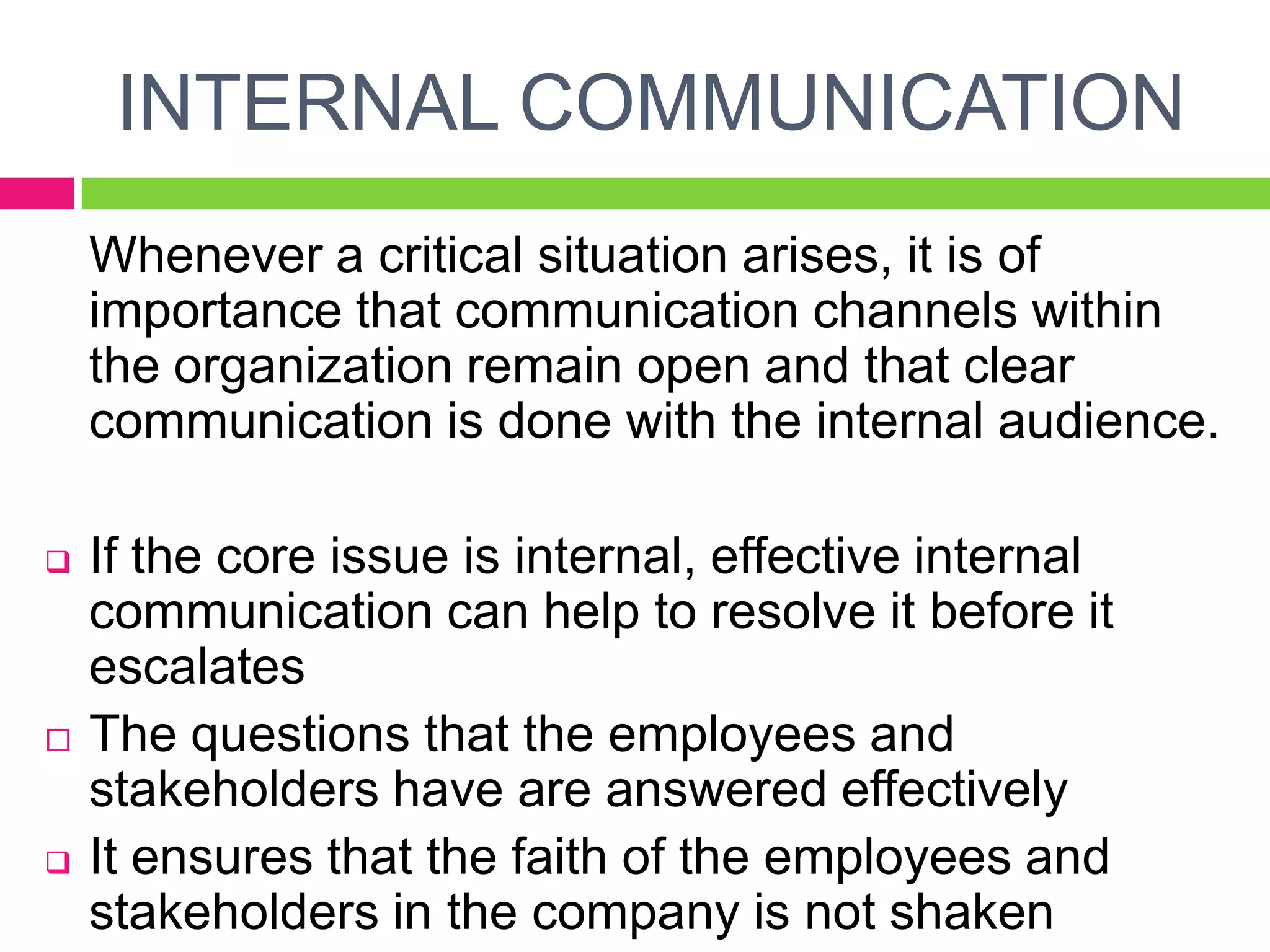
INTERNAL COMMUNICATION
Whenever a critical situation arises, it is of
importance that communication channels within
the organization remain open and that clear
communication is done with the internal audience.
 If the core issue is internal, effective internal
communication can help to resolve it before it
escalates
 The questions that the employees and
stakeholders have are answered effectively
 It ensures that the faith of the employees and
stakeholders in the company is not shaken
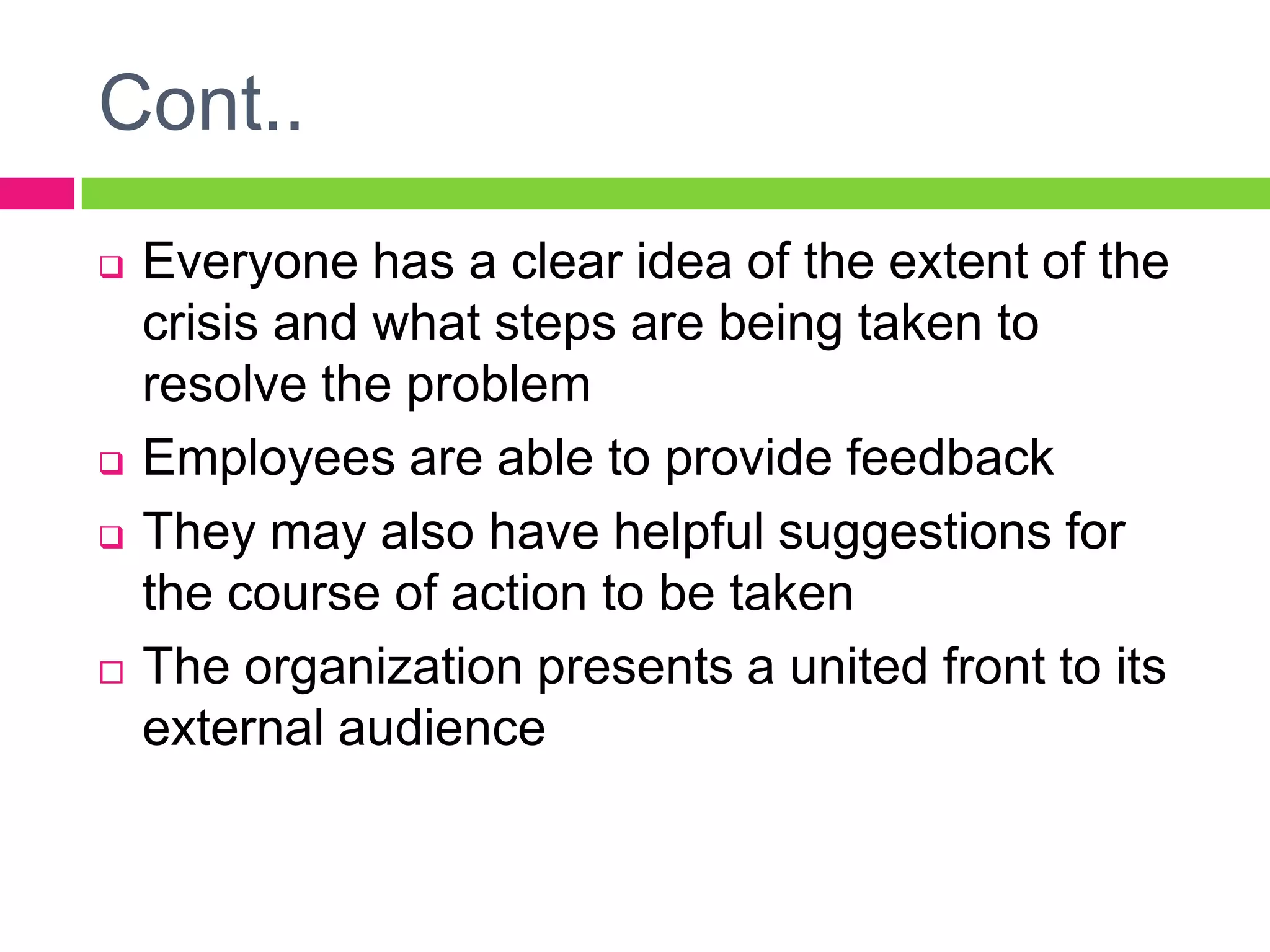
 Everyone has a clear idea of the extent of the
crisis and what steps are being taken to
resolve the problem
 Employees are able to provide feedback
 They may also have helpful suggestions for
the course of action to be taken
 The organization presents a united front to its
external audience
Cont..
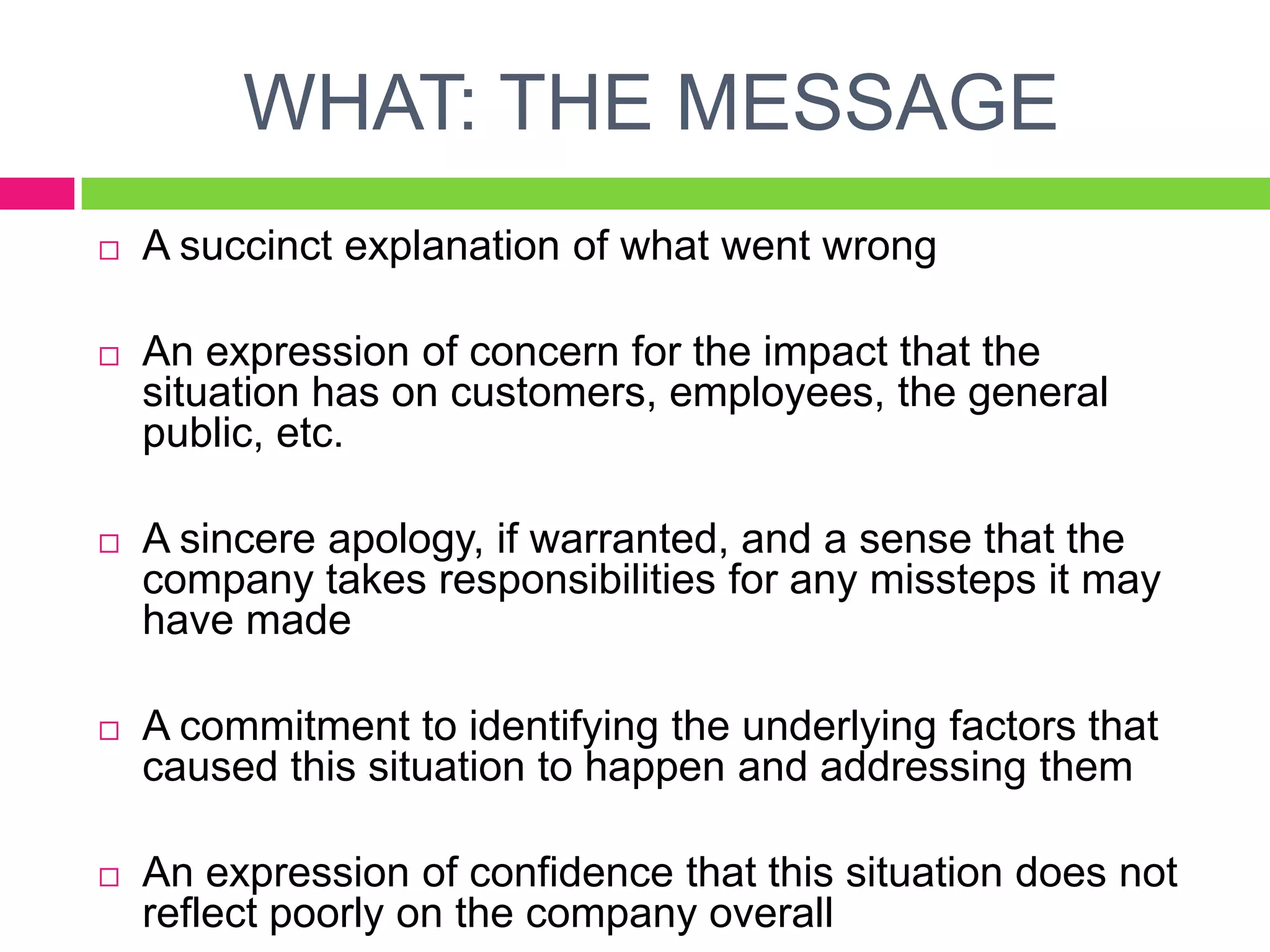
WHAT: THE MESSAGE
 A succinct explanation of what went wrong
 An expression of concern for the impact that the
situation has on customers, employees, the general
public, etc.
 A sincere apology, if warranted, and a sense that the
company takes responsibilities for any missteps it may
have made
 A commitment to identifying the underlying factors that
caused this situation to happen and addressing them
 An expression of confidence that this situation does not
reflect poorly on the company overall
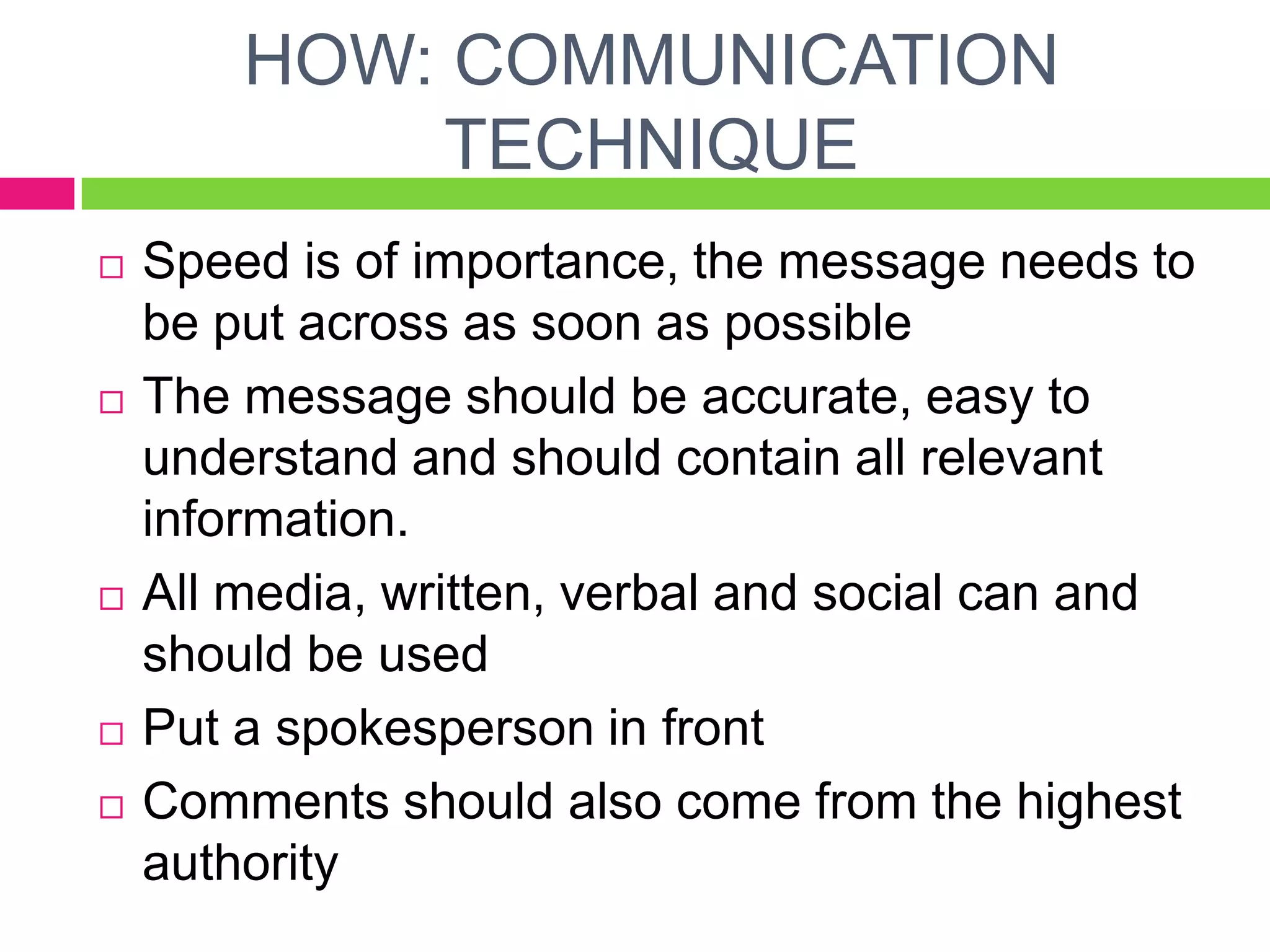
HOW: COMMUNICATION
TECHNIQUE
 Speed is of importance, the message needs to
be put across as soon as possible
 The message should be accurate, easy to
understand and should contain all relevant
information.
 All media, written, verbal and social can and
should be used
 Put a spokesperson in front
 Comments should also come from the highest
authority
HANDLING THE MEDIA: A
SPOKESPERSON
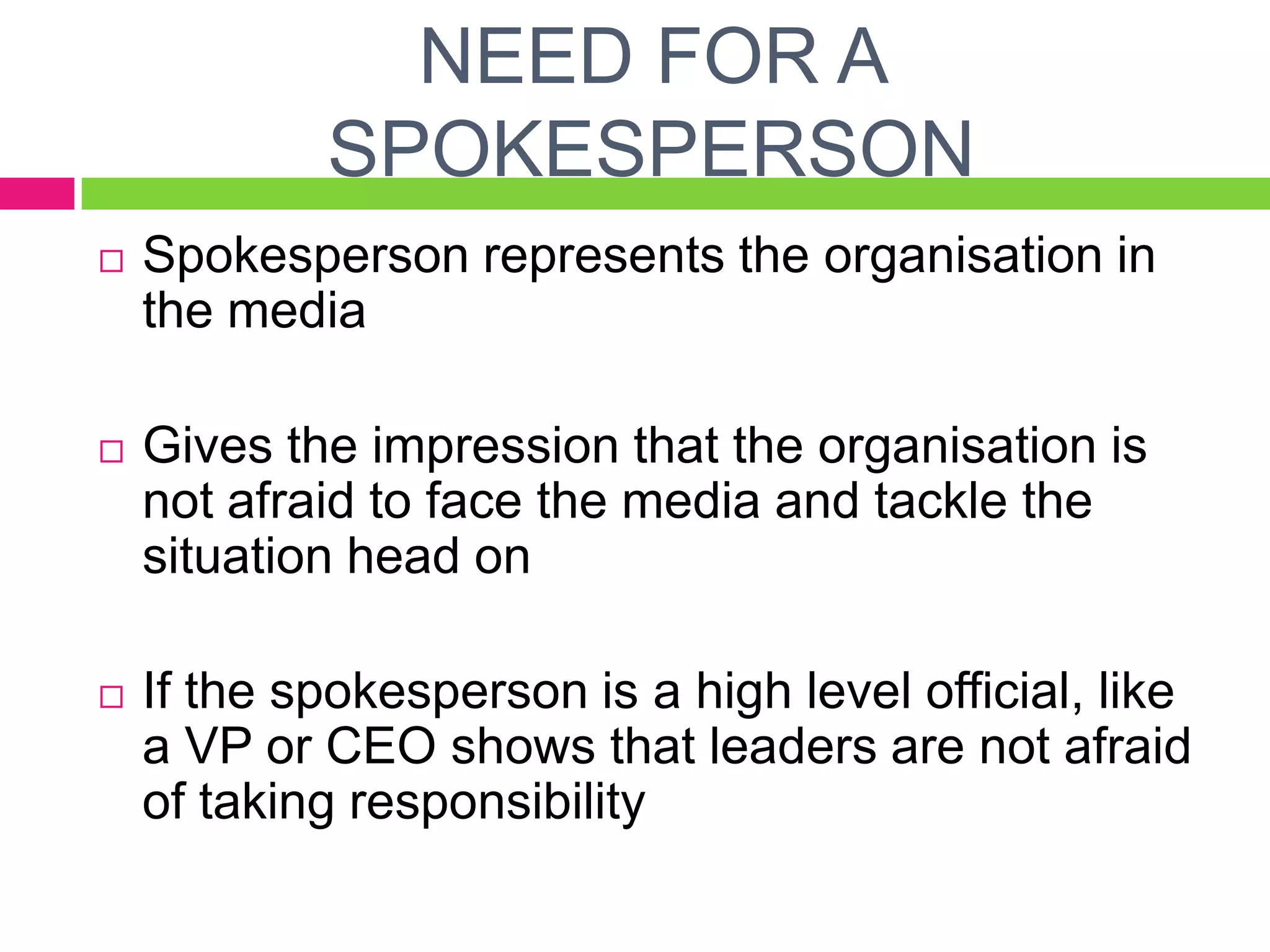
NEED FOR A
SPOKESPERSON
 Spokesperson represents the organisation in
the media
 Gives the impression that the organisation is
not afraid to face the media and tackle the
situation head on
 If the spokesperson is a high level official, like
a VP or CEO shows that leaders are not afraid
of taking responsibility
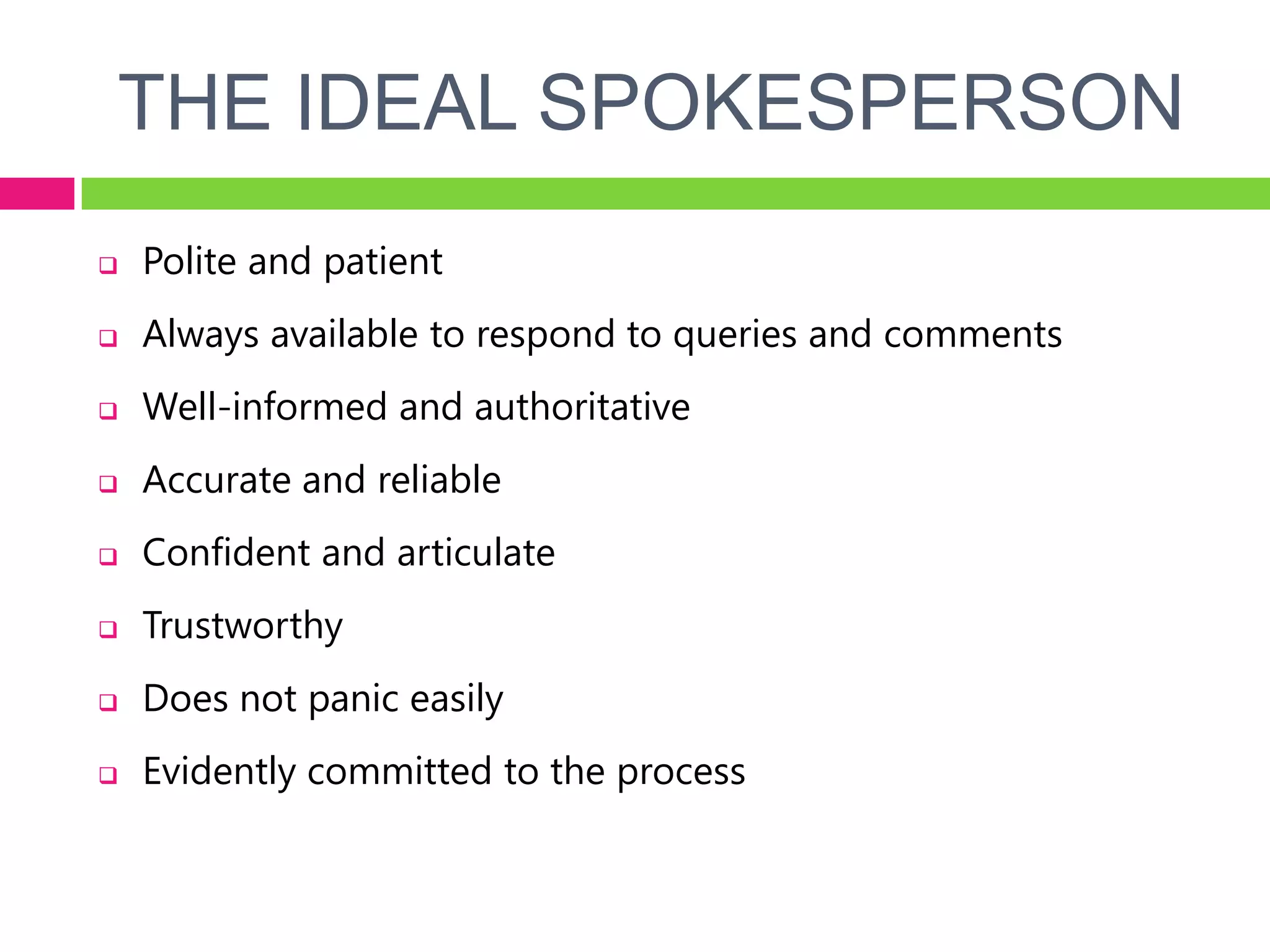
THE IDEAL SPOKESPERSON
 Polite and patient
 Always available to respond to queries and comments
 Well-informed and authoritative
 Accurate and reliable
 Confident and articulate
 Trustworthy
 Does not panic easily
 Evidently committed to the process
CONCLUSION
 Effective communication in the event of a crisis
may well help to keep the situation from
escalating beyond control
 Ineffective communication or lack of
communication on the other hand can escalate
a small situation to large levels and have fatal
repercussions on the reputation and value of
the company
“People don’t judge the good guys on
whether they have made mistakes,
but on how they have fixed them”
THANK YOU

Crisis communication

  • 1.
    CRISIS COMMUNICATION AND ITSIMPLICATIONS FOR ORGANISATIONS Group 5: Kushagra Sharma (057) Neha Dalal (070) Paras Sharma (077) Prodyot Parashar (083) Raj Kumar Singh (089)
  • 2.
    "It takes 20years to build a reputation and five minutes to ruin it.” -Warren Buffett
  • 3.
    Bloodbath in IndianStock Markets Investors in Indian markets lost more than 16 trillion Rupees in just 2 days !
  • 4.
  • 5.
    BP Oil Spill BPloss more than 5 Billion USD due to the crisis and lost its brand image.
  • 6.
  • 7.
    CRISIS A crisis isa situation that has reached a critical phase. A crisis could be caused by:  Natural disaster  Technological crises  Confrontation  Malevolence  Organizational Misdeeds  Workplace Violence  Rumours  Terrorist attacks/man-made disasters
  • 8.
    COMMON FEATURES OFA CRISIS  The situation materialises unexpectedly  Decisions are required urgently  There is sense of loss of control  Pressures build over time  Reputation suffers  Communications are increasingly difficult to manage
  • 9.
    CRISIS COMMUNICATION  Partof a larger process called Crisis Management.  Sub-specialty of Public Relation Profession.  Designed to protect in any situation that could threaten to harm people or property, interrupt business, damage reputation or negatively impact the share value of an organisation.
  • 10.
    WHY CRISIS COMMUNICATION? ……. becauseevery organization is vulnerable to crisis and the days of playing ostrich are gone.
  • 11.
     Organizations thatdo not communicate quickly make it worse for themselves  The crisis response itself changes the crisis  Buying bad news rarely works  Reputation suffers  Financial instability may occur Cont..
  • 12.
    CHALLENGES TO THE ORGANISATION Investigation from a Govt. Agency  Criminal allegation and lawsuits  Media Enquiry leading to loss of reputation and credibility  Loss of legal, ethical and financial standing of entity  Violation of environmental regulations  Operational viability
  • 13.
  • 14.
    CRISIS MANAGEMENT MODEL According toGonzalez-Herrero and Pratt three phases of Crisis Management are: Diagnose the impending trouble Choose appropriate Turnaround Strategy Implement the change process and monitor it
  • 15.
    The best defenseagainst reputation damage at the time of a crisis is an investment in planning and preparedness well before it hits. This  minimizes the impact of a crisis  defines roles and responsibilities among the leadership team  ensures a coordinated response  reducing the severity of a crisis. CONTINGENCY PLANNING
  • 16.
    CRISIS TEAM  ACrisis Team is composed of senior management, communications staff, and others appropriate to the situation at hand.  The Crisis Team will gather information, decide a course of action, and manage the crisis response.  The Crisis Team should designate an official spokesperson, who will be the single point person for all communications with the news media and other interested parties.
  • 17.
    CRISIS IDENTIFICATION  Allmanagers and supervisors should be made aware of what kinds of situations may constitute a crisis. Any employee who becomes aware of a potential crisis should take responsibility for quickly bringing the problem to the attention of his or her immediate supervisor.  An incident report should be prepared with the facts available. This should be done as quickly as possible, so that facts and details are recalled accurately.
  • 18.
    CRISIS RESPONSE As theCrisis Team begins to address the situation, keep these points in mind:  Take responsibility  Show compassion  Speak with one voice  Be responsive to the media and track inquiries  Seek resolution
  • 19.
  • 20.
    An effective crisiscommunication strategy will typically consider achieving most, if not all, of the following objectives:  Maintain connectivity  Be readily accessible to the news media  Show empathy for the people involved  Allow distributed access  Streamline communication processes  Maintain information security  Ensure uninterrupted audit trails  Deliver high volume communications  Support multi-channel communications  Remove dependencies on paper based processes
  • 21.
    COMMUNICATION PLAN For effectivecommunication to take place, three questions need to be addressed while preparing the communication plan:  WHO is the audience?  WHAT is the message that needs to be put across?  HOW is this message to be communicated?
  • 22.
    WHO: THE AUDIENCE Theaudience can be internal or external. Internal audience:  Employees  Shareholders  Management  Legal and media representatives External audience:  Customers  The media  Government and authorities  Consumer rights lobbying groups, legal authorities
  • 23.
    INTERNAL COMMUNICATION Whenever acritical situation arises, it is of importance that communication channels within the organization remain open and that clear communication is done with the internal audience.  If the core issue is internal, effective internal communication can help to resolve it before it escalates  The questions that the employees and stakeholders have are answered effectively  It ensures that the faith of the employees and stakeholders in the company is not shaken
  • 24.
     Everyone hasa clear idea of the extent of the crisis and what steps are being taken to resolve the problem  Employees are able to provide feedback  They may also have helpful suggestions for the course of action to be taken  The organization presents a united front to its external audience Cont..
  • 25.
    WHAT: THE MESSAGE A succinct explanation of what went wrong  An expression of concern for the impact that the situation has on customers, employees, the general public, etc.  A sincere apology, if warranted, and a sense that the company takes responsibilities for any missteps it may have made  A commitment to identifying the underlying factors that caused this situation to happen and addressing them  An expression of confidence that this situation does not reflect poorly on the company overall
  • 26.
    HOW: COMMUNICATION TECHNIQUE  Speedis of importance, the message needs to be put across as soon as possible  The message should be accurate, easy to understand and should contain all relevant information.  All media, written, verbal and social can and should be used  Put a spokesperson in front  Comments should also come from the highest authority
  • 27.
    HANDLING THE MEDIA:A SPOKESPERSON
  • 28.
    NEED FOR A SPOKESPERSON Spokesperson represents the organisation in the media  Gives the impression that the organisation is not afraid to face the media and tackle the situation head on  If the spokesperson is a high level official, like a VP or CEO shows that leaders are not afraid of taking responsibility
  • 29.
    THE IDEAL SPOKESPERSON Polite and patient  Always available to respond to queries and comments  Well-informed and authoritative  Accurate and reliable  Confident and articulate  Trustworthy  Does not panic easily  Evidently committed to the process
  • 30.
    CONCLUSION  Effective communicationin the event of a crisis may well help to keep the situation from escalating beyond control  Ineffective communication or lack of communication on the other hand can escalate a small situation to large levels and have fatal repercussions on the reputation and value of the company
  • 31.
    “People don’t judgethe good guys on whether they have made mistakes, but on how they have fixed them”
  • 32.