M215: Creating the Blended Learning Classroom of the Future Bjorn Billhardt, CEO Enspire Learning, Inc. [email_address] ASTD 2010 International Conference and Expo Learning Objectives: Create an effective online/classroom blended training program Use simulations, stories, and social networks to create blended learning Evaluate the applicability of new technologies to specific training settings
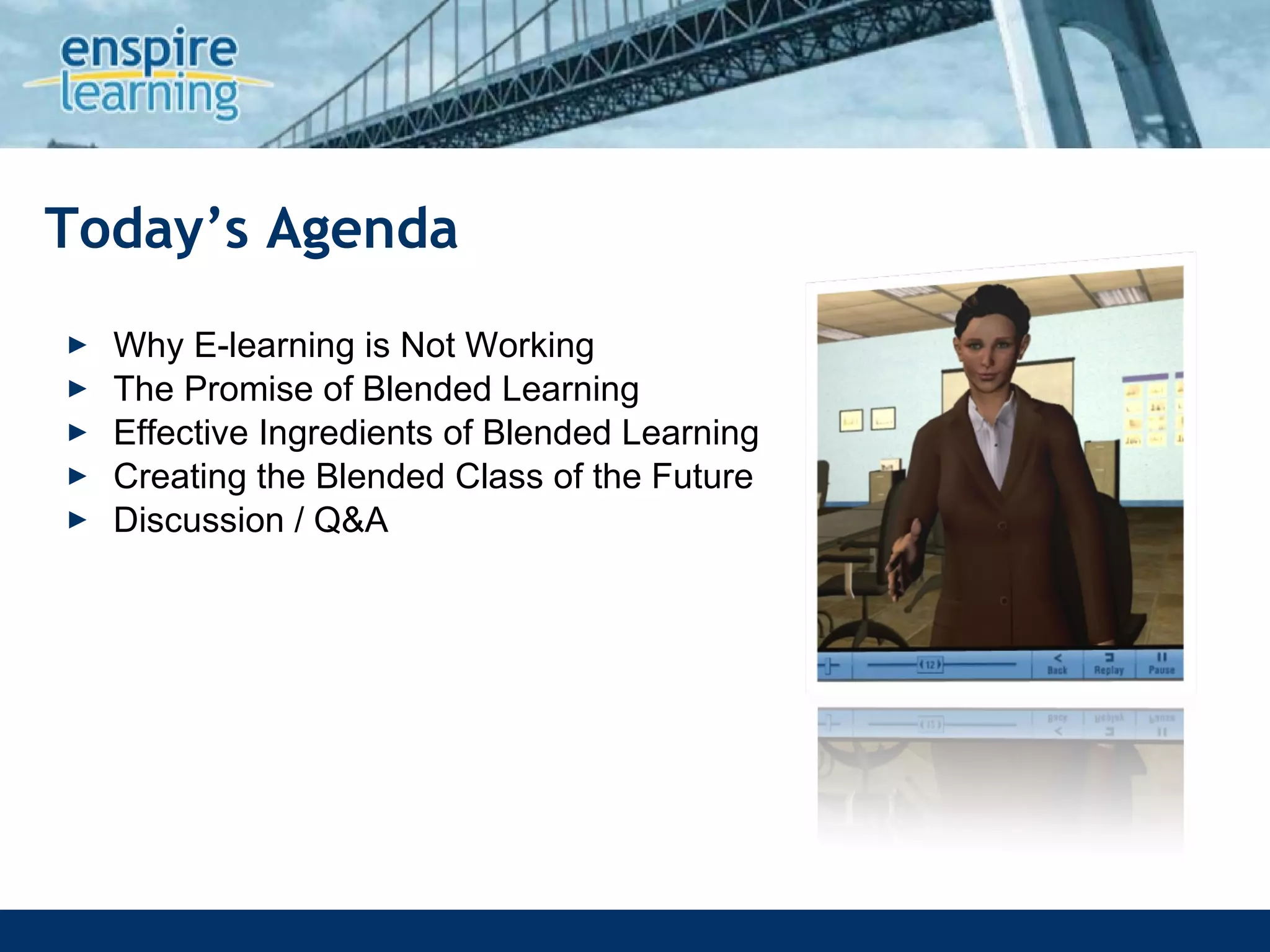
Today’s Agenda Why E-learning is Not Working The Promise of Blended Learning Effective Ingredients of Blended Learning Creating the Blended Class of the Future Discussion / Q&A
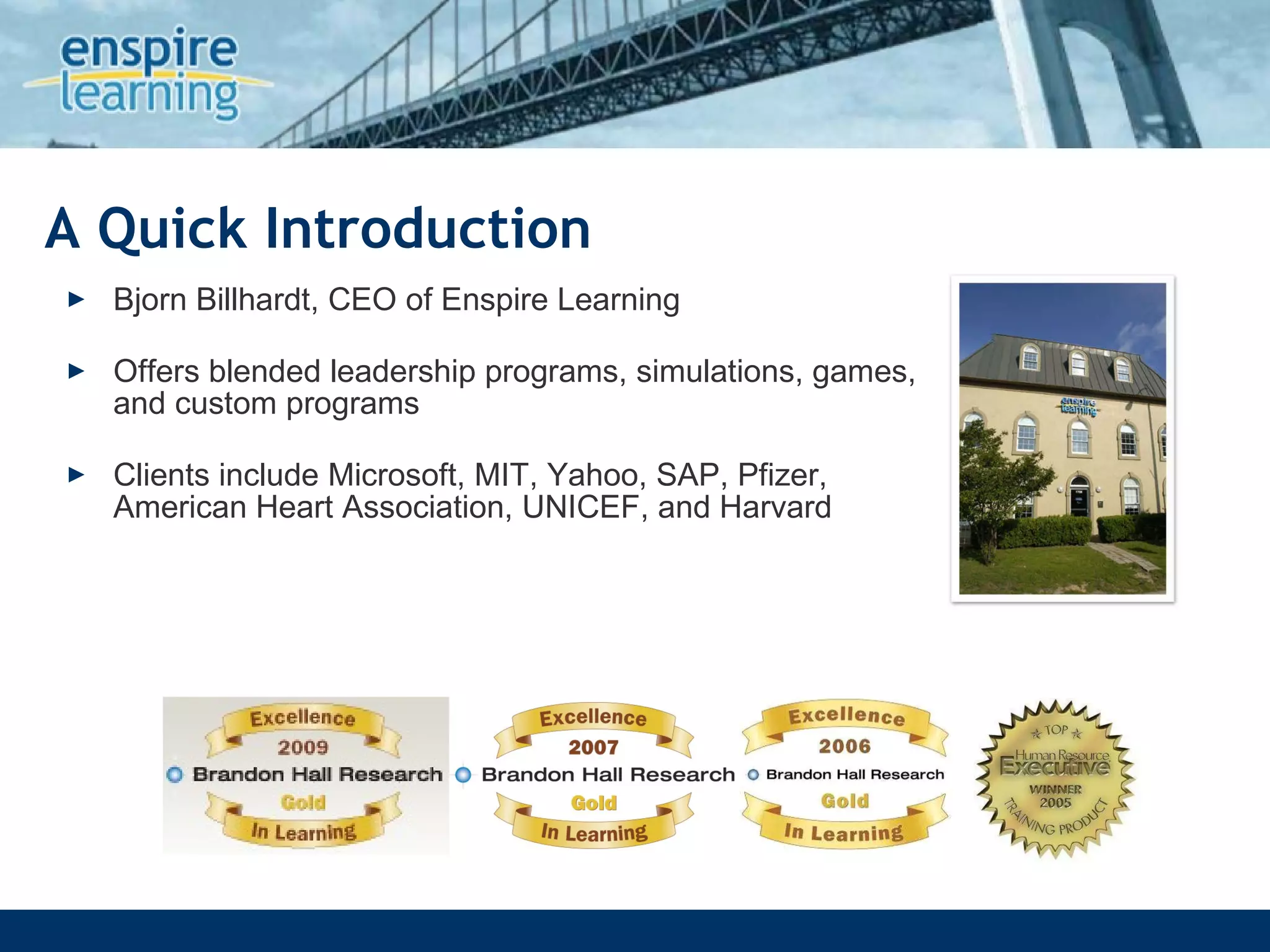
A Quick Introduction Bjorn Billhardt, CEO of Enspire Learning Offers blended leadership programs, simulations, games, and custom programs Clients include Microsoft, MIT, Yahoo, SAP, Pfizer, American Heart Association, UNICEF, and Harvard
2000 Headlines “ E-learning will make e-mail look like a rounding error” John Chambers, CEO of Cisco “ Online Education to Be Free; Billionaire Envisions Cyber-U” “ NotHarvard.com Sues Harvard”
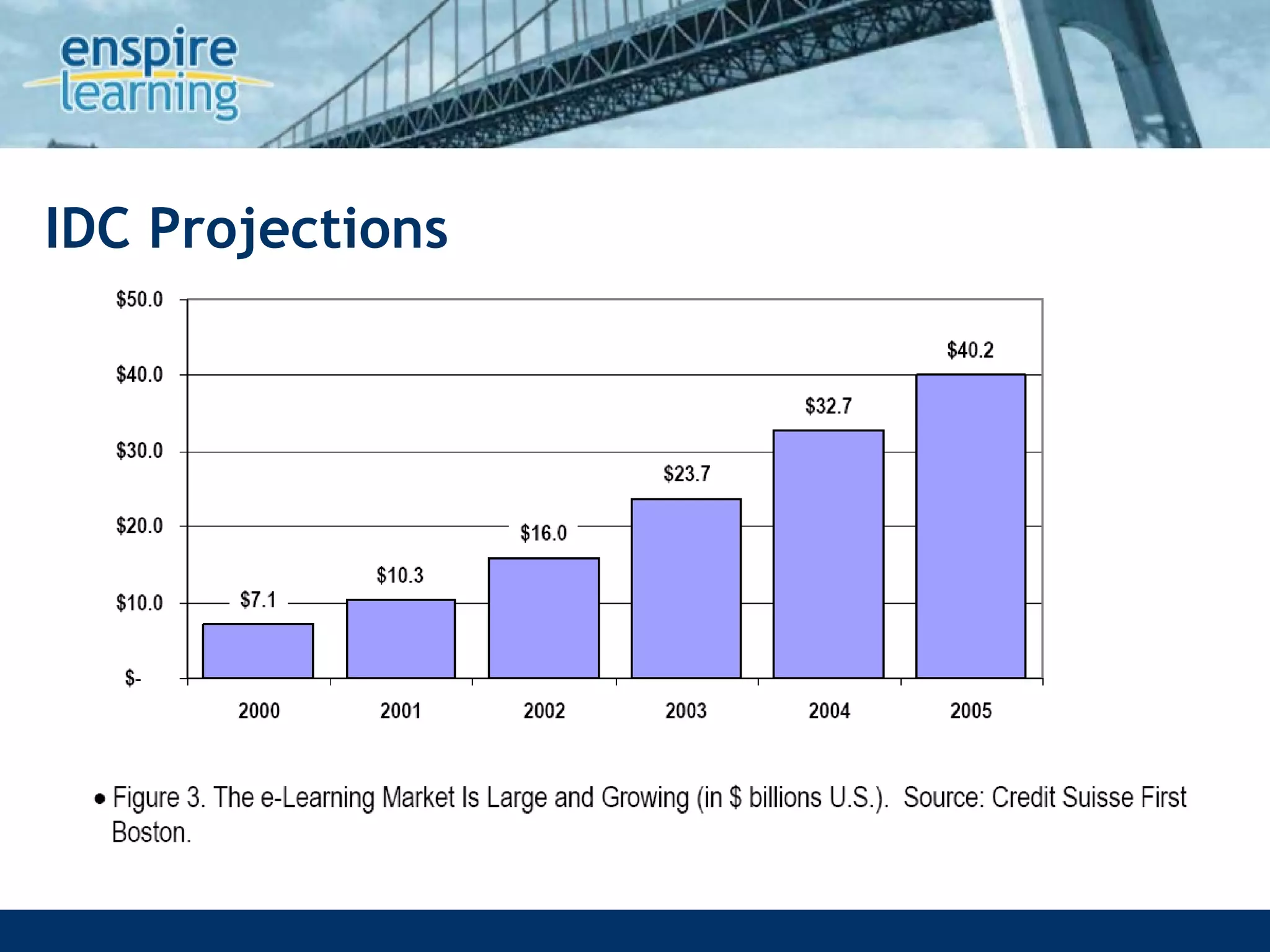
IDC Projections
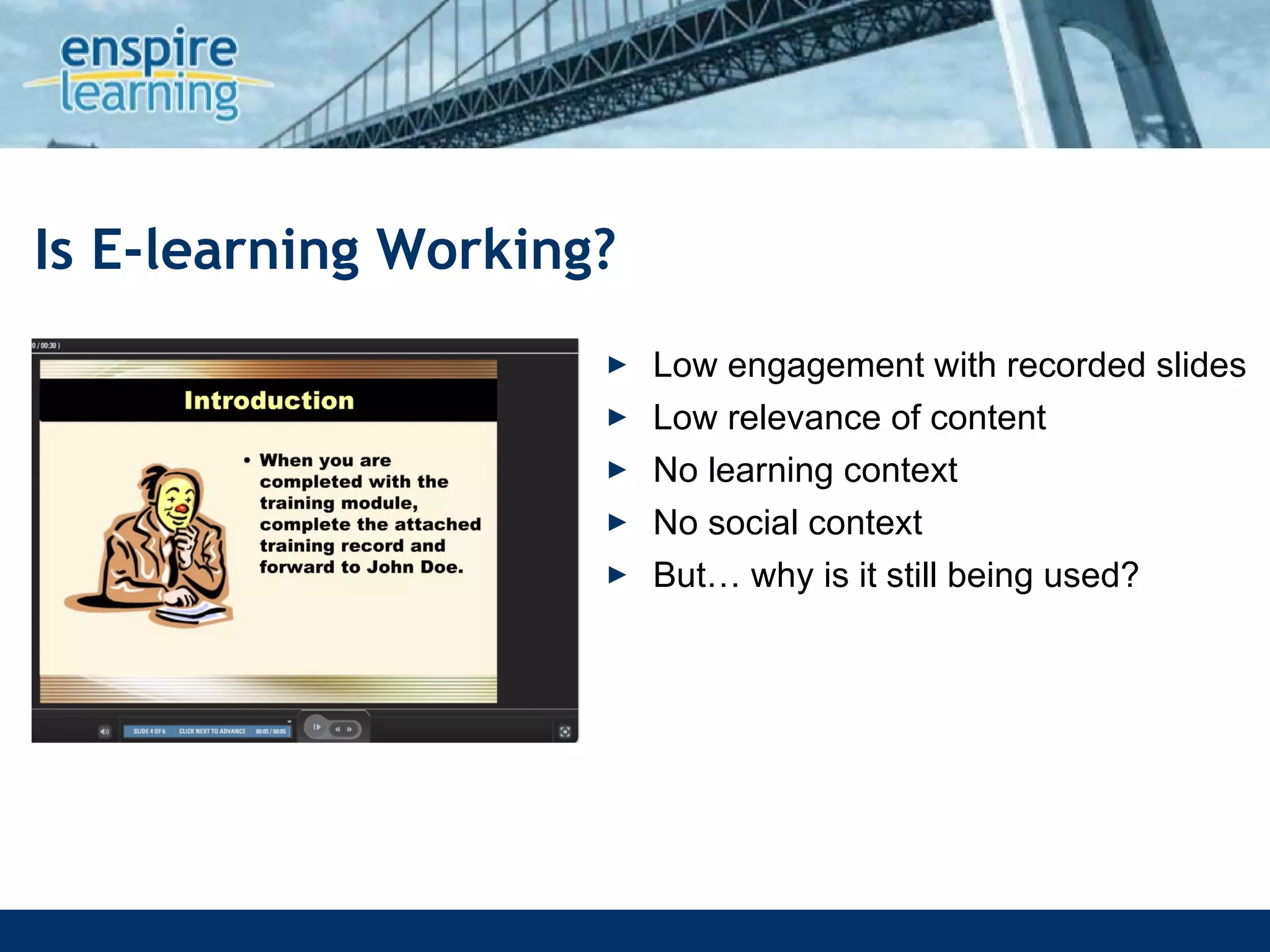
Is E-learning Working? Low engagement with recorded slides Low relevance of content No learning context No social context But… why is it still being used?
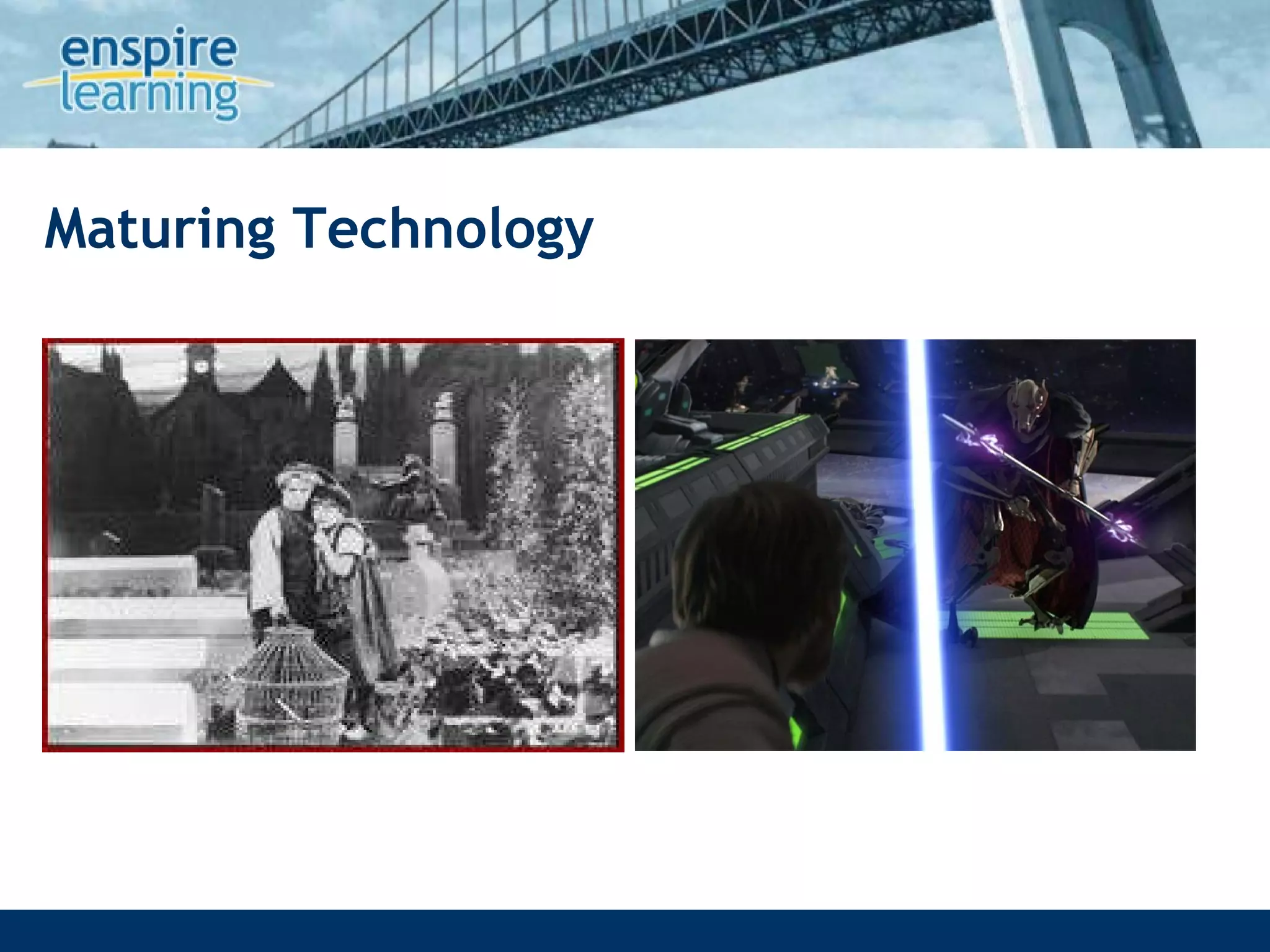
Maturing Technology
Ingredients / Best Practices of the Blended Classroom of the Future (Classroom Brainstorming Exercise) Engage live subject matter experts online Create a lab environment - live or virtual – for technical training Use online collaboration tools for application sharing  Create virtual scenarios – as pretests or as  part  of the classroom Share user stats – not just to test and record learners, but for fun! Find and utilize related media to illustrate points – movies, etc.  Utilize interactive tools of web collaboration software - polling, breakout chat rooms, etc.  Create personalized learning experiences
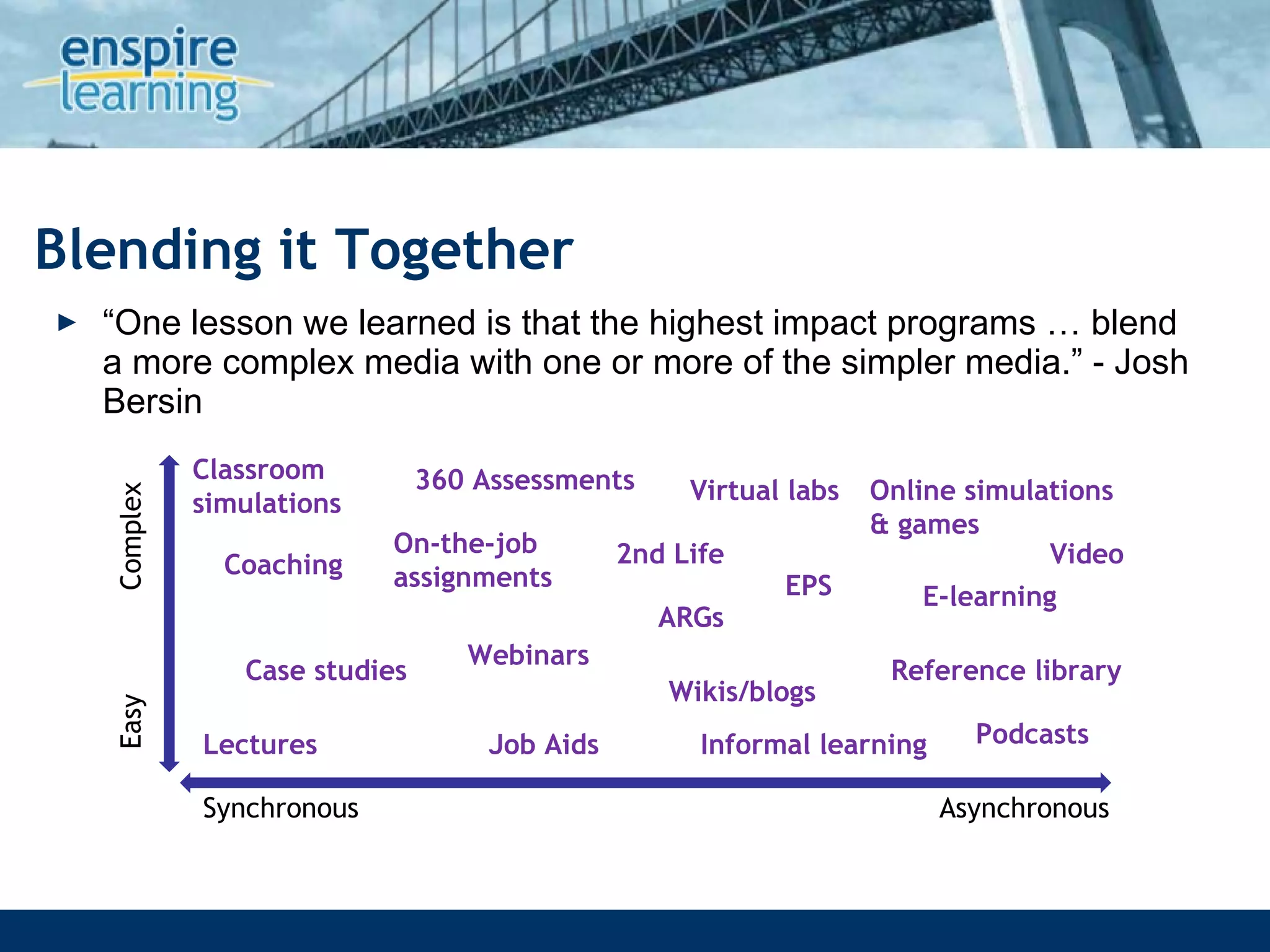
Blending it Together “ One lesson we learned is that the highest impact programs … blend a more complex media with one or more of the simpler media.” - Josh Bersin  Video E-learning Podcasts Wikis/blogs Job Aids Lectures Online simulations & games Webinars ARGs Case studies Coaching Informal learning EPS Reference library  2nd Life Virtual labs On-the-job assignments 360 Assessments Classroom simulations Synchronous Asynchronous Complex Easy
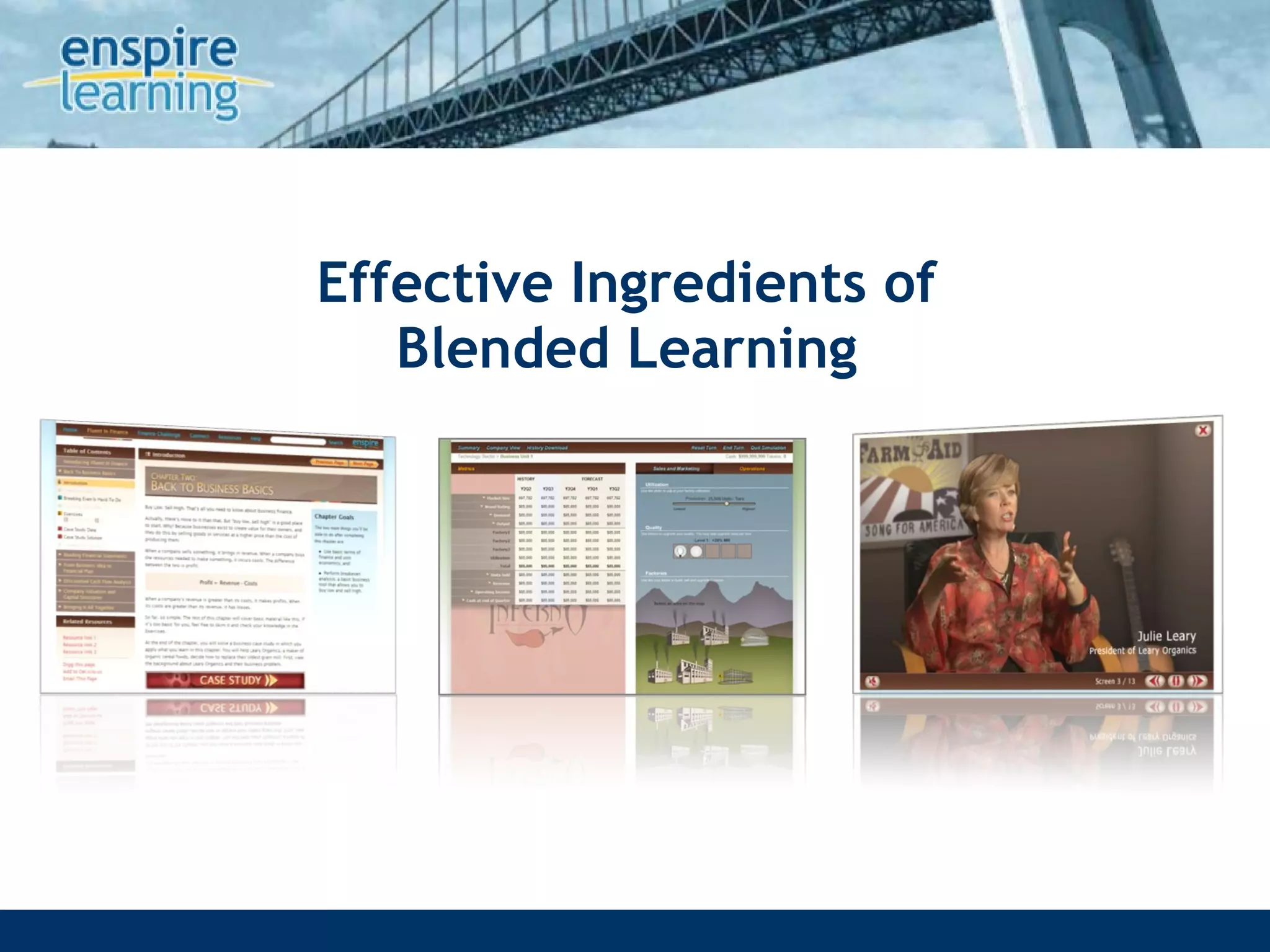
Effective Ingredients of  Blended Learning
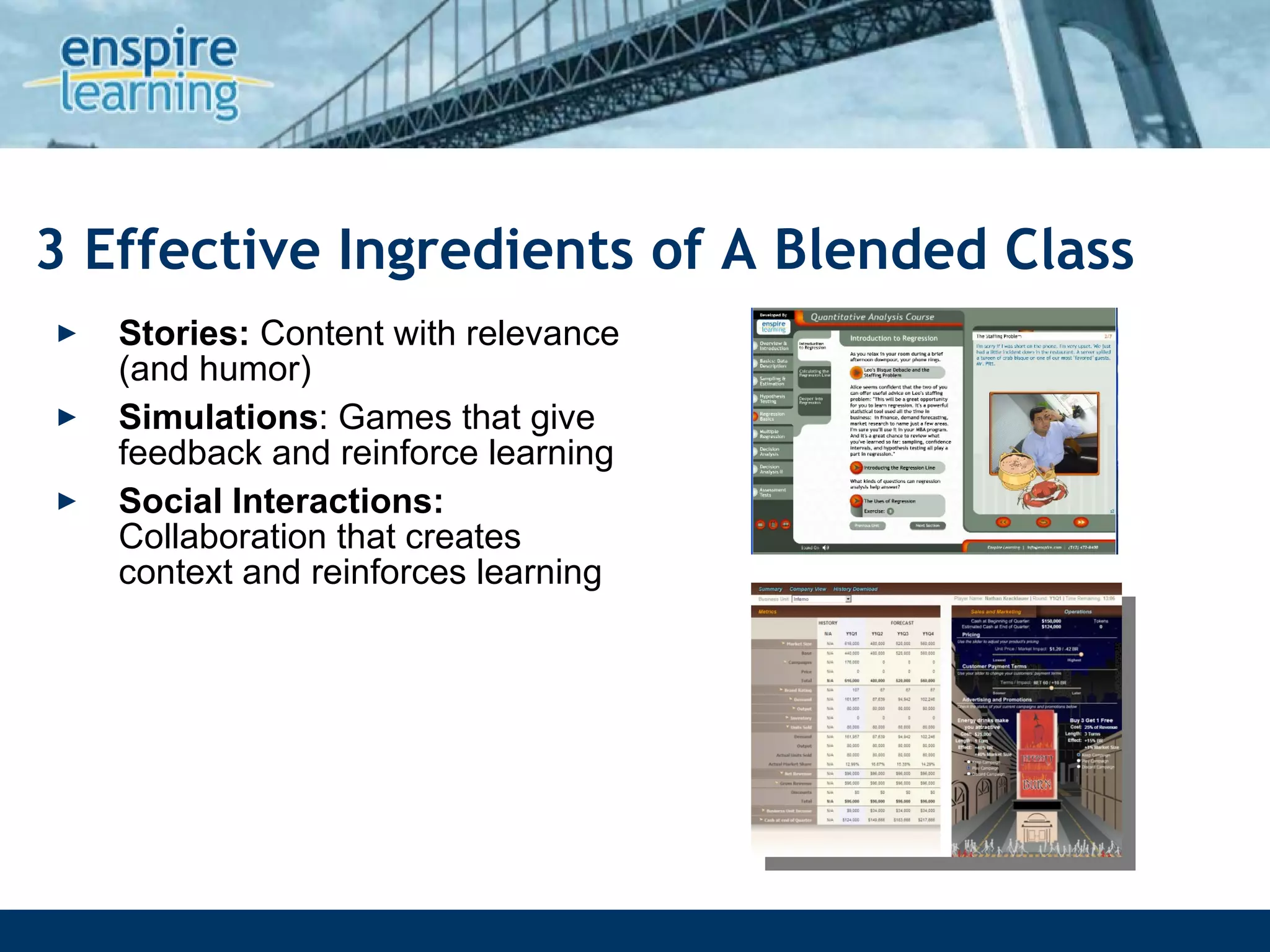
3 Effective Ingredients of A Blended Class Stories:  Content with relevance (and humor) Simulations : Games that give feedback and reinforce learning Social Interactions:  Collaboration that creates context and reinforces learning
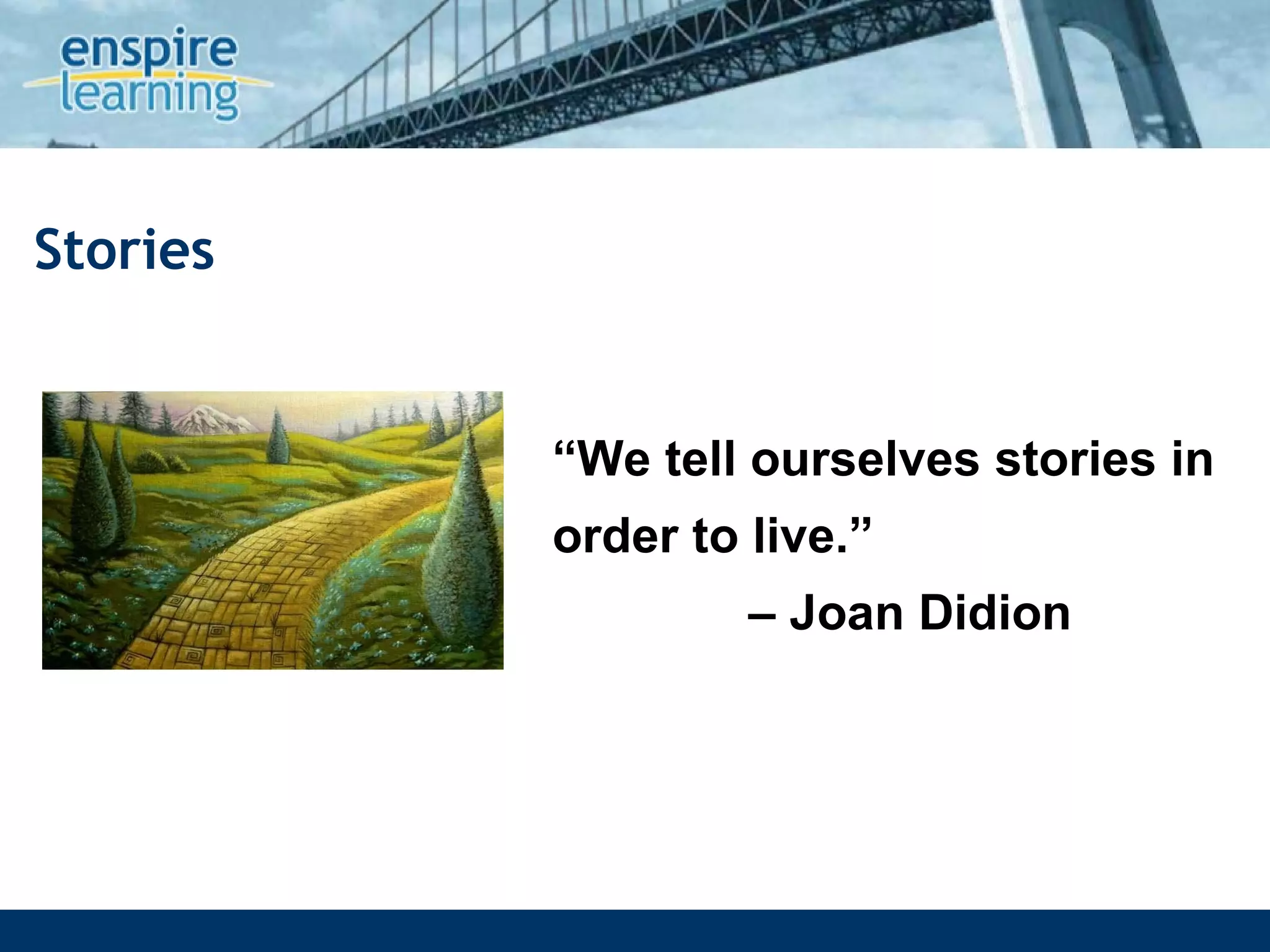
Stories “ We tell ourselves stories in order to live.”    – Joan Didion
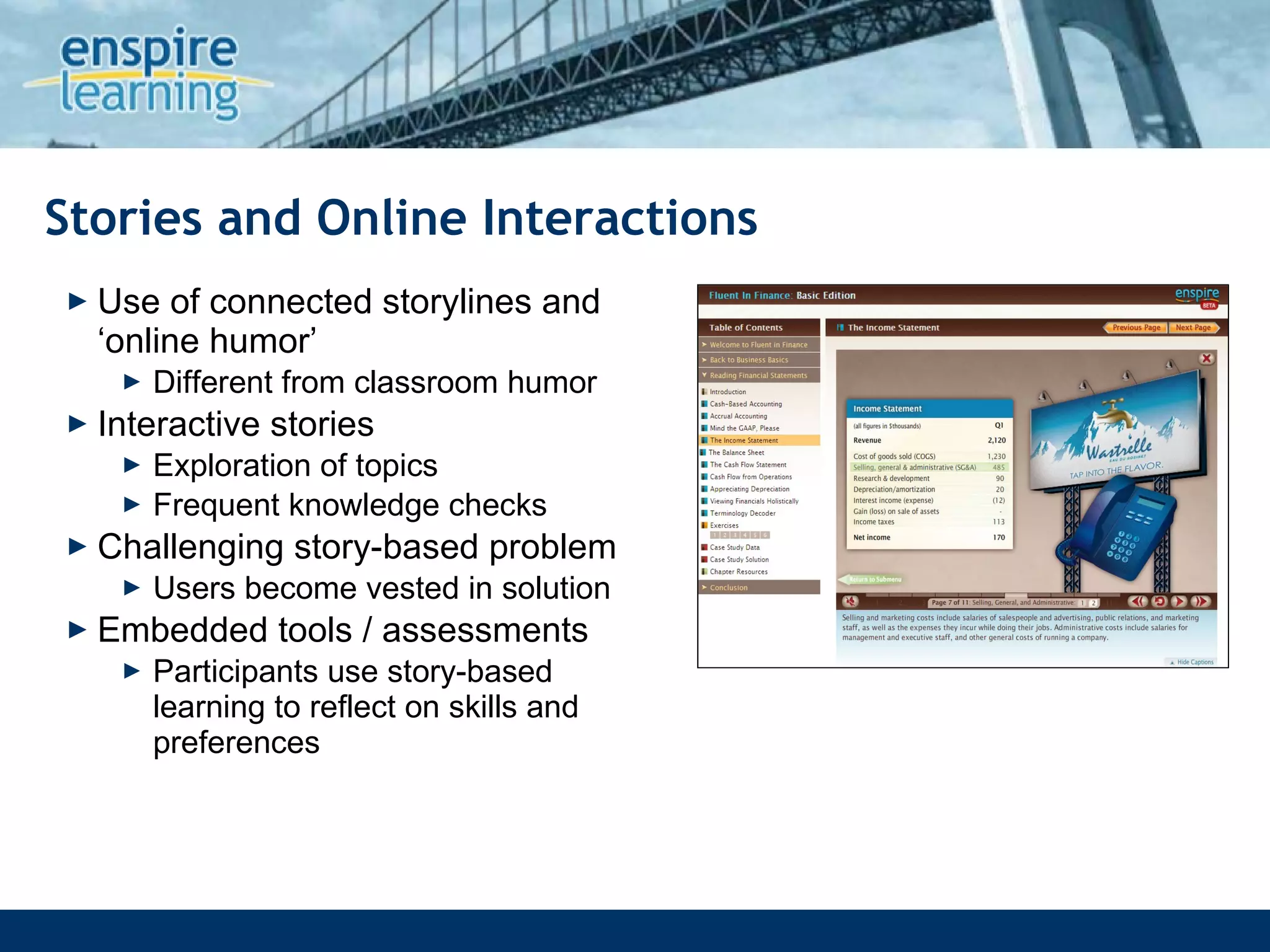
Stories and Online Interactions Use of connected storylines and ‘online humor’ Different from classroom humor Interactive stories Exploration of topics Frequent knowledge checks Challenging story-based problem Users become vested in solution Embedded tools / assessments  Participants use story-based learning to reflect on skills and preferences
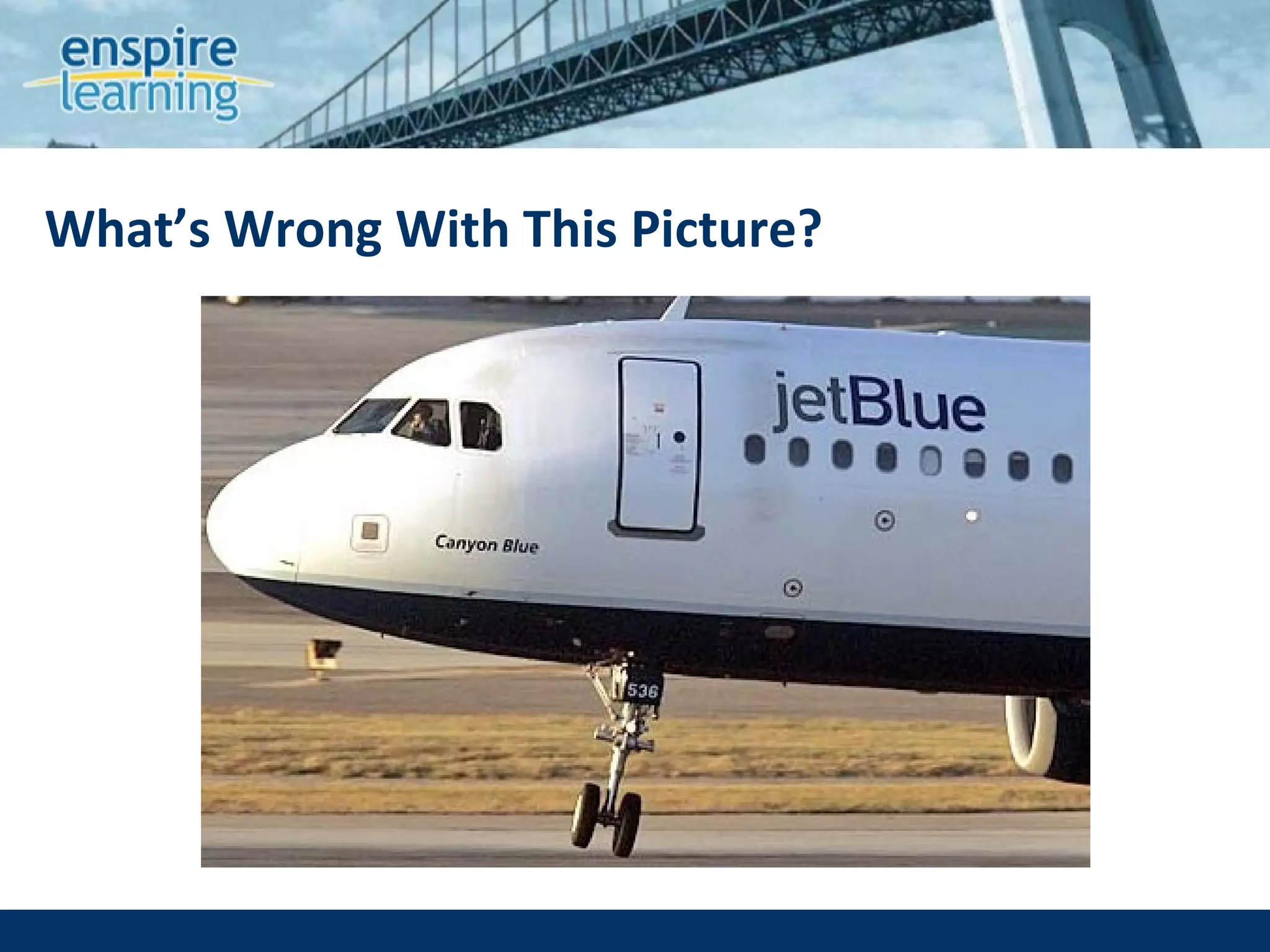
What’s Wrong With This Picture?
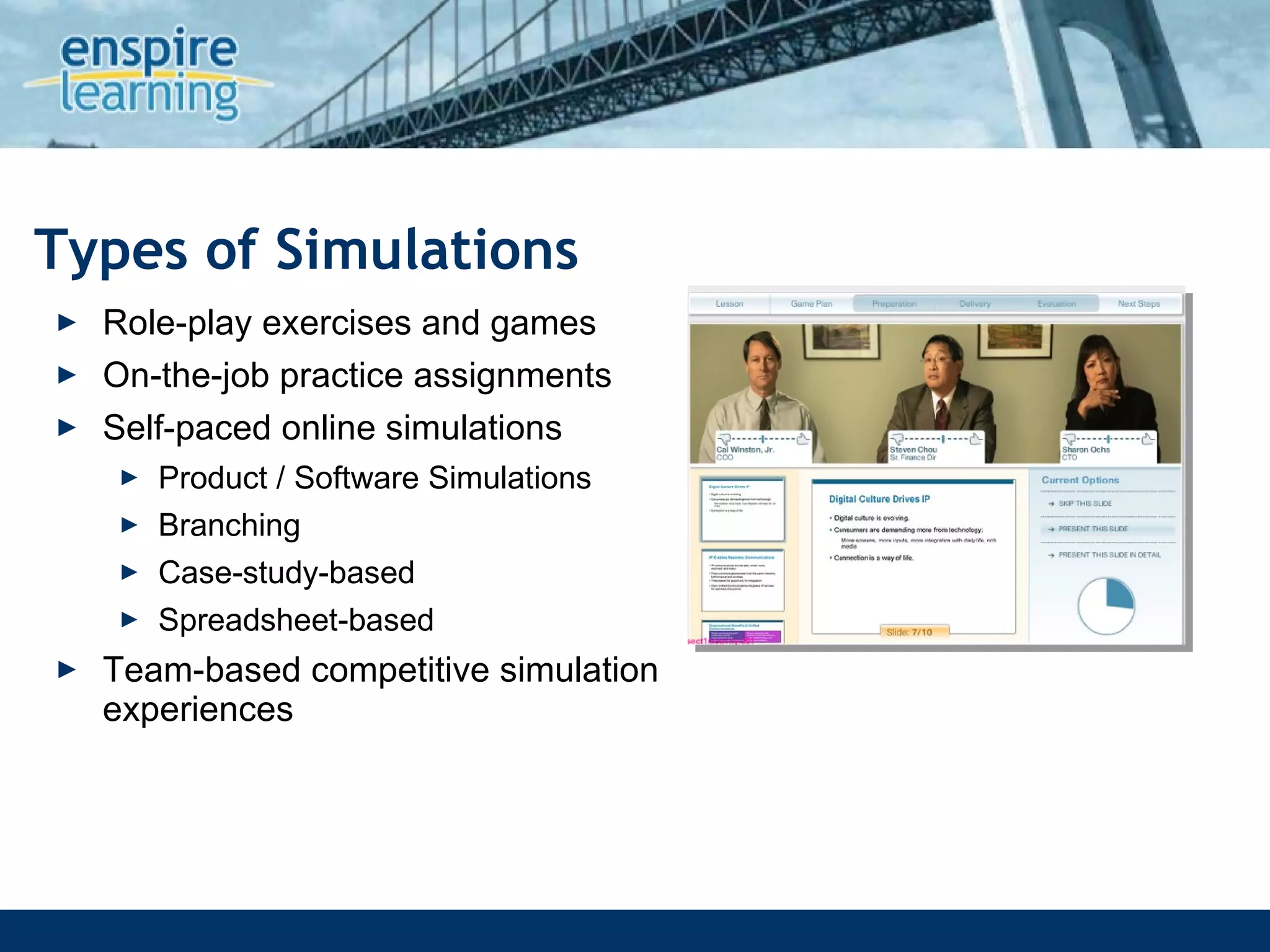
Types of Simulations Role-play exercises and games On-the-job practice assignments Self-paced online simulations  Product / Software Simulations Branching Case-study-based Spreadsheet-based Team-based competitive simulation experiences
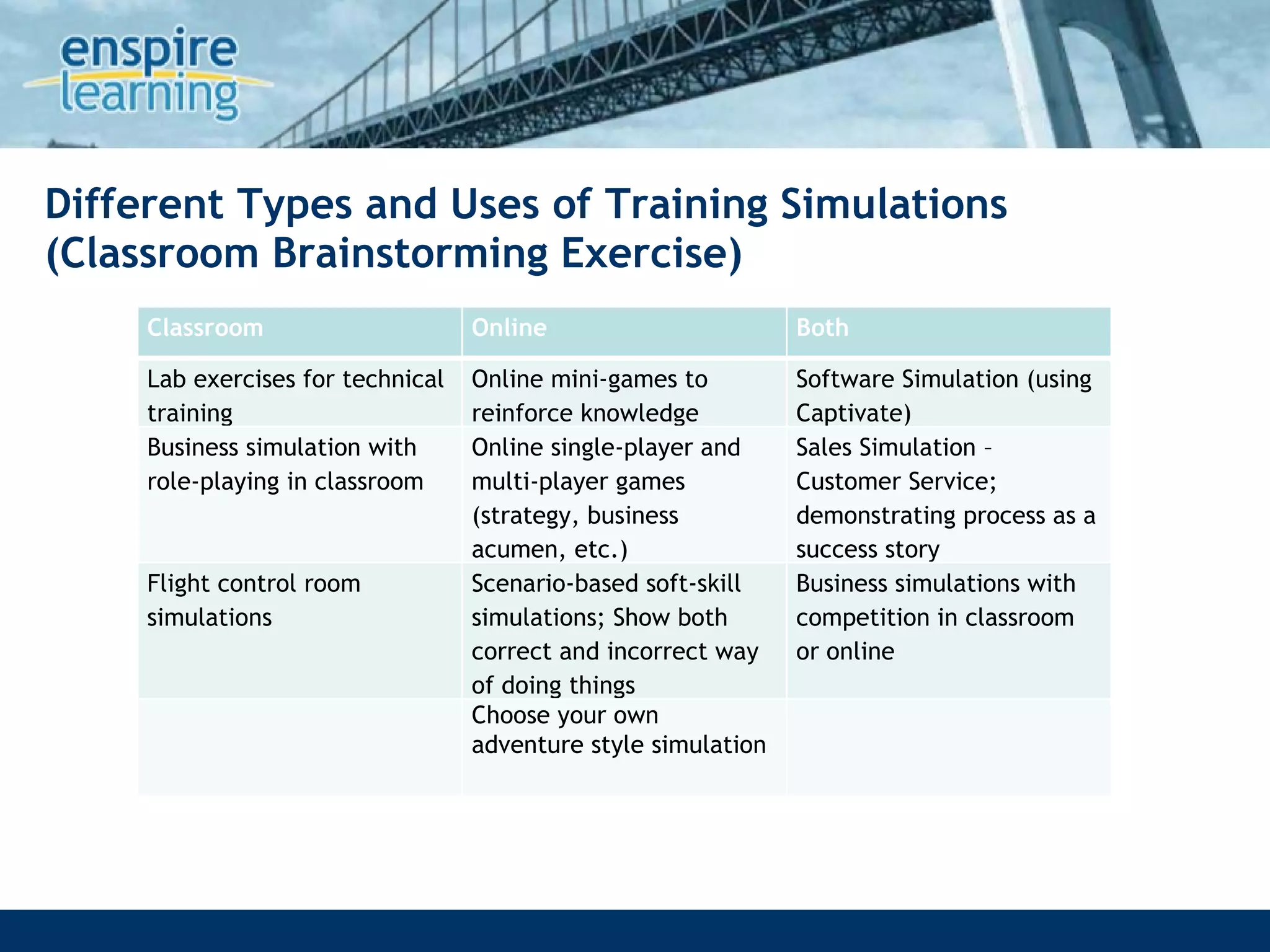
Different Types and Uses of Training Simulations (Classroom Brainstorming Exercise) Classroom Online Both Lab exercises for technical training Online mini-games to reinforce knowledge Software Simulation (using Captivate) Business simulation with role-playing in classroom Online single-player and multi-player games (strategy, business acumen, etc.) Sales Simulation – Customer Service; demonstrating process as a success story Flight control room simulations Scenario-based soft-skill simulations; Show both correct and incorrect way of doing things Business simulations with competition in classroom or online Choose your own adventure style simulation
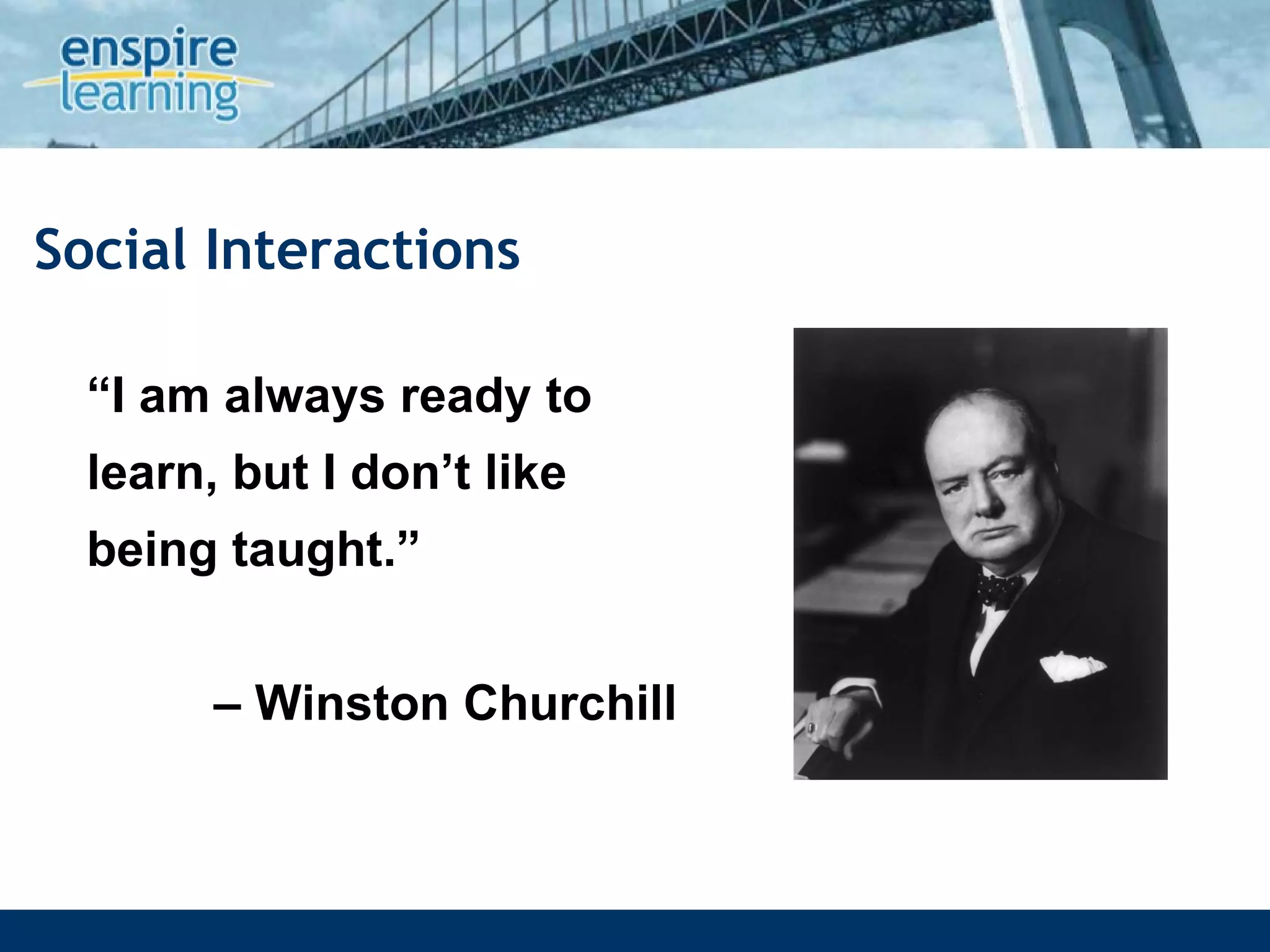
Social Interactions “ I am always ready to learn, but I don’t like being taught.” –  Winston Churchill
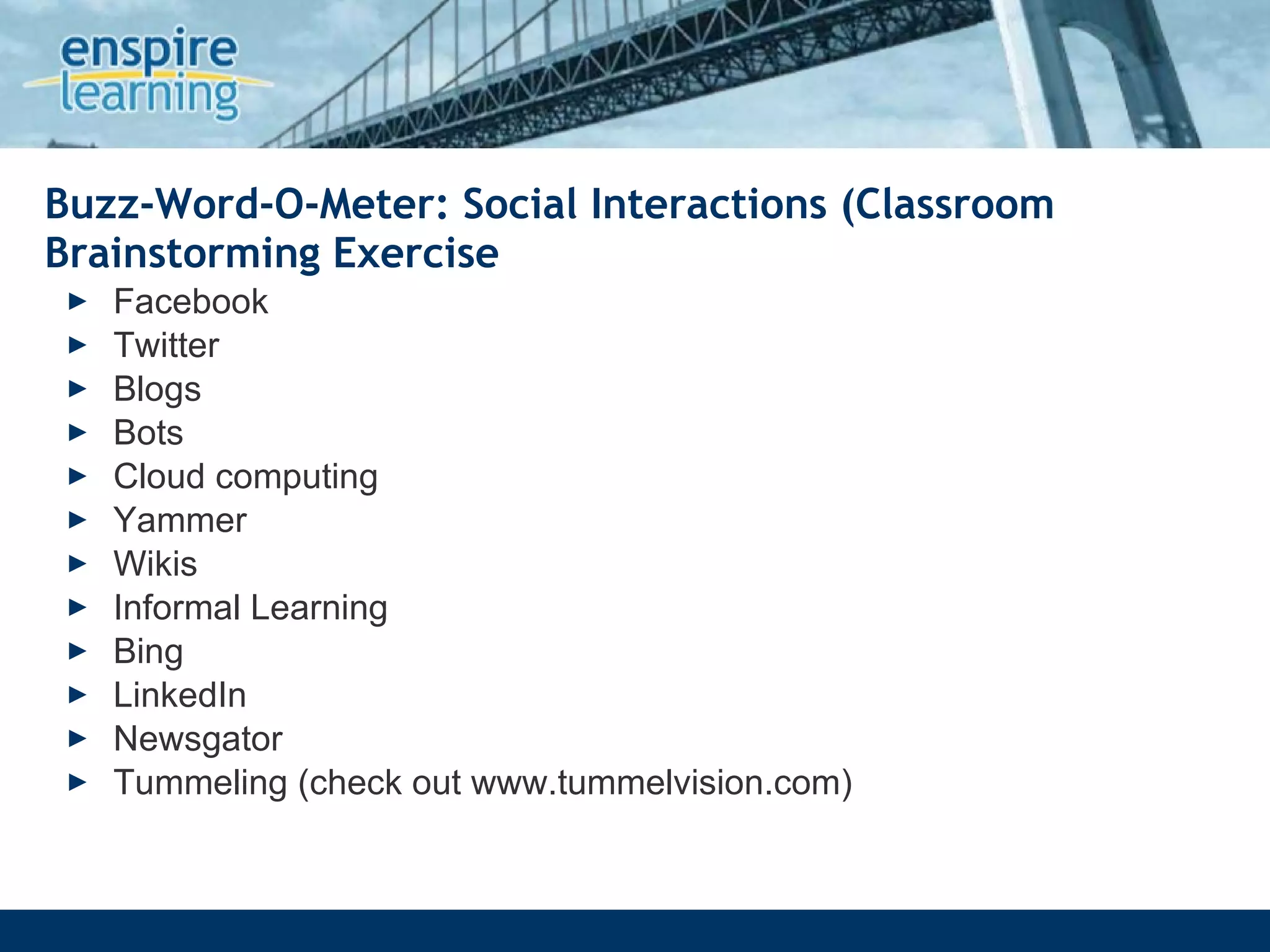
Buzz-Word-O-Meter: Social Interactions (Classroom Brainstorming Exercise Facebook Twitter Blogs Bots Cloud computing Yammer Wikis Informal Learning Bing LinkedIn Newsgator Tummeling (check out www.tummelvision.com)
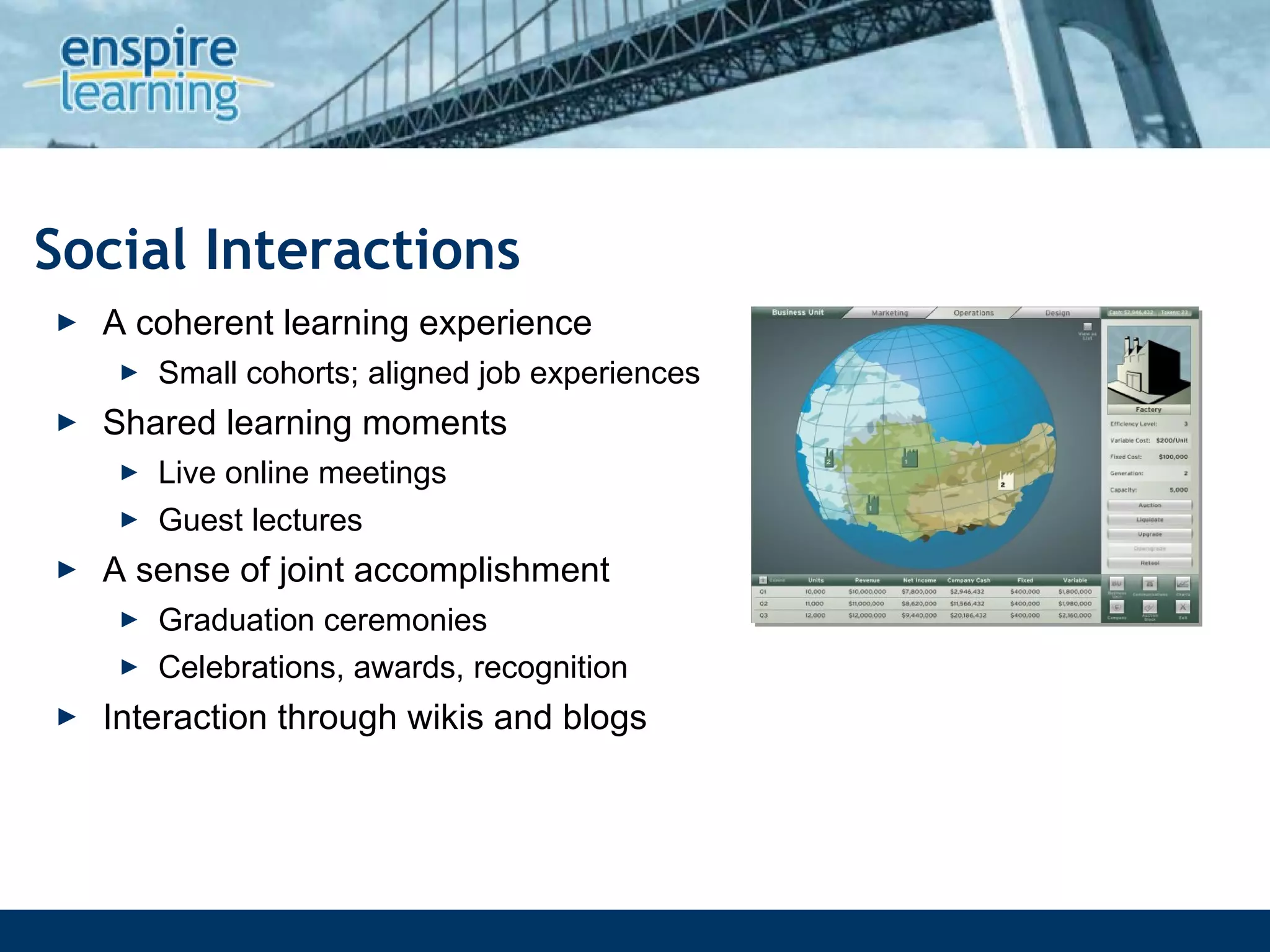
Social Interactions A coherent learning experience  Small cohorts; aligned job experiences Shared learning moments Live online meetings Guest lectures A sense of joint accomplishment Graduation ceremonies Celebrations, awards, recognition Interaction through wikis and blogs
Question and Answer Bjorn Billhardt [email_address]
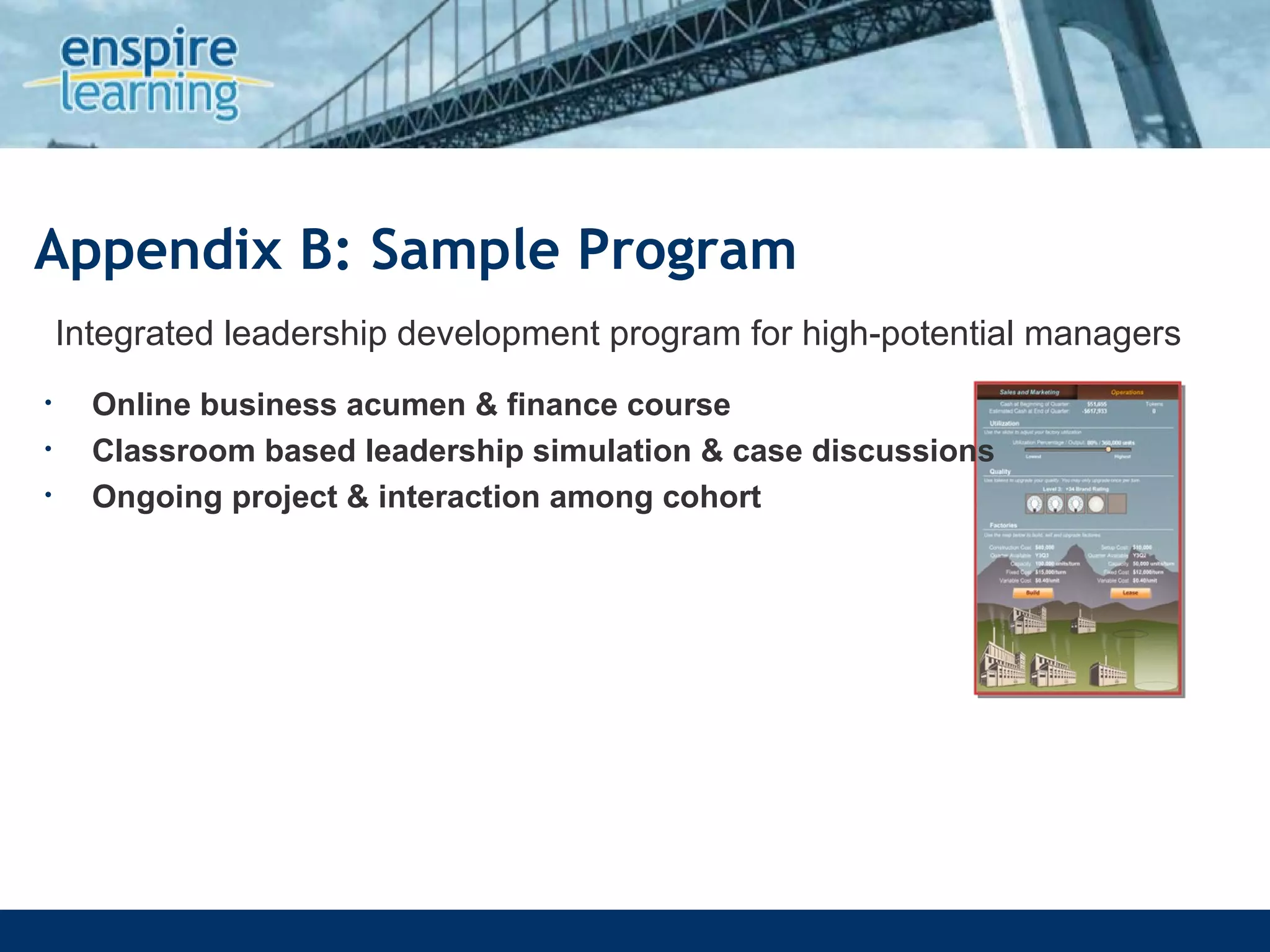
Appendix B: Sample Program Integrated leadership development program for high-potential managers Online business acumen & finance course Classroom based leadership simulation & case discussions Ongoing project & interaction among cohort
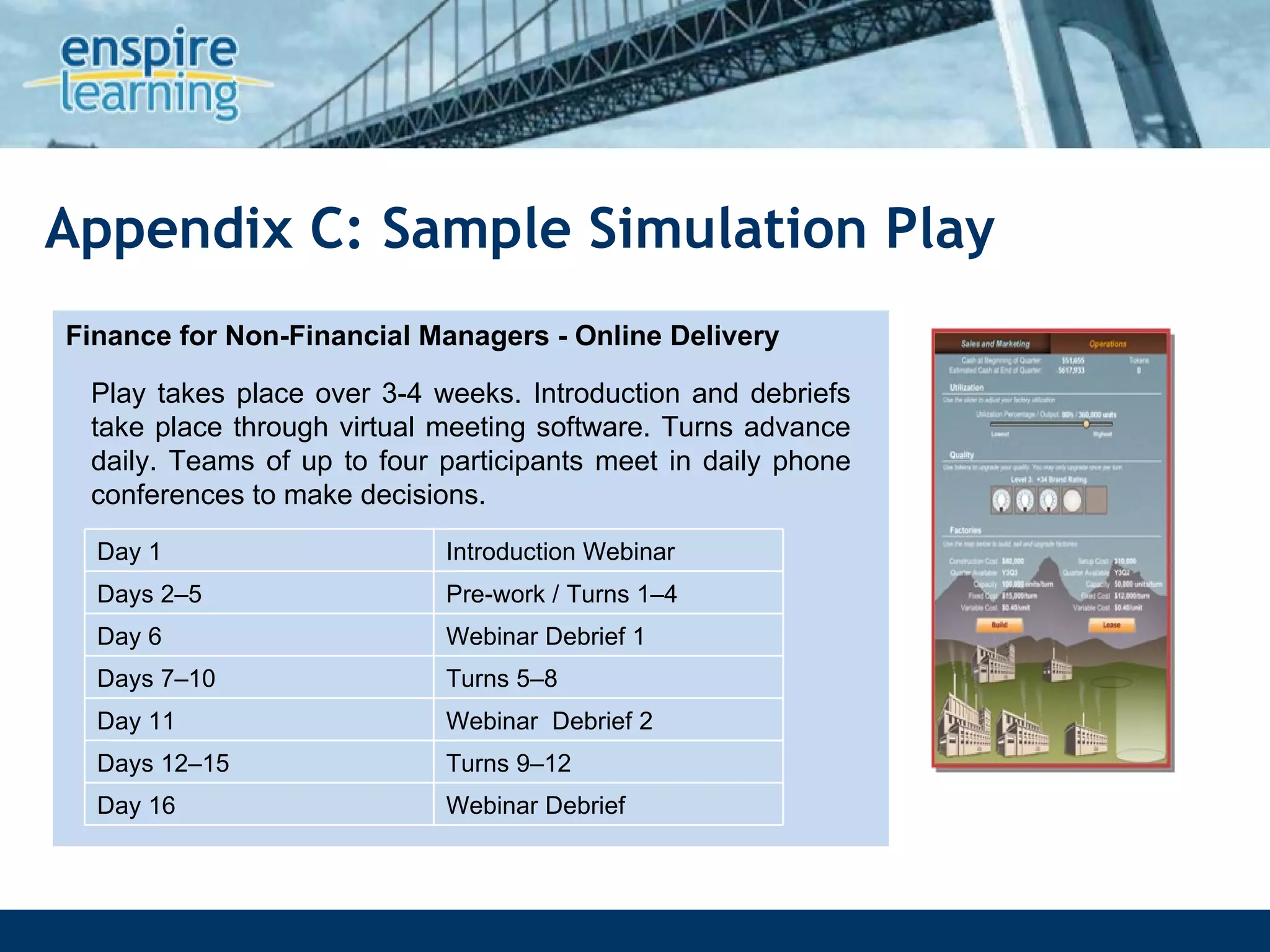
Appendix C: Sample Simulation Play Finance for Non-Financial Managers - Online Delivery Play takes place over 3-4 weeks. Introduction and debriefs take place through virtual meeting software. Turns advance daily. Teams of up to four participants meet in daily phone conferences to make decisions. Day 1 Introduction Webinar Days 2–5 Pre-work / Turns 1–4 Day 6  Webinar Debrief 1 Days 7–10 Turns 5–8 Day 11 Webinar  Debrief 2 Days 12–15 Turns 9–12 Day 16 Webinar Debrief

Creating the Blended Classroom of the Future - ASTD 2010

  • 1.
    M215: Creating theBlended Learning Classroom of the Future Bjorn Billhardt, CEO Enspire Learning, Inc. [email_address] ASTD 2010 International Conference and Expo Learning Objectives: Create an effective online/classroom blended training program Use simulations, stories, and social networks to create blended learning Evaluate the applicability of new technologies to specific training settings
  • 2.
    Today’s Agenda WhyE-learning is Not Working The Promise of Blended Learning Effective Ingredients of Blended Learning Creating the Blended Class of the Future Discussion / Q&A
  • 3.
    A Quick IntroductionBjorn Billhardt, CEO of Enspire Learning Offers blended leadership programs, simulations, games, and custom programs Clients include Microsoft, MIT, Yahoo, SAP, Pfizer, American Heart Association, UNICEF, and Harvard
  • 4.
    2000 Headlines “E-learning will make e-mail look like a rounding error” John Chambers, CEO of Cisco “ Online Education to Be Free; Billionaire Envisions Cyber-U” “ NotHarvard.com Sues Harvard”
  • 5.
  • 6.
    Is E-learning Working?Low engagement with recorded slides Low relevance of content No learning context No social context But… why is it still being used?
  • 7.
  • 8.
    Ingredients / BestPractices of the Blended Classroom of the Future (Classroom Brainstorming Exercise) Engage live subject matter experts online Create a lab environment - live or virtual – for technical training Use online collaboration tools for application sharing Create virtual scenarios – as pretests or as part of the classroom Share user stats – not just to test and record learners, but for fun! Find and utilize related media to illustrate points – movies, etc. Utilize interactive tools of web collaboration software - polling, breakout chat rooms, etc. Create personalized learning experiences
  • 9.
    Blending it Together“ One lesson we learned is that the highest impact programs … blend a more complex media with one or more of the simpler media.” - Josh Bersin Video E-learning Podcasts Wikis/blogs Job Aids Lectures Online simulations & games Webinars ARGs Case studies Coaching Informal learning EPS Reference library 2nd Life Virtual labs On-the-job assignments 360 Assessments Classroom simulations Synchronous Asynchronous Complex Easy
  • 10.
    Effective Ingredients of Blended Learning
  • 11.
    3 Effective Ingredientsof A Blended Class Stories: Content with relevance (and humor) Simulations : Games that give feedback and reinforce learning Social Interactions: Collaboration that creates context and reinforces learning
  • 12.
    Stories “ Wetell ourselves stories in order to live.” – Joan Didion
  • 13.
    Stories and OnlineInteractions Use of connected storylines and ‘online humor’ Different from classroom humor Interactive stories Exploration of topics Frequent knowledge checks Challenging story-based problem Users become vested in solution Embedded tools / assessments Participants use story-based learning to reflect on skills and preferences
  • 14.
    What’s Wrong WithThis Picture?
  • 15.
    Types of SimulationsRole-play exercises and games On-the-job practice assignments Self-paced online simulations Product / Software Simulations Branching Case-study-based Spreadsheet-based Team-based competitive simulation experiences
  • 16.
    Different Types andUses of Training Simulations (Classroom Brainstorming Exercise) Classroom Online Both Lab exercises for technical training Online mini-games to reinforce knowledge Software Simulation (using Captivate) Business simulation with role-playing in classroom Online single-player and multi-player games (strategy, business acumen, etc.) Sales Simulation – Customer Service; demonstrating process as a success story Flight control room simulations Scenario-based soft-skill simulations; Show both correct and incorrect way of doing things Business simulations with competition in classroom or online Choose your own adventure style simulation
  • 17.
    Social Interactions “I am always ready to learn, but I don’t like being taught.” – Winston Churchill
  • 18.
    Buzz-Word-O-Meter: Social Interactions(Classroom Brainstorming Exercise Facebook Twitter Blogs Bots Cloud computing Yammer Wikis Informal Learning Bing LinkedIn Newsgator Tummeling (check out www.tummelvision.com)
  • 19.
    Social Interactions Acoherent learning experience Small cohorts; aligned job experiences Shared learning moments Live online meetings Guest lectures A sense of joint accomplishment Graduation ceremonies Celebrations, awards, recognition Interaction through wikis and blogs
  • 20.
    Question and AnswerBjorn Billhardt [email_address]
  • 21.
    Appendix B: SampleProgram Integrated leadership development program for high-potential managers Online business acumen & finance course Classroom based leadership simulation & case discussions Ongoing project & interaction among cohort
  • 22.
    Appendix C: SampleSimulation Play Finance for Non-Financial Managers - Online Delivery Play takes place over 3-4 weeks. Introduction and debriefs take place through virtual meeting software. Turns advance daily. Teams of up to four participants meet in daily phone conferences to make decisions. Day 1 Introduction Webinar Days 2–5 Pre-work / Turns 1–4 Day 6 Webinar Debrief 1 Days 7–10 Turns 5–8 Day 11 Webinar Debrief 2 Days 12–15 Turns 9–12 Day 16 Webinar Debrief