Replacing Hope with Certainty Improving the Achievement of All Students in the Mercer Area School District Through Focused Vision and Comprehensive Collaboration
Creating a Shared Vision Project – Achieving Equity in Education.This work has been completed as a part of the Creating a Shared Vision Project Course Offered Through the Pennsylvania Inspired Leadership ProgramI chose to conduct an equity audit of my district after reviewing the most recent PSSA scores.  I worked with my Superintendent to put together an equity team to review the findings of my investigation.  Three elements of our district were analyzed: teacher distribution, program equity, and achievement equity.  I also included some data I had collected near the end of the school year to gauge student attitudes, beliefs, perceptions, and/or concerns.  Recommendations are based on research focusing on the areas of concern mentioned near the end of the presentation.  I have also including references and my reflection regarding this process within this presentation.
Equity DefinedEducation EquityThe educational policies, practices and programs necessary to (a) eliminate educational barriers based on gender, race/ethnicity, national origin, color, disability, age, or other protected group status; and (b) provide equal educational opportunities and ensure that historically underserved or underrepresented populations meet the same rigorous standard for academic performance expected of all children and youth. (Skrla, Mckenzie, & Scheurich, 2009. p. 3-4).Definition adapted from Wisconsin Department of InstructionSystemic EquityThe transformed ways in which systems and individuals habitually operate to ensure that every learner – in whatever learning environment that learner is found – has the greatest opportunity to learn enhanced by the resources and supports necessary to achieve competence, excellence, independence, responsibility, and self sufficiency for school and life ((Skrla, Mckenzie, & Scheurich, 2009. p. 6)
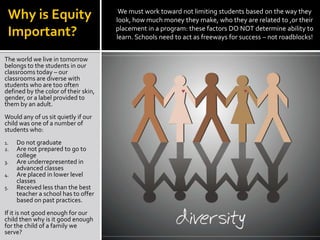
Why is Equity Important?We must work toward not limiting students based on the way they look, how much money they make, who they are related to ,or their placement in a program: these factors DO NOT determine ability to learn. Schools need to act as freeways for success – not roadblocks! The world we live in tomorrow belongs to the students in our classrooms today – our classrooms are diverse with students who are too often defined by the color of their skin, gender, or a label provided to them by an adult.Would any of us sit quietly if our child was one of a number of students who:Do not graduateAre not prepared to go to collegeAre underrepresented in advanced classesAre placed in lower level classesReceived less than the best teacher a school has to offer based on past practices.If it is not good enough for our child then why is it good enough for the child of a family we serve?
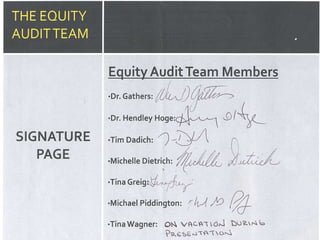
THE EQUITY AUDIT TEAMEquity Audit Team MembersDr. Gathers
Superintendent
Dr. Hendley Hoge
HS Principal
Tim Dadich
MS Principal
Michelle Dietrich
Special Ed. Director and Elementary Assistant Principal
Tina Greig
School Counselor and Leadership Team Member
Michael Piddington
Teacher and Leadership Team Member
Tina Wagner
Teacher and Leadership Team MemberDr. William Gathers, Superintendent of Schools, recommended people who have the ability to enact change within the district using the information/data retrieved from the equity audit. The team includes several key administrators, a school counselor, and two teacher leadership team members.
ConversationsConversation with the Superintendent, Dr. William Gathers, focused on his genuine concern for the discrepancy that exists between the academic achievement of our general population and those students who have been identified as economically disadvantaged or in need of special education services.  Dr. Gathers is genuinely aware of the situation, ready to take action to improve the situation, and is not afraid to have those conversations that could present other leaders and teachers with uncomfortable truths about their actions.We have also discussed the importance of “keeping the main thing the main thing” by maintaining focus – keep the Eye on the Goal!Initial discussion were held with the following members of the Mercer Area School District:The SuperintendentSeveral Members of the Audit Team: Administration and TeachersGroup of Teachers on the School Leadership TeamThe conversations that took place helped to guide the direction of research and suggestions for solution
ConversationsConversations with other audit members and the teachers on the leadership team demonstrated a slight awareness of the problem at hand; however, there seems to be a predominate belief among some members of both groups that all the roadblocks we face with our students are completely out of our control – it is the “fault” of the home, the parents, or the choices of the students.  Some are intent on maintaining the low level classes while others recognize the need to increase academic rigor for all students.  Regardless, one very promising element that has surfaced throughout conversations is the desire of the teachers and administrators to work together in addressing the disparities in the achievement of our students – the staff is excited to begin engaging in embedded professional development focused on collaboration and improving instruction for all students.  Initial discussion were held with the following members of the Mercer Area School District:The SuperintendentSeveral Members of the Audit Team: Administration and TeachersGroup of Teachers on the School Leadership TeamThe conversations that took place helped to guide the direction of research and suggestions for resolutions
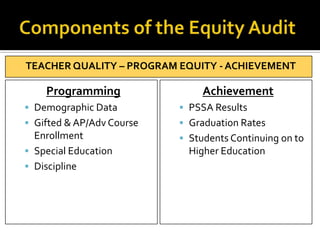
Components of the Equity AuditTEACHER QUALITY – PROGRAM EQUITY - ACHIEVEMENTProgrammingDemographic DataGifted & AP/Adv Course EnrollmentSpecial EducationDisciplineAchievementPSSA ResultsGraduation RatesStudents Continuing on to Higher Education
CURRENT PROGRAM & ACHIEVEMENT DATAThe time has passed for hoping our students do well – We must plan for and have the belief that ALL students can achieve at high levels.
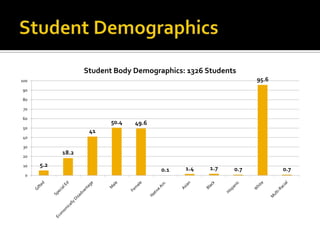
Student Demographics
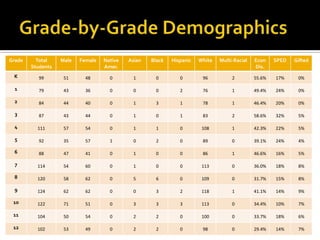
Grade-by-Grade Demographics
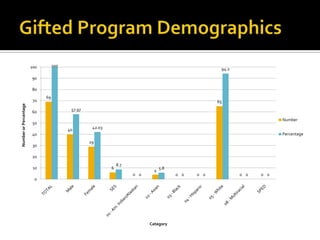
Gifted Program Demographics
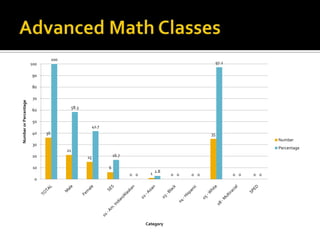
Advanced Math Classes
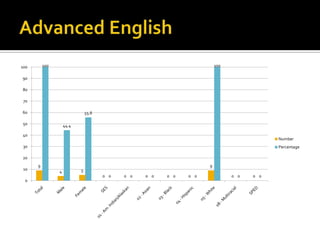
Advanced English
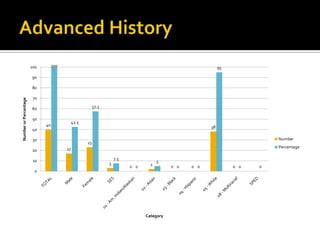
Advanced History
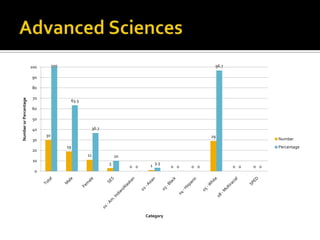
Advanced Sciences
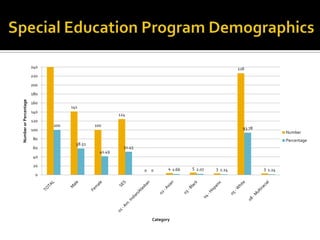
Special Education Program Demographics
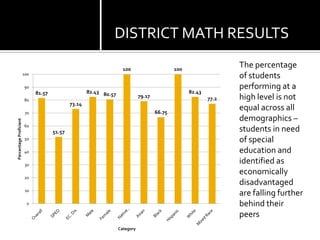
DISTRICT MATH RESULTSThe percentage of students performing at a high level is not equal across all demographics – students in need of special education and identified as economically disadvantaged are falling further behind their peers
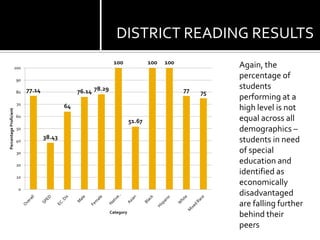
DISTRICT READING RESULTSAgain, the percentage of students performing at a high level is not equal across all demographics – students in need of special education and identified as economically disadvantaged are falling further behind their peers
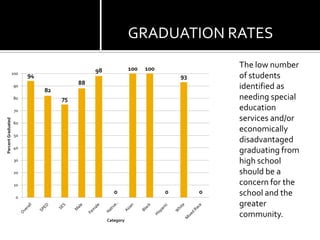
GRADUATION RATESThe low number of students identified as needing special education services and/or economically disadvantaged graduating from high school should be a concern for the school and the greater community.
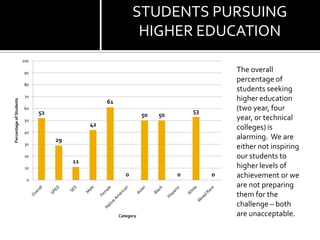
STUDENTS PURSUING HIGHER EDUCATIONThe overall percentage of students seeking higher education (two year, four year, or technical colleges) is alarming.  We are either not inspiring our students to higher levels of achievement or we are not preparing them for the challenge – both are unacceptable.
STUDENT POLLWhat do our students have to say? Conversations with Students.
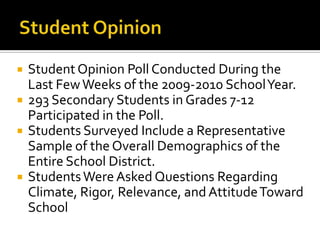
Student OpinionStudent Opinion Poll Conducted During the Last Few Weeks of the 2009-2010 School Year.
293 Secondary Students in Grades 7-12 Participated in the Poll.
Students Surveyed Include a Representative Sample of the Overall Demographics of the Entire School District.
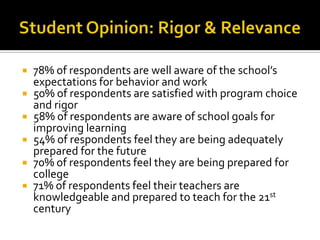
Students Were Asked Questions Regarding Climate, Rigor, Relevance, and Attitude Toward SchoolStudent Opinion: Rigor & Relevance78% of respondents are well aware of the school’s expectations for behavior and work50% of respondents are satisfied with program choice and rigor58% of respondents are aware of school goals for improving learning54% of respondents feel they are being adequately prepared for the future70% of respondents feel they are being prepared for college71% of respondents feel their teachers are knowledgeable and prepared to teach for the 21st century
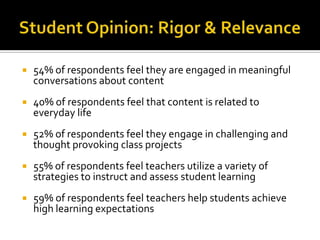
Student Opinion: Rigor & Relevance54% of respondents feel they are engaged in meaningful conversations about content40% of respondents feel that content is related to everyday life52% of respondents feel they engage in challenging and thought provoking class projects55% of respondents feel teachers utilize a variety of strategies to instruct and assess student learning59% of respondents feel teachers help students achieve high learning expectations
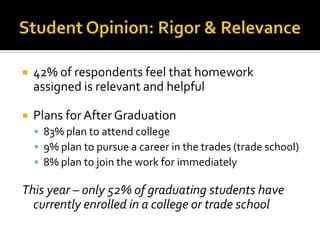
Student Opinion: Rigor & Relevance42% of respondents feel that homework assigned is relevant and helpfulPlans for After Graduation83% plan to attend college9% plan to pursue a career in the trades (trade school)8% plan to join the work for immediatelyThis year – only 52% of graduating students have currently enrolled in a college or trade school
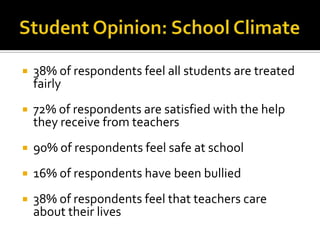
Student Opinion: School Climate38% of respondents feel all students are treated fairly72% of respondents are satisfied with the help they receive from teachers90% of respondents feel safe at school16% of respondents have been bullied38% of respondents feel that teachers care about their lives
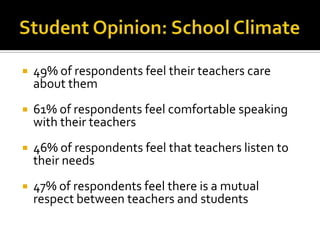
Student Opinion: School Climate49% of respondents feel their teachers care about them61% of respondents feel comfortable speaking with their teachers46% of respondents feel that teachers listen to their needs47% of respondents feel there is a mutual respect between teachers and students
Student Opinion: Attitude45% of respondents are satisfied with what they are learning62% of respondents feel they put forth their very best effort62% of respondents  feel they are developing into better readers57% of respondents feel they are developing better skills in math
Student Opinion: Attitude37% of respondents “like” coming to school every day26% of respondents think school is interesting46% of respondents are proud of their schooling62% of respondents feel they are able to learn about technology and/or utilize their technology skills in the classroom
PRACTICES CONTRIBUTING TO LACK OF ACHIEVEMENTAbstract Vision – Not PublicizedLack of Aligned SystemTeaching and LearningProfessional DevelopmentSupervision and EvaluationLack of Teacher LeadershipBuilding Leadership TeamsPeer Visits and Learning CommunitiesLack of Shared Leadership & Collaboration between stakeholdersAdministration, Instructional staffStudents, Parents, Community membersLack of formal process for leading changeThe items to the right are those that have been identified as processes lacking or inadequate to implementing a rigorous and relevant program for all students regardless of their age, ethnicity, gender, ability, and/or economic status.In order to achieve the goals and vision developed during our most recent strategic planning session (2009 – 2015) the district must make significant changes in the way it operates in specific regard to its overall vision.
When we say high expectations for all do we really mean it?It is one thing to take as a given that approximately 50% of an entering group of students in kindergarten may not attend college, but to assign a particular child to a curriculum designed for that 50 % closes that door altogether.  Are we comfortable providing only half of our students the best we have to offer?
WHAT CAN WE DO?A PLAN FOR REFORMING THE MERCER AREA SCHOOL DISTRICT
STEP ONE: Communicate Our VisionThe Mercer  Area School District worked with staff, students, and community members to develop a strategic vision for the future - “The Mission of the Mercer Area School District, with community support, is to educate each student to be an involved responsible citizen.  Upon graduation, all students will be prepared to succeed in an ever-changing society by utilizing critical thinking and lifelong learning to become stewards of their communities.”What does this mean? What does this look like?
STEP ONE: Communicate Our VisionVision provides a picture of the future with some implicit or explicit commentary on why people should strive to create that shared future (Kotter, 1996).A critical component to accomplish the goal of improving instruction in the classroom is the establishment of a common vision, rigorous curriculum, and common model of instruction (Marzano, 2010; Blackburn & Williamson 2010; Riddile, 2010).Vision has six main characteristics (Kotter, 1996).Imaginable: people can see itDesirable: people are drawn to itFeasible: people can accomplish it through small stepsFocused: people understand it as a mechanism to drive daily actionsFlexible: people are able to utilize their own strengths to accomplish itCommunicable: It is easy to communicate
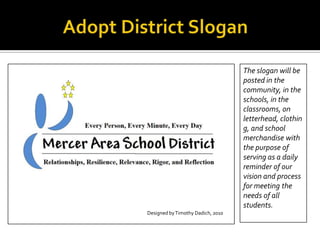
Adopt District SloganThe slogan will be posted in the community, in the schools, in the classrooms, on letterhead, clothing, and school merchandise with the purpose of serving as a daily reminder of our vision and process for meeting the needs of all students.Designed by Timothy Dadich, 2010
STEP TWO: Data Collection and TeamworkThe Mercer Area District must work to promote shared leadership from teacher to teacher, teacher to student, teacher to parent, teacher to administration, administration to board members, building to building, building to central office, district to community.The Mercer Area School District must adopt a regular process for the collection of data and the collaboration between stakeholders to actively review the data to drive decisions for the direction of district programs and resources
ATP: Action Team  for PartnershipThe Mercer Area School District will develop an Action Team for Partnerships (ATP) to organize and sustain a program of school, family, and community partnerships. With an ATP, teachers, administrators, parents, community members, and others can work together to connect family and community involvement with school improvement goals. The ATP in each school aims to: Create a welcoming school environment for families Engage families and the community in ways that support student achievement and success
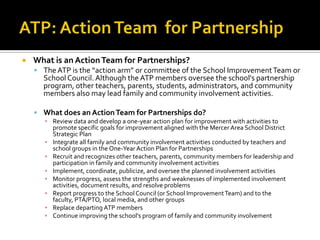
ATP: Action Team  for PartnershipWhat is an Action Team for Partnerships?The ATP is the “action arm” or committee of the School Improvement Team or School Council. Although the ATP members oversee the school's partnership program, other teachers, parents, students, administrators, and community members also may lead family and community involvement activities. What does an Action Team for Partnerships do?Review data and develop a one-year action plan for improvement with activities to promote specific goals for improvement aligned with the Mercer Area School District Strategic PlanIntegrate all family and community involvement activities conducted by teachers and school groups in the One-Year Action Plan for Partnerships Recruit and recognizes other teachers, parents, community members for leadership and participation in family and community involvement activities Implement, coordinate, publicize, and oversee the planned involvement activities Monitor progress, assess the strengths and weaknesses of implemented involvement activities, document results, and resolve problems Report progress to the School Council (or School Improvement Team) and to the faculty, PTA/PTO, local media, and other groups Replace departing ATP members Continue improving the school's program of family and community involvement
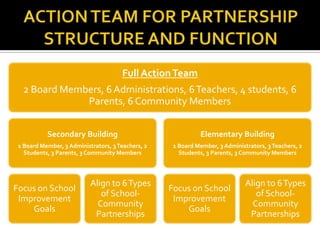
ACTION TEAM FOR PARTNERSHIP STRUCTURE AND FUNCTION
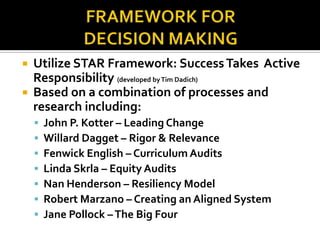
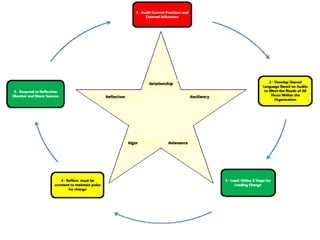
FRAMEWORK FOR DECISION MAKINGUtilize STAR Framework: Success Takes  Active Responsibility (developed by Tim Dadich)Based on a combination of processes and research including: John P. Kotter – Leading ChangeWillard Dagget – Rigor & RelevanceFenwick English – Curriculum AuditsLinda Skrla – Equity AuditsNan Henderson – Resiliency ModelRobert Marzano – Creating an Aligned SystemJane Pollock – The Big Four
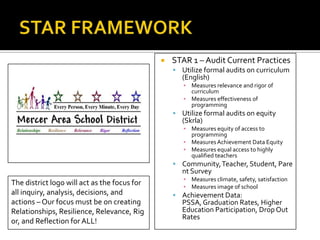
STAR FRAMEWORKSTAR 1 – Audit Current Practices Utilize formal audits on curriculum (English)Measures relevance and rigor of curriculumMeasures effectiveness of programmingUtilize formal audits on equity (Skrla)Measures equity of access to programmingMeasures Achievement Data EquityMeasures equal access to highly qualified teachersCommunity, Teacher, Student, Parent SurveyMeasures climate, safety, satisfactionMeasures image of schoolAchievement Data: PSSA, Graduation Rates, Higher Education Participation, Drop Out RatesThe district logo will act as the focus for all inquiry, analysis, decisions, and actions – Our focus must be on creating Relationships, Resilience, Relevance, Rigor, and Reflection for ALL!
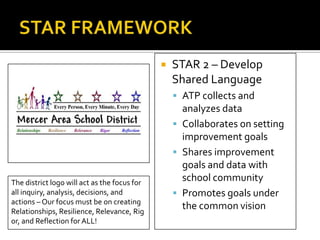
STAR FRAMEWORKSTAR 2 – Develop Shared LanguageATP collects and analyzes dataCollaborates on setting improvement goalsShares improvement goals and data with school communityPromotes goals under the common visionThe district logo will act as the focus for all inquiry, analysis, decisions, and actions – Our focus must be on creating Relationships, Resilience, Relevance, Rigor, and Reflection for ALL!
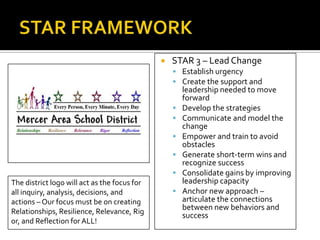
STAR FRAMEWORKSTAR 3 – Lead ChangeEstablish urgencyCreate the support and leadership needed to move forwardDevelop the strategiesCommunicate and model the change Empower and train to avoid obstaclesGenerate short-term wins and recognize successConsolidate gains by improving leadership capacityAnchor new approach – articulate the connections between new behaviors and successThe district logo will act as the focus for all inquiry, analysis, decisions, and actions – Our focus must be on creating Relationships, Resilience, Relevance, Rigor, and Reflection for ALL!
STAR FRAMEWORKSTAR 4 – ReflectEstablish a climate of resiliency and reflection through Resiliency FrameworkAlign evaluation procedures to promote reflective practices on change strategiesDevelop assessments to measure effectiveness of changeThe district logo will act as the focus for all inquiry, analysis, decisions, and actions – Our focus must be on creating Relationships, Resilience, Relevance, Rigor, and Reflection for ALL!
STAR FRAMEWORKSTAR 5 – RespondRespond to reflectionsShare success storiesConnect effort to achievementProvide constant feedback to parents, students, staff, and communityATP Team meets to review process and move forward to continuing the cycle The district logo will act as the focus for all inquiry, analysis, decisions, and actions – Our focus must be on creating Relationships, Resilience, Relevance, Rigor, and Reflection for ALL!
STEP THREE: PROGRAMMINGUtilize Evidence-Based Equity in FinancingDeveloped by Odden and PicusIdentifies educational strategies that produced desired results (staffing, instruction, facilities)Helps districts focus money where it will be most effectiveImplement Big FourDeveloped by Jane Pollock and based on research conducted by Pollock, Pickering, and MarzanoProvides a way for each teacher to improve the learning of every studentONE: Use of a well-articulated curriculum review on a regular basis to ensure rigor and relevanceTWO: Plan for delivery – GANAG Lesson SchemaTHREE: Vary assessments to meet learning stylesFOUR: Give criterion-based feedbackCreate Aligned SystemBased on Marzano research on effective schoolsAligns vision, practice, evaluation, and professional development to support learning
TIMELINE	August 2010Articulate vision to school and community using new district logoSchool sites utilize district vision to conduct workshop on first in-service dayGOAL – to translate district vision to building/grade level/content area practices (Appendix B)September 2010 – June 2011Leadership Staff TrainingAligned Systems: Big Four, Supervision, STAR FrameworkInstructional Staff Training (Partnership with Keystone Educational Consult)Instructional Strategies, Differentiation, Assessment, Big FourEstablish Building Leadership TeamsIdentify volunteers to train as ATP members and become familiar with data collection and change processBegin working with instructional staff to align evaluation/observation methods with strategies focusing on the districts initiative/vision to increase the quality of relationships, resiliency, relevance, rigor, and reflection for all students and professional development including teacher learning communities and opportunities for peer visits
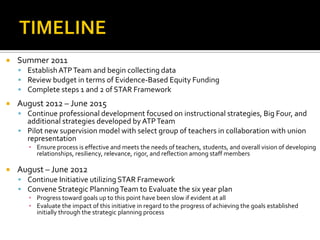
TIMELINE	Summer 2011Establish ATP Team and begin collecting dataReview budget in terms of Evidence-Based Equity FundingComplete steps 1 and 2 of STAR FrameworkAugust 2012 – June 2015Continue professional development focused on instructional strategies, Big Four, and additional strategies developed by ATP TeamPilot new supervision model with select group of teachers in collaboration with union representationEnsure process is effective and meets the needs of teachers, students, and overall vision of developing relationships, resiliency, relevance, rigor, and reflection among staff membersAugust – June 2012Continue Initiative utilizing STAR FrameworkConvene Strategic Planning Team to Evaluate the six year plan Progress toward goals up to this point have been slow if evident at allEvaluate the impact of this initiative in regard to the progress of achieving the goals established initially through the strategic planning process
REFERENCESEpstein, et. al (2009). School, family and community partnerships:  Your handbook for action (3rd ed.). Thousand Oaks, CA: Corwin Press.Pollock, J. E. (2007). Improving student learning one teacher at a time. Alexandria, VA: Association for Supervision and Curriculum Development.Pollock, J. (2009).  Improving student learning one principal at a time. Alexandria, VA: Association for Supervision and Curriculum Development.
REFERENCESMarzano Research. (2010). Creating an aligned system to develop great teachers within the federal race to the top initiative (1st ed.). Marzano Research.  Marzano, R., Schooling, P., & Toth, M.Kotter, J.P. (1996).  Leading Change.  Boston, Massachusetts: Harvard Business School Press. Odden, A., & Picus, L. (2008). School finance: a policy perspective (4th ed.). New York , NY: McGraw-Hill Companies
REFERENCESMilstein, M. & Henry, D. (2008).  Leadership strategies that promote student resiliency. Leadership for Resilient School and Communities, 2, 1-7.Skrla, L., McKenzie, L. & Scheurich, J. (2009).  Using equity audits to create equitable and excellent schools.  Thousand Oaks, CA: Corwin Press.Henderson, N. (2007). Resiliency in action(2nded.). Ojai, CA: Resiliency in Action Inc. English, F. (1999).  Deciding what to teach and test: developing, aligning, and auditing the curriculum.  Thousand Oaks, CA: Corwin Press.
Appendix AReflections of Findings and SolutionsSIGNATURE PAGE
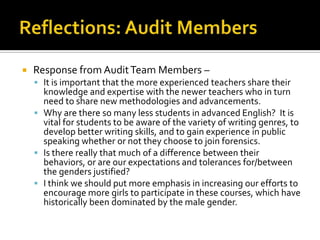
Reflections: Audit MembersResponse from Audit Team Members –It is important that the more experienced teachers share their knowledge and expertise with the newer teachers who in turn need to share new methodologies and advancements.  Why are there so many less students in advanced English?  It is vital for students to be aware of the variety of writing genres, to develop better writing skills, and to gain experience in public speaking whether or not they choose to join forensics.Is there really that much of a difference between their behaviors, or are our expectations and tolerances for/between the genders justified?  I think we should put more emphasis in increasing our efforts to encourage more girls to participate in these courses, which have historically been dominated by the male gender.
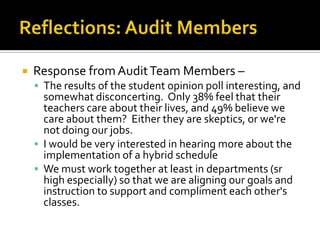
Reflections: Audit MembersResponse from Audit Team Members –The results of the student opinion poll interesting, and somewhat disconcerting.  Only 38% feel that their teachers care about their lives, and 49% believe we care about them?  Either they are skeptics, or we're not doing our jobs. I would be very interested in hearing more about the implementation of a hybrid scheduleWe must work together at least in departments (sr high especially) so that we are aligning our goals and instruction to support and compliment each other's classes. 
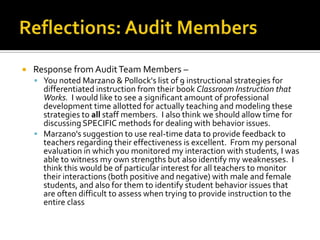
Reflections: Audit MembersResponse from Audit Team Members –You noted Marzano & Pollock's list of 9 instructional strategies for differentiated instruction from their book Classroom Instruction that Works.  I would like to see a significant amount of professional development time allotted for actually teaching and modeling these strategies to all staff members.  I also think we should allow time for discussing SPECIFIC methods for dealing with behavior issues.  Marzano's suggestion to use real-time data to provide feedback to teachers regarding their effectiveness is excellent.  From my personal evaluation in which you monitored my interaction with students, I was able to witness my own strengths but also identify my weaknesses.  I think this would be of particular interest for all teachers to monitor their interactions (both positive and negative) with male and female students, and also for them to identify student behavior issues that are often difficult to assess when trying to provide instruction to the entire class
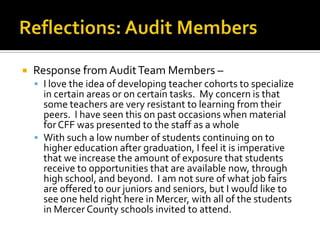
Reflections: Audit MembersResponse from Audit Team Members –I love the idea of developing teacher cohorts to specialize in certain areas or on certain tasks.  My concern is that some teachers are very resistant to learning from their peers.  I have seen this on past occasions when material for CFF was presented to the staff as a wholeWith such a low number of students continuing on to higher education after graduation, I feel it is imperative that we increase the amount of exposure that students receive to opportunities that are available now, through high school, and beyond.  I am not sure of what job fairs are offered to our juniors and seniors, but I would like to see one held right here in Mercer, with all of the students in Mercer County schools invited to attend. 
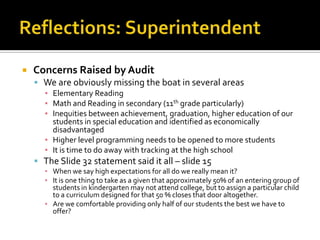
Reflections: SuperintendentConcerns Raised by AuditWe are obviously missing the boat in several areasElementary ReadingMath and Reading in secondary (11th grade particularly)Inequities between achievement, graduation, higher education of our students in special education and identified as economically disadvantagedHigher level programming needs to be opened to more studentsIt is time to do away with tracking at the high schoolThe Slide 32 statement said it all – slide 15When we say high expectations for all do we really mean it?It is one thing to take as a given that approximately 50% of an entering group of students in kindergarten may not attend college, but to assign a particular child to a curriculum designed for that 50 % closes that door altogether.  Are we comfortable providing only half of our students the best we have to offer?
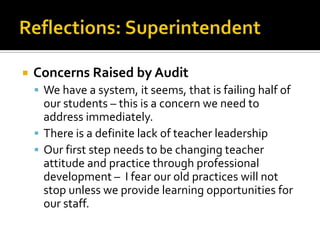
Reflections: SuperintendentConcerns Raised by AuditWe have a system, it seems, that is failing half of our students – this is a concern we need to address immediately. There is a definite lack of teacher leadershipOur first step needs to be changing teacher attitude and practice through professional development –  I fear our old practices will not stop unless we provide learning opportunities for our staff.
Reflections: SuperintendentAdditional Concerns From His PerspectiveThere is a lack of communication and focused collaboration among the districts administration to enact long term systematic change with respect to equity for all studentsLack of total support and agreement from all leadership levels as to how best to implement change
Reflections: SuperintendentThoughts on SolutionsDeveloping Teacher Leadership“By developing and sustaining true leadership you will change the culture and character of the buildings – but this must be coupled with a clearly articulated vision from the building leaders.  This should also be done slowly, methodically, and diligently – DO NOT LET UP.  Do not let go once you have created it – THIS WILL BE OUR TRUE IMPETUS TO CHANGE.”Articulate the district vision in a way that is meaningful and memorable - and convert this to actual practice. The focus should be on providing a rich learning experience for every student we serve.  The logo/slogan will serve as a daily reminder of what should drive our decision making.
Reflections: SuperintendentThoughts on SolutionsDeveloping Teacher LeadershipPursue the co-teaching method with the Director of Special EducationAlign all facets of what we do to promote student learning: Instruction, Assessment, Professional Development, Evaluation & FeedbackWork toward eliminating general courses gradually over the next several years.
Appendix BSchool-Based Activity to Translate District Vision Into Classroom PracticeDefining What We Do!
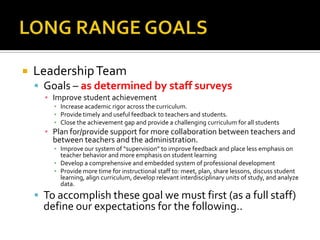
LONG RANGE GOALSLeadership TeamGoals – as determined by staff surveysImprove student achievementIncrease academic rigor across the curriculum.Provide timely and useful feedback to teachers and students. Close the achievement gap and provide a challenging curriculum for all studentsPlan for/provide support for more collaboration between teachers and between teachers and the administration. Improve our system of “supervision” to improve feedback and place less emphasis on teacher behavior and more emphasis on student learningDevelop a comprehensive and embedded system of professional developmentProvide more time for instructional staff to: meet, plan, share lessons, discuss student learning, align curriculum, develop relevant interdisciplinary units of study, and analyze data.To accomplish these goal we must first (as a full staff) define our expectations for the following..
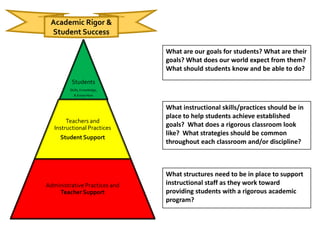
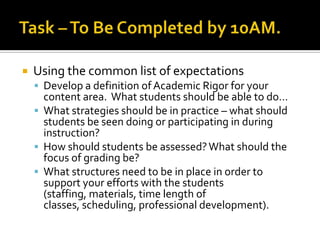
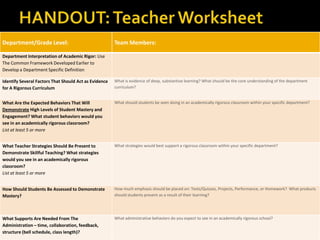
Academic Rigor & Student SuccessWhat are our goals for students? What are their goals? What does our world expect from them? What should students know and be able to do?What instructional skills/practices should be in place to help students achieve established goals?  What does a rigorous classroom look like?  What strategies should be common throughout each classroom and/or discipline?What structures need to be in place to support instructional staff as they work toward providing students with a rigorous academic program?
School Mission – How Many of You Have Seen It?The mission of the Mercer Area School District, with community support, is to educate each student to be an involved responsible citizen.  Upon graduation, all students will be prepared to succeed in an ever-changing society utilizing critical thinking and lifelong learning to become stewards of their communities.
Purpose….The answers to these questions will guide everything we do.Student Expectations
Teaching Practices
Administrative Practices
Supervision and Feedback
Professional Development
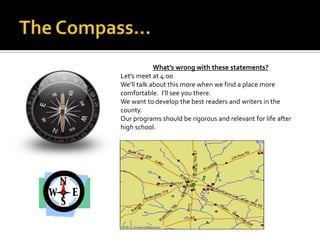
Scheduling – Bell Schedule – Instructional Day – Instructional YearThe Compass…What’s wrong with these statements?Let’s meet at 4:00We’ll talk about this more when we find a place more comfortable.  I’ll see you there.We want to develop the best readers and writers in the county.Our programs should be rigorous and relevant for life after high school.
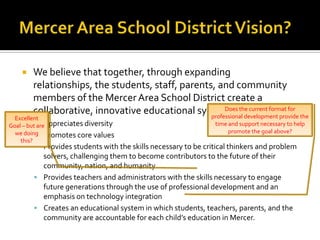
Mercer Area School District Vision?We believe that together, through expanding relationships, the students, staff, parents, and community members of the Mercer Area School District create a collaborative, innovative educational system that:Appreciates diversityPromotes core valuesProvides students with the skills necessary to be critical thinkers and problem solvers, challenging them to become contributors to the future of their community, nation, and humanityProvides teachers and administrators with the skills necessary to engage future generations through the use of professional development and an emphasis on technology integrationCreates an educational system in which students, teachers, parents, and the community are accountable for each child’s education in Mercer.Does the current format for professional development provide the time and support necessary to help promote the goal above?Excellent Goal – but are we doing this?
Shared Values – We Believe…Education is a shared responsibilityAll students must develop a sense of responsibility, accountability, and self-discipline in order to be successfulEducation is an on-going process in which students learn at different rates and in different way.  A variety of learning experiences and strategies is vital for each student’s developmentRespect must be encouraged and demonstrated for self, other, and possessions so that open communication and trust among students, teachers, administrators, staff, and community flourishes – TRUST.  Learning is a lifelong process of acquiring knowledge, values, skills, and attitudes that are critical in preparing students for future challenges and opportunitiesALL children are capable of learning and should be challenged to reach their highest potential
Shared Values – We Believe…Communication is a critical component of educational excellenceLearning needs to be relevant, rigorous, and reflective, and should prepare students to live successfully in an ever-changing global societyA variety of learning experiences and strategies is vital for each student’s development
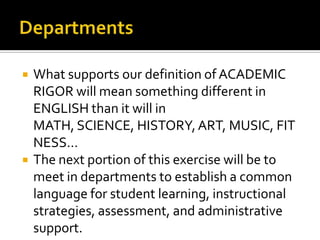
Part IDefining our expectations ~Academic RIGOR~

Creating a shared vision project

  • 1.
    Replacing Hope withCertainty Improving the Achievement of All Students in the Mercer Area School District Through Focused Vision and Comprehensive Collaboration
  • 2.
    Creating a SharedVision Project – Achieving Equity in Education.This work has been completed as a part of the Creating a Shared Vision Project Course Offered Through the Pennsylvania Inspired Leadership ProgramI chose to conduct an equity audit of my district after reviewing the most recent PSSA scores. I worked with my Superintendent to put together an equity team to review the findings of my investigation. Three elements of our district were analyzed: teacher distribution, program equity, and achievement equity. I also included some data I had collected near the end of the school year to gauge student attitudes, beliefs, perceptions, and/or concerns. Recommendations are based on research focusing on the areas of concern mentioned near the end of the presentation. I have also including references and my reflection regarding this process within this presentation.
  • 3.
    Equity DefinedEducation EquityTheeducational policies, practices and programs necessary to (a) eliminate educational barriers based on gender, race/ethnicity, national origin, color, disability, age, or other protected group status; and (b) provide equal educational opportunities and ensure that historically underserved or underrepresented populations meet the same rigorous standard for academic performance expected of all children and youth. (Skrla, Mckenzie, & Scheurich, 2009. p. 3-4).Definition adapted from Wisconsin Department of InstructionSystemic EquityThe transformed ways in which systems and individuals habitually operate to ensure that every learner – in whatever learning environment that learner is found – has the greatest opportunity to learn enhanced by the resources and supports necessary to achieve competence, excellence, independence, responsibility, and self sufficiency for school and life ((Skrla, Mckenzie, & Scheurich, 2009. p. 6)
  • 4.
    Why is EquityImportant?We must work toward not limiting students based on the way they look, how much money they make, who they are related to ,or their placement in a program: these factors DO NOT determine ability to learn. Schools need to act as freeways for success – not roadblocks! The world we live in tomorrow belongs to the students in our classrooms today – our classrooms are diverse with students who are too often defined by the color of their skin, gender, or a label provided to them by an adult.Would any of us sit quietly if our child was one of a number of students who:Do not graduateAre not prepared to go to collegeAre underrepresented in advanced classesAre placed in lower level classesReceived less than the best teacher a school has to offer based on past practices.If it is not good enough for our child then why is it good enough for the child of a family we serve?
  • 5.
    THE EQUITY AUDITTEAMEquity Audit Team MembersDr. Gathers
  • 6.
  • 7.
  • 8.
  • 9.
  • 10.
  • 11.
  • 12.
    Special Ed. Directorand Elementary Assistant Principal
  • 13.
  • 14.
    School Counselor andLeadership Team Member
  • 15.
  • 16.
  • 17.
  • 18.
    Teacher and LeadershipTeam MemberDr. William Gathers, Superintendent of Schools, recommended people who have the ability to enact change within the district using the information/data retrieved from the equity audit. The team includes several key administrators, a school counselor, and two teacher leadership team members.
  • 19.
    ConversationsConversation with theSuperintendent, Dr. William Gathers, focused on his genuine concern for the discrepancy that exists between the academic achievement of our general population and those students who have been identified as economically disadvantaged or in need of special education services. Dr. Gathers is genuinely aware of the situation, ready to take action to improve the situation, and is not afraid to have those conversations that could present other leaders and teachers with uncomfortable truths about their actions.We have also discussed the importance of “keeping the main thing the main thing” by maintaining focus – keep the Eye on the Goal!Initial discussion were held with the following members of the Mercer Area School District:The SuperintendentSeveral Members of the Audit Team: Administration and TeachersGroup of Teachers on the School Leadership TeamThe conversations that took place helped to guide the direction of research and suggestions for solution
  • 20.
    ConversationsConversations with otheraudit members and the teachers on the leadership team demonstrated a slight awareness of the problem at hand; however, there seems to be a predominate belief among some members of both groups that all the roadblocks we face with our students are completely out of our control – it is the “fault” of the home, the parents, or the choices of the students. Some are intent on maintaining the low level classes while others recognize the need to increase academic rigor for all students. Regardless, one very promising element that has surfaced throughout conversations is the desire of the teachers and administrators to work together in addressing the disparities in the achievement of our students – the staff is excited to begin engaging in embedded professional development focused on collaboration and improving instruction for all students. Initial discussion were held with the following members of the Mercer Area School District:The SuperintendentSeveral Members of the Audit Team: Administration and TeachersGroup of Teachers on the School Leadership TeamThe conversations that took place helped to guide the direction of research and suggestions for resolutions
  • 21.
    Components of theEquity AuditTEACHER QUALITY – PROGRAM EQUITY - ACHIEVEMENTProgrammingDemographic DataGifted & AP/Adv Course EnrollmentSpecial EducationDisciplineAchievementPSSA ResultsGraduation RatesStudents Continuing on to Higher Education
  • 22.
    CURRENT PROGRAM &ACHIEVEMENT DATAThe time has passed for hoping our students do well – We must plan for and have the belief that ALL students can achieve at high levels.
  • 23.
  • 24.
  • 25.
  • 26.
  • 27.
  • 28.
  • 29.
  • 30.
  • 31.
    DISTRICT MATH RESULTSThepercentage of students performing at a high level is not equal across all demographics – students in need of special education and identified as economically disadvantaged are falling further behind their peers
  • 32.
    DISTRICT READING RESULTSAgain,the percentage of students performing at a high level is not equal across all demographics – students in need of special education and identified as economically disadvantaged are falling further behind their peers
  • 33.
    GRADUATION RATESThe lownumber of students identified as needing special education services and/or economically disadvantaged graduating from high school should be a concern for the school and the greater community.
  • 34.
    STUDENTS PURSUING HIGHEREDUCATIONThe overall percentage of students seeking higher education (two year, four year, or technical colleges) is alarming. We are either not inspiring our students to higher levels of achievement or we are not preparing them for the challenge – both are unacceptable.
  • 35.
    STUDENT POLLWhat doour students have to say? Conversations with Students.
  • 36.
    Student OpinionStudent OpinionPoll Conducted During the Last Few Weeks of the 2009-2010 School Year.
  • 37.
    293 Secondary Studentsin Grades 7-12 Participated in the Poll.
  • 38.
    Students Surveyed Includea Representative Sample of the Overall Demographics of the Entire School District.
  • 39.
    Students Were AskedQuestions Regarding Climate, Rigor, Relevance, and Attitude Toward SchoolStudent Opinion: Rigor & Relevance78% of respondents are well aware of the school’s expectations for behavior and work50% of respondents are satisfied with program choice and rigor58% of respondents are aware of school goals for improving learning54% of respondents feel they are being adequately prepared for the future70% of respondents feel they are being prepared for college71% of respondents feel their teachers are knowledgeable and prepared to teach for the 21st century
  • 40.
    Student Opinion: Rigor& Relevance54% of respondents feel they are engaged in meaningful conversations about content40% of respondents feel that content is related to everyday life52% of respondents feel they engage in challenging and thought provoking class projects55% of respondents feel teachers utilize a variety of strategies to instruct and assess student learning59% of respondents feel teachers help students achieve high learning expectations
  • 41.
    Student Opinion: Rigor& Relevance42% of respondents feel that homework assigned is relevant and helpfulPlans for After Graduation83% plan to attend college9% plan to pursue a career in the trades (trade school)8% plan to join the work for immediatelyThis year – only 52% of graduating students have currently enrolled in a college or trade school
  • 42.
    Student Opinion: SchoolClimate38% of respondents feel all students are treated fairly72% of respondents are satisfied with the help they receive from teachers90% of respondents feel safe at school16% of respondents have been bullied38% of respondents feel that teachers care about their lives
  • 43.
    Student Opinion: SchoolClimate49% of respondents feel their teachers care about them61% of respondents feel comfortable speaking with their teachers46% of respondents feel that teachers listen to their needs47% of respondents feel there is a mutual respect between teachers and students
  • 44.
    Student Opinion: Attitude45%of respondents are satisfied with what they are learning62% of respondents feel they put forth their very best effort62% of respondents feel they are developing into better readers57% of respondents feel they are developing better skills in math
  • 45.
    Student Opinion: Attitude37%of respondents “like” coming to school every day26% of respondents think school is interesting46% of respondents are proud of their schooling62% of respondents feel they are able to learn about technology and/or utilize their technology skills in the classroom
  • 46.
    PRACTICES CONTRIBUTING TOLACK OF ACHIEVEMENTAbstract Vision – Not PublicizedLack of Aligned SystemTeaching and LearningProfessional DevelopmentSupervision and EvaluationLack of Teacher LeadershipBuilding Leadership TeamsPeer Visits and Learning CommunitiesLack of Shared Leadership & Collaboration between stakeholdersAdministration, Instructional staffStudents, Parents, Community membersLack of formal process for leading changeThe items to the right are those that have been identified as processes lacking or inadequate to implementing a rigorous and relevant program for all students regardless of their age, ethnicity, gender, ability, and/or economic status.In order to achieve the goals and vision developed during our most recent strategic planning session (2009 – 2015) the district must make significant changes in the way it operates in specific regard to its overall vision.
  • 47.
    When we sayhigh expectations for all do we really mean it?It is one thing to take as a given that approximately 50% of an entering group of students in kindergarten may not attend college, but to assign a particular child to a curriculum designed for that 50 % closes that door altogether. Are we comfortable providing only half of our students the best we have to offer?
  • 48.
    WHAT CAN WEDO?A PLAN FOR REFORMING THE MERCER AREA SCHOOL DISTRICT
  • 49.
    STEP ONE: CommunicateOur VisionThe Mercer Area School District worked with staff, students, and community members to develop a strategic vision for the future - “The Mission of the Mercer Area School District, with community support, is to educate each student to be an involved responsible citizen. Upon graduation, all students will be prepared to succeed in an ever-changing society by utilizing critical thinking and lifelong learning to become stewards of their communities.”What does this mean? What does this look like?
  • 50.
    STEP ONE: CommunicateOur VisionVision provides a picture of the future with some implicit or explicit commentary on why people should strive to create that shared future (Kotter, 1996).A critical component to accomplish the goal of improving instruction in the classroom is the establishment of a common vision, rigorous curriculum, and common model of instruction (Marzano, 2010; Blackburn & Williamson 2010; Riddile, 2010).Vision has six main characteristics (Kotter, 1996).Imaginable: people can see itDesirable: people are drawn to itFeasible: people can accomplish it through small stepsFocused: people understand it as a mechanism to drive daily actionsFlexible: people are able to utilize their own strengths to accomplish itCommunicable: It is easy to communicate
  • 51.
    Adopt District SloganTheslogan will be posted in the community, in the schools, in the classrooms, on letterhead, clothing, and school merchandise with the purpose of serving as a daily reminder of our vision and process for meeting the needs of all students.Designed by Timothy Dadich, 2010
  • 52.
    STEP TWO: DataCollection and TeamworkThe Mercer Area District must work to promote shared leadership from teacher to teacher, teacher to student, teacher to parent, teacher to administration, administration to board members, building to building, building to central office, district to community.The Mercer Area School District must adopt a regular process for the collection of data and the collaboration between stakeholders to actively review the data to drive decisions for the direction of district programs and resources
  • 53.
    ATP: Action Team for PartnershipThe Mercer Area School District will develop an Action Team for Partnerships (ATP) to organize and sustain a program of school, family, and community partnerships. With an ATP, teachers, administrators, parents, community members, and others can work together to connect family and community involvement with school improvement goals. The ATP in each school aims to: Create a welcoming school environment for families Engage families and the community in ways that support student achievement and success
  • 54.
    ATP: Action Team for PartnershipWhat is an Action Team for Partnerships?The ATP is the “action arm” or committee of the School Improvement Team or School Council. Although the ATP members oversee the school's partnership program, other teachers, parents, students, administrators, and community members also may lead family and community involvement activities. What does an Action Team for Partnerships do?Review data and develop a one-year action plan for improvement with activities to promote specific goals for improvement aligned with the Mercer Area School District Strategic PlanIntegrate all family and community involvement activities conducted by teachers and school groups in the One-Year Action Plan for Partnerships Recruit and recognizes other teachers, parents, community members for leadership and participation in family and community involvement activities Implement, coordinate, publicize, and oversee the planned involvement activities Monitor progress, assess the strengths and weaknesses of implemented involvement activities, document results, and resolve problems Report progress to the School Council (or School Improvement Team) and to the faculty, PTA/PTO, local media, and other groups Replace departing ATP members Continue improving the school's program of family and community involvement
  • 55.
    ACTION TEAM FORPARTNERSHIP STRUCTURE AND FUNCTION
  • 56.
    FRAMEWORK FOR DECISIONMAKINGUtilize STAR Framework: Success Takes Active Responsibility (developed by Tim Dadich)Based on a combination of processes and research including: John P. Kotter – Leading ChangeWillard Dagget – Rigor & RelevanceFenwick English – Curriculum AuditsLinda Skrla – Equity AuditsNan Henderson – Resiliency ModelRobert Marzano – Creating an Aligned SystemJane Pollock – The Big Four
  • 58.
    STAR FRAMEWORKSTAR 1– Audit Current Practices Utilize formal audits on curriculum (English)Measures relevance and rigor of curriculumMeasures effectiveness of programmingUtilize formal audits on equity (Skrla)Measures equity of access to programmingMeasures Achievement Data EquityMeasures equal access to highly qualified teachersCommunity, Teacher, Student, Parent SurveyMeasures climate, safety, satisfactionMeasures image of schoolAchievement Data: PSSA, Graduation Rates, Higher Education Participation, Drop Out RatesThe district logo will act as the focus for all inquiry, analysis, decisions, and actions – Our focus must be on creating Relationships, Resilience, Relevance, Rigor, and Reflection for ALL!
  • 59.
    STAR FRAMEWORKSTAR 2– Develop Shared LanguageATP collects and analyzes dataCollaborates on setting improvement goalsShares improvement goals and data with school communityPromotes goals under the common visionThe district logo will act as the focus for all inquiry, analysis, decisions, and actions – Our focus must be on creating Relationships, Resilience, Relevance, Rigor, and Reflection for ALL!
  • 60.
    STAR FRAMEWORKSTAR 3– Lead ChangeEstablish urgencyCreate the support and leadership needed to move forwardDevelop the strategiesCommunicate and model the change Empower and train to avoid obstaclesGenerate short-term wins and recognize successConsolidate gains by improving leadership capacityAnchor new approach – articulate the connections between new behaviors and successThe district logo will act as the focus for all inquiry, analysis, decisions, and actions – Our focus must be on creating Relationships, Resilience, Relevance, Rigor, and Reflection for ALL!
  • 61.
    STAR FRAMEWORKSTAR 4– ReflectEstablish a climate of resiliency and reflection through Resiliency FrameworkAlign evaluation procedures to promote reflective practices on change strategiesDevelop assessments to measure effectiveness of changeThe district logo will act as the focus for all inquiry, analysis, decisions, and actions – Our focus must be on creating Relationships, Resilience, Relevance, Rigor, and Reflection for ALL!
  • 62.
    STAR FRAMEWORKSTAR 5– RespondRespond to reflectionsShare success storiesConnect effort to achievementProvide constant feedback to parents, students, staff, and communityATP Team meets to review process and move forward to continuing the cycle The district logo will act as the focus for all inquiry, analysis, decisions, and actions – Our focus must be on creating Relationships, Resilience, Relevance, Rigor, and Reflection for ALL!
  • 63.
    STEP THREE: PROGRAMMINGUtilizeEvidence-Based Equity in FinancingDeveloped by Odden and PicusIdentifies educational strategies that produced desired results (staffing, instruction, facilities)Helps districts focus money where it will be most effectiveImplement Big FourDeveloped by Jane Pollock and based on research conducted by Pollock, Pickering, and MarzanoProvides a way for each teacher to improve the learning of every studentONE: Use of a well-articulated curriculum review on a regular basis to ensure rigor and relevanceTWO: Plan for delivery – GANAG Lesson SchemaTHREE: Vary assessments to meet learning stylesFOUR: Give criterion-based feedbackCreate Aligned SystemBased on Marzano research on effective schoolsAligns vision, practice, evaluation, and professional development to support learning
  • 64.
    TIMELINE August 2010Articulate visionto school and community using new district logoSchool sites utilize district vision to conduct workshop on first in-service dayGOAL – to translate district vision to building/grade level/content area practices (Appendix B)September 2010 – June 2011Leadership Staff TrainingAligned Systems: Big Four, Supervision, STAR FrameworkInstructional Staff Training (Partnership with Keystone Educational Consult)Instructional Strategies, Differentiation, Assessment, Big FourEstablish Building Leadership TeamsIdentify volunteers to train as ATP members and become familiar with data collection and change processBegin working with instructional staff to align evaluation/observation methods with strategies focusing on the districts initiative/vision to increase the quality of relationships, resiliency, relevance, rigor, and reflection for all students and professional development including teacher learning communities and opportunities for peer visits
  • 65.
    TIMELINE Summer 2011Establish ATPTeam and begin collecting dataReview budget in terms of Evidence-Based Equity FundingComplete steps 1 and 2 of STAR FrameworkAugust 2012 – June 2015Continue professional development focused on instructional strategies, Big Four, and additional strategies developed by ATP TeamPilot new supervision model with select group of teachers in collaboration with union representationEnsure process is effective and meets the needs of teachers, students, and overall vision of developing relationships, resiliency, relevance, rigor, and reflection among staff membersAugust – June 2012Continue Initiative utilizing STAR FrameworkConvene Strategic Planning Team to Evaluate the six year plan Progress toward goals up to this point have been slow if evident at allEvaluate the impact of this initiative in regard to the progress of achieving the goals established initially through the strategic planning process
  • 66.
    REFERENCESEpstein, et. al(2009). School, family and community partnerships: Your handbook for action (3rd ed.). Thousand Oaks, CA: Corwin Press.Pollock, J. E. (2007). Improving student learning one teacher at a time. Alexandria, VA: Association for Supervision and Curriculum Development.Pollock, J. (2009). Improving student learning one principal at a time. Alexandria, VA: Association for Supervision and Curriculum Development.
  • 67.
    REFERENCESMarzano Research. (2010).Creating an aligned system to develop great teachers within the federal race to the top initiative (1st ed.). Marzano Research. Marzano, R., Schooling, P., & Toth, M.Kotter, J.P. (1996). Leading Change. Boston, Massachusetts: Harvard Business School Press. Odden, A., & Picus, L. (2008). School finance: a policy perspective (4th ed.). New York , NY: McGraw-Hill Companies
  • 68.
    REFERENCESMilstein, M. &Henry, D. (2008). Leadership strategies that promote student resiliency. Leadership for Resilient School and Communities, 2, 1-7.Skrla, L., McKenzie, L. & Scheurich, J. (2009). Using equity audits to create equitable and excellent schools. Thousand Oaks, CA: Corwin Press.Henderson, N. (2007). Resiliency in action(2nded.). Ojai, CA: Resiliency in Action Inc. English, F. (1999). Deciding what to teach and test: developing, aligning, and auditing the curriculum. Thousand Oaks, CA: Corwin Press.
  • 69.
    Appendix AReflections ofFindings and SolutionsSIGNATURE PAGE
  • 70.
    Reflections: Audit MembersResponsefrom Audit Team Members –It is important that the more experienced teachers share their knowledge and expertise with the newer teachers who in turn need to share new methodologies and advancements.  Why are there so many less students in advanced English?  It is vital for students to be aware of the variety of writing genres, to develop better writing skills, and to gain experience in public speaking whether or not they choose to join forensics.Is there really that much of a difference between their behaviors, or are our expectations and tolerances for/between the genders justified?  I think we should put more emphasis in increasing our efforts to encourage more girls to participate in these courses, which have historically been dominated by the male gender.
  • 71.
    Reflections: Audit MembersResponsefrom Audit Team Members –The results of the student opinion poll interesting, and somewhat disconcerting.  Only 38% feel that their teachers care about their lives, and 49% believe we care about them?  Either they are skeptics, or we're not doing our jobs. I would be very interested in hearing more about the implementation of a hybrid scheduleWe must work together at least in departments (sr high especially) so that we are aligning our goals and instruction to support and compliment each other's classes. 
  • 72.
    Reflections: Audit MembersResponsefrom Audit Team Members –You noted Marzano & Pollock's list of 9 instructional strategies for differentiated instruction from their book Classroom Instruction that Works.  I would like to see a significant amount of professional development time allotted for actually teaching and modeling these strategies to all staff members.  I also think we should allow time for discussing SPECIFIC methods for dealing with behavior issues.  Marzano's suggestion to use real-time data to provide feedback to teachers regarding their effectiveness is excellent.  From my personal evaluation in which you monitored my interaction with students, I was able to witness my own strengths but also identify my weaknesses.  I think this would be of particular interest for all teachers to monitor their interactions (both positive and negative) with male and female students, and also for them to identify student behavior issues that are often difficult to assess when trying to provide instruction to the entire class
  • 73.
    Reflections: Audit MembersResponsefrom Audit Team Members –I love the idea of developing teacher cohorts to specialize in certain areas or on certain tasks.  My concern is that some teachers are very resistant to learning from their peers.  I have seen this on past occasions when material for CFF was presented to the staff as a wholeWith such a low number of students continuing on to higher education after graduation, I feel it is imperative that we increase the amount of exposure that students receive to opportunities that are available now, through high school, and beyond.  I am not sure of what job fairs are offered to our juniors and seniors, but I would like to see one held right here in Mercer, with all of the students in Mercer County schools invited to attend. 
  • 74.
    Reflections: SuperintendentConcerns Raisedby AuditWe are obviously missing the boat in several areasElementary ReadingMath and Reading in secondary (11th grade particularly)Inequities between achievement, graduation, higher education of our students in special education and identified as economically disadvantagedHigher level programming needs to be opened to more studentsIt is time to do away with tracking at the high schoolThe Slide 32 statement said it all – slide 15When we say high expectations for all do we really mean it?It is one thing to take as a given that approximately 50% of an entering group of students in kindergarten may not attend college, but to assign a particular child to a curriculum designed for that 50 % closes that door altogether. Are we comfortable providing only half of our students the best we have to offer?
  • 75.
    Reflections: SuperintendentConcerns Raisedby AuditWe have a system, it seems, that is failing half of our students – this is a concern we need to address immediately. There is a definite lack of teacher leadershipOur first step needs to be changing teacher attitude and practice through professional development – I fear our old practices will not stop unless we provide learning opportunities for our staff.
  • 76.
    Reflections: SuperintendentAdditional ConcernsFrom His PerspectiveThere is a lack of communication and focused collaboration among the districts administration to enact long term systematic change with respect to equity for all studentsLack of total support and agreement from all leadership levels as to how best to implement change
  • 77.
    Reflections: SuperintendentThoughts onSolutionsDeveloping Teacher Leadership“By developing and sustaining true leadership you will change the culture and character of the buildings – but this must be coupled with a clearly articulated vision from the building leaders. This should also be done slowly, methodically, and diligently – DO NOT LET UP. Do not let go once you have created it – THIS WILL BE OUR TRUE IMPETUS TO CHANGE.”Articulate the district vision in a way that is meaningful and memorable - and convert this to actual practice. The focus should be on providing a rich learning experience for every student we serve. The logo/slogan will serve as a daily reminder of what should drive our decision making.
  • 78.
    Reflections: SuperintendentThoughts onSolutionsDeveloping Teacher LeadershipPursue the co-teaching method with the Director of Special EducationAlign all facets of what we do to promote student learning: Instruction, Assessment, Professional Development, Evaluation & FeedbackWork toward eliminating general courses gradually over the next several years.
  • 79.
    Appendix BSchool-Based Activityto Translate District Vision Into Classroom PracticeDefining What We Do!
  • 80.
    LONG RANGE GOALSLeadershipTeamGoals – as determined by staff surveysImprove student achievementIncrease academic rigor across the curriculum.Provide timely and useful feedback to teachers and students. Close the achievement gap and provide a challenging curriculum for all studentsPlan for/provide support for more collaboration between teachers and between teachers and the administration. Improve our system of “supervision” to improve feedback and place less emphasis on teacher behavior and more emphasis on student learningDevelop a comprehensive and embedded system of professional developmentProvide more time for instructional staff to: meet, plan, share lessons, discuss student learning, align curriculum, develop relevant interdisciplinary units of study, and analyze data.To accomplish these goal we must first (as a full staff) define our expectations for the following..
  • 81.
    Academic Rigor &Student SuccessWhat are our goals for students? What are their goals? What does our world expect from them? What should students know and be able to do?What instructional skills/practices should be in place to help students achieve established goals? What does a rigorous classroom look like? What strategies should be common throughout each classroom and/or discipline?What structures need to be in place to support instructional staff as they work toward providing students with a rigorous academic program?
  • 82.
    School Mission –How Many of You Have Seen It?The mission of the Mercer Area School District, with community support, is to educate each student to be an involved responsible citizen. Upon graduation, all students will be prepared to succeed in an ever-changing society utilizing critical thinking and lifelong learning to become stewards of their communities.
  • 83.
    Purpose….The answers tothese questions will guide everything we do.Student Expectations
  • 84.
  • 85.
  • 86.
  • 87.
  • 88.
    Scheduling – BellSchedule – Instructional Day – Instructional YearThe Compass…What’s wrong with these statements?Let’s meet at 4:00We’ll talk about this more when we find a place more comfortable. I’ll see you there.We want to develop the best readers and writers in the county.Our programs should be rigorous and relevant for life after high school.
  • 89.
    Mercer Area SchoolDistrict Vision?We believe that together, through expanding relationships, the students, staff, parents, and community members of the Mercer Area School District create a collaborative, innovative educational system that:Appreciates diversityPromotes core valuesProvides students with the skills necessary to be critical thinkers and problem solvers, challenging them to become contributors to the future of their community, nation, and humanityProvides teachers and administrators with the skills necessary to engage future generations through the use of professional development and an emphasis on technology integrationCreates an educational system in which students, teachers, parents, and the community are accountable for each child’s education in Mercer.Does the current format for professional development provide the time and support necessary to help promote the goal above?Excellent Goal – but are we doing this?
  • 90.
    Shared Values –We Believe…Education is a shared responsibilityAll students must develop a sense of responsibility, accountability, and self-discipline in order to be successfulEducation is an on-going process in which students learn at different rates and in different way. A variety of learning experiences and strategies is vital for each student’s developmentRespect must be encouraged and demonstrated for self, other, and possessions so that open communication and trust among students, teachers, administrators, staff, and community flourishes – TRUST. Learning is a lifelong process of acquiring knowledge, values, skills, and attitudes that are critical in preparing students for future challenges and opportunitiesALL children are capable of learning and should be challenged to reach their highest potential
  • 91.
    Shared Values –We Believe…Communication is a critical component of educational excellenceLearning needs to be relevant, rigorous, and reflective, and should prepare students to live successfully in an ever-changing global societyA variety of learning experiences and strategies is vital for each student’s development
  • 92.
    Part IDefining ourexpectations ~Academic RIGOR~