Overview                     1
           Helene Curtis, Inc               2
                 Suave                      3
            Shampoo Market                  4
        Competitive Environment             5
             Brand Loyalty                  6
     Trade Promotion & Advertising          7
Advertising Debate – The Two Alternatives   8
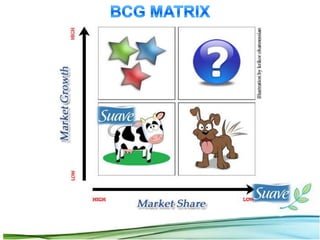
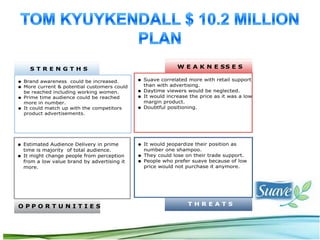
    SWOT Analysis of the Two Plans          9
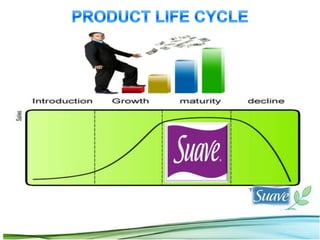
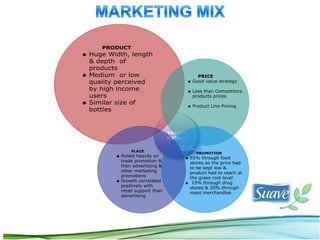
         Marketing Mix of Suave             10
    Market Segmentation & Targeting         11
          Positioning of Suave              12
           Recommendations                  13
To determine the two-advertising media plans for Suave shampoo & analyze
which is a better alternative for the shampoo which would help the company:

• To fight the current & upcoming competition

• Help them in their fight to maintain their retail shelf-space.
•Tom Kuykendall, group manager of suave had different views for the fiscal 1985
advertising campaign of Suave as compared to Ellen Vallera, the brand manager.

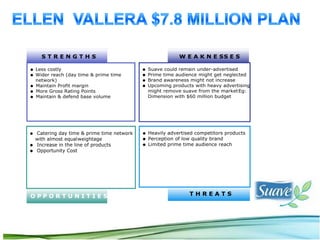
•Ellen Vallera proposed the $7.8 million plan which focused on day time & prime
time television, whereas, Kuykendall proposed a $ 10.2 million plan focused
entirely on prime time television.

•Competitors like Gillette with brand White Rain & Procter & Gamble with brand
Ivory, were soon planning to introduce a new low priced shampoo & others were
also planning a flood of new products.

•With such competition, the fight for retail shelf space would be fierce & suave
had to come up with a different advertising strategy to maintain its position.
•Created, manufactured and marketed hair-care and other personal care
products.

•Four marketing divisions; Suave being a part of the largest division, Consumer
Products.

•In fiscal 1984, it generated $10.4 million in net earnings on$330 million in sales.

•Leading marketer in conditioners and second largest in shampoos in U.S.
•Suave was a men’s hairdressing in the 1950’s & the first shampoo under the
name “Suave” was launched in 1962

•Suave products were used in 16 million homes, more than 90% shampoos.

•Finesse was launched with a $ 20million in advertising & was one of the heavily
promoted hair care brands in the industry. Finesse had a much higher gross
margin due to the price differential & generated twice the dollar profit per case
as compared to suave. Hence, Suave had taken a back seat to Finesse.

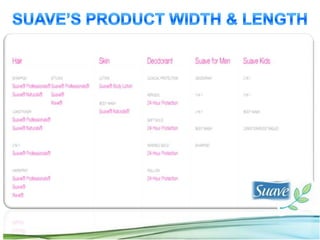
•Yet, suave had the longest line of shampoos in the industry, with a total of 40
SKU’s & average of 12 in any grocery store. New product variations were
constantly introduced to maintain brand’s vitality & to allow suave users to
switch within the suave line.
•Shampoo market was highly fragmented.

•Sales had been relatively flat in recent years.

•The market was considered mature, industry experts predicted slow growth in
coming five years.

•Firms sought untapped consumer segments to sustain growth.
•Shampoo market is loaded with new products supported by heavy advertising
and promotion.

•New shampoos were introduced catering to the specialized needs of the
consumers.

•Five major competitors were to launch new brands with unprecedented
marketing support.

•The industry advertising to sales ratio declined from 13.2% to 10.1%.

•The action in the business is taking place in high and low end of the price
spectrum, middle being squeezed.
•Brand Loyalty was not very evident in the shampoo industry as the industry was
filled with fickle consumers.

•To develop & maintain loyalty, longer shampoo product lines were marketed to
allow consumers to switch among the types of shampoo, but remain in the same
shampoo family.

•The reason for such low brand loyalty in the industry was because consumers
preferred having number of brands on their shelves since they get bored with
shampoos easily.

•Also, they had the tendency to try different brands & types of shampoo.

•However, suave yet had the highest loyalty levels in the industry. But, these
customers were very fickle & could switch loyalties easily irrespective of any
advertising techniques.
•Trade Promotion has been allocated higher budgets in the past compared to
advertising. (Ex-2)

•This was due to the fact that retail support was critical to stimulate growth & to
satisfy retailers, trade promotion was given higher budget.

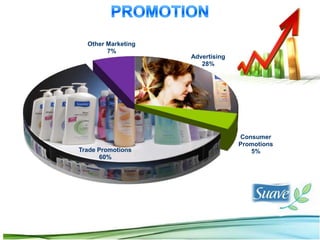
•For fiscal 1985, Ellen Vallera’s plan allocates 60% of total spending to trade
promotions & 28% to advertising. This follows the previous trend where suave has
been successful .

•So, this plan gives adequate attention to advertising & trade promotion. Trade
promotion should not be increased more than the allocated 60% which should be
sufficient.
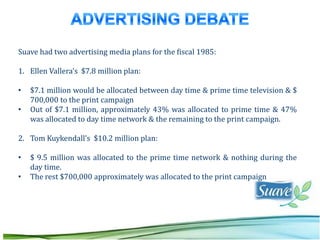
Suave had two advertising media plans for the fiscal 1985:

1. Ellen Vallera’s $7.8 million plan:

•   $7.1 million would be allocated between day time & prime time television & $
    700,000 to the print campaign
•   Out of $7.1 million, approximately 43% was allocated to prime time & 47%
    was allocated to day time network & the remaining to the print campaign.

2. Tom Kuykendall’s $10.2 million plan:

•   $ 9.5 million was allocated to the prime time network & nothing during the
    day time.
•   The rest $700,000 approximately was allocated to the print campaign
S              W
    Analysis


O              T
Buy SmartDraw!- purchased copies print this
         document without a watermark .
Visit www.smartdraw.com or call 1-800-768-3729.
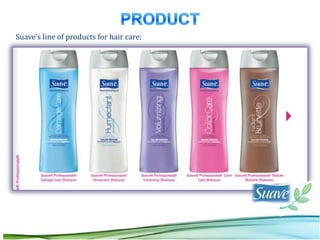
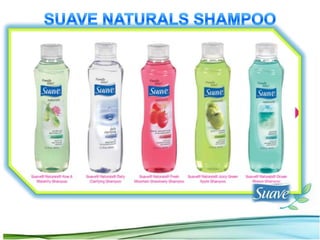
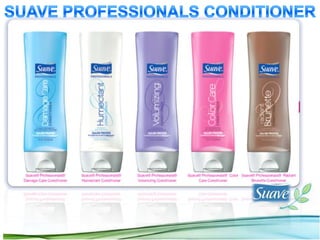
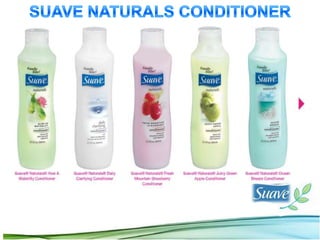
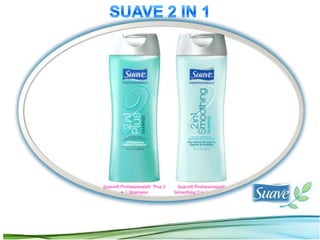
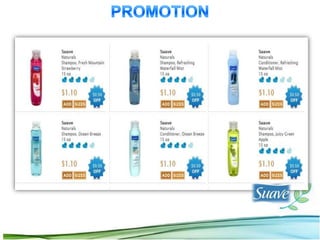
Suave’s line of products for hair care:
Buy SmartDraw!- purchased copies print this
         document without a watermark .
Visit www.smartdraw.com or call 1-800-768-3729.
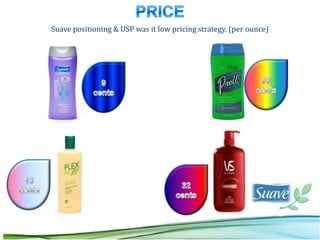
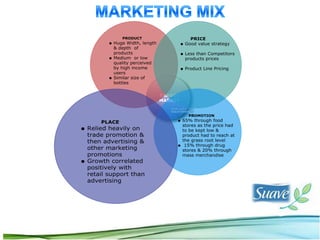
Suave positioning & USP was it low pricing strategy. (per ounce)
Buy SmartDraw!- purchased copies print this
         document without a watermark .
Visit www.smartdraw.com or call 1-800-768-3729.
Other Marketing
        7%
                    Advertising
                       28%


                                  Consumer
                                  Promotions
Trade Promotions                     5%
       60%
Buy SmartDraw!- purchased copies print this
         document without a watermark .
Visit www.smartdraw.com or call 1-800-768-3729.
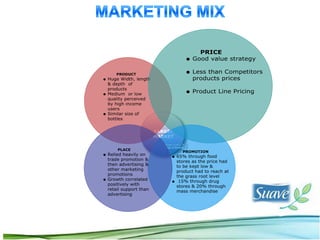
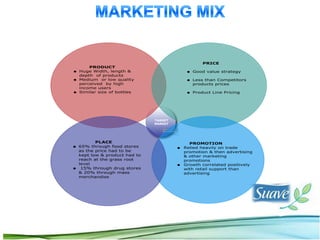
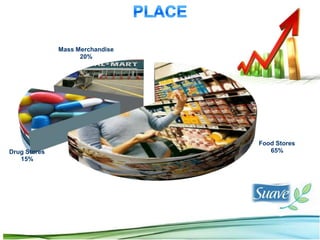
Mass Merchandise
                    20%


                                 Food Stores
Drug Stores                         65%
   15%
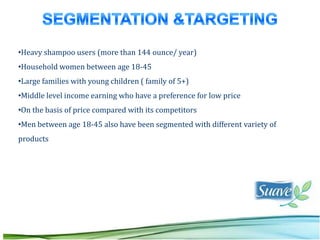
•Heavy shampoo users (more than 144 ounce/ year)
•Household women between age 18-45
•Large families with young children ( family of 5+)
•Middle level income earning who have a preference for low price
•On the basis of price compared with its competitors
•Men between age 18-45 also have been segmented with different variety of
products
• “Suave makes you look as if you spent a fortune on your hair”
•“Salon hair-Suave Price”
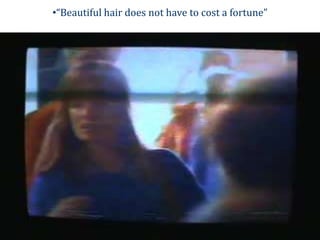
•“Beautiful hair does not have to cost a fortune”
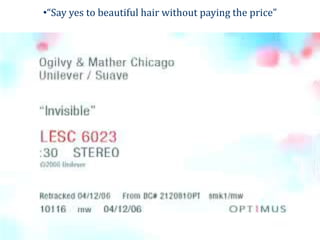
•“Say yes to beautiful hair without paying the price”
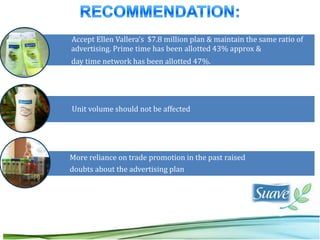
Accept Ellen Vallera’s $7.8 million plan & maintain the same ratio of
advertising. Prime time has been allotted 43% approx &
day time network has been allotted 47%.


Unit volume should not be affected


More reliance on trade promotion in the past raised
doubts about the advertising plan
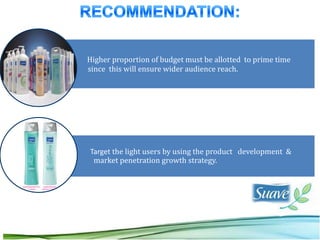
Higher proportion of budget must be allotted to prime time
network   since this will ensure wider audience reach.


          Target the light users by using the product development &
m          market penetration growth strategy.
Buy SmartDraw!- purchased copies print this
         document without a watermark .
Visit www.smartdraw.com or call 1-800-768-3729.
Buy SmartDraw!- purchased copies print this
         document without a watermark .
Visit www.smartdraw.com or call 1-800-768-3729.

Suave final

  • 2.
    Overview 1 Helene Curtis, Inc 2 Suave 3 Shampoo Market 4 Competitive Environment 5 Brand Loyalty 6 Trade Promotion & Advertising 7 Advertising Debate – The Two Alternatives 8 SWOT Analysis of the Two Plans 9 Marketing Mix of Suave 10 Market Segmentation & Targeting 11 Positioning of Suave 12 Recommendations 13
  • 3.
    To determine thetwo-advertising media plans for Suave shampoo & analyze which is a better alternative for the shampoo which would help the company: • To fight the current & upcoming competition • Help them in their fight to maintain their retail shelf-space.
  • 4.
    •Tom Kuykendall, groupmanager of suave had different views for the fiscal 1985 advertising campaign of Suave as compared to Ellen Vallera, the brand manager. •Ellen Vallera proposed the $7.8 million plan which focused on day time & prime time television, whereas, Kuykendall proposed a $ 10.2 million plan focused entirely on prime time television. •Competitors like Gillette with brand White Rain & Procter & Gamble with brand Ivory, were soon planning to introduce a new low priced shampoo & others were also planning a flood of new products. •With such competition, the fight for retail shelf space would be fierce & suave had to come up with a different advertising strategy to maintain its position.
  • 5.
    •Created, manufactured andmarketed hair-care and other personal care products. •Four marketing divisions; Suave being a part of the largest division, Consumer Products. •In fiscal 1984, it generated $10.4 million in net earnings on$330 million in sales. •Leading marketer in conditioners and second largest in shampoos in U.S.
  • 6.
    •Suave was amen’s hairdressing in the 1950’s & the first shampoo under the name “Suave” was launched in 1962 •Suave products were used in 16 million homes, more than 90% shampoos. •Finesse was launched with a $ 20million in advertising & was one of the heavily promoted hair care brands in the industry. Finesse had a much higher gross margin due to the price differential & generated twice the dollar profit per case as compared to suave. Hence, Suave had taken a back seat to Finesse. •Yet, suave had the longest line of shampoos in the industry, with a total of 40 SKU’s & average of 12 in any grocery store. New product variations were constantly introduced to maintain brand’s vitality & to allow suave users to switch within the suave line.
  • 8.
    •Shampoo market washighly fragmented. •Sales had been relatively flat in recent years. •The market was considered mature, industry experts predicted slow growth in coming five years. •Firms sought untapped consumer segments to sustain growth.
  • 9.
    •Shampoo market isloaded with new products supported by heavy advertising and promotion. •New shampoos were introduced catering to the specialized needs of the consumers. •Five major competitors were to launch new brands with unprecedented marketing support. •The industry advertising to sales ratio declined from 13.2% to 10.1%. •The action in the business is taking place in high and low end of the price spectrum, middle being squeezed.
  • 10.
    •Brand Loyalty wasnot very evident in the shampoo industry as the industry was filled with fickle consumers. •To develop & maintain loyalty, longer shampoo product lines were marketed to allow consumers to switch among the types of shampoo, but remain in the same shampoo family. •The reason for such low brand loyalty in the industry was because consumers preferred having number of brands on their shelves since they get bored with shampoos easily. •Also, they had the tendency to try different brands & types of shampoo. •However, suave yet had the highest loyalty levels in the industry. But, these customers were very fickle & could switch loyalties easily irrespective of any advertising techniques.
  • 11.
    •Trade Promotion hasbeen allocated higher budgets in the past compared to advertising. (Ex-2) •This was due to the fact that retail support was critical to stimulate growth & to satisfy retailers, trade promotion was given higher budget. •For fiscal 1985, Ellen Vallera’s plan allocates 60% of total spending to trade promotions & 28% to advertising. This follows the previous trend where suave has been successful . •So, this plan gives adequate attention to advertising & trade promotion. Trade promotion should not be increased more than the allocated 60% which should be sufficient.
  • 12.
    Suave had twoadvertising media plans for the fiscal 1985: 1. Ellen Vallera’s $7.8 million plan: • $7.1 million would be allocated between day time & prime time television & $ 700,000 to the print campaign • Out of $7.1 million, approximately 43% was allocated to prime time & 47% was allocated to day time network & the remaining to the print campaign. 2. Tom Kuykendall’s $10.2 million plan: • $ 9.5 million was allocated to the prime time network & nothing during the day time. • The rest $700,000 approximately was allocated to the print campaign
  • 13.
    S W Analysis O T
  • 16.
    Buy SmartDraw!- purchasedcopies print this document without a watermark . Visit www.smartdraw.com or call 1-800-768-3729.
  • 18.
    Suave’s line ofproducts for hair care:
  • 23.
    Buy SmartDraw!- purchasedcopies print this document without a watermark . Visit www.smartdraw.com or call 1-800-768-3729.
  • 24.
    Suave positioning &USP was it low pricing strategy. (per ounce)
  • 25.
    Buy SmartDraw!- purchasedcopies print this document without a watermark . Visit www.smartdraw.com or call 1-800-768-3729.
  • 26.
    Other Marketing 7% Advertising 28% Consumer Promotions Trade Promotions 5% 60%
  • 28.
    Buy SmartDraw!- purchasedcopies print this document without a watermark . Visit www.smartdraw.com or call 1-800-768-3729.
  • 29.
    Mass Merchandise 20% Food Stores Drug Stores 65% 15%
  • 30.
    •Heavy shampoo users(more than 144 ounce/ year) •Household women between age 18-45 •Large families with young children ( family of 5+) •Middle level income earning who have a preference for low price •On the basis of price compared with its competitors •Men between age 18-45 also have been segmented with different variety of products
  • 33.
    • “Suave makesyou look as if you spent a fortune on your hair”
  • 34.
  • 35.
    •“Beautiful hair doesnot have to cost a fortune”
  • 36.
    •“Say yes tobeautiful hair without paying the price”
  • 39.
    Accept Ellen Vallera’s$7.8 million plan & maintain the same ratio of advertising. Prime time has been allotted 43% approx & day time network has been allotted 47%. Unit volume should not be affected More reliance on trade promotion in the past raised doubts about the advertising plan
  • 40.
    Higher proportion ofbudget must be allotted to prime time network since this will ensure wider audience reach. Target the light users by using the product development & m market penetration growth strategy.
  • 42.
    Buy SmartDraw!- purchasedcopies print this document without a watermark . Visit www.smartdraw.com or call 1-800-768-3729.
  • 43.
    Buy SmartDraw!- purchasedcopies print this document without a watermark . Visit www.smartdraw.com or call 1-800-768-3729.