NEUROFIBROMATOSIS
TYPE II
Ade Wijaya, MD – November 2018
Outline:
• Introduction
• Epidemiology
• Diagnostic Criteria
• Diagnosis
• Clinical Features
• Management
• Summary
Introduction
• Rare syndrome
• Hearing loss as presenting symptom
• Invasive, requiring a multispecialist team approach
• Chromosome 22
Slattery WH. Neurofibromatosis type 2. Otolaryngologic Clinics of North America. 2015 Jun 1;48(3):443-60.
Epidemiology
• The average age of diagnosis of NF2 is 25 years
• The average delay of diagnosis is 7 years
• No gender or ethnicity difference
• Epidemiologic studies place the incidence of NF2 between 1 in 33,000 live births and 1 in 87,410
live births
Shelton C, Brackmann DE, House WF. Middle fossa approach. In: Brackmann DE, Shelton C, Arriaga MA, editors. Otologic surgery. 3rd edition. Philadelphia: Elsevier; 2010. p. 581–9.
Antinheimo J, Sankila R, Carpen O, et al. Population-based analysis of sporadic and type 2 neurofibromatosis-associated meningiomas and schwannomas. Neurology 2000;54:71–6.
Evans DG, Howard E, Giblin C, et al. Birth incidence and prevalence of tumorprone syndromes: estimates from a UK family genetic register service. Am J Med Genet A 2010;152A:327–32.
Diagnostic Criteria
Diagnosis
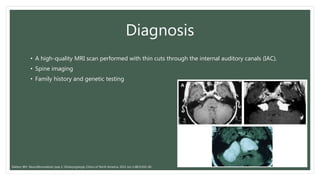
• A high-quality MRI scan performed with thin cuts through the internal auditory canals (IAC).
• Spine imaging
• Family history and genetic testing
Slattery WH. Neurofibromatosis type 2. Otolaryngologic Clinics of North America. 2015 Jun 1;48(3):443-60.
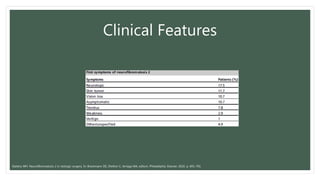
Clinical Features
Slattery WH. Neurofibromatosis 2 in otologic surgery. In: Brackmann DE, Shelton C, Arriaga MA, editors. Philadelphia: Elsevier; 2010. p. 691–701
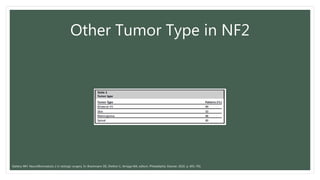
Other Tumor Type in NF2
Slattery WH. Neurofibromatosis 2 in otologic surgery. In: Brackmann DE, Shelton C, Arriaga MA, editors. Philadelphia: Elsevier; 2010. p. 691–701
Management
• Observation
• Surgical
• Hearing preservation
• Auditory brainstem implant
• Cochlear implant
• Stereotactic irradiation
• Drug therapy
Slattery WH. Neurofibromatosis type 2. Otolaryngologic Clinics of North America. 2015 Jun 1;48(3):443-60.
Management (Drug Therapy)
• Target multiple intracellular signaling pathways that interact with the NF2 protein, including the
phosphatidylinositol 3 kinase/Akt, Raf/MEK/ERK, and mTOR pathways as well as integrin/focal
adhesion kinase/Src/Ras signaling cascades, platelet-derived growth factor receptor beta, and
vascular endothelial growth factor (VEGF) pathways.
• Erlotinib, lapatinib, and bevacizumab, avastin, rapamycin.
Wong HK, Lahdenranta J, Kamoun WS, et al. Anti-vascular endothelial growth factor therapies as a novel therapeutic approach to treating neurofibromatosisrelated tumors. Cancer Res 010;70(9):3483–93.
Plotkin SR, Stemmer-Rachamimov AO, Barker FG 2nd, et al. Hearing improvement after bevacizumab in patients with neurofibromatosis type 2. N Engl J Med 2009;361(4):358–67.
Plotkin SR, Singh MA, O’Donnell CC, et al. Audiologic and radiographic response of NF2-related vestibular schwannoma to erlotinib therapy. Nat Clin Pract Oncol 2008;5(8):487–91.
Plotkin SR, Halpin C, McKenna MJ, et al. Erlotinib for progressive vestibular schwannoma in neurofibromatosis 2 patients. Otol Neurotol 2010;31(7):1135–43.
Evans DG. Neurofibromatosis type 2 (NF2): a clinical and molecular review. Orphanet J Rare Dis 2009;4:16.
Summary
• Care of patients with NF2 requires knowledge of all tumors and symptoms involved with the
disorder.
• Bilateral schwanomas
• Multidisciplinary approach
Neurofibromatosis Type II

Neurofibromatosis Type II

  • 1.
  • 2.
    Outline: • Introduction • Epidemiology •Diagnostic Criteria • Diagnosis • Clinical Features • Management • Summary
  • 3.
    Introduction • Rare syndrome •Hearing loss as presenting symptom • Invasive, requiring a multispecialist team approach • Chromosome 22 Slattery WH. Neurofibromatosis type 2. Otolaryngologic Clinics of North America. 2015 Jun 1;48(3):443-60.
  • 4.
    Epidemiology • The averageage of diagnosis of NF2 is 25 years • The average delay of diagnosis is 7 years • No gender or ethnicity difference • Epidemiologic studies place the incidence of NF2 between 1 in 33,000 live births and 1 in 87,410 live births Shelton C, Brackmann DE, House WF. Middle fossa approach. In: Brackmann DE, Shelton C, Arriaga MA, editors. Otologic surgery. 3rd edition. Philadelphia: Elsevier; 2010. p. 581–9. Antinheimo J, Sankila R, Carpen O, et al. Population-based analysis of sporadic and type 2 neurofibromatosis-associated meningiomas and schwannomas. Neurology 2000;54:71–6. Evans DG, Howard E, Giblin C, et al. Birth incidence and prevalence of tumorprone syndromes: estimates from a UK family genetic register service. Am J Med Genet A 2010;152A:327–32.
  • 5.
  • 6.
    Diagnosis • A high-qualityMRI scan performed with thin cuts through the internal auditory canals (IAC). • Spine imaging • Family history and genetic testing Slattery WH. Neurofibromatosis type 2. Otolaryngologic Clinics of North America. 2015 Jun 1;48(3):443-60.
  • 7.
    Clinical Features Slattery WH.Neurofibromatosis 2 in otologic surgery. In: Brackmann DE, Shelton C, Arriaga MA, editors. Philadelphia: Elsevier; 2010. p. 691–701
  • 8.
    Other Tumor Typein NF2 Slattery WH. Neurofibromatosis 2 in otologic surgery. In: Brackmann DE, Shelton C, Arriaga MA, editors. Philadelphia: Elsevier; 2010. p. 691–701
  • 9.
    Management • Observation • Surgical •Hearing preservation • Auditory brainstem implant • Cochlear implant • Stereotactic irradiation • Drug therapy Slattery WH. Neurofibromatosis type 2. Otolaryngologic Clinics of North America. 2015 Jun 1;48(3):443-60.
  • 10.
    Management (Drug Therapy) •Target multiple intracellular signaling pathways that interact with the NF2 protein, including the phosphatidylinositol 3 kinase/Akt, Raf/MEK/ERK, and mTOR pathways as well as integrin/focal adhesion kinase/Src/Ras signaling cascades, platelet-derived growth factor receptor beta, and vascular endothelial growth factor (VEGF) pathways. • Erlotinib, lapatinib, and bevacizumab, avastin, rapamycin. Wong HK, Lahdenranta J, Kamoun WS, et al. Anti-vascular endothelial growth factor therapies as a novel therapeutic approach to treating neurofibromatosisrelated tumors. Cancer Res 010;70(9):3483–93. Plotkin SR, Stemmer-Rachamimov AO, Barker FG 2nd, et al. Hearing improvement after bevacizumab in patients with neurofibromatosis type 2. N Engl J Med 2009;361(4):358–67. Plotkin SR, Singh MA, O’Donnell CC, et al. Audiologic and radiographic response of NF2-related vestibular schwannoma to erlotinib therapy. Nat Clin Pract Oncol 2008;5(8):487–91. Plotkin SR, Halpin C, McKenna MJ, et al. Erlotinib for progressive vestibular schwannoma in neurofibromatosis 2 patients. Otol Neurotol 2010;31(7):1135–43. Evans DG. Neurofibromatosis type 2 (NF2): a clinical and molecular review. Orphanet J Rare Dis 2009;4:16.
  • 11.
    Summary • Care ofpatients with NF2 requires knowledge of all tumors and symptoms involved with the disorder. • Bilateral schwanomas • Multidisciplinary approach