Sedimentary Petroology
Sedimentology
The study of the processes that erode,
transport and deposit sediments
Sedimentary Petrology
The study of the characteristics and origin of
sedimentary rocks.
Stratigraphy
The study of the origin, relationship, and
extent of rock layers (strata).
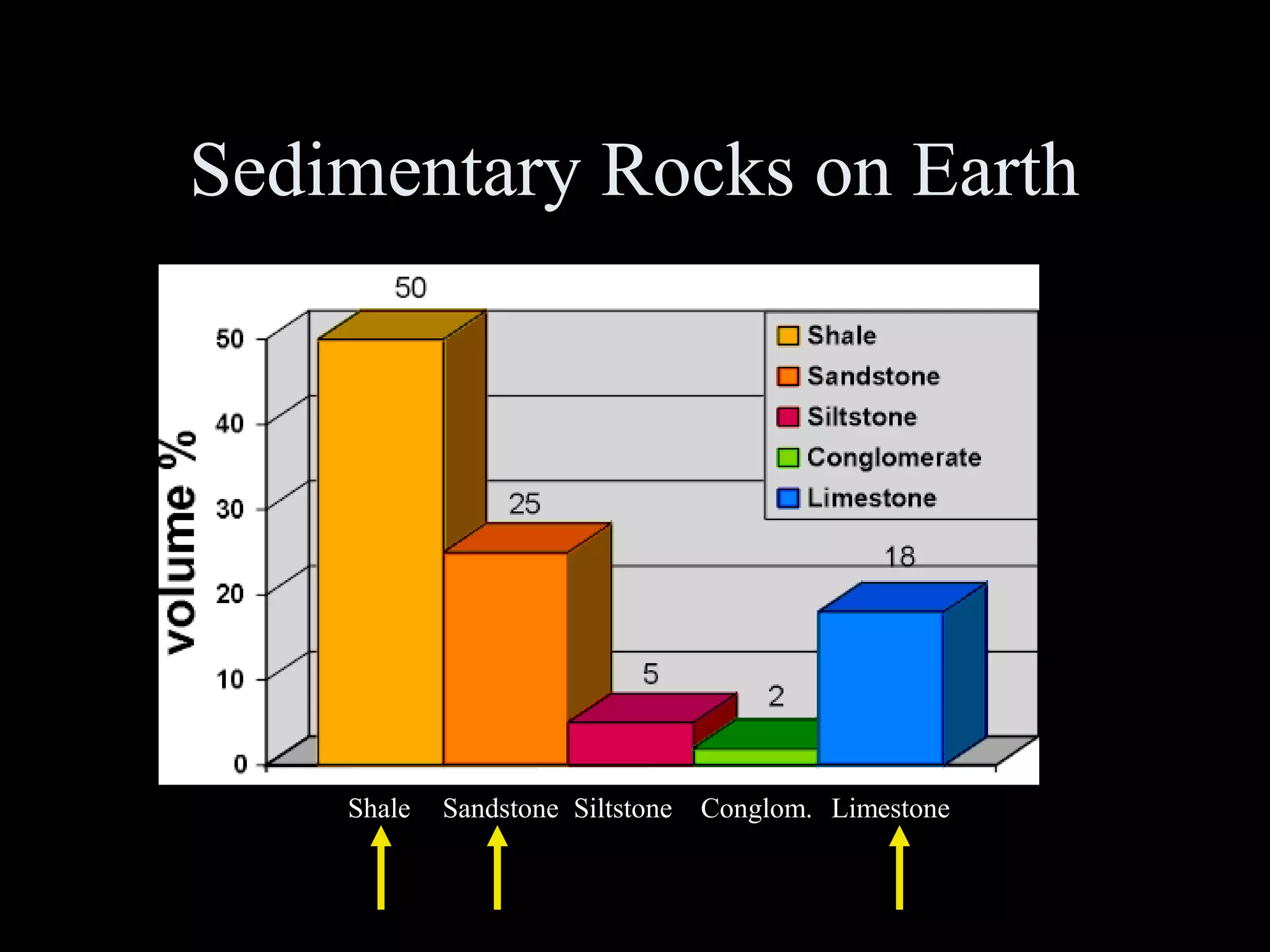
Sedimentary Rocks on Earth
Shale Sandstone Siltstone LimestoneConglom.
What do Sedimentary Rocks Record?
Magma
Igneous Rocks
Sedimentary Rocks
Metamorphic Rocks
Sediment
Crystallization Melting
Metamorphism
Lithification
Weathering
Erosion
Transport
Deposition
What do Sedimentary Rocks Record?
•Source (Provenance) of sediment
•Erosion and Transport Agent
•Depositional Environment
•Paleogeography/Tectonic Setting
•Diagenesis (what happened after deposition)
Rock Identification is based on:
• Composition
What minerals make
up the rock?
• Texture
What is the shape, size
and orientation of the
mineral grains that
make up the rock?
Types of Sedimentary Rocks
Detrital Chemical
Organic
Clastic
Texture Crystalline
Texture
Detrital Rock Composition
Detrital Rocks
• Lithic Fragments
• Quartz
• Clay Minerals
• Fossil Fragments
• Rust Minerals
• Orthoclase
• Muscovite / Biotite
Note About Sediment Composition:
Weathering
The sediments that make up sedimentary rocks are produced by:
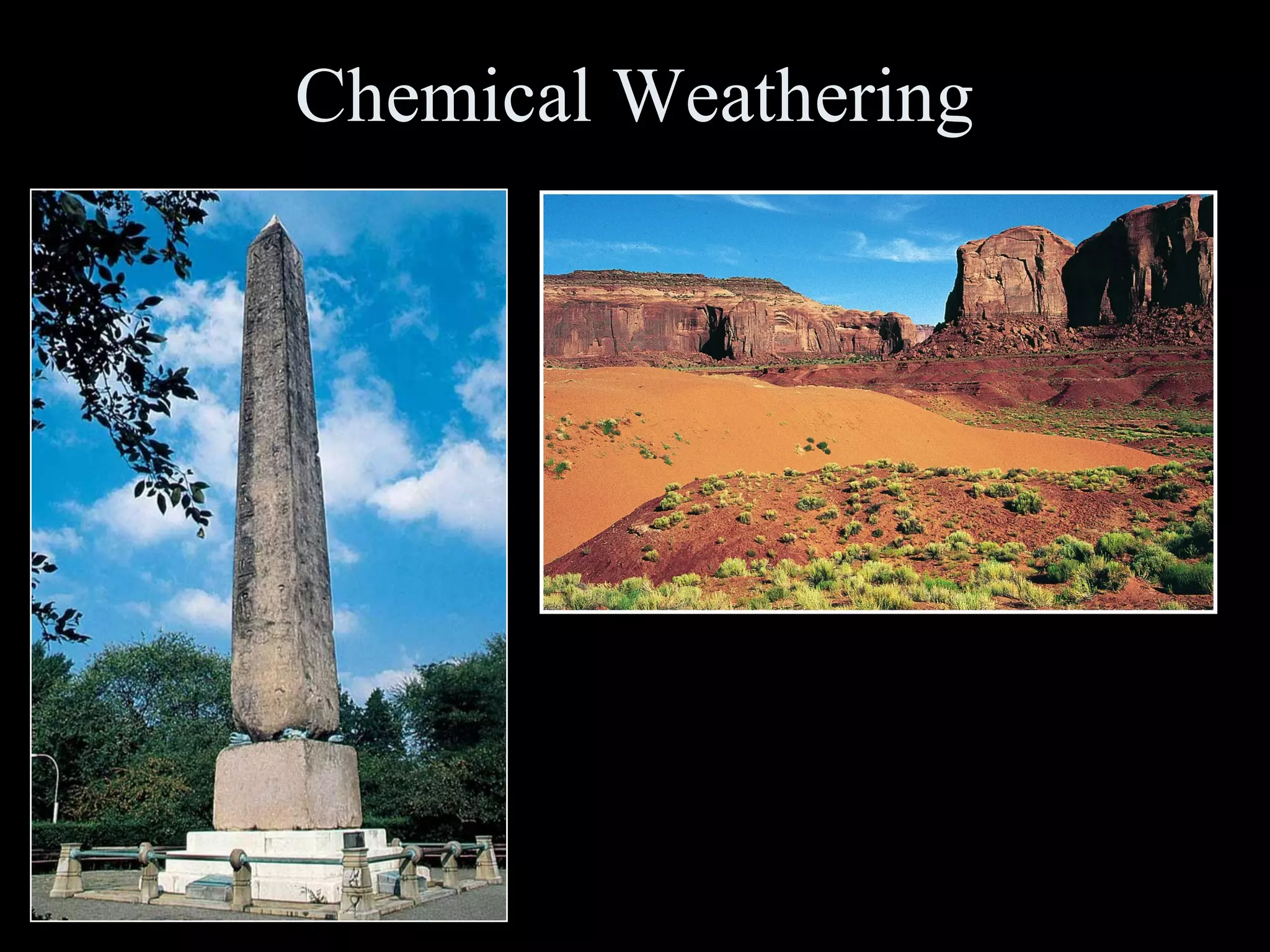
Mechanical & Chemical Weathering
Mechanical Weathering
Chemical Weathering
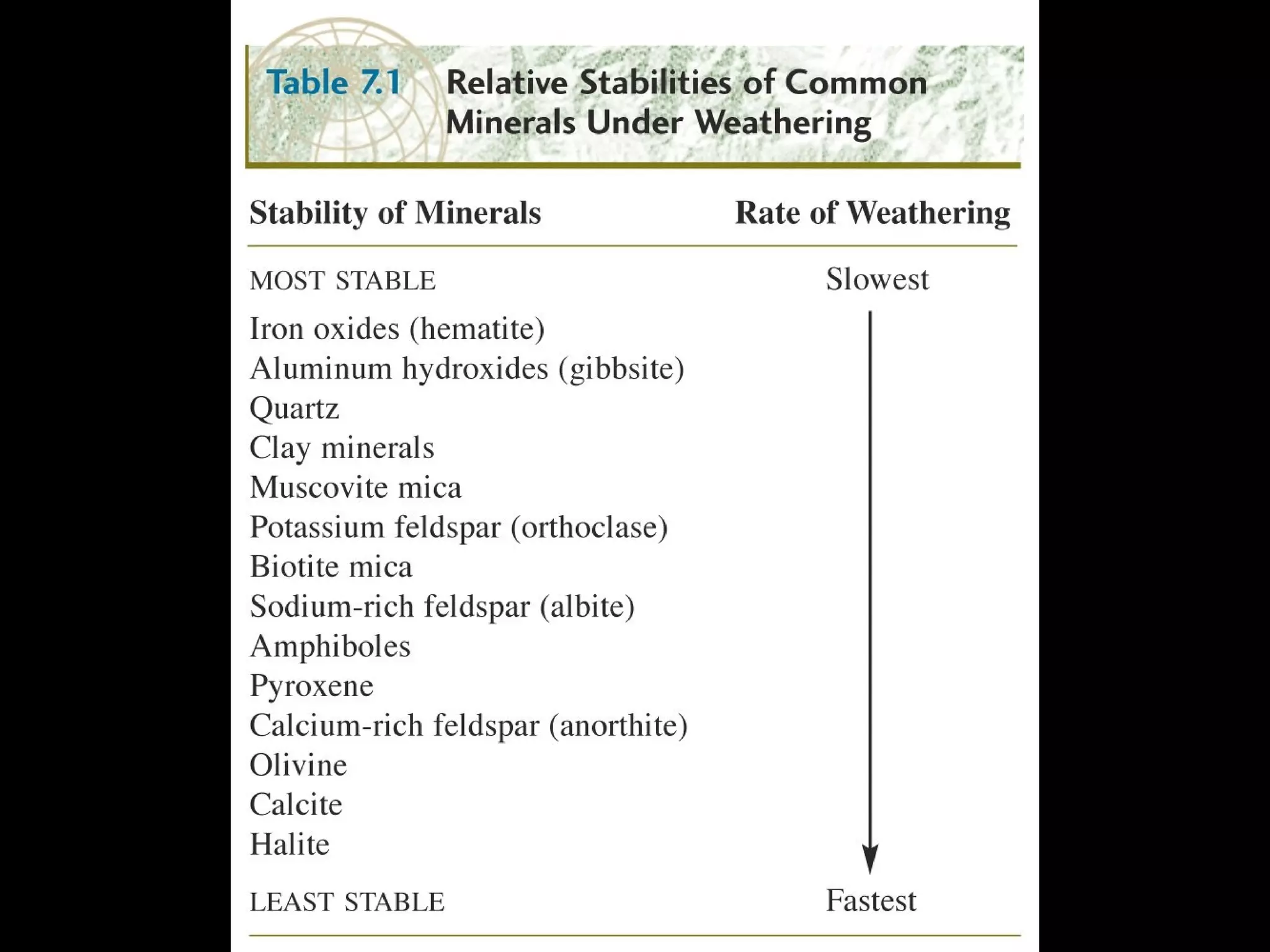
Mineral
Stability
Products of Weathering
• Lithic (Rock) Fragments
(granite, basalt,schist, etc.)
• Dissolved Ions
(Calcium, Potassium, Sodium, etc.)
• Rust Minerals (Hematite, Goertite, etc.)
• Clay Minerals
(Bentonite, Montmorillonite, etc.)
• Residual Minerals
(Quartz, Orthoclase, Muscovite, etc.)
Interpretation of Composition
Detrital Rocks:
• Source of Sediment (Provenance)
• Exposure to Weathering
(Distance of Transport)
(Type of Climate)
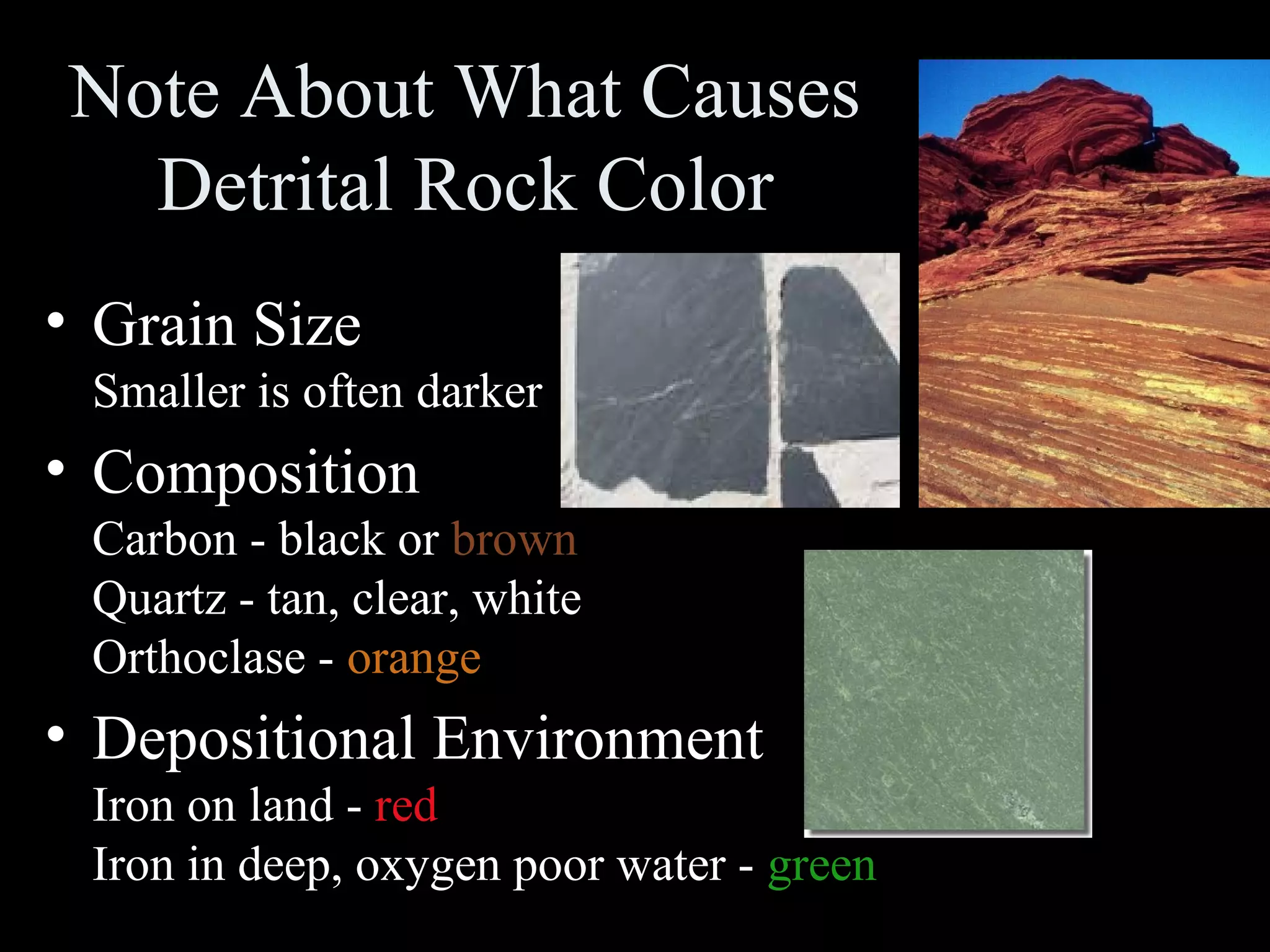
Note About What Causes
Detrital Rock Color
• Grain Size
Smaller is often darker
• Composition
Carbon - black or brown
Quartz - tan, clear, white
Orthoclase - orange
• Depositional Environment
Iron on land - red
Iron in deep, oxygen poor water - green
MajorMajor SedimentarySedimentary RockRock TypesTypes
• SiliciclasticSiliciclastic
• VolcaniclasticVolcaniclastic
• CarbonatesCarbonates (evaporites/chemical,(evaporites/chemical, non-non-
skeletal,skeletal, skeletal)skeletal)
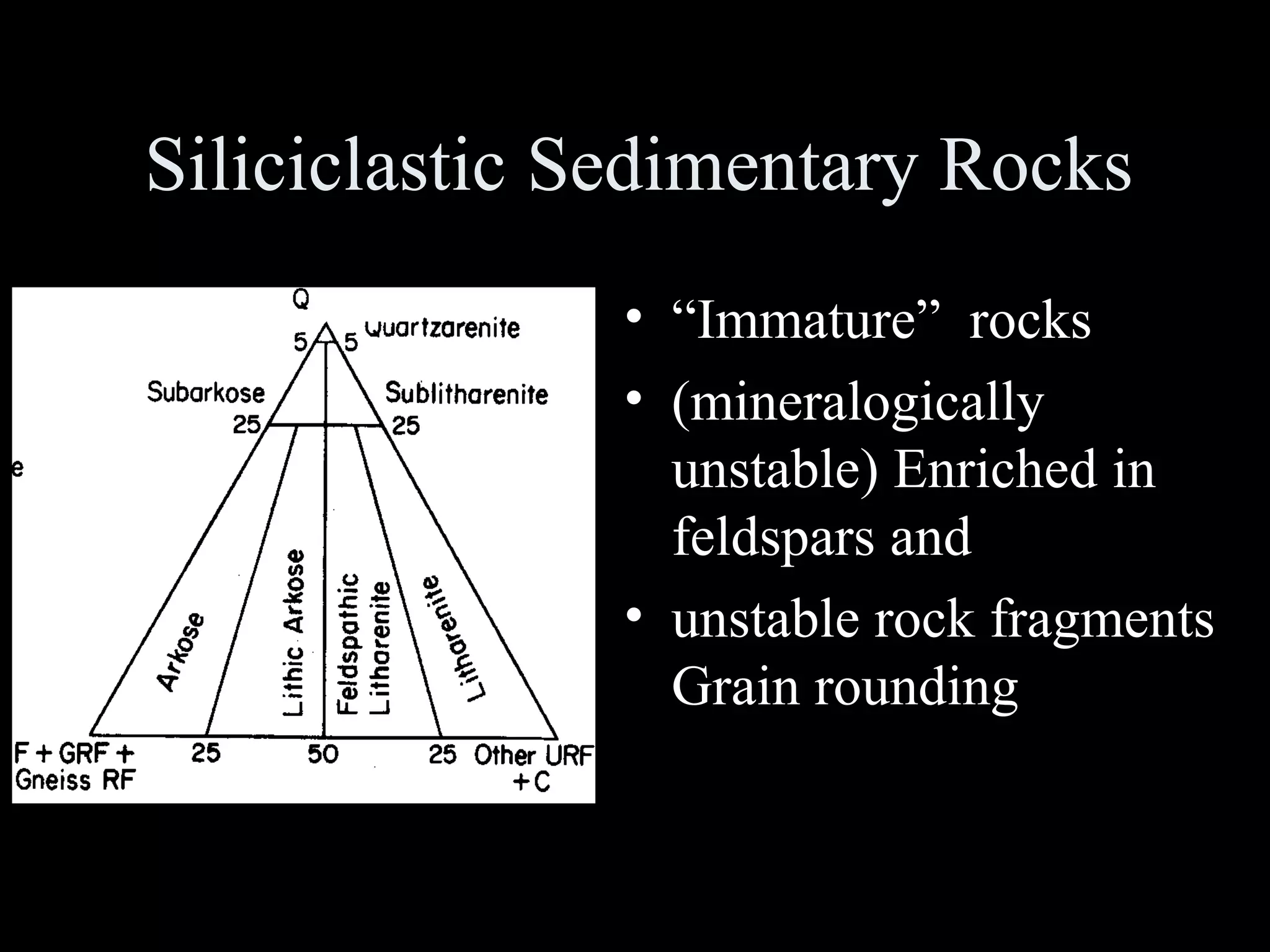
SiliciclasticSiliciclastic SedimentarySedimentary RocksRocks
• QQ == quartzquartz
• FF == feldsparsfeldspars
• RR == lithiclithic fragmentsfragments
• (includes(includes chert)chert)
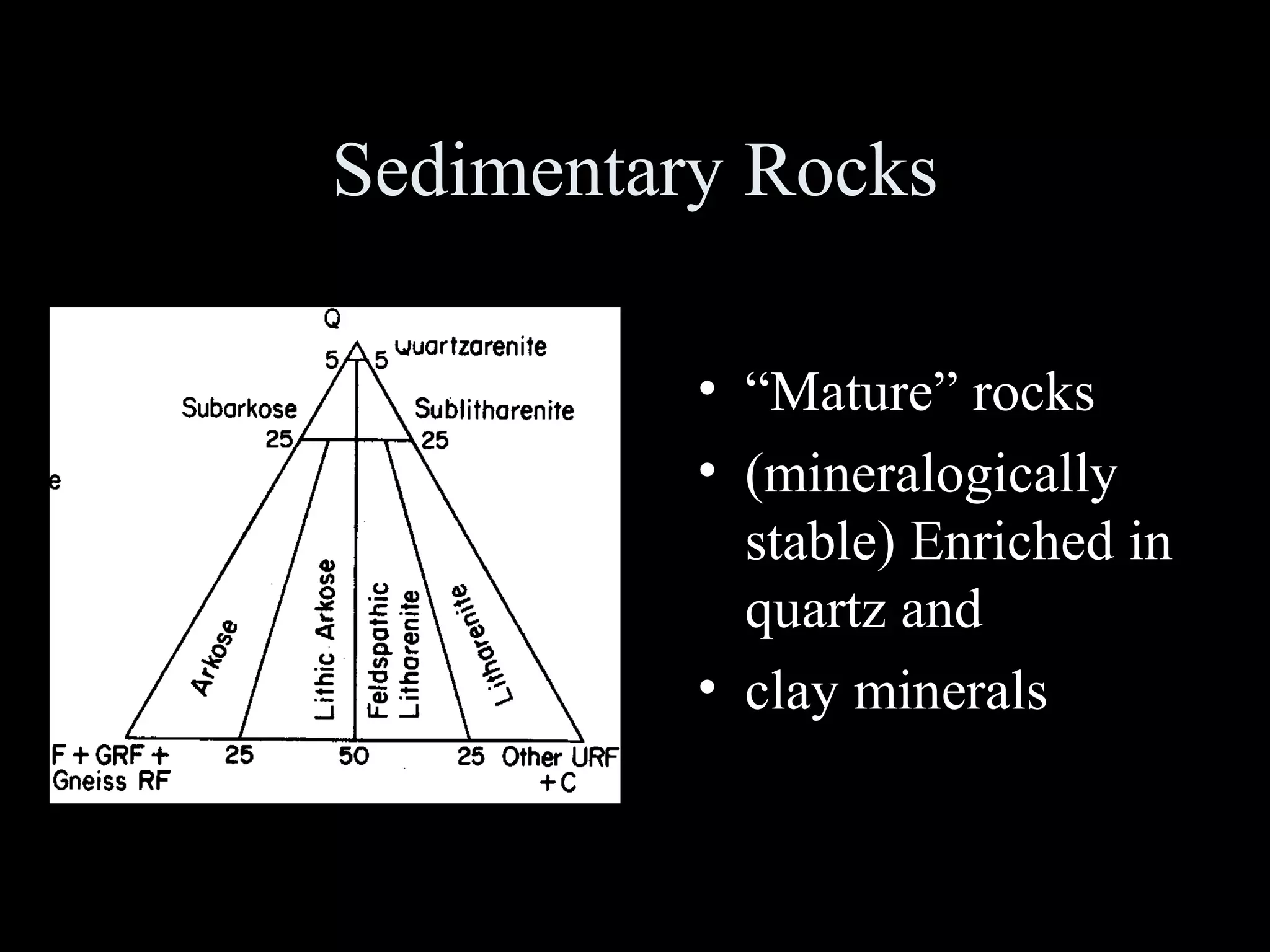
SedimentarySedimentary RocksRocks
• ““Mature”Mature” rocksrocks
• (mineralogically(mineralogically
stable)stable) EnrichedEnriched inin
quartzquartz andand
• clayclay mineralsminerals
SiliciclasticSiliciclastic SedimentarySedimentary RocksRocks
• ““Immature”Immature” rocksrocks
• (mineralogically(mineralogically
unstable)unstable) EnrichedEnriched inin
feldsparsfeldspars andand
• unstableunstable rockrock fragmentsfragments
GrainGrain roundingrounding
MatrixMatrix versusversus CementCement
• Matrix:Matrix: fine-grained*fine-grained* materialmaterial depositeddeposited
simultaneouslysimultaneously withwith
• largerlarger particles.particles. GenerallyGenerally appearsappears asas
darker-coloureddarker-coloured detritusdetritus betweenbetween grainsgrains
MatrixMatrix versusversus CementCement
• Cement:Cement: aa chemicalchemical precipitateprecipitate betweenbetween
grainsgrains formedformed fromfrom pore-waterpore-water longlong afterafter
depositiondeposition
MatrixMatrix versusversus CementCement
MatrixMatrix
HeterogeneousHeterogeneous
ChemicallyChemically impureimpure
DrapesDrapes overover grainsgrains
XNXN
PredatesPredates cementscements
GenerallyGenerally darkdark inin colorcolor
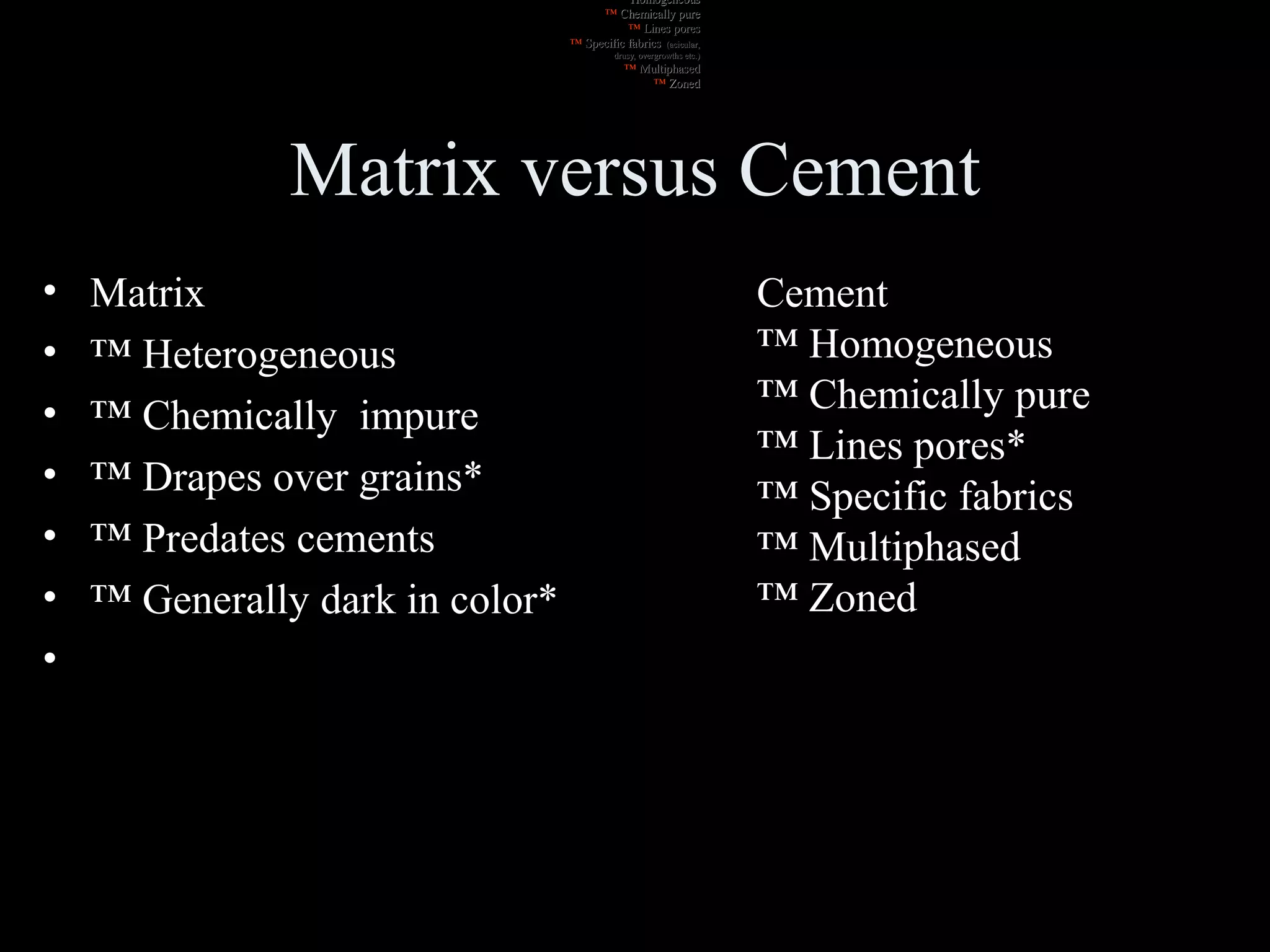
MatrixMatrix versusversus CementCement
• MatrixMatrix
• ™™ HeterogeneousHeterogeneous
• ™™ ChemicallyChemically impureimpure
• ™™ DrapesDrapes overover grains*grains*
• ™™ PredatesPredates cementscements
• ™™ GenerallyGenerally darkdark inin color*color*
•
™™ HomogeneousHomogeneous
™™ ChemicallyChemically purepure
™™ LinesLines porespores
™™ SpecificSpecific fabricsfabrics (acicular,(acicular,
drusy,drusy, overgrowthsovergrowths etc.)etc.)
™™ MultiphasedMultiphased
™™ ZonedZoned
CementCement
™™ HomogeneousHomogeneous
™™ ChemicallyChemically purepure
™™ LinesLines pores*pores*
™™ SpecificSpecific fabricsfabrics
™™ MultiphasedMultiphased
™™ ZonedZoned
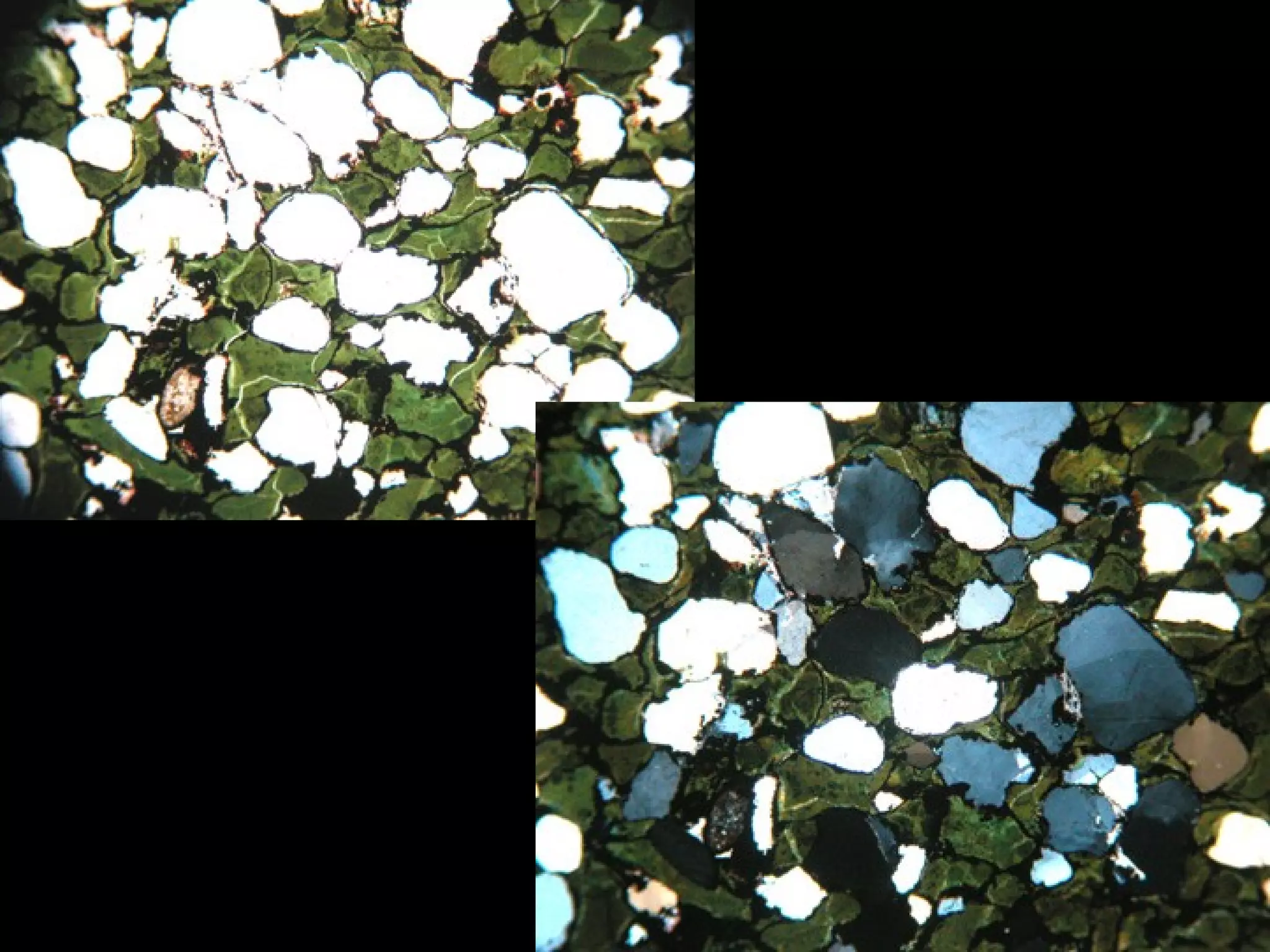
Thin-sectionThin-section PhotomicrographsPhotomicrographs
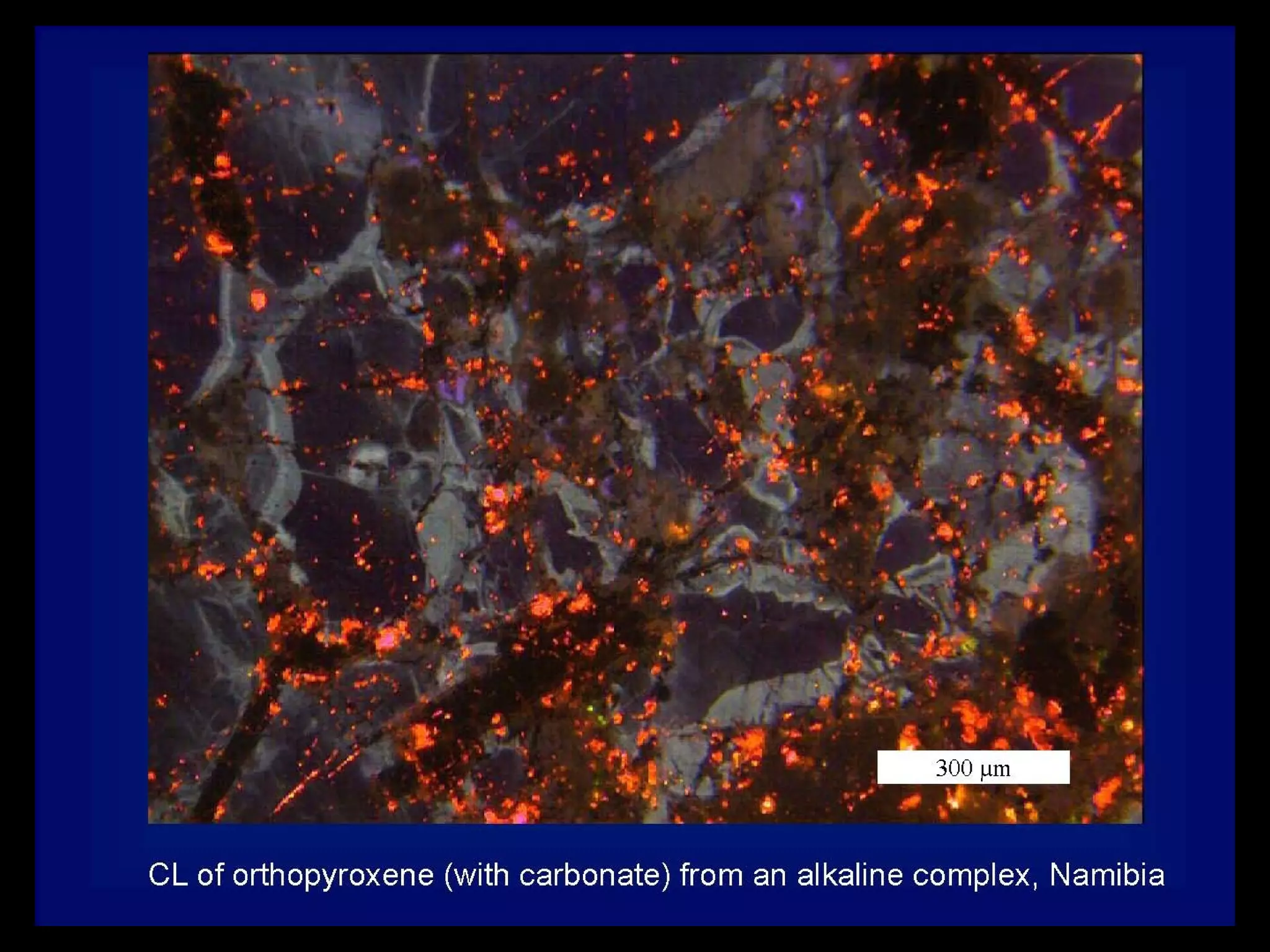
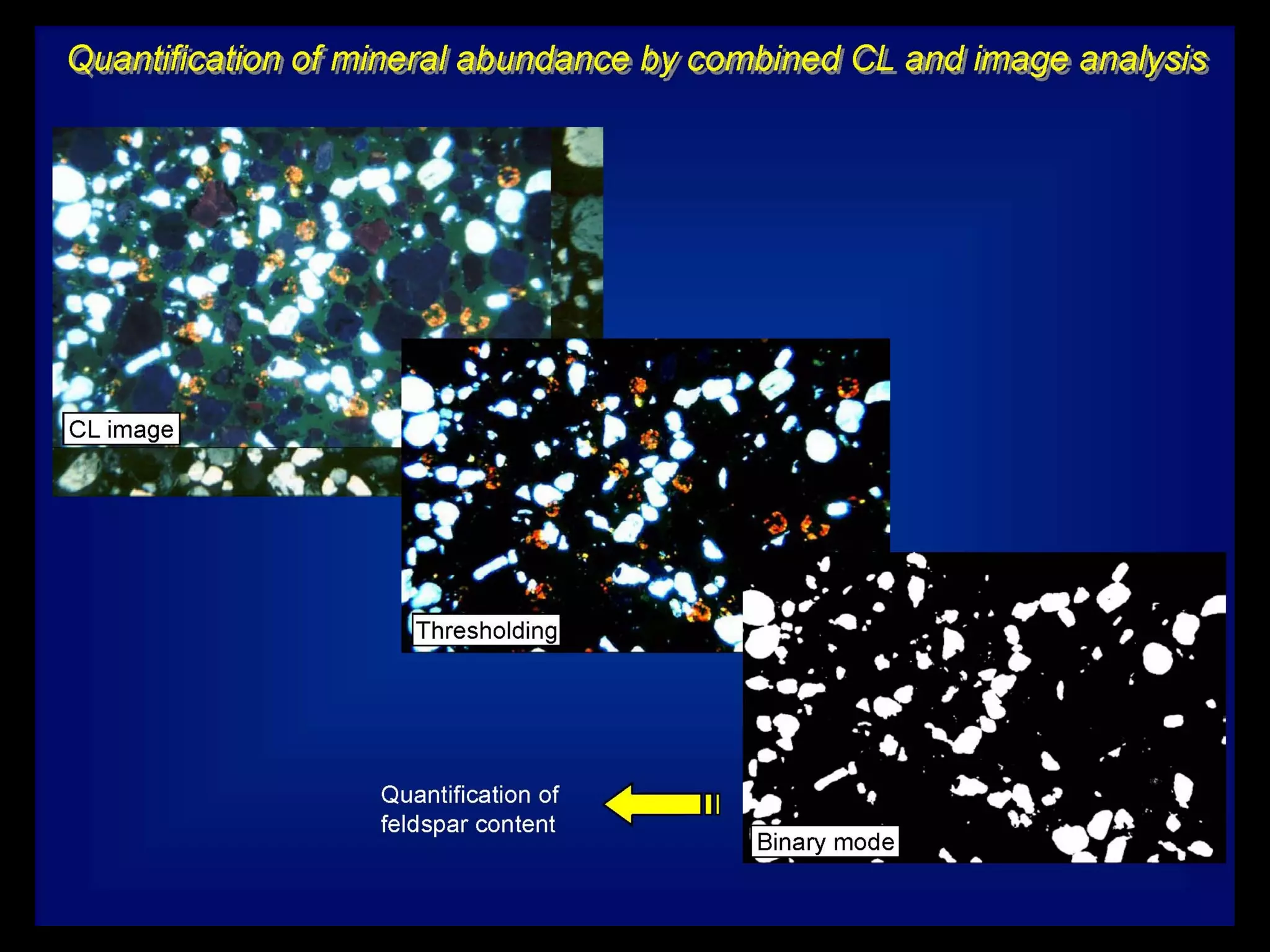
LES MINERAUX EN
CATODOLUMENESCENCE
Cours petrographie-sedimentaire

Cours petrographie-sedimentaire

  • 1.
  • 2.
    Sedimentology The study ofthe processes that erode, transport and deposit sediments Sedimentary Petrology The study of the characteristics and origin of sedimentary rocks. Stratigraphy The study of the origin, relationship, and extent of rock layers (strata).
  • 3.
    Sedimentary Rocks onEarth Shale Sandstone Siltstone LimestoneConglom.
  • 4.
    What do SedimentaryRocks Record? Magma Igneous Rocks Sedimentary Rocks Metamorphic Rocks Sediment Crystallization Melting Metamorphism Lithification Weathering Erosion Transport Deposition
  • 5.
    What do SedimentaryRocks Record? •Source (Provenance) of sediment •Erosion and Transport Agent •Depositional Environment •Paleogeography/Tectonic Setting •Diagenesis (what happened after deposition)
  • 6.
    Rock Identification isbased on: • Composition What minerals make up the rock? • Texture What is the shape, size and orientation of the mineral grains that make up the rock?
  • 7.
    Types of SedimentaryRocks Detrital Chemical Organic Clastic Texture Crystalline Texture
  • 8.
    Detrital Rock Composition DetritalRocks • Lithic Fragments • Quartz • Clay Minerals • Fossil Fragments • Rust Minerals • Orthoclase • Muscovite / Biotite
  • 9.
    Note About SedimentComposition: Weathering The sediments that make up sedimentary rocks are produced by: Mechanical & Chemical Weathering
  • 10.
  • 11.
  • 12.
  • 13.
    Products of Weathering •Lithic (Rock) Fragments (granite, basalt,schist, etc.) • Dissolved Ions (Calcium, Potassium, Sodium, etc.) • Rust Minerals (Hematite, Goertite, etc.) • Clay Minerals (Bentonite, Montmorillonite, etc.) • Residual Minerals (Quartz, Orthoclase, Muscovite, etc.)
  • 14.
    Interpretation of Composition DetritalRocks: • Source of Sediment (Provenance) • Exposure to Weathering (Distance of Transport) (Type of Climate)
  • 15.
    Note About WhatCauses Detrital Rock Color • Grain Size Smaller is often darker • Composition Carbon - black or brown Quartz - tan, clear, white Orthoclase - orange • Depositional Environment Iron on land - red Iron in deep, oxygen poor water - green
  • 16.
    MajorMajor SedimentarySedimentary RockRockTypesTypes • SiliciclasticSiliciclastic • VolcaniclasticVolcaniclastic • CarbonatesCarbonates (evaporites/chemical,(evaporites/chemical, non-non- skeletal,skeletal, skeletal)skeletal)
  • 17.
    SiliciclasticSiliciclastic SedimentarySedimentary RocksRocks •QQ == quartzquartz • FF == feldsparsfeldspars • RR == lithiclithic fragmentsfragments • (includes(includes chert)chert)
  • 18.
    SedimentarySedimentary RocksRocks • ““Mature”Mature”rocksrocks • (mineralogically(mineralogically stable)stable) EnrichedEnriched inin quartzquartz andand • clayclay mineralsminerals
  • 19.
    SiliciclasticSiliciclastic SedimentarySedimentary RocksRocks •““Immature”Immature” rocksrocks • (mineralogically(mineralogically unstable)unstable) EnrichedEnriched inin feldsparsfeldspars andand • unstableunstable rockrock fragmentsfragments GrainGrain roundingrounding
  • 20.
    MatrixMatrix versusversus CementCement •Matrix:Matrix: fine-grained*fine-grained* materialmaterial depositeddeposited simultaneouslysimultaneously withwith • largerlarger particles.particles. GenerallyGenerally appearsappears asas darker-coloureddarker-coloured detritusdetritus betweenbetween grainsgrains
  • 21.
    MatrixMatrix versusversus CementCement •Cement:Cement: aa chemicalchemical precipitateprecipitate betweenbetween grainsgrains formedformed fromfrom pore-waterpore-water longlong afterafter depositiondeposition
  • 22.
    MatrixMatrix versusversus CementCement MatrixMatrix HeterogeneousHeterogeneous ChemicallyChemicallyimpureimpure DrapesDrapes overover grainsgrains XNXN PredatesPredates cementscements GenerallyGenerally darkdark inin colorcolor
  • 23.
    MatrixMatrix versusversus CementCement •MatrixMatrix • ™™ HeterogeneousHeterogeneous • ™™ ChemicallyChemically impureimpure • ™™ DrapesDrapes overover grains*grains* • ™™ PredatesPredates cementscements • ™™ GenerallyGenerally darkdark inin color*color* • ™™ HomogeneousHomogeneous ™™ ChemicallyChemically purepure ™™ LinesLines porespores ™™ SpecificSpecific fabricsfabrics (acicular,(acicular, drusy,drusy, overgrowthsovergrowths etc.)etc.) ™™ MultiphasedMultiphased ™™ ZonedZoned CementCement ™™ HomogeneousHomogeneous ™™ ChemicallyChemically purepure ™™ LinesLines pores*pores* ™™ SpecificSpecific fabricsfabrics ™™ MultiphasedMultiphased ™™ ZonedZoned
  • 24.
  • 30.