 Countercurrent exchange is a mechanism in
which there is a crossover of some property,
usually heat or some chemical, between two
flowing bodies flowing in opposite directions
to each other.
 The maximum amount of heat or mass transfer
that can be obtained is higher with
countercurrent than co-current (parallel)
exchange because countercurrent maintains a
slowly declining difference or gradient (usually
temperature or concentration difference).
 In cocurrent exchange the initial gradient is
higher but falls off quickly, leading to wasted
potential.
 The result is that countercurrent exchange can
achieve a greater amount of transfer than parallel
under otherwise similar conditions.
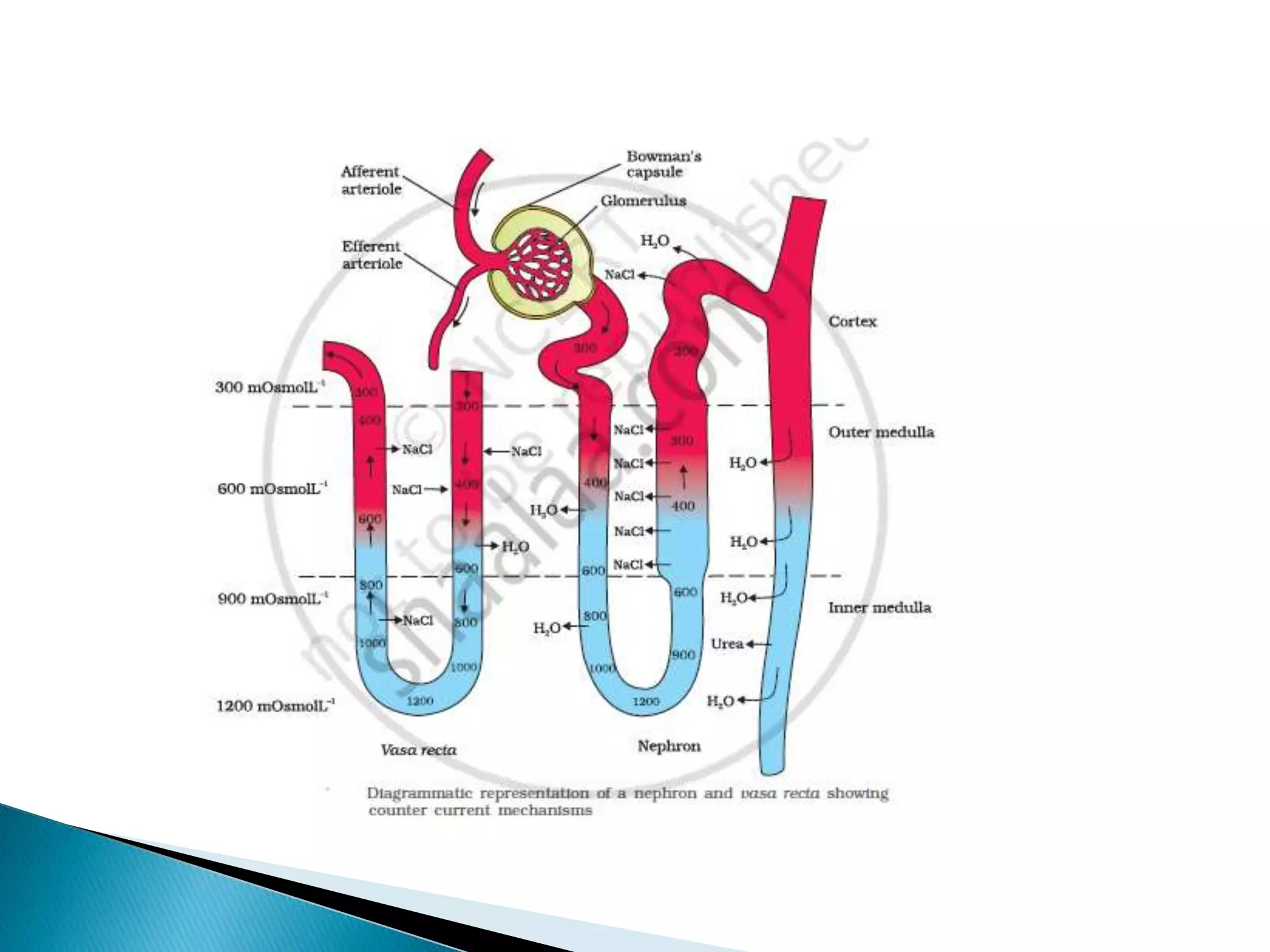
 Counter current multiplier
The repetitive reabsorption of sodium chloride by
the thick ascending loop of Henle and continued
inflow of new sodium chloride from the proximal
tubule into the loop of Henle is called the
countercurrent
multiplier. The sodium chloride reabsorbed from
the ascending loop of Henle keeps adding to the
newly
arrived sodium chloride, thus “multiplying” its
concentration
in the medullary interstitium.
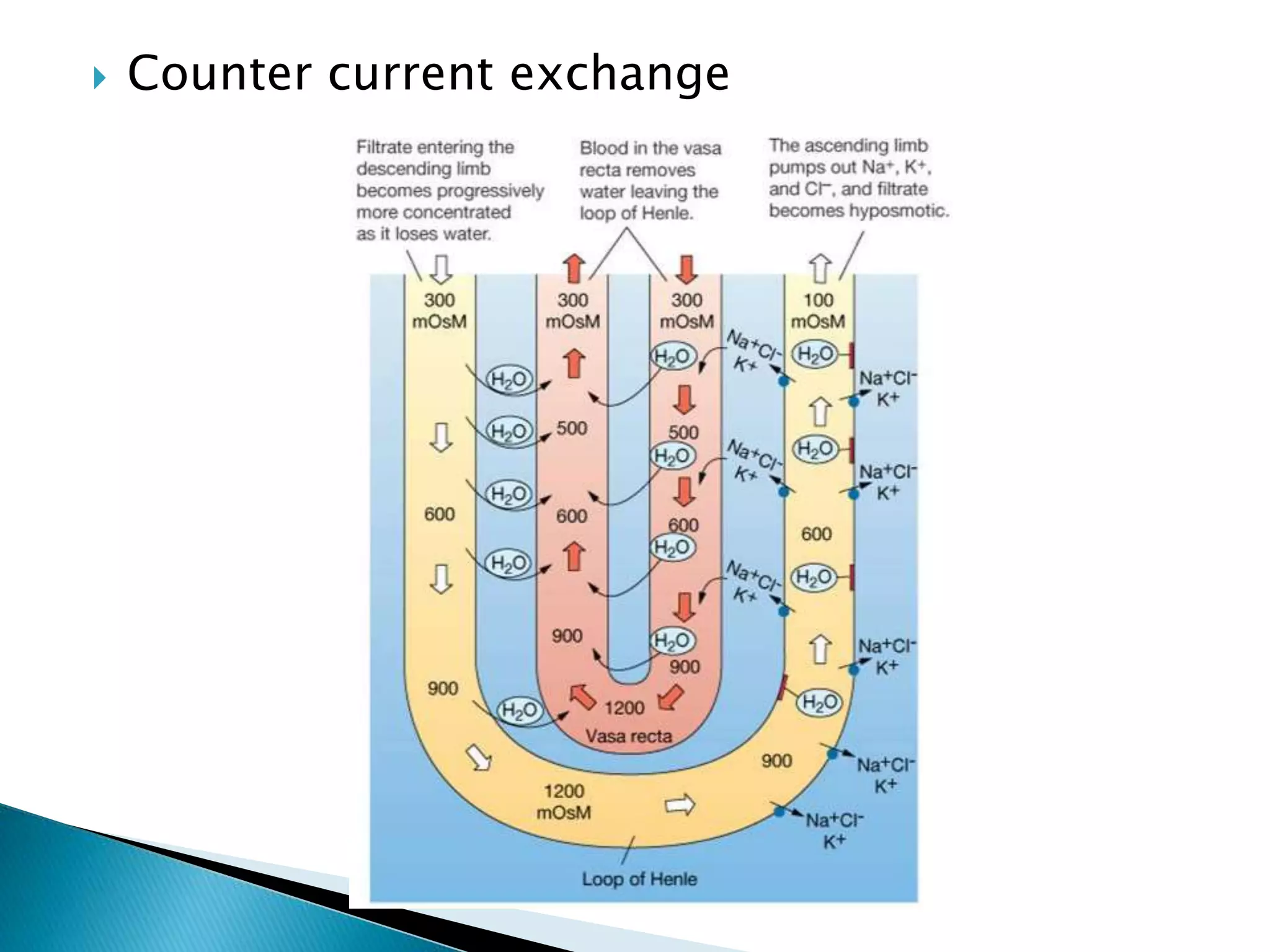
 Counter current exchange
Plasma flowing down the descending limb of
the vasa recta becomes more hyperosmotic
because of diffusion of water out of the blood
and diffusion of solutes from the renal
interstitial fluid into the blood. In the
ascending limb of the vasa recta, solutes
diffuse back into the interstitial fluid and
water diffuses back into the vasa recta. Large
amounts of solutes would be lost from the
renal medulla without the U shape of the vasa
recta capillaries.
 Thank you

Countercurrent mechanism

  • 2.
     Countercurrent exchangeis a mechanism in which there is a crossover of some property, usually heat or some chemical, between two flowing bodies flowing in opposite directions to each other.
  • 3.
     The maximumamount of heat or mass transfer that can be obtained is higher with countercurrent than co-current (parallel) exchange because countercurrent maintains a slowly declining difference or gradient (usually temperature or concentration difference).  In cocurrent exchange the initial gradient is higher but falls off quickly, leading to wasted potential.  The result is that countercurrent exchange can achieve a greater amount of transfer than parallel under otherwise similar conditions.
  • 4.
  • 5.
    The repetitive reabsorptionof sodium chloride by the thick ascending loop of Henle and continued inflow of new sodium chloride from the proximal tubule into the loop of Henle is called the countercurrent multiplier. The sodium chloride reabsorbed from the ascending loop of Henle keeps adding to the newly arrived sodium chloride, thus “multiplying” its concentration in the medullary interstitium.
  • 6.
  • 7.
    Plasma flowing downthe descending limb of the vasa recta becomes more hyperosmotic because of diffusion of water out of the blood and diffusion of solutes from the renal interstitial fluid into the blood. In the ascending limb of the vasa recta, solutes diffuse back into the interstitial fluid and water diffuses back into the vasa recta. Large amounts of solutes would be lost from the renal medulla without the U shape of the vasa recta capillaries.
  • 13.