Cosmology and Astronomy
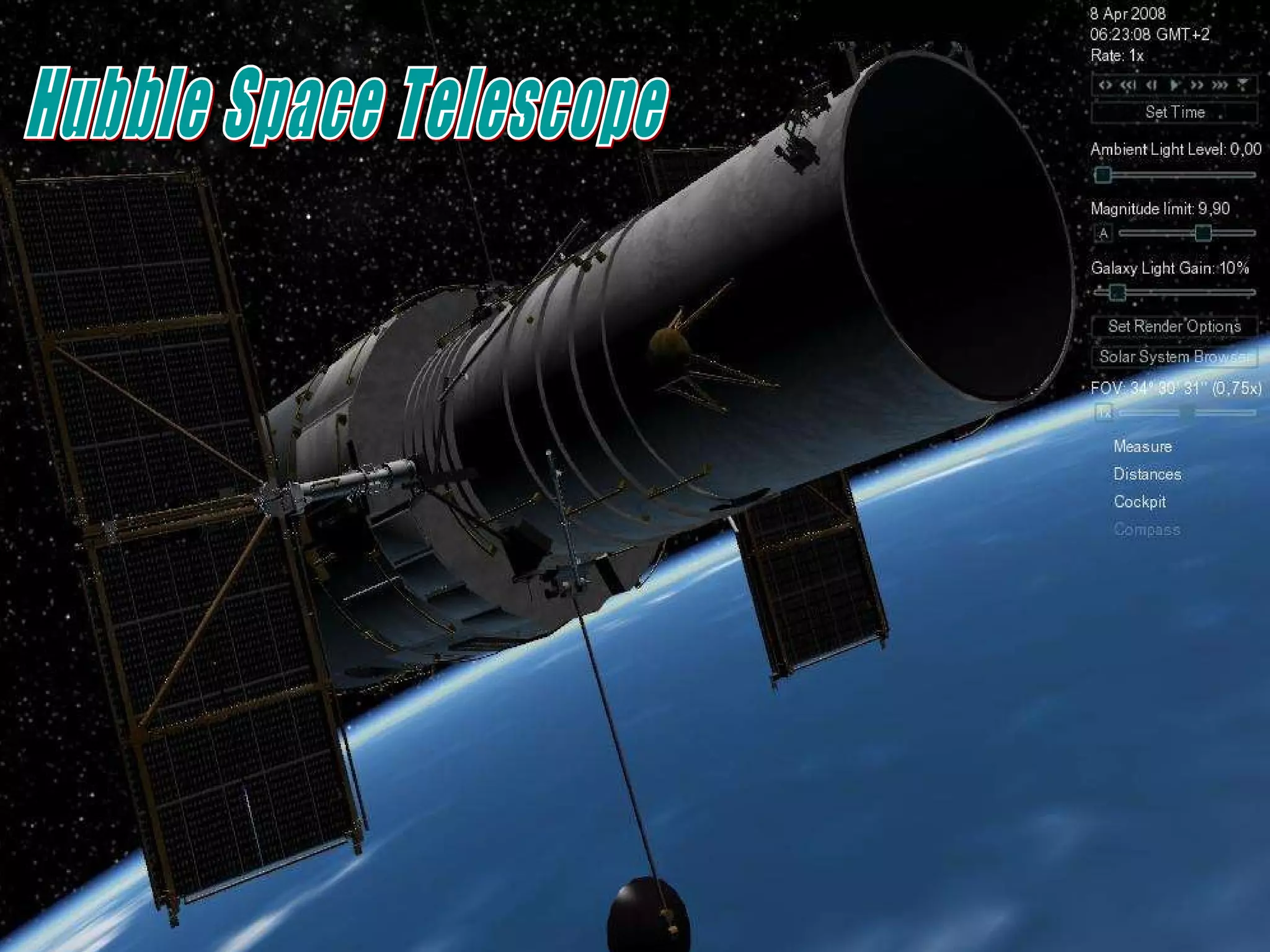
Hubble Space Telescope
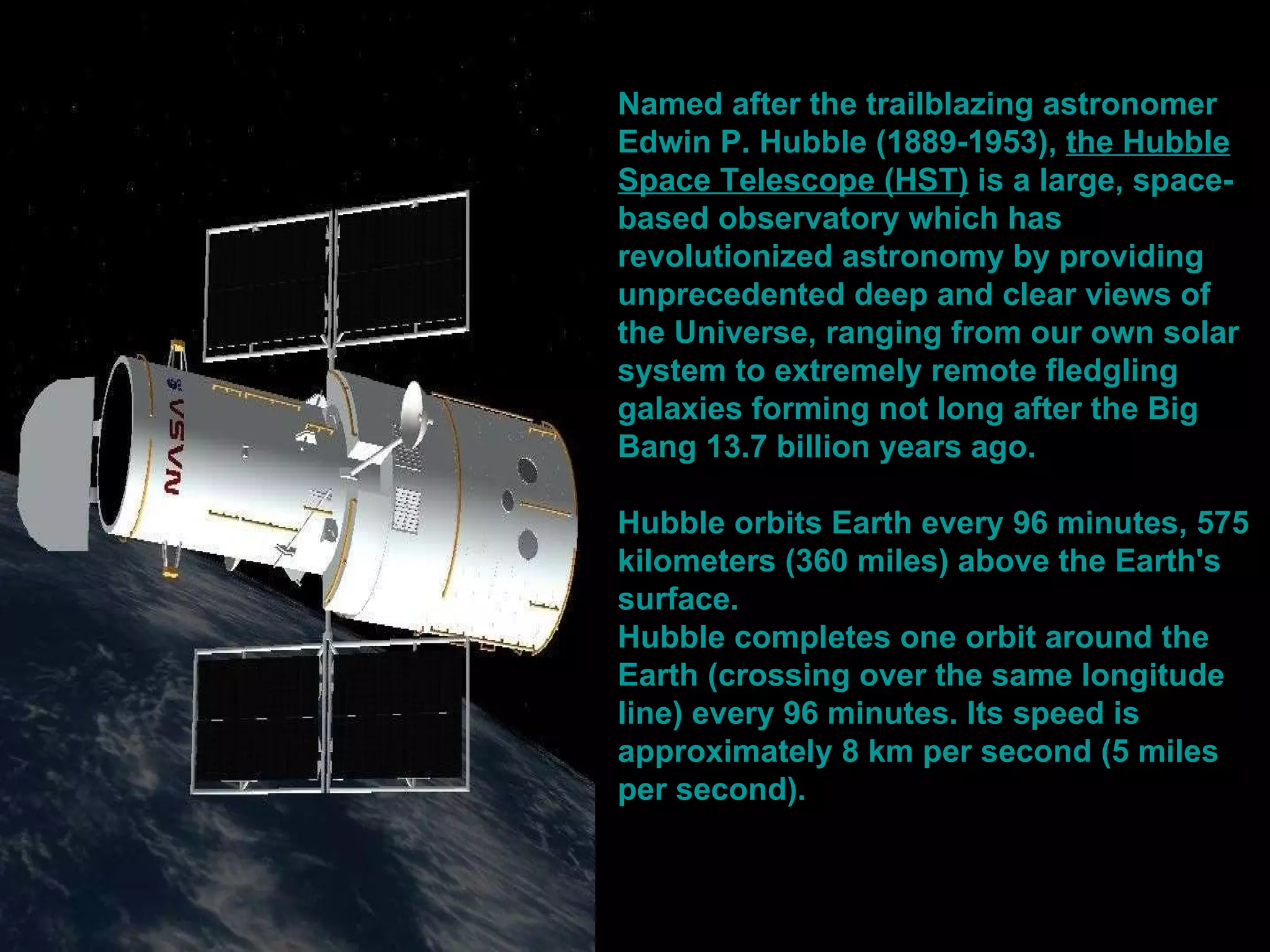
Named after the trailblazing astronomer  Edwin P. Hubble  (1889-1953),  the Hubble Space Telescope (HST)  is a large, space-based observatory which has revolutionized astronomy by providing unprecedented deep and clear views of the Universe, ranging from our own solar system to extremely remote fledgling galaxies forming not long after the Big Bang 13.7 billion years ago.   Hubble orbits Earth every 96 minutes, 575 kilometers (360 miles) above the Earth's surface.   Hubble completes one orbit around the Earth (crossing over the same longitude line) every 96 minutes. Its speed is approximately 8 km per second (5 miles per second).
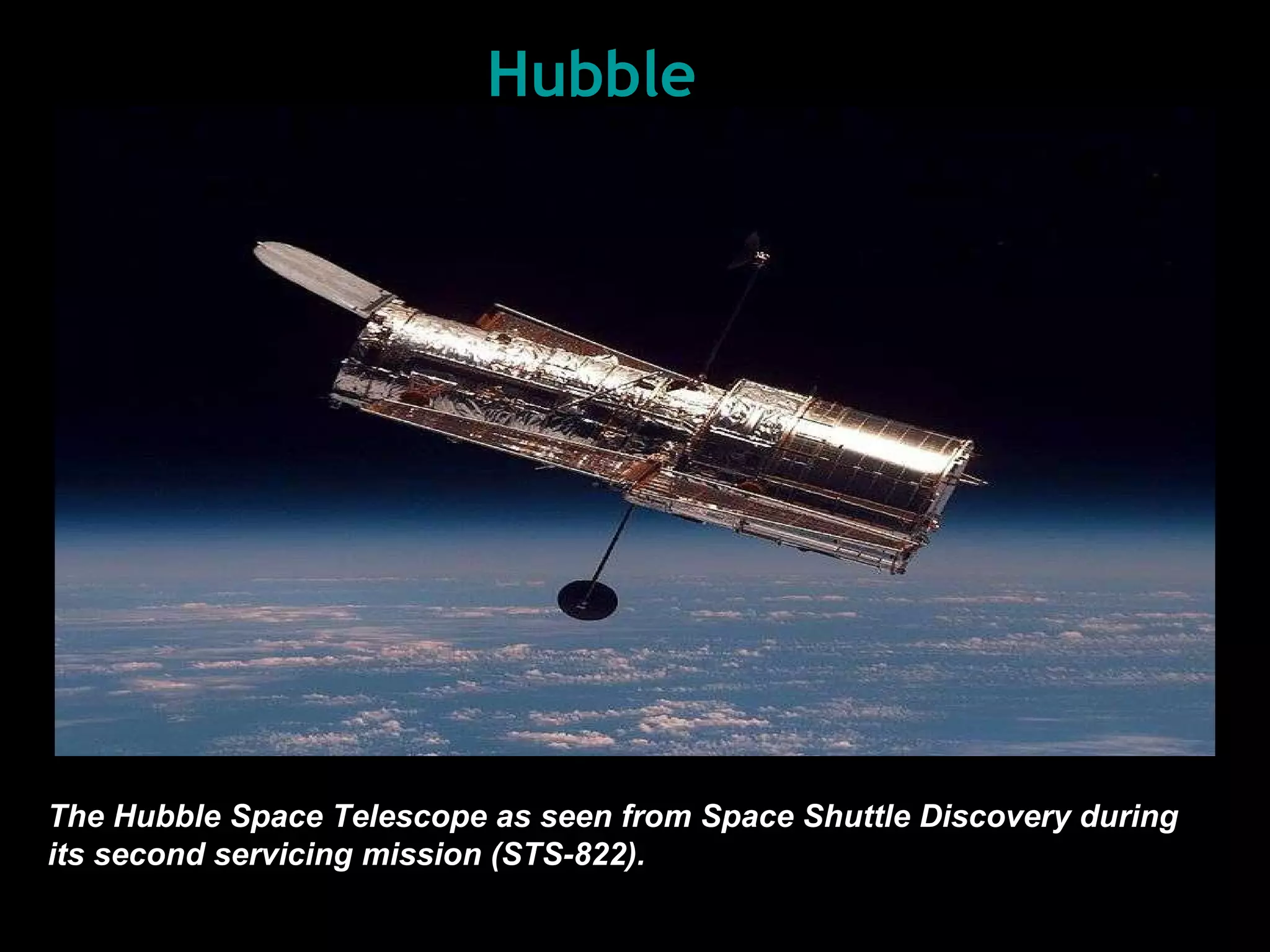
Hubble The Hubble Space Telescope as seen from  Space  Shutt le  Discovery during its second servicing mission (STS-82 2 ) .
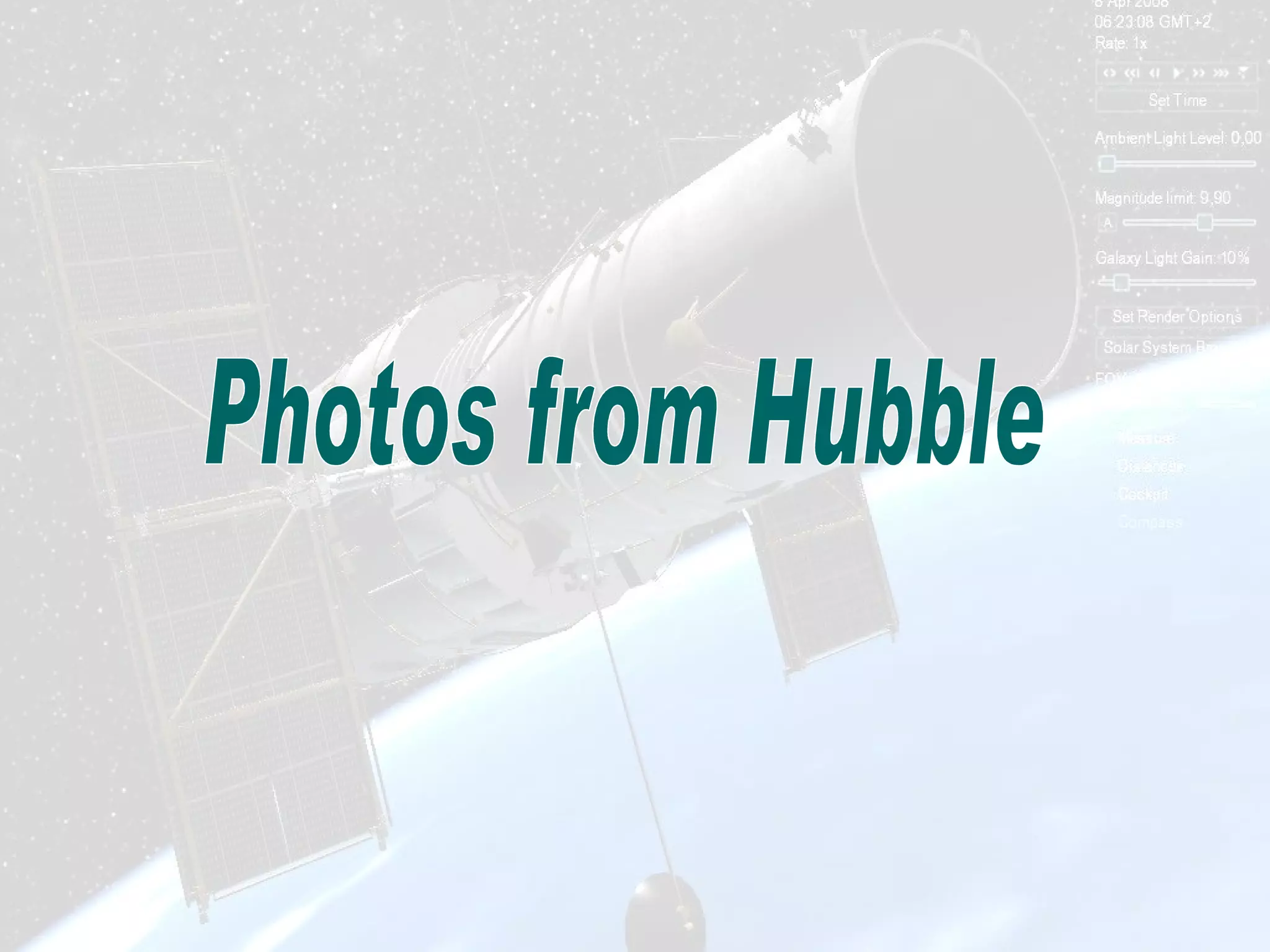
Photos from Hubble
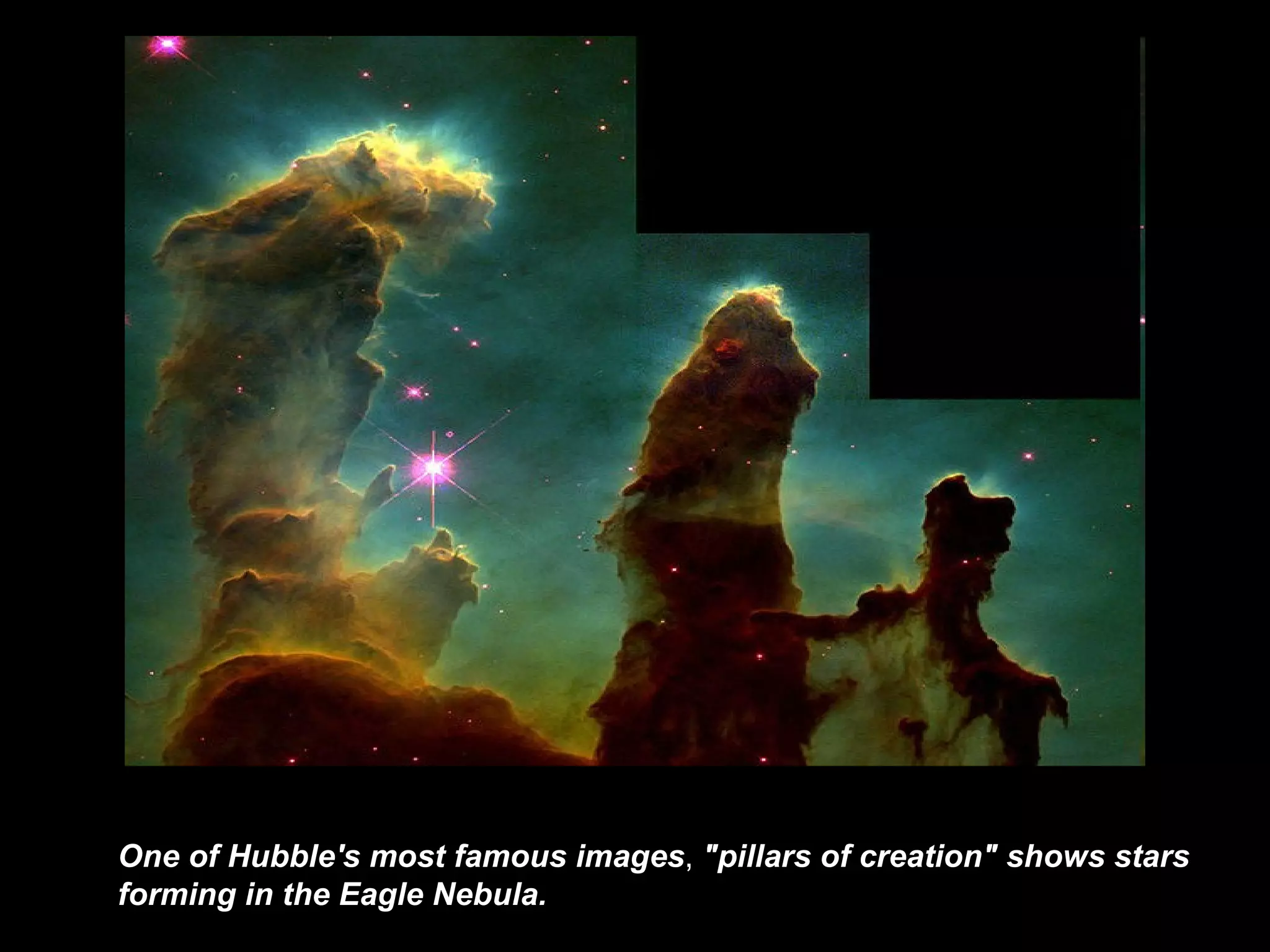
One of Hubble's most famous images ,  "pillars of creation" shows stars forming in the  Eagle Nebula.
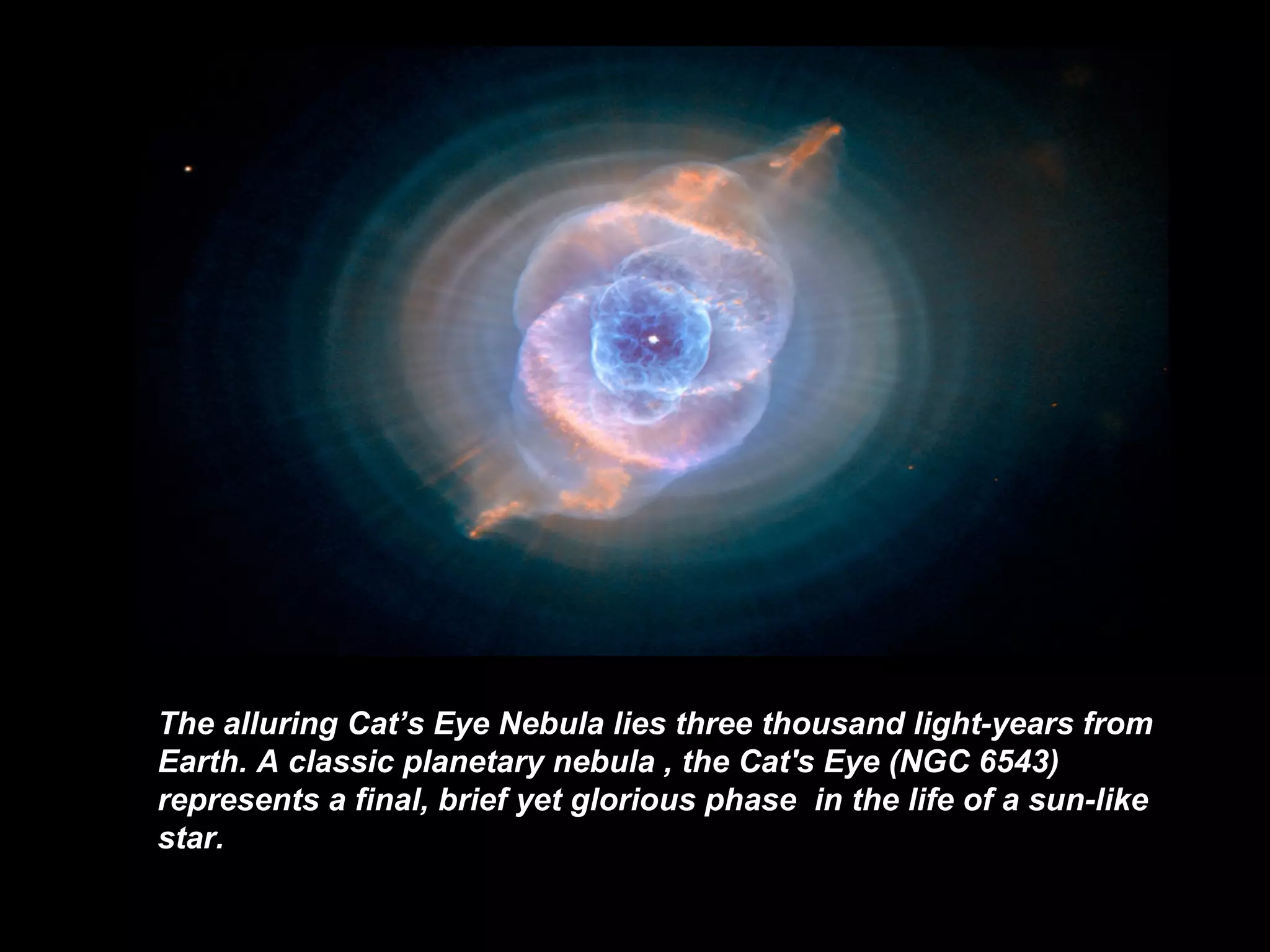
The alluring Cat’s Eye N ebula lies three thousand light-years from Earth. A classic  planetary nebula   , the Cat's Eye (NGC 6543) represents a final, brief  yet   glorious   phase   in the life of a sun-like star .
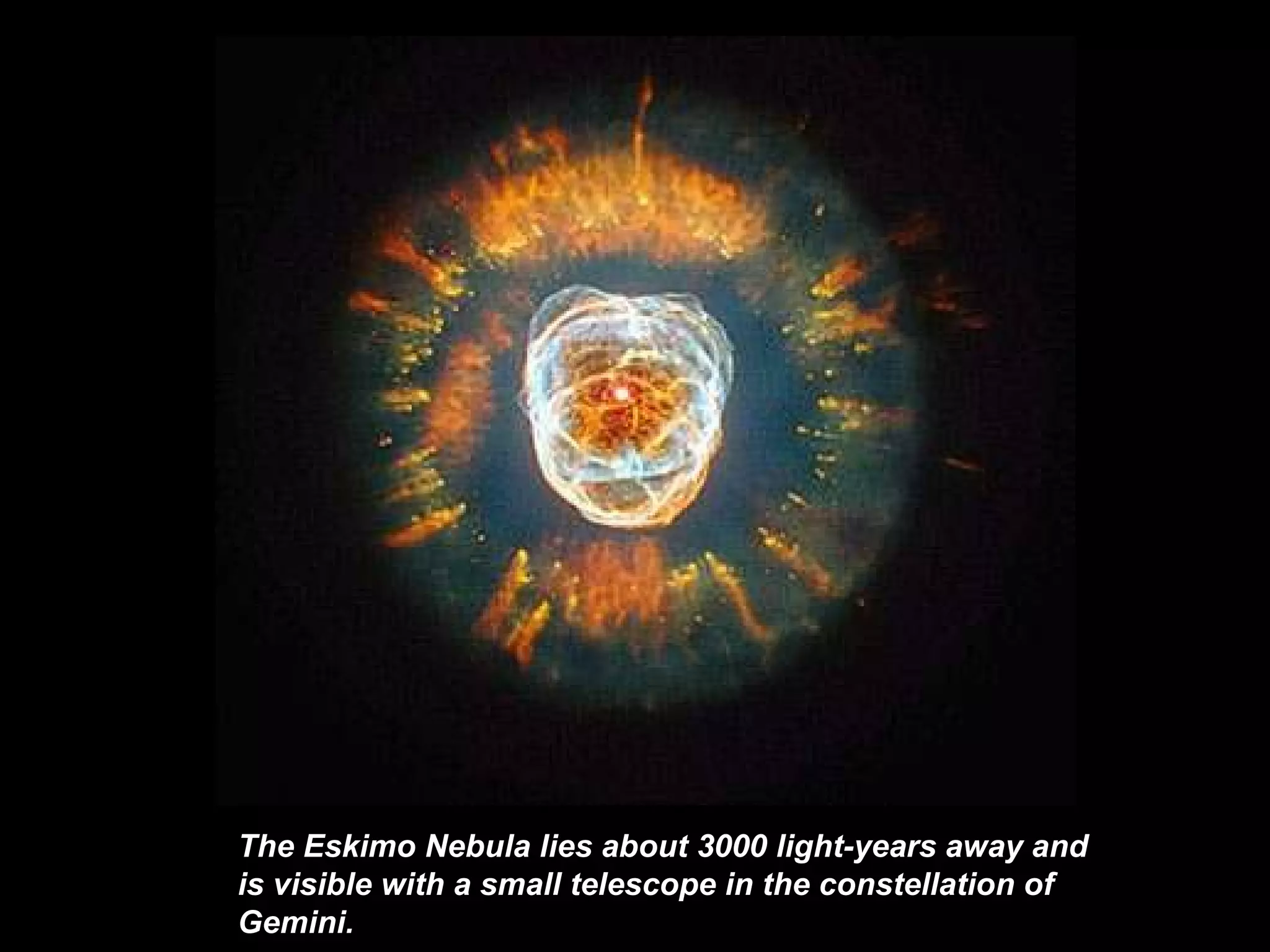
The Eskimo Nebula   lies about 3000  light - years  away and is visible with a small telescope in the constellation of Gemini.
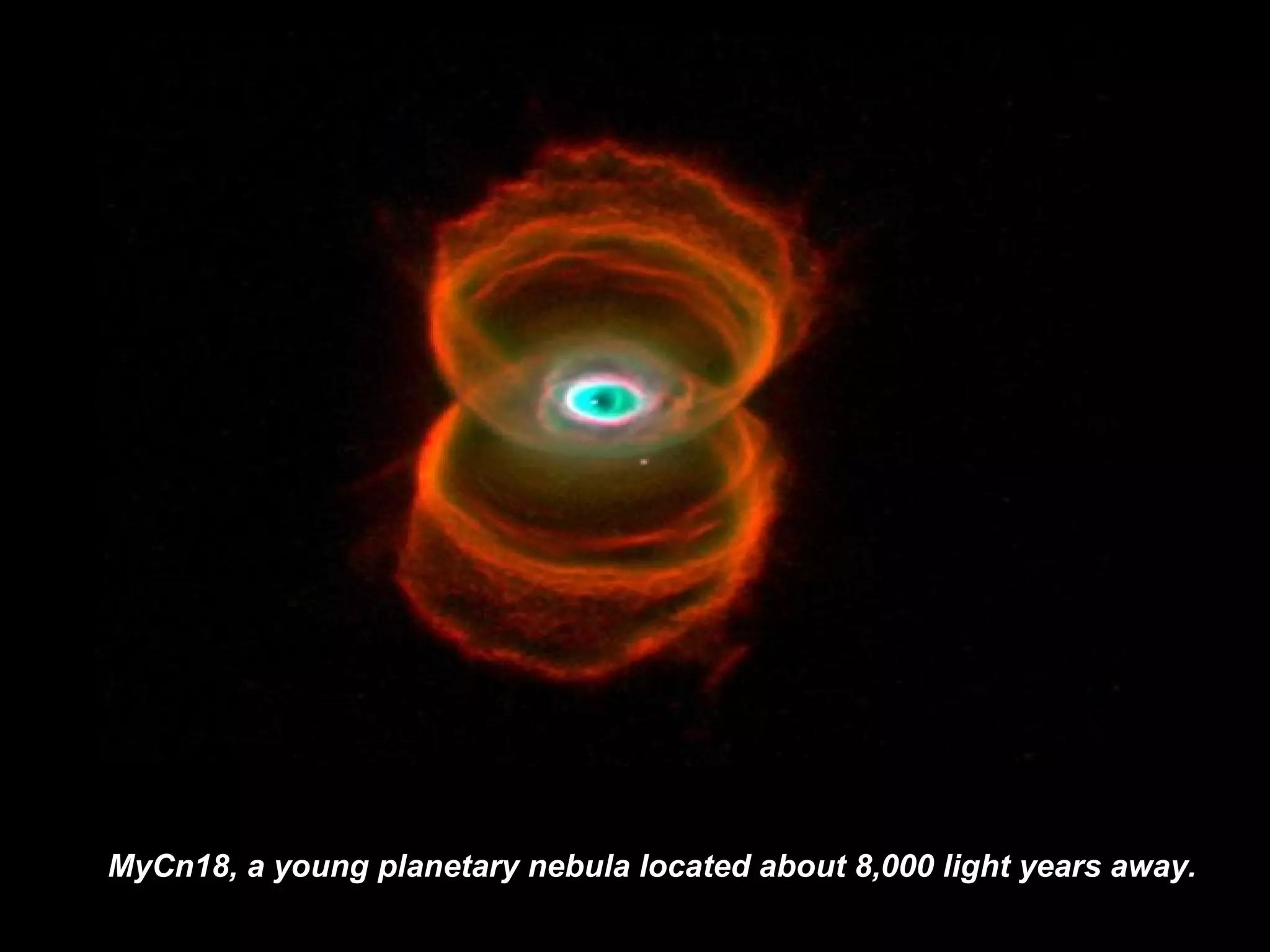
MyCn18, a young planetary nebula located about 8,000 light years away.
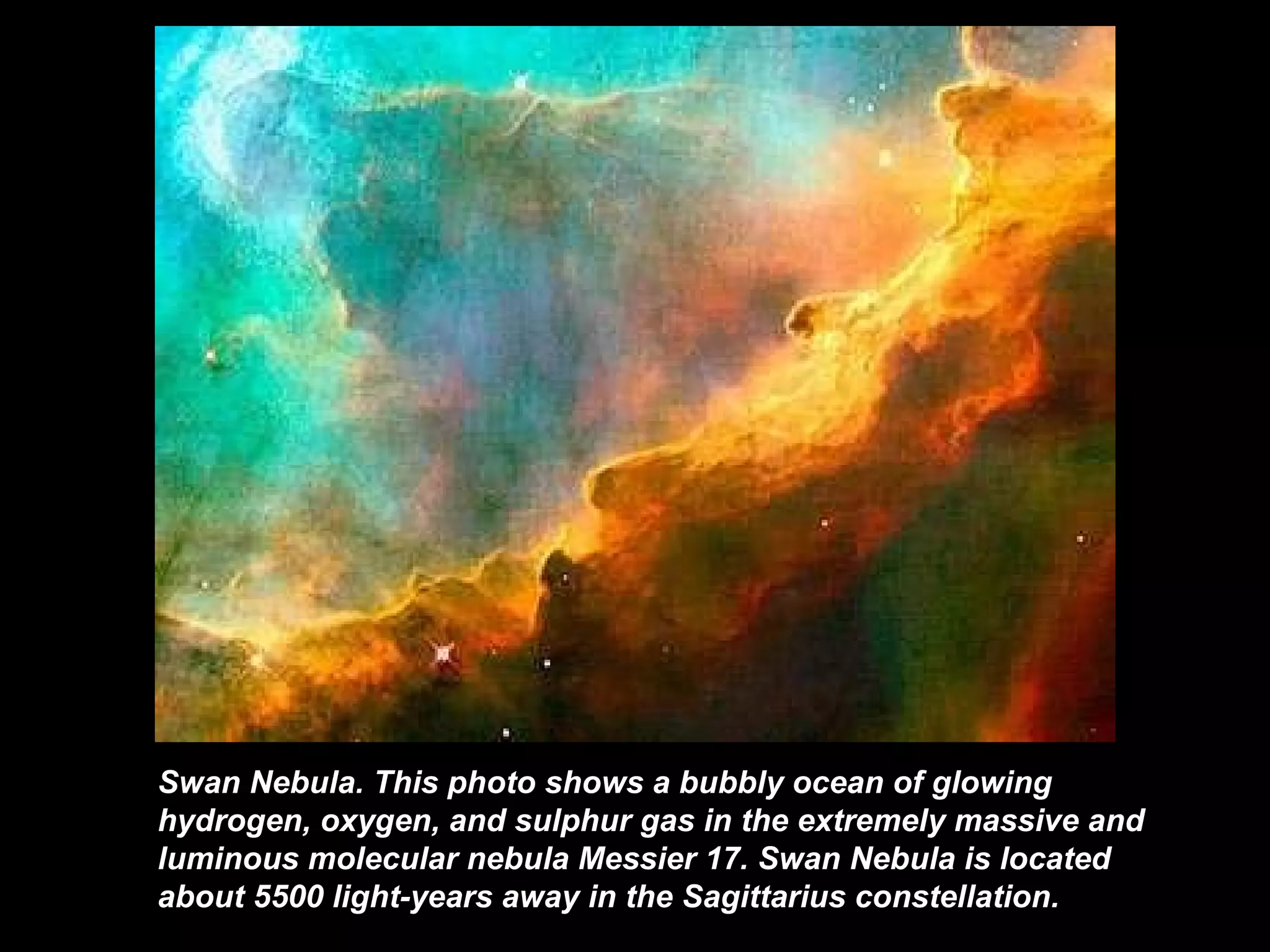
Swan Nebula.  This photo shows a bubbly ocean of glowing hydrogen, oxygen, and sulphur gas in the extremely massive and luminous molecular nebula Messier 17 .  Swan Nebula   is located about 5500 light-years away in the Sagittarius constellation.
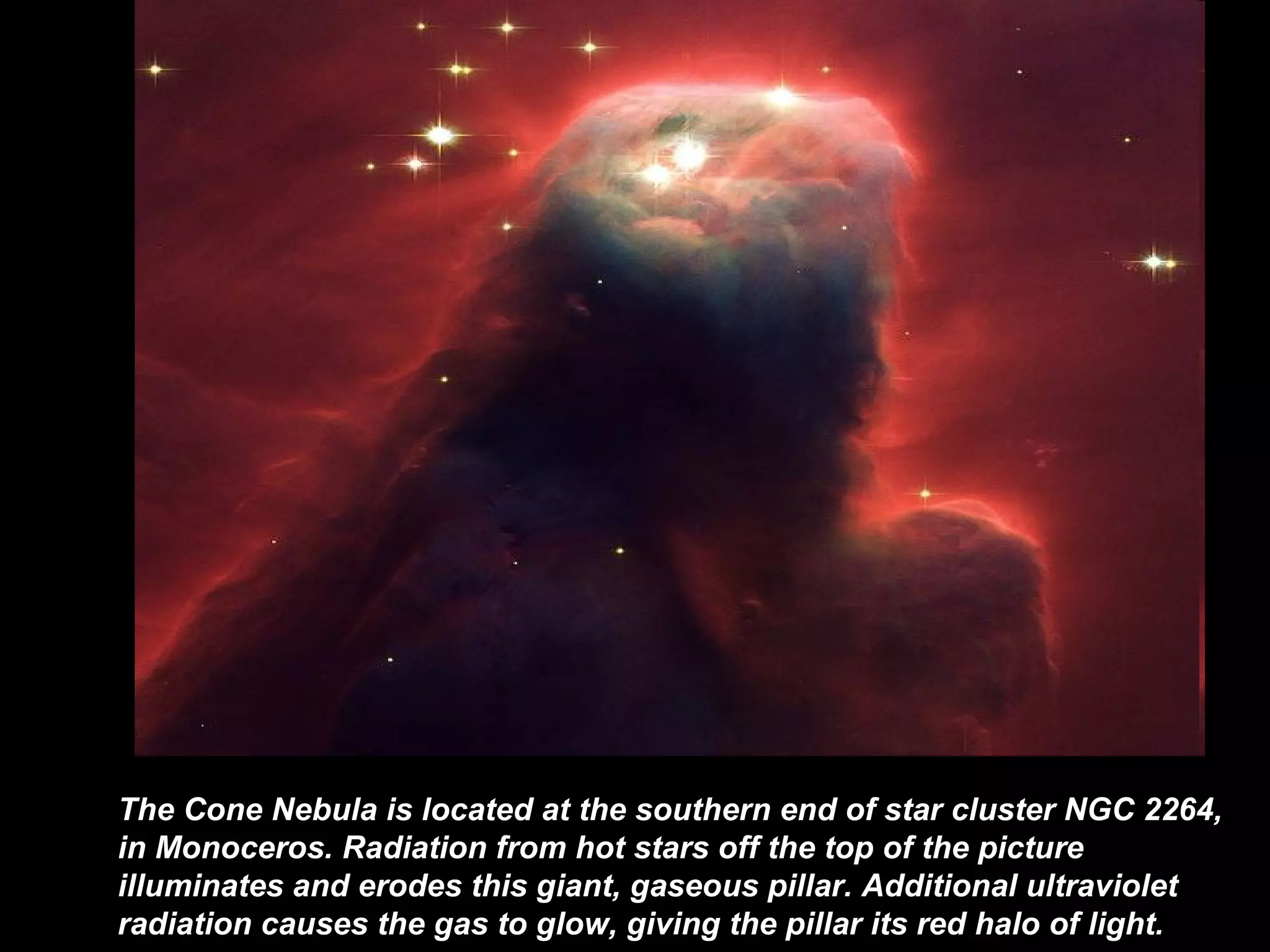
The  Cone Nebula   is located at the southern end of star cluster NGC 2264, in Monoceros.   Radiation from hot stars off the top of the picture illuminates and erodes this giant, gaseous pillar. Additional ultraviolet radiation causes the gas to glow, giving the pillar its red halo of light.
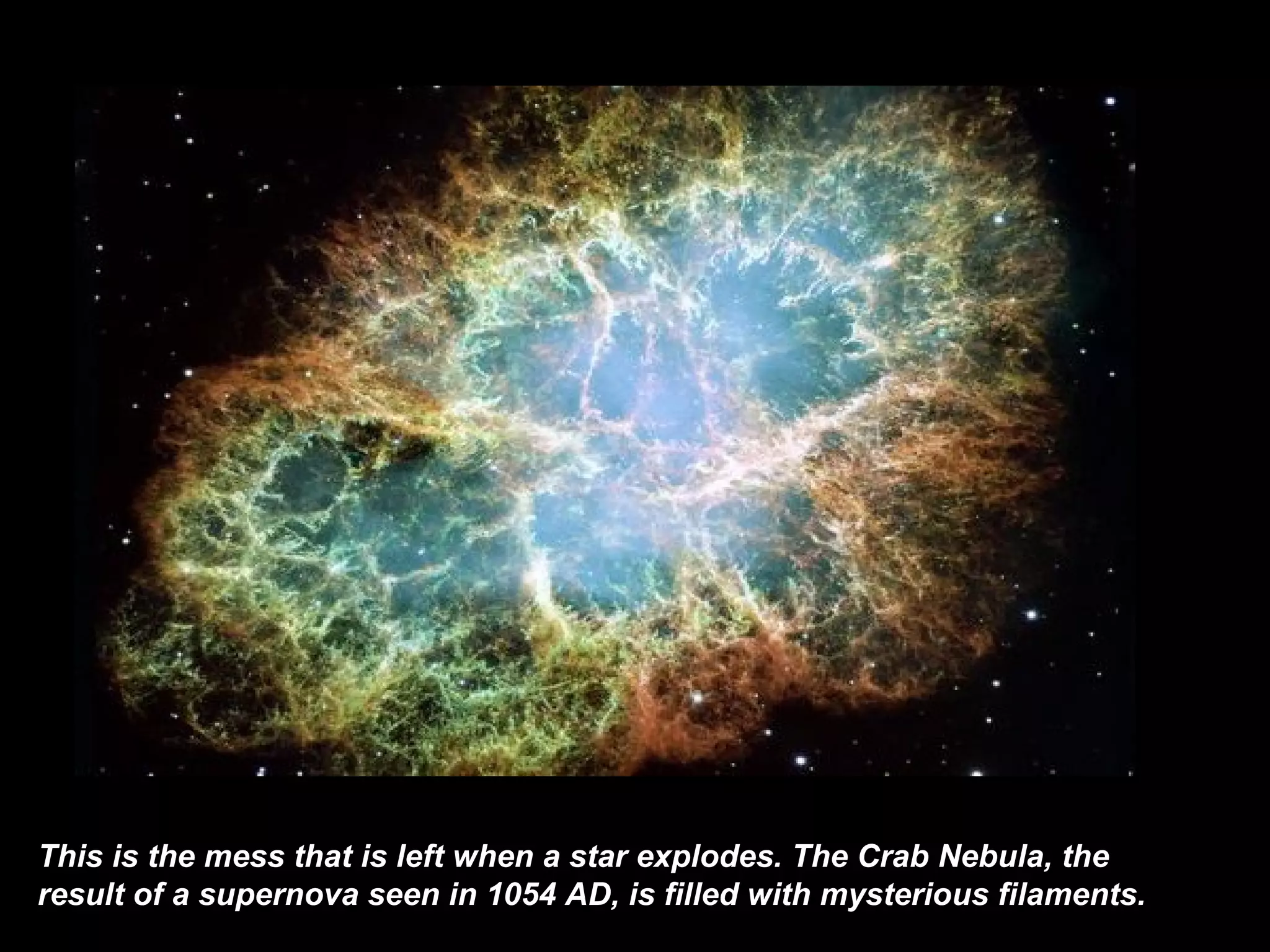
This is the mess that is left when a star explodes. The Crab Nebula, the result of a supernova seen in 1054 AD, is filled with mysterious filaments.
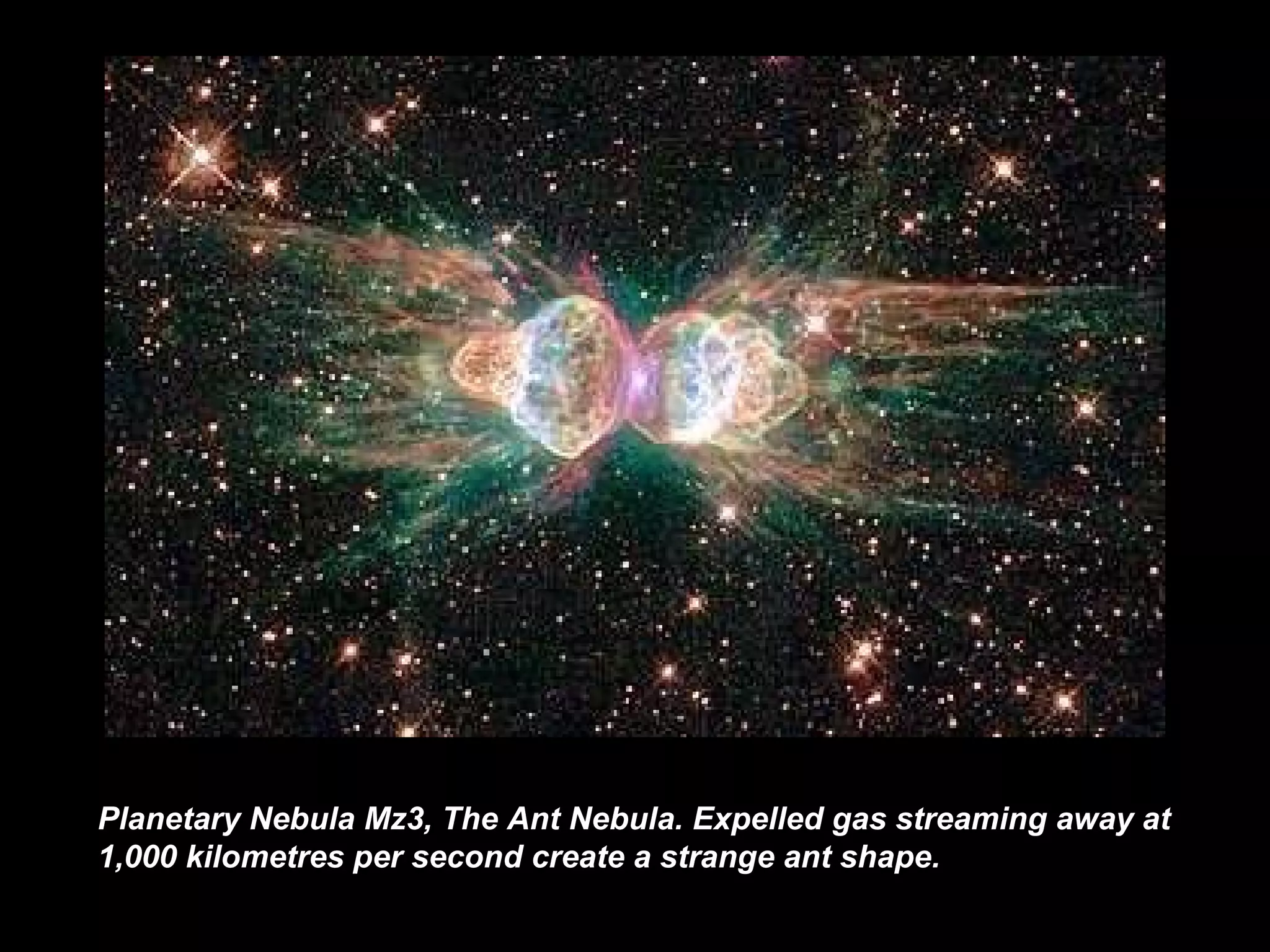
Planetary Nebula Mz3 ,  The Ant Nebula. Expelled gas streaming away at 1,000 kilometres per second create a strange ant shape.
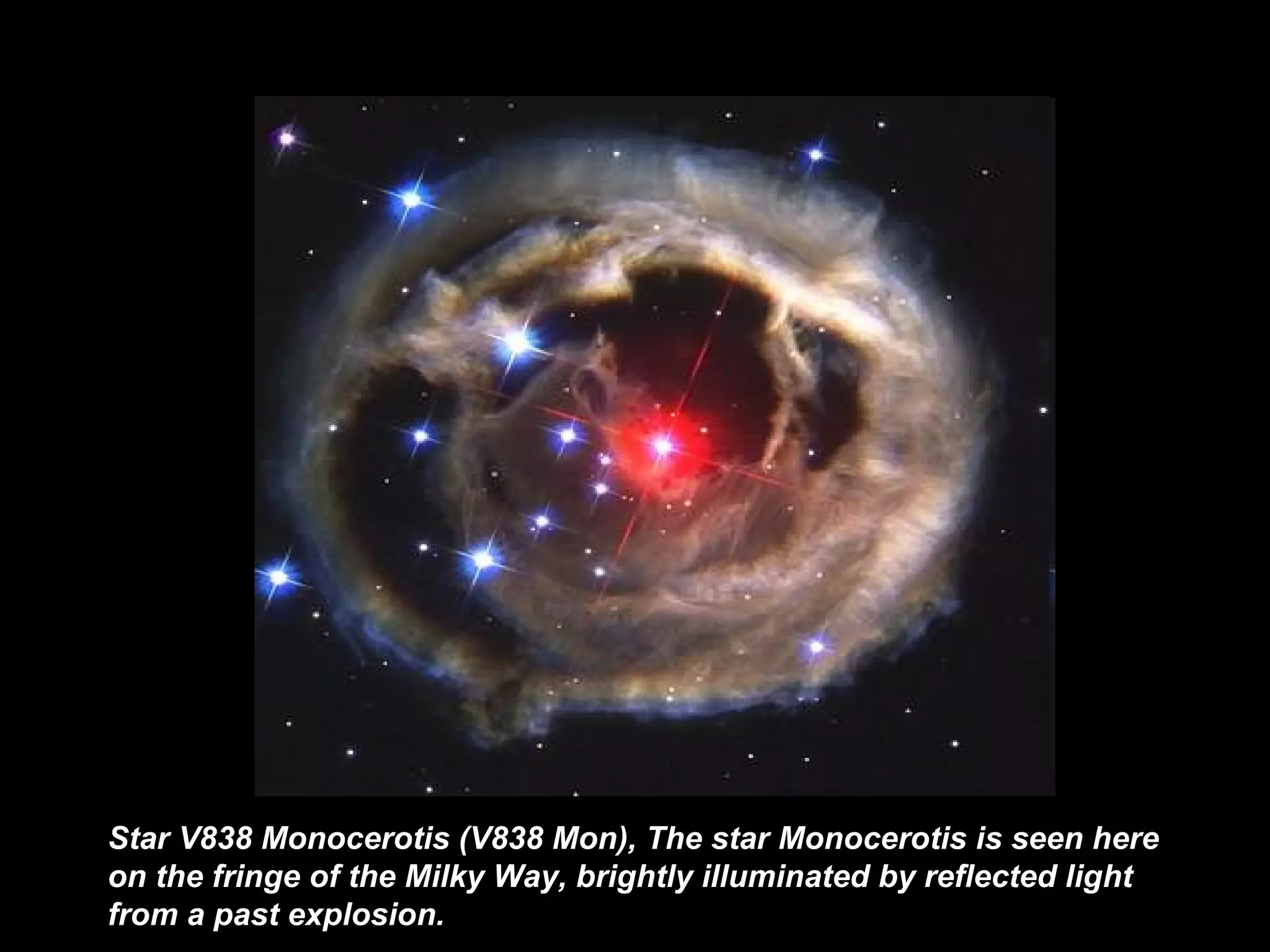
Star V838 Monocerotis   (V838 Mon) ,  The star Monocerotis is seen here on the fringe of the Milky Way, brightly illuminated by reflected light from a past explosion.
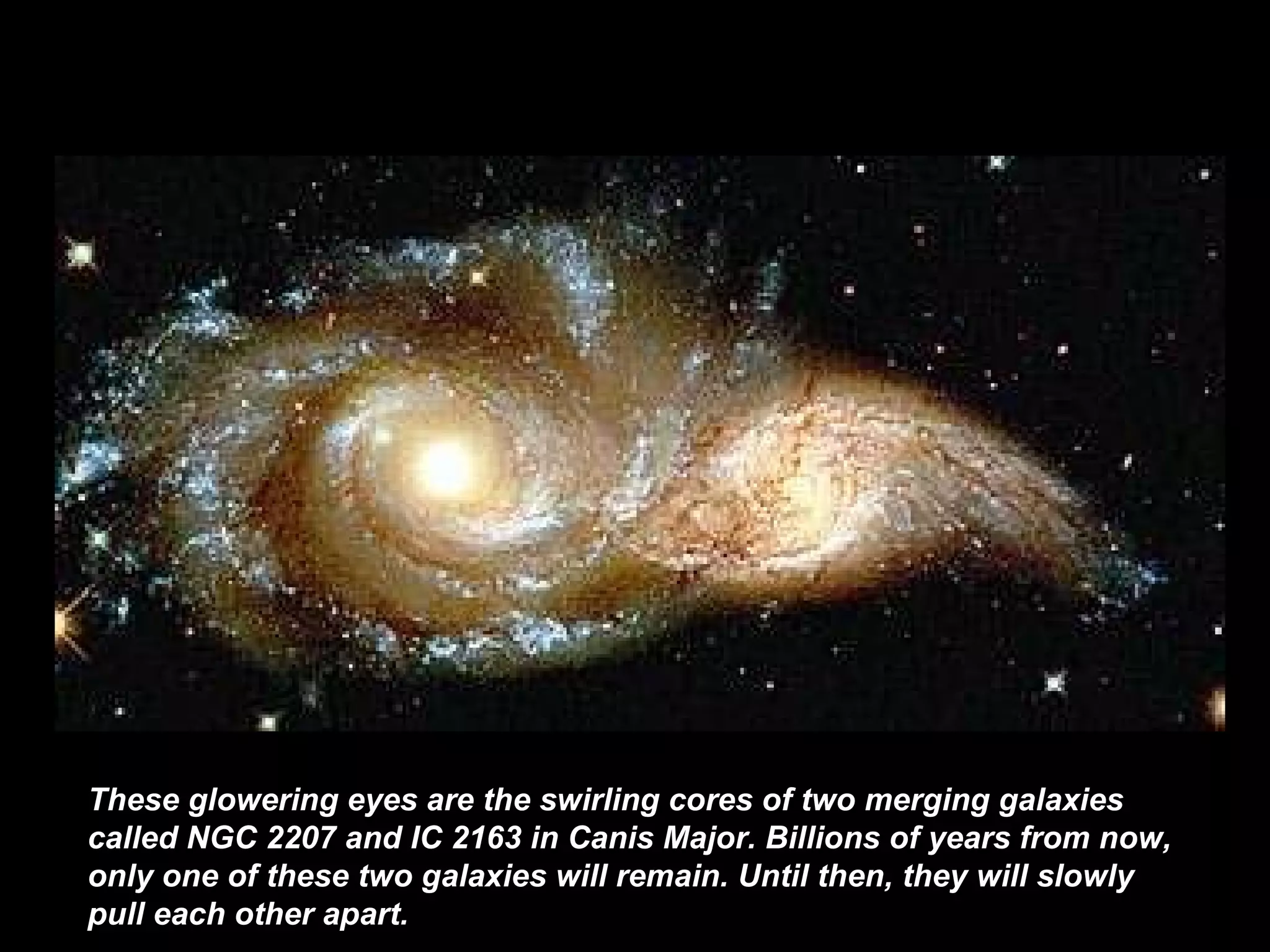
These glowering eyes are the swirling cores of two merging galaxies called NGC 2207 and IC 2163 in Canis Major. Billions of years from now, only one of these two galaxies will remain. Until then, they will slowly pull each other apart.
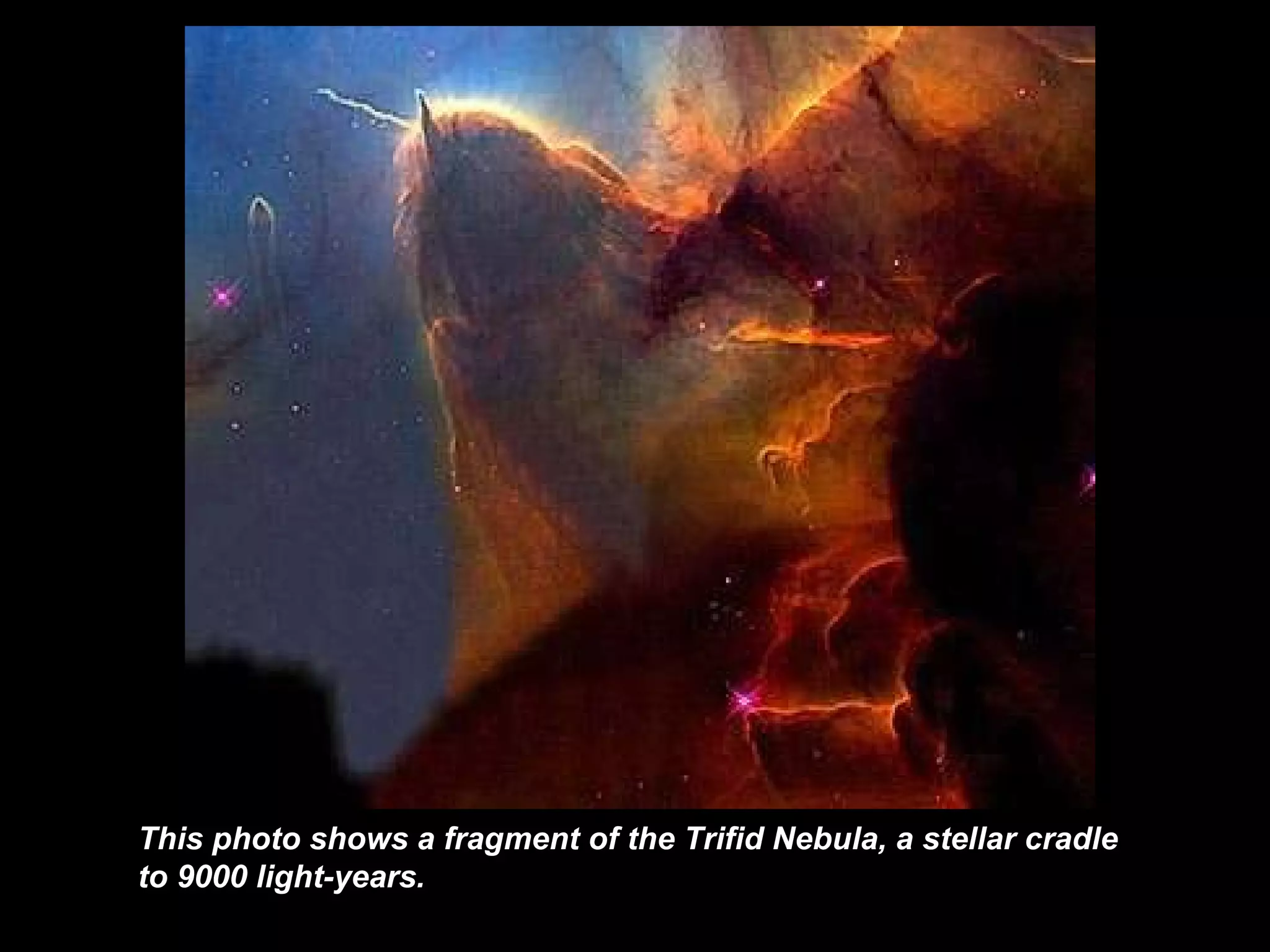
This photo shows  a fragment of the Trifid Nebula, a stellar cradle to 9000 light-years.
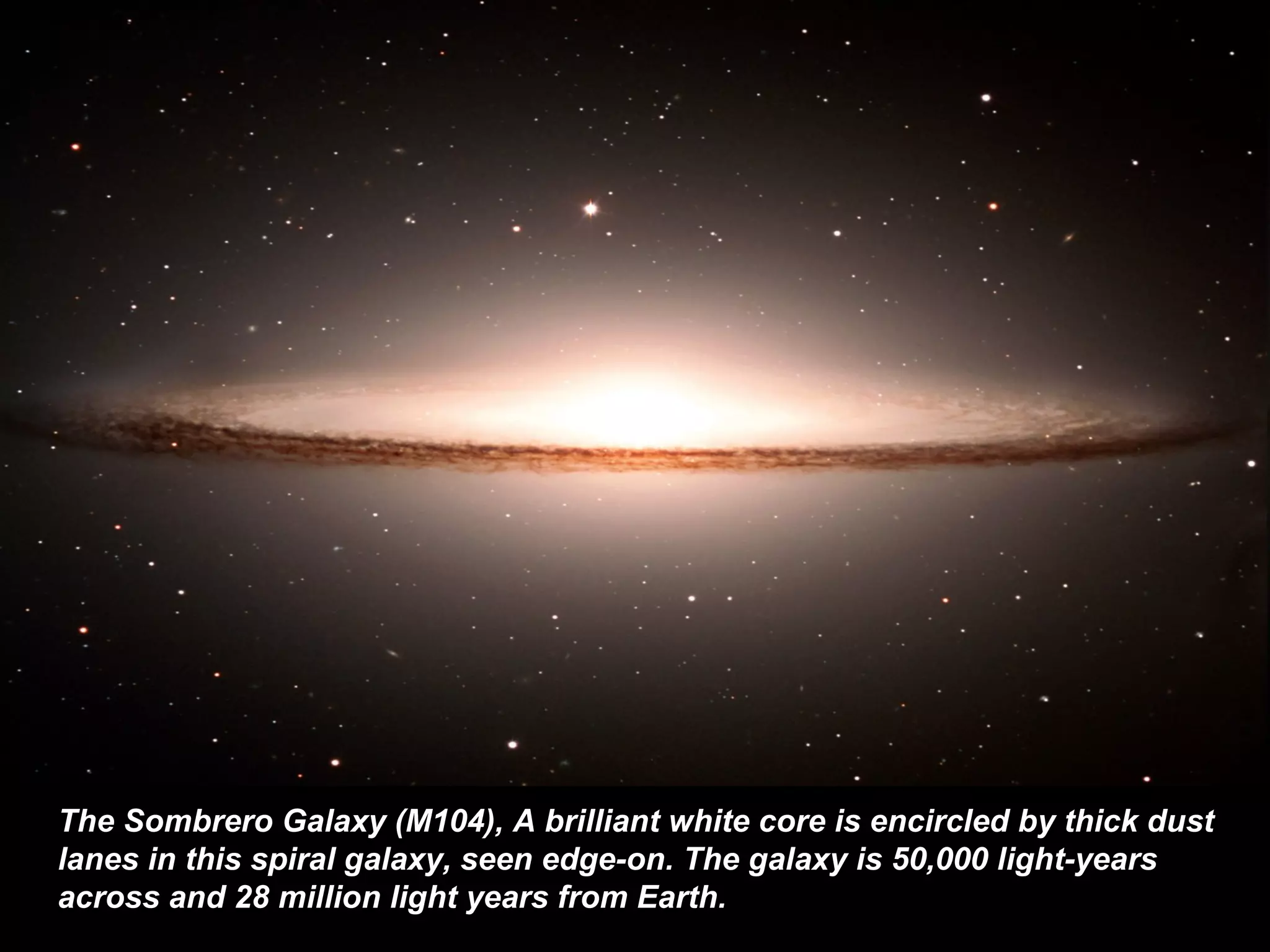
The Sombrero Galaxy (M104) ,   A brilliant white core is encircled by thick dust lanes in this spiral galaxy, seen edge-on. The galaxy is 50,000 light-years across and 28 million light years from Earth.
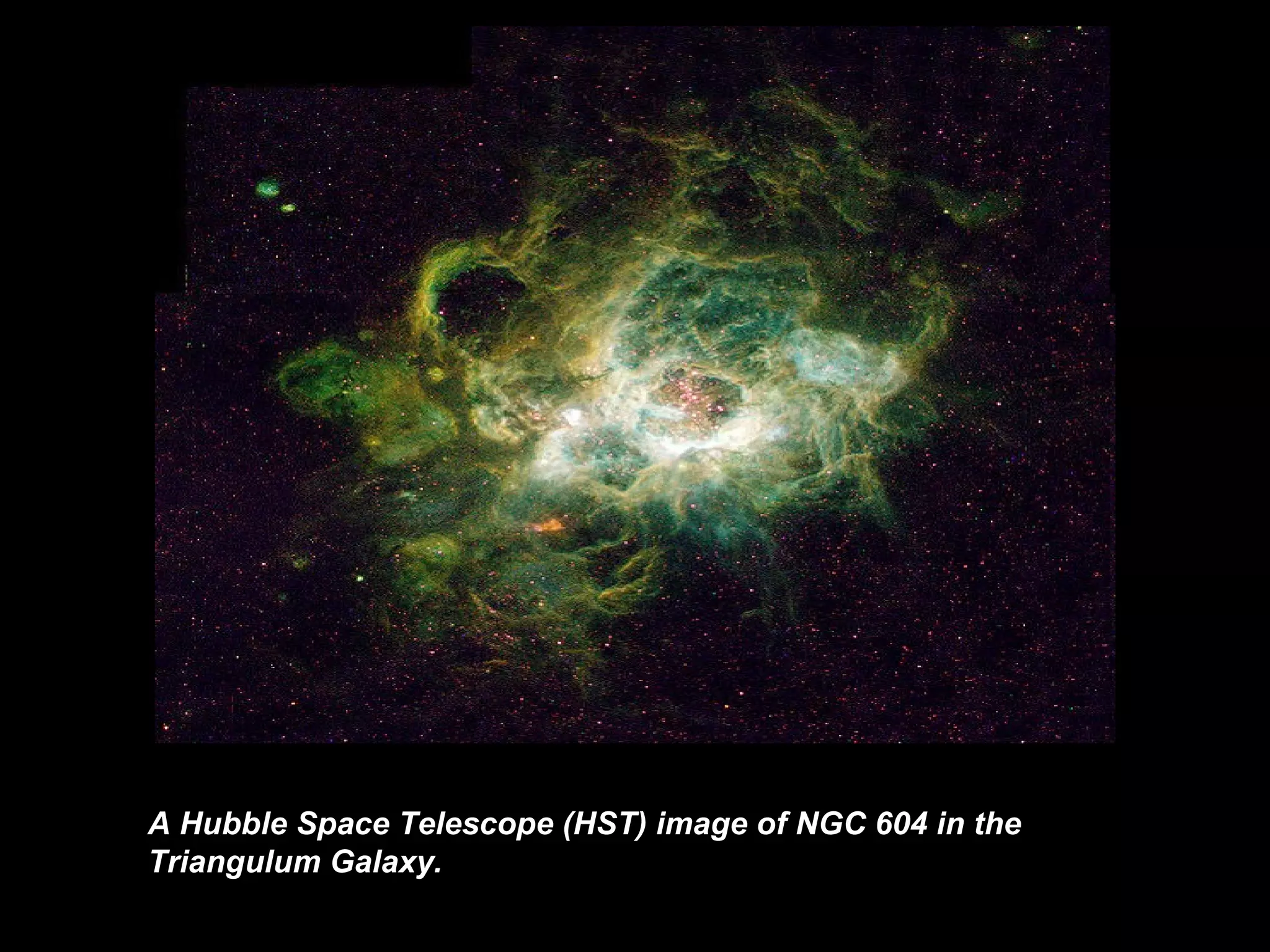
A  Hubble   Space  Telesco pe  (HST) image of NGC 604   in the Triangulum Galaxy .
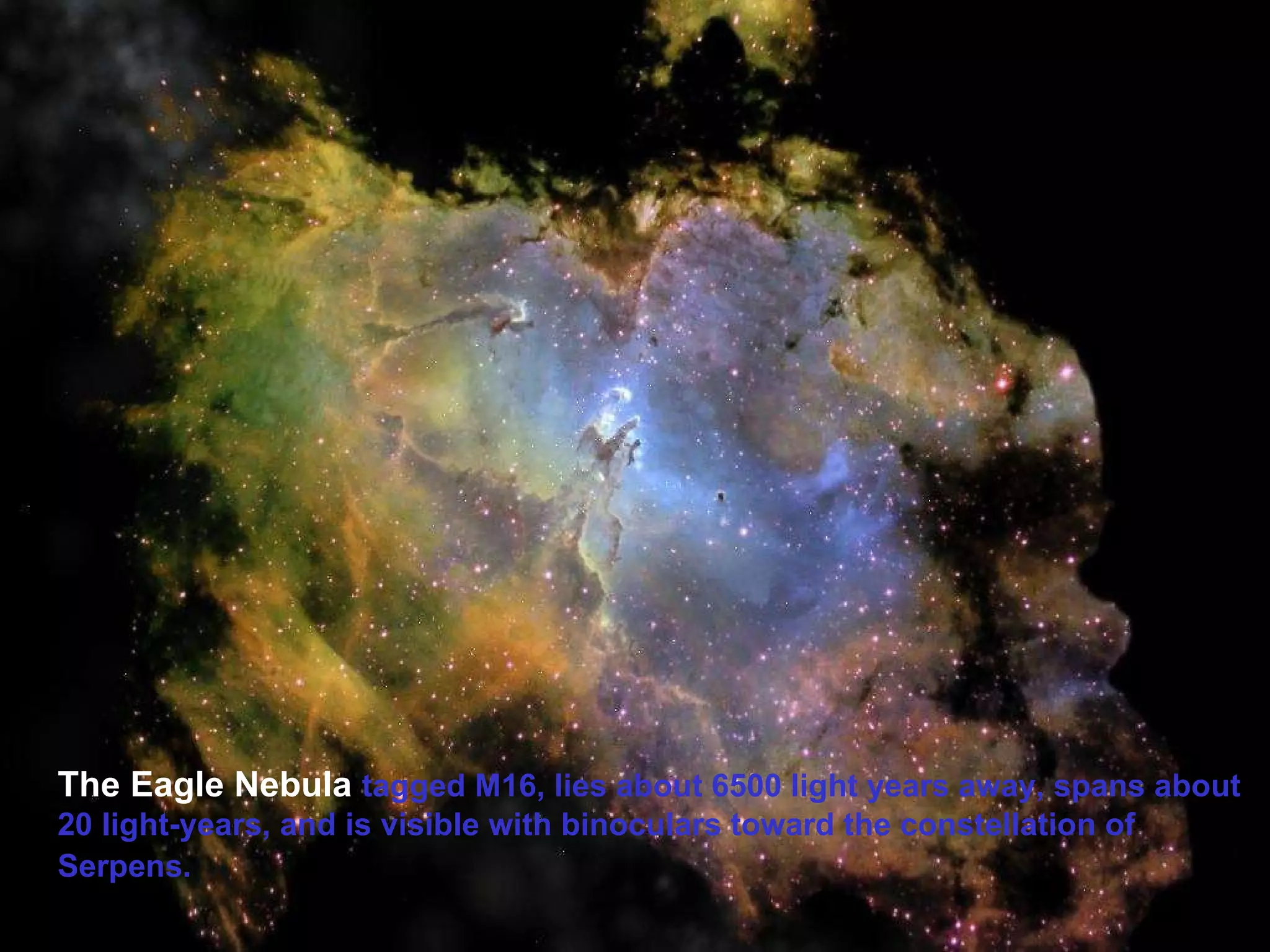
The Eagle Nebula   tagged M16, lies about 6500 light years away, spans about 20 light-years, and is visible with binoculars toward the constellation of Serpens.
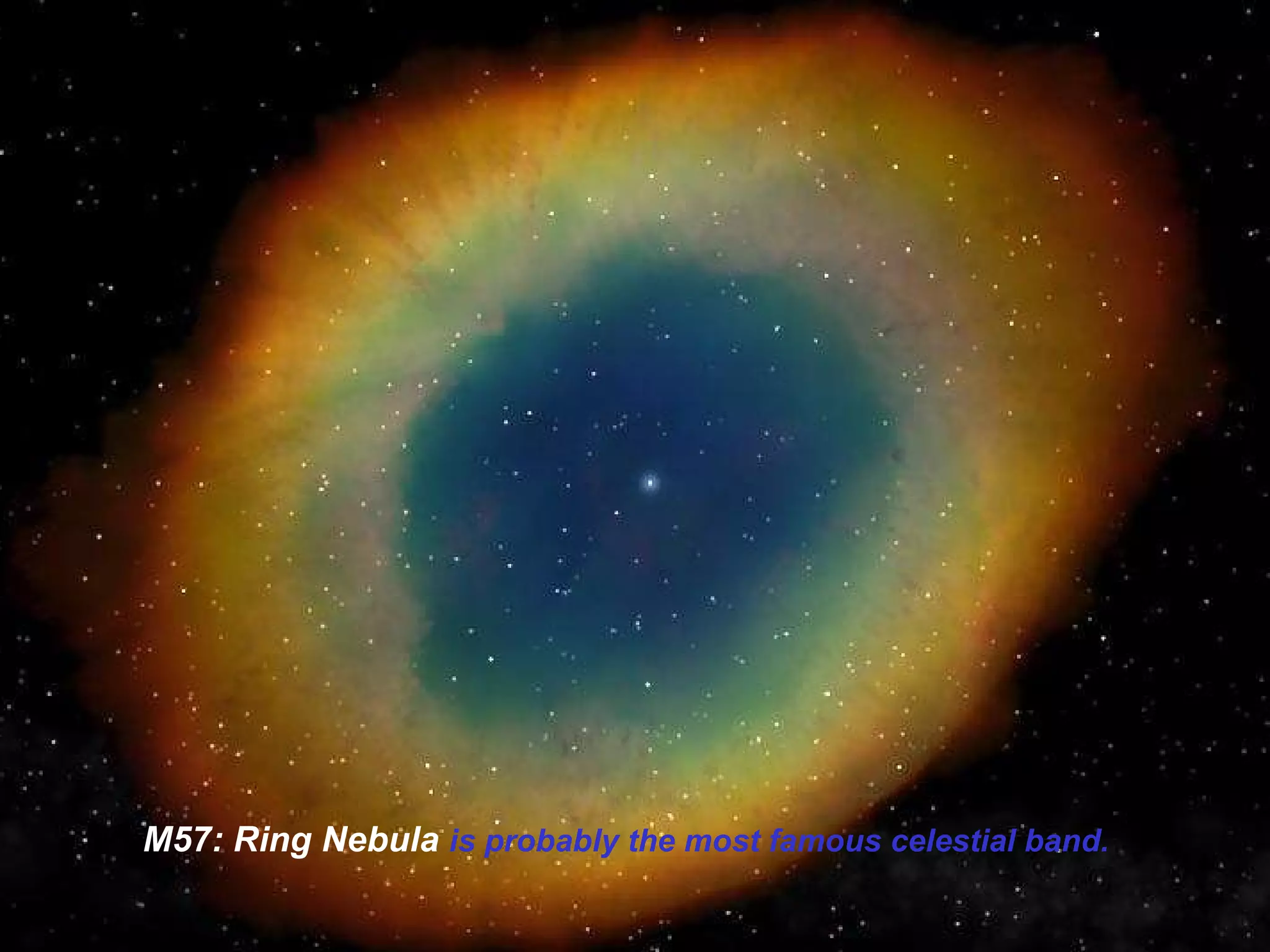
M57:  Ring Nebula   is probably the most famous celestial band.
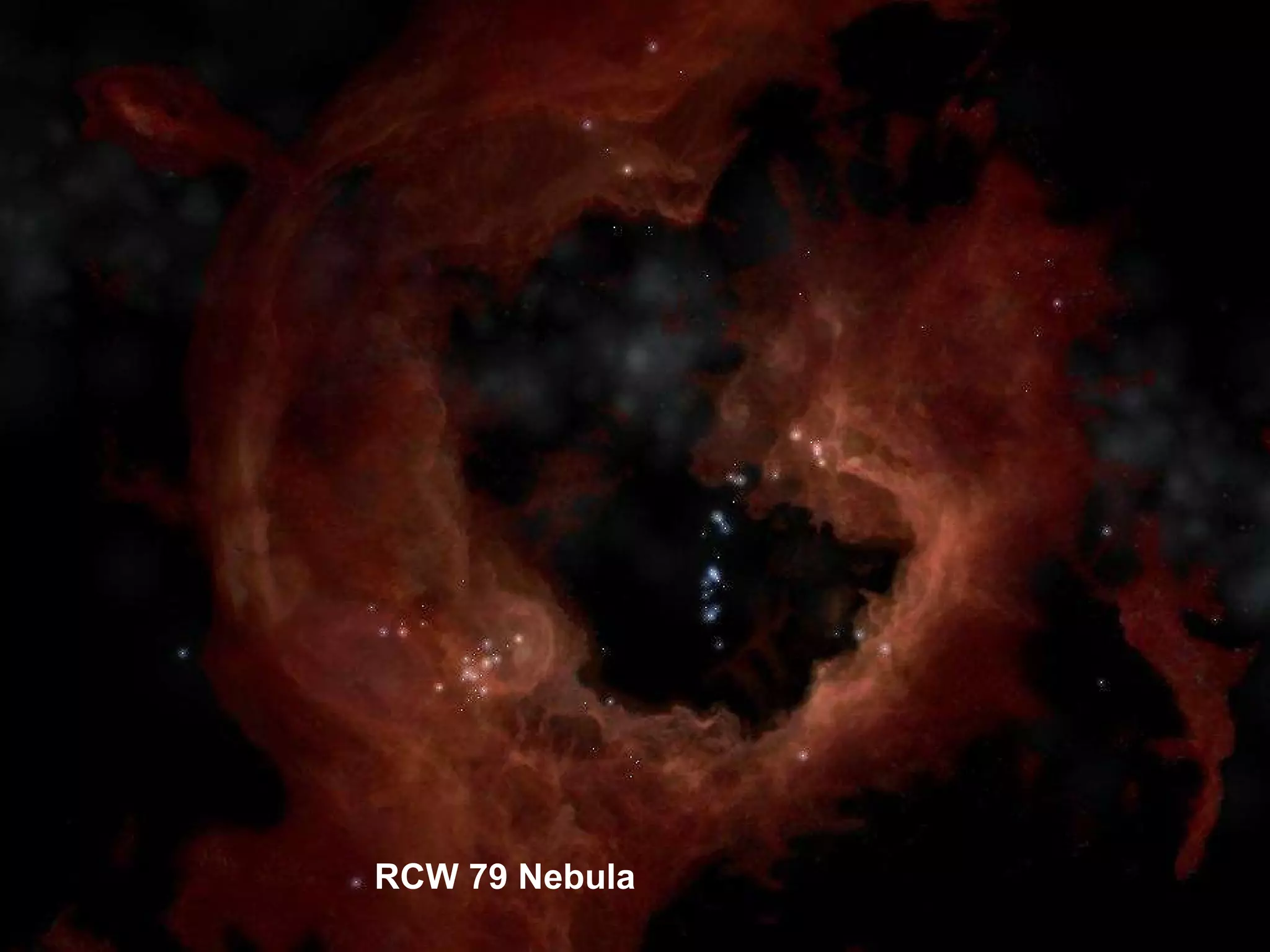
RCW 79  Nebula
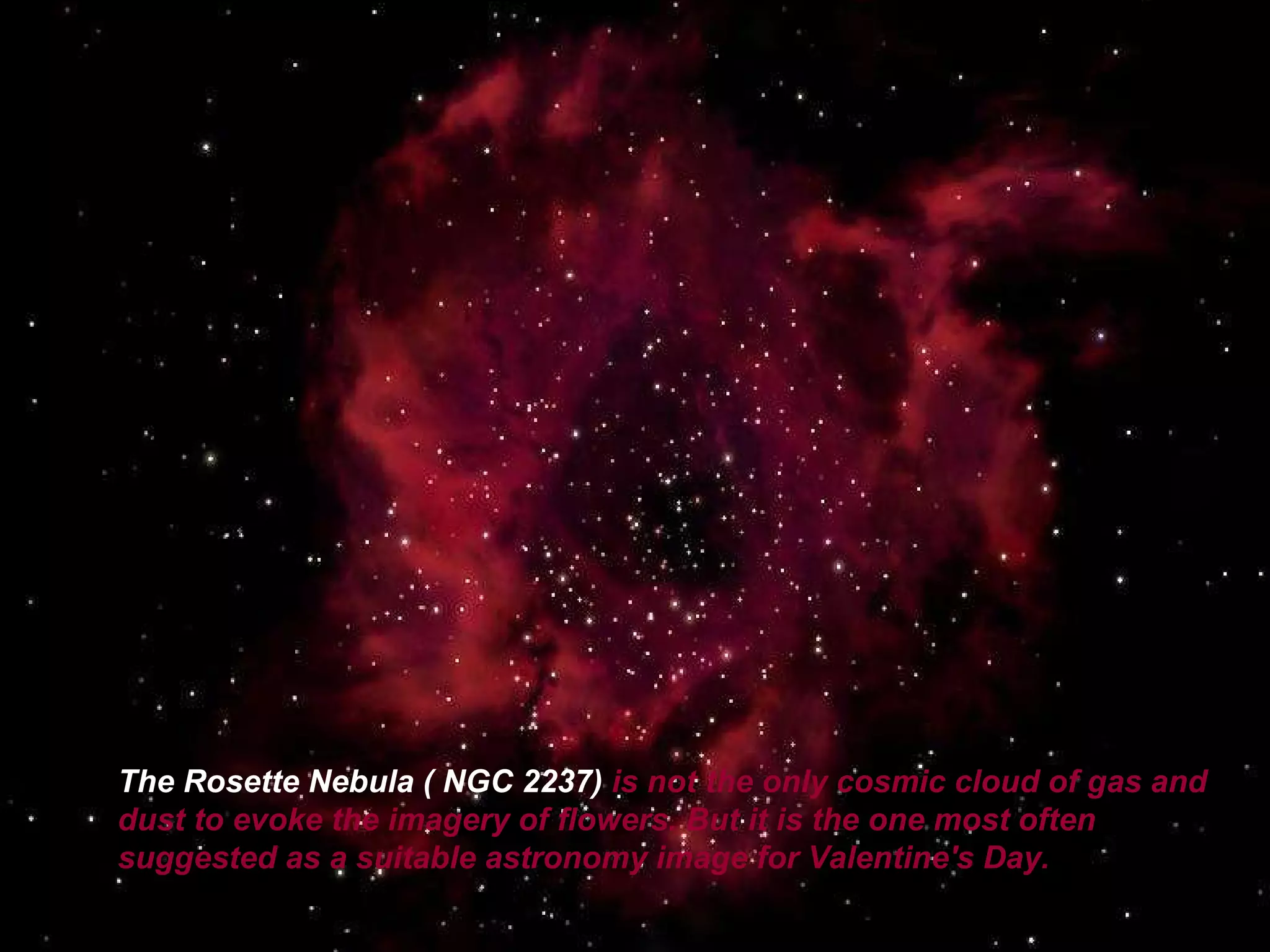
The Rosette Nebula ( NGC 2237)   is not the only cosmic cloud of gas and dust   to evoke the imagery of flowers. But it is the one most often suggested as a suitable astronomy image for Valentine's Day.
The Orion Nebula   (also known as Messier 42, M42, or NGC 1976) is a diffus e  nebula situated south of Orion's Belt. It is one of the brightest nebulae, and is visible to the naked eye in the night sky. M42 is located at a distance of 1,344±20 light years .
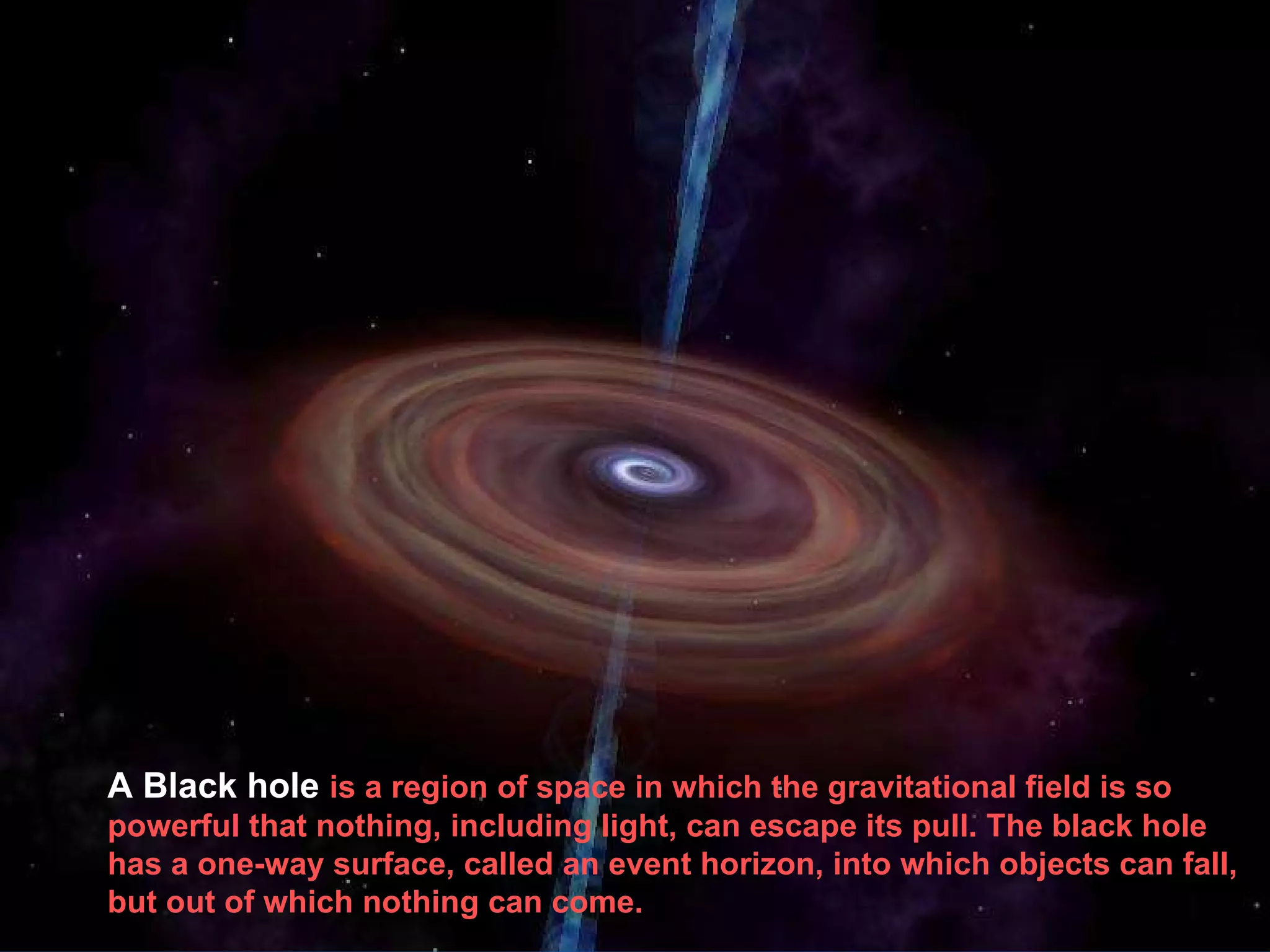
A Black hole   is a region of space in which the gravitational field is so powerful that nothing, including light, can escape its pull. The black hole has a one-way surface, called an event horizon, into which objects can fall, but out of which nothing can come.
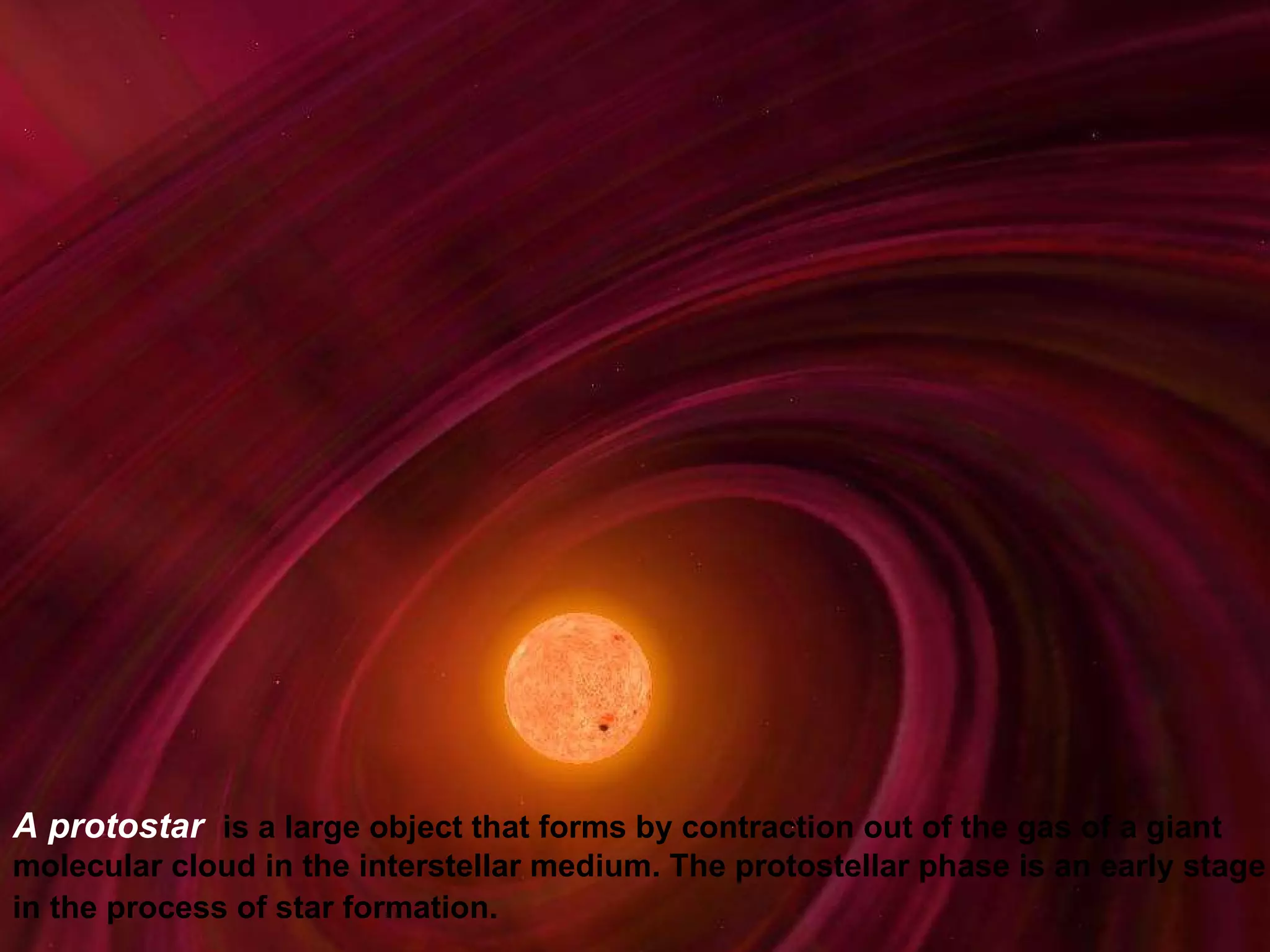
A protostar   is a large object that forms by contraction out of the gas of a giant molecula r  cloud in the interstellar medium. The protostellar phase is an early stage in the process of star formation.
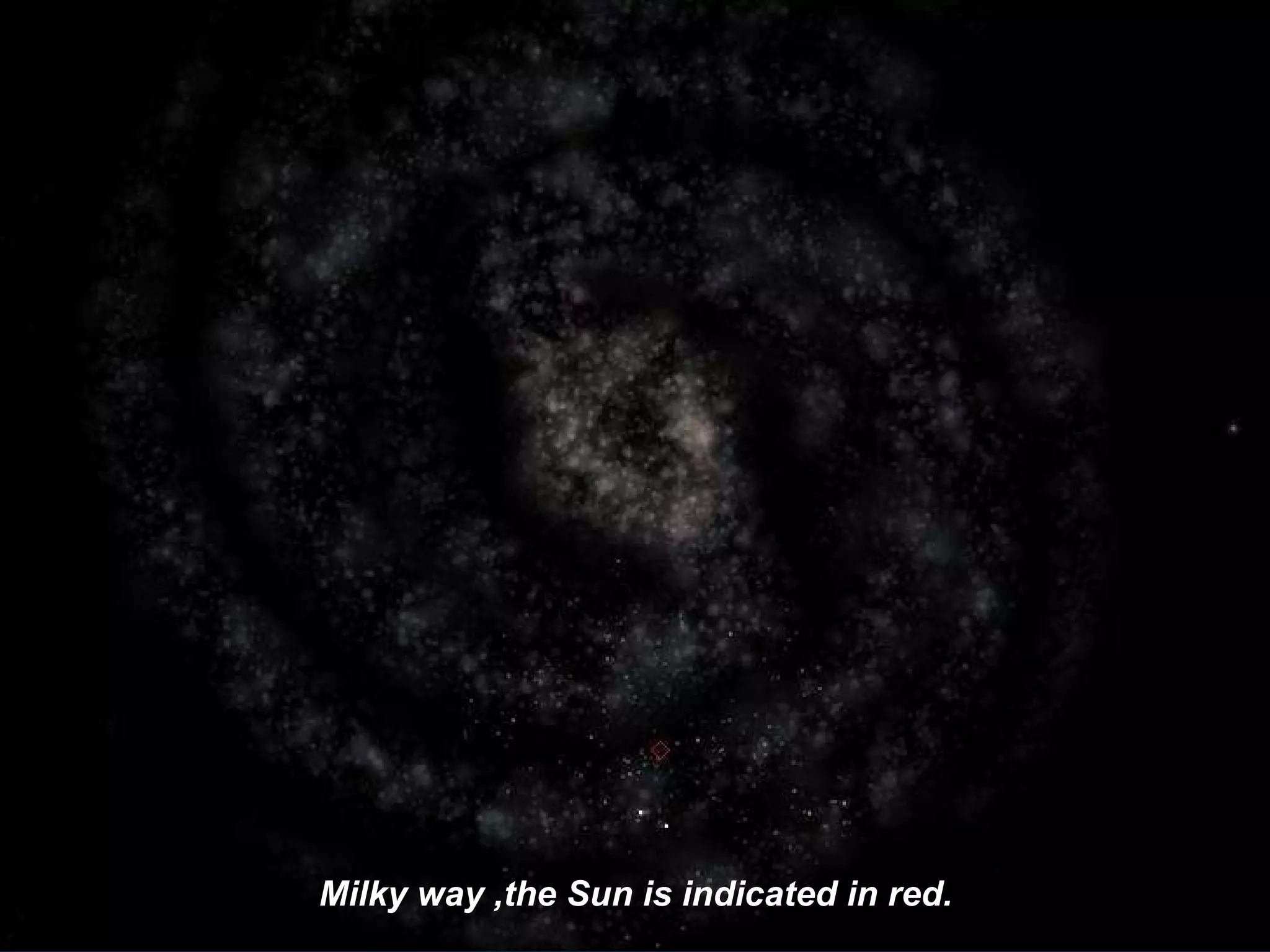
Milky way ,the Sun is indicated in red.
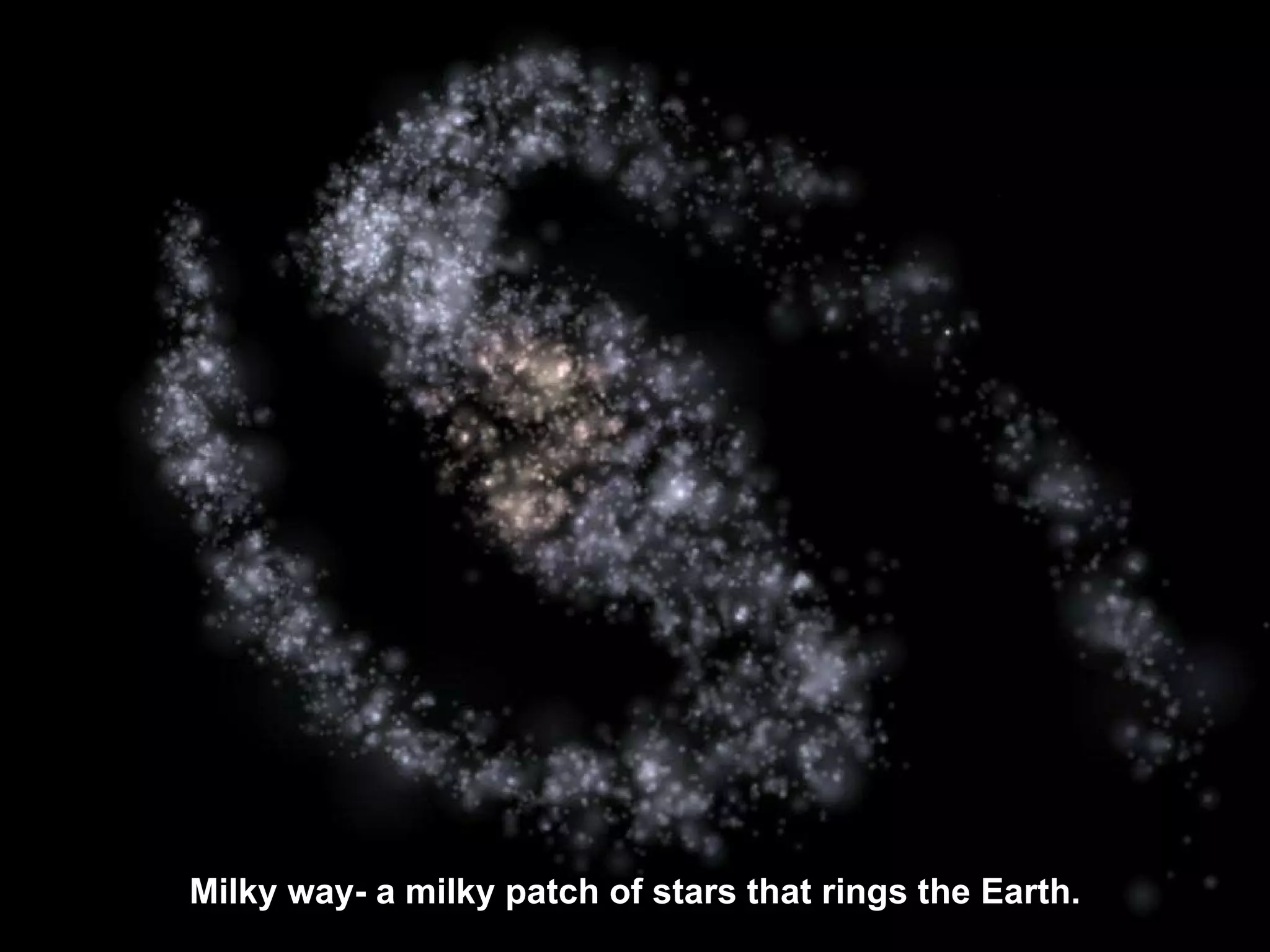
Milky way-   a milky patch of stars that rings the Earth.
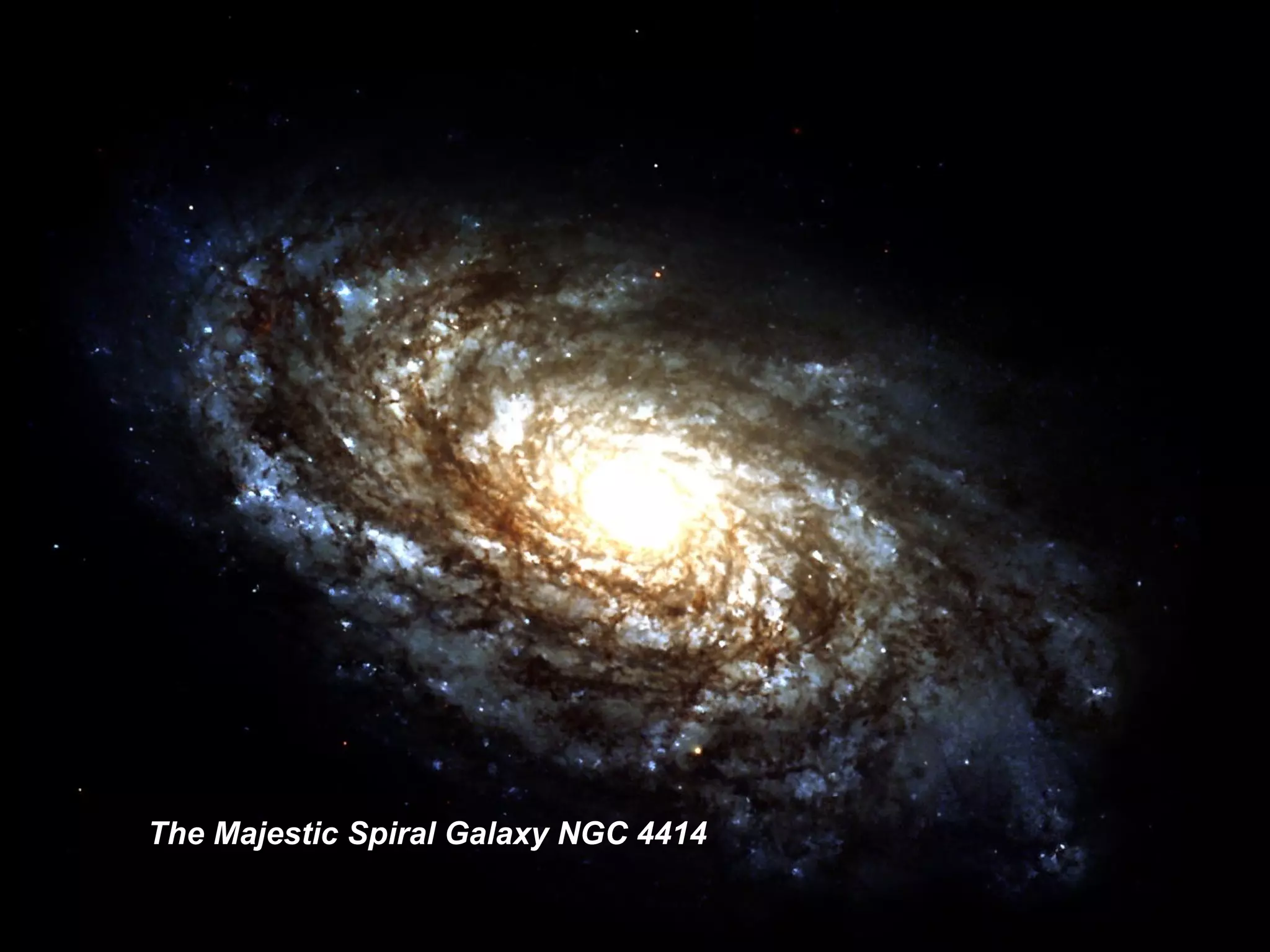
The  Majestic Spiral Galaxy NGC 4414
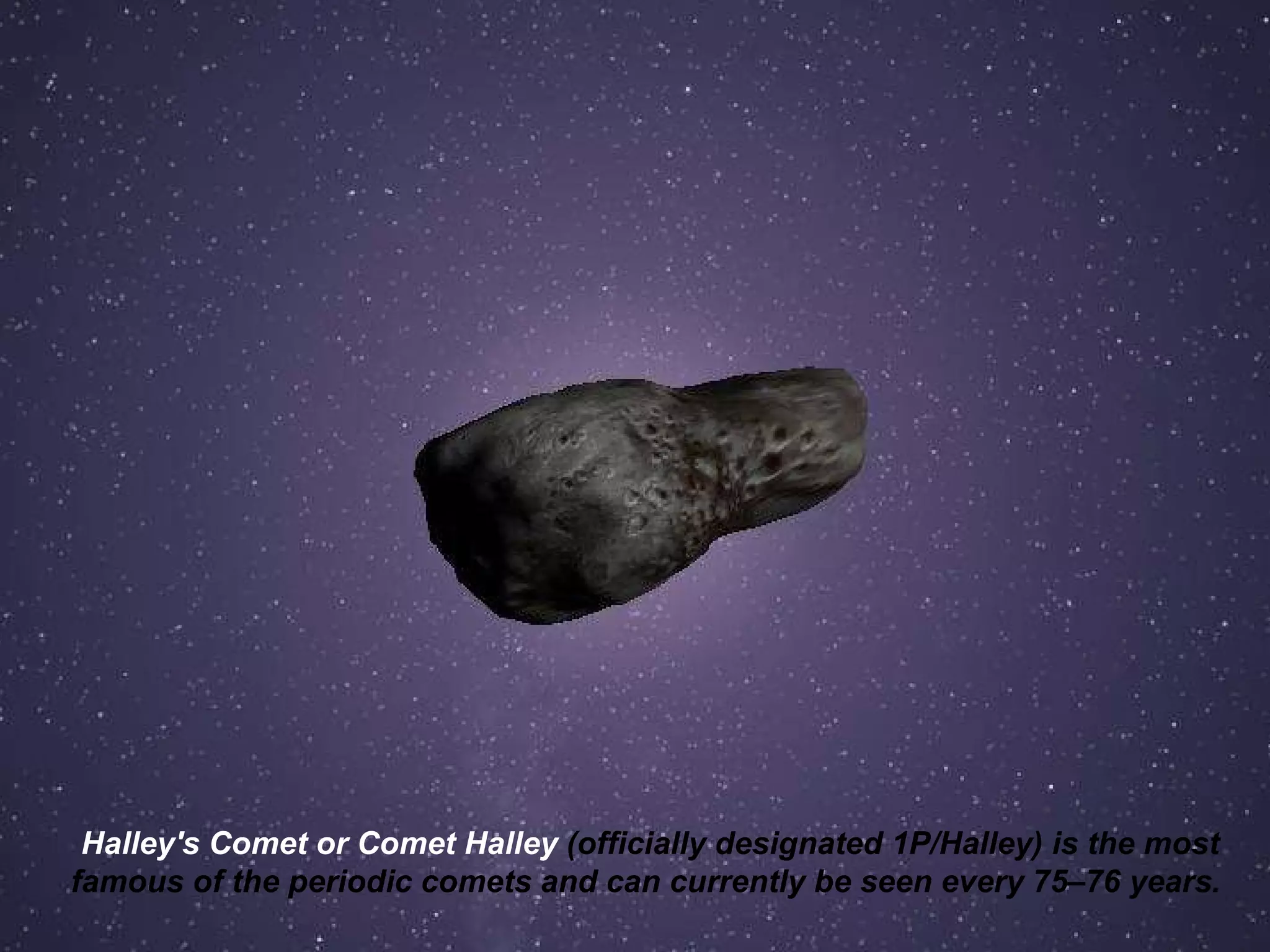
Halley's Comet or Comet Halley  (officially designated 1P/Halley) is the most famous of the periodic comets and can currently be seen every 75–76 years .
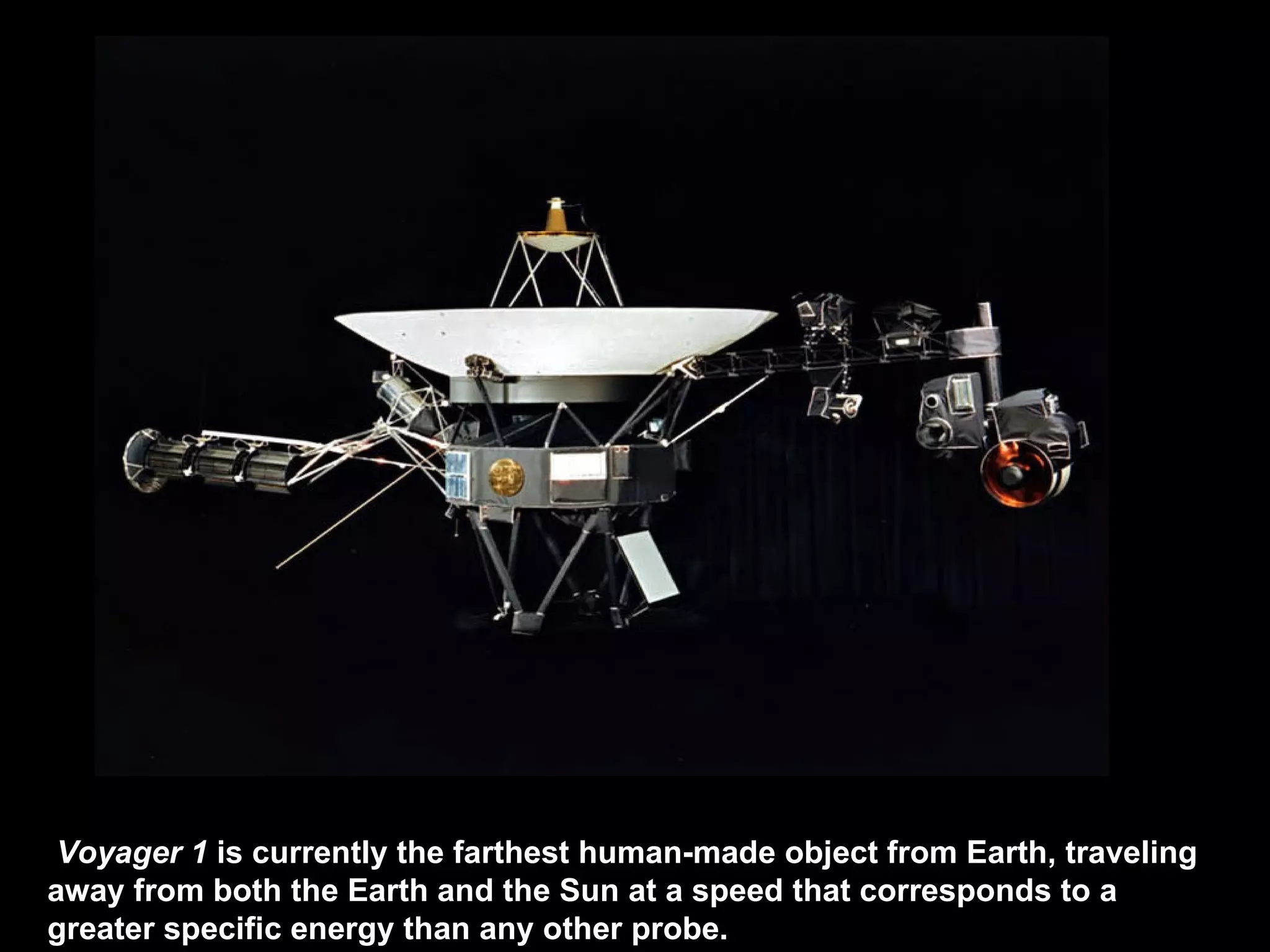
Voyager 1   is currently the farthest human-made object from Earth, traveling away from both the Earth and the Sun at a speed that corresponds to a greater specific energy than any other probe .
 
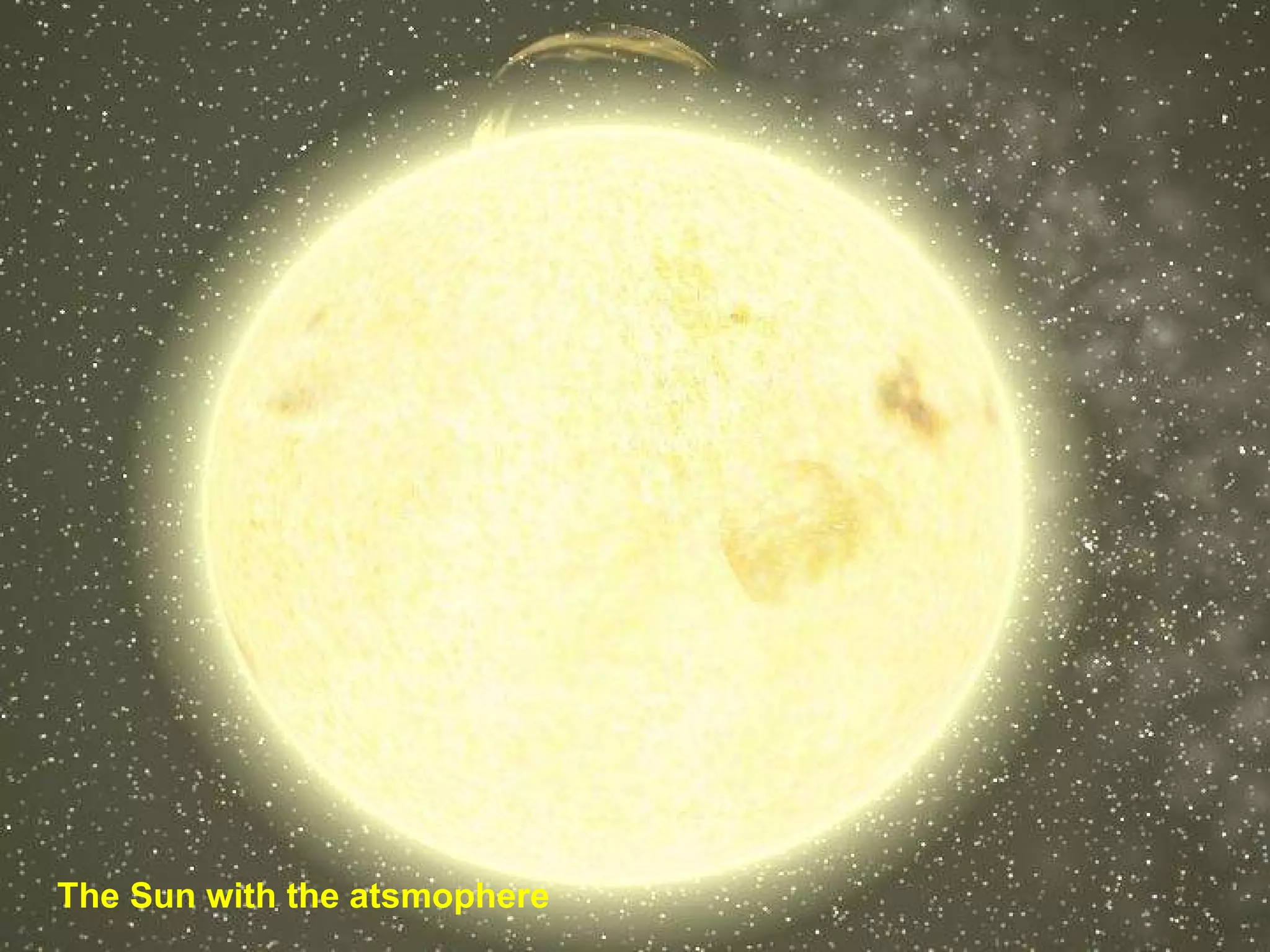
The Sun with the atsmophere
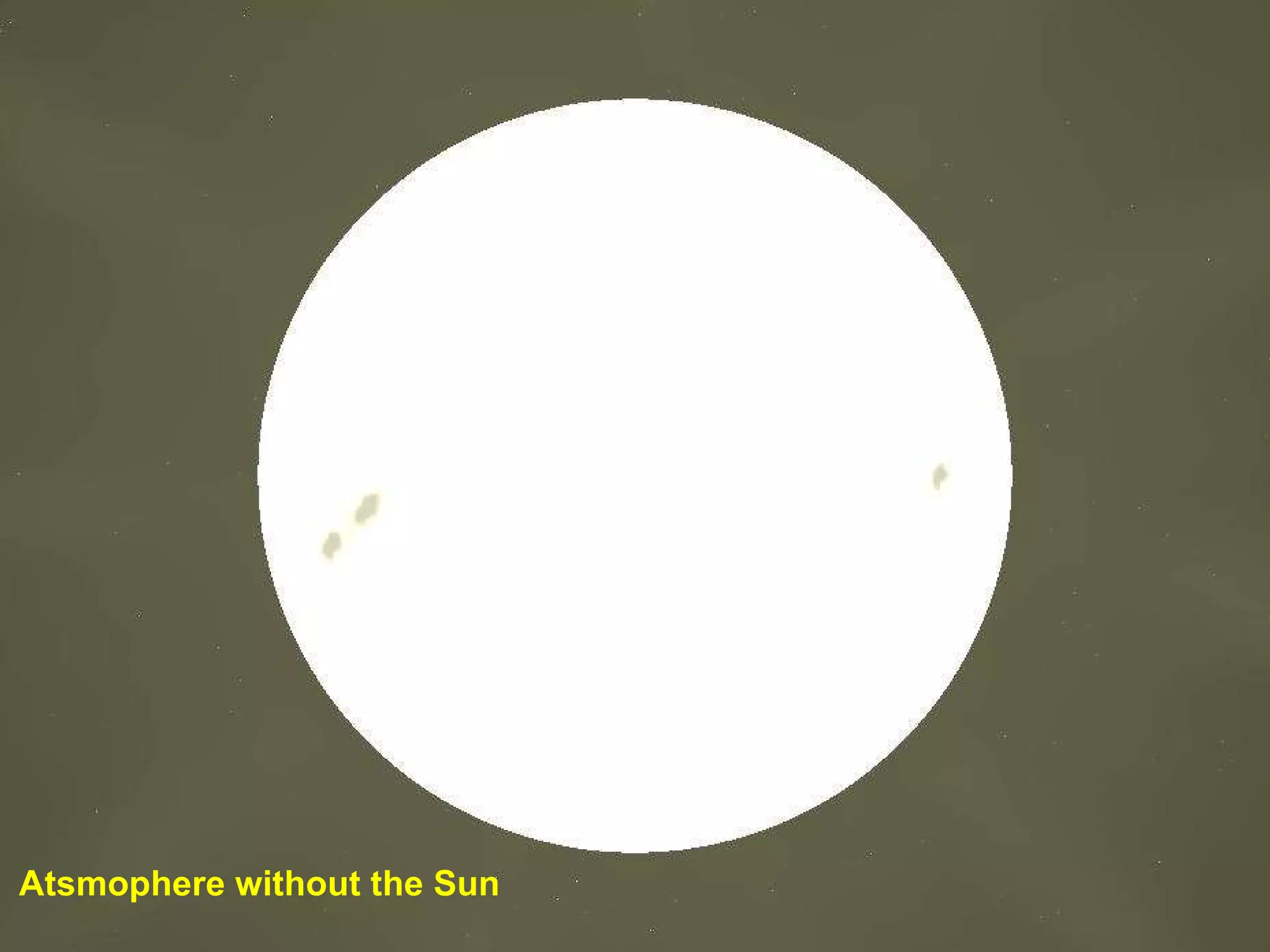
Atsmophere without the Sun
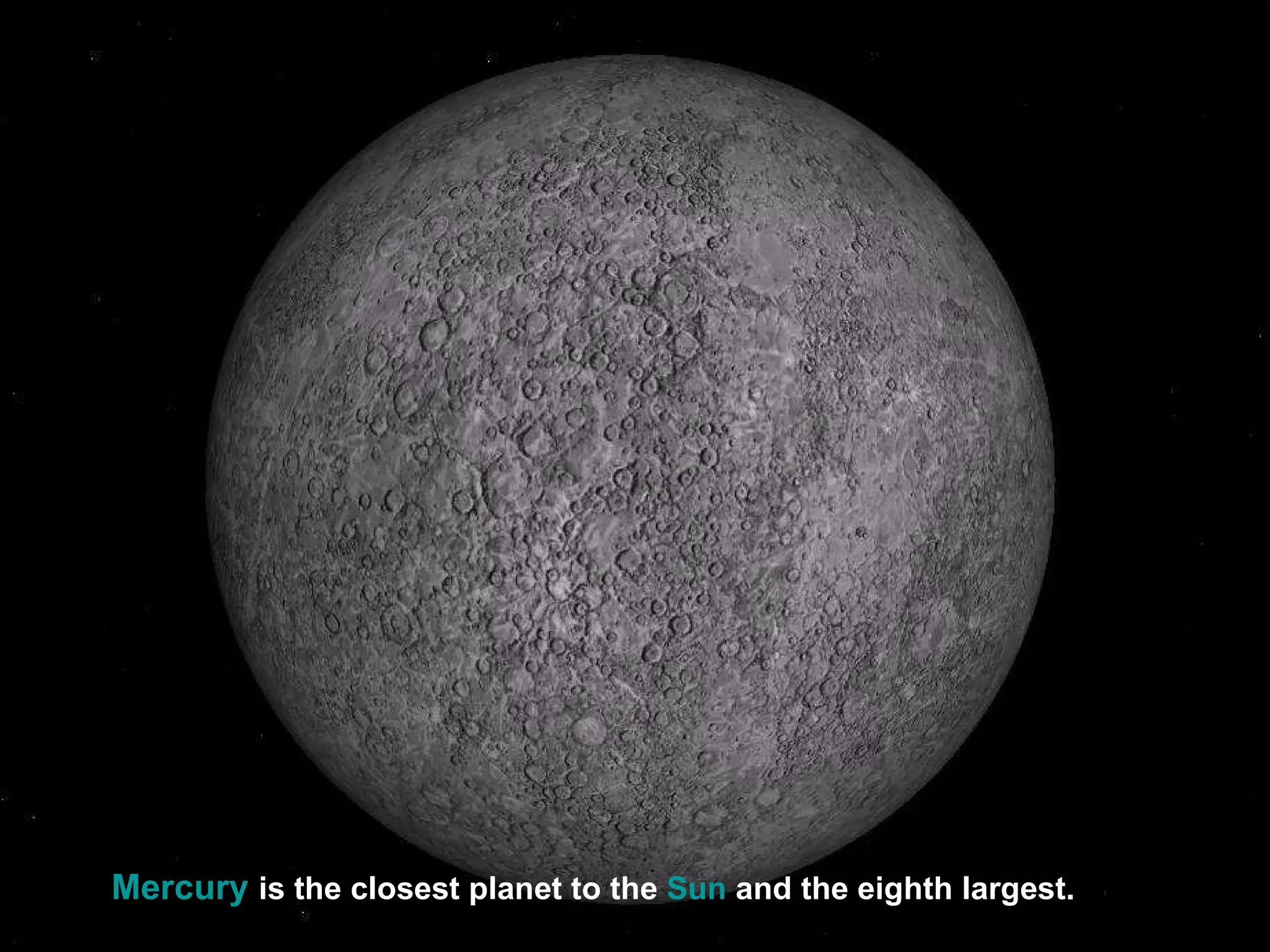
Mercury   is the closest planet to the  Sun  and the eighth largest.
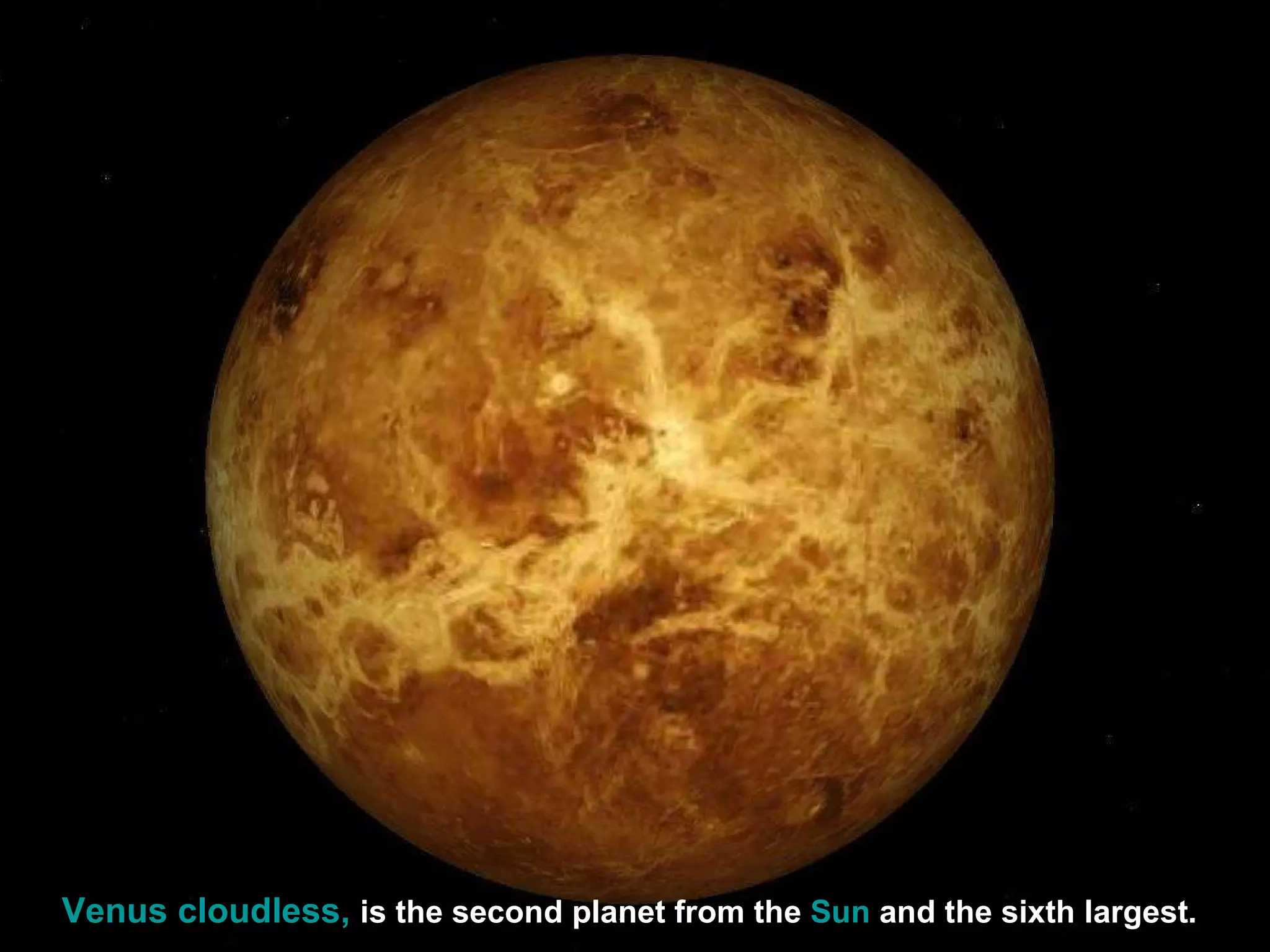
Venus cloudless,   is the second planet from the  Sun  and the sixth largest.
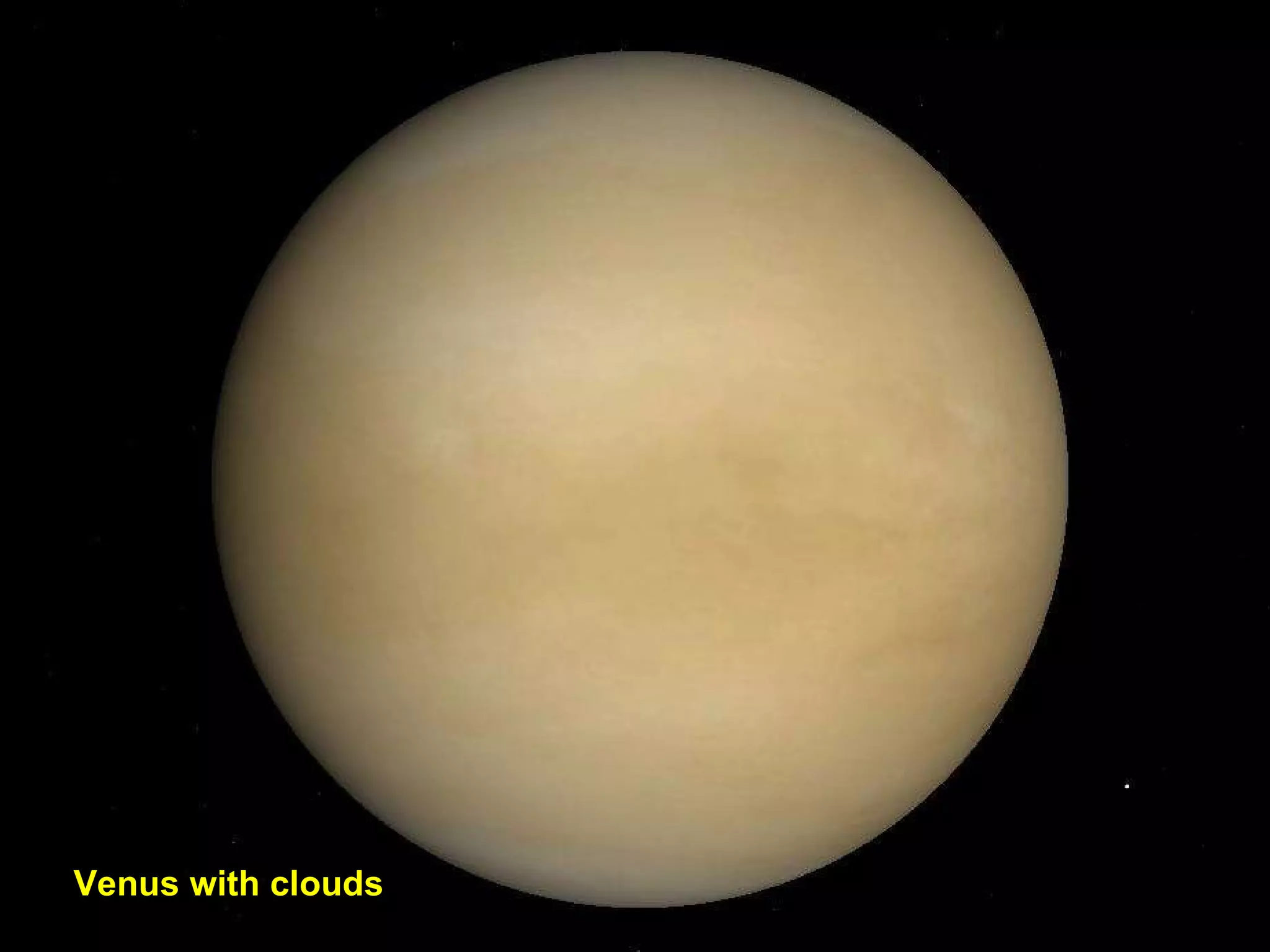
Venus with clouds
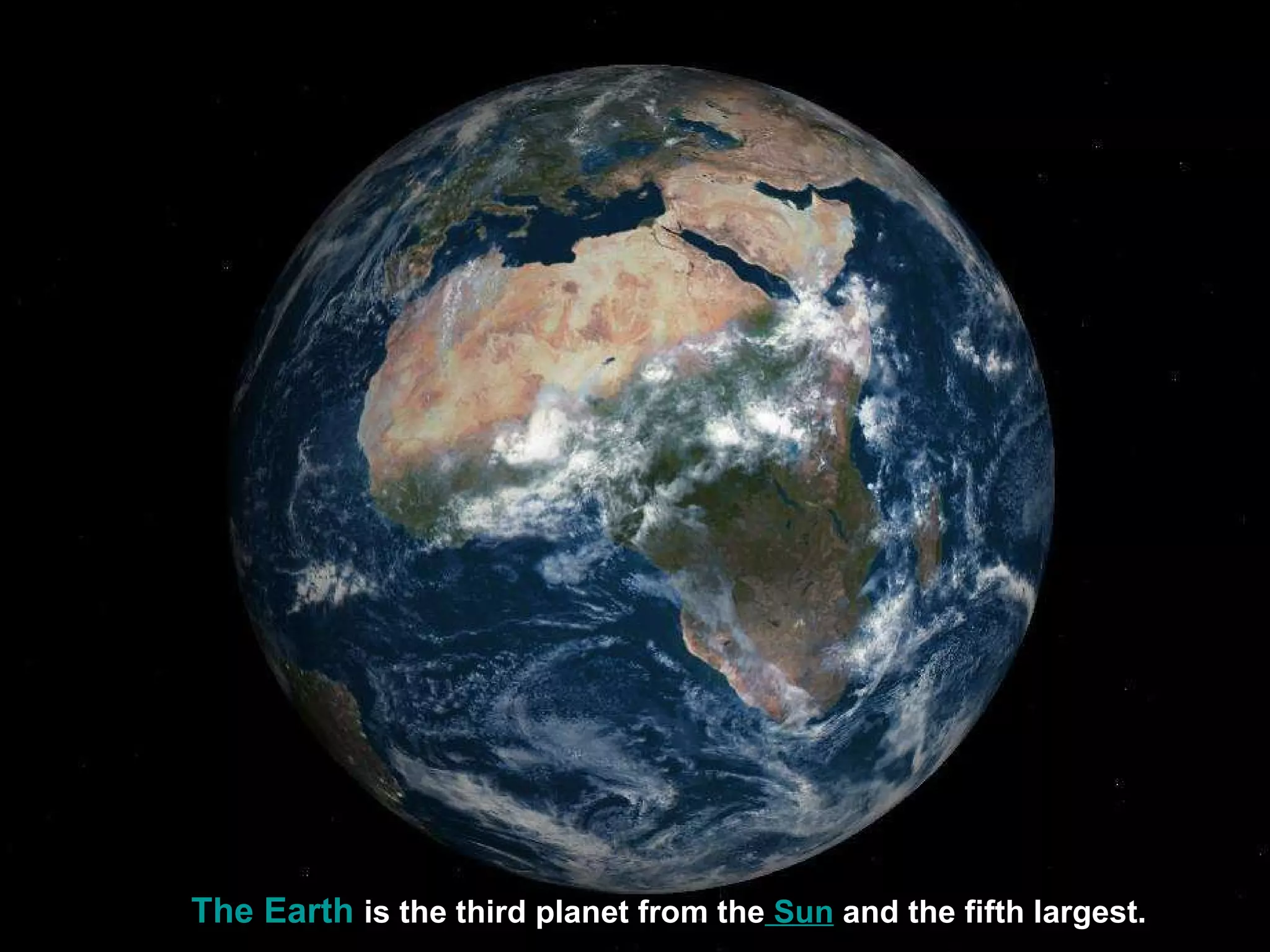
The Earth   is the third planet from the  Sun  and the fifth largest .
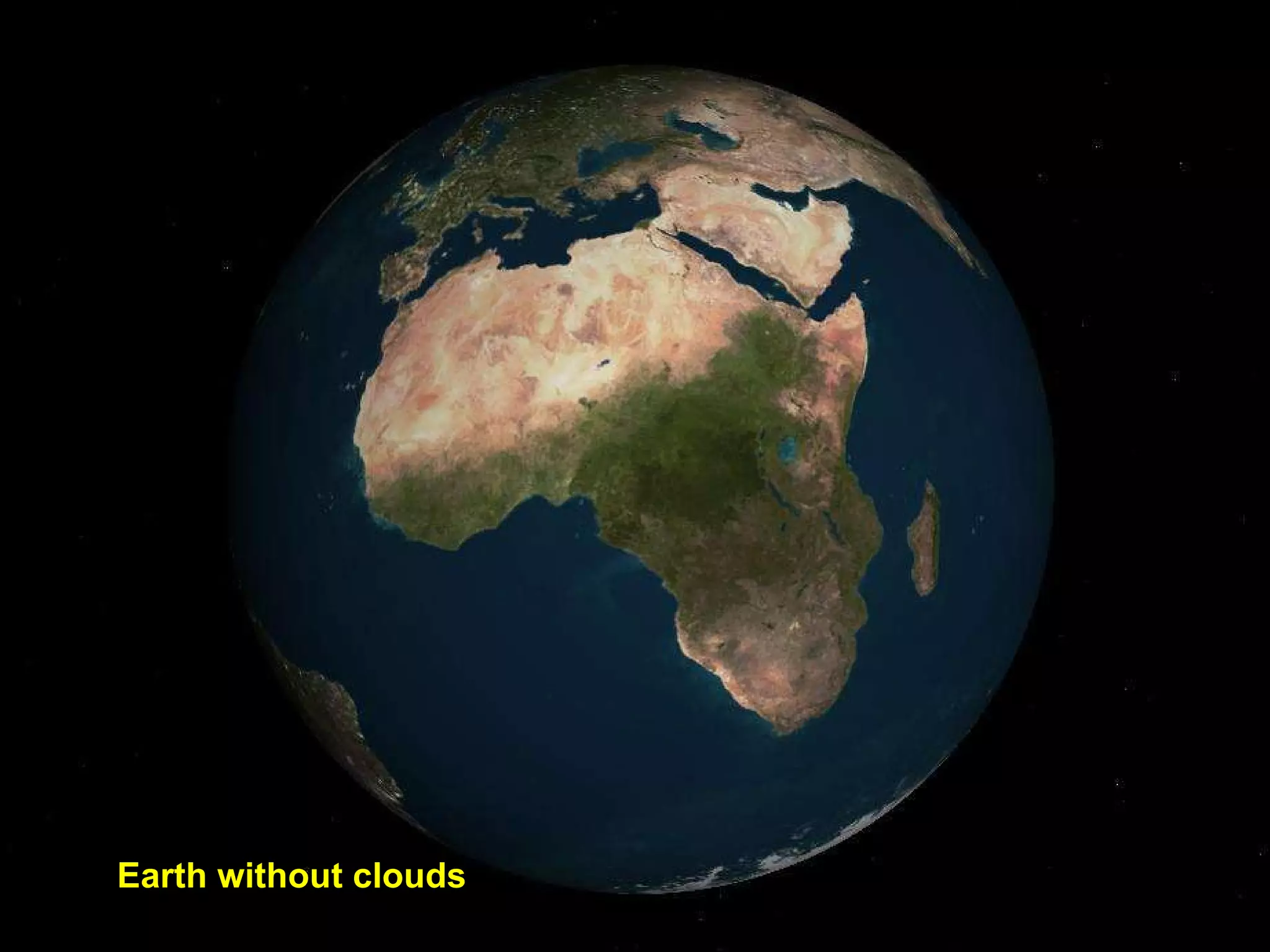
Earth without clouds
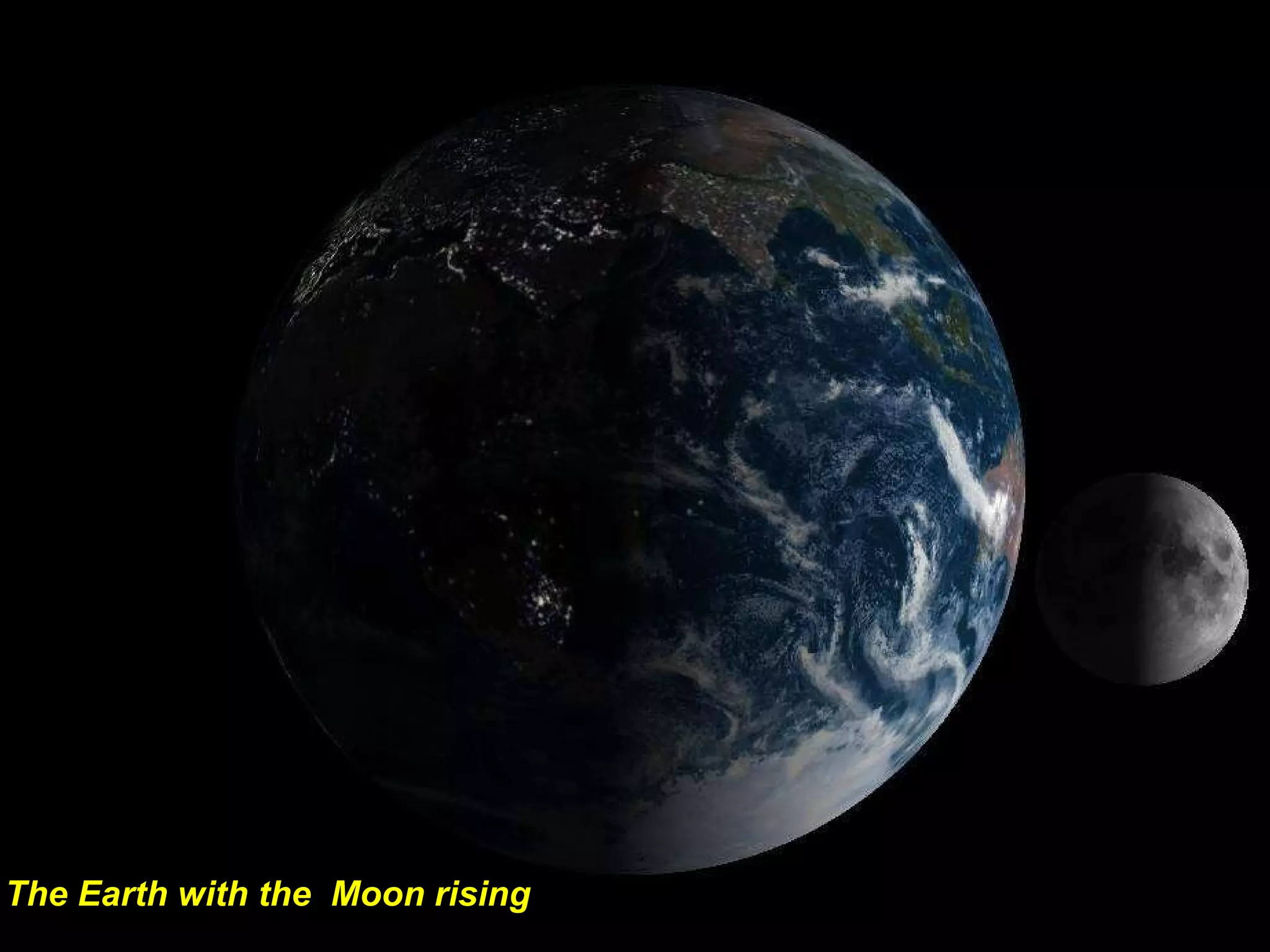
The Earth with the  Moon rising
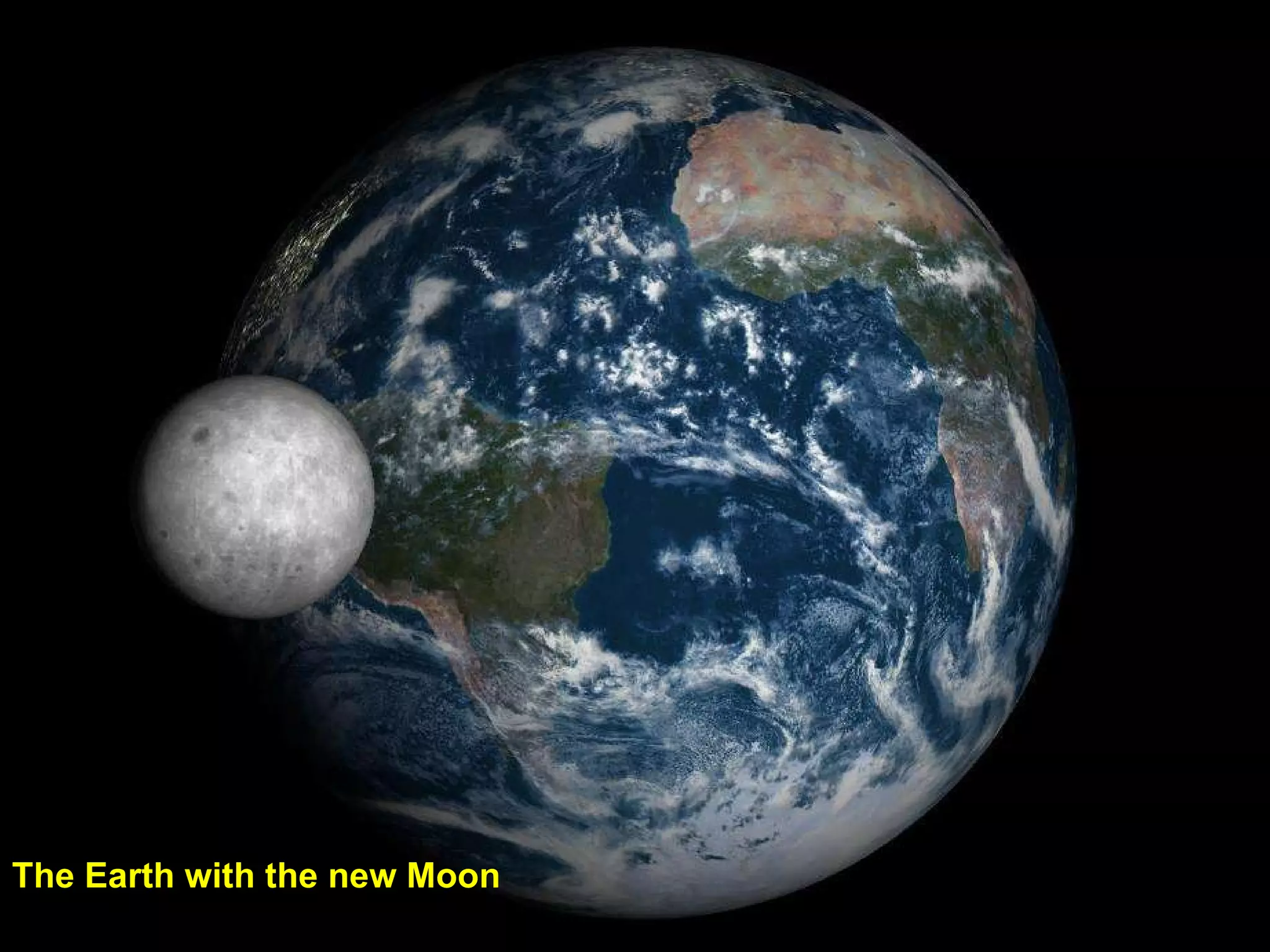
The Earth with the new Moon
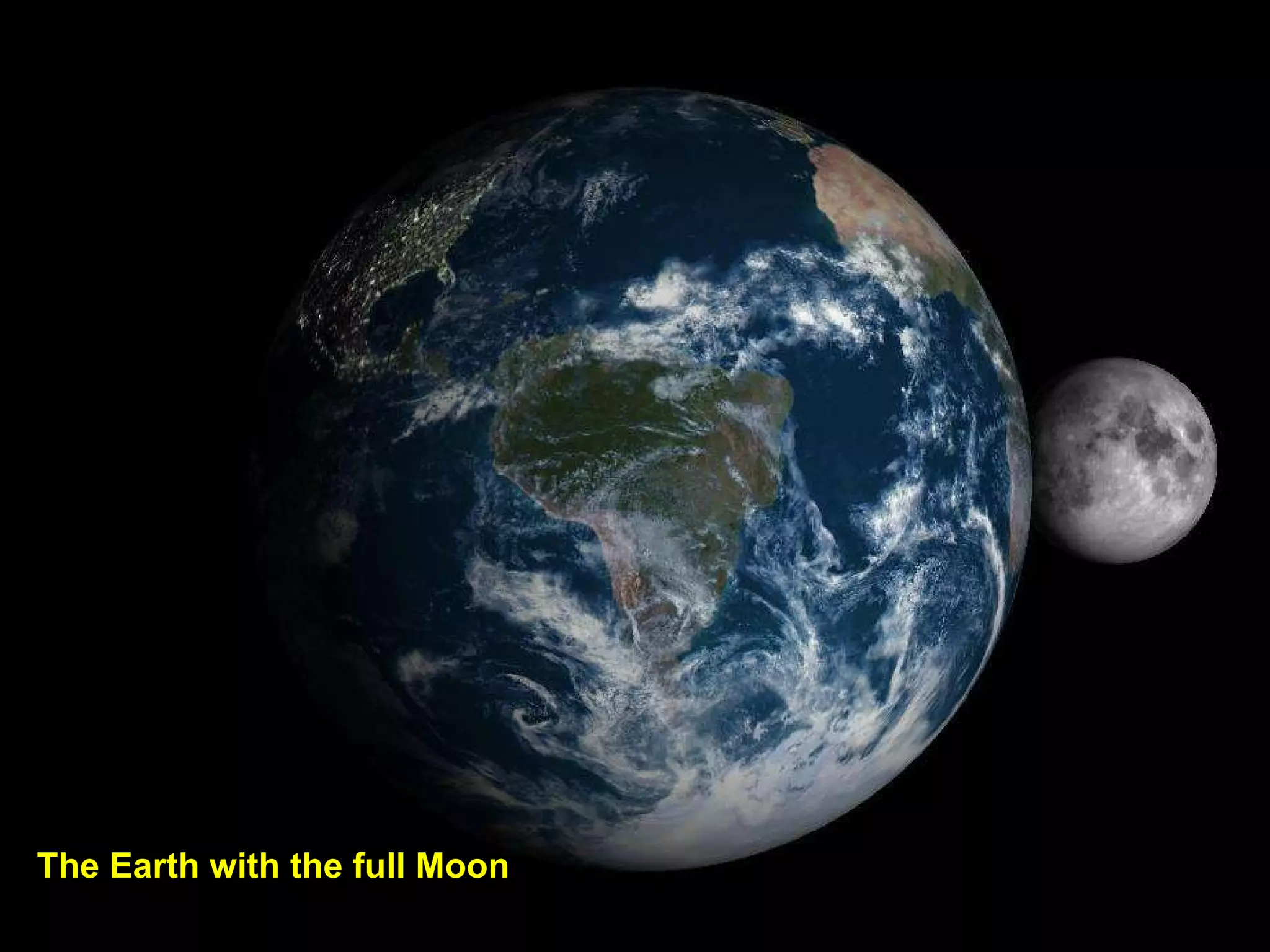
The Earth with the full Moon
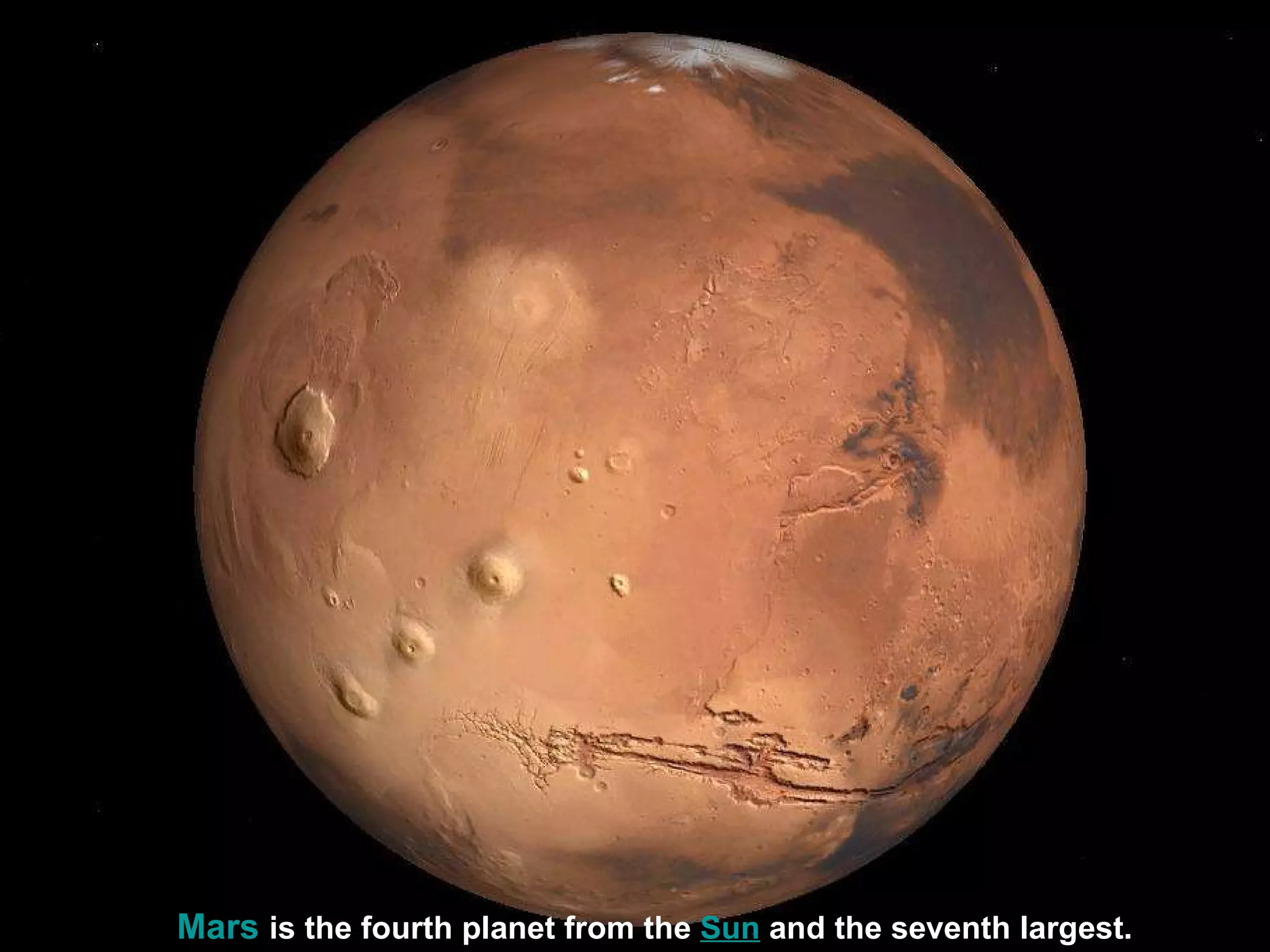
Mars   is the fourth planet from the  Sun  and the seventh largest .
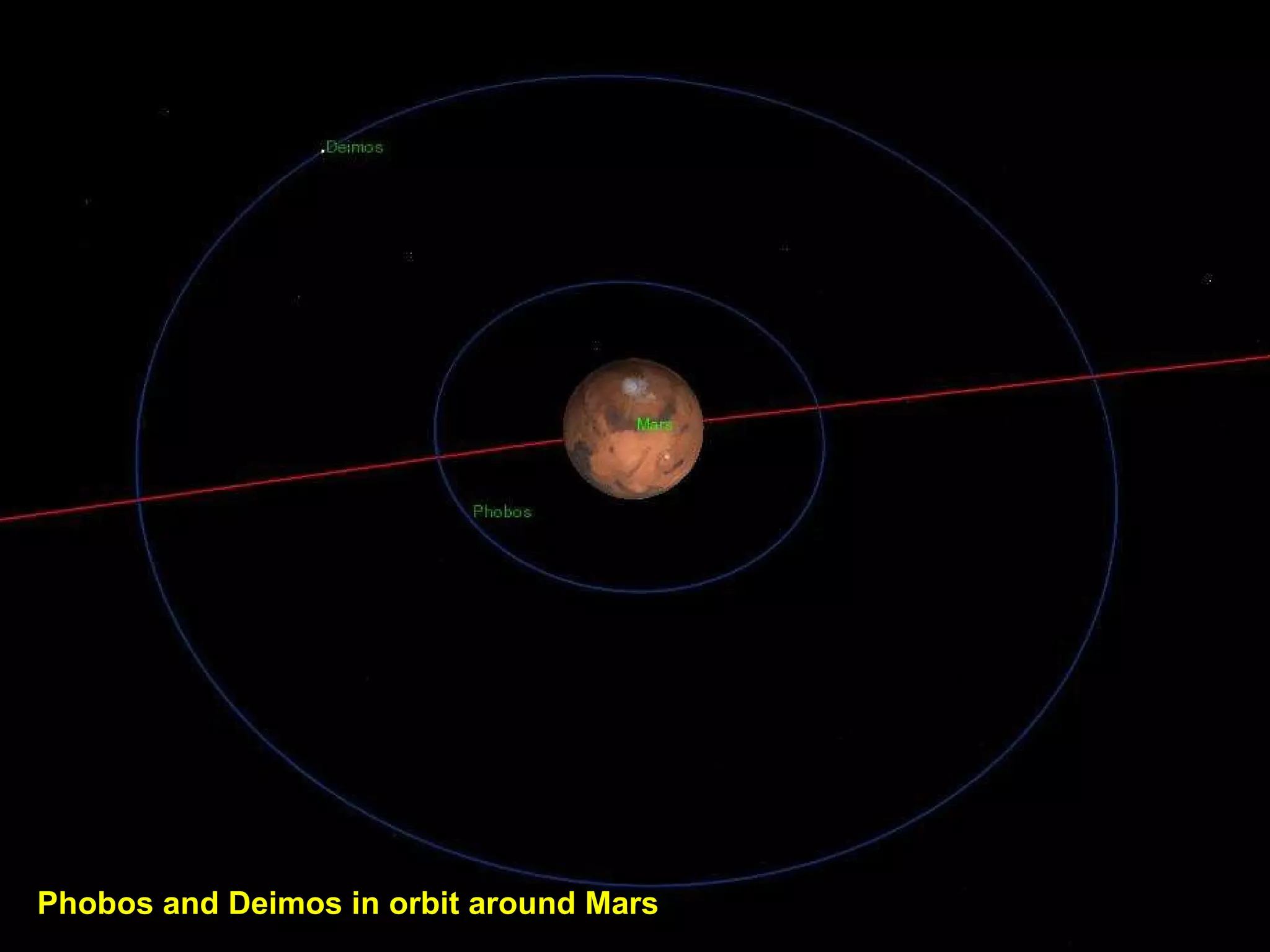
Phobos and Deimos in orbit around Mars
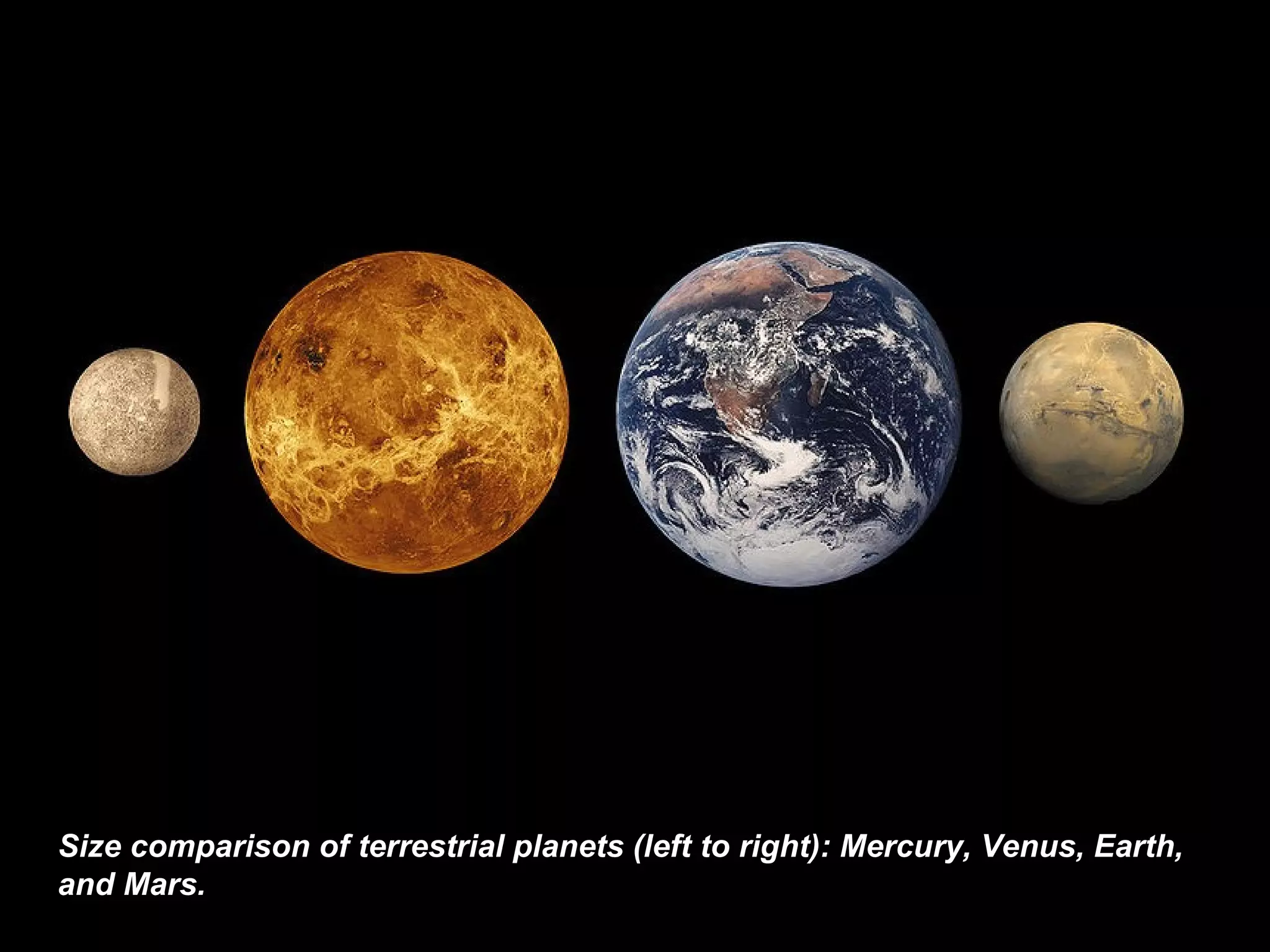
Size comparison of terrestrial planets (left to right): Mercury, Venu s , Earth, and Mars.
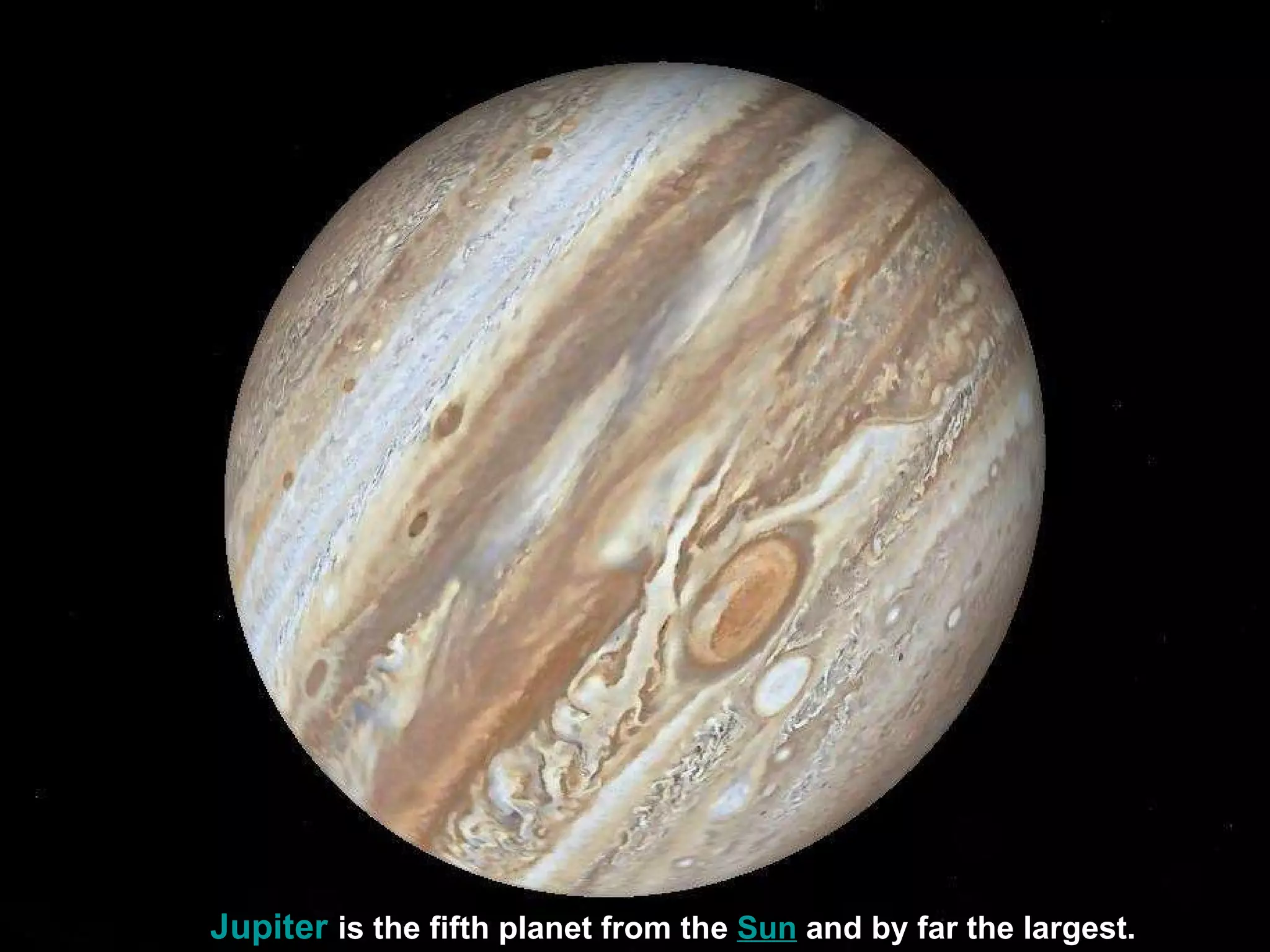
Jupiter   is the fifth planet from the  Sun  and by far the largest.
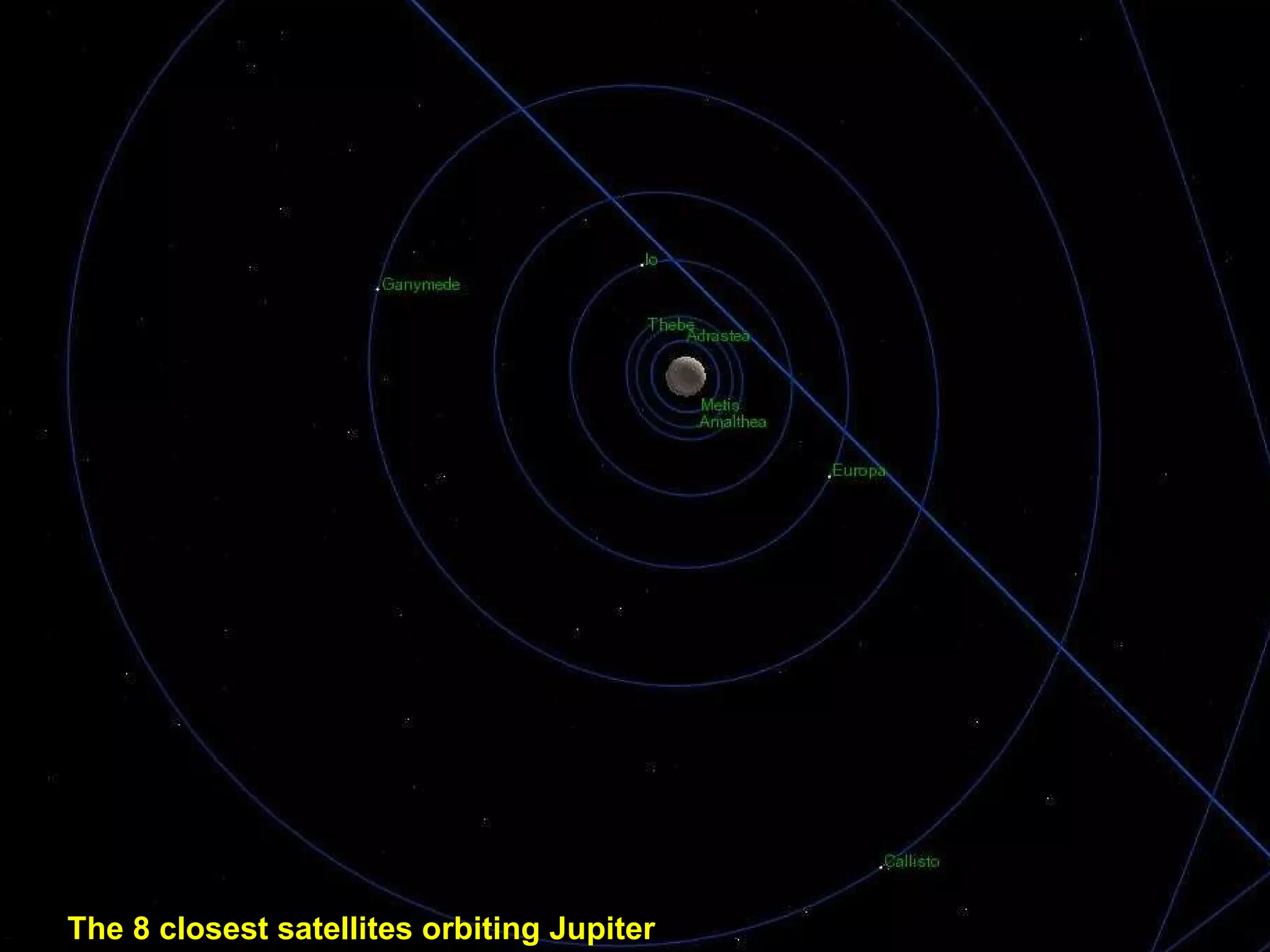
The 8 closest satellites orbiting Jupiter
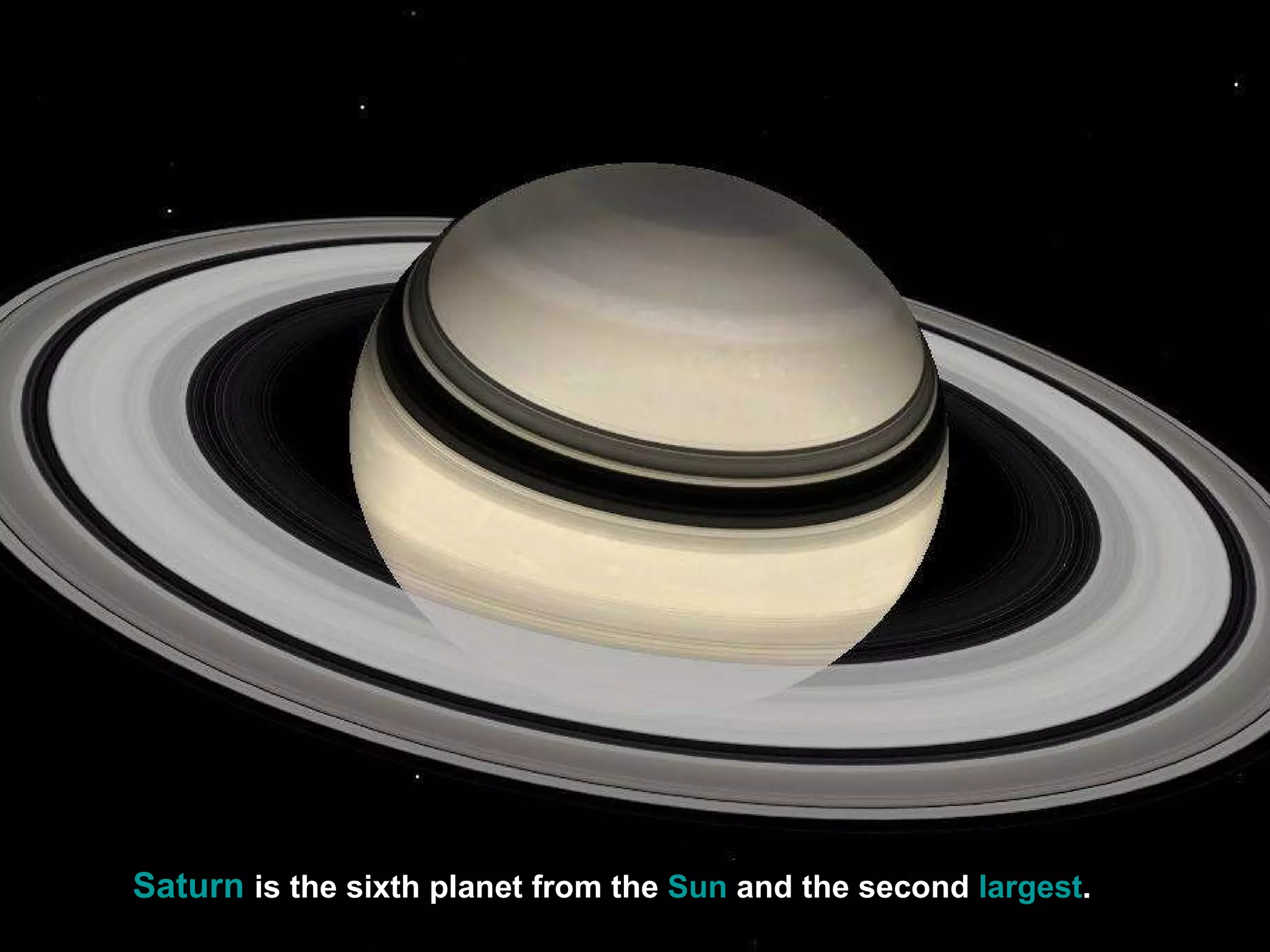
Saturn  is the sixth planet from the  Sun  and the second  largest .
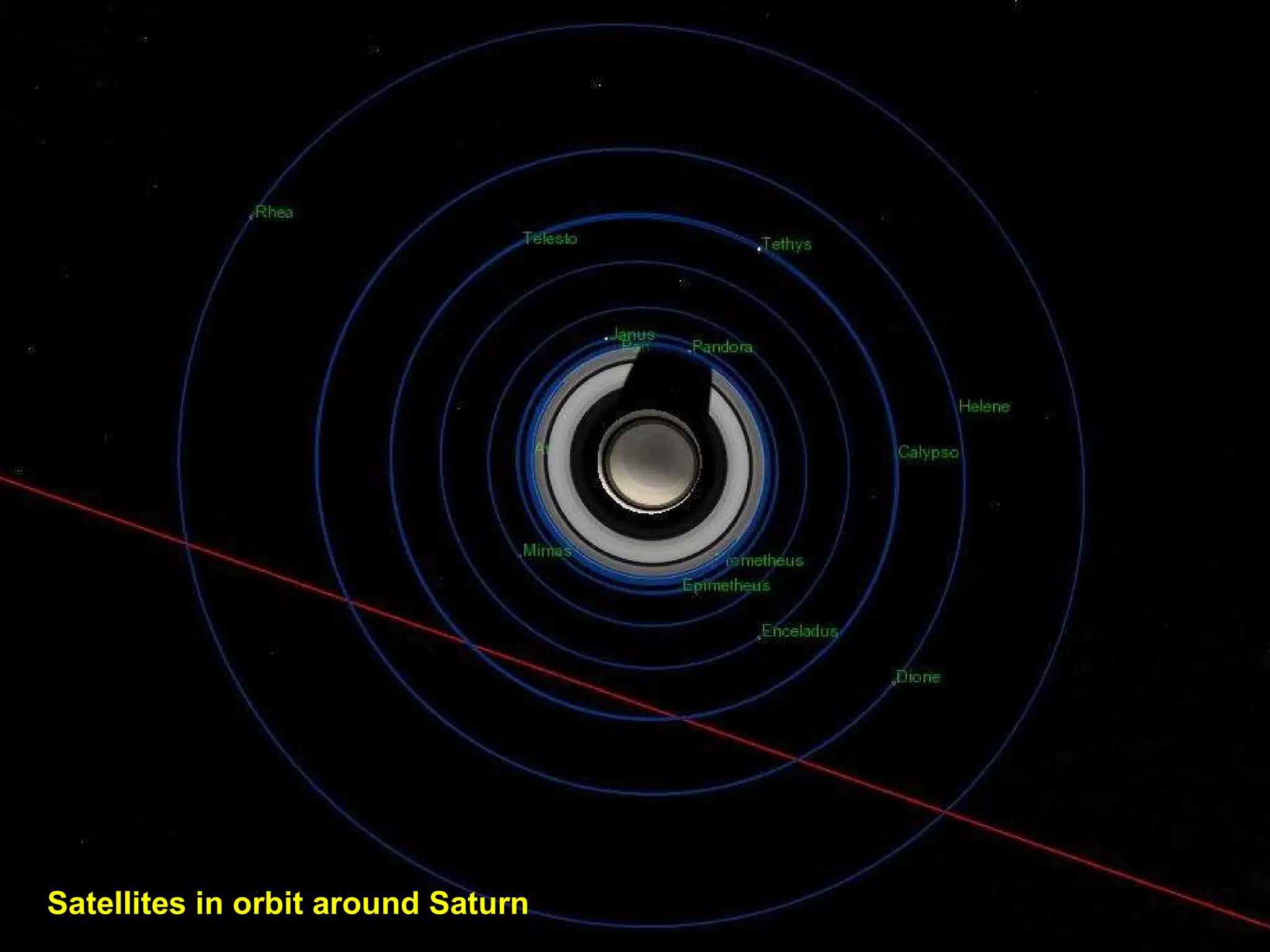
Satellites in orbit around Saturn
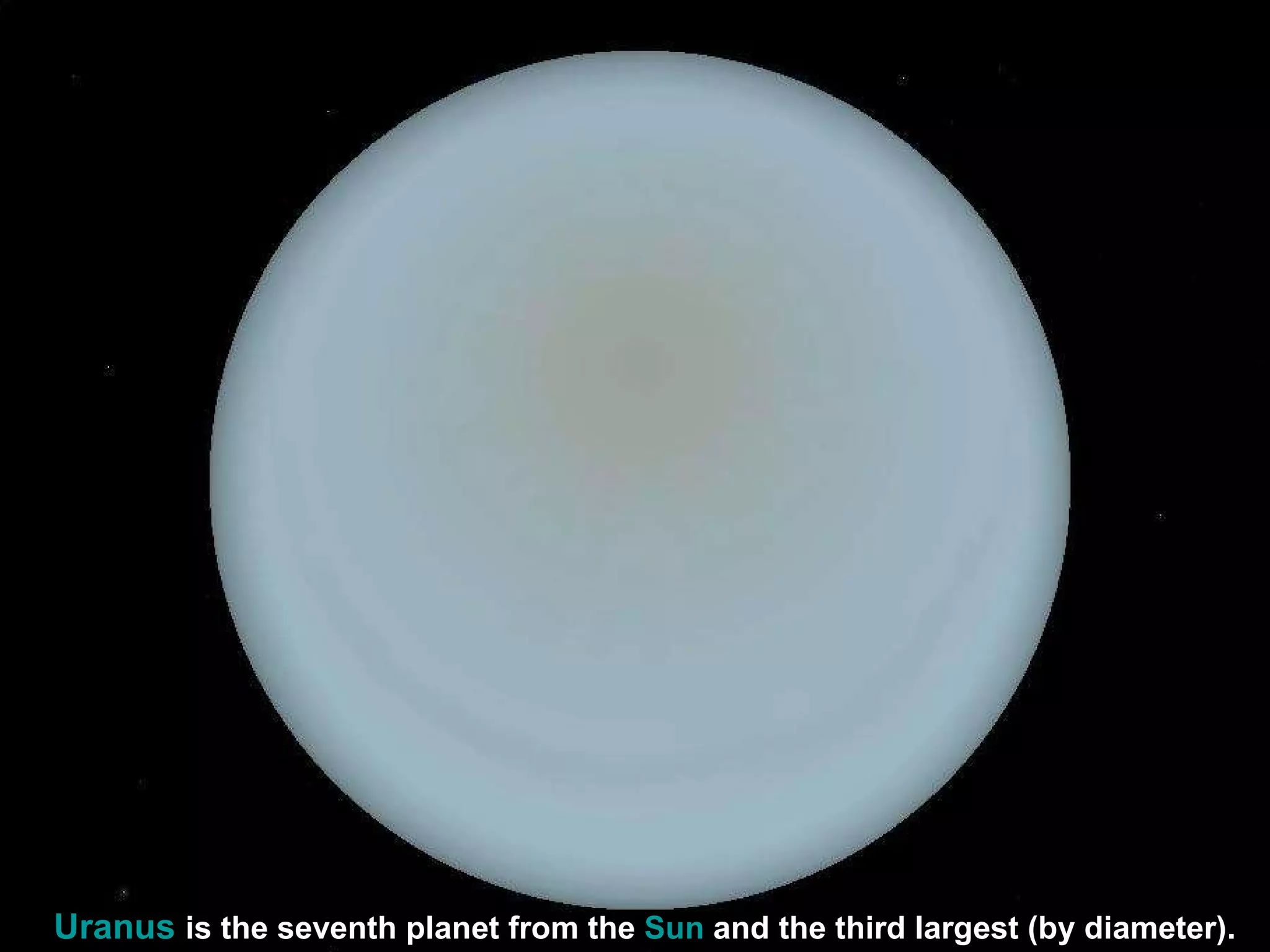
Uranus   is the seventh planet from the  Sun  and the third largest (by diameter).
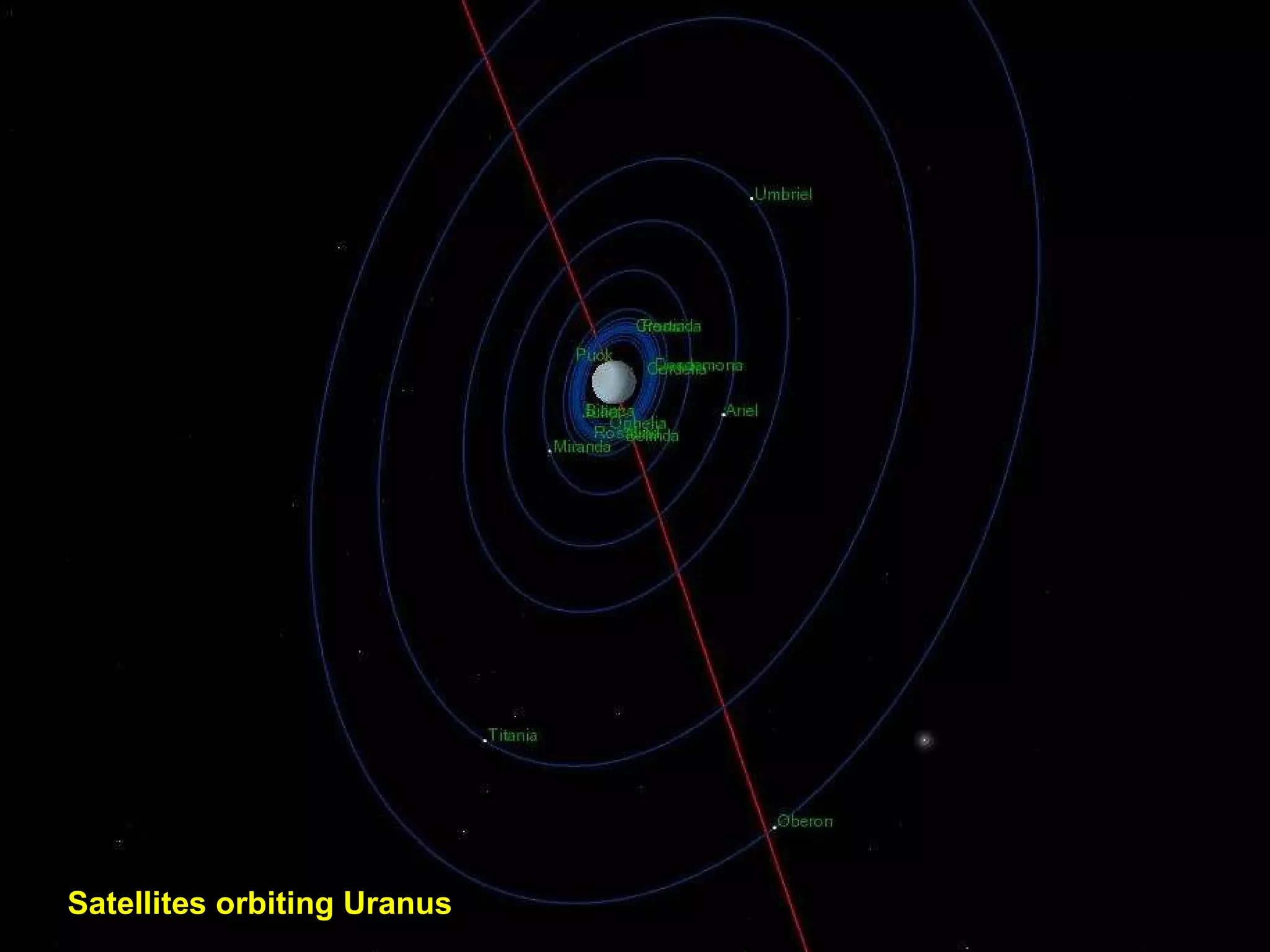
Satellites orbiting Uranus
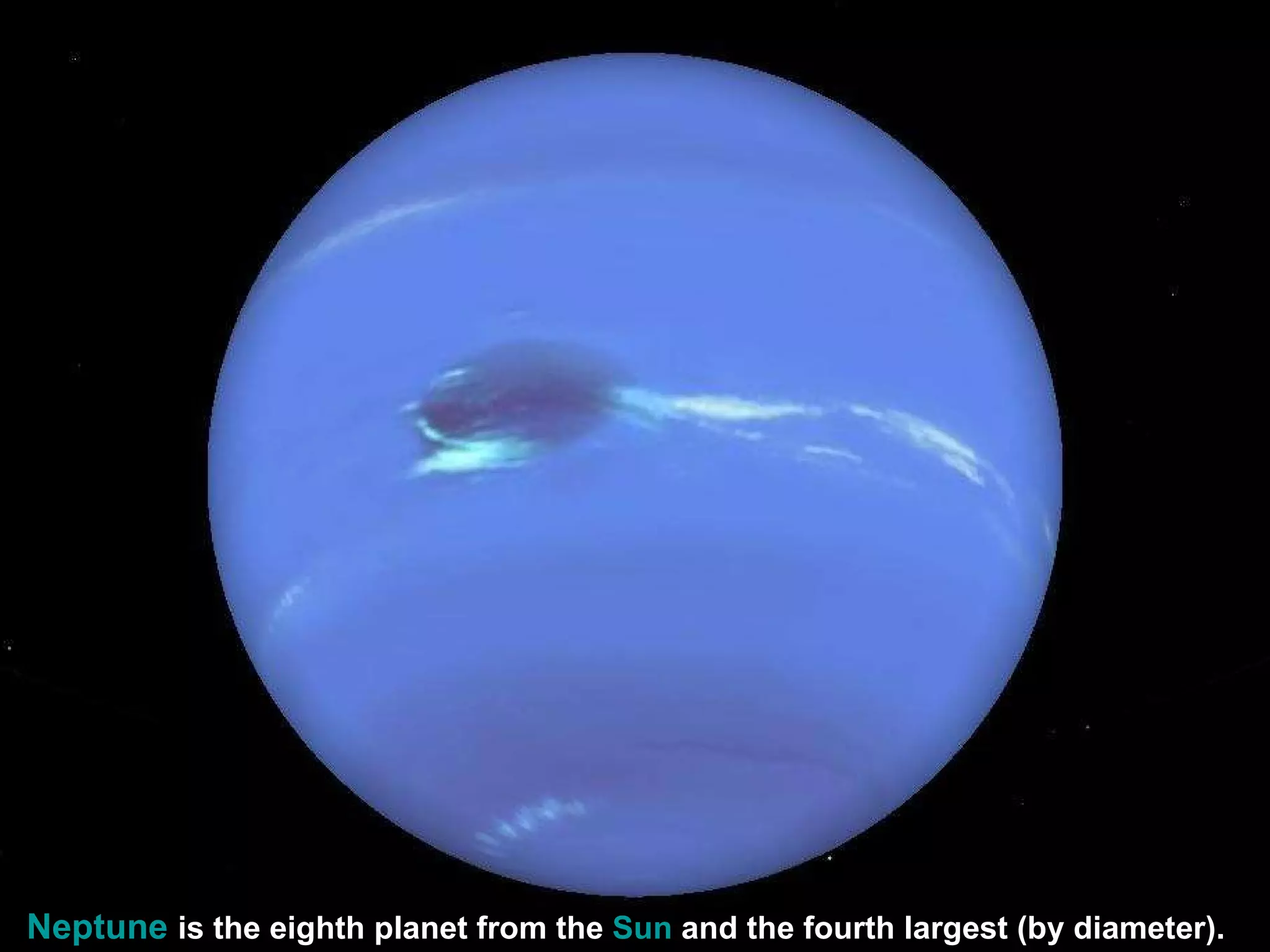
Neptune  is the eighth planet from the  Sun  and the fourth largest (by diameter).
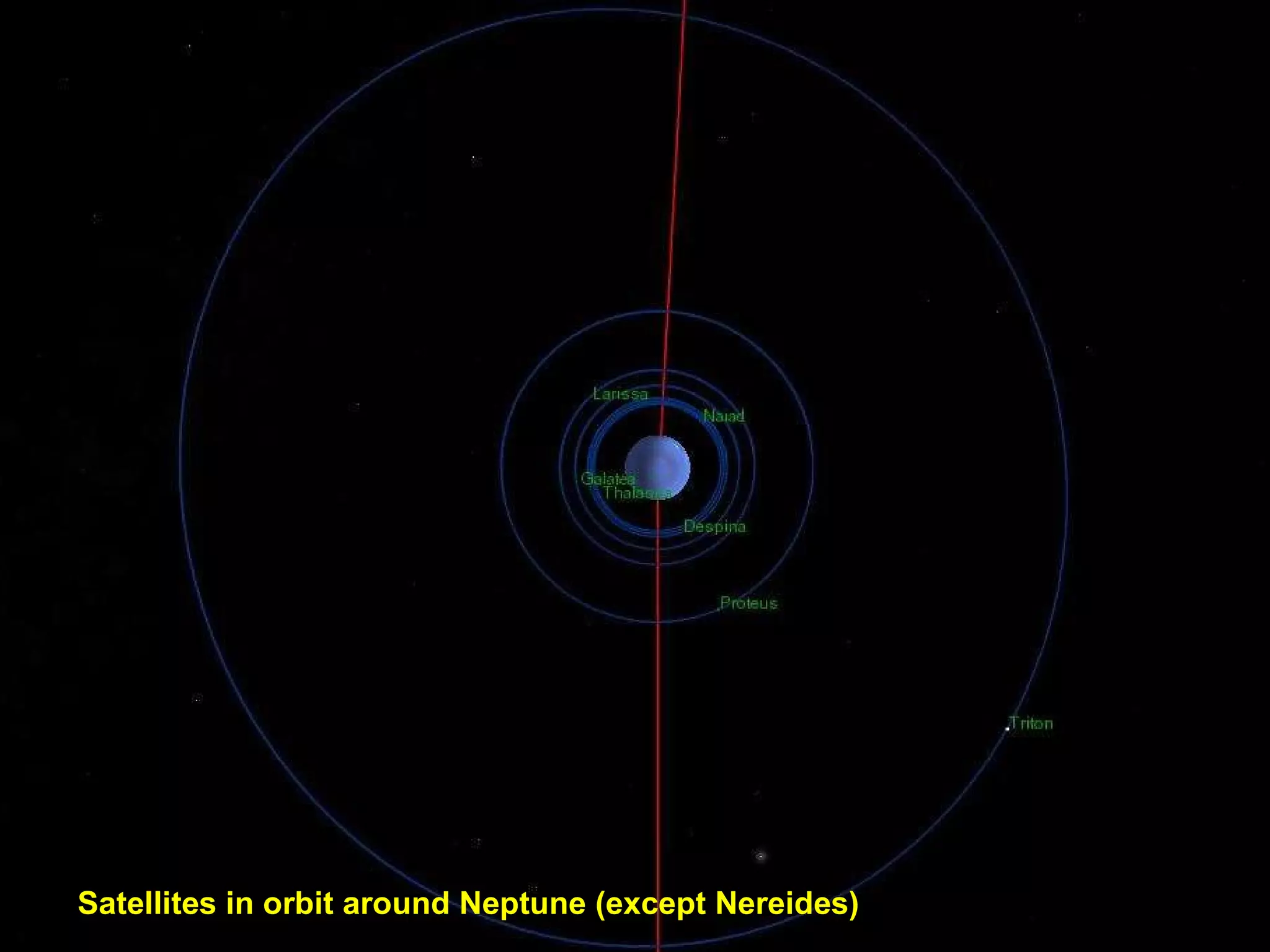
Satellites in orbit around Neptune (except Nereides )
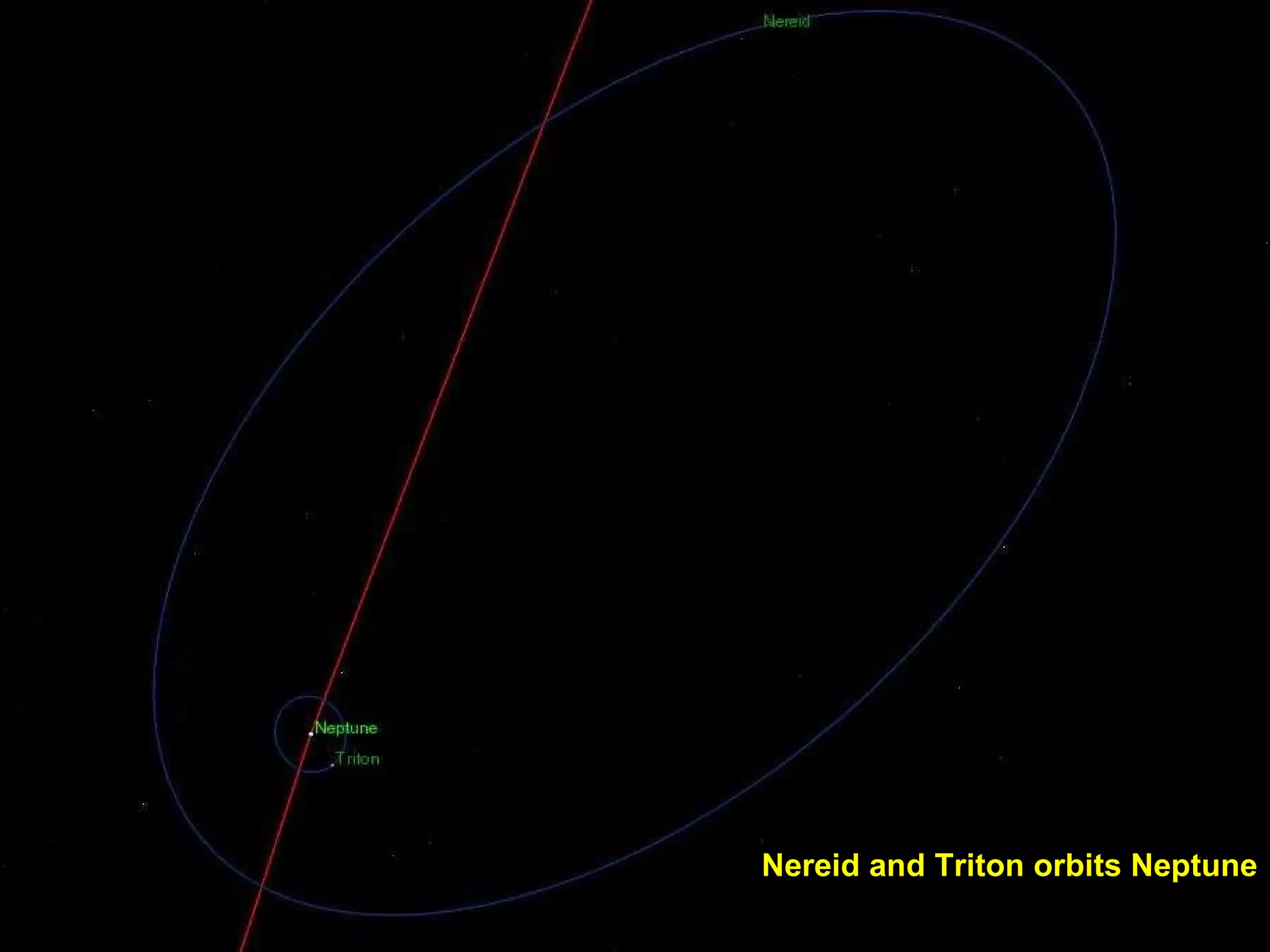
Nereid and Triton orbits Neptune
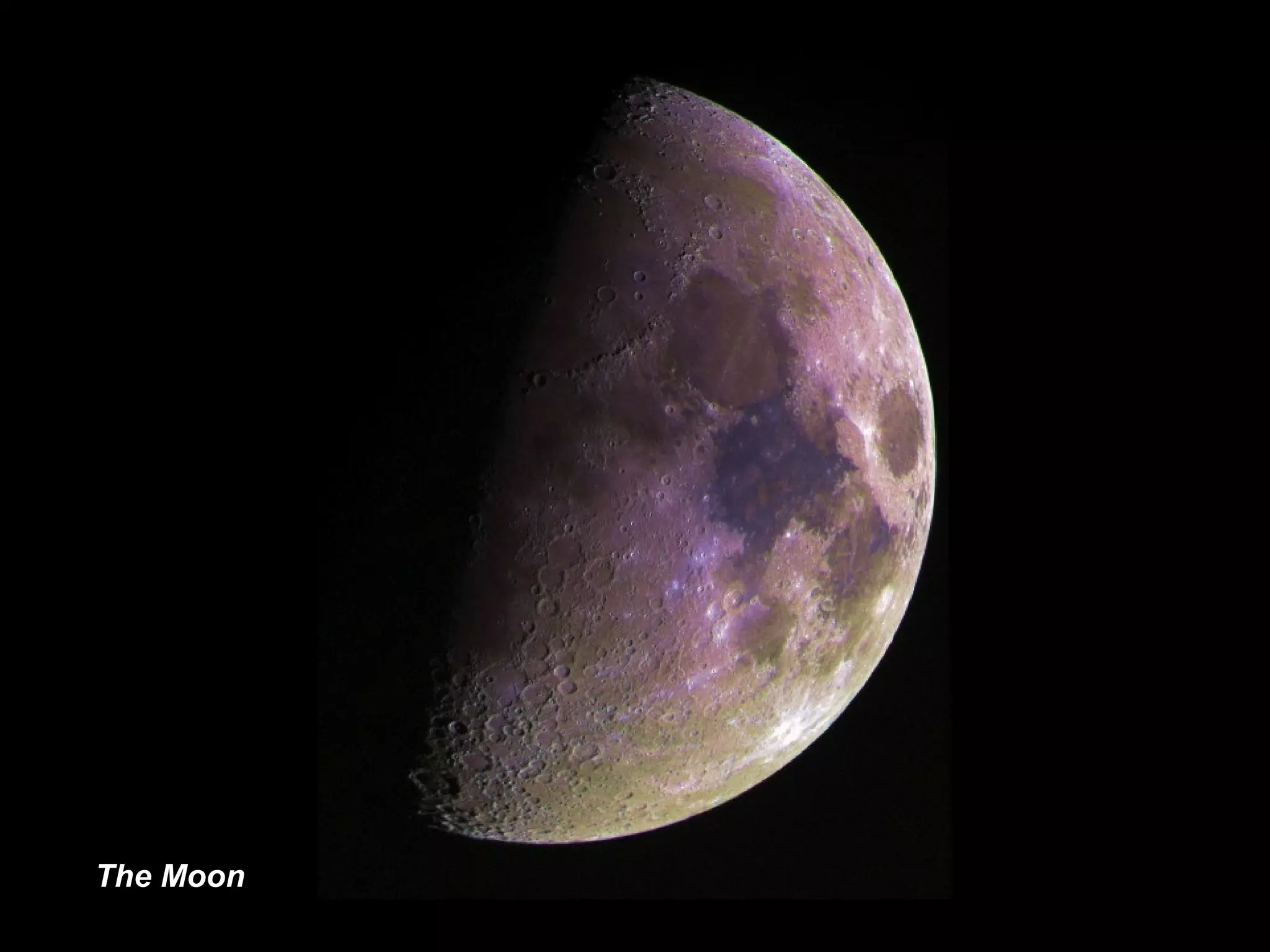
The Moon
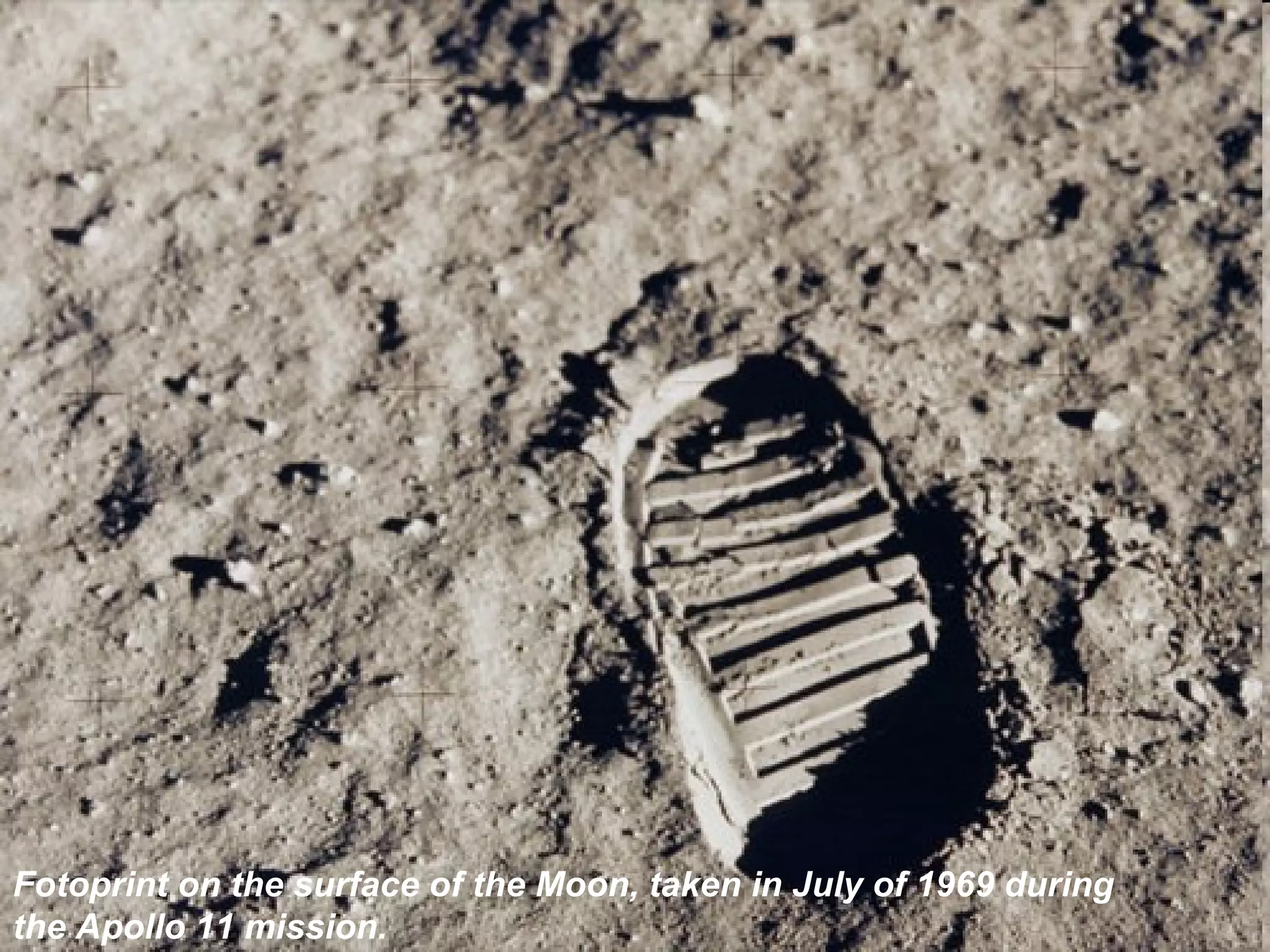
Fotoprint on the surface of the Moon,  taken in July of 1969 during the Apollo 11 mission .
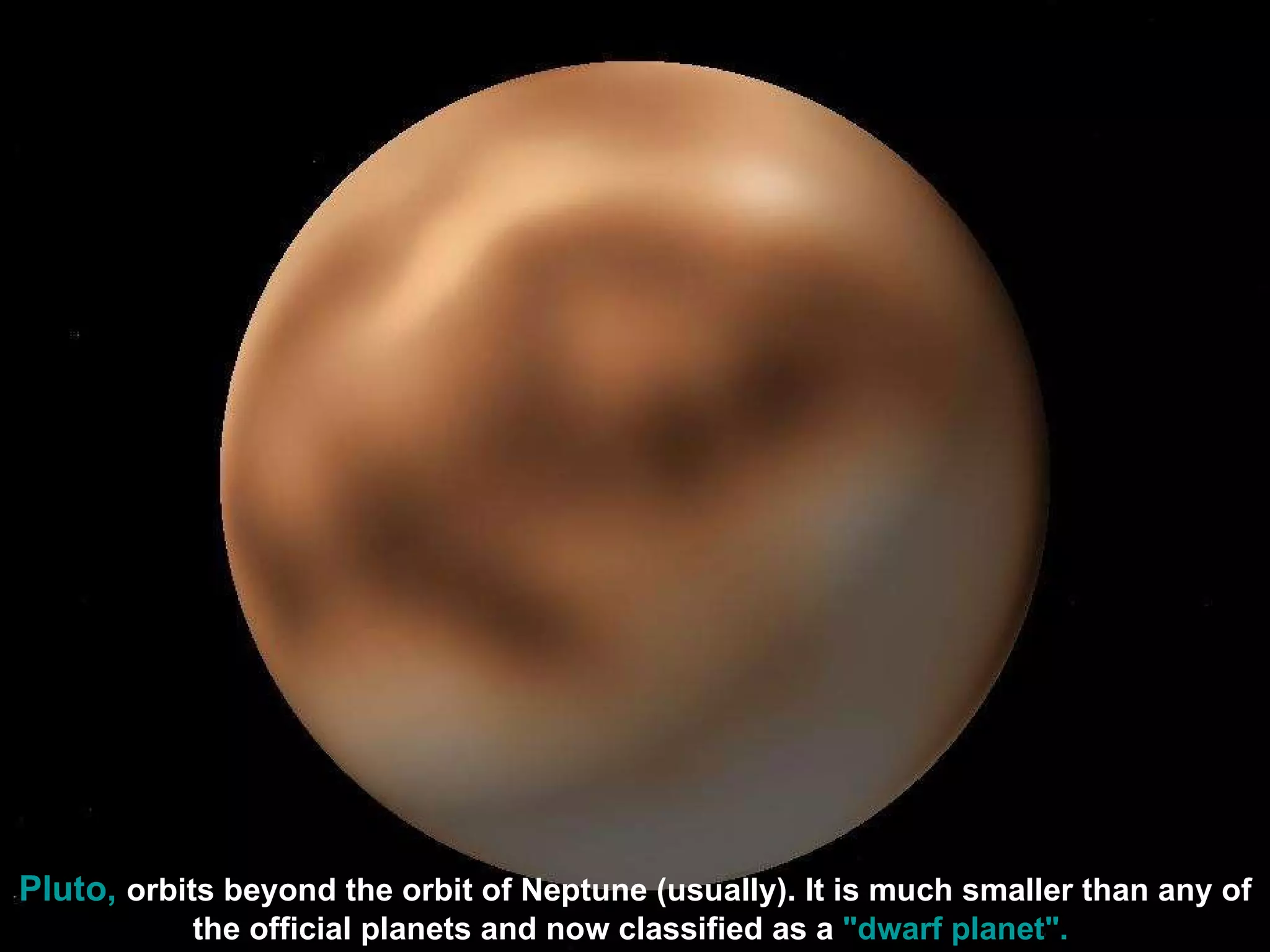
Pluto,   orbits beyond the orbit of Neptune (usually). It is much smaller than any of the official planets and now classified as a  "dwarf planet".
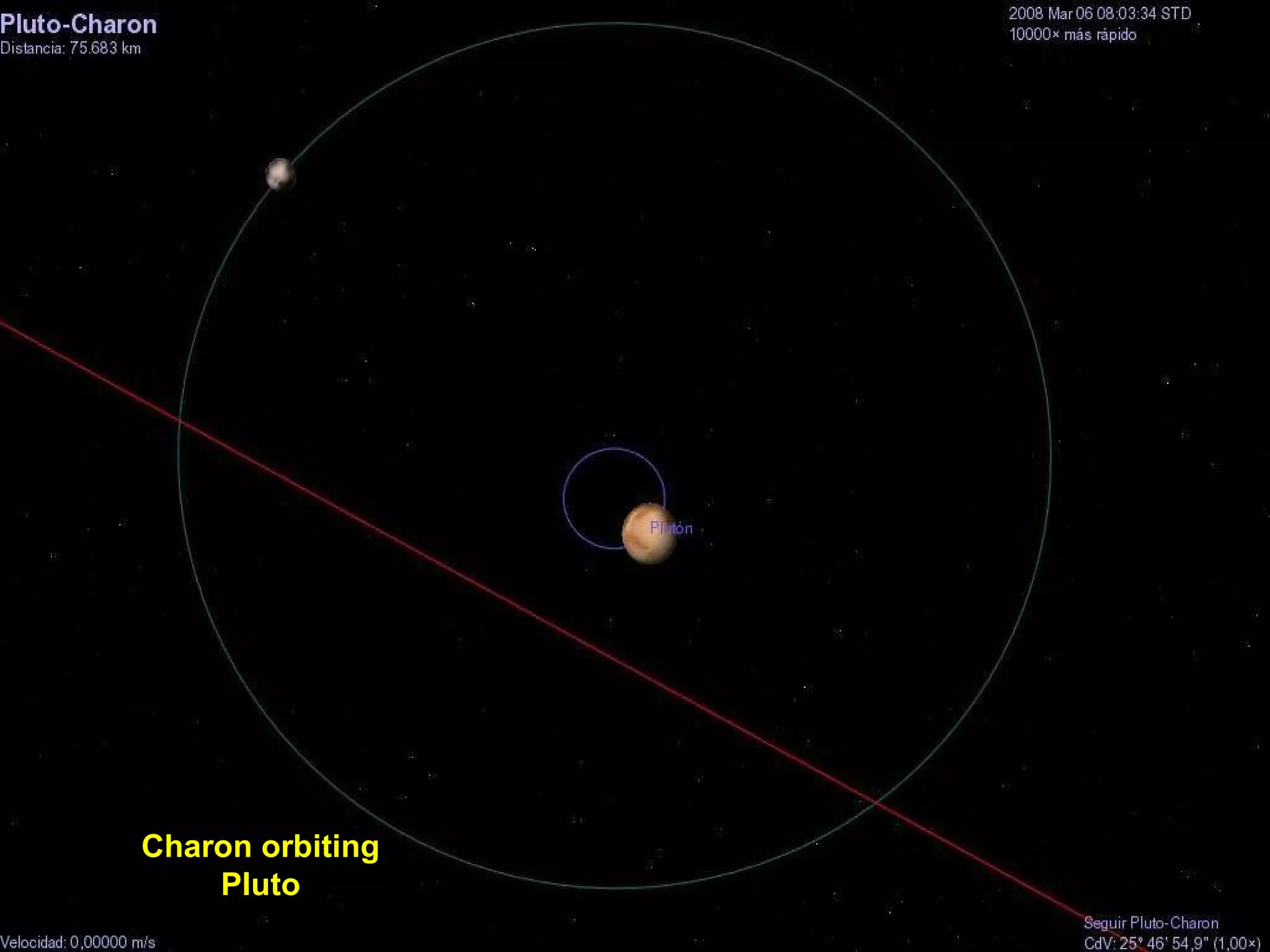
Charon orbiting Pluto
A 2003 UB 313 (Eris)   is the largest known  dwarf planet  in the  Solar System  and the ninth-largest body known to orbit the  Sun  directly.
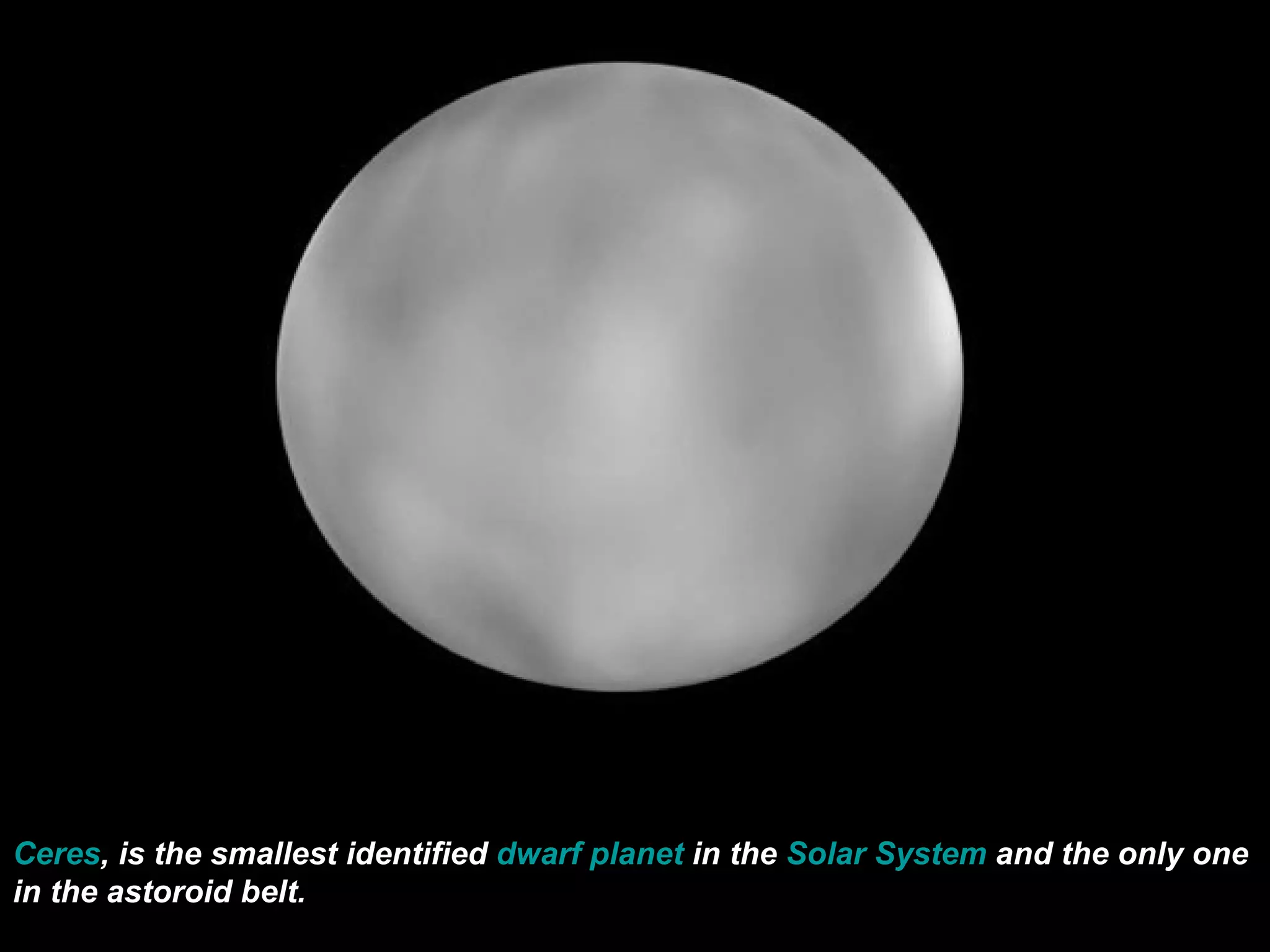
Ceres , is the smallest identified  dwarf planet  in the  Solar System  and the only one in the as toroid belt.
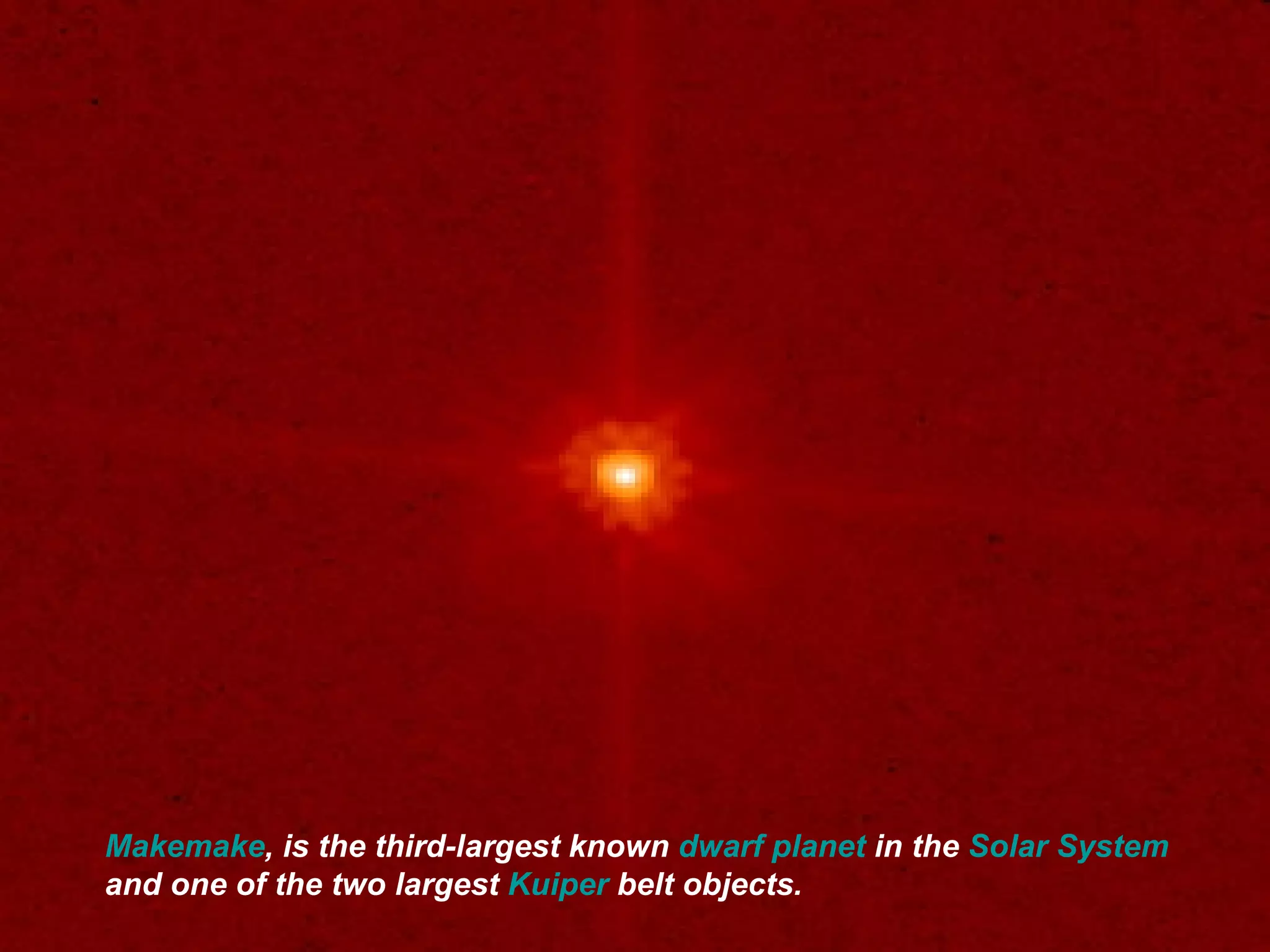
Makemake , is the third-largest known  dwarf planet  in the  Solar System  and one of the two largest  Kuiper  belt  objects .
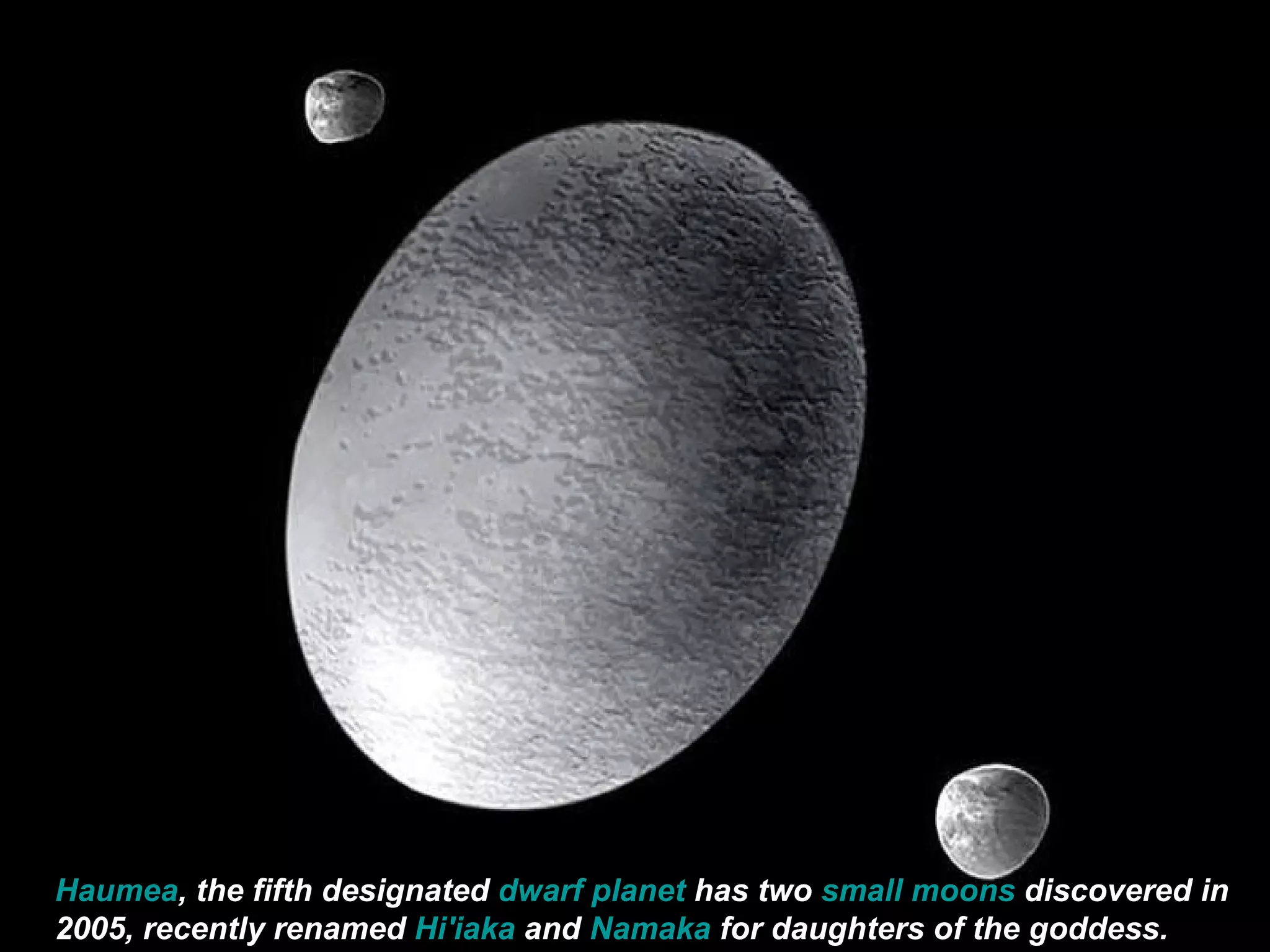
Haumea ,  the fifth designated  dwarf planet  has two  small moons  discovered in 2005, recently renamed  Hi'iaka  and  Namaka  for daughters of the goddess.
New technology and satellite experiments, such as the Hubb le  Space Telescope, have brought us an ever improving picture of our Universe . We have long known that there is more to our universe than we can see…
How big is our Universe? http://www.slideshare.net/aleniram

Cosmology And Astronomy

  • 1.
  • 2.
  • 3.
    Named after thetrailblazing astronomer Edwin P. Hubble (1889-1953), the Hubble Space Telescope (HST) is a large, space-based observatory which has revolutionized astronomy by providing unprecedented deep and clear views of the Universe, ranging from our own solar system to extremely remote fledgling galaxies forming not long after the Big Bang 13.7 billion years ago. Hubble orbits Earth every 96 minutes, 575 kilometers (360 miles) above the Earth's surface. Hubble completes one orbit around the Earth (crossing over the same longitude line) every 96 minutes. Its speed is approximately 8 km per second (5 miles per second).
  • 4.
    Hubble The HubbleSpace Telescope as seen from Space Shutt le  Discovery during its second servicing mission (STS-82 2 ) .
  • 5.
  • 6.
    One of Hubble'smost famous images , "pillars of creation" shows stars forming in the Eagle Nebula.
  • 7.
    The alluring Cat’sEye N ebula lies three thousand light-years from Earth. A classic planetary nebula , the Cat's Eye (NGC 6543) represents a final, brief yet glorious phase in the life of a sun-like star .
  • 8.
    The Eskimo Nebula lies about 3000 light - years away and is visible with a small telescope in the constellation of Gemini.
  • 9.
    MyCn18, a youngplanetary nebula located about 8,000 light years away.
  • 10.
    Swan Nebula. This photo shows a bubbly ocean of glowing hydrogen, oxygen, and sulphur gas in the extremely massive and luminous molecular nebula Messier 17 . Swan Nebula is located about 5500 light-years away in the Sagittarius constellation.
  • 11.
    The ConeNebula is located at the southern end of star cluster NGC 2264, in Monoceros. Radiation from hot stars off the top of the picture illuminates and erodes this giant, gaseous pillar. Additional ultraviolet radiation causes the gas to glow, giving the pillar its red halo of light.
  • 12.
    This is themess that is left when a star explodes. The Crab Nebula, the result of a supernova seen in 1054 AD, is filled with mysterious filaments.
  • 13.
    Planetary Nebula Mz3, The Ant Nebula. Expelled gas streaming away at 1,000 kilometres per second create a strange ant shape.
  • 14.
    Star V838 Monocerotis (V838 Mon) , The star Monocerotis is seen here on the fringe of the Milky Way, brightly illuminated by reflected light from a past explosion.
  • 15.
    These glowering eyesare the swirling cores of two merging galaxies called NGC 2207 and IC 2163 in Canis Major. Billions of years from now, only one of these two galaxies will remain. Until then, they will slowly pull each other apart.
  • 16.
    This photo shows a fragment of the Trifid Nebula, a stellar cradle to 9000 light-years.
  • 17.
    The Sombrero Galaxy(M104) , A brilliant white core is encircled by thick dust lanes in this spiral galaxy, seen edge-on. The galaxy is 50,000 light-years across and 28 million light years from Earth.
  • 18.
    A Hubble Space Telesco pe (HST) image of NGC 604 in the Triangulum Galaxy .
  • 19.
    The Eagle Nebula tagged M16, lies about 6500 light years away, spans about 20 light-years, and is visible with binoculars toward the constellation of Serpens.
  • 20.
    M57: RingNebula is probably the most famous celestial band.
  • 21.
    RCW 79 Nebula
  • 22.
    The Rosette Nebula( NGC 2237) is not the only cosmic cloud of gas and dust to evoke the imagery of flowers. But it is the one most often suggested as a suitable astronomy image for Valentine's Day.
  • 23.
    The Orion Nebula (also known as Messier 42, M42, or NGC 1976) is a diffus e nebula situated south of Orion's Belt. It is one of the brightest nebulae, and is visible to the naked eye in the night sky. M42 is located at a distance of 1,344±20 light years .
  • 24.
    A Black hole is a region of space in which the gravitational field is so powerful that nothing, including light, can escape its pull. The black hole has a one-way surface, called an event horizon, into which objects can fall, but out of which nothing can come.
  • 25.
    A protostar is a large object that forms by contraction out of the gas of a giant molecula r cloud in the interstellar medium. The protostellar phase is an early stage in the process of star formation.
  • 26.
    Milky way ,theSun is indicated in red.
  • 27.
    Milky way- a milky patch of stars that rings the Earth.
  • 28.
    The MajesticSpiral Galaxy NGC 4414
  • 29.
    Halley's Comet orComet Halley (officially designated 1P/Halley) is the most famous of the periodic comets and can currently be seen every 75–76 years .
  • 30.
    Voyager 1 is currently the farthest human-made object from Earth, traveling away from both the Earth and the Sun at a speed that corresponds to a greater specific energy than any other probe .
  • 31.
  • 32.
    The Sun withthe atsmophere
  • 33.
  • 34.
    Mercury is the closest planet to the Sun and the eighth largest.
  • 35.
    Venus cloudless, is the second planet from the Sun and the sixth largest.
  • 36.
  • 37.
    The Earth is the third planet from the Sun and the fifth largest .
  • 38.
  • 39.
    The Earth withthe Moon rising
  • 40.
    The Earth withthe new Moon
  • 41.
    The Earth withthe full Moon
  • 42.
    Mars is the fourth planet from the Sun and the seventh largest .
  • 43.
    Phobos and Deimosin orbit around Mars
  • 44.
    Size comparison ofterrestrial planets (left to right): Mercury, Venu s , Earth, and Mars.
  • 45.
    Jupiter is the fifth planet from the Sun and by far the largest.
  • 46.
    The 8 closestsatellites orbiting Jupiter
  • 47.
    Saturn isthe sixth planet from the Sun and the second largest .
  • 48.
    Satellites in orbitaround Saturn
  • 49.
    Uranus is the seventh planet from the Sun and the third largest (by diameter).
  • 50.
  • 51.
    Neptune isthe eighth planet from the Sun and the fourth largest (by diameter).
  • 52.
    Satellites in orbitaround Neptune (except Nereides )
  • 53.
    Nereid and Tritonorbits Neptune
  • 54.
  • 55.
    Fotoprint on thesurface of the Moon, taken in July of 1969 during the Apollo 11 mission .
  • 56.
    Pluto, orbits beyond the orbit of Neptune (usually). It is much smaller than any of the official planets and now classified as a "dwarf planet".
  • 57.
  • 58.
    A 2003 UB313 (Eris) is the largest known dwarf planet in the Solar System and the ninth-largest body known to orbit the Sun directly.
  • 59.
    Ceres , isthe smallest identified dwarf planet in the Solar System and the only one in the as toroid belt.
  • 60.
    Makemake , isthe third-largest known dwarf planet in the Solar System and one of the two largest Kuiper belt objects .
  • 61.
    Haumea , the fifth designated dwarf planet has two small moons discovered in 2005, recently renamed Hi'iaka and Namaka for daughters of the goddess.
  • 62.
    New technology andsatellite experiments, such as the Hubb le Space Telescope, have brought us an ever improving picture of our Universe . We have long known that there is more to our universe than we can see…
  • 63.
    How big isour Universe? http://www.slideshare.net/aleniram