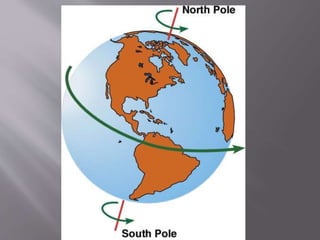
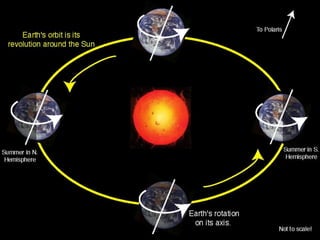
 Rotation: the act of an object spinning on
its axis
 Revolution: the path that all planets and
smaller celestial objects make AROUND
THE SUN or another object
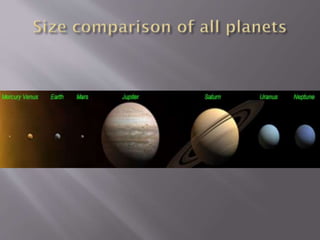
 http://sciencenetlinks.com/interactives/messeng
er/psc/PlanetSize.html Interactive Planet Size
Comparison
 http://www.youtube.com/watch?v=Ov5AHcCQt
d8 (Planet and Stars size comparison 3 min)
 http://www.youtube.com/watch?v=7zYlWTrp6J
E How the Universe was Made clip about Stars
and Size
 http://www.youtube.com/watch?v=3JdWlSF195
Y (“They Might Be Giants” The Sun is a Mass 2.5
min)
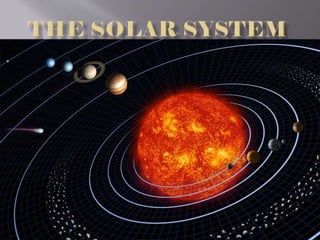
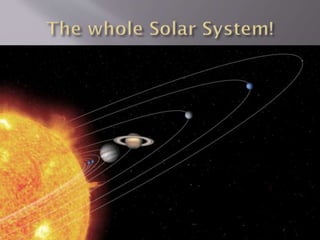
 Sun: The luminous celestial body around
which Earth and other planets revolve
and receive heat and light
 Planet: Any of the large celestial bodies
that revolve around the Sun in the Solar
System
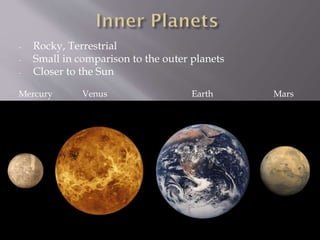
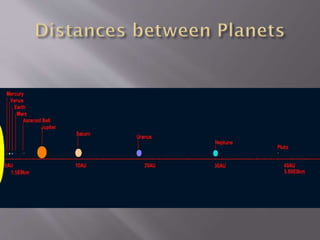
 Inner Planet: the four rocky planets
closest to the Sun: Mercury, Venus, Earth,
Mars
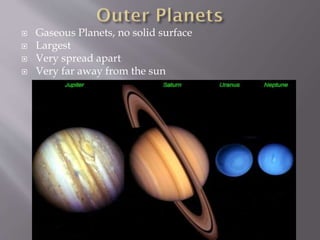
 Outer Planet: the large, gaseous planets
past the asteroid belt: Jupiter, Saturn,
Uranus, Neptune
 The Moon: the celestial satellite that
orbits our planet
 Asteroid: a small to large chunk of rock that
typically orbits in an area between Mars and
Jupiter, known as the Asteroid Belt
 Comet: a body of rock and ice that travels around
the Sun in an extreme elliptical path
 Meteor: small chunks of iron and rock that travel
through space, we see them as “shooting stars” as
they burn up in Earth’s atmosphere. Occasionally,
they hit Earth and their name changes to meteorite.
 Galilean Moons: Jupiter’s four largest moons,
named after their discoverer, Galileo Galilei. They
are Io, Europa, Ganymede, and Callisto
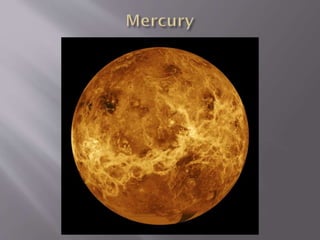
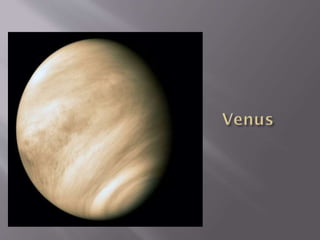
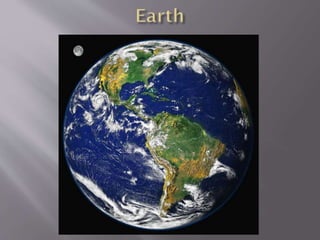
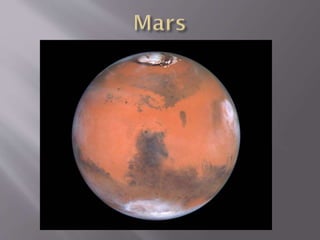
- Rocky, Terrestrial
- Small in comparison to the outer planets
- Closer to the Sun
Mercury Venus Earth Mars
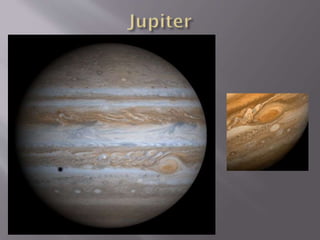
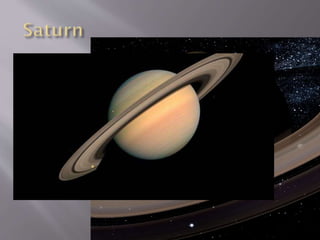
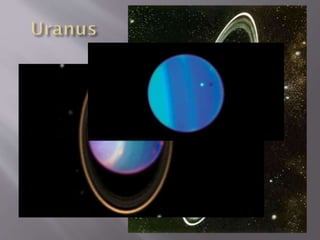
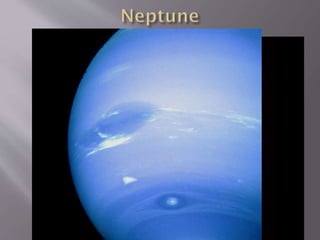
 Gaseous Planets, no solid surface
 Largest
 Very spread apart
 Very far away from the sun
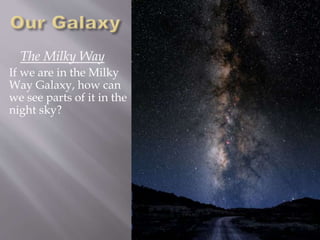
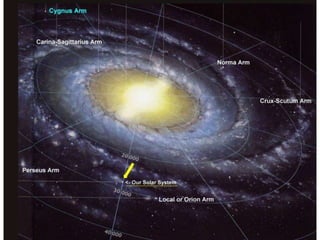
The Milky Way
If we are in the Milky
Way Galaxy, how can
we see parts of it in the
night sky?
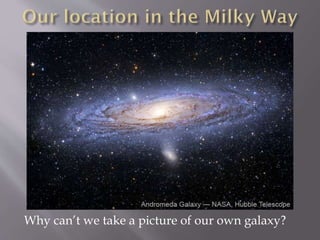
Why can’t we take a picture of our own galaxy?
So what do we know about gravity? We know
that it causes any two objects in the universe to
be drawn to one another. We know that gravity
assisted in forming the universe and that it keeps
the moon in orbit around the Earth.
http://videos.howstuffworks.com/tlc/29805-
understanding-gravity-video.htm

Space science powerpoint

  • 2.
     Rotation: theact of an object spinning on its axis  Revolution: the path that all planets and smaller celestial objects make AROUND THE SUN or another object
  • 5.
     http://sciencenetlinks.com/interactives/messeng er/psc/PlanetSize.html InteractivePlanet Size Comparison  http://www.youtube.com/watch?v=Ov5AHcCQt d8 (Planet and Stars size comparison 3 min)  http://www.youtube.com/watch?v=7zYlWTrp6J E How the Universe was Made clip about Stars and Size  http://www.youtube.com/watch?v=3JdWlSF195 Y (“They Might Be Giants” The Sun is a Mass 2.5 min)
  • 6.
     Sun: Theluminous celestial body around which Earth and other planets revolve and receive heat and light  Planet: Any of the large celestial bodies that revolve around the Sun in the Solar System
  • 7.
     Inner Planet:the four rocky planets closest to the Sun: Mercury, Venus, Earth, Mars  Outer Planet: the large, gaseous planets past the asteroid belt: Jupiter, Saturn, Uranus, Neptune  The Moon: the celestial satellite that orbits our planet
  • 8.
     Asteroid: asmall to large chunk of rock that typically orbits in an area between Mars and Jupiter, known as the Asteroid Belt  Comet: a body of rock and ice that travels around the Sun in an extreme elliptical path  Meteor: small chunks of iron and rock that travel through space, we see them as “shooting stars” as they burn up in Earth’s atmosphere. Occasionally, they hit Earth and their name changes to meteorite.  Galilean Moons: Jupiter’s four largest moons, named after their discoverer, Galileo Galilei. They are Io, Europa, Ganymede, and Callisto
  • 10.
    - Rocky, Terrestrial -Small in comparison to the outer planets - Closer to the Sun Mercury Venus Earth Mars
  • 11.
     Gaseous Planets,no solid surface  Largest  Very spread apart  Very far away from the sun
  • 23.
    The Milky Way Ifwe are in the Milky Way Galaxy, how can we see parts of it in the night sky?
  • 24.
    Why can’t wetake a picture of our own galaxy?
  • 26.
    So what dowe know about gravity? We know that it causes any two objects in the universe to be drawn to one another. We know that gravity assisted in forming the universe and that it keeps the moon in orbit around the Earth. http://videos.howstuffworks.com/tlc/29805- understanding-gravity-video.htm