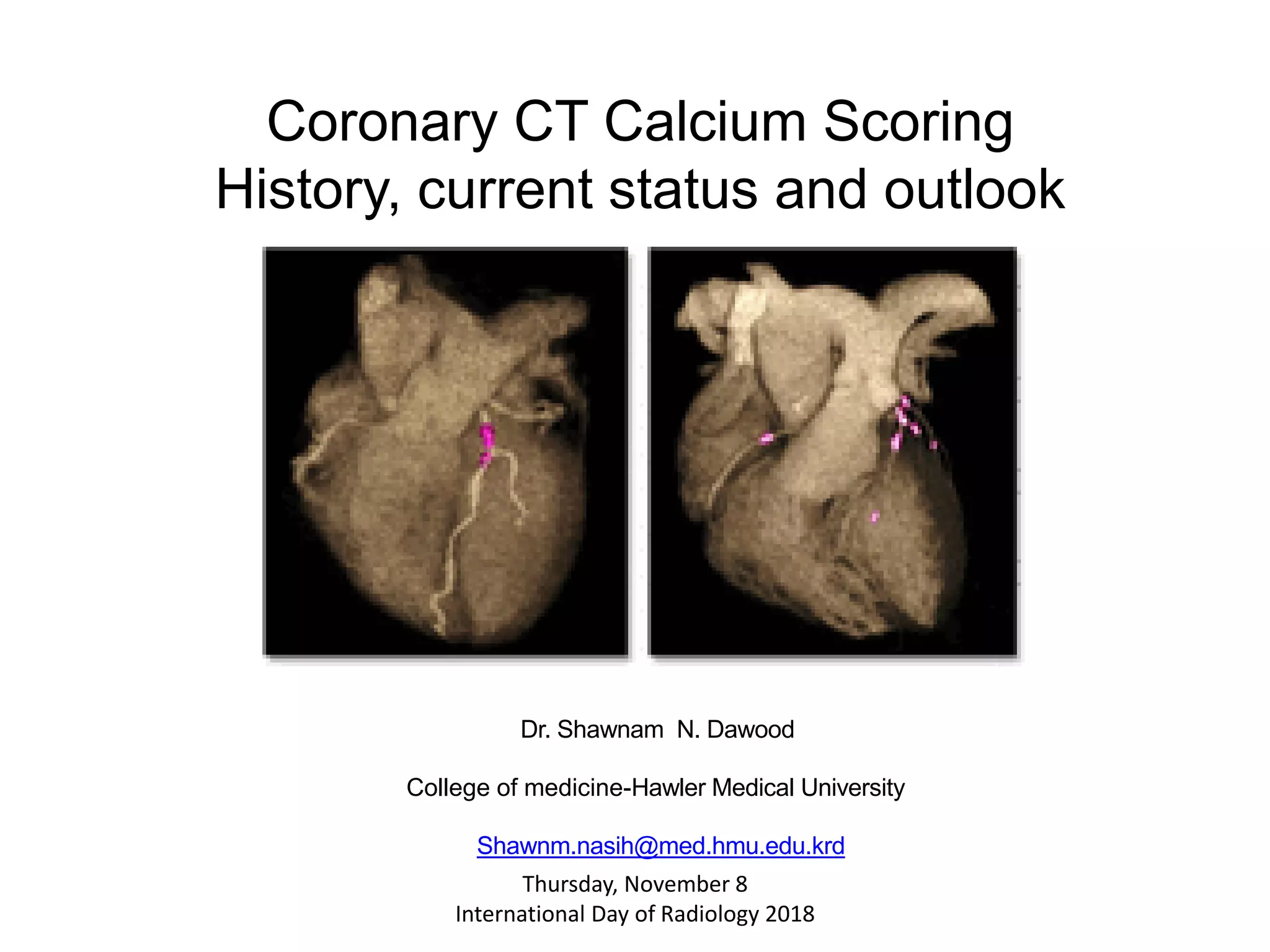
Coronary CT Calcium Scoring
History, current status and outlook
Dr. Shawnam N. Dawood
College of medicine-Hawler Medical University
Shawnm.nasih@med.hmu.edu.krd
Thursday, November 8
International Day of Radiology 2018
Cardiac CT for Calcium Scoring
Overview
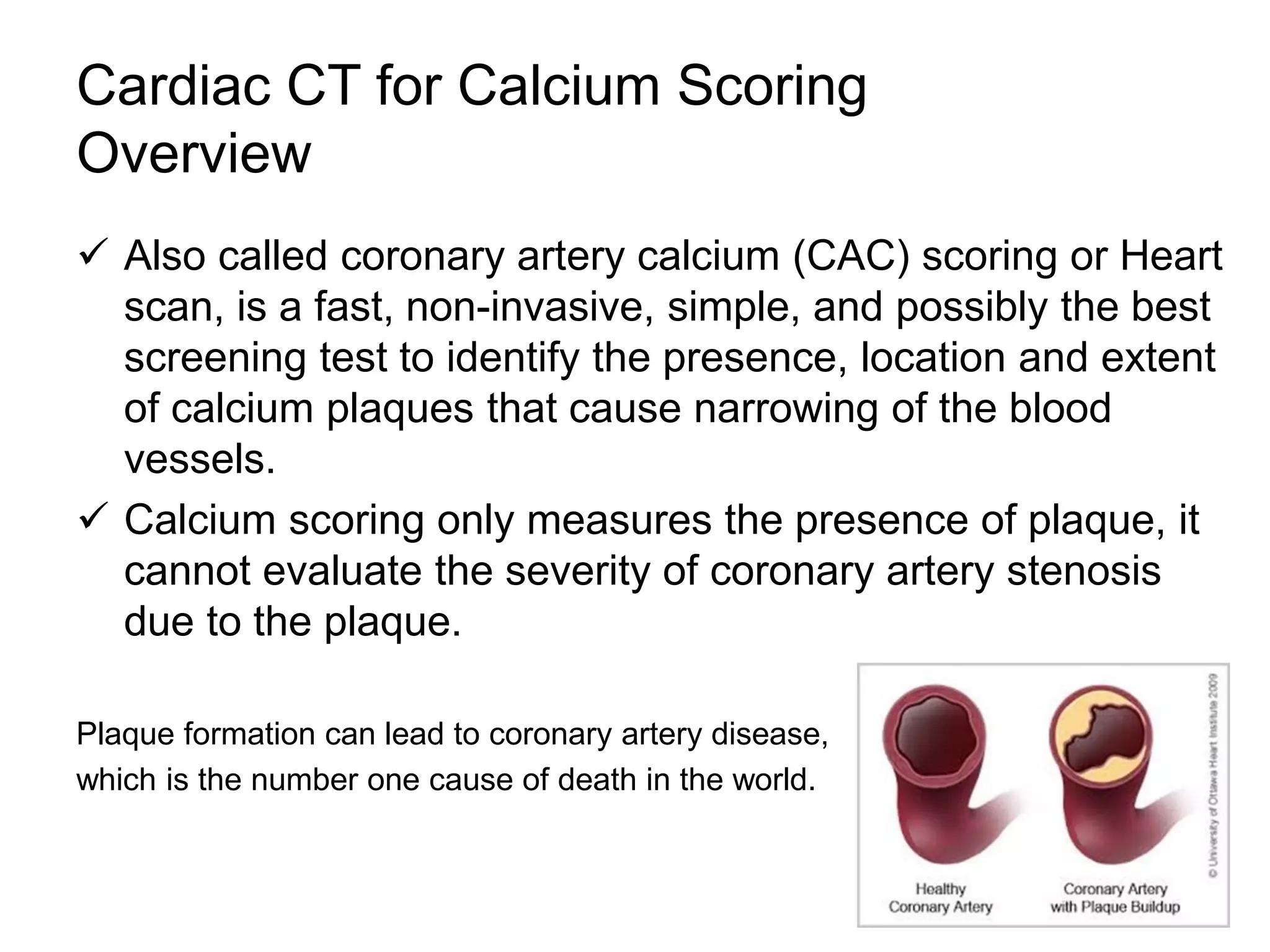
 Also called coronary artery calcium (CAC) scoring or Heart
scan, is a fast, non-invasive, simple, and possibly the best
screening test to identify the presence, location and extent
of calcium plaques that cause narrowing of the blood
vessels.
 Calcium scoring only measures the presence of plaque, it
cannot evaluate the severity of coronary artery stenosis
due to the plaque.
Plaque formation can lead to coronary artery disease,
which is the number one cause of death in the world.
Can we measure plaque?
• Plaque consists of fatty substances, LDL cholesterol,
and fibrin. The plaque is initially soft, and gets hard with
deposition of calcium phosphate which starts nearly six
months later.
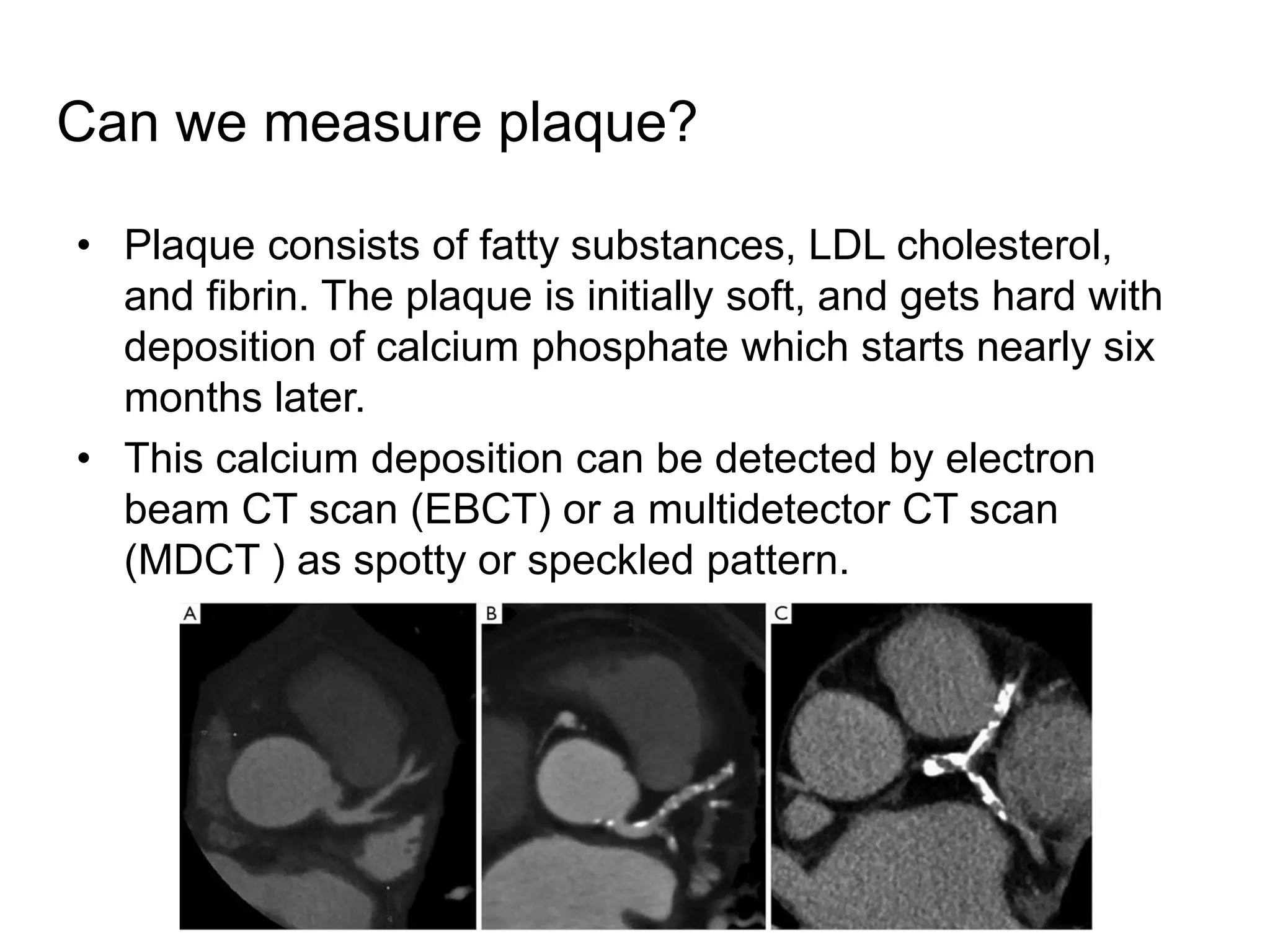
• This calcium deposition can be detected by electron
beam CT scan (EBCT) or a multidetector CT scan
(MDCT ) as spotty or speckled pattern.
Cardiac CT for
Calcium Scoring
• CAC scoring is used in
asymptomatic patients to
improve their clinically
predicted risk for future
cardiovascular events.
• Routine application of the
technology is not uniformly
recommended, instead used
for individuals at intermediate
cardiovascular risk.
Agatston scoring: what do the numbers
mean?
 Coronary calcium is defined as a lesion above a threshold of
130 Hounsfield units, with an area of ≥3 adjacent pixels (at
least 1 mm2).
 Formal coronary artery calcium (CAC) scoring was
introduced in 1990.
 AGATSTON SCORE. The first CAC score, proposed by
Arthur Agatston (a cardiologist) and Warren Janowitz (a
radiologist), remains the reference standard and the most
commonly used CAC score in clinical practice.
 Agatston scoring assumes that an increased local density of
calcium is associated with more coronary artery disease and
greater CVD risk.
Coronary Calcium CT Scan
Exploring the basics leads us to the following
questions:
 Who should get a coronary calcium scan?
 What are the risk factors associated with heart disease?
 Benefits vs. Risks.
 How should I prepare for the scan?
 How does the procedure work?
 How long is the procedure?
 What can I expect after the procedure?
 Are there any alternatives to this procedure?
 What about Insurance coverage?
Candidates for Calcium Scoring
 Men: 35-70 years of age with one or more risk
factors for heart disease.
 Women: 40-75 years of age with one or more risk
factors for heart disease.
 Also patients with symptoms of chest pain,
shortness of breath, fatigue and with an abnormal
ECG.
What are the risk factors associated with heart disease?
 Major risk factors that are modifiable
• High blood pressure
• Diabetes mellitus
• Dyslipidemias
• Physical inactivity
• Obesity
 Major risk factors that are non-modifiable
• Age
• Gender
• Heredity
 Other risk factors include
• Stress
• Alcohol
• smocking
• Diet and Nutrition
 CAC scoring is not appropriate for all patients.
Some contraindications include:
• Pregnancy
• Prior heart attack, angioplasty/stent or bypass
surgery
• Resting heart rate above 90-95 beats per minute
• Cardiac implants including mechanical heart
valves, pacemaker wires or stents.
Benefits and Risks of coronary calcium scan
Benefits
• Identifies risk of having heart attack and if identified the
level of severity helping the patient to plan treatment and
relief.
• Helps screen patients with chances of having heart attack
even 5-10 yrs. prior to the occurrence of symptoms.
Risks
• Risks are minimal with no immediate side effects. Benefits
of the scan outweighs the exposure to radiation and
radiation is minimal compared to the natural radiation
received from our atmosphere.
Interpretation of the coronary calcium scoring
Score Presence of Plaque Heart disease Risk of Heart
attack
0 No identifiable plaque. You
have less than 5% chance of
having heart disease.
<5% chance Very low
1-10 Minimal identifiable plaque.
You have less than 10%
chance of having heart
disease.
<10% chance Low
11-100 Mild plaque is present. You
have mild heart disease.
Mild Moderate
101-400 Moderate amount of plaque is
present. You have heart
disease and plaque may be
blocking an artery.
Moderate Moderate to high
>400 Large amount of plaque is
present. You have more than
a 90% chance that plaque is
blocking one of your arteries.
Severe High
Significant Coronary Artery Calcium Score (>400)
The significance of ‘‘zero calcium’’
• An interesting property of the calcium score is its high negative predictive
value.
A comprehensive meta-analysis examined the prognostic significance of CAC = 0 . In 29,312
individuals with CAC = 0 reported in 13 studies the event rate was 0.47% during a mean
follow-up of 50 months. The relative risk ratio of CAC = 0 compared to CAC > 0 was 0.15.
In a large review of 44,052 patients referred for calcium scoring, individuals without any
clinical risk factors but a CAC ≥ 400 experienced a significantly higher event rate than
subjects with ≥ 3 risk factors but a CAC of 0.
• This means that absence of coronary calcium ‘‘overpowered’’ clinical risk
factors in regard to mortality prediction.
• The strong relationship between zero calcium score and very low
cardiovascular event rate applies only to asymptomatic individuals.
Management of the patients with positive
screening test
• Based on the results and considering other risk factors your
cardiologist may order other diagnostic tests like stress test
and Echocardiography to further evaluate the condition.
• Coronary catheterization with angiography of the coronary
arteries may be indicated to assess the severity and extent
of coronary narrowing.
• There is no specific treatment available to lower coronary
artery calcium deposition. Treatment of patients with high
calcium scores should aim at reducing risk of heart attack.
This involves treating lipid disorders, diabetes mellitus, and
high blood pressure.
• Patients are advised to avoid smoking and do regular and
moderate exercise.
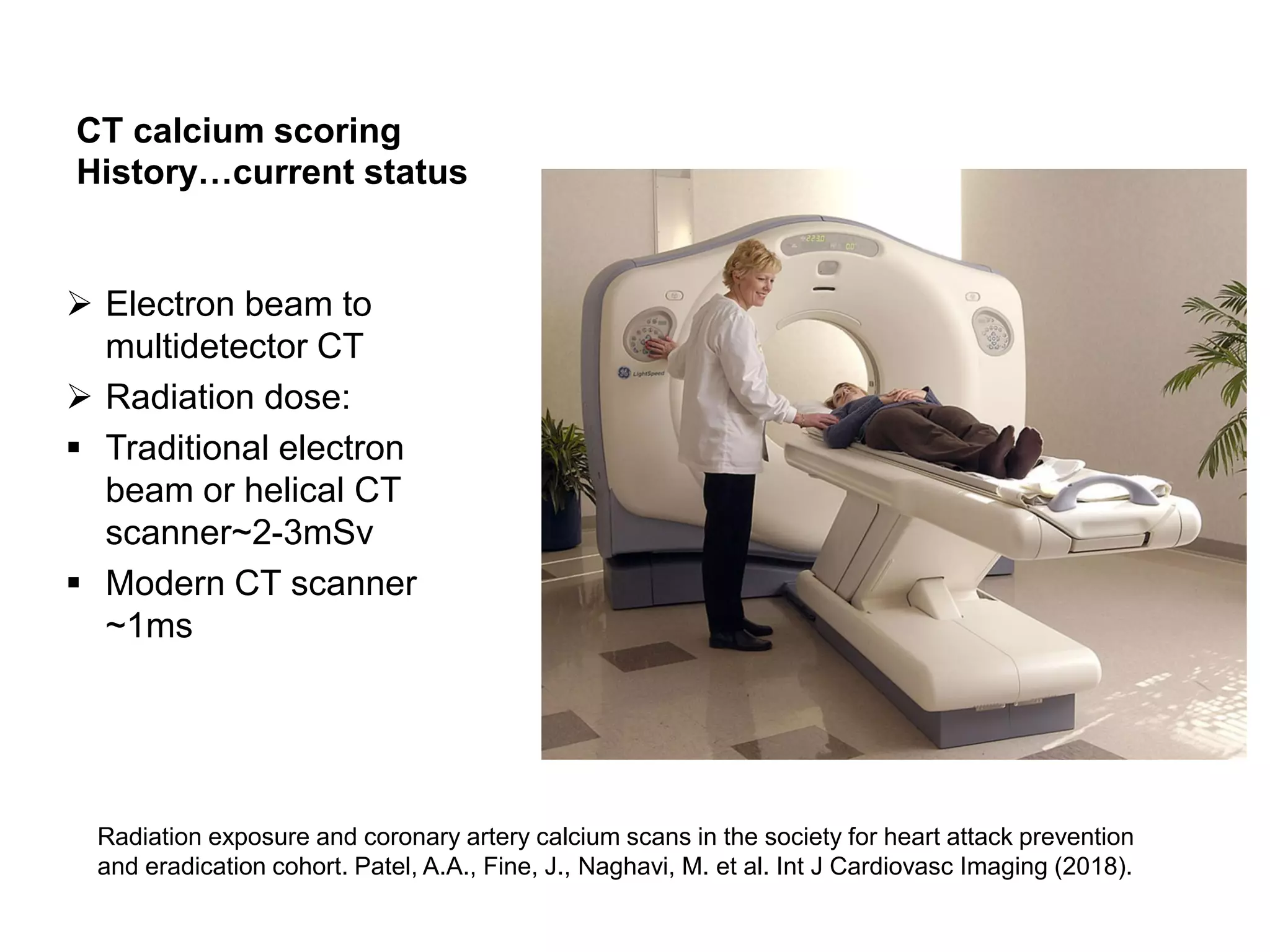
CT calcium scoring
History…current status
 Electron beam to
multidetector CT
 Radiation dose:
 Traditional electron
beam or helical CT
scanner~2-3mSv
 Modern CT scanner
~1ms
Radiation exposure and coronary artery calcium scans in the society for heart attack prevention
and eradication cohort. Patel, A.A., Fine, J., Naghavi, M. et al. Int J Cardiovasc Imaging (2018).
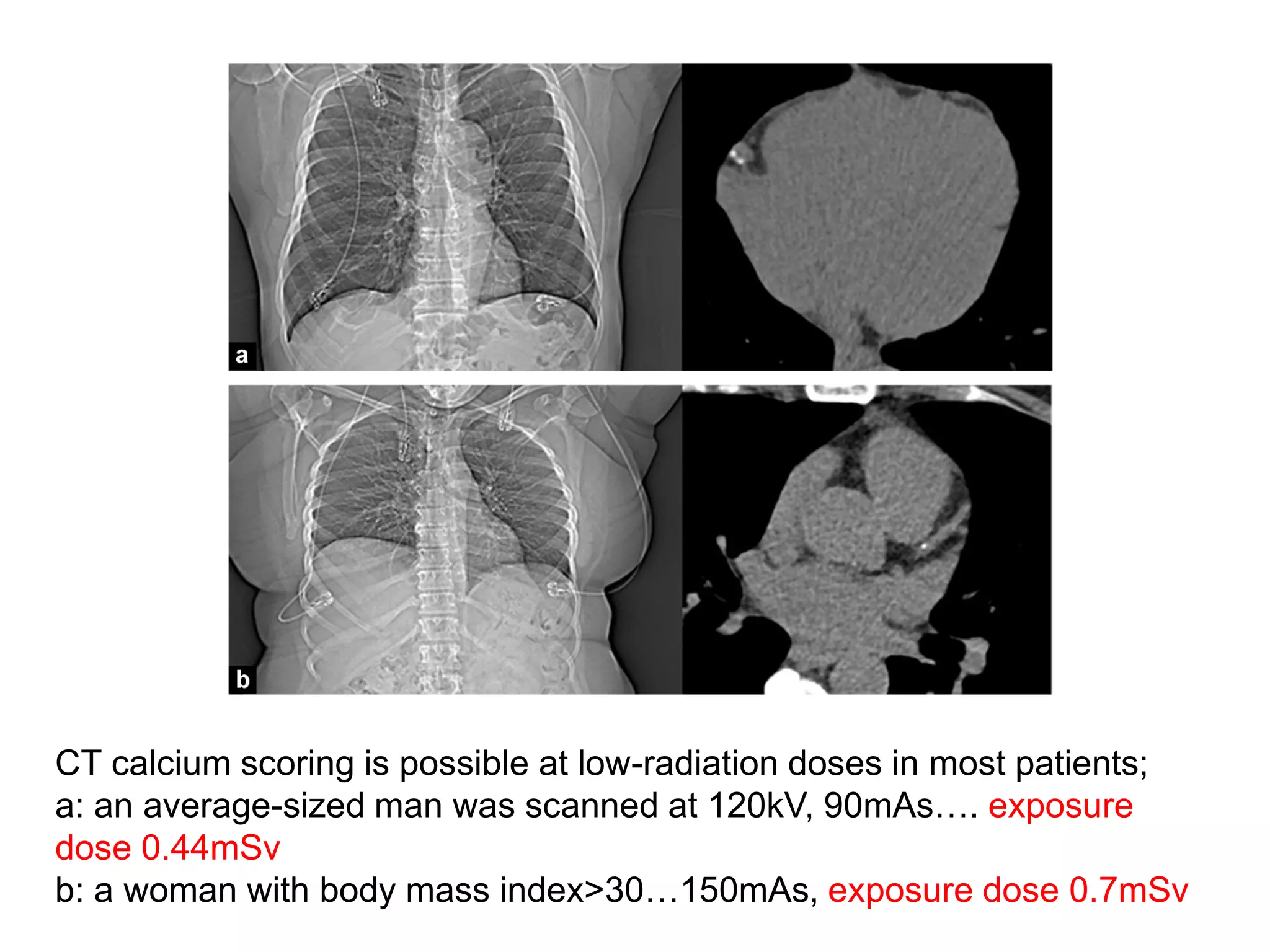
CT calcium scoring is possible at low-radiation doses in most patients;
a: an average-sized man was scanned at 120kV, 90mAs…. exposure
dose 0.44mSv
b: a woman with body mass index>30…150mAs, exposure dose 0.7mSv
Calcium scoring methods
• Agatston score
• Volume score
• Mass score
• Density score
Sandfort V. and Bluemke D.A. CT calcium scoring. History, current status and outlook
Diagnostic and Interventional Imaging Volume 98, Issue 1, January 2017, Pages 3-10
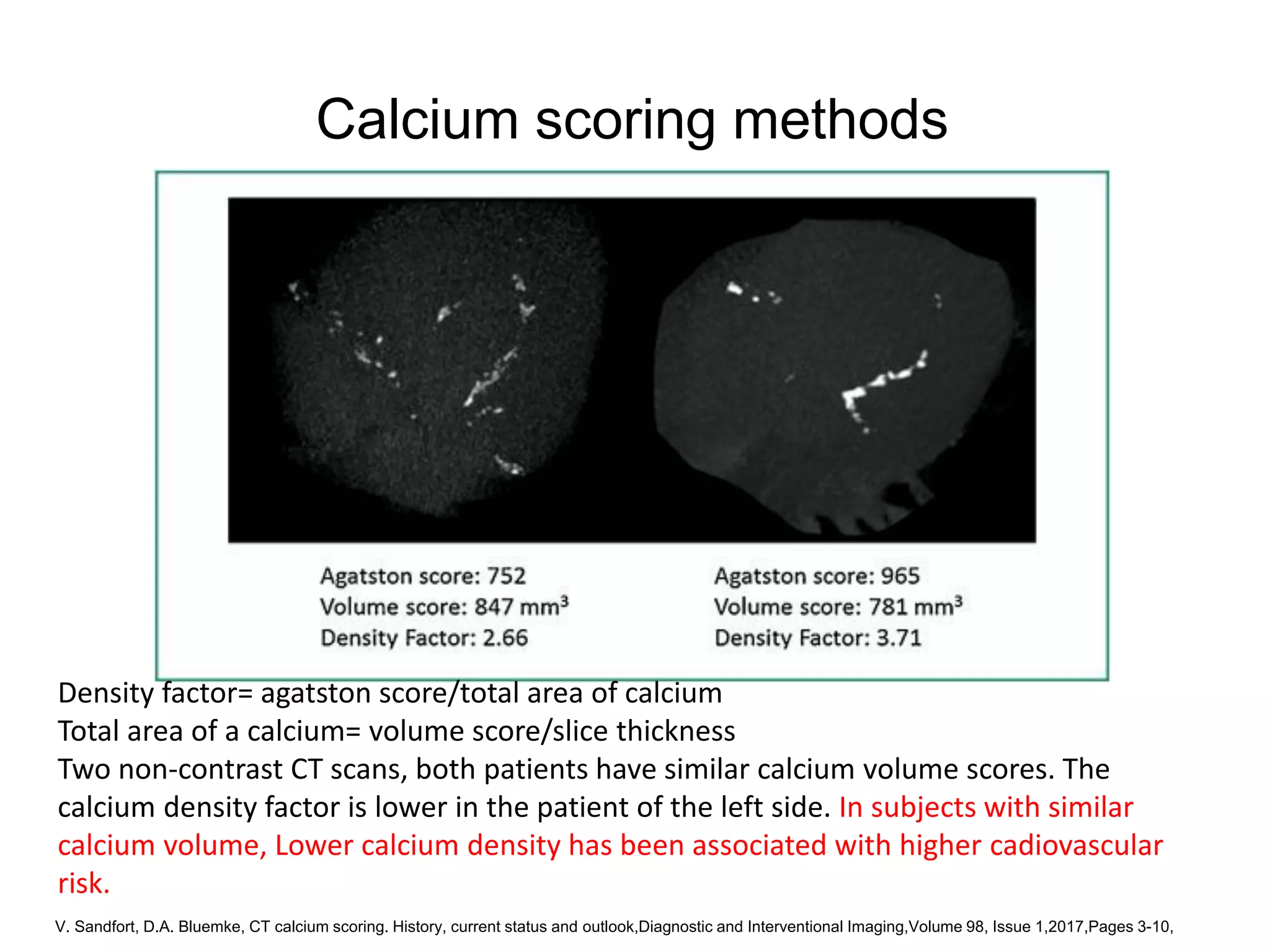
Calcium scoring methods
Density factor= agatston score/total area of calcium
Total area of a calcium= volume score/slice thickness
Two non-contrast CT scans, both patients have similar calcium volume scores. The
calcium density factor is lower in the patient of the left side. In subjects with similar
calcium volume, Lower calcium density has been associated with higher cadiovascular
risk.
V. Sandfort, D.A. Bluemke, CT calcium scoring. History, current status and outlook,Diagnostic and Interventional Imaging,Volume 98, Issue 1,2017,Pages 3-10,
How to calculate cardiovascular risk?
Do you know your own CV risk? If you do not!
go to this site below to calculate.
http://cvdrisk.nhlbi.nih.gov/
Framingham CV risk calculator: age, gender,
total cholesterol, HDL cholesterol, smoking
history, systolic BP and if on medications for
hypertension.
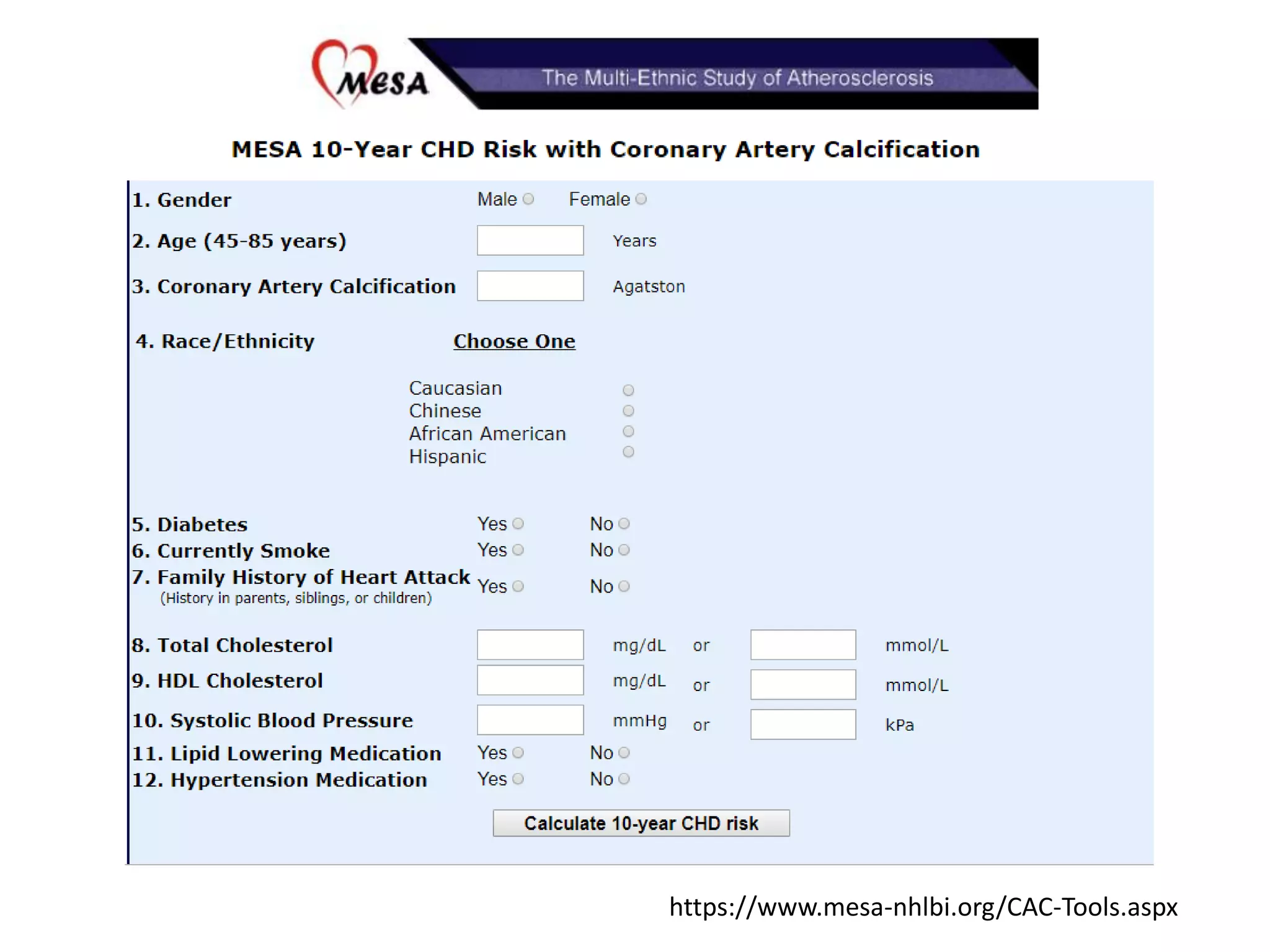
 The Multi-Ethnic Study of Atherosclerosis (MESA) is a medical research
study involving more than 6,000 men and women from six communities
in the United States.
 MESA is sponsored by the National Heart Lung and Blood Institute of
the National Institutes of Health.
 Participants in MESA are seen at clinics in the following universities:
• Columbia University, New York
• Johns Hopkins University, Baltimore
• Northwestern University, Chicago
• UCLA, Los Angeles
• University of Minnesota, Twin Cities
• Wake Forest University, Winston Salem
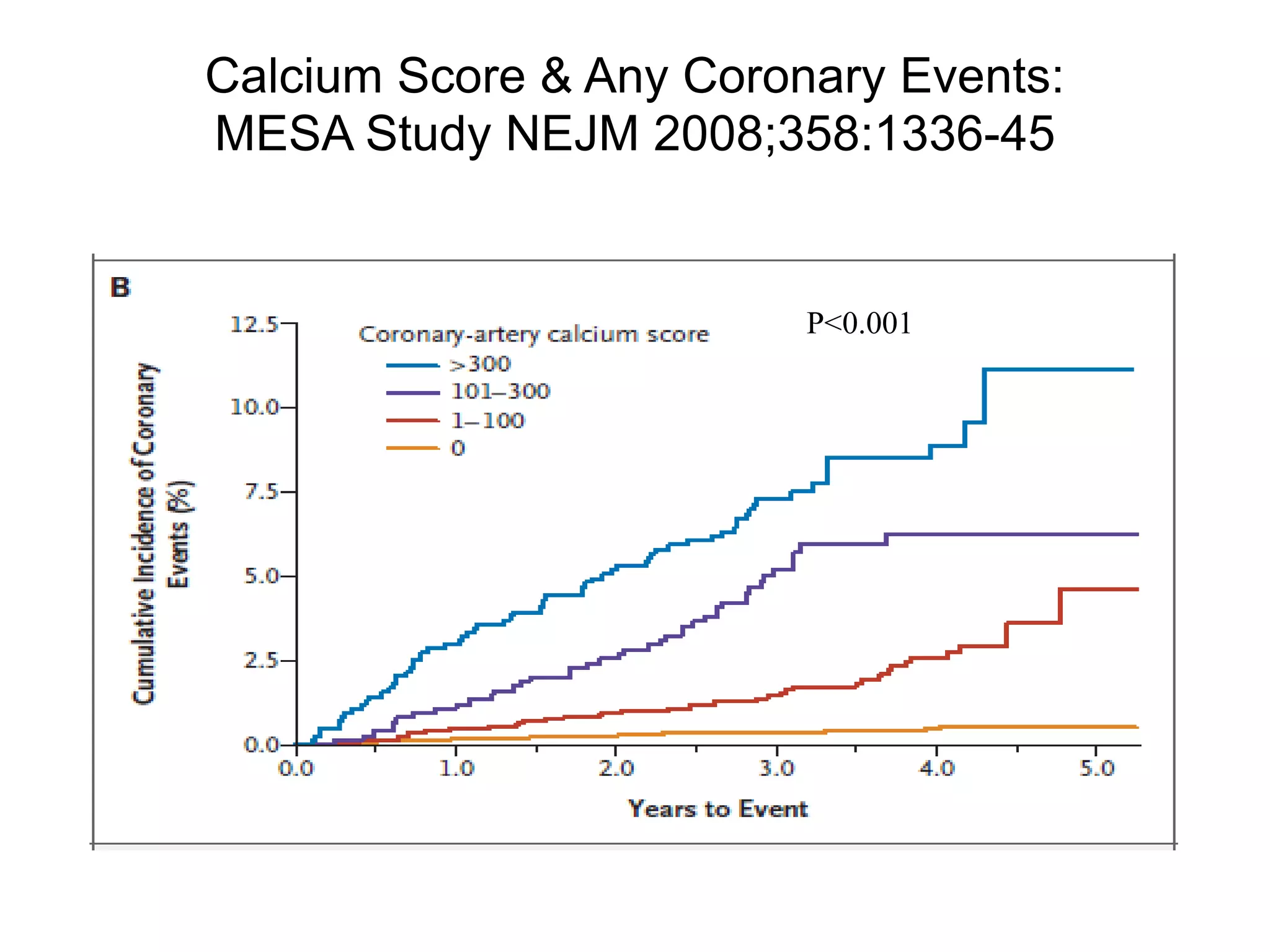
Calcium Score & Any Coronary Events:
MESA Study NEJM 2008;358:1336-45
P<0.001
https://www.mesa-nhlbi.org/CAC-Tools.aspx
Repeat CAC testing
• If coronary calcium has been identified in a patient, is there
any value in performing a follow-up scan to evaluate
progression? Multiple prospective, randomized statin trials
have evaluated repeat CAC testing.
• No clinical algorithm for treatment decisions based on calcium
progression exists to date.
• CAC assessment of atherosclerosis is inherently limited
because it can only detect the calcified plaque component,
while the non-calcified component is unknown.
• At this time, repeat CAC scoring is not recommended.
Impact on patient adherence to treatment
‘Is seeing believing?’’
A potential benefit of CAC scoring is that visualization
of coronary calcification may affect patient adherence
to drug therapy or lifestyle modifications.
The ‘‘Early Identification of Subclinical Atherosclerosis
by Noninvasive Imaging Research’’ (EISNER) study
randomized 2137 individuals to CAC scanning or no CAC
scanning (2:1 ratio) and looked at coronary artery risk
factors at 4 years.
Case scenario
A 63-year-old female with coronary artery disease visited to the
clinic for follow up on her condition. She has a family history of
heart disease, her father died at the age of 36 with heart attack.
She had heart scan during her previous visit as part of screening
for heart disease and her calcium score was 400. She was
educated about the screening tests and its benefits.
Because of her family history, she advised her brother who is 70-
year-old to get the scan. He was asymptomatic and never had
any heart problems. On testing the calcium score was 2500.
Patient had coronary angiogram which showed 100 % blockage
of coronary vessels and patient had coronary artery bypass
surgery.
Now the patient is doing well after the surgery and back to his
normal activities……………………Truly lifesaving!
Recommendations
• CAC scoring is sound and physicians must be
made aware on the ways to incorporate this
screening tool into clinical practice.
• More research is needed on CAC progression
and regression using various treatments for
CAD.
References:
• Statistics of heart disease: Heart Disease and Stroke Statistics 2017 Update
http://circ.ahajournals.org/content/early/2017/01/2
• Risk factors for heart disease:
http://www.heart.org/HEARTORG/Conditions/More/MyHeartandStrokeNews/Coronary-Artery-
Disease—Coronary-Heart-Disease_UCM_436416_Article.jsp#.WhQyXhNSzVo
• Procedure of heart scan, risks and benefits: www.radiologyinfo.org/en/info.cfm?PG=ct_calscorin
• Interpretation of calcium scoring
http://www.umm.edu/programs/diagnosticrad/services/technology/ct/cardiac-calcium-scoring
• Calcium scoring of the heart scan www.RadiologyInfo.Org
• V. Sandfort, D.A. Bluemke, CT calcium scoring. History, current status and outlook,Diagnostic and
Interventional Imaging,Volume 98, Issue 1,2017,Pages 3-10,ISSN 2211-5684,
https://doi.org/10.1016/j.diii.2016.06.007(http://www.sciencedirect.com/science/article/pii/S221156
841630136X)
• Radiation exposure and coronary artery calcium scans in the society for heart attack prevention
and eradication cohort. Patel, A.A., Fine, J., Naghavi, M. et al. Int J Cardiovasc Imaging (2018).
• Sandfort V. and Bluemke D.A. CT calcium scoring. History, current status and outlook Diagnostic
and Interventional Imaging Volume 98, Issue 1, January 2017, Pages 3-10
Thank you

Coronary artery calcium scoring IDoR 2018

  • 1.
    Coronary CT CalciumScoring History, current status and outlook Dr. Shawnam N. Dawood College of medicine-Hawler Medical University Shawnm.nasih@med.hmu.edu.krd Thursday, November 8 International Day of Radiology 2018
  • 2.
    Cardiac CT forCalcium Scoring Overview  Also called coronary artery calcium (CAC) scoring or Heart scan, is a fast, non-invasive, simple, and possibly the best screening test to identify the presence, location and extent of calcium plaques that cause narrowing of the blood vessels.  Calcium scoring only measures the presence of plaque, it cannot evaluate the severity of coronary artery stenosis due to the plaque. Plaque formation can lead to coronary artery disease, which is the number one cause of death in the world.
  • 3.
    Can we measureplaque? • Plaque consists of fatty substances, LDL cholesterol, and fibrin. The plaque is initially soft, and gets hard with deposition of calcium phosphate which starts nearly six months later. • This calcium deposition can be detected by electron beam CT scan (EBCT) or a multidetector CT scan (MDCT ) as spotty or speckled pattern.
  • 4.
    Cardiac CT for CalciumScoring • CAC scoring is used in asymptomatic patients to improve their clinically predicted risk for future cardiovascular events. • Routine application of the technology is not uniformly recommended, instead used for individuals at intermediate cardiovascular risk.
  • 5.
    Agatston scoring: whatdo the numbers mean?  Coronary calcium is defined as a lesion above a threshold of 130 Hounsfield units, with an area of ≥3 adjacent pixels (at least 1 mm2).  Formal coronary artery calcium (CAC) scoring was introduced in 1990.  AGATSTON SCORE. The first CAC score, proposed by Arthur Agatston (a cardiologist) and Warren Janowitz (a radiologist), remains the reference standard and the most commonly used CAC score in clinical practice.  Agatston scoring assumes that an increased local density of calcium is associated with more coronary artery disease and greater CVD risk.
  • 6.
    Coronary Calcium CTScan Exploring the basics leads us to the following questions:  Who should get a coronary calcium scan?  What are the risk factors associated with heart disease?  Benefits vs. Risks.  How should I prepare for the scan?  How does the procedure work?  How long is the procedure?  What can I expect after the procedure?  Are there any alternatives to this procedure?  What about Insurance coverage?
  • 7.
    Candidates for CalciumScoring  Men: 35-70 years of age with one or more risk factors for heart disease.  Women: 40-75 years of age with one or more risk factors for heart disease.  Also patients with symptoms of chest pain, shortness of breath, fatigue and with an abnormal ECG.
  • 8.
    What are therisk factors associated with heart disease?  Major risk factors that are modifiable • High blood pressure • Diabetes mellitus • Dyslipidemias • Physical inactivity • Obesity  Major risk factors that are non-modifiable • Age • Gender • Heredity  Other risk factors include • Stress • Alcohol • smocking • Diet and Nutrition
  • 9.
     CAC scoringis not appropriate for all patients. Some contraindications include: • Pregnancy • Prior heart attack, angioplasty/stent or bypass surgery • Resting heart rate above 90-95 beats per minute • Cardiac implants including mechanical heart valves, pacemaker wires or stents.
  • 10.
    Benefits and Risksof coronary calcium scan Benefits • Identifies risk of having heart attack and if identified the level of severity helping the patient to plan treatment and relief. • Helps screen patients with chances of having heart attack even 5-10 yrs. prior to the occurrence of symptoms. Risks • Risks are minimal with no immediate side effects. Benefits of the scan outweighs the exposure to radiation and radiation is minimal compared to the natural radiation received from our atmosphere.
  • 11.
    Interpretation of thecoronary calcium scoring Score Presence of Plaque Heart disease Risk of Heart attack 0 No identifiable plaque. You have less than 5% chance of having heart disease. <5% chance Very low 1-10 Minimal identifiable plaque. You have less than 10% chance of having heart disease. <10% chance Low 11-100 Mild plaque is present. You have mild heart disease. Mild Moderate 101-400 Moderate amount of plaque is present. You have heart disease and plaque may be blocking an artery. Moderate Moderate to high >400 Large amount of plaque is present. You have more than a 90% chance that plaque is blocking one of your arteries. Severe High
  • 12.
    Significant Coronary ArteryCalcium Score (>400)
  • 13.
    The significance of‘‘zero calcium’’ • An interesting property of the calcium score is its high negative predictive value. A comprehensive meta-analysis examined the prognostic significance of CAC = 0 . In 29,312 individuals with CAC = 0 reported in 13 studies the event rate was 0.47% during a mean follow-up of 50 months. The relative risk ratio of CAC = 0 compared to CAC > 0 was 0.15. In a large review of 44,052 patients referred for calcium scoring, individuals without any clinical risk factors but a CAC ≥ 400 experienced a significantly higher event rate than subjects with ≥ 3 risk factors but a CAC of 0. • This means that absence of coronary calcium ‘‘overpowered’’ clinical risk factors in regard to mortality prediction. • The strong relationship between zero calcium score and very low cardiovascular event rate applies only to asymptomatic individuals.
  • 14.
    Management of thepatients with positive screening test • Based on the results and considering other risk factors your cardiologist may order other diagnostic tests like stress test and Echocardiography to further evaluate the condition. • Coronary catheterization with angiography of the coronary arteries may be indicated to assess the severity and extent of coronary narrowing. • There is no specific treatment available to lower coronary artery calcium deposition. Treatment of patients with high calcium scores should aim at reducing risk of heart attack. This involves treating lipid disorders, diabetes mellitus, and high blood pressure. • Patients are advised to avoid smoking and do regular and moderate exercise.
  • 15.
    CT calcium scoring History…currentstatus  Electron beam to multidetector CT  Radiation dose:  Traditional electron beam or helical CT scanner~2-3mSv  Modern CT scanner ~1ms Radiation exposure and coronary artery calcium scans in the society for heart attack prevention and eradication cohort. Patel, A.A., Fine, J., Naghavi, M. et al. Int J Cardiovasc Imaging (2018).
  • 16.
    CT calcium scoringis possible at low-radiation doses in most patients; a: an average-sized man was scanned at 120kV, 90mAs…. exposure dose 0.44mSv b: a woman with body mass index>30…150mAs, exposure dose 0.7mSv
  • 17.
    Calcium scoring methods •Agatston score • Volume score • Mass score • Density score Sandfort V. and Bluemke D.A. CT calcium scoring. History, current status and outlook Diagnostic and Interventional Imaging Volume 98, Issue 1, January 2017, Pages 3-10
  • 18.
    Calcium scoring methods Densityfactor= agatston score/total area of calcium Total area of a calcium= volume score/slice thickness Two non-contrast CT scans, both patients have similar calcium volume scores. The calcium density factor is lower in the patient of the left side. In subjects with similar calcium volume, Lower calcium density has been associated with higher cadiovascular risk. V. Sandfort, D.A. Bluemke, CT calcium scoring. History, current status and outlook,Diagnostic and Interventional Imaging,Volume 98, Issue 1,2017,Pages 3-10,
  • 19.
    How to calculatecardiovascular risk? Do you know your own CV risk? If you do not! go to this site below to calculate. http://cvdrisk.nhlbi.nih.gov/ Framingham CV risk calculator: age, gender, total cholesterol, HDL cholesterol, smoking history, systolic BP and if on medications for hypertension.
  • 21.
     The Multi-EthnicStudy of Atherosclerosis (MESA) is a medical research study involving more than 6,000 men and women from six communities in the United States.  MESA is sponsored by the National Heart Lung and Blood Institute of the National Institutes of Health.  Participants in MESA are seen at clinics in the following universities: • Columbia University, New York • Johns Hopkins University, Baltimore • Northwestern University, Chicago • UCLA, Los Angeles • University of Minnesota, Twin Cities • Wake Forest University, Winston Salem
  • 23.
    Calcium Score &Any Coronary Events: MESA Study NEJM 2008;358:1336-45 P<0.001
  • 24.
  • 25.
    Repeat CAC testing •If coronary calcium has been identified in a patient, is there any value in performing a follow-up scan to evaluate progression? Multiple prospective, randomized statin trials have evaluated repeat CAC testing. • No clinical algorithm for treatment decisions based on calcium progression exists to date. • CAC assessment of atherosclerosis is inherently limited because it can only detect the calcified plaque component, while the non-calcified component is unknown. • At this time, repeat CAC scoring is not recommended.
  • 26.
    Impact on patientadherence to treatment ‘Is seeing believing?’’ A potential benefit of CAC scoring is that visualization of coronary calcification may affect patient adherence to drug therapy or lifestyle modifications. The ‘‘Early Identification of Subclinical Atherosclerosis by Noninvasive Imaging Research’’ (EISNER) study randomized 2137 individuals to CAC scanning or no CAC scanning (2:1 ratio) and looked at coronary artery risk factors at 4 years.
  • 27.
    Case scenario A 63-year-oldfemale with coronary artery disease visited to the clinic for follow up on her condition. She has a family history of heart disease, her father died at the age of 36 with heart attack. She had heart scan during her previous visit as part of screening for heart disease and her calcium score was 400. She was educated about the screening tests and its benefits. Because of her family history, she advised her brother who is 70- year-old to get the scan. He was asymptomatic and never had any heart problems. On testing the calcium score was 2500. Patient had coronary angiogram which showed 100 % blockage of coronary vessels and patient had coronary artery bypass surgery. Now the patient is doing well after the surgery and back to his normal activities……………………Truly lifesaving!
  • 28.
    Recommendations • CAC scoringis sound and physicians must be made aware on the ways to incorporate this screening tool into clinical practice. • More research is needed on CAC progression and regression using various treatments for CAD.
  • 29.
    References: • Statistics ofheart disease: Heart Disease and Stroke Statistics 2017 Update http://circ.ahajournals.org/content/early/2017/01/2 • Risk factors for heart disease: http://www.heart.org/HEARTORG/Conditions/More/MyHeartandStrokeNews/Coronary-Artery- Disease—Coronary-Heart-Disease_UCM_436416_Article.jsp#.WhQyXhNSzVo • Procedure of heart scan, risks and benefits: www.radiologyinfo.org/en/info.cfm?PG=ct_calscorin • Interpretation of calcium scoring http://www.umm.edu/programs/diagnosticrad/services/technology/ct/cardiac-calcium-scoring • Calcium scoring of the heart scan www.RadiologyInfo.Org • V. Sandfort, D.A. Bluemke, CT calcium scoring. History, current status and outlook,Diagnostic and Interventional Imaging,Volume 98, Issue 1,2017,Pages 3-10,ISSN 2211-5684, https://doi.org/10.1016/j.diii.2016.06.007(http://www.sciencedirect.com/science/article/pii/S221156 841630136X) • Radiation exposure and coronary artery calcium scans in the society for heart attack prevention and eradication cohort. Patel, A.A., Fine, J., Naghavi, M. et al. Int J Cardiovasc Imaging (2018). • Sandfort V. and Bluemke D.A. CT calcium scoring. History, current status and outlook Diagnostic and Interventional Imaging Volume 98, Issue 1, January 2017, Pages 3-10
  • 30.