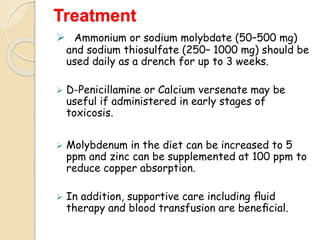
Copper toxicity occurs when animals ingest excessive amounts of copper. This can happen through contaminated pastures or accidental ingestion of copper salts. Copper is absorbed in the intestines and stored primarily in the liver, where excessive amounts can cause cellular damage and necrosis. Clinical signs of copper toxicity include jaundice, hemolytic anemia, hemoglobinuria, and liver enzyme elevation. The liver becomes enlarged and discolored. Treatment focuses on chelating agents like sodium thiosulfate and dietary molybdenum to reduce copper absorption. Supportive care like fluids and blood transfusions may also be needed.