TOXIC LEVELS OF DIFFERENT MINERALS, CLINICAL
FEATURES OF DEFICIENCY
AND TOXICITY SYNDROMES, AMELIORATIVE
MEASURES
PRESENTED BY
BORNALEE HANDIQUE
P-2047
INTRODUCTION
 Minerals are required by all living creature
Deficiency diseases
Minerals Normal healthy life
Toxicity
 Mineral toxicity is a condition in which concentration of any
one of the minerals in the body is abnormally high, and which
has an adverse effect on health
SOURCES OF MINERAL TOXICITY
LEAD TOXICITY (PLUMBISM)
 Ubiquitous environmental pollutant
 Cattle, horse and dogs are more susceptible
 Pig and cat are rare
- H.S. Sandhu 2nd ed (2012)
 Younger Vs old
 ruminant Vs non-ruminant
- Nathery (1984)
 In mineral mixture maximum acceptable conc. of Pb is 10ppm
-marcal et al (2005)
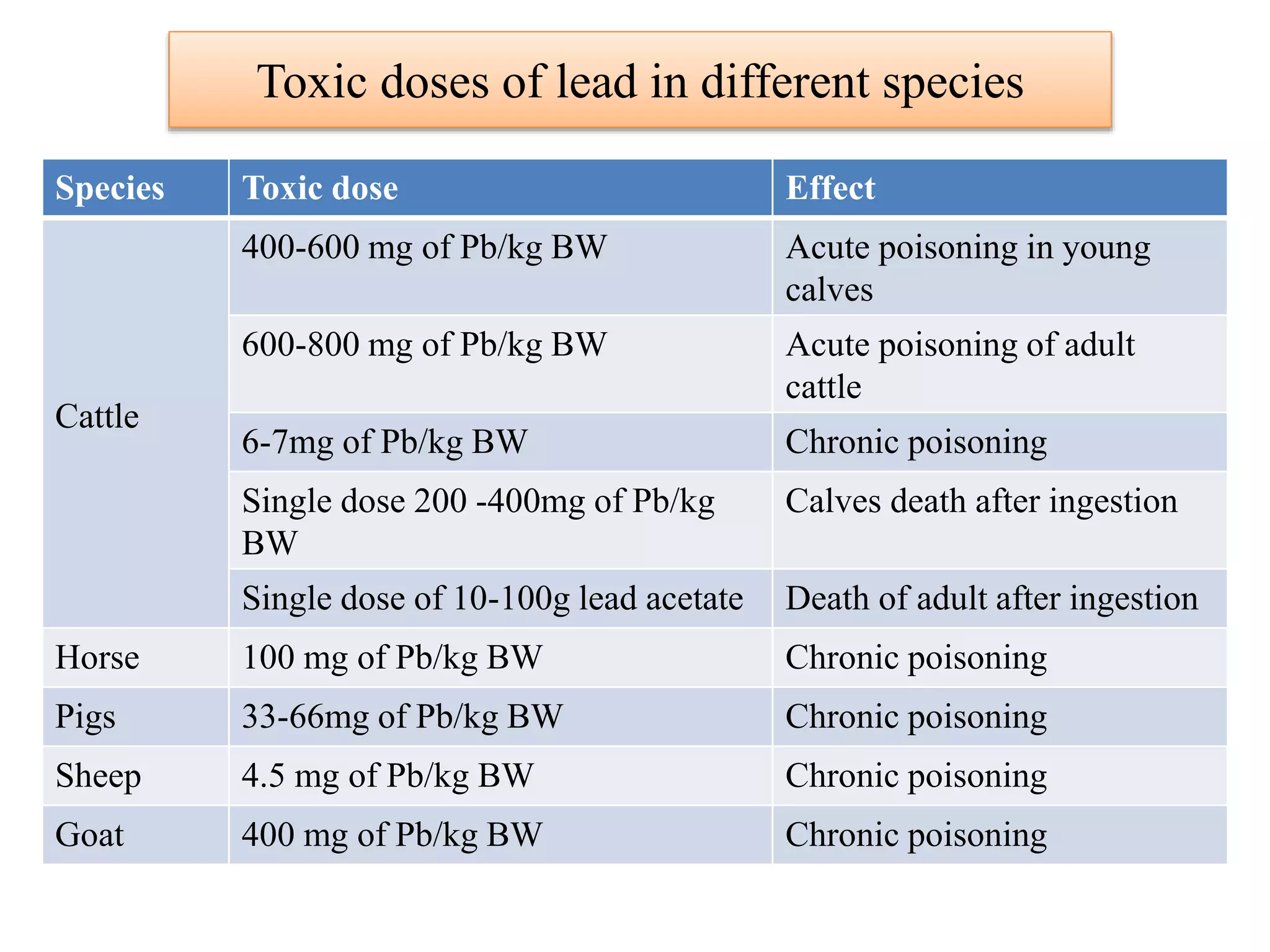
Toxic doses of lead in different species
Species Toxic dose Effect
Cattle
400-600 mg of Pb/kg BW Acute poisoning in young
calves
600-800 mg of Pb/kg BW Acute poisoning of adult
cattle
6-7mg of Pb/kg BW Chronic poisoning
Single dose 200 -400mg of Pb/kg
BW
Calves death after ingestion
Single dose of 10-100g lead acetate Death of adult after ingestion
Horse 100 mg of Pb/kg BW Chronic poisoning
Pigs 33-66mg of Pb/kg BW Chronic poisoning
Sheep 4.5 mg of Pb/kg BW Chronic poisoning
Goat 400 mg of Pb/kg BW Chronic poisoning
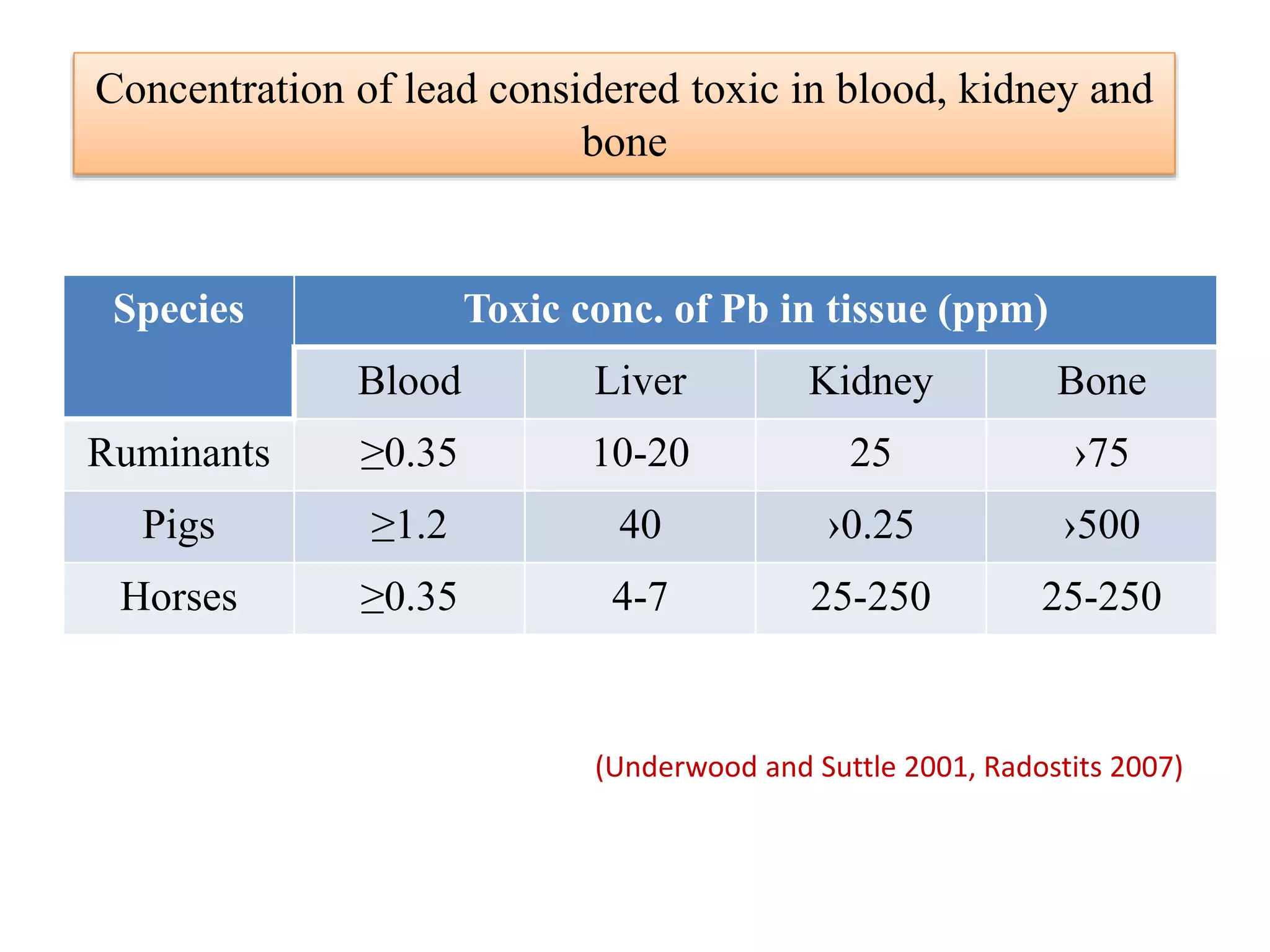
Concentration of lead considered toxic in blood, kidney and
bone
Species Toxic conc. of Pb in tissue (ppm)
Blood Liver Kidney Bone
Ruminants ≥0.35 10-20 25 ›75
Pigs ≥1.2 40 ›0.25 ›500
Horses ≥0.35 4-7 25-250 25-250
(Underwood and Suttle 2001, Radostits 2007)
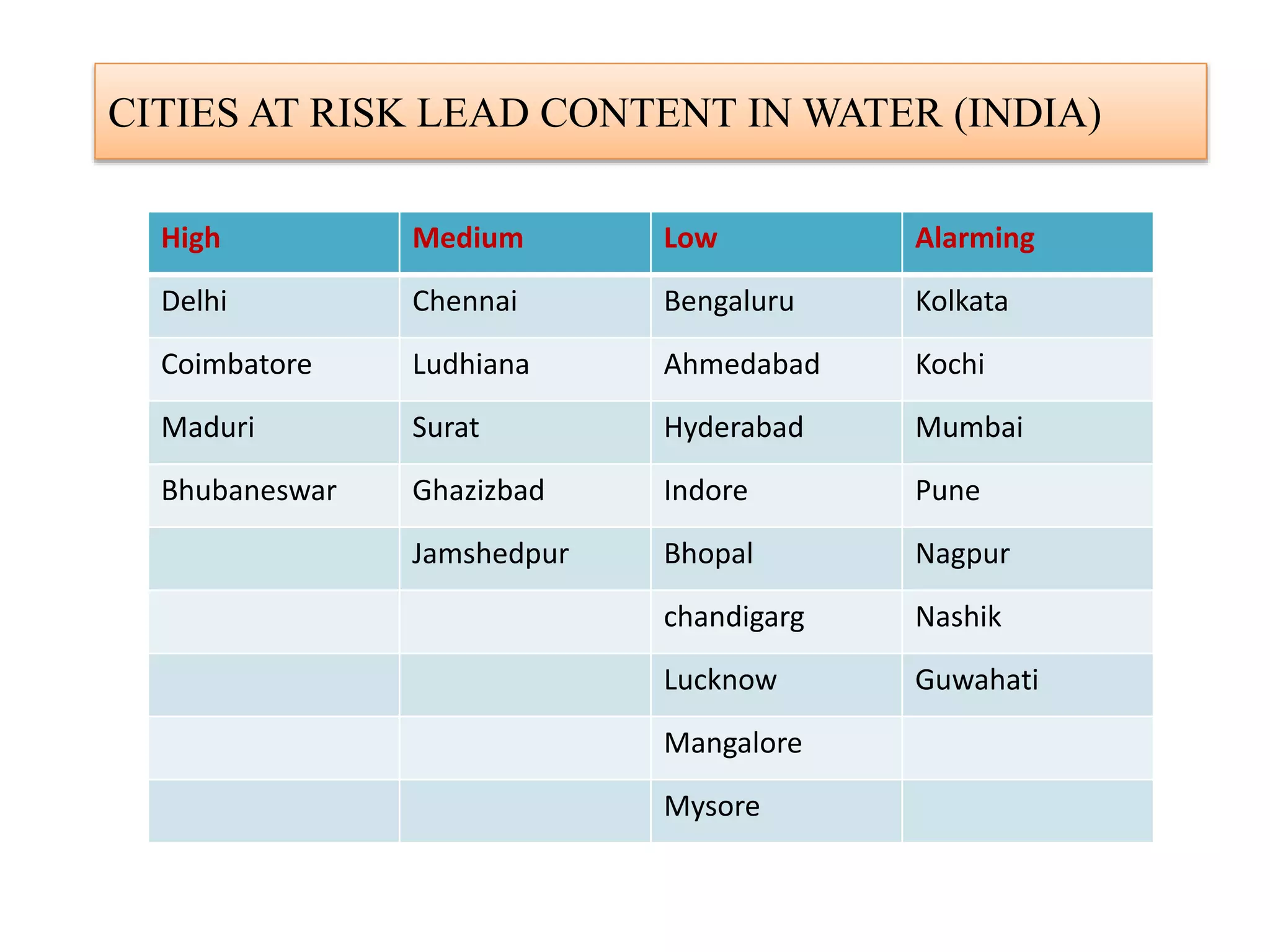
High Medium Low Alarming
Delhi Chennai Bengaluru Kolkata
Coimbatore Ludhiana Ahmedabad Kochi
Maduri Surat Hyderabad Mumbai
Bhubaneswar Ghazizbad Indore Pune
Jamshedpur Bhopal Nagpur
chandigarg Nashik
Lucknow Guwahati
Mangalore
Mysore
CITIES AT RISK LEAD CONTENT IN WATER (INDIA)
Affected organs/systems
LEAD
Neurological Nephrological
Hepatological
Endocrine
GIT Reproductive
Clinical symptoms of lead poisoning
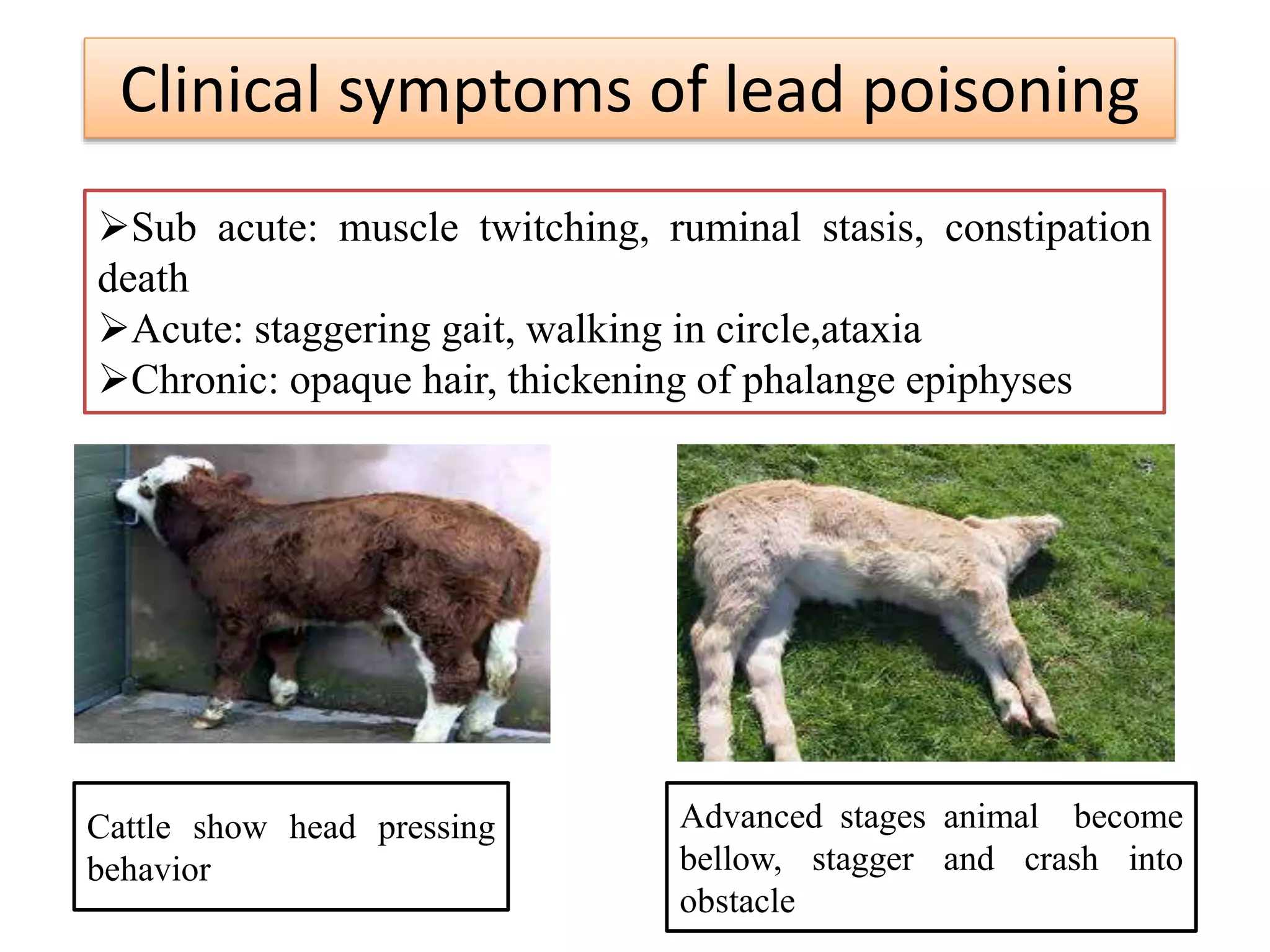
Sub acute: muscle twitching, ruminal stasis, constipation
death
Acute: staggering gait, walking in circle,ataxia
Chronic: opaque hair, thickening of phalange epiphyses
Cattle show head pressing
behavior
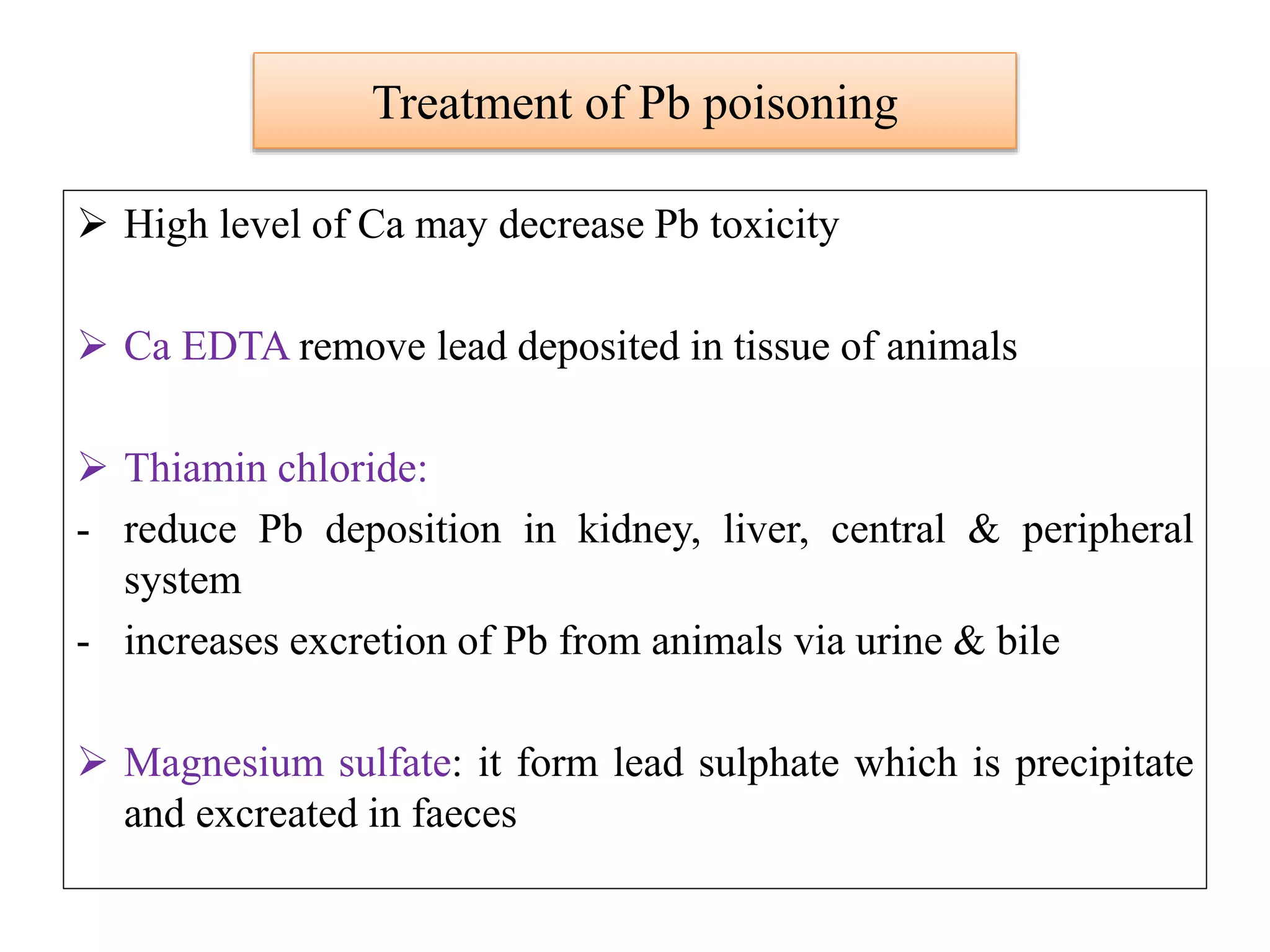
Advanced stages animal become
bellow, stagger and crash into
obstacle
Treatment of Pb poisoning
 High level of Ca may decrease Pb toxicity
 Ca EDTA remove lead deposited in tissue of animals
 Thiamin chloride:
- reduce Pb deposition in kidney, liver, central & peripheral
system
- increases excretion of Pb from animals via urine & bile
 Magnesium sulfate: it form lead sulphate which is precipitate
and excreated in faeces
Arsenic toxicity
 Most common environmental toxicant present in soil, water
and air
 King of poison
 Arsenite (As+3) – As2O3 most toxic
 Arsenic level in drinking water 10ppb (WHO) but in India it is
50ppb
Clinical signs
First stage: GIT disturbance
Second stage: cattarhal stage
Third stage: skin eruption
Fourth stage : nervous symptoms
Dew drops appearance in the skin
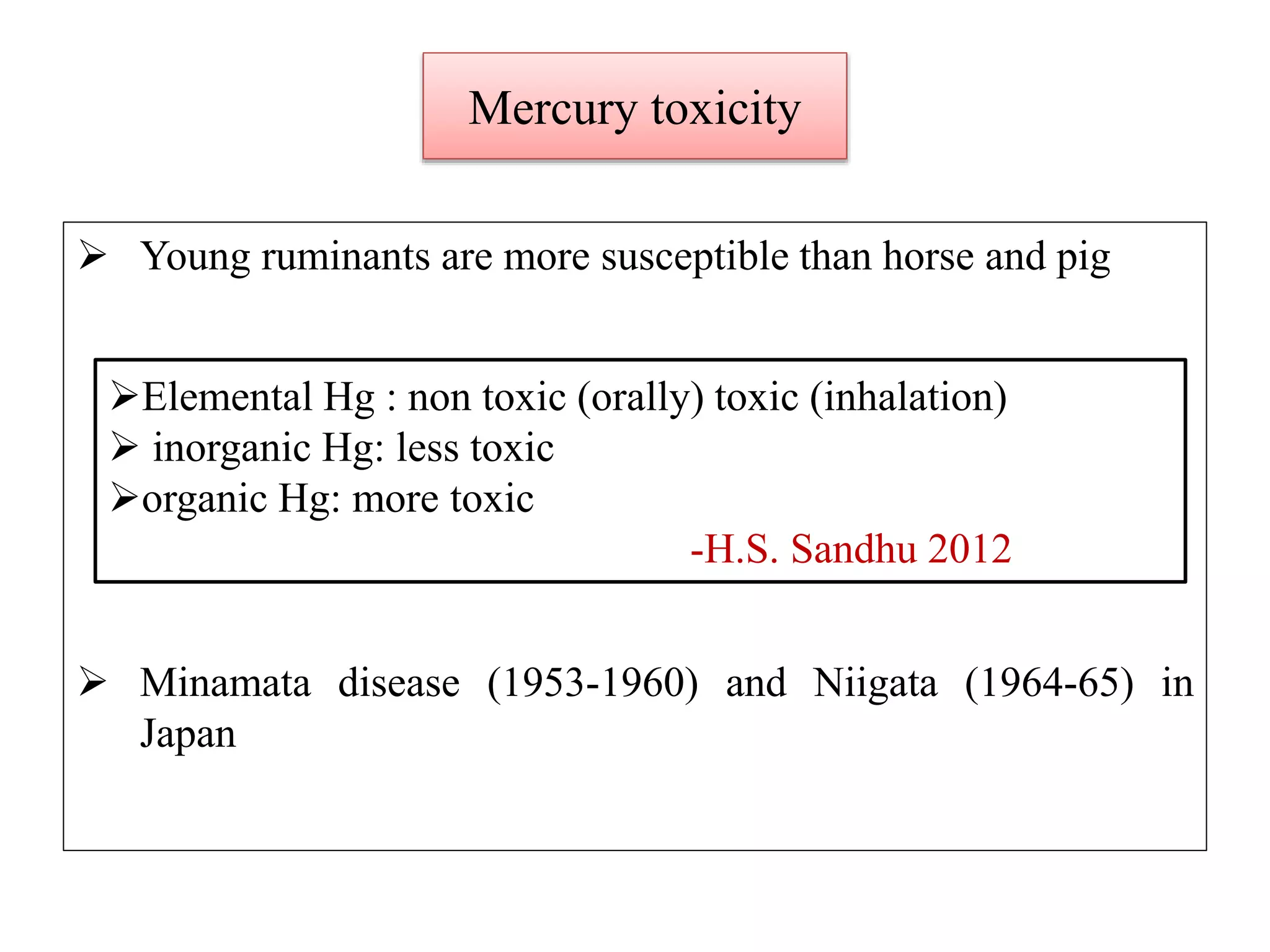
Mercury toxicity
 Young ruminants are more susceptible than horse and pig
 Minamata disease (1953-1960) and Niigata (1964-65) in
Japan
Elemental Hg : non toxic (orally) toxic (inhalation)
 inorganic Hg: less toxic
organic Hg: more toxic
-H.S. Sandhu 2012
Cadmium toxicity
 Highly toxic to animals and human (NRC 2001)
 Clinical symptoms:
-enlagement of joint
-inflammation of liver parenchyma
-testicular necrosis
-abortion
 Treatment:
-zinc and iron reduce Cd accumulation
-administration of selenium
Toxic doses of Cd
Species Dose Effect
Cattle
Diet containing 5-30mg /kg Decrease performance
Diet containing ≥30mg/kg Health disorder
Sheep
Diet containing ›40mg/kg DM Parakeratosis, reduce
appetite, weight gain
Diet containing 5-60mg/kg DM Increased Zn conc. in
liver &kidney
-NRC (2001); Underwood and Suttle 2001
Selenium toxicity (Selenosis)
 Selenosis: more than 10-20 ppm selenium
 Factors that causes selenosis
 Seleniferous plant
i) Primary indicator plant:1000-10000 ppm Se in DM
eg. Astragalus, oonopsis, stanleya
ii)Secondary accumulating plants: grow in low Se soil.
eg. Aster, Comandra,Grrayia, Grindelia
iii) Passive accumulating plants: 10-30ppm Se in DM
 Imbalnce of minerals, industrial waste
 Scarcity of rain
Toxic doses of Se
Species Toxic dose Effect
Cattle
10-20mg/kg Acute poisoning
Daily supplementation of 6.4 mg/bovine Reduce BW, muscle
degeneration
5-40mg/kg Chronic poisoning
Horse
Daily administration of 0.37mg of
sodium selenite
Chronic poisoning
Daily administration of 0.50mg of
sodium selenite
Acute poisoning
Sheep
0.8 mg/kg BW Poisoning
1.6mg/kg BW Lethal dose
pigs 1-2 mg/kg BW Lethal dose
-NRC (1996); NRC( 2001); Radostits (2007)
Clinical signs
 Acute toxicosis (blind stagger)
-Abnormal staggering
movement
-Labored breathing
-Pulmonary edema
-prostration and diarrhoea
-ataxia, abnormal posture
death from respiratory failure
 Chronic toxicosis (Alkali
disease)
-liver cirrhosis
-nephritis
-lameness
-anorexia
-emaciation
-lower conception rate
-Sore feet
-cracked, deformed and elongated
hoof
-Loss of hair from tail
Treatment: high protein intake, supplementation of inorganic sulfate
and arsenic
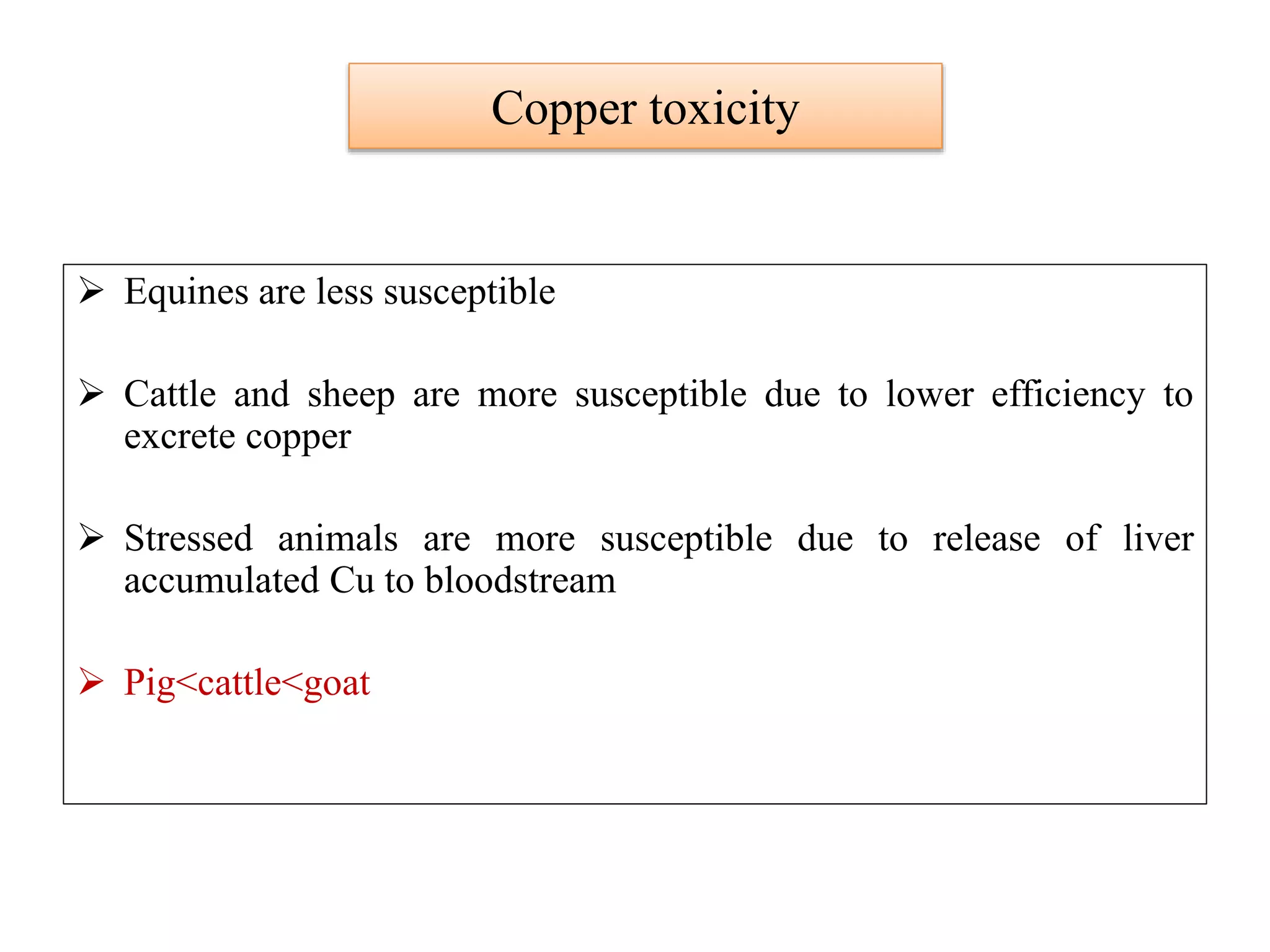
Copper toxicity
 Equines are less susceptible
 Cattle and sheep are more susceptible due to lower efficiency to
excrete copper
 Stressed animals are more susceptible due to release of liver
accumulated Cu to bloodstream
 Pig<cattle<goat
Toxic doses of copper
Species Toxic dose Effect
Cattle
20-110mg/kg BW Acute poisonig of calves
200mg/kg BW Acute poisoning of adult
cattle
1-2g/d Chronic poisoning of
calves
3-5mg/kg BW/d Chronic poining of adult
Mineral mixture containing 328mg/kg High mortality
Sheep
Single dose 20-110 mg/kg BW Acute poisoning
3.5mg/kg BW/d Chronic poisoning
Diet with 15ppm Pb without appropiate
conc. Of Mo
poisoning
-NRC (1996);Radostits et al (2007)
Clinical signs
 Primary Cu poisonig
 Acute poisoning:salivation, hemoglobinuria,abdominal pain
 Chronic poisoning:necrosis of liver, hemolytic crisis, jaundice,
anemia,ruminal stasis,infertility, abortion
 Secondary Cu poisoning
 Chronic Cu poison by plant: Trifolium subterraneum
 Chronic hepatic poisoning: Heliotropium europaem, Echcium
plantaginieum
Treatment: magnesium oxide or carbonate, ammonium molybdate
and anhydrous sodium sulfate, ammonium tetramolybdate, addition
of Mo & sulfur
Molybdenum poisoning( molybdenosis)
 Cattle are more susceptible than sheep & horses because
bovine digestive tract has good ability to absorb Mo
 Cu:Mo 2:1
 Spring pasture contain higher Mo than Autumn
 Leguminous contain high Mo
 Clinical symptoms:anorexia, immunosuppression, persistent
diarrhoea, dudley hair, hindlimb incordination,
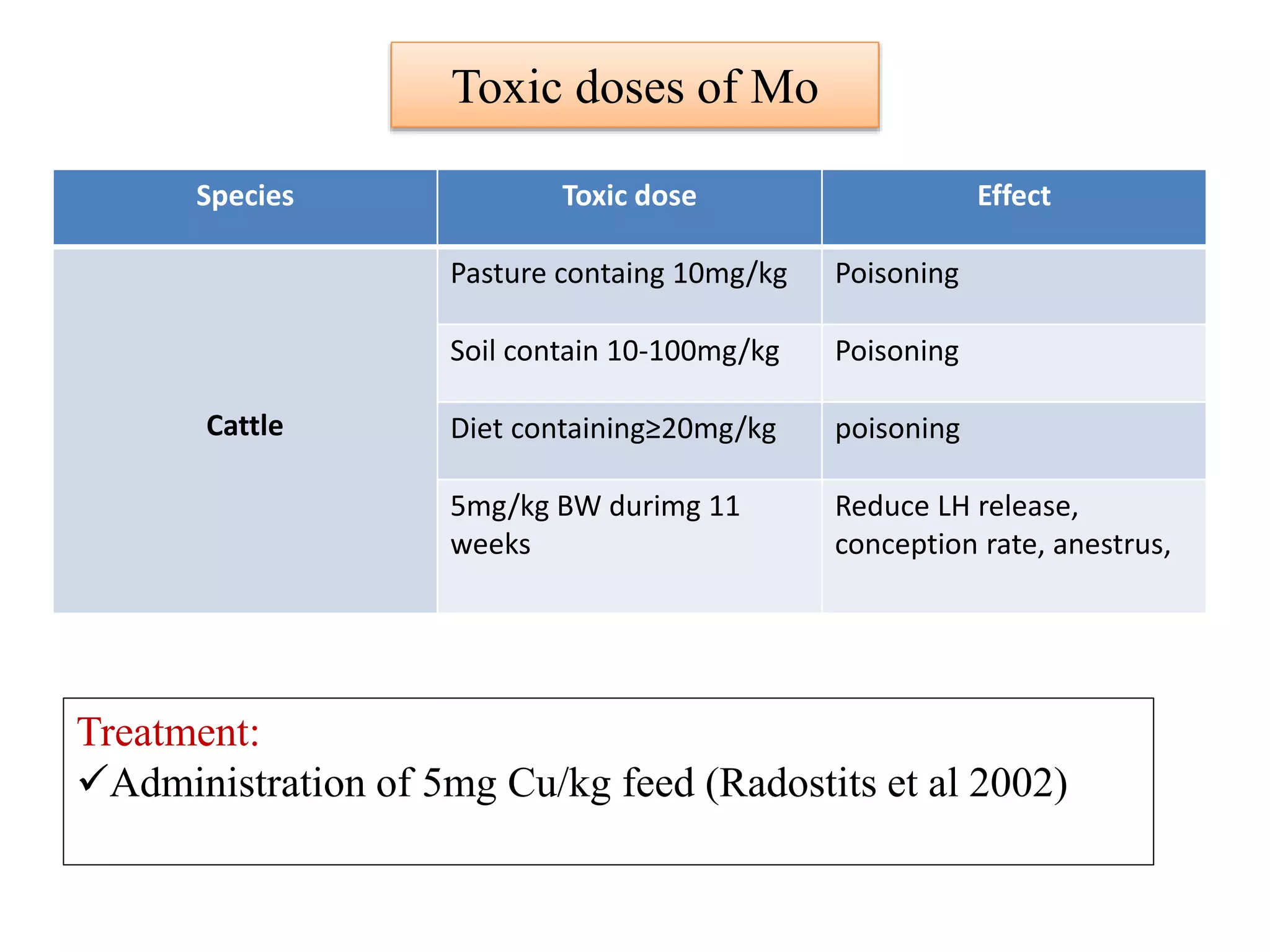
Toxic doses of Mo
Species Toxic dose Effect
Cattle
Pasture containg 10mg/kg Poisoning
Soil contain 10-100mg/kg Poisoning
Diet containing≥20mg/kg poisoning
5mg/kg BW durimg 11
weeks
Reduce LH release,
conception rate, anestrus,
Treatment:
Administration of 5mg Cu/kg feed (Radostits et al 2002)
Zinc poisoning
 Cattle, sheep and pig are less susceptible
 Clinical symptomps
 Cattle: inappetance, paresis, chronic constipation, colic, green
coloured diarrhoea, subcuteneous edema, anaemia
 Horse : weight loss, degenerative arthritis of fetlock joint,
osteoporosis
 Pigs: anorexia, arthritis, gastritis, rough hair, subcutaneous
hematoma, bleeding in armpits
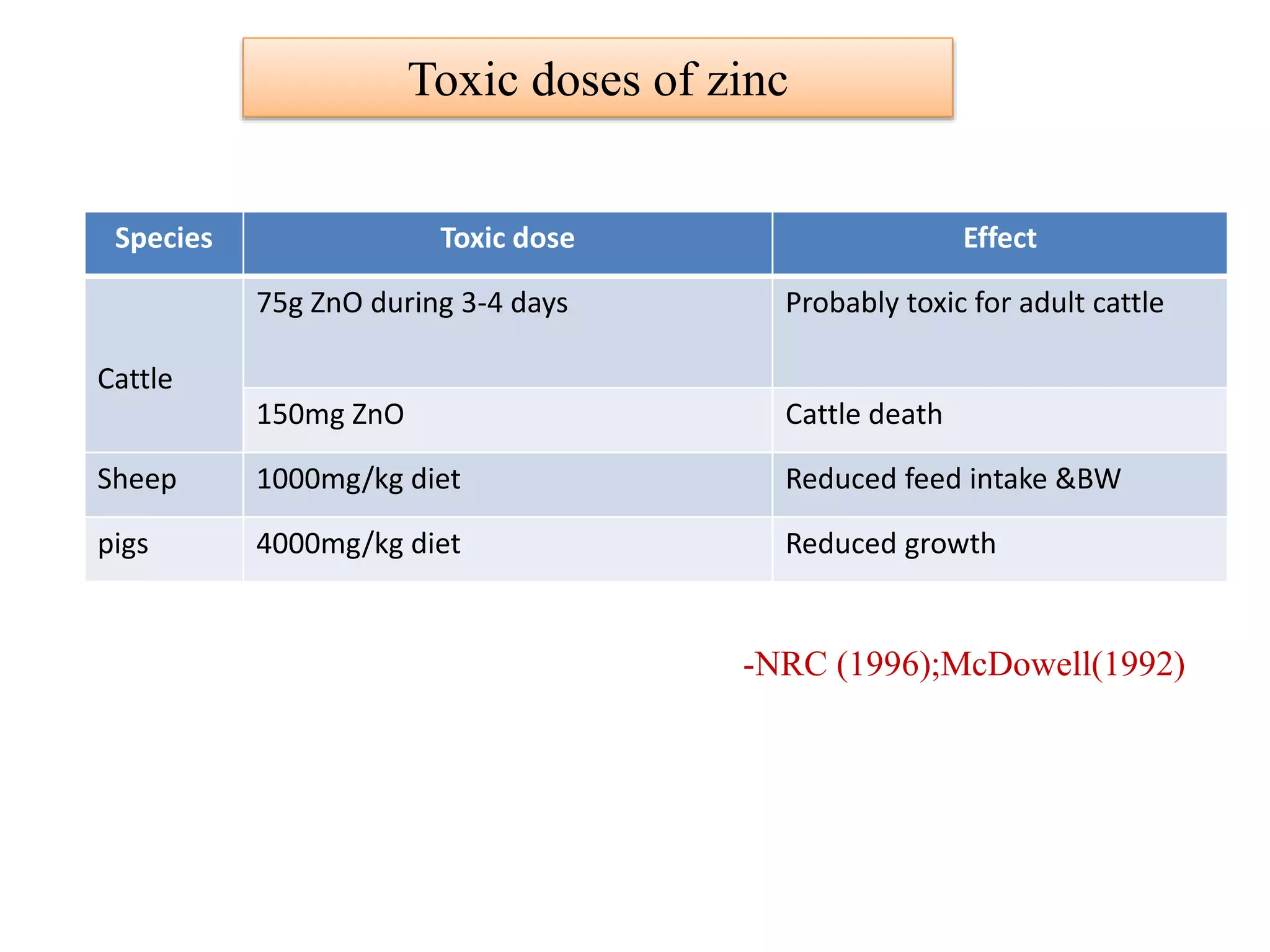
Toxic doses of zinc
Species Toxic dose Effect
Cattle
75g ZnO during 3-4 days Probably toxic for adult cattle
150mg ZnO Cattle death
Sheep 1000mg/kg diet Reduced feed intake &BW
pigs 4000mg/kg diet Reduced growth
-NRC (1996);McDowell(1992)
Fluorine toxicity
 Fluorosis: drinking water containing more than 1ppm flourine
 Cumulative poisoning
 Chicken can tolerate higher level than farm animals
 Maximum level of fluorine in bone meal and mineral mixture
0.05-0.07%
 Sodium fluoride is more toxic than calcium fluoride
Clinical symptoms:
Bone and teeth lose natural color. Bone become thick, softened
Knocked knee syndrome
Elongation of incisor teeth and molar
Manganese toxicity:
Mn conc. above 70ppm is poisoned to animals
Clinical symptoms: reduced growth &weight gain, anemia, GI
lesions, neurological alteration
50-125 ppm Mn affect Hb formation
Iodine toxicity:
200-500 ppm Iodine toxic
Reduced thyroidal iodine uptake (Iodide goiter)
Other mineral toxicity
Basic principles of mineral toxicity management
 Prevention of further metal absorption into the system
 Elimination of metal from the circulation
 Inactivation of metal bioavailable in the system
 Decontamination
• Emetics, activated charcoal, gastric lavage is employed if
ingestion is recent
 Resuscitation
• Good supportive care
 Chelation : CaEDTA
Bioremediation
 Microbes and plants have capability to attenuate or reduce
mass toxicity, volume, concentration of pollutants
 Aerobic bacteria
eg, Pseudomonas, Alcaligenes, Sphingomonas, Rhodococcus
and Mycobacterium
 Fungi
able to degrade a diverse range of persistent or toxic
environmental pollutants
(Bodishbaugh, D.F., 2006)
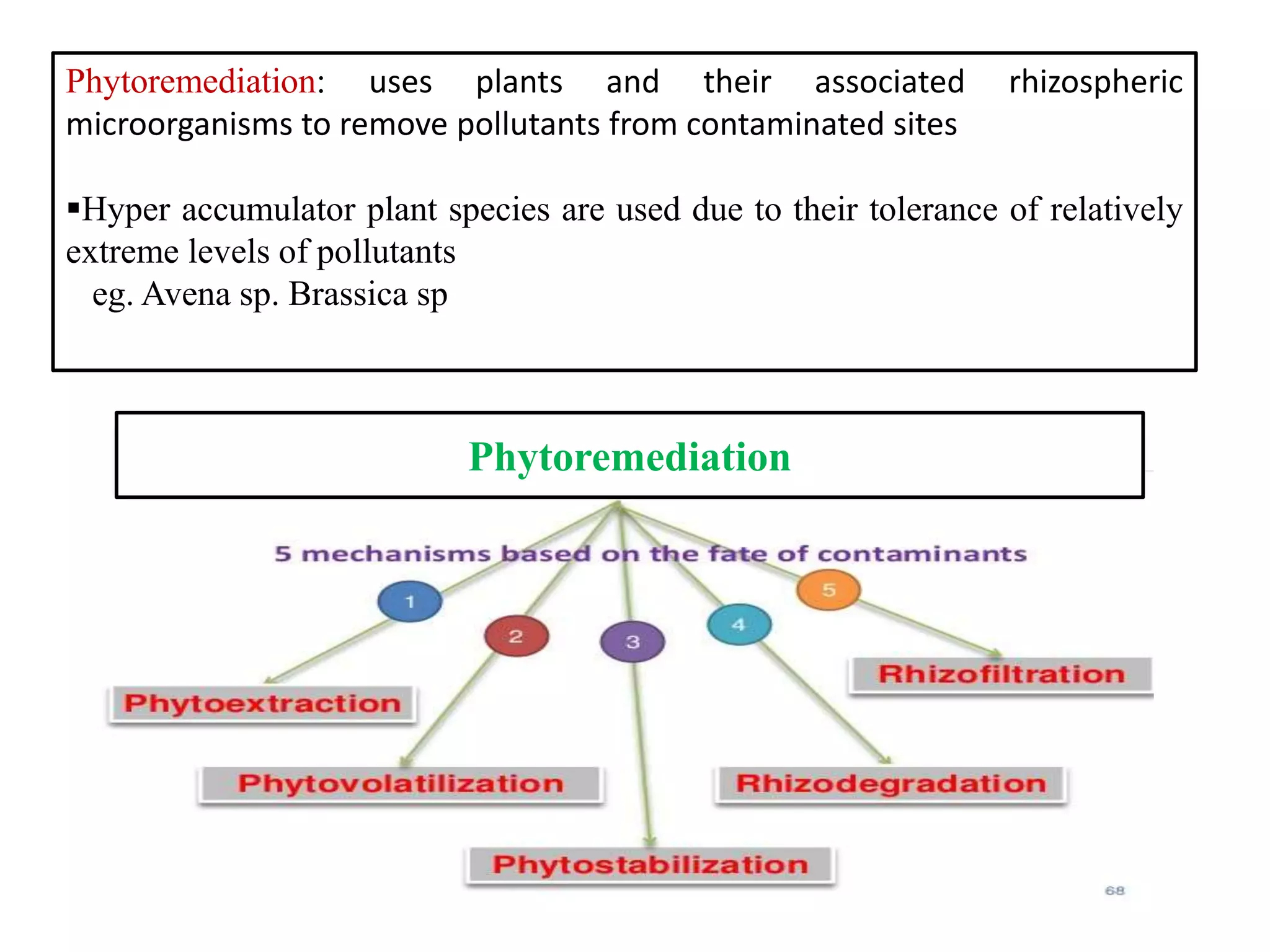
Phytoremediation: uses plants and their associated rhizospheric
microorganisms to remove pollutants from contaminated sites
Hyper accumulator plant species are used due to their tolerance of relatively
extreme levels of pollutants
eg. Avena sp. Brassica sp
Phytoremediation
Mineral toxicity ppt

Mineral toxicity ppt

  • 1.
    TOXIC LEVELS OFDIFFERENT MINERALS, CLINICAL FEATURES OF DEFICIENCY AND TOXICITY SYNDROMES, AMELIORATIVE MEASURES PRESENTED BY BORNALEE HANDIQUE P-2047
  • 2.
    INTRODUCTION  Minerals arerequired by all living creature Deficiency diseases Minerals Normal healthy life Toxicity  Mineral toxicity is a condition in which concentration of any one of the minerals in the body is abnormally high, and which has an adverse effect on health
  • 4.
  • 6.
    LEAD TOXICITY (PLUMBISM) Ubiquitous environmental pollutant  Cattle, horse and dogs are more susceptible  Pig and cat are rare - H.S. Sandhu 2nd ed (2012)  Younger Vs old  ruminant Vs non-ruminant - Nathery (1984)  In mineral mixture maximum acceptable conc. of Pb is 10ppm -marcal et al (2005)
  • 7.
    Toxic doses oflead in different species Species Toxic dose Effect Cattle 400-600 mg of Pb/kg BW Acute poisoning in young calves 600-800 mg of Pb/kg BW Acute poisoning of adult cattle 6-7mg of Pb/kg BW Chronic poisoning Single dose 200 -400mg of Pb/kg BW Calves death after ingestion Single dose of 10-100g lead acetate Death of adult after ingestion Horse 100 mg of Pb/kg BW Chronic poisoning Pigs 33-66mg of Pb/kg BW Chronic poisoning Sheep 4.5 mg of Pb/kg BW Chronic poisoning Goat 400 mg of Pb/kg BW Chronic poisoning
  • 8.
    Concentration of leadconsidered toxic in blood, kidney and bone Species Toxic conc. of Pb in tissue (ppm) Blood Liver Kidney Bone Ruminants ≥0.35 10-20 25 ›75 Pigs ≥1.2 40 ›0.25 ›500 Horses ≥0.35 4-7 25-250 25-250 (Underwood and Suttle 2001, Radostits 2007)
  • 9.
    High Medium LowAlarming Delhi Chennai Bengaluru Kolkata Coimbatore Ludhiana Ahmedabad Kochi Maduri Surat Hyderabad Mumbai Bhubaneswar Ghazizbad Indore Pune Jamshedpur Bhopal Nagpur chandigarg Nashik Lucknow Guwahati Mangalore Mysore CITIES AT RISK LEAD CONTENT IN WATER (INDIA)
  • 10.
  • 11.
    Clinical symptoms oflead poisoning Sub acute: muscle twitching, ruminal stasis, constipation death Acute: staggering gait, walking in circle,ataxia Chronic: opaque hair, thickening of phalange epiphyses Cattle show head pressing behavior Advanced stages animal become bellow, stagger and crash into obstacle
  • 12.
    Treatment of Pbpoisoning  High level of Ca may decrease Pb toxicity  Ca EDTA remove lead deposited in tissue of animals  Thiamin chloride: - reduce Pb deposition in kidney, liver, central & peripheral system - increases excretion of Pb from animals via urine & bile  Magnesium sulfate: it form lead sulphate which is precipitate and excreated in faeces
  • 13.
    Arsenic toxicity  Mostcommon environmental toxicant present in soil, water and air  King of poison  Arsenite (As+3) – As2O3 most toxic  Arsenic level in drinking water 10ppb (WHO) but in India it is 50ppb
  • 15.
    Clinical signs First stage:GIT disturbance Second stage: cattarhal stage Third stage: skin eruption Fourth stage : nervous symptoms Dew drops appearance in the skin
  • 16.
    Mercury toxicity  Youngruminants are more susceptible than horse and pig  Minamata disease (1953-1960) and Niigata (1964-65) in Japan Elemental Hg : non toxic (orally) toxic (inhalation)  inorganic Hg: less toxic organic Hg: more toxic -H.S. Sandhu 2012
  • 18.
    Cadmium toxicity  Highlytoxic to animals and human (NRC 2001)  Clinical symptoms: -enlagement of joint -inflammation of liver parenchyma -testicular necrosis -abortion  Treatment: -zinc and iron reduce Cd accumulation -administration of selenium
  • 20.
    Toxic doses ofCd Species Dose Effect Cattle Diet containing 5-30mg /kg Decrease performance Diet containing ≥30mg/kg Health disorder Sheep Diet containing ›40mg/kg DM Parakeratosis, reduce appetite, weight gain Diet containing 5-60mg/kg DM Increased Zn conc. in liver &kidney -NRC (2001); Underwood and Suttle 2001
  • 21.
    Selenium toxicity (Selenosis) Selenosis: more than 10-20 ppm selenium  Factors that causes selenosis  Seleniferous plant i) Primary indicator plant:1000-10000 ppm Se in DM eg. Astragalus, oonopsis, stanleya ii)Secondary accumulating plants: grow in low Se soil. eg. Aster, Comandra,Grrayia, Grindelia iii) Passive accumulating plants: 10-30ppm Se in DM  Imbalnce of minerals, industrial waste  Scarcity of rain
  • 22.
    Toxic doses ofSe Species Toxic dose Effect Cattle 10-20mg/kg Acute poisoning Daily supplementation of 6.4 mg/bovine Reduce BW, muscle degeneration 5-40mg/kg Chronic poisoning Horse Daily administration of 0.37mg of sodium selenite Chronic poisoning Daily administration of 0.50mg of sodium selenite Acute poisoning Sheep 0.8 mg/kg BW Poisoning 1.6mg/kg BW Lethal dose pigs 1-2 mg/kg BW Lethal dose -NRC (1996); NRC( 2001); Radostits (2007)
  • 23.
    Clinical signs  Acutetoxicosis (blind stagger) -Abnormal staggering movement -Labored breathing -Pulmonary edema -prostration and diarrhoea -ataxia, abnormal posture death from respiratory failure  Chronic toxicosis (Alkali disease) -liver cirrhosis -nephritis -lameness -anorexia -emaciation -lower conception rate -Sore feet -cracked, deformed and elongated hoof -Loss of hair from tail Treatment: high protein intake, supplementation of inorganic sulfate and arsenic
  • 24.
    Copper toxicity  Equinesare less susceptible  Cattle and sheep are more susceptible due to lower efficiency to excrete copper  Stressed animals are more susceptible due to release of liver accumulated Cu to bloodstream  Pig<cattle<goat
  • 25.
    Toxic doses ofcopper Species Toxic dose Effect Cattle 20-110mg/kg BW Acute poisonig of calves 200mg/kg BW Acute poisoning of adult cattle 1-2g/d Chronic poisoning of calves 3-5mg/kg BW/d Chronic poining of adult Mineral mixture containing 328mg/kg High mortality Sheep Single dose 20-110 mg/kg BW Acute poisoning 3.5mg/kg BW/d Chronic poisoning Diet with 15ppm Pb without appropiate conc. Of Mo poisoning -NRC (1996);Radostits et al (2007)
  • 26.
    Clinical signs  PrimaryCu poisonig  Acute poisoning:salivation, hemoglobinuria,abdominal pain  Chronic poisoning:necrosis of liver, hemolytic crisis, jaundice, anemia,ruminal stasis,infertility, abortion  Secondary Cu poisoning  Chronic Cu poison by plant: Trifolium subterraneum  Chronic hepatic poisoning: Heliotropium europaem, Echcium plantaginieum Treatment: magnesium oxide or carbonate, ammonium molybdate and anhydrous sodium sulfate, ammonium tetramolybdate, addition of Mo & sulfur
  • 27.
    Molybdenum poisoning( molybdenosis) Cattle are more susceptible than sheep & horses because bovine digestive tract has good ability to absorb Mo  Cu:Mo 2:1  Spring pasture contain higher Mo than Autumn  Leguminous contain high Mo  Clinical symptoms:anorexia, immunosuppression, persistent diarrhoea, dudley hair, hindlimb incordination,
  • 28.
    Toxic doses ofMo Species Toxic dose Effect Cattle Pasture containg 10mg/kg Poisoning Soil contain 10-100mg/kg Poisoning Diet containing≥20mg/kg poisoning 5mg/kg BW durimg 11 weeks Reduce LH release, conception rate, anestrus, Treatment: Administration of 5mg Cu/kg feed (Radostits et al 2002)
  • 29.
    Zinc poisoning  Cattle,sheep and pig are less susceptible  Clinical symptomps  Cattle: inappetance, paresis, chronic constipation, colic, green coloured diarrhoea, subcuteneous edema, anaemia  Horse : weight loss, degenerative arthritis of fetlock joint, osteoporosis  Pigs: anorexia, arthritis, gastritis, rough hair, subcutaneous hematoma, bleeding in armpits
  • 30.
    Toxic doses ofzinc Species Toxic dose Effect Cattle 75g ZnO during 3-4 days Probably toxic for adult cattle 150mg ZnO Cattle death Sheep 1000mg/kg diet Reduced feed intake &BW pigs 4000mg/kg diet Reduced growth -NRC (1996);McDowell(1992)
  • 31.
    Fluorine toxicity  Fluorosis:drinking water containing more than 1ppm flourine  Cumulative poisoning  Chicken can tolerate higher level than farm animals  Maximum level of fluorine in bone meal and mineral mixture 0.05-0.07%  Sodium fluoride is more toxic than calcium fluoride Clinical symptoms: Bone and teeth lose natural color. Bone become thick, softened Knocked knee syndrome Elongation of incisor teeth and molar
  • 32.
    Manganese toxicity: Mn conc.above 70ppm is poisoned to animals Clinical symptoms: reduced growth &weight gain, anemia, GI lesions, neurological alteration 50-125 ppm Mn affect Hb formation Iodine toxicity: 200-500 ppm Iodine toxic Reduced thyroidal iodine uptake (Iodide goiter) Other mineral toxicity
  • 33.
    Basic principles ofmineral toxicity management  Prevention of further metal absorption into the system  Elimination of metal from the circulation  Inactivation of metal bioavailable in the system  Decontamination • Emetics, activated charcoal, gastric lavage is employed if ingestion is recent  Resuscitation • Good supportive care  Chelation : CaEDTA
  • 34.
    Bioremediation  Microbes andplants have capability to attenuate or reduce mass toxicity, volume, concentration of pollutants  Aerobic bacteria eg, Pseudomonas, Alcaligenes, Sphingomonas, Rhodococcus and Mycobacterium  Fungi able to degrade a diverse range of persistent or toxic environmental pollutants (Bodishbaugh, D.F., 2006)
  • 35.
    Phytoremediation: uses plantsand their associated rhizospheric microorganisms to remove pollutants from contaminated sites Hyper accumulator plant species are used due to their tolerance of relatively extreme levels of pollutants eg. Avena sp. Brassica sp Phytoremediation