
Basic Photography
     Aperture and Depth of Field
Source: http://www.illustratedphotogr
           aphy.com/basic-
photography/aperture-and-depth-field
Aperture and Depth of Field
        The aperture explained
• In photography, aperture refers to the size of
  the opening in the lens of the camera through
  which light can pass.
• The size of this aperture is adjustable in nearly
  all the lenses that fit digital cameras.
• By adjusting the size of the aperture, the
  photographer can ensure that the correct
  amount of light reaches the digital sensor
  during any given exposure.
Aperture and Depth of Field
         The aperture explained
• As such, it is one of the three elements used to
  provide a correctly exposed image.
• The others are the length of the exposure, called
  the shutter speed, and the light sensitivity of the
  sensor, called the ISO.
• The aperture can be adjusted either manually
  or, in most cameras, automatically by the camera.
• When the diameter of the aperture is changed, a
  set of blades inside the lens narrow down or
  open up to allow more or less light to pass
  through the lens.
Aperture and Depth of Field
        The aperture explained
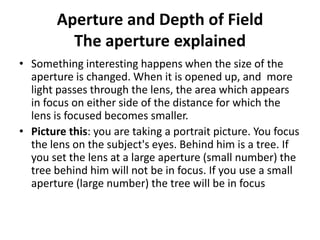
• The act of narrowing down the aperture is
  often referred to as 'stopping down' while
  opening it up is called 'stopping up'.
Aperture and Depth of Field
         The aperture explained
• The number indicates the inverted size of the
  aperture as it relates to the focal length of the
  lens.
• This is quite a mouthful, and not easily
  understood, but the point is that the larger the
  number, the smaller the hole, and therefore, the
  less light is allowed to pass through the lens.
• The smaller the number, the larger the hole, and
  the more light is allowed to be transmitted.
Aperture and Depth of Field
        The aperture explained
• So, other things being equal, the brighter the
  light in which the picture is taken, the less
  light would be needed for an accurate
  exposure and the bigger the f-number one
  must use.
• Inversely, the dimmer the light, the bigger the
  hole that is needed, and the smaller the f-
  number that is selected.
Aperture and Depth of Field
          The aperture explained
• Something interesting happens when the size of the
  aperture is changed. When it is opened up, and more
  light passes through the lens, the area which appears
  in focus on either side of the distance for which the
  lens is focused becomes smaller.
• Picture this: you are taking a portrait picture. You focus
  the lens on the subject's eyes. Behind him is a tree. If
  you set the lens at a large aperture (small number) the
  tree behind him will not be in focus. If you use a small
  aperture (large number) the tree will be in focus
Aperture and Depth of Field
         The aperture explained
• This byproduct of adjusting the size of the
  aperture is referred to as 'depth of field' and
  translates into the depth (or distance) of the area
  which will remain in focus for a given aperture
  and focus distance.
• The creative utility of adjusting the depth of field
  should immediately be apparent.
• By changing how big a part of the photograph is
  in focus, you can control exactly which details
  show up, and which do not, allowing you to lead
  the viewer's eye anywhere you wish.
More about depth of field
• The depth of field becomes greater with
  smaller apertures, and vice versa, that much is
  true, but things are a little more complicated
  than that.
• Depth of field decreases the shorter the
  focusing distance, so if you are focusing on a
  subject that is very close to the lens, you will
  have less depth of field than if you are
  focusing on a subject which is far away.
Source: http://www.illustratedph
      otography.com/basic-
photography/aperture-and-depth-
              field

Basic photography aperture and depth-of-field

  • 1.
    Basic Photography Aperture and Depth of Field Source: http://www.illustratedphotogr aphy.com/basic- photography/aperture-and-depth-field
  • 2.
    Aperture and Depthof Field The aperture explained • In photography, aperture refers to the size of the opening in the lens of the camera through which light can pass. • The size of this aperture is adjustable in nearly all the lenses that fit digital cameras. • By adjusting the size of the aperture, the photographer can ensure that the correct amount of light reaches the digital sensor during any given exposure.
  • 3.
    Aperture and Depthof Field The aperture explained • As such, it is one of the three elements used to provide a correctly exposed image. • The others are the length of the exposure, called the shutter speed, and the light sensitivity of the sensor, called the ISO. • The aperture can be adjusted either manually or, in most cameras, automatically by the camera. • When the diameter of the aperture is changed, a set of blades inside the lens narrow down or open up to allow more or less light to pass through the lens.
  • 4.
    Aperture and Depthof Field The aperture explained • The act of narrowing down the aperture is often referred to as 'stopping down' while opening it up is called 'stopping up'.
  • 5.
    Aperture and Depthof Field The aperture explained • The number indicates the inverted size of the aperture as it relates to the focal length of the lens. • This is quite a mouthful, and not easily understood, but the point is that the larger the number, the smaller the hole, and therefore, the less light is allowed to pass through the lens. • The smaller the number, the larger the hole, and the more light is allowed to be transmitted.
  • 6.
    Aperture and Depthof Field The aperture explained • So, other things being equal, the brighter the light in which the picture is taken, the less light would be needed for an accurate exposure and the bigger the f-number one must use. • Inversely, the dimmer the light, the bigger the hole that is needed, and the smaller the f- number that is selected.
  • 7.
    Aperture and Depthof Field The aperture explained • Something interesting happens when the size of the aperture is changed. When it is opened up, and more light passes through the lens, the area which appears in focus on either side of the distance for which the lens is focused becomes smaller. • Picture this: you are taking a portrait picture. You focus the lens on the subject's eyes. Behind him is a tree. If you set the lens at a large aperture (small number) the tree behind him will not be in focus. If you use a small aperture (large number) the tree will be in focus
  • 8.
    Aperture and Depthof Field The aperture explained • This byproduct of adjusting the size of the aperture is referred to as 'depth of field' and translates into the depth (or distance) of the area which will remain in focus for a given aperture and focus distance. • The creative utility of adjusting the depth of field should immediately be apparent. • By changing how big a part of the photograph is in focus, you can control exactly which details show up, and which do not, allowing you to lead the viewer's eye anywhere you wish.
  • 9.
    More about depthof field • The depth of field becomes greater with smaller apertures, and vice versa, that much is true, but things are a little more complicated than that. • Depth of field decreases the shorter the focusing distance, so if you are focusing on a subject that is very close to the lens, you will have less depth of field than if you are focusing on a subject which is far away.
  • 10.
    Source: http://www.illustratedph otography.com/basic- photography/aperture-and-depth- field