
Anger Management
ObjectivesUnderstanding the concept of stressUnderstanding its effect on our livesUnderstanding how to manage the angerIncorporating the anger management strategies in daily professional and social life
BEHAVIOUR:The way observable in which you act, function or change.
ASPECT OF BEHAVIOUR:Biological.Psychological.Social.
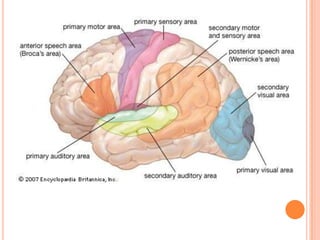
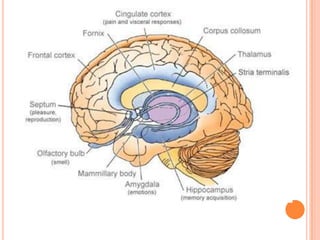
Biological:GeneNeuron circuitsNeurotransmittersBrain physical condition
Psychological:PersonalityCopying skills
Social:FamilyCommunityEducationCulture Awareness
Stress:“It is a Process where a stressor (s) demands/tax a person’s career or coping capabilities and causing a negative effect on individual.”
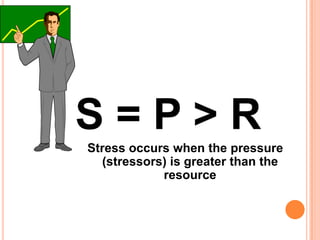
S = P > RStress occurs when the pressure (stressors) is greater than the resource
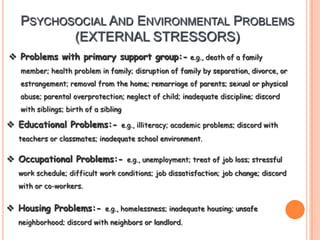
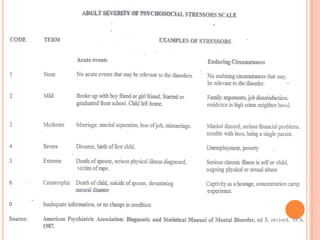
Psychosocial And Environmental Problems (EXTERNAL STRESSORS) Problems with primary support group:-e.g., death of a family member; health problem in family; disruption of family by separation, divorce, or estrangement; removal from the home; remarriage of parents; sexual or physical abuse; parental overprotection; neglect of child; inadequate discipline; discord with siblings; birth of a sibling
Educational Problems:- e.g., illiteracy; academic problems; discord with teachers or classmates; inadequate school environment.
Occupational Problems:- e.g., unemployment; treat of job loss; stressful work schedule; difficult work conditions; job dissatisfaction; job change; discord with or co-workers.
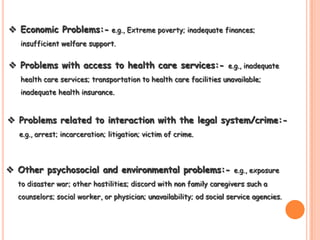
Housing Problems:- e.g., homelessness; inadequate housing; unsafe neighborhood; discord with neighbors or landlord.Economic Problems:-e.g., Extreme poverty; inadequate finances; insufficient welfare support.
Problems with access to health care services:- e.g., inadequate health care services; transportation to health care facilities unavailable; inadequate health insurance.
Problems related to interaction with the legal system/crime:- e.g., arrest; incarceration; litigation; victim of crime.
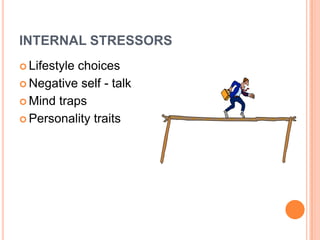
Other psychosocial and environmental problems:-e.g., exposure to disaster war; other hostilities; discord with non family caregivers such a counselors; social worker, or physician; unavailability; od social service agencies.INTERNAL STRESSORSLifestyle choicesNegative self - talkMind trapsPersonality traits
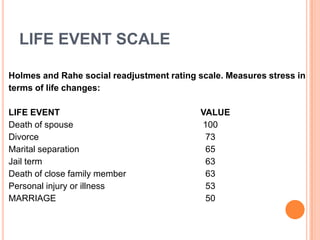
LIFE EVENT SCALEHolmes and Rahe social readjustment rating scale. Measures stress in terms of life changes: LIFE EVENT					VALUE Death of spouse				 100Divorce 					  73Marital separation				  65Jail term					  63Death of close family member		  	  63Personal injury or illness			  53MARRIAGE					  50
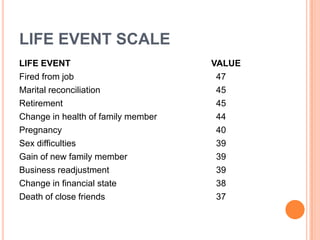
LIFE EVENT SCALELIFE EVENT					VALUEFired from job					  47Marital reconciliation 				  45Retirement					  45Change in health of family member		  44Pregnancy					  40Sex difficulties					  39Gain of new family member			  39Business readjustment				  39Change in financial state			  38Death of close friends				  37
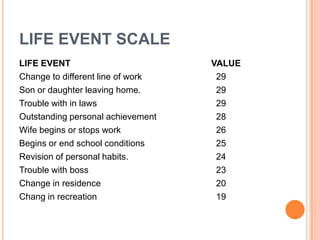
LIFE EVENT SCALELIFE EVENT					VALUE Change to different line of work 		  	  29Son or daughter leaving home. 		  	  29Trouble with in laws				  29Outstanding personal achievement		  28Wife begins or stops work			  26Begins or end school conditions		  	  25Revision of personal habits.			  24Trouble with boss				  23Change in residence				  20Chang in recreation				  19
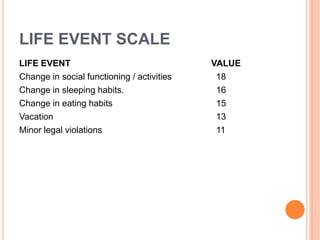
LIFE EVENT SCALELIFE EVENT					VALUEChange in social functioning / activities	  	  18Change in sleeping habits. 			  16Change in eating habits			  	  15Vacation					  13Minor legal violations				  11
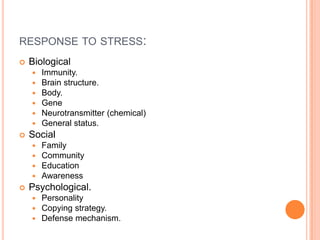
response to stress:BiologicalImmunity.Brain structure.Body.GeneNeurotransmitter (chemical)General status.SocialFamilyCommunityEducationAwarenessPsychological.PersonalityCopying strategy.Defense mechanism.
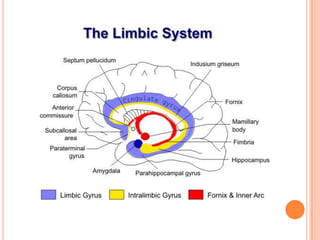
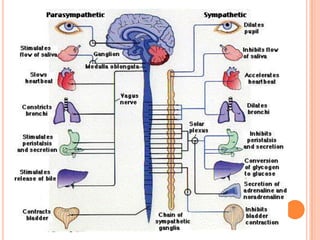
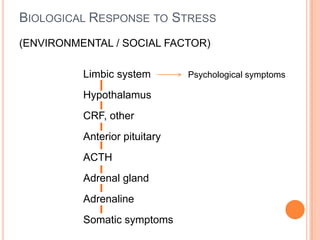
Biological Response to Stress (ENVIRONMENTAL / SOCIAL FACTOR)			Limbic system	   Psychological symptoms 			Hypothalamus			CRF, other			Anterior pituitary			ACTH			Adrenal gland			Adrenaline			Somatic symptoms
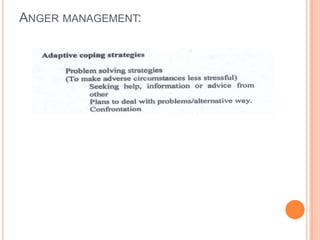
Copying strategy:Adaptive copying strategy.Problem-solving strategy.Emotional-reducing strategy.Maladaptive copying strategy.Use of alcohol or un-prescribed drugs.Deliberate self harm.Histrionic behaviorAggressive behaviorDefense mechanismRepressionDenialDisplacementProjectionRegressionEgo dystonic/static
Social:FamilyCommunityEducationCulture Awareness
Reaction to stress:EmotionalFearCryAngerAggressiveSomaticUlcerDiabetes mellitusArthritisUrticariaPsychologicalStress reactionPTSDAdjustment disorderPathological griefReaction to illness/stress/conflict
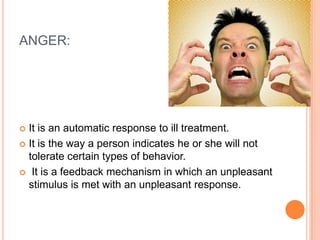
ANGER:It is an automatic response to ill treatment. It is the way a person indicates he or she will not tolerate certain types of behavior. It is a feedback mechanism in which an unpleasant stimulus is met with an unpleasant response.
EXERCISE:INDIVIDUAL ANGER PRESENTATION.
Any one can become angry--- that is easy. But to be angry with the right person, to the right degree, at the right time, for the right purpose, and in the right way--- that is not easy.”--------- Aristotle
EXERCISE:INDIVIDUAL RESPONSE TO ANGER
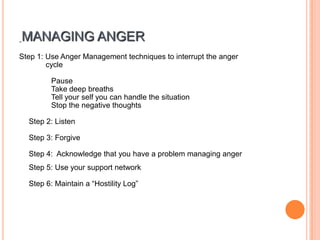
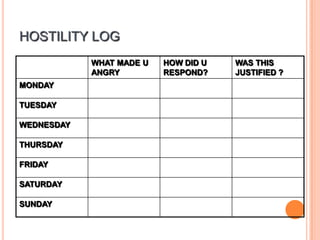
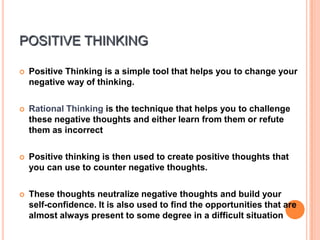
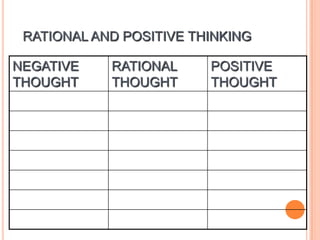
Anger management:
Anger management:
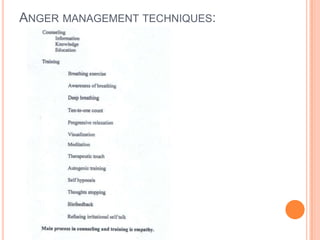
Anger management techniques:
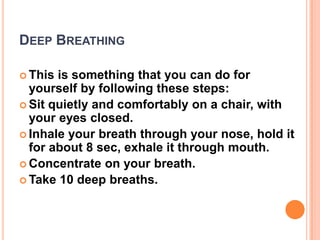
This is something that you can do for yourself by following these steps:Sit quietly and comfortably on a chair, with your eyes closed.Inhale your breath through your nose, hold it for about 8 sec, exhale it through mouth.Concentrate on your breath. Take 10 deep breaths.Deep Breathing
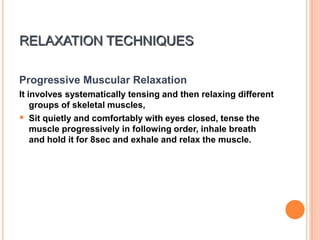
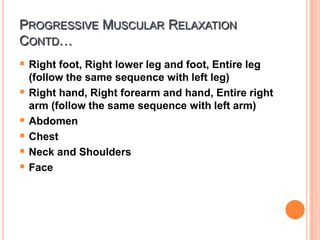
RELAXATION TECHNIQUESProgressive Muscular RelaxationIt involves systematically tensing and then relaxing different groups of skeletal muscles,Sit quietly and comfortably with eyes closed, tense the muscle progressively in following order, inhale breath and hold it for 8sec and exhale and relax the muscle.Progressive Muscular Relaxation Contd…Right foot, Right lower leg and foot, Entire leg (follow the same sequence with left leg)
Right hand, Right forearm and hand, Entire right arm (follow the same sequence with left arm)
Abdomen
Chest

Anger management final

  • 1.
  • 2.
    ObjectivesUnderstanding the conceptof stressUnderstanding its effect on our livesUnderstanding how to manage the angerIncorporating the anger management strategies in daily professional and social life
  • 3.
    BEHAVIOUR:The way observablein which you act, function or change.
  • 4.
  • 5.
  • 10.
  • 11.
  • 12.
    Stress:“It is aProcess where a stressor (s) demands/tax a person’s career or coping capabilities and causing a negative effect on individual.”
  • 13.
    S = P> RStress occurs when the pressure (stressors) is greater than the resource
  • 14.
    Psychosocial And EnvironmentalProblems (EXTERNAL STRESSORS) Problems with primary support group:-e.g., death of a family member; health problem in family; disruption of family by separation, divorce, or estrangement; removal from the home; remarriage of parents; sexual or physical abuse; parental overprotection; neglect of child; inadequate discipline; discord with siblings; birth of a sibling
  • 15.
    Educational Problems:- e.g.,illiteracy; academic problems; discord with teachers or classmates; inadequate school environment.
  • 16.
    Occupational Problems:- e.g.,unemployment; treat of job loss; stressful work schedule; difficult work conditions; job dissatisfaction; job change; discord with or co-workers.
  • 17.
    Housing Problems:- e.g.,homelessness; inadequate housing; unsafe neighborhood; discord with neighbors or landlord.Economic Problems:-e.g., Extreme poverty; inadequate finances; insufficient welfare support.
  • 18.
    Problems with accessto health care services:- e.g., inadequate health care services; transportation to health care facilities unavailable; inadequate health insurance.
  • 19.
    Problems related tointeraction with the legal system/crime:- e.g., arrest; incarceration; litigation; victim of crime.
  • 20.
    Other psychosocial andenvironmental problems:-e.g., exposure to disaster war; other hostilities; discord with non family caregivers such a counselors; social worker, or physician; unavailability; od social service agencies.INTERNAL STRESSORSLifestyle choicesNegative self - talkMind trapsPersonality traits
  • 22.
    LIFE EVENT SCALEHolmesand Rahe social readjustment rating scale. Measures stress in terms of life changes: LIFE EVENT VALUE Death of spouse 100Divorce 73Marital separation 65Jail term 63Death of close family member 63Personal injury or illness 53MARRIAGE 50
  • 23.
    LIFE EVENT SCALELIFEEVENT VALUEFired from job 47Marital reconciliation 45Retirement 45Change in health of family member 44Pregnancy 40Sex difficulties 39Gain of new family member 39Business readjustment 39Change in financial state 38Death of close friends 37
  • 24.
    LIFE EVENT SCALELIFEEVENT VALUE Change to different line of work 29Son or daughter leaving home. 29Trouble with in laws 29Outstanding personal achievement 28Wife begins or stops work 26Begins or end school conditions 25Revision of personal habits. 24Trouble with boss 23Change in residence 20Chang in recreation 19
  • 25.
    LIFE EVENT SCALELIFEEVENT VALUEChange in social functioning / activities 18Change in sleeping habits. 16Change in eating habits 15Vacation 13Minor legal violations 11
  • 26.
    response to stress:BiologicalImmunity.Brainstructure.Body.GeneNeurotransmitter (chemical)General status.SocialFamilyCommunityEducationAwarenessPsychological.PersonalityCopying strategy.Defense mechanism.
  • 27.
    Biological Response toStress (ENVIRONMENTAL / SOCIAL FACTOR) Limbic system Psychological symptoms Hypothalamus CRF, other Anterior pituitary ACTH Adrenal gland Adrenaline Somatic symptoms
  • 28.
    Copying strategy:Adaptive copyingstrategy.Problem-solving strategy.Emotional-reducing strategy.Maladaptive copying strategy.Use of alcohol or un-prescribed drugs.Deliberate self harm.Histrionic behaviorAggressive behaviorDefense mechanismRepressionDenialDisplacementProjectionRegressionEgo dystonic/static
  • 29.
  • 30.
    Reaction to stress:EmotionalFearCryAngerAggressiveSomaticUlcerDiabetesmellitusArthritisUrticariaPsychologicalStress reactionPTSDAdjustment disorderPathological griefReaction to illness/stress/conflict
  • 31.
    ANGER:It is anautomatic response to ill treatment. It is the way a person indicates he or she will not tolerate certain types of behavior. It is a feedback mechanism in which an unpleasant stimulus is met with an unpleasant response.
  • 32.
  • 33.
    Any one canbecome angry--- that is easy. But to be angry with the right person, to the right degree, at the right time, for the right purpose, and in the right way--- that is not easy.”--------- Aristotle
  • 34.
  • 35.
  • 36.
  • 37.
  • 38.
    This is somethingthat you can do for yourself by following these steps:Sit quietly and comfortably on a chair, with your eyes closed.Inhale your breath through your nose, hold it for about 8 sec, exhale it through mouth.Concentrate on your breath. Take 10 deep breaths.Deep Breathing
  • 39.
    RELAXATION TECHNIQUESProgressive MuscularRelaxationIt involves systematically tensing and then relaxing different groups of skeletal muscles,Sit quietly and comfortably with eyes closed, tense the muscle progressively in following order, inhale breath and hold it for 8sec and exhale and relax the muscle.Progressive Muscular Relaxation Contd…Right foot, Right lower leg and foot, Entire leg (follow the same sequence with left leg)
  • 40.
    Right hand, Rightforearm and hand, Entire right arm (follow the same sequence with left arm)
  • 41.
  • 42.