Contributions of
Mesopotamia
sections 2.1 & 2.2
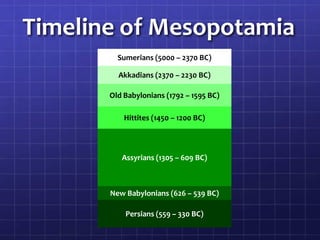
Timeline of Mesopotamia
Sumerians (5000 – 2370 BC)
Akkadians (2370 – 2230 BC)
Old Babylonians (1792 – 1595 BC)
Hittites (1450 – 1200 BC)

Assyrians (1305 – 609 BC)

New Babylonians (626 – 539 BC)
Persians (559 – 330 BC)
A. Law, Government,
and Society
Sumerians
Independent City-States
Distinct Social Hierarchy
Powerful Kings
Public Works

Akkadians
First Empire
united Sumerian city-states into
one empire

Old Babylonians
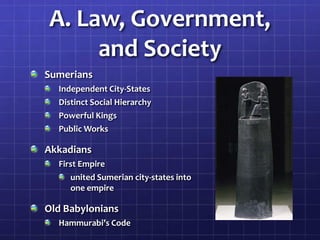
Hammurabi’s Code
A.
Law, Government, and
Society
Assyrians

set rituals, decorum, etiquette, and ceremonies for the royal
household

Persians
1.

Cultural Diffusion & Unity
practiced tolerance of conquered people in order to
make them less likely to rebel
allowed conquered people to practice their own customs
and religion
created a single law code from the laws of the different
people he conquered
hundreds of miles of road were either built or repaired
making communication easier
celebrated important festivals of the different diverse
people in the empire
A.
Law, Government, and
Society
Persians
2.

Government
divided the huge empire into satrapies (provinces) each
headed by a satrap (like a governor)
each province had to pay taxes based on its resources and
wealth
each satrap was observed by a special official (“the Eyes
and Ears of the King”)

3. Economy
a common set of weights and measures were established
to standardize trade
used a money economy where coins would be used for
trade (this also helped unite the large empire by making
trade easier)
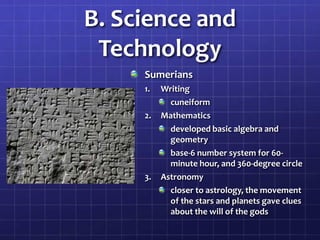
B. Science and
Technology
Sumerians
1.
2.

3.

Writing
cuneiform
Mathematics
developed basic algebra and
geometry
base-6 number system for 60minute hour, and 360-degree circle
Astronomy
closer to astrology, the movement
of the stars and planets gave clues
about the will of the gods
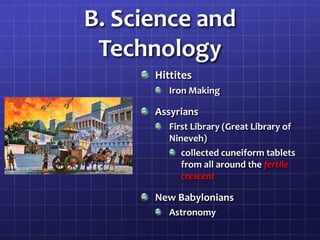
B. Science and
Technology
Hittites
Iron Making

Assyrians
First Library (Great Library of
Nineveh)
collected cuneiform tablets
from all around the fertile
crescent

New Babylonians
Astronomy
B. Science and Technology
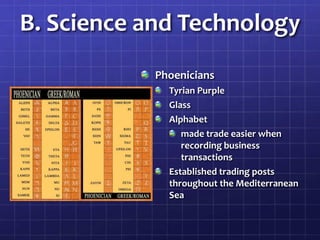
Phoenicians
Tyrian Purple
Glass
Alphabet
made trade easier when
recording business
transactions
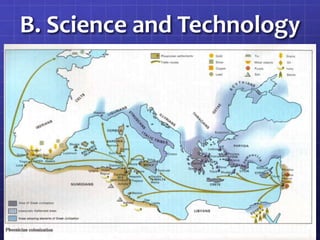
Established trading posts
throughout the Mediterranean
Sea
B. Science and Technology
C. Art & Architecture
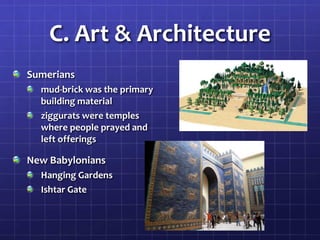
Sumerians
mud-brick was the primary
building material
ziggurats were temples
where people prayed and
left offerings

New Babylonians
Hanging Gardens
Ishtar Gate
D. Religion
Sumerians
polytheistic
gods with human
characteristics but
immortal & control nature
the afterlife was
considered bleak
regardless of one’s
behavior in life

Persians
Zoroastrianism
people could control
the fate of their soul by
choosing “sides”
between good and evil
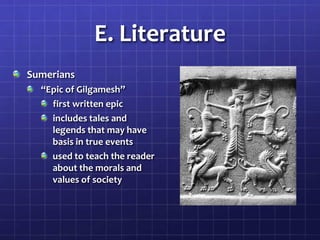
E. Literature
Sumerians
“Epic of Gilgamesh”
first written epic
includes tales and
legends that may have
basis in true events
used to teach the reader
about the morals and
values of society

Contributions of Mesopotamia

  • 1.
  • 2.
    Timeline of Mesopotamia Sumerians(5000 – 2370 BC) Akkadians (2370 – 2230 BC) Old Babylonians (1792 – 1595 BC) Hittites (1450 – 1200 BC) Assyrians (1305 – 609 BC) New Babylonians (626 – 539 BC) Persians (559 – 330 BC)
  • 3.
    A. Law, Government, andSociety Sumerians Independent City-States Distinct Social Hierarchy Powerful Kings Public Works Akkadians First Empire united Sumerian city-states into one empire Old Babylonians Hammurabi’s Code
  • 4.
    A. Law, Government, and Society Assyrians setrituals, decorum, etiquette, and ceremonies for the royal household Persians 1. Cultural Diffusion & Unity practiced tolerance of conquered people in order to make them less likely to rebel allowed conquered people to practice their own customs and religion created a single law code from the laws of the different people he conquered hundreds of miles of road were either built or repaired making communication easier celebrated important festivals of the different diverse people in the empire
  • 5.
    A. Law, Government, and Society Persians 2. Government dividedthe huge empire into satrapies (provinces) each headed by a satrap (like a governor) each province had to pay taxes based on its resources and wealth each satrap was observed by a special official (“the Eyes and Ears of the King”) 3. Economy a common set of weights and measures were established to standardize trade used a money economy where coins would be used for trade (this also helped unite the large empire by making trade easier)
  • 6.
    B. Science and Technology Sumerians 1. 2. 3. Writing cuneiform Mathematics developedbasic algebra and geometry base-6 number system for 60minute hour, and 360-degree circle Astronomy closer to astrology, the movement of the stars and planets gave clues about the will of the gods
  • 7.
    B. Science and Technology Hittites IronMaking Assyrians First Library (Great Library of Nineveh) collected cuneiform tablets from all around the fertile crescent New Babylonians Astronomy
  • 8.
    B. Science andTechnology Phoenicians Tyrian Purple Glass Alphabet made trade easier when recording business transactions Established trading posts throughout the Mediterranean Sea
  • 9.
    B. Science andTechnology
  • 10.
    C. Art &Architecture Sumerians mud-brick was the primary building material ziggurats were temples where people prayed and left offerings New Babylonians Hanging Gardens Ishtar Gate
  • 11.
    D. Religion Sumerians polytheistic gods withhuman characteristics but immortal & control nature the afterlife was considered bleak regardless of one’s behavior in life Persians Zoroastrianism people could control the fate of their soul by choosing “sides” between good and evil
  • 12.
    E. Literature Sumerians “Epic ofGilgamesh” first written epic includes tales and legends that may have basis in true events used to teach the reader about the morals and values of society