






ALTERNATIVE/COMPLEMENTARY
THERAPIES DURING INTRANATAL
PERIOD
KANCHAN MEHRA
M.Sc. NURSING 1ST YEAR
PCNMS
INTRODUCTION
Complimentary therapy are increasingly popular with both
consumers and professionals, and are based on philosophy of
holism and an interaction between body, mind and spirit in
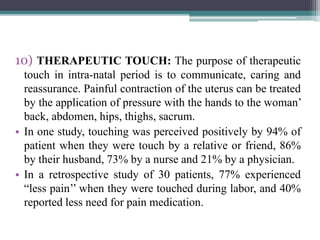
which it is believed that all components in combination to the
whole.
Within midwifery ,use of complementary therapy has been
driven by mothers looking for strategies to help them cope
with pregnancy symptoms and labor discomforts and to aid
relaxation.
DEFINITION
ALTERNATIVE THERAPIES:
Alternative therapies are used instead of
conventional therapy. for example, the use of
Acupuncture/Acupressure rather than analgesic to
relieve pain.
COMPLEMENTARY THRTAPY:-
Complementary therapy are those therapy used in
conjunction with conventional therapies. For example
meditation used as an adjunct to analgesics drugs.
CLASSIFICATION OF
ALTERNATIVE/COMPLEMENTARY
THERAPY
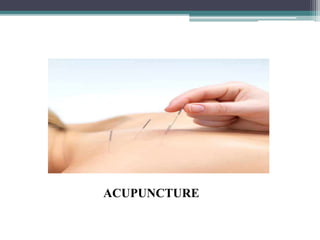
1) ACUPUNCTURE: Acupuncture is well known Chinese
practice. In this one uses needles inserted at specific points
to relieve pain, this therapy is found beneficial during
pregnancy.
• It is used to relieve pain and also to reduce morning
sickness.
• The placement of needle will depend on which area and
what kind of pain.
• Advisable of take this treatment certificate practitioners.
ACUPUNCTURE
ADVANTAGE OF ACUPUNTURE:-
• Performed correctly, it is safe.
• There are very few side effects.
• It can be effectively combined with other treatments.
• It can control some type of pain.
• It may help patients for whom pain medications are not
suitable.
DISADVANTAGE OF ACUPUNCTURE:
• It is dangerous if a patient has a bleeding disorder or takes
blood thinners.
• Bleeding, bruising, and soreness may occur at the insertion
sites.
• Unsterilized needles may infect the patient.
• In rare cases, a needle may break and damage an internal
organ.
• When needle inserted deeply into the chest or upper back,
there is a risk of collapsed lung, but this is very rare.
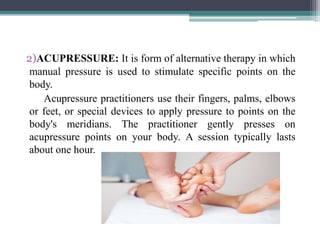
2)ACUPRESSURE: It is form of alternative therapy in which
manual pressure is used to stimulate specific points on the
body.
Acupressure practitioners use their fingers, palms, elbows
or feet, or special devices to apply pressure to points on the
body's meridians. The practitioner gently presses on
acupressure points on your body. A session typically lasts
about one hour.
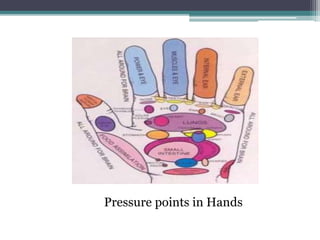
Pressure points in Hands
ADVANTAGES OF ACUPRESSURE:
• Relieving stress, tension and anxiety
• Improving sleep
• Relaxing muscles and joints
• Soothing the pain and discomfort of a sports or other injury
• Reducing digestive issues
• Minimizing headaches
• Alleviating chronic pain
DISADVANTAGES OFACUPRESSURE:
• People having a fractured bone should avoid acupressure
• Patients with diarrhoea and fever should not go for
acupressure massage therapy.
• Acupressure is less effective in soft pressure points such as
stomach.
• Acupressure is not the right choice for patients having
osteoporosis.
3)HERBAL MEDICINE: Herbal medicine involves the
therapeutic use of plants in various forms, which works
pharmacologically. There is a common misconception that
because herbal remedies are natural they are automatically safe
but there is now a growing body of evidence about the risk of
possible interaction between herbal and conventional
medicines.
Many herbal remedies should be avoided during preconception
and antenatal period and when breastfeeding because they may
induce uterine bleeding.
ADVANTAGES OF HERBAL MEDICATIONS:
• More affordable than conventional medicine.
• Promote natural healing.
• Strength in immune system.
• Stabilizes hormones and metabolism.
• It is cost effective.
DISADVANTAGES OF HERBAL MEDICATIONS:
• Herbal medicines take a longer time to work compared to
pharmaceutical drugs. If an individual decides to take the
herbal alternative to pharmaceuticals, he or she must be very
patience.
• Herbal medicines are often self administered. As a result, there
is no dosage or warnings specified. When Herbal medicines
are consumed with pharmaceutical drugs, the two can interact
with each other resulting injuries to health.
HERBAL MEDICINE
4) HOMEOPATHY: Homeopathic drugs that may help to lessen
the pain of natural child birth. Through homeopathy is not
recognized as a way of curing an ailment of pain quickly, it can
start from the later months of pregnancy, with the aim of
reducing the eventual labor pain .
These drugs only be taken by recognized homeopathy
practitioner and obstetrician
ADVANTAGES OF HOMEOPATHY:
• Pregnant women are very sensitive to any eating
products. But the medicines of Homeopathy can protect
pregnant women as it proves safe for them.
• If a person has already been taking medicines. Then he
can also continue with the treatment of Homeopathy.
• It also controls the reactions caused by the medicines.
• It does not encounter any side-effect.
• The homeopathy treatment is not very expensive, and it is
affordable by the common man.
DISADVANTAGES OF HOMEOPATHY:
• The treatment of Homeopathy does not work at the time of
emergency.
• It takes a long time to cure the disease.
• Its treatment is restricted to eat so many things like the pickle,
non-veg, oily food, etc.
5) HYPNOTHERAPY/ HYPNOSIS THERAPY: The word
hypnosis originates from the Greek “HYPNOS” which means
sleep. Hypnosis is not sleep but a state of focused
concentration in which the patient can be relatively unaware,
yet not completely blind to their surroundings.
Hypnosis focus on diminishing the awareness of pain as well
as fear and anxiety.
ADVANTAGES OF HYPNOTHERAPY:
• Beneficial for people with an anxiety disorders,
• And hypnotherapy can even improve mood to ease feelings
of depression.
• Hypnosis can assist with weight loss, help you to improve
your diet and give you the encouragement that you need to
work out on a regular basis.
DISADVANTAGES OF HYPNOTHERAPY:
• Dizziness.
• Headache.
• Feelings of anxiety.
• Stomach upset.
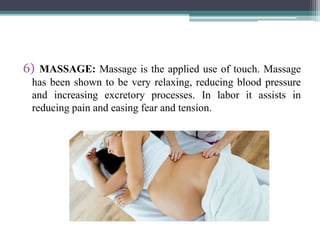
6) MASSAGE: Massage is the applied use of touch. Massage
has been shown to be very relaxing, reducing blood pressure
and increasing excretory processes. In labor it assists in
reducing pain and easing fear and tension.
ADVANTAGES OF MASSAGE:
Benefits of massage demonstrate that it is an effective
treatment for reducing stress, pain and muscle tension. While
more research is needed to confirm the benefits of massage,
some studies have found massage may also be helpful for
anxiety, digestive disorders.
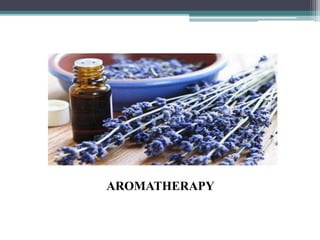
7)AROMATHERAPY: It involves the use of highly
concentrated plants essential oils administered via the
skin(massage, water or compresses),via the respiratory
tract(inhalation and vaporizers),via mucous membranes
(pessaries and suppositories) and occasionally via the
gastrointestinal tract(orally).
‘Aroma’(smell)‘therapy’ (treatment),aromatherapy can help
ease headaches and fatigue.
• Uplifting scents such as orange, peppermint and lemon will
help improve clarity and focus.
• For headaches and tension try peppermint, basil or rosemary.
• For insomnia and tension try relaxing scents such as lavender,
rose, patchouli.
AROMATHERAPY
8) YOGA: Yoga, a method of Indian origin, proposes control of
mind and body. Yoga can be applied in pregnancy and delivery.
Through special training of breathing, it achieves changes in
level of consciousness, relaxation, receptivity to the world and
inner peace.
According to professionals who use this technique for delivery,
yoga shortens the duration of labor, decreases pain and reduces
the need for analgesic medication.
YOGA
9)REFLEXOLOGY/ REFLEX ZONE THERAPY :
Reflexology, a therapy in which pressure is applied to certain
areas of the feet, hands and ears, can be beneficial in helping
relieve nausea, constipation, fatigue and backache, among
other pregnant women. Reflexology on certain areas of the feet
can also stimulate labor contractions
Reflexology involve pressure point manipulation, sedation and
stimulation.
During labor a experienced reflexologist can help woman to
cope with the pain and speed the process of childbirth by
pressure and stoking specific ankle points, which are said to
stimulates the pituitary glands to release pain killer hormone.
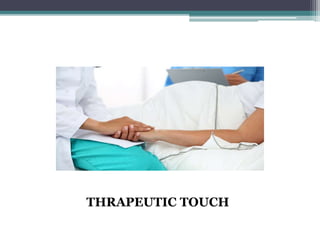
10) THERAPEUTIC TOUCH: The purpose of therapeutic
touch in intra-natal period is to communicate, caring and
reassurance. Painful contraction of the uterus can be treated
by the application of pressure with the hands to the woman’
back, abdomen, hips, thighs, sacrum.
• In one study, touching was perceived positively by 94% of
patient when they were touch by a relative or friend, 86%
by their husband, 73% by a nurse and 21% by a physician.
• In a retrospective study of 30 patients, 77% experienced
“less pain’’ when they were touched during labor, and 40%
reported less need for pain medication.
THRAPEUTIC TOUCH
11)OSTEOPATHY: Osteopathy has been regulated since 1993
by the general osteopathic council and it is based on the
principle that misalignment of the neuro-musculo skeletal
system. Treatment aims to re-align and rebalance the whole
person.
12) HYDROTHERAPY : The use of hydrotherapy during
labor, whether in a shower or a tub, is a proven means of
relaxation and pain relief. The warm water stimulates and
release of endorphins that relaxes muscle to decrease muscle
tension, increase large diameters of nerve fibers. And
promotes better circulation and oxygenation.
Hydrotherapy can increases diueresis, decreased edema,
decrease blood pressure, less use of intramuscular and
intravenous medication.
BENEFITS OF HYDROTHERAPY:
• Hydrotherapy helps loosen weight, tense muscles tone
and encourages relaxation. Hydro therapy increases the
digestion activity and metabolic rate. Hydrotherapy
hydrates the cells and improves muscle and skin tone.
• Hydrotherapy helps in boosting the immune
system allowing it to function more efficiently.
• Hydrotherapy stimulates the blood supply improving the
function of the internal organs.
.
DISADVANTAGES OF HYDROTHERAPY:
• Hydrotherapy can also put on a risk of allergic reaction known
as contact dermatitis for some patients using essential herbs
and oils in their bath water.
SUMMARY
Alternative therapies are used instead of conventional
therapy. for example, the use of acupuncture/ acupressure rather
than analgesic to relieve pain. Complementary therapy are those
therapy used in conjunction with conventional therapies. For
example meditation used as an adjunct to analgesics drugs. It
can be seen that there are many complementary therapies
during intra natal period which can be applied to the care of
pregnant women, although they are not always without risk and
must be used accurately and appropriately.
BIBLIOGRAPHY
• Mitchell, Mary. "Women's use of complementary and alternative medicine
in pregnancy: A search for holistic wellbeing." Women and Birth 27.4
(2014): 276-280.
• Warriner, Sian, Karen Bryan, and Anna Maria Brown. "Women's attitude
towards the use of complementary and alternative medicines (CAM) in
pregnancy." Midwifery 30, no. 1 (2014): 138-143.
• https://www.webmd.com/balance/guide/alternative-therapies-in-pregnancy
• https://www.whattoexpect.com/pregnancy/ask-heidi/week-
24/complementary-and-alternative-medicines.aspx
• https://www.slideshare.net/AncyAbraham2/alternative-and-
complementary-methods-during-labor
• https://www.slideshare.net/manuaravind73/alternative-amp-
complementary-therapies-in-midwifery
• Fraser Diame M., Cooper Margaret A, Myles textbook for midwives, 15th
edition, Churchill Livingstone Elsevier publisher, pg no. 959- 965.
THANK YOU…..

ALTERNATIVE AND COMPLEMENTARY THERAPIES DURING INTRANATAL PERIOD

  • 1.
  • 2.
    INTRODUCTION Complimentary therapy areincreasingly popular with both consumers and professionals, and are based on philosophy of holism and an interaction between body, mind and spirit in which it is believed that all components in combination to the whole. Within midwifery ,use of complementary therapy has been driven by mothers looking for strategies to help them cope with pregnancy symptoms and labor discomforts and to aid relaxation.
  • 3.
    DEFINITION ALTERNATIVE THERAPIES: Alternative therapiesare used instead of conventional therapy. for example, the use of Acupuncture/Acupressure rather than analgesic to relieve pain. COMPLEMENTARY THRTAPY:- Complementary therapy are those therapy used in conjunction with conventional therapies. For example meditation used as an adjunct to analgesics drugs.
  • 4.
    CLASSIFICATION OF ALTERNATIVE/COMPLEMENTARY THERAPY 1) ACUPUNCTURE:Acupuncture is well known Chinese practice. In this one uses needles inserted at specific points to relieve pain, this therapy is found beneficial during pregnancy. • It is used to relieve pain and also to reduce morning sickness. • The placement of needle will depend on which area and what kind of pain. • Advisable of take this treatment certificate practitioners.
  • 5.
  • 6.
    ADVANTAGE OF ACUPUNTURE:- •Performed correctly, it is safe. • There are very few side effects. • It can be effectively combined with other treatments. • It can control some type of pain. • It may help patients for whom pain medications are not suitable.
  • 7.
    DISADVANTAGE OF ACUPUNCTURE: •It is dangerous if a patient has a bleeding disorder or takes blood thinners. • Bleeding, bruising, and soreness may occur at the insertion sites. • Unsterilized needles may infect the patient. • In rare cases, a needle may break and damage an internal organ. • When needle inserted deeply into the chest or upper back, there is a risk of collapsed lung, but this is very rare.
  • 8.
    2)ACUPRESSURE: It isform of alternative therapy in which manual pressure is used to stimulate specific points on the body. Acupressure practitioners use their fingers, palms, elbows or feet, or special devices to apply pressure to points on the body's meridians. The practitioner gently presses on acupressure points on your body. A session typically lasts about one hour.
  • 9.
  • 10.
    ADVANTAGES OF ACUPRESSURE: •Relieving stress, tension and anxiety • Improving sleep • Relaxing muscles and joints • Soothing the pain and discomfort of a sports or other injury • Reducing digestive issues • Minimizing headaches • Alleviating chronic pain
  • 11.
    DISADVANTAGES OFACUPRESSURE: • Peoplehaving a fractured bone should avoid acupressure • Patients with diarrhoea and fever should not go for acupressure massage therapy. • Acupressure is less effective in soft pressure points such as stomach. • Acupressure is not the right choice for patients having osteoporosis.
  • 12.
    3)HERBAL MEDICINE: Herbalmedicine involves the therapeutic use of plants in various forms, which works pharmacologically. There is a common misconception that because herbal remedies are natural they are automatically safe but there is now a growing body of evidence about the risk of possible interaction between herbal and conventional medicines. Many herbal remedies should be avoided during preconception and antenatal period and when breastfeeding because they may induce uterine bleeding.
  • 13.
    ADVANTAGES OF HERBALMEDICATIONS: • More affordable than conventional medicine. • Promote natural healing. • Strength in immune system. • Stabilizes hormones and metabolism. • It is cost effective.
  • 14.
    DISADVANTAGES OF HERBALMEDICATIONS: • Herbal medicines take a longer time to work compared to pharmaceutical drugs. If an individual decides to take the herbal alternative to pharmaceuticals, he or she must be very patience. • Herbal medicines are often self administered. As a result, there is no dosage or warnings specified. When Herbal medicines are consumed with pharmaceutical drugs, the two can interact with each other resulting injuries to health.
  • 15.
  • 16.
    4) HOMEOPATHY: Homeopathicdrugs that may help to lessen the pain of natural child birth. Through homeopathy is not recognized as a way of curing an ailment of pain quickly, it can start from the later months of pregnancy, with the aim of reducing the eventual labor pain . These drugs only be taken by recognized homeopathy practitioner and obstetrician
  • 17.
    ADVANTAGES OF HOMEOPATHY: •Pregnant women are very sensitive to any eating products. But the medicines of Homeopathy can protect pregnant women as it proves safe for them. • If a person has already been taking medicines. Then he can also continue with the treatment of Homeopathy. • It also controls the reactions caused by the medicines. • It does not encounter any side-effect. • The homeopathy treatment is not very expensive, and it is affordable by the common man.
  • 18.
    DISADVANTAGES OF HOMEOPATHY: •The treatment of Homeopathy does not work at the time of emergency. • It takes a long time to cure the disease. • Its treatment is restricted to eat so many things like the pickle, non-veg, oily food, etc.
  • 19.
    5) HYPNOTHERAPY/ HYPNOSISTHERAPY: The word hypnosis originates from the Greek “HYPNOS” which means sleep. Hypnosis is not sleep but a state of focused concentration in which the patient can be relatively unaware, yet not completely blind to their surroundings. Hypnosis focus on diminishing the awareness of pain as well as fear and anxiety.
  • 20.
    ADVANTAGES OF HYPNOTHERAPY: •Beneficial for people with an anxiety disorders, • And hypnotherapy can even improve mood to ease feelings of depression. • Hypnosis can assist with weight loss, help you to improve your diet and give you the encouragement that you need to work out on a regular basis.
  • 21.
    DISADVANTAGES OF HYPNOTHERAPY: •Dizziness. • Headache. • Feelings of anxiety. • Stomach upset.
  • 22.
    6) MASSAGE: Massageis the applied use of touch. Massage has been shown to be very relaxing, reducing blood pressure and increasing excretory processes. In labor it assists in reducing pain and easing fear and tension.
  • 23.
    ADVANTAGES OF MASSAGE: Benefitsof massage demonstrate that it is an effective treatment for reducing stress, pain and muscle tension. While more research is needed to confirm the benefits of massage, some studies have found massage may also be helpful for anxiety, digestive disorders.
  • 24.
    7)AROMATHERAPY: It involvesthe use of highly concentrated plants essential oils administered via the skin(massage, water or compresses),via the respiratory tract(inhalation and vaporizers),via mucous membranes (pessaries and suppositories) and occasionally via the gastrointestinal tract(orally). ‘Aroma’(smell)‘therapy’ (treatment),aromatherapy can help ease headaches and fatigue. • Uplifting scents such as orange, peppermint and lemon will help improve clarity and focus. • For headaches and tension try peppermint, basil or rosemary. • For insomnia and tension try relaxing scents such as lavender, rose, patchouli.
  • 25.
  • 26.
    8) YOGA: Yoga,a method of Indian origin, proposes control of mind and body. Yoga can be applied in pregnancy and delivery. Through special training of breathing, it achieves changes in level of consciousness, relaxation, receptivity to the world and inner peace. According to professionals who use this technique for delivery, yoga shortens the duration of labor, decreases pain and reduces the need for analgesic medication.
  • 27.
  • 28.
    9)REFLEXOLOGY/ REFLEX ZONETHERAPY : Reflexology, a therapy in which pressure is applied to certain areas of the feet, hands and ears, can be beneficial in helping relieve nausea, constipation, fatigue and backache, among other pregnant women. Reflexology on certain areas of the feet can also stimulate labor contractions Reflexology involve pressure point manipulation, sedation and stimulation. During labor a experienced reflexologist can help woman to cope with the pain and speed the process of childbirth by pressure and stoking specific ankle points, which are said to stimulates the pituitary glands to release pain killer hormone.
  • 29.
    10) THERAPEUTIC TOUCH:The purpose of therapeutic touch in intra-natal period is to communicate, caring and reassurance. Painful contraction of the uterus can be treated by the application of pressure with the hands to the woman’ back, abdomen, hips, thighs, sacrum. • In one study, touching was perceived positively by 94% of patient when they were touch by a relative or friend, 86% by their husband, 73% by a nurse and 21% by a physician. • In a retrospective study of 30 patients, 77% experienced “less pain’’ when they were touched during labor, and 40% reported less need for pain medication.
  • 30.
  • 31.
    11)OSTEOPATHY: Osteopathy hasbeen regulated since 1993 by the general osteopathic council and it is based on the principle that misalignment of the neuro-musculo skeletal system. Treatment aims to re-align and rebalance the whole person.
  • 32.
    12) HYDROTHERAPY :The use of hydrotherapy during labor, whether in a shower or a tub, is a proven means of relaxation and pain relief. The warm water stimulates and release of endorphins that relaxes muscle to decrease muscle tension, increase large diameters of nerve fibers. And promotes better circulation and oxygenation. Hydrotherapy can increases diueresis, decreased edema, decrease blood pressure, less use of intramuscular and intravenous medication.
  • 34.
    BENEFITS OF HYDROTHERAPY: •Hydrotherapy helps loosen weight, tense muscles tone and encourages relaxation. Hydro therapy increases the digestion activity and metabolic rate. Hydrotherapy hydrates the cells and improves muscle and skin tone. • Hydrotherapy helps in boosting the immune system allowing it to function more efficiently. • Hydrotherapy stimulates the blood supply improving the function of the internal organs. .
  • 35.
    DISADVANTAGES OF HYDROTHERAPY: •Hydrotherapy can also put on a risk of allergic reaction known as contact dermatitis for some patients using essential herbs and oils in their bath water.
  • 36.
    SUMMARY Alternative therapies areused instead of conventional therapy. for example, the use of acupuncture/ acupressure rather than analgesic to relieve pain. Complementary therapy are those therapy used in conjunction with conventional therapies. For example meditation used as an adjunct to analgesics drugs. It can be seen that there are many complementary therapies during intra natal period which can be applied to the care of pregnant women, although they are not always without risk and must be used accurately and appropriately.
  • 37.
    BIBLIOGRAPHY • Mitchell, Mary."Women's use of complementary and alternative medicine in pregnancy: A search for holistic wellbeing." Women and Birth 27.4 (2014): 276-280. • Warriner, Sian, Karen Bryan, and Anna Maria Brown. "Women's attitude towards the use of complementary and alternative medicines (CAM) in pregnancy." Midwifery 30, no. 1 (2014): 138-143. • https://www.webmd.com/balance/guide/alternative-therapies-in-pregnancy • https://www.whattoexpect.com/pregnancy/ask-heidi/week- 24/complementary-and-alternative-medicines.aspx • https://www.slideshare.net/AncyAbraham2/alternative-and- complementary-methods-during-labor • https://www.slideshare.net/manuaravind73/alternative-amp- complementary-therapies-in-midwifery • Fraser Diame M., Cooper Margaret A, Myles textbook for midwives, 15th edition, Churchill Livingstone Elsevier publisher, pg no. 959- 965.
  • 38.