Who I am
 I am working with TCS as Information Security
  Consultant.
 Work area includes vulnerability assessment ,
  Penetration Testing and secure environment setup.
 Interested in reverse engineering and exploit writing.
Title
 Content-Type Attack : Content-Type attack is related to the
  vulnerability in client side software that are use to read the content like adobe
  reader , Microsoft office , Image viewer. Attackers attempt to exploit programming
  flaws in that code to induce memory corruption issues, resulting in their own attack
  code being run on the victim computer that opened the PDF or DOC file.
 Dark Hole in a secure environment : This is due to following
  reasons.
  1) Un-detective Nature
  2) Ignorance
   3) False sense of security
Content
 Content-Type Attack process
 Malicious attack document structure
 Attack demo
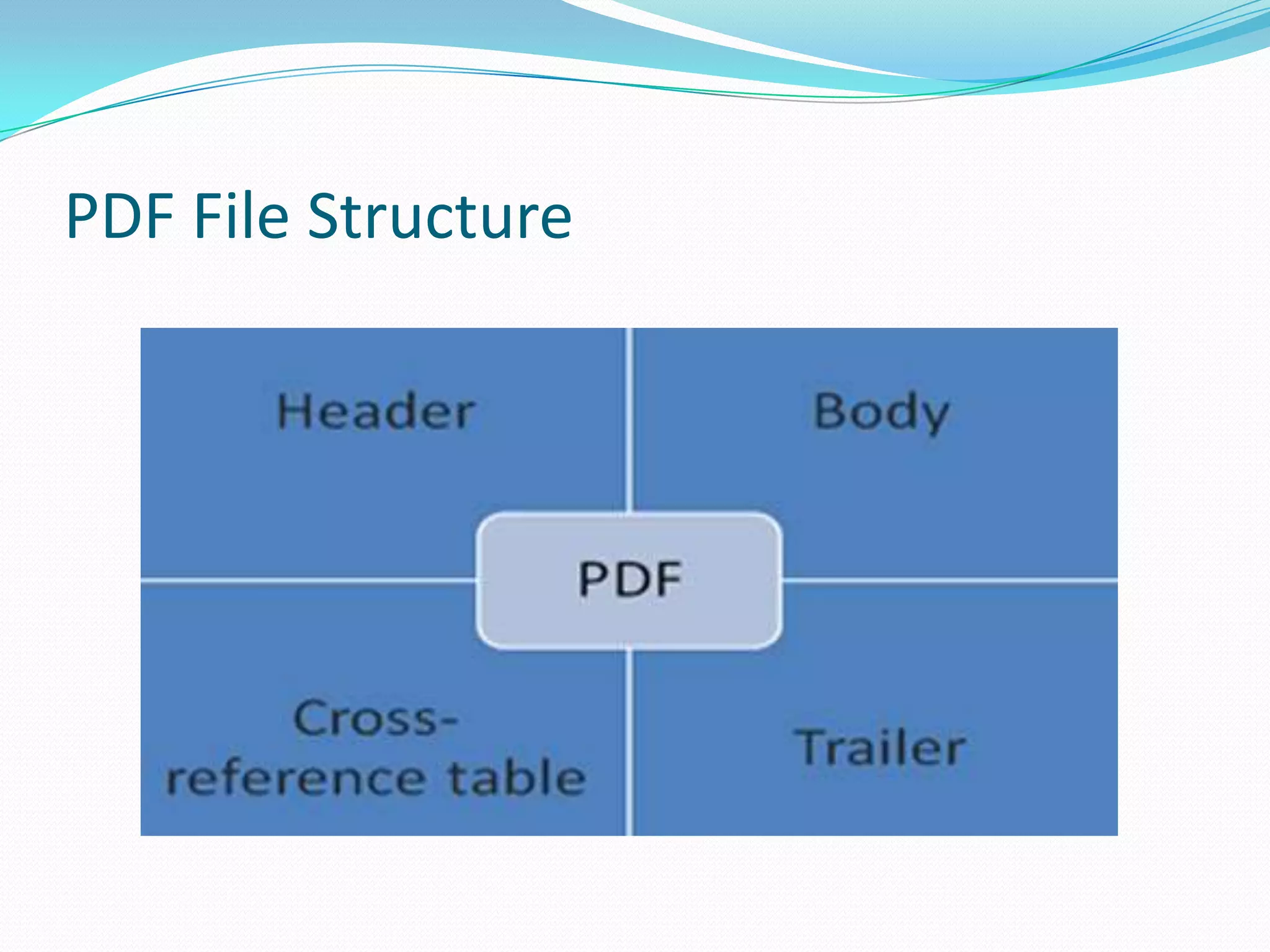
 PDF File Structure
 Intro to the PDF file format
 PDF object type overview
 Demo : PDF analysis using scripts
 Content-Type Attack protection technique
Content-Type Attack process

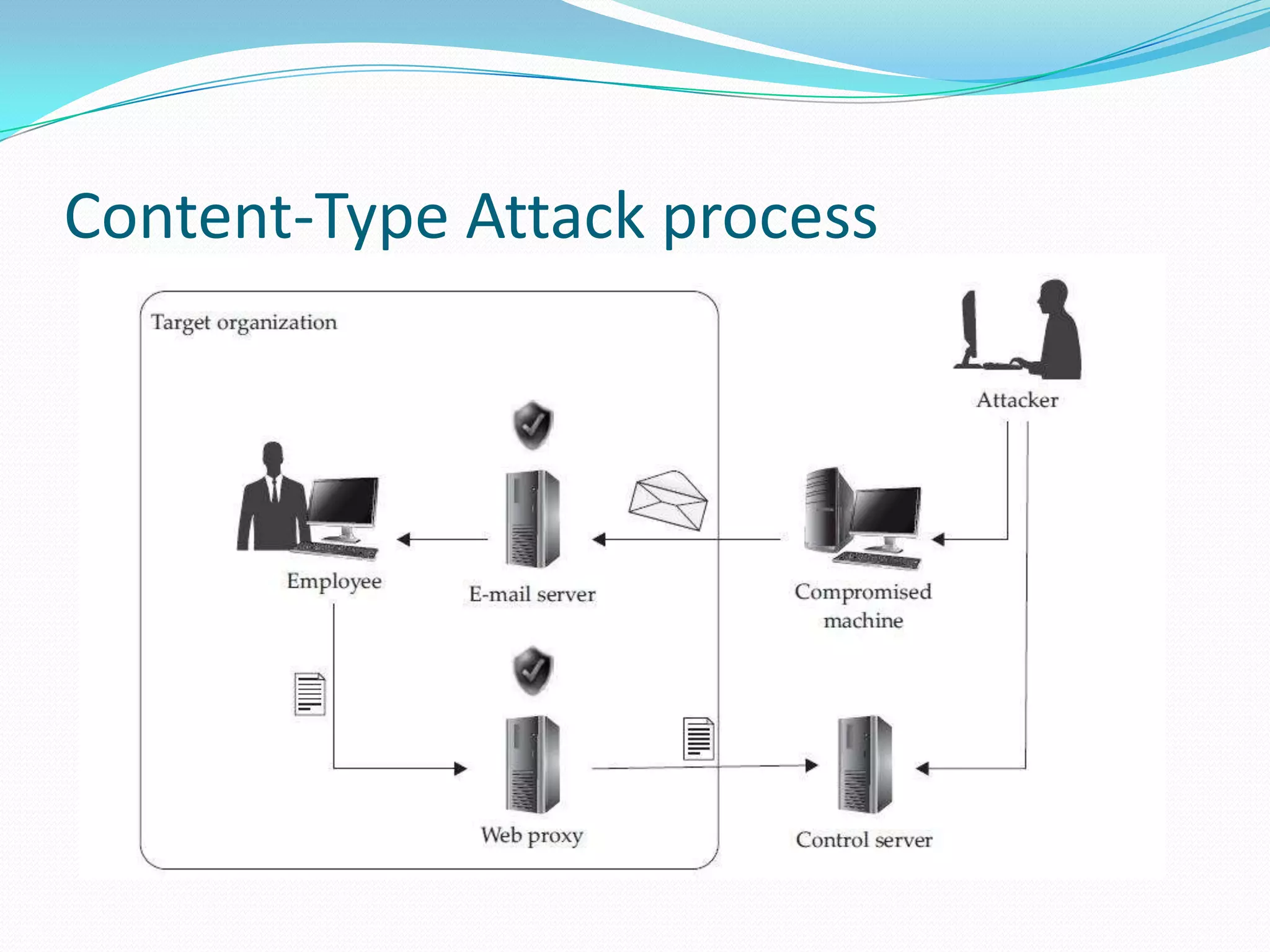
 This attack document is sent by an attacker to a victim, perhaps using a compromised
  machine to relay the e-mail to help conceal the attacker’s identify.
 If the victim double-clicks the file attached to the e-mail, the application registered for
  the file type launches and starts parsing the file.
 In this malicious file, the attacker will have embedded malformed content that exploits a
  file-parsing vulnerability, causing the application to corrupt memory on the stack or
  heap.
 Successful exploits transfer control to the attacker’s shell code that has been loaded from
  the file into memory.
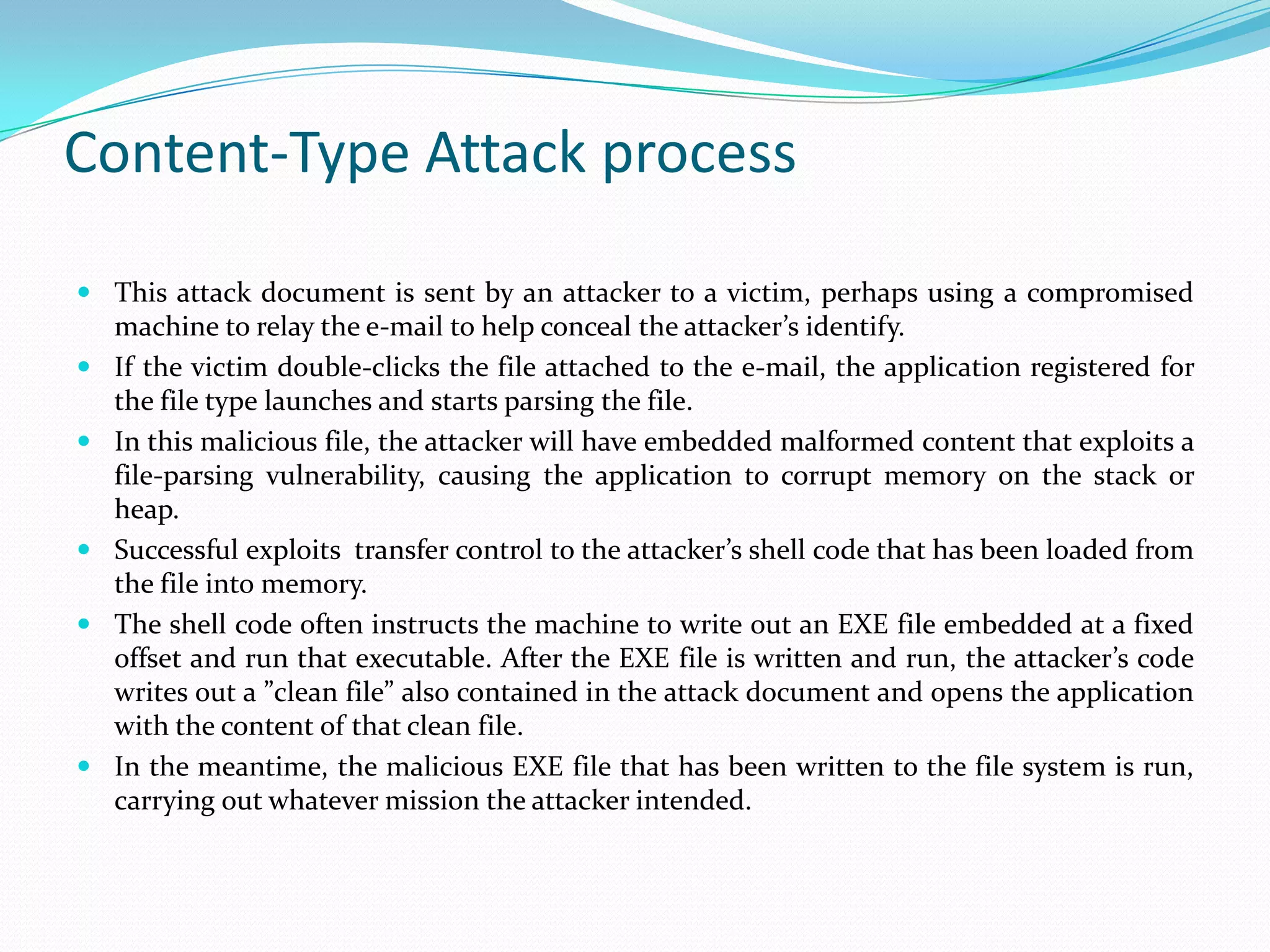
 The shell code often instructs the machine to write out an EXE file embedded at a fixed
  offset and run that executable. After the EXE file is written and run, the attacker’s code
  writes out a ”clean file” also contained in the attack document and opens the application
  with the content of that clean file.
 In the meantime, the malicious EXE file that has been written to the file system is run,
  carrying out whatever mission the attacker intended.
Malicious attack document structure
Attack Demo
PDF File Structure
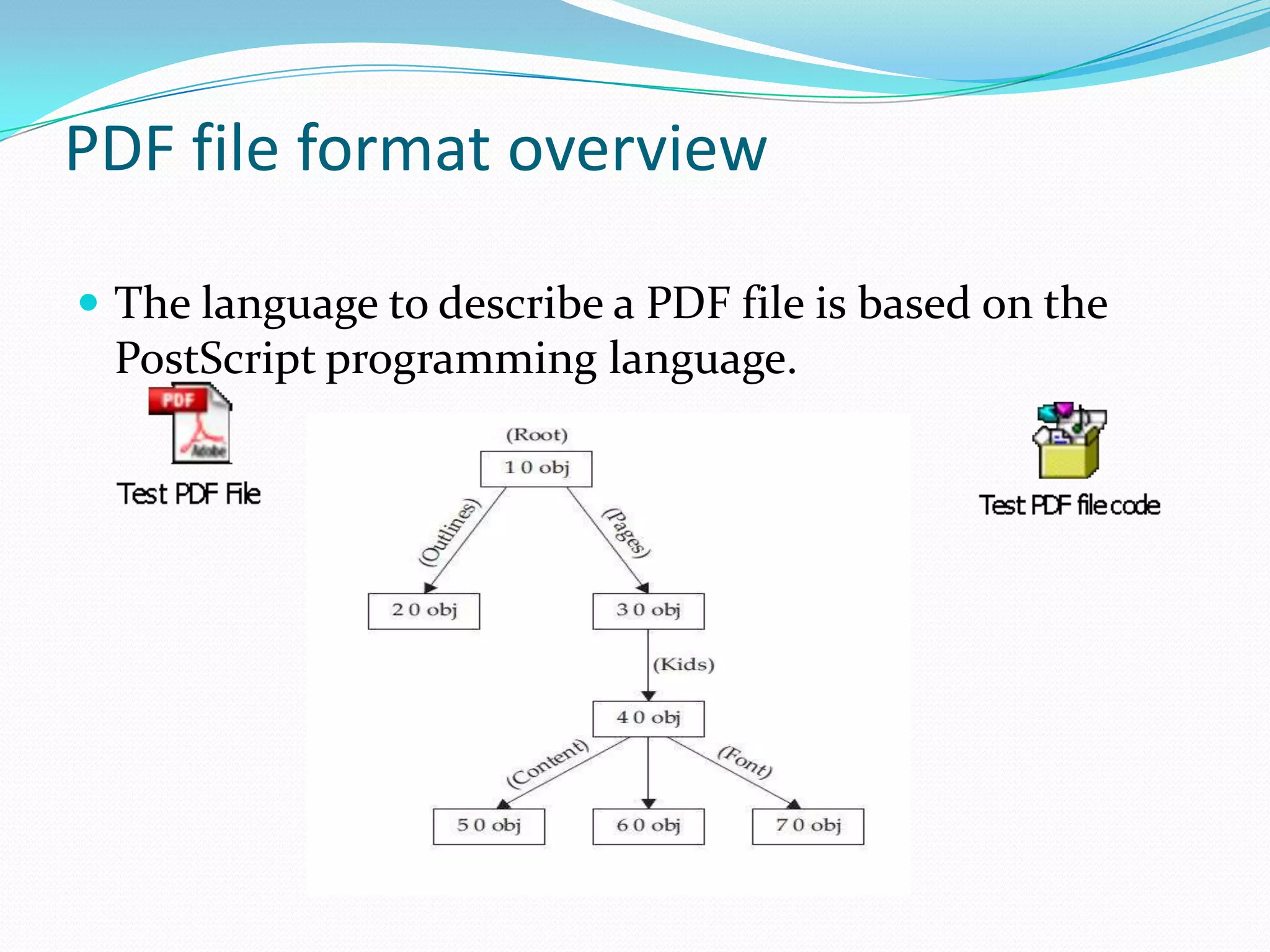
PDF file format overview

 The language to describe a PDF file is based on the
 PostScript programming language.
 Stream objects may contain compressed, obfuscated binary data between the opening
  “stream” tag and closing “endstream” tag. Here is an example:

 5 0 bj<</Subtype/Type1C/Length=5416/Filter/FlateDecode>>stream
   H%|T}T#W#Ÿ!d&"FI#Å%NFW#åC
   ...
   endstream
   endobj

 In this example, the stream data is compressed using the /Flate Compressed stream
  data is a popular trick used by malware authors to evade detection.
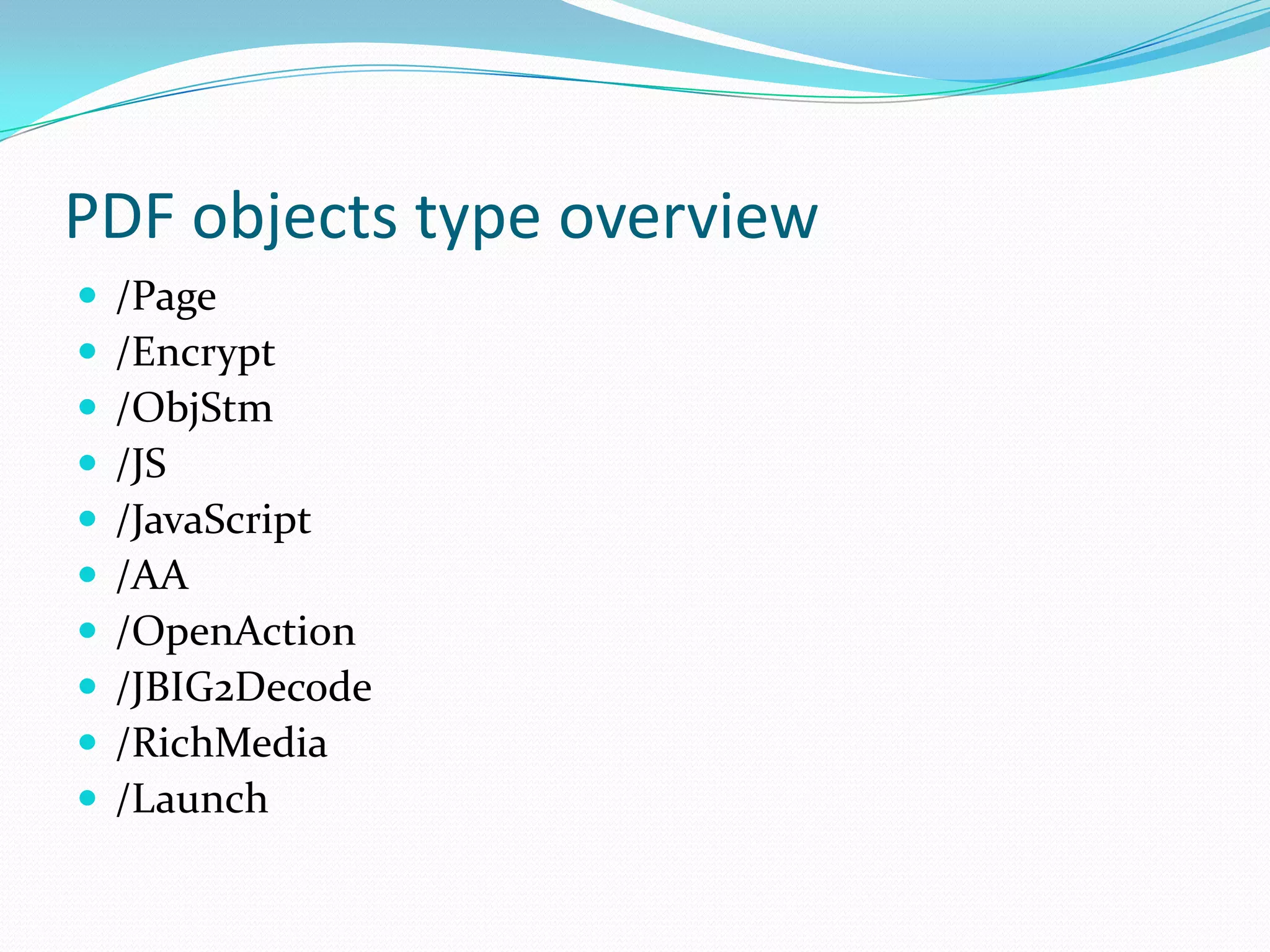
PDF objects type overview
   /Page
   /Encrypt
   /ObjStm
   /JS
   /JavaScript
   /AA
   /OpenAction
   /JBIG2Decode
   /RichMedia
   /Launch
Demo:
PDF analysis using scripts
Content-Type Attack protection technique
 All security update must be available.
 Disable java script in adobe reader.
 Enable DEP for un-trusted application.
 Don’t open attach file in mail from unknown or un-
  trusted source.
 Implement white-list based proxy.
 Implement strong outbound firewall policy.
Credit
 Didier Stevens
 Nikhil Mittal
 ClubHack
Thank you


     Presented by : Raman Gupta
     ( Twitter : Raman_gupta1)

Content Type Attack Dark Hole in the Secure Environment by Raman Gupta

  • 2.
    Who I am I am working with TCS as Information Security Consultant.  Work area includes vulnerability assessment , Penetration Testing and secure environment setup.  Interested in reverse engineering and exploit writing.
  • 3.
    Title  Content-Type Attack: Content-Type attack is related to the vulnerability in client side software that are use to read the content like adobe reader , Microsoft office , Image viewer. Attackers attempt to exploit programming flaws in that code to induce memory corruption issues, resulting in their own attack code being run on the victim computer that opened the PDF or DOC file.  Dark Hole in a secure environment : This is due to following reasons. 1) Un-detective Nature 2) Ignorance 3) False sense of security
  • 4.
    Content  Content-Type Attackprocess  Malicious attack document structure  Attack demo  PDF File Structure  Intro to the PDF file format  PDF object type overview  Demo : PDF analysis using scripts  Content-Type Attack protection technique
  • 5.
  • 6.
    Content-Type Attack process This attack document is sent by an attacker to a victim, perhaps using a compromised machine to relay the e-mail to help conceal the attacker’s identify.  If the victim double-clicks the file attached to the e-mail, the application registered for the file type launches and starts parsing the file.  In this malicious file, the attacker will have embedded malformed content that exploits a file-parsing vulnerability, causing the application to corrupt memory on the stack or heap.  Successful exploits transfer control to the attacker’s shell code that has been loaded from the file into memory.  The shell code often instructs the machine to write out an EXE file embedded at a fixed offset and run that executable. After the EXE file is written and run, the attacker’s code writes out a ”clean file” also contained in the attack document and opens the application with the content of that clean file.  In the meantime, the malicious EXE file that has been written to the file system is run, carrying out whatever mission the attacker intended.
  • 7.
  • 8.
  • 9.
  • 10.
    PDF file formatoverview  The language to describe a PDF file is based on the PostScript programming language.
  • 11.
     Stream objectsmay contain compressed, obfuscated binary data between the opening “stream” tag and closing “endstream” tag. Here is an example:  5 0 bj<</Subtype/Type1C/Length=5416/Filter/FlateDecode>>stream H%|T}T#W#Ÿ!d&"FI#Å%NFW#åC ... endstream endobj  In this example, the stream data is compressed using the /Flate Compressed stream data is a popular trick used by malware authors to evade detection.
  • 12.
    PDF objects typeoverview  /Page  /Encrypt  /ObjStm  /JS  /JavaScript  /AA  /OpenAction  /JBIG2Decode  /RichMedia  /Launch
  • 13.
  • 14.
    Content-Type Attack protectiontechnique  All security update must be available.  Disable java script in adobe reader.  Enable DEP for un-trusted application.  Don’t open attach file in mail from unknown or un- trusted source.  Implement white-list based proxy.  Implement strong outbound firewall policy.
  • 15.
    Credit  Didier Stevens Nikhil Mittal  ClubHack
  • 16.
    Thank you Presented by : Raman Gupta ( Twitter : Raman_gupta1)