Arranged by:
Ahmad Hasanul Basri
(E1D011002)
Baiq Ilda Karwayu
(E1D011013)
Desi Prihartini
(E1D011016)
FACULTY OF TEACHER TRANING AND EDUCATION
UNIVERSITY OF MATARAM

2013
WHAT IS CONTENT
•Grammar-translation
Grammar structure
•Communicative approach
Communicative purpose
•Natural Approach
Game
•More recently

The subject matters (topics and themes)
RATIONALES OF CONTENT-BASED
INSTRUCTION
• Krashen (1984)
Comprehensible input rather than memorizing vocabulary or
completing grammar exercises.
• Swain (1985)
The more opportunities, the more communicative the student is
• Cummins (1980b, 1981b)
Social-interpersonal language is learnt more quickly and easily
• Snow, Met, and Genesee (1989)
Systematic, well-planned instructional framework for academic
learning
MODEL OF CONTENT-BASED
INSTRUCTION
• Immerse Education
 prototype content-based instruction
• Content enriched foreign language in the elementary
school
point coincidence or content-compatible
language
• Theme-based model
• Sheltered model
• Adjunct Model
INTEGRATING FIVE SKILLS

•Unit I: Classification
•Unit 2: Text Coherence
•Unit 3: Understanding Lectures
STRATEGIES AND TECHNIQUE FOR
CONTENT INSTRUCTION
• Modifying input
• Use of Contextual Cues
• Checking for Understanding
• Designing Appropriate Lessons
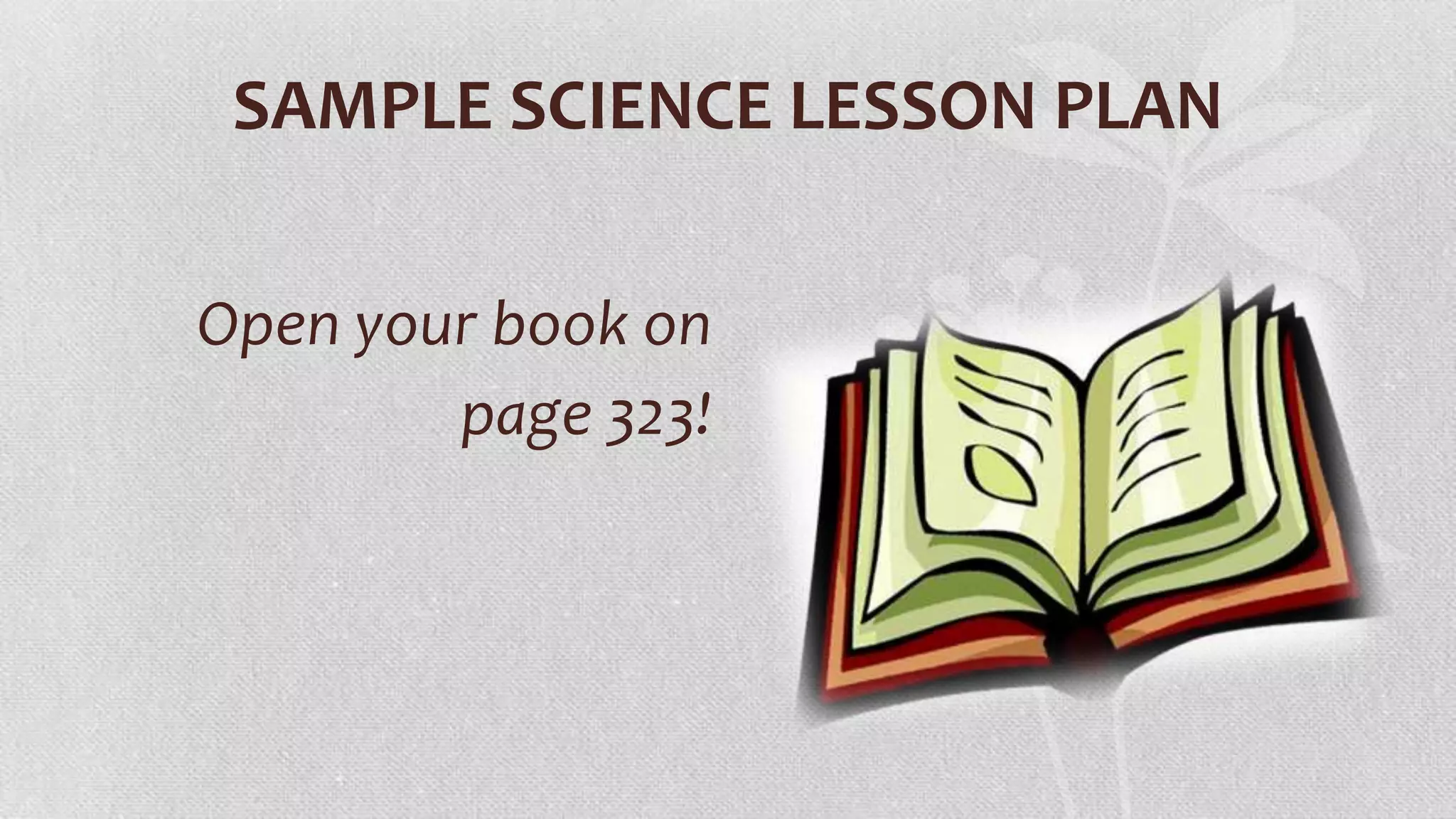
SAMPLE SCIENCE LESSON PLAN
Open your book on
page 323!
KEY ISSUES
• Teachers’ roles


To exploit the content

• Developing appropriate
curricula and materials
• Students-centred approach
LITERATURE and LANGUAGE
• Vocabulary
• Main reading problem for ESL/EFL learners
• Specific words and phrases
• Many words and phrases are culture-tied

• 2. Grammar
• Not the major problem as the vocabulary does
• Dealing grammatical problems by clarify them
• Literary selection
LANGUAGE AND READING
• Literal Level
• Inferential Level
• Personal/evaluative level
LANGUAGE AND WRITING
• Literature as model for writing
• Literature as subject for writing
LITERATURE AND THE ORAL
SKILLS
1. ORAL READING
•Make students active to follow the class*
•Teacher as a facilitator
•Different interesting topics every class
LITERATURE AND THE ORAL
SKILLS
2. DRAMA*
• Dramatization
• Role-playing
• Improvisation
LITERATURE AND THE ORAL
SKILLS
3. GROUP ACTIVITIES
• General Class Discussion
• Small-group Work*
• Panes Discussion
• Debates
LITERATURE AND THE ORAL
SKILLS
4. CULTURE
• Introduction to Cultural Context
• Culture Aside
• Culture Capsule*
• Group Work on Culture*
LITERATURE AND THE ORAL
SKILLS
5. SELECTION OF LITERATURE
• Age of The Work
• Theme
• Language Proficiency
• Genre-specific Recommendations
• The Personal Aspects of Literature Selection

CONTENT AND LITERATURE-BASED ENGLISH TEACHING

  • 1.
    Arranged by: Ahmad HasanulBasri (E1D011002) Baiq Ilda Karwayu (E1D011013) Desi Prihartini (E1D011016) FACULTY OF TEACHER TRANING AND EDUCATION UNIVERSITY OF MATARAM 2013
  • 2.
    WHAT IS CONTENT •Grammar-translation Grammarstructure •Communicative approach Communicative purpose •Natural Approach Game •More recently The subject matters (topics and themes)
  • 3.
    RATIONALES OF CONTENT-BASED INSTRUCTION •Krashen (1984) Comprehensible input rather than memorizing vocabulary or completing grammar exercises. • Swain (1985) The more opportunities, the more communicative the student is • Cummins (1980b, 1981b) Social-interpersonal language is learnt more quickly and easily • Snow, Met, and Genesee (1989) Systematic, well-planned instructional framework for academic learning
  • 4.
    MODEL OF CONTENT-BASED INSTRUCTION •Immerse Education  prototype content-based instruction • Content enriched foreign language in the elementary school point coincidence or content-compatible language • Theme-based model • Sheltered model • Adjunct Model
  • 5.
    INTEGRATING FIVE SKILLS •UnitI: Classification •Unit 2: Text Coherence •Unit 3: Understanding Lectures
  • 6.
    STRATEGIES AND TECHNIQUEFOR CONTENT INSTRUCTION • Modifying input • Use of Contextual Cues • Checking for Understanding • Designing Appropriate Lessons
  • 7.
    SAMPLE SCIENCE LESSONPLAN Open your book on page 323!
  • 8.
    KEY ISSUES • Teachers’roles  To exploit the content • Developing appropriate curricula and materials • Students-centred approach
  • 9.
    LITERATURE and LANGUAGE •Vocabulary • Main reading problem for ESL/EFL learners • Specific words and phrases • Many words and phrases are culture-tied • 2. Grammar • Not the major problem as the vocabulary does • Dealing grammatical problems by clarify them • Literary selection
  • 10.
    LANGUAGE AND READING •Literal Level • Inferential Level • Personal/evaluative level
  • 11.
    LANGUAGE AND WRITING •Literature as model for writing • Literature as subject for writing
  • 12.
    LITERATURE AND THEORAL SKILLS 1. ORAL READING •Make students active to follow the class* •Teacher as a facilitator •Different interesting topics every class
  • 13.
    LITERATURE AND THEORAL SKILLS 2. DRAMA* • Dramatization • Role-playing • Improvisation
  • 14.
    LITERATURE AND THEORAL SKILLS 3. GROUP ACTIVITIES • General Class Discussion • Small-group Work* • Panes Discussion • Debates
  • 15.
    LITERATURE AND THEORAL SKILLS 4. CULTURE • Introduction to Cultural Context • Culture Aside • Culture Capsule* • Group Work on Culture*
  • 16.
    LITERATURE AND THEORAL SKILLS 5. SELECTION OF LITERATURE • Age of The Work • Theme • Language Proficiency • Genre-specific Recommendations • The Personal Aspects of Literature Selection