CONSUMER
RIGHTS
-By Rafiq Shaik
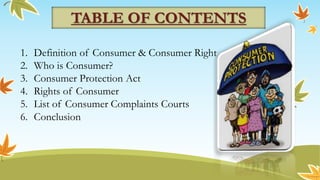
TABLE OF CONTENTS
1. Definition of Consumer & Consumer Right
2. Who is Consumer?
3. Consumer Protection Act
4. Rights of Consumer
5. List of Consumer Complaints Courts
6. Conclusion
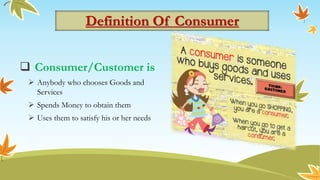
Definition Of Consumer
 Consumer/Customer is
 Anybody who chooses Goods and
Services
 Spends Money to obtain them
 Uses them to satisfy his or her needs
 Right to have information about
 Quality
 Potency
 Quantity
 Purity
 Price
 Standard of Goods and Services
Definition Of Consumer Right
Who is Consumer?
 Most important Visitor
 Not dependent on us,
But we are dependent on him.
 Not interruption to our work, he is the purpose of it.
 We are not doing a favour to a consumer
 He is doing us a favour by giving us opportunity to
service him
- By Mahatma Gandhi
Consumer Protection Act
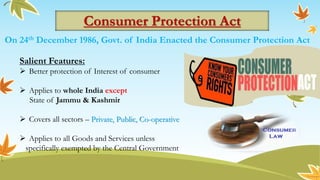
On 24th December 1986, Govt. of India Enacted the Consumer Protection Act
Salient Features:
 Better protection of Interest of consumer
 Applies to whole India except
State of Jammu & Kashmir
 Covers all sectors – Private, Public, Co-operative
 Applies to all Goods and Services unless
specifically exempted by the Central Government
Consumer Protection
 Fair trading regulations exist to protect consumers from
exploitation.
 Consumers have basic legal rights and can
complain/sue if a product is:
 Giving a misleading description
 Of an unsatisfactory quality
 Not fit for its intended purpose
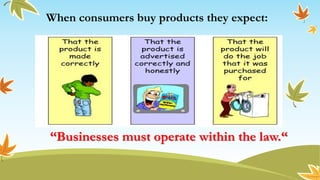
When consumers buy products they expect:
“Businesses must operate within the law.“
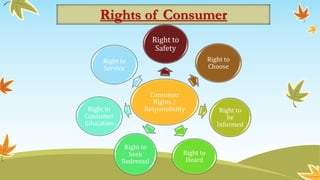
Rights of Consumer
Consumer
Rights /
Responsibility
Right to
Safety
Right to
Choose
Right to
be
Informed
Right to
Heard
Right to
Seek
Redressal
Right to
Consumer
Education
Right to
Service
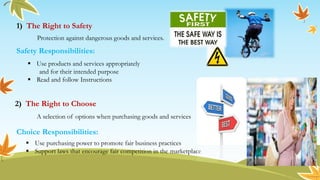
1) The Right to Safety
2) The Right to Choose
Protection against dangerous goods and services.
Safety Responsibilities:
 Use products and services appropriately
and for their intended purpose
 Read and follow Instructions
A selection of options when purchasing goods and services
Choice Responsibilities:
 Use purchasing power to promote fair business practices
 Support laws that encourage fair competition in the marketplace
3) The Right to Informed
4) The Right to Heard
Reliable sources of information about product or service performance, quality and price
Informed Responsibilities:
• Seek information before purchasing
• Use information to make decisions about where and what to purchase
• Voice complaints about products, services and business practices
• Expect to have your concerns addressed by business and government
Being Heard Responsibilities:
• Speak up when you have a problem or concern
• Support rules and regulations that are consumer friendly
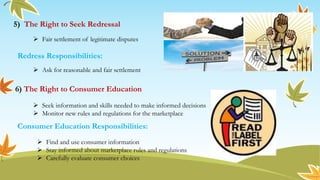
5) The Right to Seek Redressal
6) The Right to Consumer Education
 Fair settlement of legitimate disputes
 Ask for reasonable and fair settlement
Redress Responsibilities:
 Seek information and skills needed to make informed decisions
 Monitor new rules and regulations for the marketplace
 Find and use consumer information
 Stay informed about marketplace rules and regulations
 Carefully evaluate consumer choices
Consumer Education Responsibilities:
7) The Right to Service
 Customers have a right to be treated
in a respectful and courteous manner
 You have the right to expect fast delivery of goods or services
and that they meet the standard of quality a business claims
 You have the right to be served without discrimination
on the basis of your race, gender, income, or age.
Three types of Consumer courts in India:
• District Consumer Disputes Redressal Forum (DCDRF)
 District level court.
 Deals with cases less than INR 20 Lakh.
• State Consumer Disputes Redressal Commission (SCDRC)
 State level court
 Deals with cases less than INR 1 Crore.
• National Consumer Disputes Redressal Commission in India (NCDRC)
 National level court
 Deals with cases more than INR 1 Crore.
List of Consumer Courts in India
• Educate yourself
• Before making major purchase, read Fact Sheets
from the Consumer Product Safety Commission
• Get product information online
• Make Comparisons to find the best product or
service at the best price.
• Follow instructions for the safe use of products
• Report unfair, unsafe, and illegal business
practices.
CONCLUSION
Consumer Rules the Market
THANK
YOU !!

Consumer rights

  • 1.
  • 2.
    TABLE OF CONTENTS 1.Definition of Consumer & Consumer Right 2. Who is Consumer? 3. Consumer Protection Act 4. Rights of Consumer 5. List of Consumer Complaints Courts 6. Conclusion
  • 3.
    Definition Of Consumer Consumer/Customer is  Anybody who chooses Goods and Services  Spends Money to obtain them  Uses them to satisfy his or her needs
  • 4.
     Right tohave information about  Quality  Potency  Quantity  Purity  Price  Standard of Goods and Services Definition Of Consumer Right
  • 5.
    Who is Consumer? Most important Visitor  Not dependent on us, But we are dependent on him.  Not interruption to our work, he is the purpose of it.  We are not doing a favour to a consumer  He is doing us a favour by giving us opportunity to service him - By Mahatma Gandhi
  • 6.
    Consumer Protection Act On24th December 1986, Govt. of India Enacted the Consumer Protection Act Salient Features:  Better protection of Interest of consumer  Applies to whole India except State of Jammu & Kashmir  Covers all sectors – Private, Public, Co-operative  Applies to all Goods and Services unless specifically exempted by the Central Government
  • 7.
    Consumer Protection  Fairtrading regulations exist to protect consumers from exploitation.  Consumers have basic legal rights and can complain/sue if a product is:  Giving a misleading description  Of an unsatisfactory quality  Not fit for its intended purpose
  • 8.
    When consumers buyproducts they expect: “Businesses must operate within the law.“
  • 10.
    Rights of Consumer Consumer Rights/ Responsibility Right to Safety Right to Choose Right to be Informed Right to Heard Right to Seek Redressal Right to Consumer Education Right to Service
  • 11.
    1) The Rightto Safety 2) The Right to Choose Protection against dangerous goods and services. Safety Responsibilities:  Use products and services appropriately and for their intended purpose  Read and follow Instructions A selection of options when purchasing goods and services Choice Responsibilities:  Use purchasing power to promote fair business practices  Support laws that encourage fair competition in the marketplace
  • 12.
    3) The Rightto Informed 4) The Right to Heard Reliable sources of information about product or service performance, quality and price Informed Responsibilities: • Seek information before purchasing • Use information to make decisions about where and what to purchase • Voice complaints about products, services and business practices • Expect to have your concerns addressed by business and government Being Heard Responsibilities: • Speak up when you have a problem or concern • Support rules and regulations that are consumer friendly
  • 13.
    5) The Rightto Seek Redressal 6) The Right to Consumer Education  Fair settlement of legitimate disputes  Ask for reasonable and fair settlement Redress Responsibilities:  Seek information and skills needed to make informed decisions  Monitor new rules and regulations for the marketplace  Find and use consumer information  Stay informed about marketplace rules and regulations  Carefully evaluate consumer choices Consumer Education Responsibilities:
  • 14.
    7) The Rightto Service  Customers have a right to be treated in a respectful and courteous manner  You have the right to expect fast delivery of goods or services and that they meet the standard of quality a business claims  You have the right to be served without discrimination on the basis of your race, gender, income, or age.
  • 15.
    Three types ofConsumer courts in India: • District Consumer Disputes Redressal Forum (DCDRF)  District level court.  Deals with cases less than INR 20 Lakh. • State Consumer Disputes Redressal Commission (SCDRC)  State level court  Deals with cases less than INR 1 Crore. • National Consumer Disputes Redressal Commission in India (NCDRC)  National level court  Deals with cases more than INR 1 Crore. List of Consumer Courts in India
  • 16.
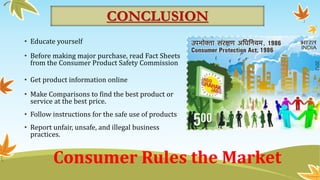
    • Educate yourself •Before making major purchase, read Fact Sheets from the Consumer Product Safety Commission • Get product information online • Make Comparisons to find the best product or service at the best price. • Follow instructions for the safe use of products • Report unfair, unsafe, and illegal business practices. CONCLUSION Consumer Rules the Market
  • 17.

Editor's Notes

  • #4 Consumer is a person who buys goods or services to be used or consumed by himself/herself or by someone else on behalf of the buyer. Goods may include both consumable items or durable consumer goods. While services paid for may be transport, electricity, film-shows and the like etc.
  • #5 The definition of Consumer right is ‘the right to have information about the quality, potency, quantity, purity, price and standard of goods or services’, as it may be the case, but the consumer is to be protected against any unfair practices of trade. It is very essential for the consumers to know these rights.
  • #7 According to this law, everybody, including individuals, a firm, a Hindu undivided family and a company, have the right to exercise their consumer rights for the purchase of goods and services made by them. The consumer is to be protected against any unfair practices of trade. It is very essential for the consumers to know these rights.
  • #16 District Consumer Disputes Redressal Forum (DCDRF) is a district level court. It deals with cases valuing up to INR 20 Lakh. State Consumer Disputes Redressal Commission (SCDRC) is a state-level court. It takes up cases valuing less than 1 crore. National Consumer Disputes Redressal Commission in India (NCDRC) is a national level court. It deals with amount more than INR 1 Crore. It is the highest court of appeal in matters related to consumer disputes in India. The presiding judges in NCDRC are retired judges of the Supreme court.
  • #17 As a consumer, you have the responsibility to educate yourself. Before making a major purchase, read Fact Sheets from the Consumer Product Safety Commission. You can also get product information on the Internet. Responsible consumers make comparisons to find the best product or service at the best price. Consumers must follow the instructions given by the manufacturer for the safe use of products. You have the responsibility to report unfair, unsafe, and illegal business practices.