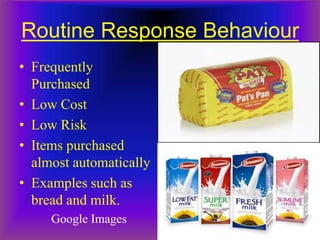
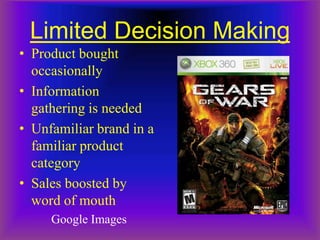
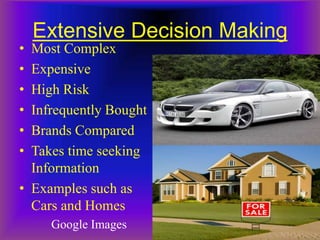
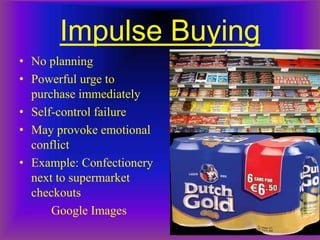
This document defines consumer buying behaviour and identifies different types. It discusses routine response behaviour, limited decision making, extensive decision making, and impulse buying. Routine response behaviour involves automatically purchasing frequently bought, low cost, and low risk items like bread and milk. Limited decision making requires some information gathering for occasional purchases of unfamiliar brands in familiar categories. Extensive decision making is the most complex type and involves expensive, high risk, infrequently purchased items where multiple brands are researched like cars and homes. Impulse buying involves no planning and an immediate urge to purchase that may provoke emotional conflict, for example confectionery near checkouts.

![References
• Dibb, S, Simkin, Pride Ferrell; (2006);
Marketing Concepts and Strategies, City:
Publisher
• Google Images [accessed on 20/02/12]
• Foxall, G. (2011?) Cardiff Business
School, University of Wales
• Sgclub.com
• Warner Brothers / Google Images](https://image.slidesharecdn.com/consumerbuyingbehaviour-121011075119-phpapp02/85/Consumer-buying-behaviour-9-320.jpg)



![Lesson 2--what-is-econ[1]](https://cdn.slidesharecdn.com/ss_thumbnails/lesson-2-what-is-econ1-130409195930-phpapp01-thumbnail.jpg?width=640&height=640&fit=bounds)


![[Agile Testing Day] Tests de charge](https://cdn.slidesharecdn.com/ss_thumbnails/agiletestingday-loadtests-ph-160126180912-thumbnail.jpg?width=640&height=640&fit=bounds)


