Introduction to
Consumer Behavior
Consumer Behavior
Definition

      “The decision process and physical activity
 individuals engage in when
 evaluating, acquiring, using or disposing of goods and
 services”.
Customer
 A person or organization that buys goods or services
  from a store or other business.
 A customer can also be someone purchasing from a
  particular store or shop.

 e.g. Tesco, Metro, Refreshment Center etc
Consumer
 A consumer is a person or group of people who are
  the final users of products and or services.
 An individual who buys products or services for
  personal use and not for manufacture or resale.

 e.g. A Household.
Ultimate Consumer
 Individuals purchasing for the purpose of individual or

  household consumption.

 e.g. for personal use or in a house.

 Not for commercial or industrial use.

  e.g. not for mess or canteen.
Theindividual making a purchase with little or no
 An
     Individual Buyer
  influence from others.

  A number of people can also be jointly involved in a
  purchase decision.

  For example. Planning a vacation or deciding on a new
  car can involve an entire family.
Some Consumer Behavior Roles
 Initiator: The individual who determines that
  some need or want is not being met and
  authorizes a purchase to rectify the situation.
 Influencer: A person who by some intentional or
  unintentional word or action influences the
  purchase decision, the actual purchase, and / or
  the use of the product or service.
 Buyer: The individual who actually makes the
  purchase transaction.
 User: The person most directly involved in the
  consumption or use of the purchase.
Examples
 A wife may ask her husband to pick up a box of
 Chocolates on his shopping trip because their child
 said she wanted it.

 At another time the husband is purchasing a health
 spa membership for himself.
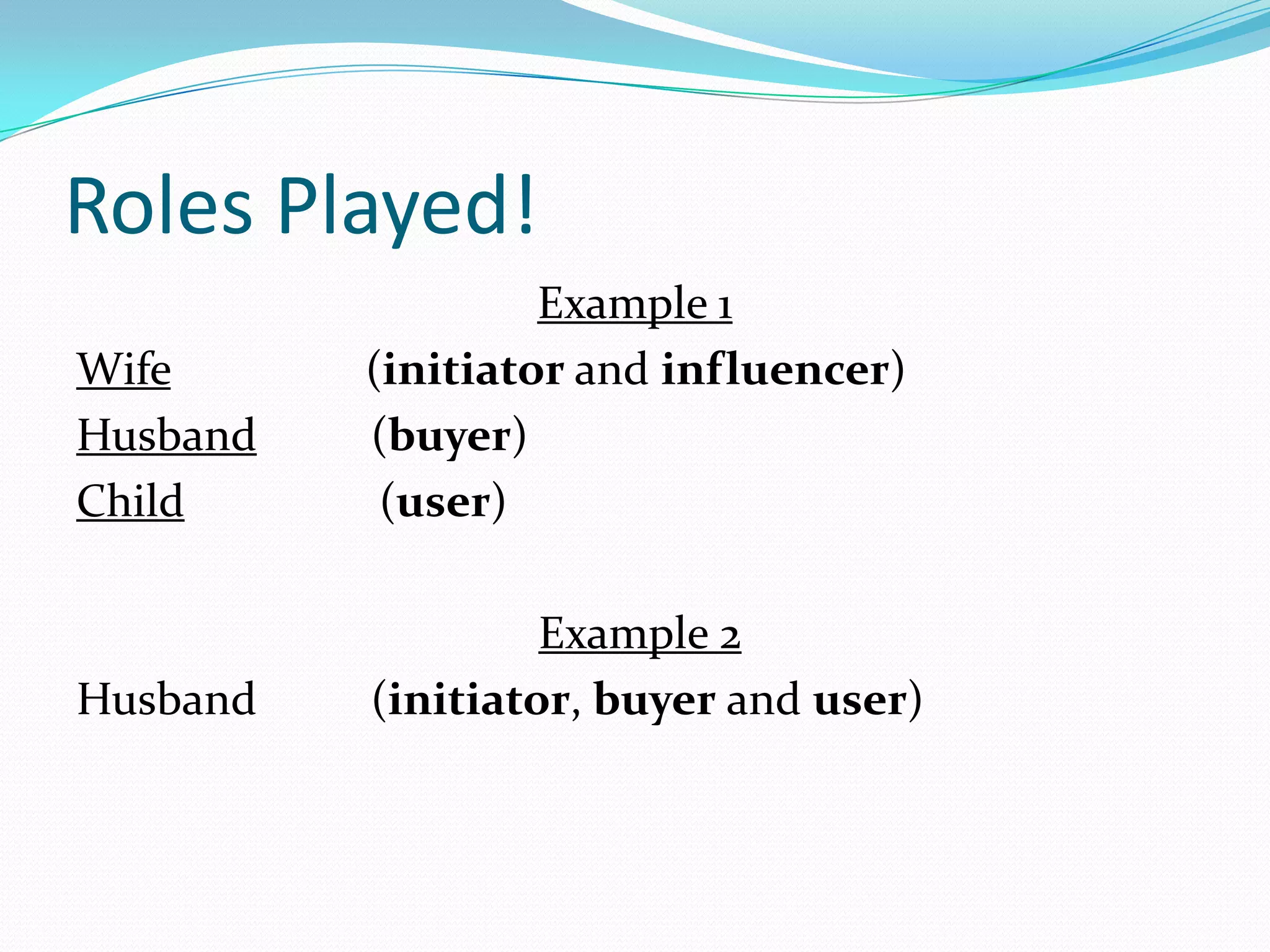
Roles Played!
                   Example 1
Wife      (initiator and influencer)
Husband   (buyer)
Child      (user)

                   Example 2
Husband   (initiator, buyer and user)
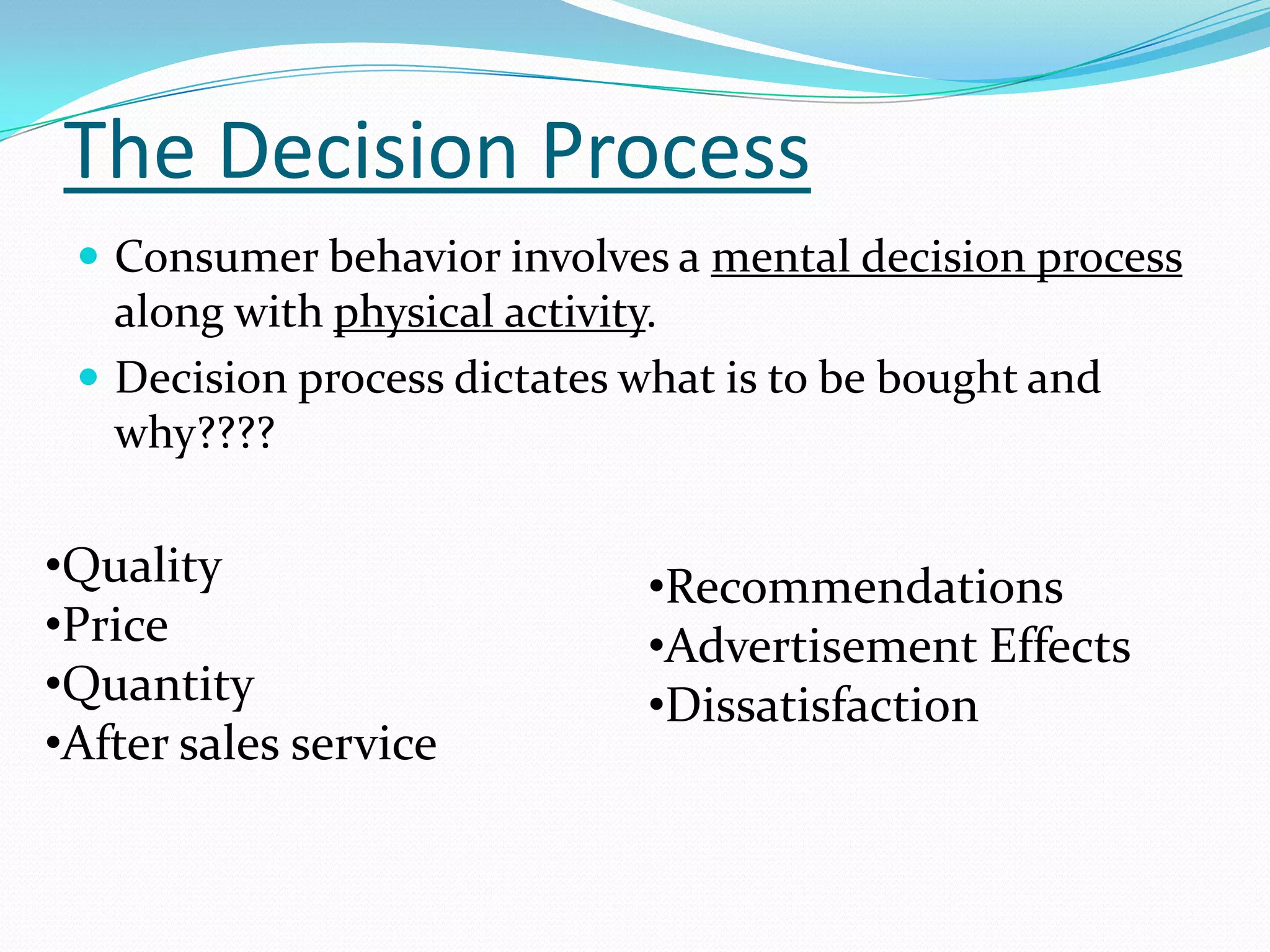
The Decision Process
  Consumer behavior involves a mental decision process
   along with physical activity.
  Decision process dictates what is to be bought and
   why????

•Quality                     •Recommendations
•Price                       •Advertisement Effects
•Quantity                    •Dissatisfaction
•After sales service
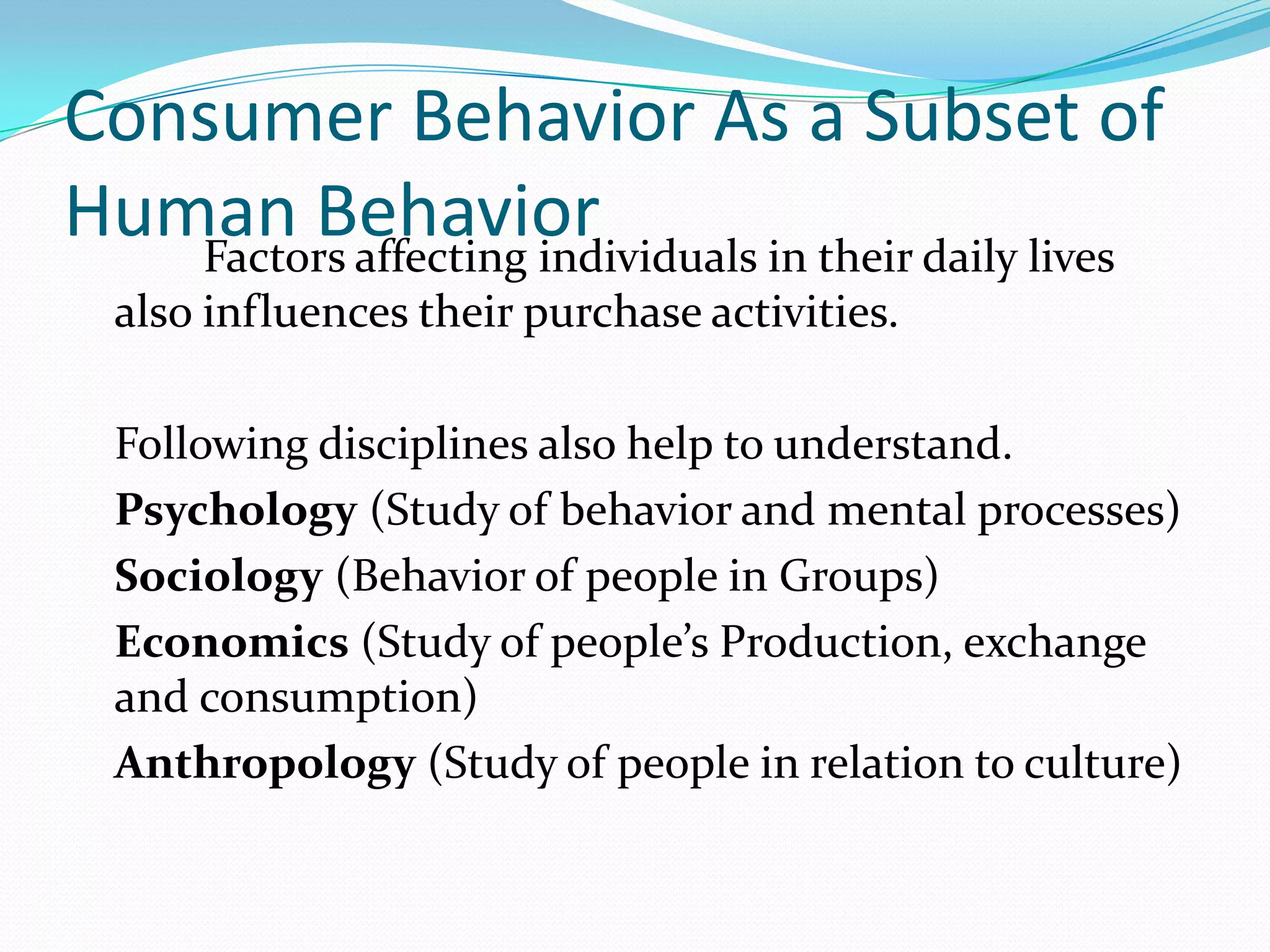
Consumer Behavior As a Subset of
Human Behavior
   Factors affecting individuals in their daily lives
  also influences their purchase activities.

  Following disciplines also help to understand.
  Psychology (Study of behavior and mental processes)
  Sociology (Behavior of people in Groups)
  Economics (Study of people’s Production, exchange
  and consumption)
  Anthropology (Study of people in relation to culture)
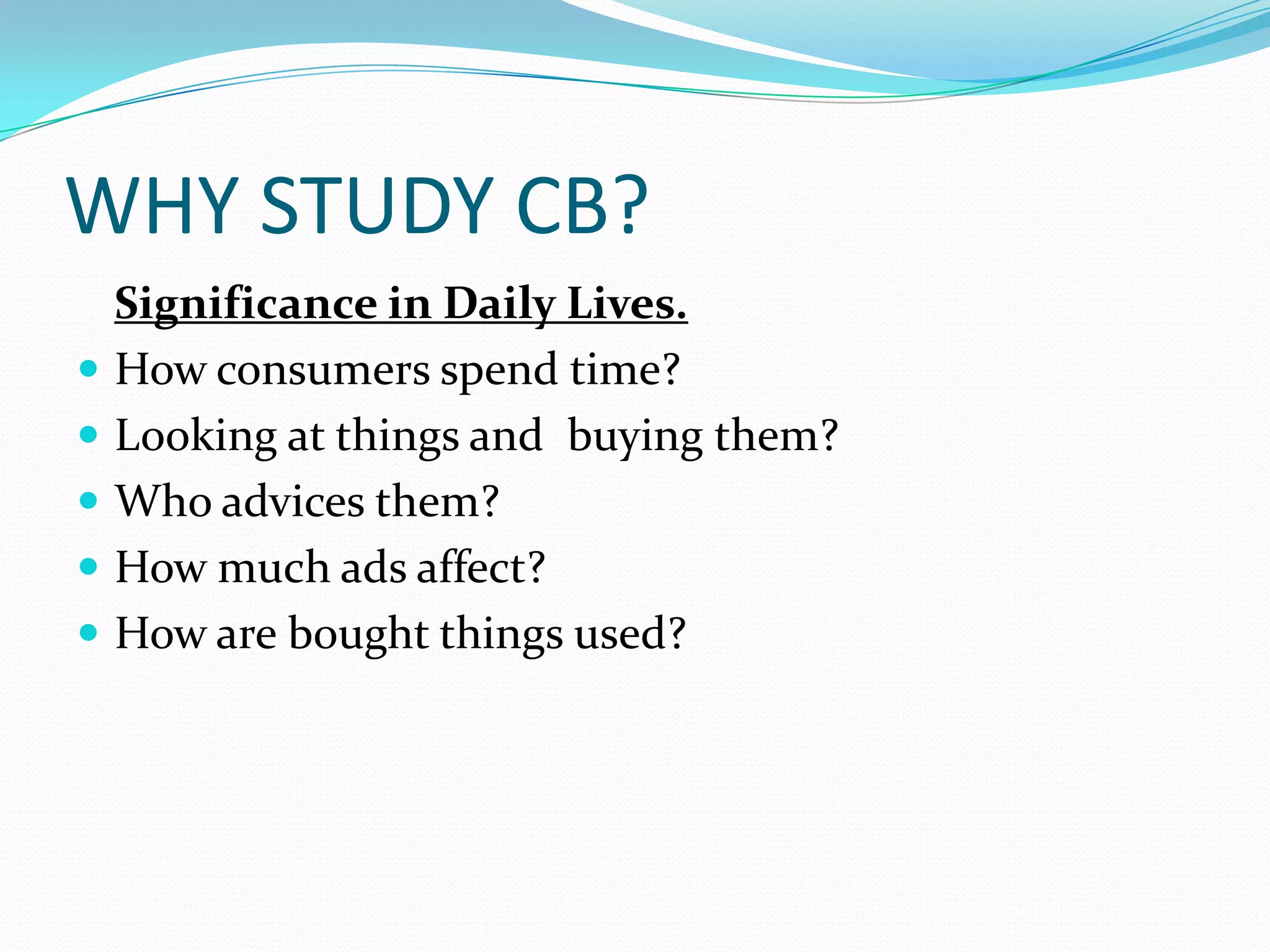
WHY STUDY CB?
    Significance in Daily Lives.
   How consumers spend time?
   Looking at things and buying them?
   Who advices them?
   How much ads affect?
   How are bought things used?
Application to Decision Making

Micro Perspective
      Helping an individual firm achieve its objectives.
      E.g. increase sales or profits etc.
Societal Perspective
 Macro or Aggregate.
 Determines what is to happen in the society.
 Constructing flats.
 Moving to Suburbs.
 How we run our daily lives (what we eat, where we shop
  and how we are entertained)
 Owning private cars etc.
 Helps in solving Problems of the Society.
Consumer Behavior and
Marketing Management
  Understanding of CB is essential to run marketing
  programs.
1. Consumers Wants and Needs


2. Company objectives

3. Integrated Strategies
Market-Opportunity Analysis
Understanding consumers lifestyle and income levels.

Then satisfying unmet needs and wants.

e.g. Fitness trend in the market.

Result : Exercise machines and fitness products.
Target Market Selection
Identifying distinct group of consumers.

Offer a unique product or service.

e.g. Soft drinks markets.
 Diet vs. Regular
 Bottle vs. Tinned
 Packed vs. Fountain fresh
 Vending machines vs. Retail outlets


Niche Marketing????
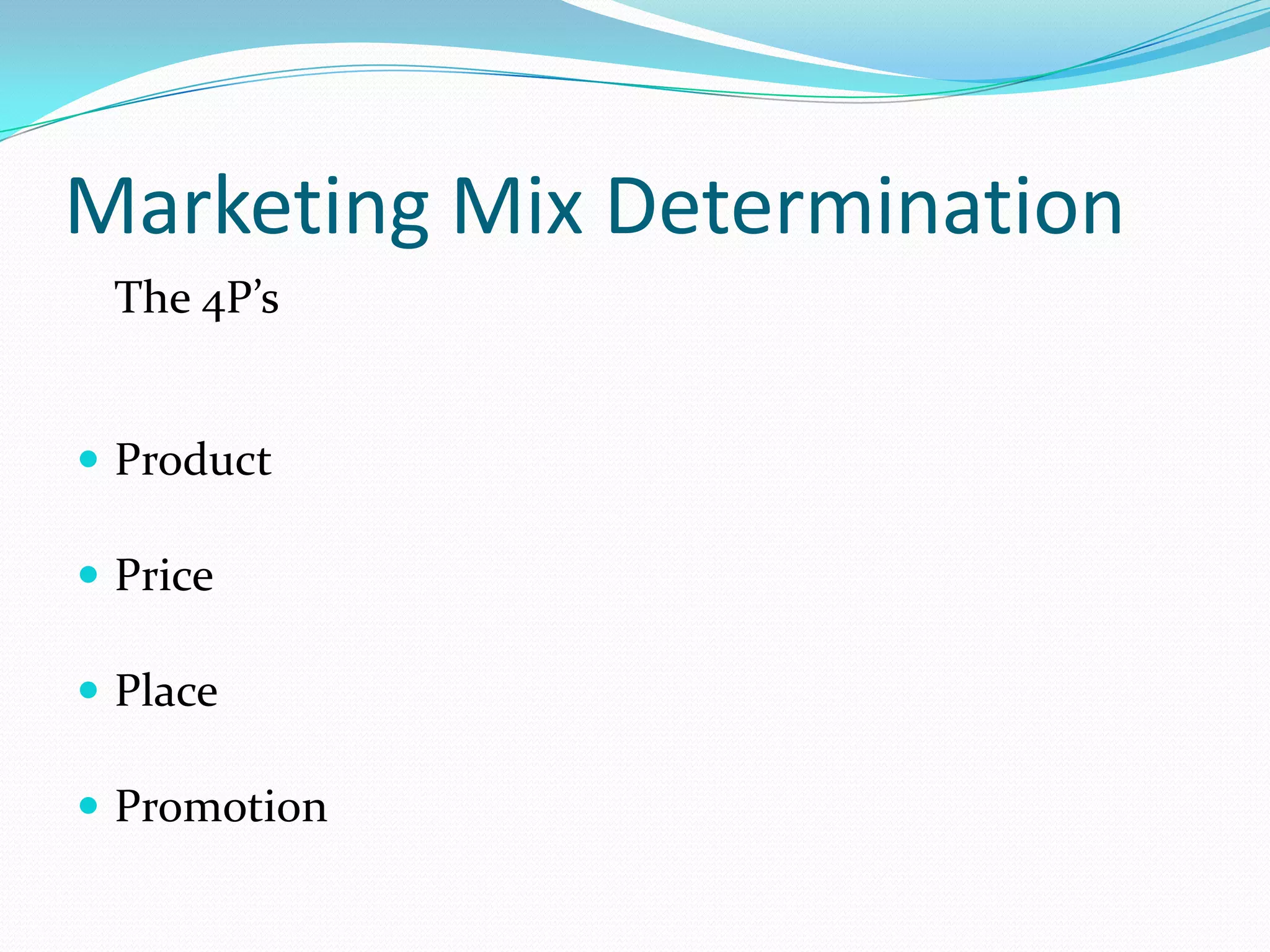
Marketing Mix Determination
 The 4P’s


 Product

 Price

 Place

 Promotion
Select Any Product????
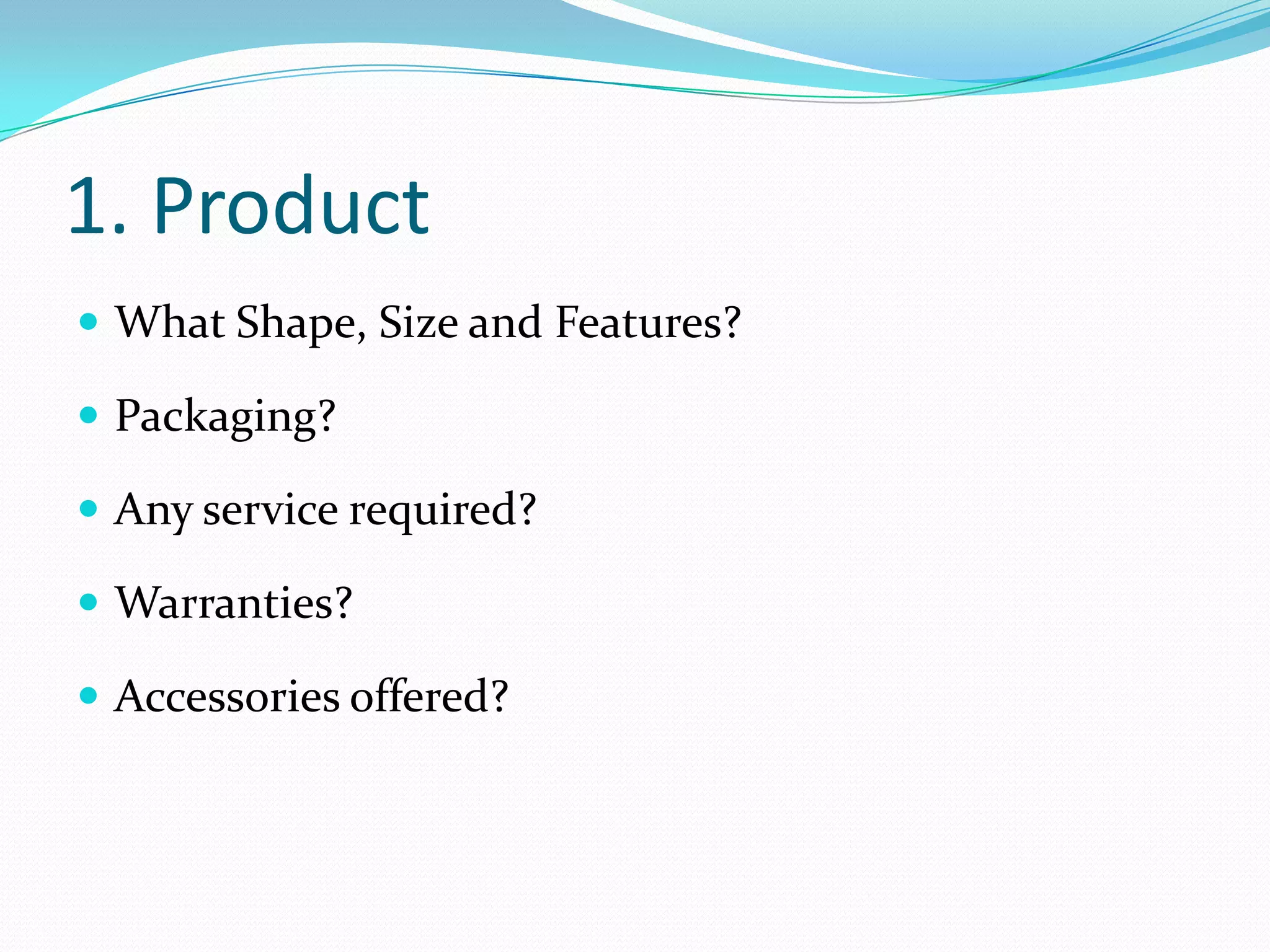
1. Product
 What Shape, Size and Features?

 Packaging?

 Any service required?

 Warranties?

 Accessories offered?
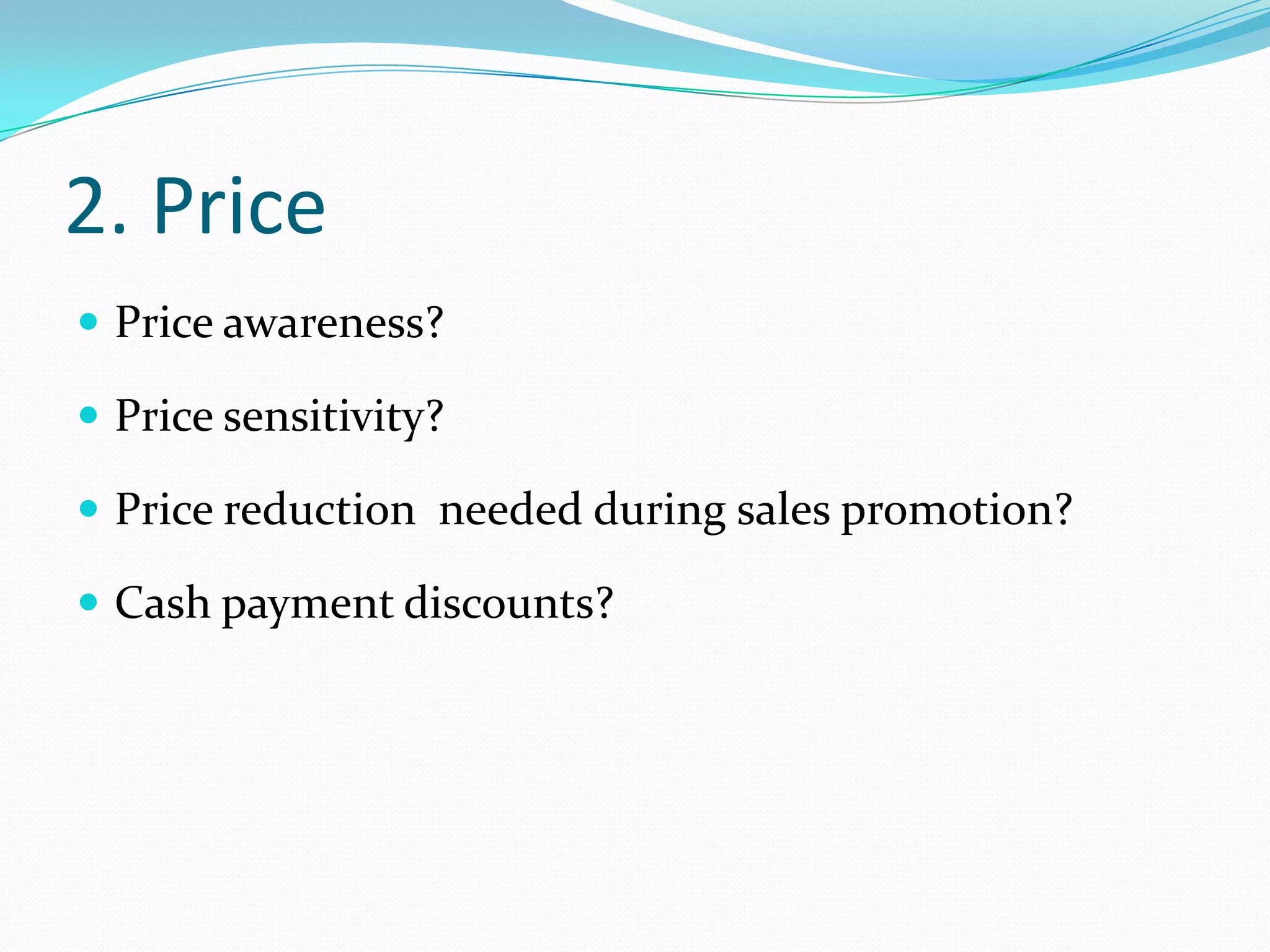
2. Price
 Price awareness?

 Price sensitivity?

 Price reduction needed during sales promotion?

 Cash payment discounts?
3. Place
 Type of Retail outlet?

 Location and no. of outlets?

 Arrangements needed to distribute products?

 Tight Control in channel of distribution?
4. Promotion
 Method of promotion?

 Gaining consumer attention?

 Repetition of advertisement?

 Best method to convey intended message?
CB and Nonprofit and Social
Marketing
Includes:
 Governmental Agencies.
 Religious Organizations.
 Charity Organizations


Uses to:
 To create awareness.
 To Donate.
 To Help people.
Examples:
 Combating Aids.

 Anti Polio.

 Anti Cancer.
CB and Governmental Decision
Making
 To create a softer image for the decisions made by
 Govt.

 Chipped NADRA ID Card.

 Ads of Metro bus service (Working Phase).

 Using Seatbelts.

 Avoiding Over speeding.
CB and Demarketing
 Anti Smoking Campaigns.

 Drug Abuse.
CB and Consumer Education
 To educate the Consumer for his rights.
 To reduce impulse buying.
 How to compare things with money.
 Better return for Dollar.
 Courses are even offered.
THE END

Chap 1 cb

  • 1.
  • 2.
    Consumer Behavior Definition “The decision process and physical activity individuals engage in when evaluating, acquiring, using or disposing of goods and services”.
  • 3.
    Customer  A personor organization that buys goods or services from a store or other business.  A customer can also be someone purchasing from a particular store or shop. e.g. Tesco, Metro, Refreshment Center etc
  • 4.
    Consumer  A consumeris a person or group of people who are the final users of products and or services.  An individual who buys products or services for personal use and not for manufacture or resale. e.g. A Household.
  • 5.
    Ultimate Consumer  Individualspurchasing for the purpose of individual or household consumption.  e.g. for personal use or in a house.  Not for commercial or industrial use. e.g. not for mess or canteen.
  • 6.
    Theindividual making apurchase with little or no An Individual Buyer influence from others. A number of people can also be jointly involved in a purchase decision. For example. Planning a vacation or deciding on a new car can involve an entire family.
  • 7.
    Some Consumer BehaviorRoles  Initiator: The individual who determines that some need or want is not being met and authorizes a purchase to rectify the situation.  Influencer: A person who by some intentional or unintentional word or action influences the purchase decision, the actual purchase, and / or the use of the product or service.  Buyer: The individual who actually makes the purchase transaction.  User: The person most directly involved in the consumption or use of the purchase.
  • 8.
    Examples  A wifemay ask her husband to pick up a box of Chocolates on his shopping trip because their child said she wanted it.  At another time the husband is purchasing a health spa membership for himself.
  • 9.
    Roles Played! Example 1 Wife (initiator and influencer) Husband (buyer) Child (user) Example 2 Husband (initiator, buyer and user)
  • 10.
    The Decision Process  Consumer behavior involves a mental decision process along with physical activity.  Decision process dictates what is to be bought and why???? •Quality •Recommendations •Price •Advertisement Effects •Quantity •Dissatisfaction •After sales service
  • 11.
    Consumer Behavior Asa Subset of Human Behavior Factors affecting individuals in their daily lives also influences their purchase activities. Following disciplines also help to understand. Psychology (Study of behavior and mental processes) Sociology (Behavior of people in Groups) Economics (Study of people’s Production, exchange and consumption) Anthropology (Study of people in relation to culture)
  • 12.
    WHY STUDY CB? Significance in Daily Lives.  How consumers spend time?  Looking at things and buying them?  Who advices them?  How much ads affect?  How are bought things used?
  • 13.
    Application to DecisionMaking Micro Perspective  Helping an individual firm achieve its objectives.  E.g. increase sales or profits etc. Societal Perspective  Macro or Aggregate.  Determines what is to happen in the society.  Constructing flats.  Moving to Suburbs.  How we run our daily lives (what we eat, where we shop and how we are entertained)  Owning private cars etc.  Helps in solving Problems of the Society.
  • 14.
    Consumer Behavior and MarketingManagement Understanding of CB is essential to run marketing programs. 1. Consumers Wants and Needs 2. Company objectives 3. Integrated Strategies
  • 15.
    Market-Opportunity Analysis Understanding consumerslifestyle and income levels. Then satisfying unmet needs and wants. e.g. Fitness trend in the market. Result : Exercise machines and fitness products.
  • 16.
    Target Market Selection Identifyingdistinct group of consumers. Offer a unique product or service. e.g. Soft drinks markets.  Diet vs. Regular  Bottle vs. Tinned  Packed vs. Fountain fresh  Vending machines vs. Retail outlets Niche Marketing????
  • 17.
    Marketing Mix Determination The 4P’s  Product  Price  Place  Promotion
  • 18.
  • 19.
    1. Product  WhatShape, Size and Features?  Packaging?  Any service required?  Warranties?  Accessories offered?
  • 20.
    2. Price  Priceawareness?  Price sensitivity?  Price reduction needed during sales promotion?  Cash payment discounts?
  • 21.
    3. Place  Typeof Retail outlet?  Location and no. of outlets?  Arrangements needed to distribute products?  Tight Control in channel of distribution?
  • 22.
    4. Promotion  Methodof promotion?  Gaining consumer attention?  Repetition of advertisement?  Best method to convey intended message?
  • 23.
    CB and Nonprofitand Social Marketing Includes:  Governmental Agencies.  Religious Organizations.  Charity Organizations Uses to:  To create awareness.  To Donate.  To Help people.
  • 24.
    Examples:  Combating Aids. Anti Polio.  Anti Cancer.
  • 25.
    CB and GovernmentalDecision Making  To create a softer image for the decisions made by Govt.  Chipped NADRA ID Card.  Ads of Metro bus service (Working Phase).  Using Seatbelts.  Avoiding Over speeding.
  • 26.
    CB and Demarketing Anti Smoking Campaigns.  Drug Abuse.
  • 27.
    CB and ConsumerEducation  To educate the Consumer for his rights.  To reduce impulse buying.  How to compare things with money.  Better return for Dollar.  Courses are even offered.
  • 28.