Title
I. A concrete vibrator is a construction tool
typically used on concrete pouring sites.
II. The vibrators are used to ensure that the
pour is free of air bubbles and are even.
This is so that the concrete remains strong
and has a smooth finish even after
removal of the form work.
III. It is not exactly necessary for small jobs
but it can be essential for large load
bearing projects.
IV. The machines range in sizes from small
battery powered wands to larger plug in
versions that are used on very deep
pours.
V. Attachments are selected on the basis
of depth and type of concrete used
during the concrete pour.
VI. A typical concrete vibrator utilizes an
off-center weight that spins at 10000
times a minute
They are also called
im m e rsio n, po ke r o r ne e dle
vibrato rs.
They essentially consist of a
power unit and a long
flexible tube at the end of
which a vibrating head is
attached.
Power is provided by electric
motor, compressed air or
 They are clamped
to the formwork
horizontally and
vertically at suitable
spacing not
exceeding 90 cm in
either direction
 As the work
progress they are
shifted. They
vibrate the concrete
 They are also called screed or
pan vibrators.
 They are clamped to the screed.
They vibrate the concrete from
the surface at the time when
screeding (striking off) of the
concrete is carried out. They are
effective only if depth of concrete
is upto 20 cm.
 if the depth is more they can be used in
combination with internal vibrators. They
are used for long horizontal surfaces such
as pavements and slabs.
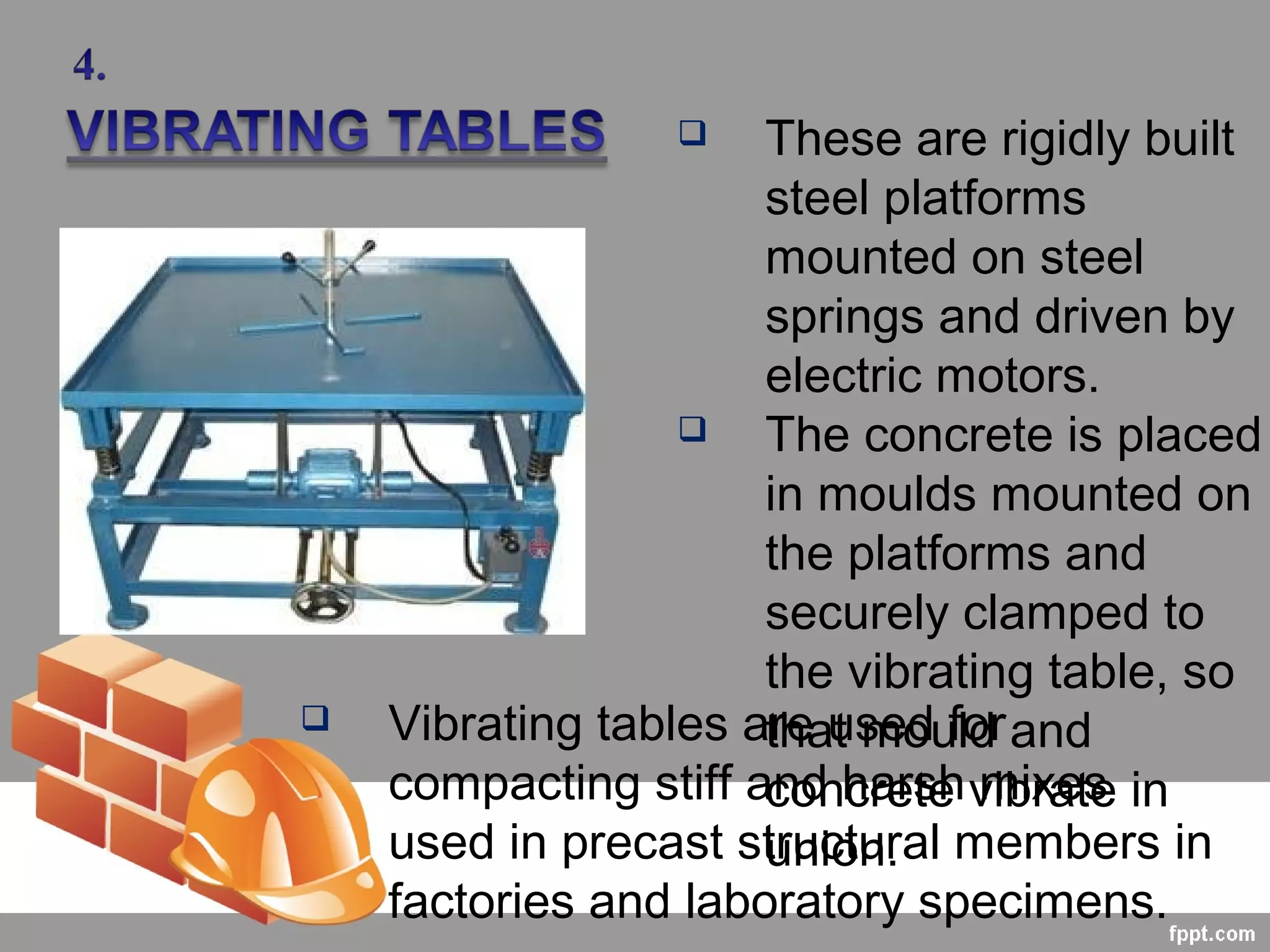
 These are rigidly built
steel platforms
mounted on steel
springs and driven by
electric motors.
 The concrete is placed
in moulds mounted on
the platforms and
securely clamped to
the vibrating table, so
that mould and
concrete vibrate in
union.
 Vibrating tables are used for
compacting stiff and harsh mixes
used in precast structural members in
factories and laboratory specimens.
RESULT DUE TO IMPROPERUSE
construction equipment(VIBRATOR)

construction equipment(VIBRATOR)

  • 1.
  • 3.
    I. A concrete vibrator isa construction tool typically used on concrete pouring sites. II. The vibrators are used to ensure that the pour is free of air bubbles and are even. This is so that the concrete remains strong and has a smooth finish even after removal of the form work. III. It is not exactly necessary for small jobs but it can be essential for large load bearing projects.
  • 4.
    IV. The machinesrange in sizes from small battery powered wands to larger plug in versions that are used on very deep pours. V. Attachments are selected on the basis of depth and type of concrete used during the concrete pour. VI. A typical concrete vibrator utilizes an off-center weight that spins at 10000 times a minute
  • 5.
    They are alsocalled im m e rsio n, po ke r o r ne e dle vibrato rs. They essentially consist of a power unit and a long flexible tube at the end of which a vibrating head is attached. Power is provided by electric motor, compressed air or
  • 6.
     They areclamped to the formwork horizontally and vertically at suitable spacing not exceeding 90 cm in either direction  As the work progress they are shifted. They vibrate the concrete
  • 7.
     They arealso called screed or pan vibrators.  They are clamped to the screed. They vibrate the concrete from the surface at the time when screeding (striking off) of the concrete is carried out. They are effective only if depth of concrete is upto 20 cm.
  • 8.
     if thedepth is more they can be used in combination with internal vibrators. They are used for long horizontal surfaces such as pavements and slabs.
  • 9.
     These arerigidly built steel platforms mounted on steel springs and driven by electric motors.  The concrete is placed in moulds mounted on the platforms and securely clamped to the vibrating table, so that mould and concrete vibrate in union.  Vibrating tables are used for compacting stiff and harsh mixes used in precast structural members in factories and laboratory specimens.
  • 11.
    RESULT DUE TOIMPROPERUSE