Download as PDF, PPTX




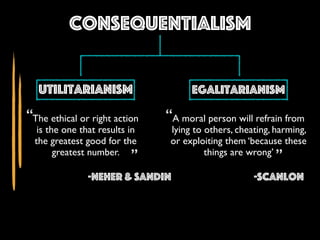

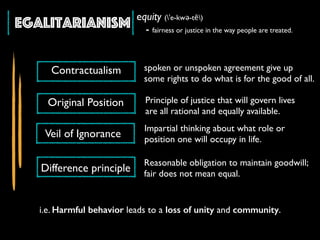


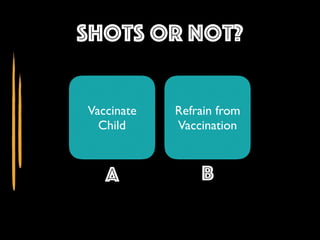








This document provides an analysis and overview of consequentialist ethics, specifically utilitarianism and egalitarianism. It discusses key aspects of these approaches, including that utilitarianism evaluates actions based on their consequences and producing the greatest good for the greatest number, while egalitarianism focuses on fairness and equal treatment of people. Examples are provided to illustrate how these ethical frameworks could be applied to issues like public health decisions, resource allocation, and difficult moral dilemmas. The learning objective is to help understand the different foundations of consequence ethics.


