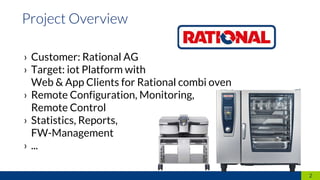


› Customer: Rational AG
› Target: iot Platform with
Web & App Clients for Rational combi oven
› Remote Configuration, Monitoring,
Remote Control
› Statistics, Reports,
FW-Management
› ...
2
› Requirements:
› Proxy support/Firewall friendly
› embedded client libraries
› fast, scalable & lightweight
› Candidates:
› WebSocket / Stomp
› AMQP / JMS
› Cloud Push Provider (Parse)
› MQTT
3
› initially developed by IBM
› OASIS Standard
› lightweight (binary, tcp or websocket tunnel)
› fault tolerant (multiple QoS Level support, …)
› PubSub
4
https://goo.gl/JTUaS2
5
Disclaimer: evaluation 2,5 years ago
› HiveMQ
› Apache Apollo
› ApacheMQ, RabbitMQ
› VerneMQ
› EMQ (emqtt)
6
› fuse source
› auto reconnect, fluent API
› but: concurrency issues (especially after some runtime)
› in the meantime: repo is dead
› eclipse paho
› supports many languages
› API could be more lightweight
› but: no concurrency issues
› main eclipse project (part of iot eclipse ecosystem)
7
› pros:
› HW & platform dev team: common API (MQTT, HTTP)
› cons:
› device firmware delay: many dry runs for Sprint reviews of
iot platform
› no automated integration tests
› some problems only occur on production with real live traffic
8
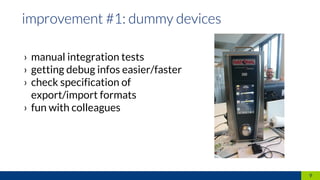
› manual integration tests
› getting debug infos easier/faster
› check specification of
export/import formats
› fun with colleagues
9
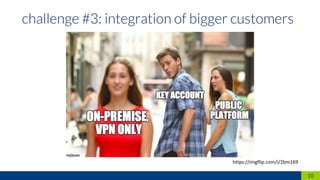
https://imgflip.com/i/2bm169
10
› current/previous solution:
› complex desktop sw / single host
› can manage intranet devices only
› first wish: on-promise systems
› very expensive & high operating costs
› complex version/upgrade management
› migration from current system to the new iot cloud
11
› few new technologies and blackbox devices
› mqtt as protocol, mqtt broker
› handling thousands of concurrent connections
› device firmware developed by another team which is
not integrated in the same development workflow
12
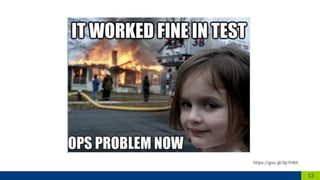
https://goo.gl/5p7HKh
13
14
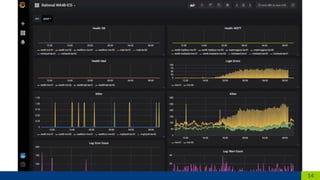
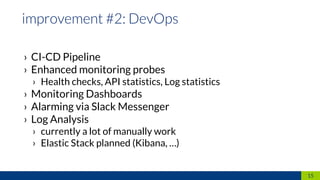
› CI-CD Pipeline
› Enhanced monitoring probes
› Health checks, API statistics, Log statistics
› Monitoring Dashboards
› Alarming via Slack Messenger
› Log Analysis
› currently a lot of manually work
› Elastic Stack planned (Kibana, …)
15
› monitor & analyse API usage
› sometimes APIs are not used as intended in all use cases
› get more understanding for client requirements and
special use cases
› If APIs does not cover each use case, the client developer
will find a way
› discussed many improvements, but...
16
https://imgflip.com/i/2bl74a
17
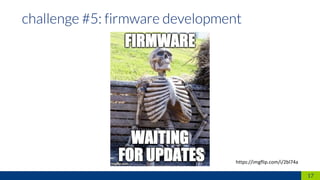
› embedded development not agile and very conservative
› iot platform team & firmware dev team are seperated:
e.g. different roadmaps
› devices with different firmwares must be handled like
supporting different mobile app versions
› workarounds on backend side
› Restriction: forcing fw updates not possible
18
› Breaking changes (monitoring API, config files)
› Long unresolved issues (emq-auth-http)
› problem due to permanent connections: broker restarts
› client reconnects to the first node back online
19
› (Pre-)Sharding device TOPICs
› /<shard>/<device-uuid>/<device-topic>
› message processing can be distributed
› Combine MQTT messages for same device in a short
timeframe
› only update database once, ignore duplicates
› Using (mqtt) sessions
20
https://goo.gl/LjraKf
21
› “Last will” often used for connection status updates
› server send “offline” on client connection loss
› but what if server or node died
› e.g. operating team have to clear device online state
› bulk updates are dangerous
› self-healing if device reconnects successfully
22
› Remote display & slow connections: Great wall of china
› AWS China
› Handling auth server problems
› by default: bad username or password (Code 4)
› better solution: server unavailable (Code 3)
23
› Shared subscriptions
› load balancing of message processing possible
› scalable subscriber
› TTL for messages
› Alternate auth mechanisms (challenge/response)
› error handling improvements
› more flexibility (topic alias, custom header, user
properties)
24
› EMQ current state: only usable together with local
subscriptions
› subscription client must know all cluster nodes any time
› other brokers already support cluster wide subscriptions
(HiveMQ, VerneMQ)
› but: concrete implementation very unclear
› e.g. will online clients be preferred, will node local clients
be preferred
25
› no official EMQ roadmap available
› GitHub ticket comments from devs:
› EMQ version 3.0 with MQTT 5 support is coming soon
(probably beta phase)
› monitoring: Prometheus support announced (already exists
in paid version EMQ X/Plus)
26
27
Gerrit Brehmer
Developer / Architect
inovex GmbH
Ludwig-Erhard-Allee 6
76131 Karlsruhe
gbrehmer@inovex.de
0173 3181 007

Connected Cooking powered by MQTT

  • 2.
    › Customer: RationalAG › Target: iot Platform with Web & App Clients for Rational combi oven › Remote Configuration, Monitoring, Remote Control › Statistics, Reports, FW-Management › ... 2
  • 3.
    › Requirements: › Proxysupport/Firewall friendly › embedded client libraries › fast, scalable & lightweight › Candidates: › WebSocket / Stomp › AMQP / JMS › Cloud Push Provider (Parse) › MQTT 3
  • 4.
    › initially developedby IBM › OASIS Standard › lightweight (binary, tcp or websocket tunnel) › fault tolerant (multiple QoS Level support, …) › PubSub 4
  • 5.
  • 6.
    Disclaimer: evaluation 2,5years ago › HiveMQ › Apache Apollo › ApacheMQ, RabbitMQ › VerneMQ › EMQ (emqtt) 6
  • 7.
    › fuse source ›auto reconnect, fluent API › but: concurrency issues (especially after some runtime) › in the meantime: repo is dead › eclipse paho › supports many languages › API could be more lightweight › but: no concurrency issues › main eclipse project (part of iot eclipse ecosystem) 7
  • 8.
    › pros: › HW& platform dev team: common API (MQTT, HTTP) › cons: › device firmware delay: many dry runs for Sprint reviews of iot platform › no automated integration tests › some problems only occur on production with real live traffic 8
  • 9.
    › manual integrationtests › getting debug infos easier/faster › check specification of export/import formats › fun with colleagues 9
  • 10.
  • 11.
    › current/previous solution: ›complex desktop sw / single host › can manage intranet devices only › first wish: on-promise systems › very expensive & high operating costs › complex version/upgrade management › migration from current system to the new iot cloud 11
  • 12.
    › few newtechnologies and blackbox devices › mqtt as protocol, mqtt broker › handling thousands of concurrent connections › device firmware developed by another team which is not integrated in the same development workflow 12
  • 13.
  • 14.
  • 15.
    › CI-CD Pipeline ›Enhanced monitoring probes › Health checks, API statistics, Log statistics › Monitoring Dashboards › Alarming via Slack Messenger › Log Analysis › currently a lot of manually work › Elastic Stack planned (Kibana, …) 15
  • 16.
    › monitor &analyse API usage › sometimes APIs are not used as intended in all use cases › get more understanding for client requirements and special use cases › If APIs does not cover each use case, the client developer will find a way › discussed many improvements, but... 16
  • 17.
  • 18.
    › embedded developmentnot agile and very conservative › iot platform team & firmware dev team are seperated: e.g. different roadmaps › devices with different firmwares must be handled like supporting different mobile app versions › workarounds on backend side › Restriction: forcing fw updates not possible 18
  • 19.
    › Breaking changes(monitoring API, config files) › Long unresolved issues (emq-auth-http) › problem due to permanent connections: broker restarts › client reconnects to the first node back online 19
  • 20.
    › (Pre-)Sharding deviceTOPICs › /<shard>/<device-uuid>/<device-topic> › message processing can be distributed › Combine MQTT messages for same device in a short timeframe › only update database once, ignore duplicates › Using (mqtt) sessions 20
  • 21.
  • 22.
    › “Last will”often used for connection status updates › server send “offline” on client connection loss › but what if server or node died › e.g. operating team have to clear device online state › bulk updates are dangerous › self-healing if device reconnects successfully 22
  • 23.
    › Remote display& slow connections: Great wall of china › AWS China › Handling auth server problems › by default: bad username or password (Code 4) › better solution: server unavailable (Code 3) 23
  • 24.
    › Shared subscriptions ›load balancing of message processing possible › scalable subscriber › TTL for messages › Alternate auth mechanisms (challenge/response) › error handling improvements › more flexibility (topic alias, custom header, user properties) 24
  • 25.
    › EMQ currentstate: only usable together with local subscriptions › subscription client must know all cluster nodes any time › other brokers already support cluster wide subscriptions (HiveMQ, VerneMQ) › but: concrete implementation very unclear › e.g. will online clients be preferred, will node local clients be preferred 25
  • 26.
    › no officialEMQ roadmap available › GitHub ticket comments from devs: › EMQ version 3.0 with MQTT 5 support is coming soon (probably beta phase) › monitoring: Prometheus support announced (already exists in paid version EMQ X/Plus) 26
  • 27.
  • 28.
    Gerrit Brehmer Developer /Architect inovex GmbH Ludwig-Erhard-Allee 6 76131 Karlsruhe gbrehmer@inovex.de 0173 3181 007