Recognition well deserved
that you are a leader in your
field. That you are the one we will
look to for innovation.
Just admit it…
You are an agent of
change!
Now. Always. And now
you have the tools to
leverage your ideas.
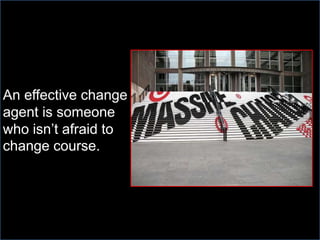
An effective change
agent is someone
who isn’t afraid to
change course.
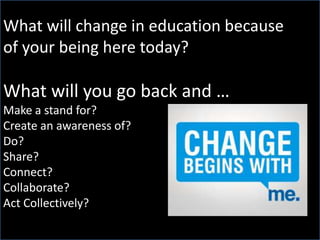
What will change in education because
of your being here today?
What will you go back and …
Make a stand for?
Create an awareness of?
Do?
Share?
Connect?
Collaborate?
Act Collectively?
Mantra …
We are stronger together than apart.
None of us is as smart, creative, or
productive as all of us.
• Letting go of control
• Willing to unlearn &
relearn
• Mindset of discovery
• Reversed mentorship
• Distributive leadership
• Co-learning and co-creating
• Messy, ground zero, risk taking
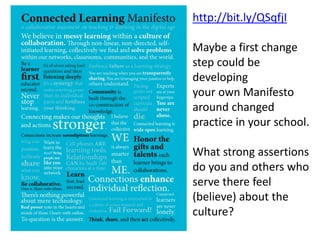
http://bit.ly/QSqfjI
Maybe a first change
step could be
developing
your own Manifesto
around changed
practice in your school.
What strong assertions
do you and others who
serve there feel
(believe) about the
culture?
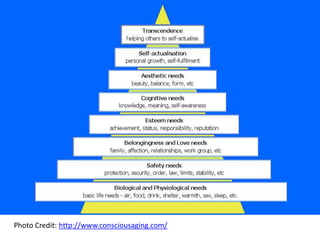
Photo Credit: http://www.consciousaging.com/
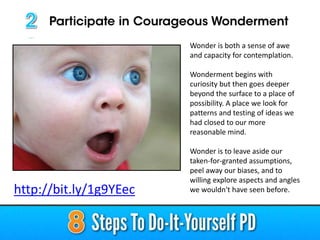
Wonder is both a sense of awe
and capacity for contemplation.
Wonderment begins with
curiosity but then goes deeper
beyond the surface to a place of
possibility. A place we look for
patterns and testing of ideas we
had closed to our more
reasonable mind.
Wonder is to leave aside our
taken-for-granted assumptions,
peel away our biases, and to
willing explore aspects and angles
we wouldn't have seen before.http://bit.ly/1g9YEec
It also helps to ask yourself questions like:
1) Why am I planning to do this?
2) How will I initiate this change?
3) Who can I connect with online in my network that can help me?
4) How will I measure my progress? Or how will I know if I am learning?
5) Am I using various social media tools for different purposes?
http://connectedprincipals.com/guiding-principles
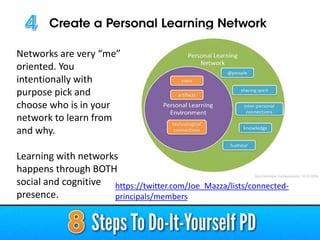
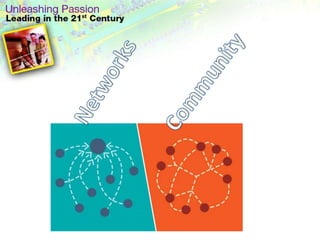
Networks are very “me”
oriented. You
intentionally with
purpose pick and
choose who is in your
network to learn from
and why.
Learning with networks
happens through BOTH
social and cognitive
presence.
https://twitter.com/Joe_Mazza/lists/connected-
principals/members
Developing Your Tribe
A group of people connected to one another,
connected to a leader (you), connected to
an idea
Need two things:
1) Shared interest (mission)
2) A way to communicate
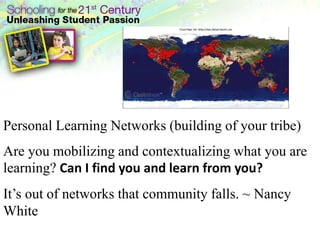
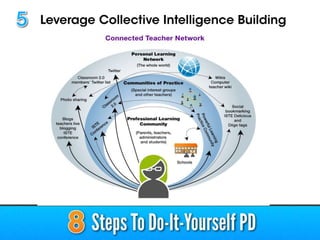
Personal Learning Networks (building of your tribe)
Are you mobilizing and contextualizing what you are
learning? Can I find you and learn from you?
It’s out of networks that community falls. ~ Nancy
White
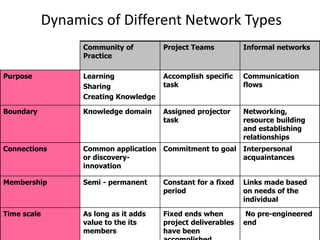
Dynamics of Different Network Types
Community of
Practice
Project Teams Informal networks
Purpose Learning
Sharing
Creating Knowledge
Accomplish specific
task
Communication
flows
Boundary Knowledge domain Assigned projector
task
Networking,
resource building
and establishing
relationships
Connections Common application
or discovery-
innovation
Commitment to goal Interpersonal
acquaintances
Membership Semi - permanent Constant for a fixed
period
Links made based
on needs of the
individual
Time scale As long as it adds
value to the its
members
Fixed ends when
project deliverables
have been
No pre-engineered
end
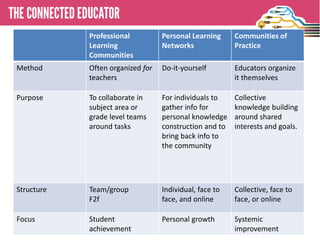
• THE CONNECTED EDUCATOR
Professional
Learning
Communities
Personal Learning
Networks
Communities of
Practice
Method Often organized for
teachers
Do-it-yourself Educators organize
it themselves
Purpose To collaborate in
subject area or
grade level teams
around tasks
For individuals to
gather info for
personal knowledge
construction and to
bring back info to
the community
Collective
knowledge building
around shared
interests and goals.
Structure Team/group
F2f
Individual, face to
face, and online
Collective, face to
face, or online
Focus Student
achievement
Personal growth Systemic
improvement
Community is the New Professional Development
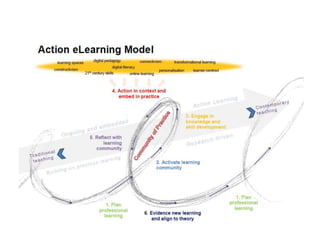
Cochran-Smith and Lytle (1999a) describe three ways of knowing and constructing
knowledge…
Knowledge for Practice is often reflected in traditional PD efforts when a trainer shares
with teachers information produced by educational researchers. This knowledge
presumes a commonly accepted degree of correctness about what is being shared. The
learner is typically passive in this kind of "sit and get" experience. This kind of knowledge
is difficult for teachers to transfer to classrooms without support and follow through.
After a workshop, much of what was useful gets lost in the daily grind, pressures and
isolation of teaching.
Knowledge in Practice recognizes the importance of teacher experience and practical
knowledge in improving classroom practice. As a teacher tests out new strategies and
assimilates them into teaching routines they construct knowledge in practice. They learn
by doing. This knowledge is strengthened when teachers reflect and share with one
another lessons learned during specific teaching sessions and describe the tacit
knowledge embedded in their experiences.
Community is the New Professional Development
Knowledge of Practice believes that systematic inquiry where teachers create
knowledge as they focus on raising questions about and systematically studying
their own classroom teaching practices collaboratively, allows educators to
construct knowledge of practice in ways that move beyond the basics of
classroom practice to a more systemic view of learning.
I believe that by attending to the development of knowledge for, in and of
practice, we can enhance professional growth that leads to real change.
Cochran-Smith, M., & Lytle, S.L. (1999a). Relationships of knowledge and
practice: Teaching learning in communities. Review of Research in Education, 24,
249-305.
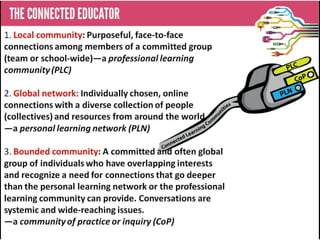
Passive, active, and reflective knowledge building in local
(PLC), global (CoP) and contextual (PLN) learning spaces.
Virtual Community
A virtual space supported by
computer-based information
technology, centered upon
communication and interaction
of participants to generate
member-driven content,
resulting in relationships being
built up. (Lee & Vogel, 2003)
A Definition of Community
Communities are quite simply, collections of individuals who
are bound together by natural will and a set of shared ideas
and ideals.
“A system in which people can enter into relations
that are determined by problems or shared ambitions
rather than by rules or structure.” (Heckscher, 1994, p.
24).
The process of social learning that occurs when people who have a
common interest in some subject or problem collaborate over an extended
period to share ideas, find solutions, and build innovations. (Wikipedia)
A Community of Practice is a network of individuals with common
problems or interests who get together to explore ways of working,
identify common solutions, and share good practice and ideas.
• puts you in touch with like-minded colleagues and peers
• allows you to share your experiences and learn from others
• allows you to collaborate and achieve common outcomes
• accelerates your learning
• Improves student achievement
• validates and builds on existing knowledge and good practice
• provides the opportunity to innovate and create new ideas
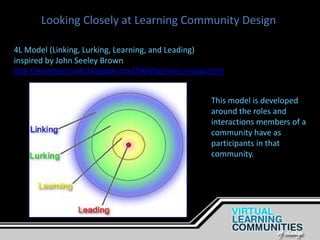
Looking Closely at Learning Community Design
4L Model (Linking, Lurking, Learning, and Leading)
inspired by John Seeley Brown
http://learningcircuits.blogspot.com/2006/06/roles-in-cops.html
This model is developed
around the roles and
interactions members of a
community have as
participants in that
community.
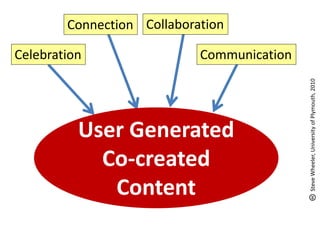
User Generated
Co-created
Content
Celebration
Connection
Communication
Collaboration
SteveWheeler,UniversityofPlymouth,2010
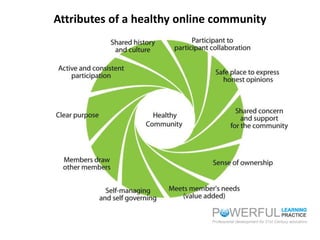
Attributes of a healthy online community
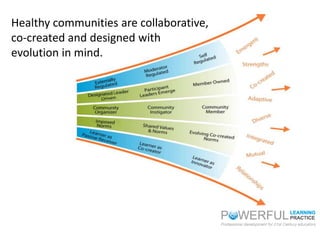
Healthy communities are collaborative,
co-created and designed with
evolution in mind.
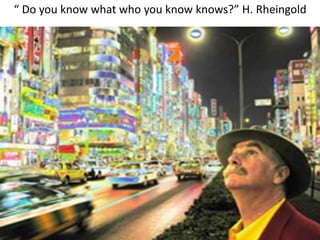
“ Do you know what who you know knows?” H. Rheingold
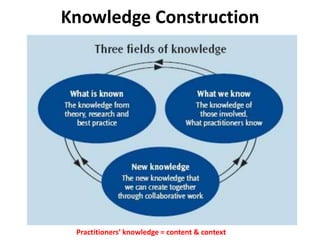
Knowledge Construction
Practitioners’ knowledge = content & context
Critical friends: Form a professional learning team who come together
voluntarily at least once a month. Have members commit to improving
their practice through collaborative learning. Use protocols to examine
each other’s teaching or leadership activities and share both warm and
cool feedback in respectful ways.
Curriculum review or mapping groups: Meet regularly in teams to
review what team members are teaching, to reflect together on the
impact of assumptions that underlie the curriculum, and to make
collaborative decisions. Teams often study lesson plans together.
Action research groups: Do active, collaborative research focused
on improvement around a possibility or problem in a classroom,
school, district, or state.
Book study groups: Collaboratively read and discuss a book in an
online space.
Case studies: Analyze in detail specific situations and their
relationship to current thinking and pedagogy. Write, discuss, and
reflect on cases using a 21st century lens to produce collaborative
reflection and improve practice.
Instructional rounds: Adopt a process through which
educators develop a shared practice of observing each other,
analyzing learning and teaching from a research perspective,
and sharing expertise.
Connected coaching: Assign a connected coach to
individuals on teams who will discuss and share teaching
practices in order to promote collegiality and help educators
think about how the new literacies inform current teaching
practices.
Are you (is your school)
#FutureReady?
http://tech.ed.gov
Future Ready Pledge
http://futurereadyschools.org/take-the-pledge
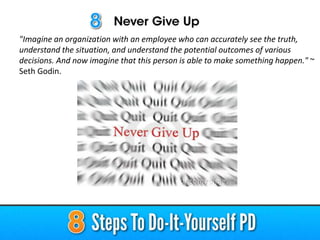
"Imagine an organization with an employee who can accurately see the truth,
understand the situation, and understand the potential outcomes of various
decisions. And now imagine that this person is able to make something happen." ~
Seth Godin.
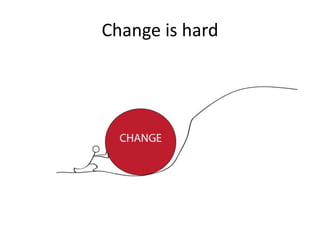
Change is hard
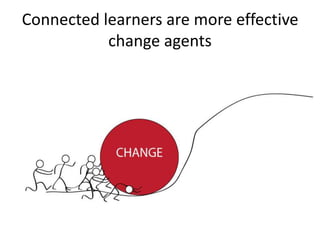
Connected learners are more effective
change agents
Connected communities of change

Connected communities of change

  • 1.
    Recognition well deserved thatyou are a leader in your field. That you are the one we will look to for innovation.
  • 2.
    Just admit it… Youare an agent of change! Now. Always. And now you have the tools to leverage your ideas.
  • 3.
    An effective change agentis someone who isn’t afraid to change course.
  • 4.
    What will changein education because of your being here today? What will you go back and … Make a stand for? Create an awareness of? Do? Share? Connect? Collaborate? Act Collectively?
  • 5.
    Mantra … We arestronger together than apart. None of us is as smart, creative, or productive as all of us.
  • 8.
    • Letting goof control • Willing to unlearn & relearn • Mindset of discovery • Reversed mentorship • Distributive leadership • Co-learning and co-creating • Messy, ground zero, risk taking
  • 10.
    http://bit.ly/QSqfjI Maybe a firstchange step could be developing your own Manifesto around changed practice in your school. What strong assertions do you and others who serve there feel (believe) about the culture?
  • 11.
  • 12.
    Wonder is botha sense of awe and capacity for contemplation. Wonderment begins with curiosity but then goes deeper beyond the surface to a place of possibility. A place we look for patterns and testing of ideas we had closed to our more reasonable mind. Wonder is to leave aside our taken-for-granted assumptions, peel away our biases, and to willing explore aspects and angles we wouldn't have seen before.http://bit.ly/1g9YEec
  • 13.
    It also helpsto ask yourself questions like: 1) Why am I planning to do this? 2) How will I initiate this change? 3) Who can I connect with online in my network that can help me? 4) How will I measure my progress? Or how will I know if I am learning? 5) Am I using various social media tools for different purposes? http://connectedprincipals.com/guiding-principles
  • 14.
    Networks are very“me” oriented. You intentionally with purpose pick and choose who is in your network to learn from and why. Learning with networks happens through BOTH social and cognitive presence. https://twitter.com/Joe_Mazza/lists/connected- principals/members
  • 15.
    Developing Your Tribe Agroup of people connected to one another, connected to a leader (you), connected to an idea Need two things: 1) Shared interest (mission) 2) A way to communicate
  • 16.
    Personal Learning Networks(building of your tribe) Are you mobilizing and contextualizing what you are learning? Can I find you and learn from you? It’s out of networks that community falls. ~ Nancy White
  • 18.
    Dynamics of DifferentNetwork Types Community of Practice Project Teams Informal networks Purpose Learning Sharing Creating Knowledge Accomplish specific task Communication flows Boundary Knowledge domain Assigned projector task Networking, resource building and establishing relationships Connections Common application or discovery- innovation Commitment to goal Interpersonal acquaintances Membership Semi - permanent Constant for a fixed period Links made based on needs of the individual Time scale As long as it adds value to the its members Fixed ends when project deliverables have been No pre-engineered end
  • 20.
    • THE CONNECTEDEDUCATOR Professional Learning Communities Personal Learning Networks Communities of Practice Method Often organized for teachers Do-it-yourself Educators organize it themselves Purpose To collaborate in subject area or grade level teams around tasks For individuals to gather info for personal knowledge construction and to bring back info to the community Collective knowledge building around shared interests and goals. Structure Team/group F2f Individual, face to face, and online Collective, face to face, or online Focus Student achievement Personal growth Systemic improvement
  • 21.
    Community is theNew Professional Development Cochran-Smith and Lytle (1999a) describe three ways of knowing and constructing knowledge… Knowledge for Practice is often reflected in traditional PD efforts when a trainer shares with teachers information produced by educational researchers. This knowledge presumes a commonly accepted degree of correctness about what is being shared. The learner is typically passive in this kind of "sit and get" experience. This kind of knowledge is difficult for teachers to transfer to classrooms without support and follow through. After a workshop, much of what was useful gets lost in the daily grind, pressures and isolation of teaching. Knowledge in Practice recognizes the importance of teacher experience and practical knowledge in improving classroom practice. As a teacher tests out new strategies and assimilates them into teaching routines they construct knowledge in practice. They learn by doing. This knowledge is strengthened when teachers reflect and share with one another lessons learned during specific teaching sessions and describe the tacit knowledge embedded in their experiences.
  • 22.
    Community is theNew Professional Development Knowledge of Practice believes that systematic inquiry where teachers create knowledge as they focus on raising questions about and systematically studying their own classroom teaching practices collaboratively, allows educators to construct knowledge of practice in ways that move beyond the basics of classroom practice to a more systemic view of learning. I believe that by attending to the development of knowledge for, in and of practice, we can enhance professional growth that leads to real change. Cochran-Smith, M., & Lytle, S.L. (1999a). Relationships of knowledge and practice: Teaching learning in communities. Review of Research in Education, 24, 249-305. Passive, active, and reflective knowledge building in local (PLC), global (CoP) and contextual (PLN) learning spaces.
  • 24.
    Virtual Community A virtualspace supported by computer-based information technology, centered upon communication and interaction of participants to generate member-driven content, resulting in relationships being built up. (Lee & Vogel, 2003)
  • 25.
    A Definition ofCommunity Communities are quite simply, collections of individuals who are bound together by natural will and a set of shared ideas and ideals. “A system in which people can enter into relations that are determined by problems or shared ambitions rather than by rules or structure.” (Heckscher, 1994, p. 24). The process of social learning that occurs when people who have a common interest in some subject or problem collaborate over an extended period to share ideas, find solutions, and build innovations. (Wikipedia)
  • 26.
    A Community ofPractice is a network of individuals with common problems or interests who get together to explore ways of working, identify common solutions, and share good practice and ideas. • puts you in touch with like-minded colleagues and peers • allows you to share your experiences and learn from others • allows you to collaborate and achieve common outcomes • accelerates your learning • Improves student achievement • validates and builds on existing knowledge and good practice • provides the opportunity to innovate and create new ideas
  • 27.
    Looking Closely atLearning Community Design 4L Model (Linking, Lurking, Learning, and Leading) inspired by John Seeley Brown http://learningcircuits.blogspot.com/2006/06/roles-in-cops.html This model is developed around the roles and interactions members of a community have as participants in that community.
  • 28.
  • 29.
    Attributes of ahealthy online community
  • 30.
    Healthy communities arecollaborative, co-created and designed with evolution in mind.
  • 32.
    “ Do youknow what who you know knows?” H. Rheingold
  • 34.
  • 35.
    Critical friends: Forma professional learning team who come together voluntarily at least once a month. Have members commit to improving their practice through collaborative learning. Use protocols to examine each other’s teaching or leadership activities and share both warm and cool feedback in respectful ways. Curriculum review or mapping groups: Meet regularly in teams to review what team members are teaching, to reflect together on the impact of assumptions that underlie the curriculum, and to make collaborative decisions. Teams often study lesson plans together.
  • 36.
    Action research groups:Do active, collaborative research focused on improvement around a possibility or problem in a classroom, school, district, or state. Book study groups: Collaboratively read and discuss a book in an online space. Case studies: Analyze in detail specific situations and their relationship to current thinking and pedagogy. Write, discuss, and reflect on cases using a 21st century lens to produce collaborative reflection and improve practice.
  • 37.
    Instructional rounds: Adopta process through which educators develop a shared practice of observing each other, analyzing learning and teaching from a research perspective, and sharing expertise. Connected coaching: Assign a connected coach to individuals on teams who will discuss and share teaching practices in order to promote collegiality and help educators think about how the new literacies inform current teaching practices.
  • 39.
    Are you (isyour school) #FutureReady? http://tech.ed.gov Future Ready Pledge http://futurereadyschools.org/take-the-pledge
  • 40.
    "Imagine an organizationwith an employee who can accurately see the truth, understand the situation, and understand the potential outcomes of various decisions. And now imagine that this person is able to make something happen." ~ Seth Godin.
  • 41.
  • 42.
    Connected learners aremore effective change agents