Congenital & Infantile
Cataract
Prof. Naimatullah Khan Kundi
Khyber Teaching Hospital
Peshawar
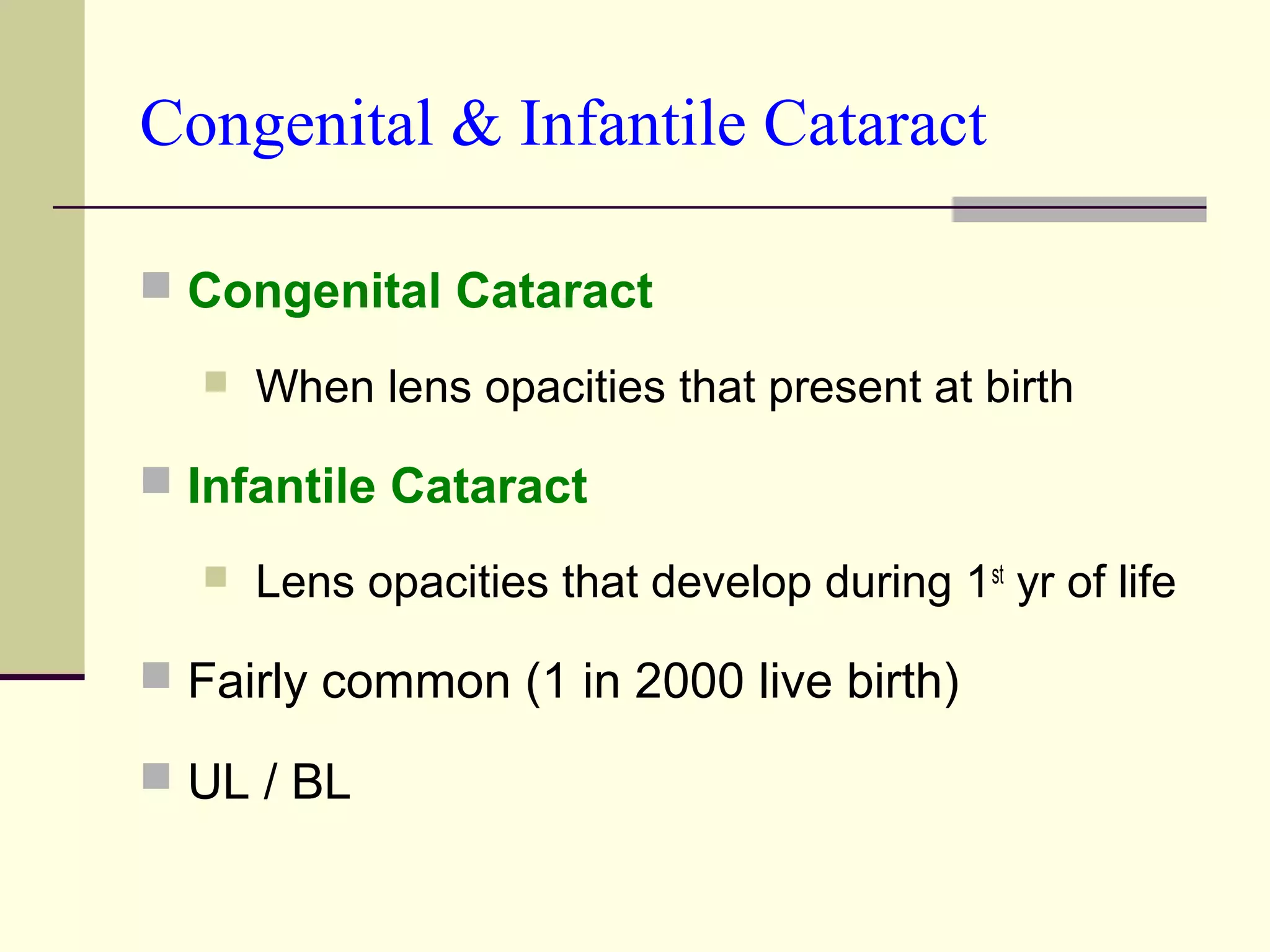
Congenital & Infantile Cataract
 Congenital Cataract


When lens opacities that present at birth

 Infantile Cataract


Lens opacities that develop during 1st yr of life

 Fairly common (1 in 2000 live birth)
 UL / BL
Congenital & Infantile Cataract
 Classification


Morphology



Presumed aetiology



Metabolic disorders



Associated ocular anomalies



Systemic disorders
Congenital & Infantile Cataract
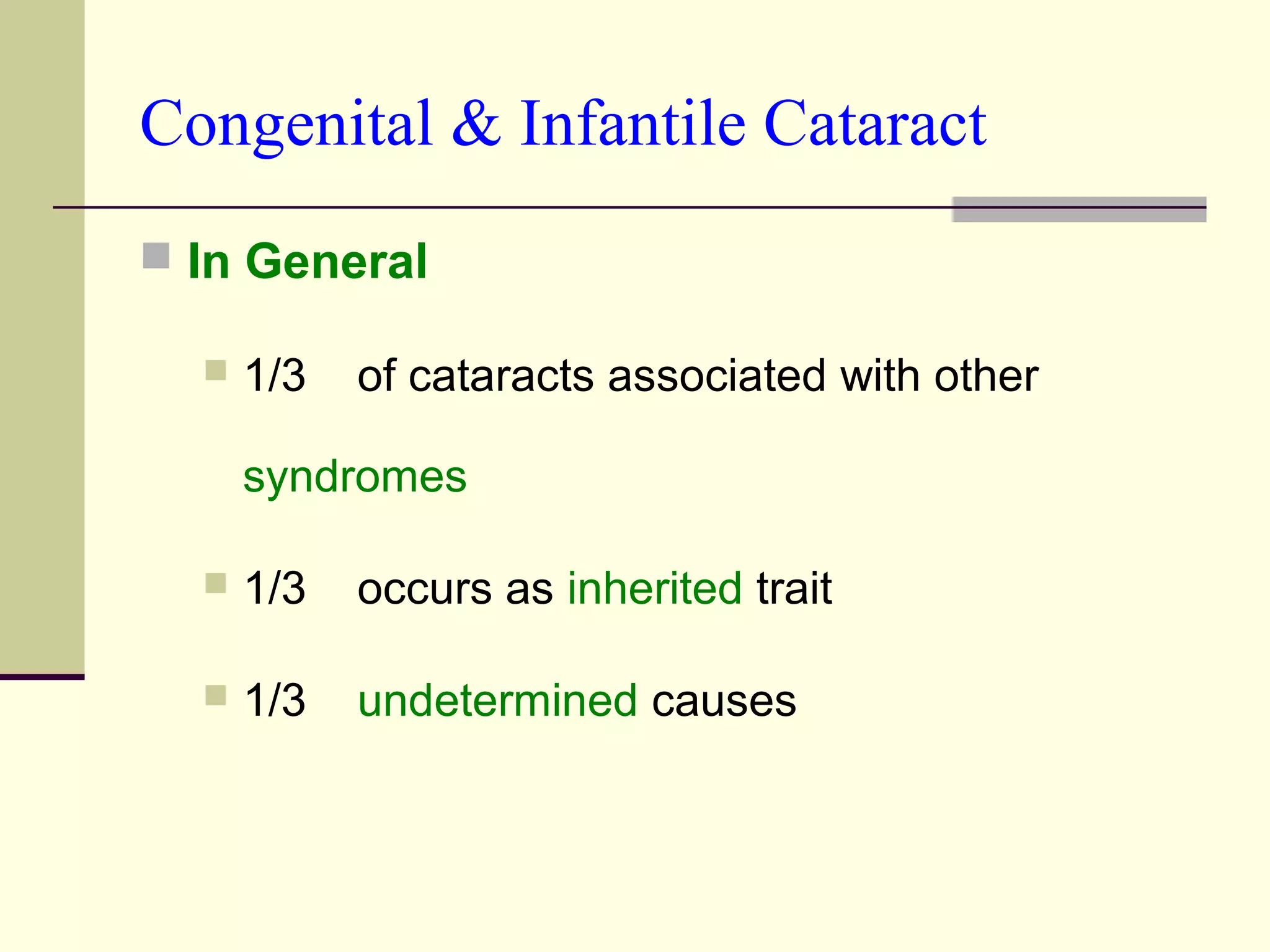
 In General


1/3

of cataracts associated with other

syndromes


1/3

occurs as inherited trait



1/3

undetermined causes
Morphological classification of
congenital and infantile cataracts
1.

Polar

2.

Sutural

3.

Nuclear

4.

Capsular

5.

Lamellar

6.

Complete

7.

Membranous
Congenital and infantile cataracts
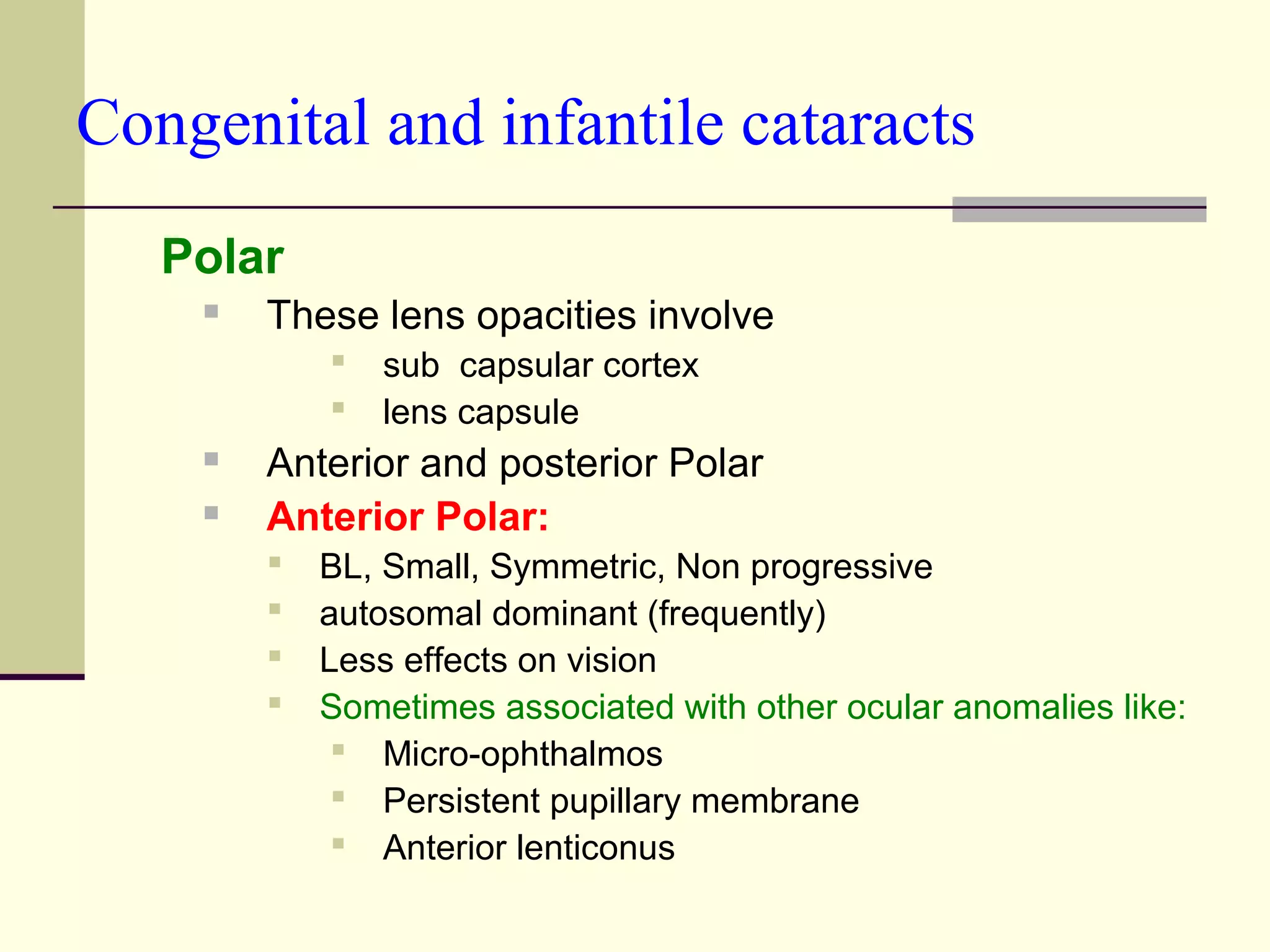
Polar


These lens opacities involve






sub capsular cortex
lens capsule

Anterior and posterior Polar
Anterior Polar:





BL, Small, Symmetric, Non progressive
autosomal dominant (frequently)
Less effects on vision
Sometimes associated with other ocular anomalies like:
 Micro-ophthalmos
 Persistent pupillary membrane
 Anterior lenticonus
Congenital and infantile cataracts
Polar


Posterior Polar cataracts:





Stable/Progressive (Occasionally)
Sporadic/Familial

Sporadic:


UL,



May be associated with remnants of tunica vasculosa
Lentis,



Lenticonus,



Lentiglobus
Congenital and infantile cataracts
Polar


(cont’d)

Familial:





BL
Autsomal dominant

Larger and positioned closer to the nodal point of
the eye



Produce more visual impairment
Congenital and infantile cataracts
Sutural (Stellate) Cataract


Opacification of ”Y” – sutures of fetal nucleus



BL



Symmetric,



Autosomal dominant pattern



Seldom impair vision
Congenital and infantile cataracts
Nuclear


Opacification of the:


Embryonic nucleus or



Embryonic + fetal nucleus



BL



Opacity may involve the:


Complete nucleus



Discrete layers within the nucleus
Congenital and infantile cataracts
Capsular Cataract


Opacification of the:


Lens epithelium and



Anterior lens capsule



It spares the cortex



They protrude into the anterior chamber
(Cf. Anterior Polar cataract)



Vision not adversely affected
Congenital and infantile cataracts
Lamellar (zonular) cataracts


Most common type of congenital/infantile cataract



BL, Symmetrical



Effect on vision vary (size/density)



Causes:


Toxic influence



Hereditary (autosomal dominant)



Early toxic influence – opacity small and deeper



Opacities – in specific layers/zones of the lens
Congenital and infantile cataracts
Lamellar (zonular) cataracts


Clinically the cataract visible as a layer of
Opacification that surrounds a clear center and
itself surrounded by a layer of clear cortex



Disc shaped configuration when viewed from the
front



Additional arcuate opacities within cortex straddle
the equator of the lamellar cataract. These
Horseshoe shaped opacities are called Riders
Congenital and infantile cataracts
Complete (Total) Cataract
1.

Opacification of all the lens fibers

2.

Red reflex completely obscured

3.

No retinal view obtained with direct /indirect
ophthalmoscope

4.

UL/BL

5.

Produce profound visual impairment
Congenital and infantile cataracts
Membraneous Cataract
1.

When lens proteins are resorbed from:
•
•

1.

Intact lens
Traumatized lens

The anterior and posterior lens capsules fuse into
one dense membrane

2.

The resulting opacity and lens distortion causes
significant visual disability
Congenital and infantile cataracts
Rubella Cataract


Maternal infection – RNA Toga Virus



Congenital Rubella Syndrome:


Pearly white nuclear opacification



Sometimes complete cataract / cortex may liquefy



Histopathology:
 Retention of nuclei deep within lens substance




Live virus may be recovered from the lens as late 3
yrs after birth

Cataract removal may be complicated by excessive
posterior operative inflammation caused by release f
these live virus
Congenital and infantile cataracts
Rubella Cataract


(cont’d)

Other Ocular Manifestations:
1. Diffuse pigmentry retinopathy
2. Micro ophthalmos
3. Corneal clouding (Transient/Permanent)
4. Glaucoma



Although congenital rubella syndrome may cause
cataract or glaucoma, both conditions are not
characteristically present in the same eye

Congenital & infantile cataract

  • 1.
    Congenital & Infantile Cataract Prof.Naimatullah Khan Kundi Khyber Teaching Hospital Peshawar
  • 2.
    Congenital & InfantileCataract  Congenital Cataract  When lens opacities that present at birth  Infantile Cataract  Lens opacities that develop during 1st yr of life  Fairly common (1 in 2000 live birth)  UL / BL
  • 3.
    Congenital & InfantileCataract  Classification  Morphology  Presumed aetiology  Metabolic disorders  Associated ocular anomalies  Systemic disorders
  • 4.
    Congenital & InfantileCataract  In General  1/3 of cataracts associated with other syndromes  1/3 occurs as inherited trait  1/3 undetermined causes
  • 5.
    Morphological classification of congenitaland infantile cataracts 1. Polar 2. Sutural 3. Nuclear 4. Capsular 5. Lamellar 6. Complete 7. Membranous
  • 6.
    Congenital and infantilecataracts Polar  These lens opacities involve     sub capsular cortex lens capsule Anterior and posterior Polar Anterior Polar:     BL, Small, Symmetric, Non progressive autosomal dominant (frequently) Less effects on vision Sometimes associated with other ocular anomalies like:  Micro-ophthalmos  Persistent pupillary membrane  Anterior lenticonus
  • 7.
    Congenital and infantilecataracts Polar  Posterior Polar cataracts:    Stable/Progressive (Occasionally) Sporadic/Familial Sporadic:  UL,  May be associated with remnants of tunica vasculosa Lentis,  Lenticonus,  Lentiglobus
  • 9.
    Congenital and infantilecataracts Polar  (cont’d) Familial:    BL Autsomal dominant Larger and positioned closer to the nodal point of the eye  Produce more visual impairment
  • 10.
    Congenital and infantilecataracts Sutural (Stellate) Cataract  Opacification of ”Y” – sutures of fetal nucleus  BL  Symmetric,  Autosomal dominant pattern  Seldom impair vision
  • 11.
    Congenital and infantilecataracts Nuclear  Opacification of the:  Embryonic nucleus or  Embryonic + fetal nucleus  BL  Opacity may involve the:  Complete nucleus  Discrete layers within the nucleus
  • 12.
    Congenital and infantilecataracts Capsular Cataract  Opacification of the:  Lens epithelium and  Anterior lens capsule  It spares the cortex  They protrude into the anterior chamber (Cf. Anterior Polar cataract)  Vision not adversely affected
  • 13.
    Congenital and infantilecataracts Lamellar (zonular) cataracts  Most common type of congenital/infantile cataract  BL, Symmetrical  Effect on vision vary (size/density)  Causes:  Toxic influence  Hereditary (autosomal dominant)  Early toxic influence – opacity small and deeper  Opacities – in specific layers/zones of the lens
  • 14.
    Congenital and infantilecataracts Lamellar (zonular) cataracts  Clinically the cataract visible as a layer of Opacification that surrounds a clear center and itself surrounded by a layer of clear cortex  Disc shaped configuration when viewed from the front  Additional arcuate opacities within cortex straddle the equator of the lamellar cataract. These Horseshoe shaped opacities are called Riders
  • 15.
    Congenital and infantilecataracts Complete (Total) Cataract 1. Opacification of all the lens fibers 2. Red reflex completely obscured 3. No retinal view obtained with direct /indirect ophthalmoscope 4. UL/BL 5. Produce profound visual impairment
  • 16.
    Congenital and infantilecataracts Membraneous Cataract 1. When lens proteins are resorbed from: • • 1. Intact lens Traumatized lens The anterior and posterior lens capsules fuse into one dense membrane 2. The resulting opacity and lens distortion causes significant visual disability
  • 17.
    Congenital and infantilecataracts Rubella Cataract  Maternal infection – RNA Toga Virus  Congenital Rubella Syndrome:  Pearly white nuclear opacification  Sometimes complete cataract / cortex may liquefy  Histopathology:  Retention of nuclei deep within lens substance   Live virus may be recovered from the lens as late 3 yrs after birth Cataract removal may be complicated by excessive posterior operative inflammation caused by release f these live virus
  • 18.
    Congenital and infantilecataracts Rubella Cataract  (cont’d) Other Ocular Manifestations: 1. Diffuse pigmentry retinopathy 2. Micro ophthalmos 3. Corneal clouding (Transient/Permanent) 4. Glaucoma  Although congenital rubella syndrome may cause cataract or glaucoma, both conditions are not characteristically present in the same eye