CONGENITAL CATARACT
DR. PRABHAT DEVKOTA
MBBS(TU), MD(NAMS)
Introduction
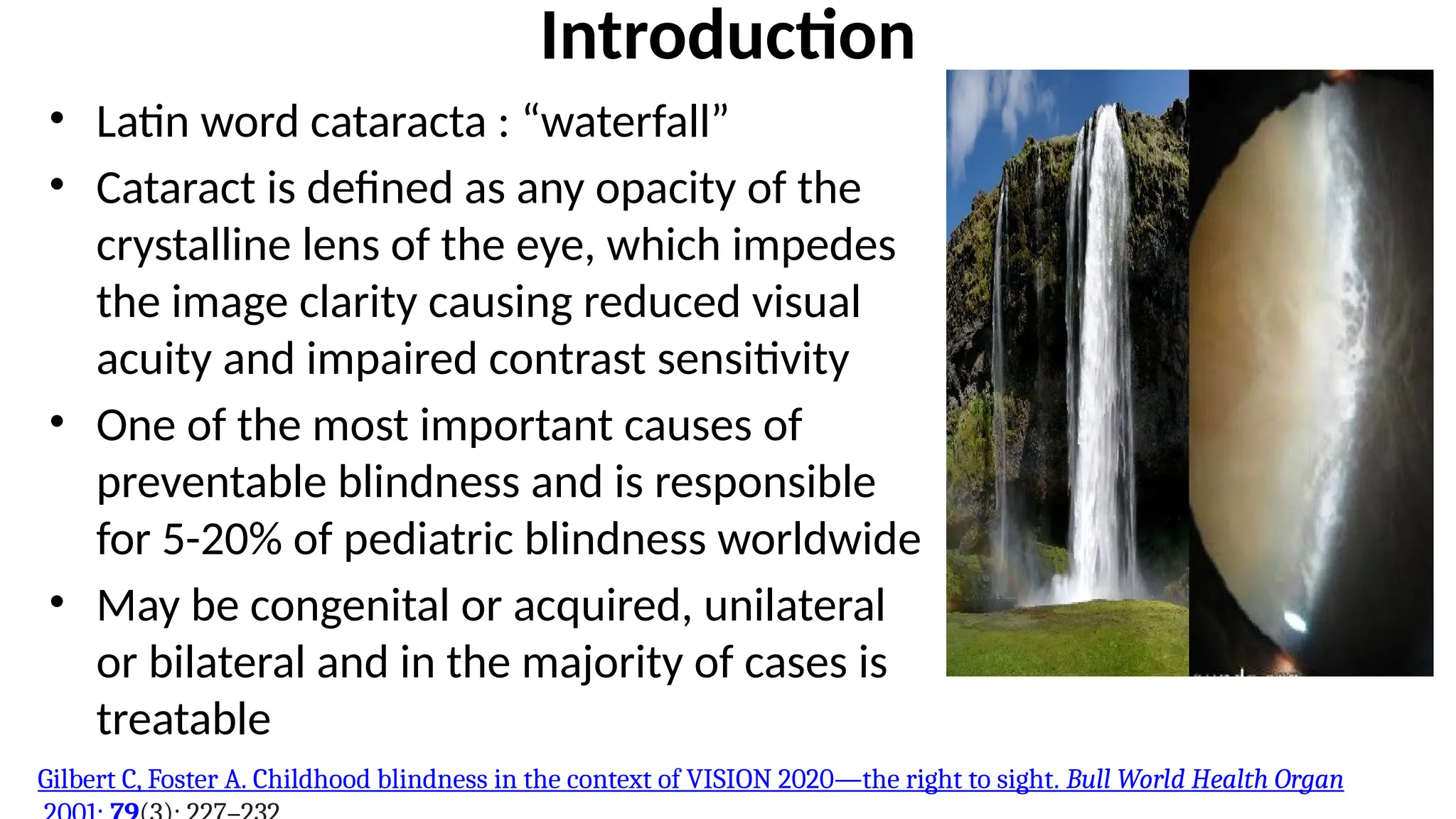
• Latin word cataracta : “waterfall”
• Cataract is defined as any opacity of the
crystalline lens of the eye, which impedes
the image clarity causing reduced visual
acuity and impaired contrast sensitivity
• One of the most important causes of
preventable blindness and is responsible
for 5-20% of pediatric blindness worldwide
• May be congenital or acquired, unilateral
or bilateral and in the majority of cases is
treatable
Gilbert C, Foster A. Childhood blindness in the context of VISION 2020—the right to sight. Bull World Health Organ
Embryology
Pediatric cataract
• Any opacification of the lens and its capsule in children less
than 15 years of age is defined as pediatric cataract
• Can be :
– Isolated or associated with a systemic condition or other ocular
anomalies
– Congenital or acquired
– Unilateral or bilateral
– Inherited or sporadic
– Partial or complete
– Stable or progressive
Epidemology
• An estimated 19 million children are visually impaired
and 1.5 millions are blind with 1 million children living
in Asia
• Prevalance of pediatric cataract range from 1.2 to 6
cases per 10,000 births
• In Nepal (as in other developing countires), cataract is
a leading cause of blindness in children
• Nepal blindness survey from 1978 to 1980, congenital
cataract accounted for 16.3% of blindness detected in
children under the age of 15 years (Brilliant et al, 1985)
• Epidemology of Blindness in Nepal 2012 survey has
suggested that the prevalence of childhood blindness
has reduced from 0.68% in 1981 to 0.4% in 2011
(Sapkota, 2012)
Classification
• Based on :
Age of onset
Laterality
Morphology
According to AGE OF ONSET
• Congenital cataract
– Present since birth
• Developmental cataract
– Present during childhood before age of 15 years
According to LATERALITY
– Unilateral
– Bilateral
• 1/3rd
- Idiopathic- may be unilateral or bilateral
• 1/3rd
– Inherited – usually billateral
• 1/3rd
– associated with systemic disease – usually
billateral
Bilateral Cataracts
1. Idiopathic
2. Hereditary
3. Genetic disease
– Downs syndrome, Marfan syndrome, trisomy 13-15, Alport syndrome, Myotonic
dystrophy, fabrys disease
4. Metabolic disease
– Galactosemia, hypoglycemia, hypoparathyroidism
5. Maternal infection
– Rubella, CMV, Varicella, Syphillis, Toxoplasmosis
6. Ocular anomalies
– Aniridia, anterior segment dysgenesis syndrome
7. Toxic
– Corticosteroids, radiation (may be unilateral)
Unilateral Cataract
1. Idiopathic
2. Ocular anomalies
– Persistent fetal vasculature
– Anterior segment dysgenesis
– Posterior lenticonus
– Posterior pole tumors
3. Traumatic (r/o child abuse)
4. Rubella
5. Masked bilateral cataract
According to MORPHOLOGY
Anterior Cataract
Anterior Polar Cataract
Anterior Pyramidal Cataract
Anterior Subcapsular Cataract
Anterior Lenticonus
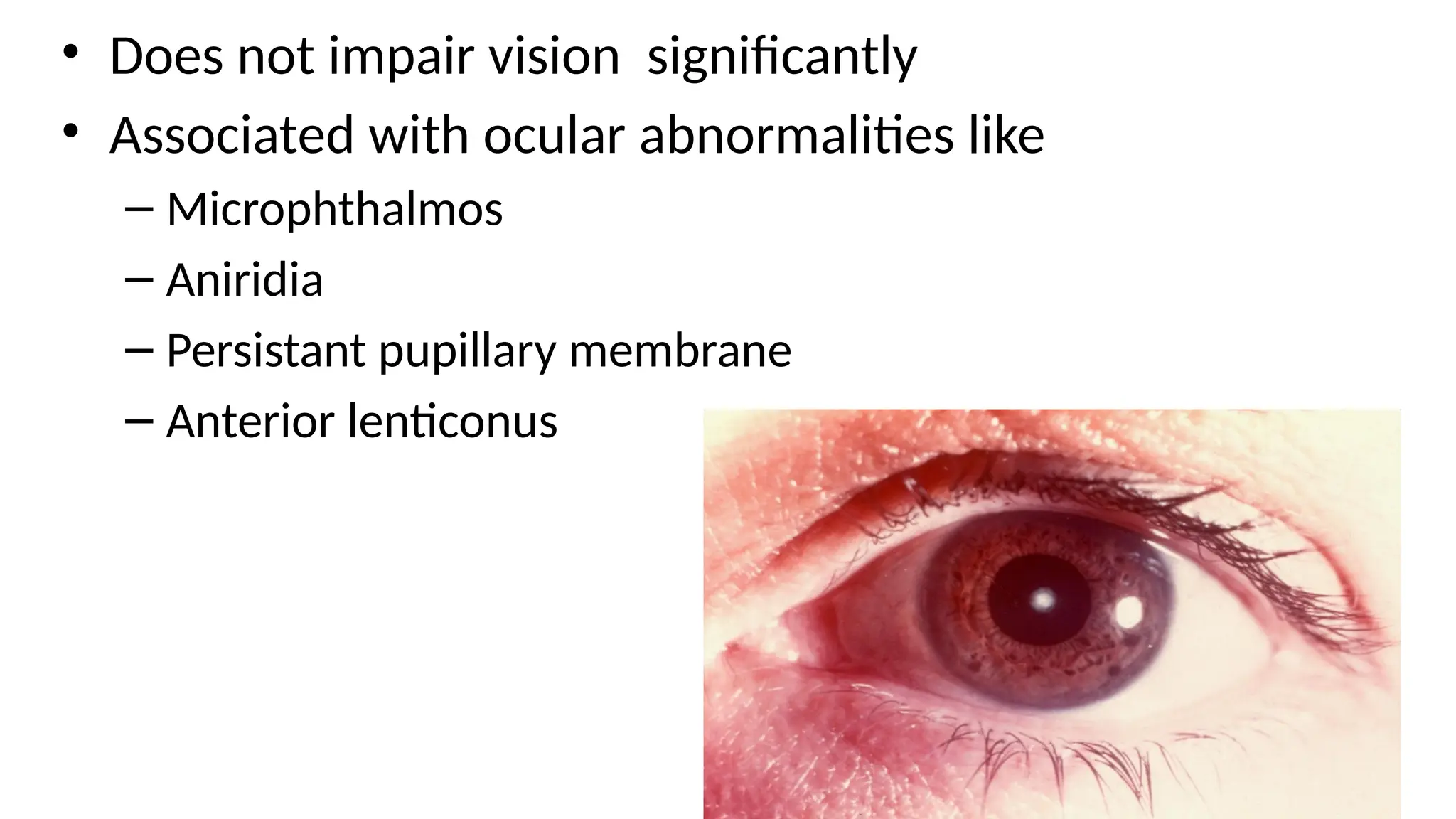
1. Anterior Polar cataract
• Opacities that involves anterior
subcapsular cortex and capsule of
anterior pole of lens
• Present as a small white dot
• Are thought to arise from
– Imperfect separation of lens vesicle from
surface ectoderm
– Metaplasia of anterior epithelial cells
• Usually congenital, non progressive, small
,bilateral and symmetric
• Does not impair vision significantly
• Associated with ocular abnormalities like
– Microphthalmos
– Aniridia
– Persistant pupillary membrane
– Anterior lenticonus
2. Anterior Pyramidal Cataract
• More severe form of anterior polar
cataract
• Are conical opacities that project into
anterior chamber from anterior lens
capsule
• Tends to be larger, elevated and
visually more significant
• Are usually congenital, bilateral,
symmeterical
3. Anterior subcapsular cataract
• Usually developmental
• Associated with acquired
diseases ,trauma, uveitis,
irradiation, Alport syndrome or
atopic skin disease
• The opacities vary between very
subtle to dense
4. Anterior lenticonus
• Associated with Alport syndrome, Waardenburg syndrome,
Lowe syndrome
• X linked dominant
• Progressive hereditary nephrtis, hearing impairment
• Anterior lenticonus < posterior lenticonus
Central cataract
Nuclear Cataract
Lamellar Cataract
Central Pulverant Cataract
Sutural Cataract
Cortical Cataract
Cerulean Cataract
1. Nuclear cataract
• These are opacities of embryonic
and/or fetal nucleus, between the Y
sutures
• Can be inherited or sporadic
• Usually billateral presents with a
central white opacities approximately
3.5mm in diameter surrounded by
clear cortex
• Density and size can vary
• Are usually stable but can progress
• With time, the cortex may become diffusely
opacified, or radial opacification (riders) of the cortex
may occur
2. Lamellar cataract
• Zonular cataract
• Most common type
• It is opacification of specific layers
or zones of the lens material
• Opacified layer is between
adjacent clear lamella
• Are usually bilateral and may be
aymmetric
• Does not tend to progress with
time
• Additional arcuate opacities spread from equator of
lamellar cataract
– Riders
3. Central Pulverulent cataract
• Powdery disc-like opacity involving the
embryonal and fetal nucleus with many
tiny white dots in the lamellar portion of
the lens
• Is usually bilateral, nonprogressive and
only rarely affects vision
• May also occur in transient metabolic
changes such as
– Galactosemia
– Hypolycemia
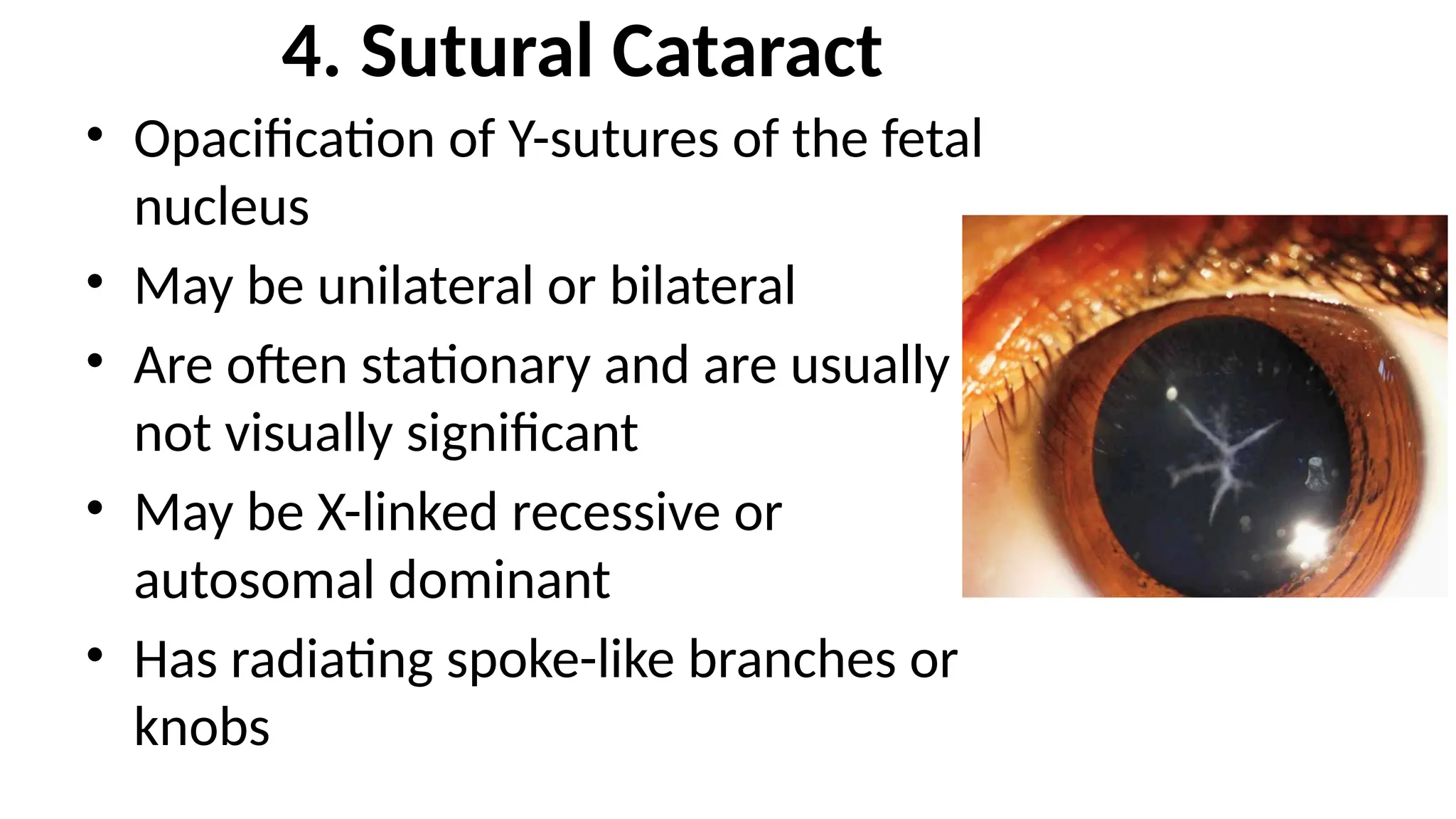
4. Sutural Cataract
• Opacification of Y-sutures of the fetal
nucleus
• May be unilateral or bilateral
• Are often stationary and are usually
not visually significant
• May be X-linked recessive or
autosomal dominant
• Has radiating spoke-like branches or
knobs
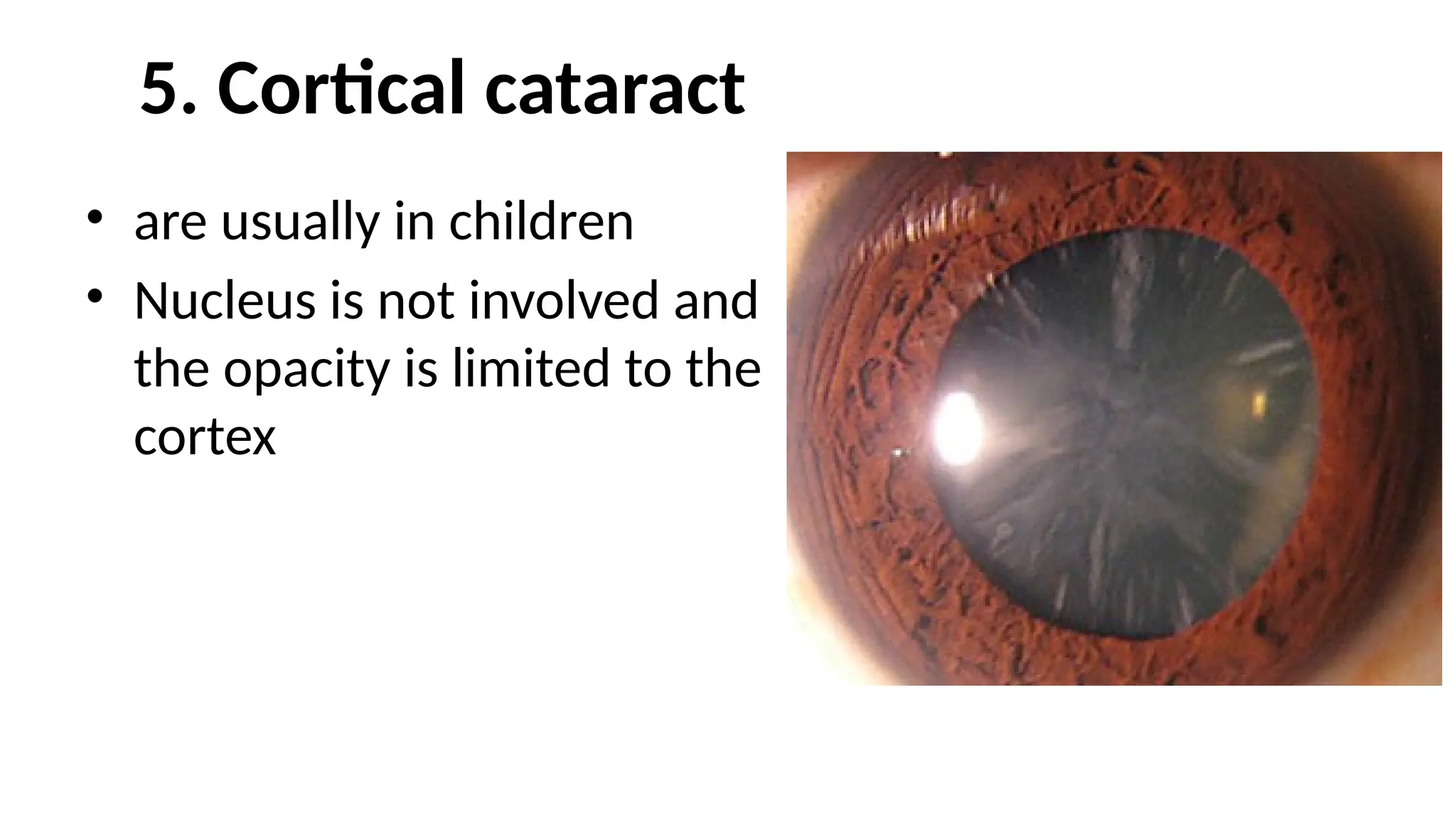
5. Cortical cataract
• are usually in children
• Nucleus is not involved and
the opacity is limited to the
cortex
6. Cerulean cataract
• Also known as Blue dot cataract
• Blue and white opacification
scattered in the nucleus and
cortex
• Developmental cataract
• Usually asymptomatic until 18-
24 months of age
• Slowly progressive
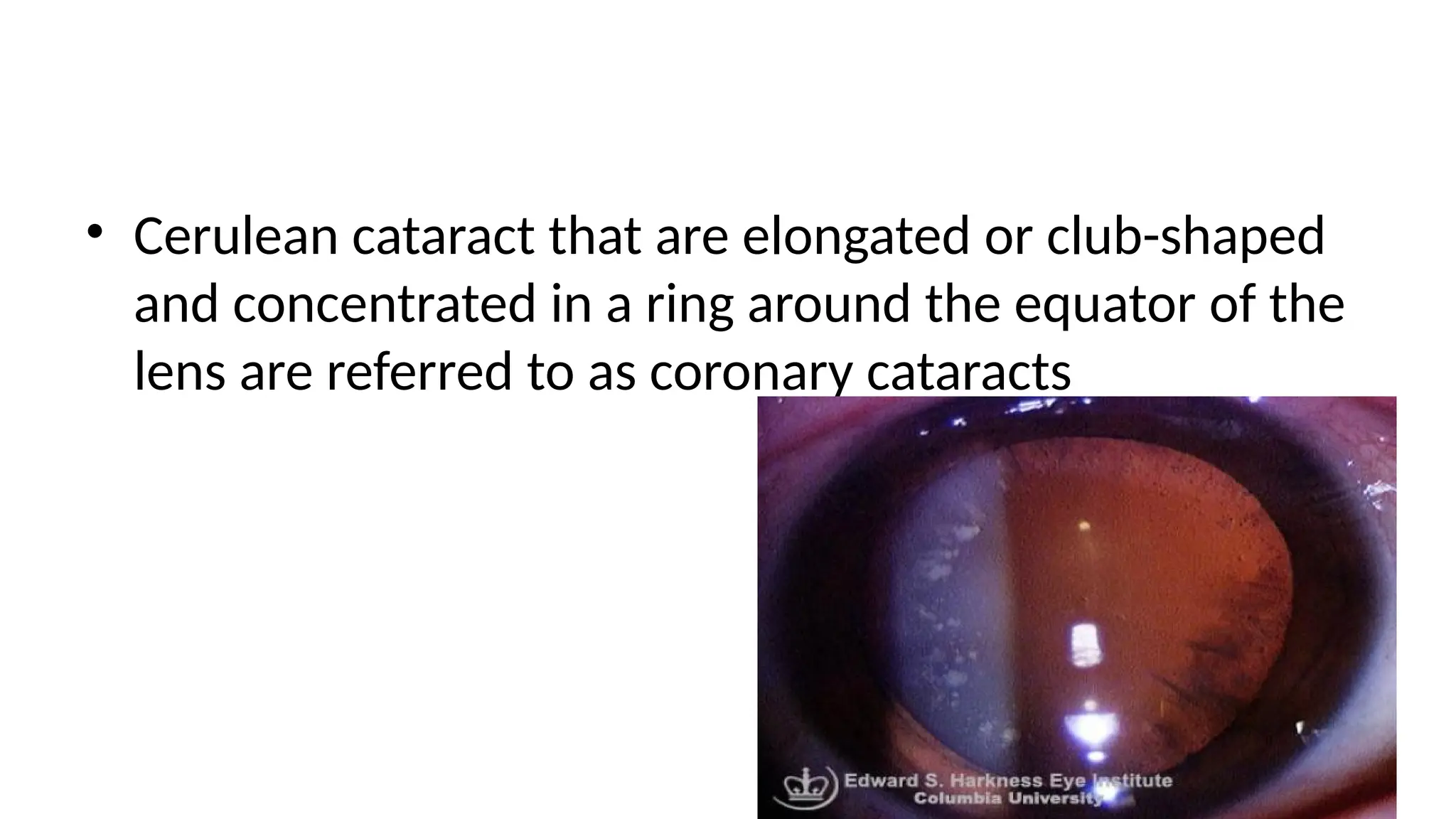
• Cerulean cataract that are elongated or club-shaped
and concentrated in a ring around the equator of the
lens are referred to as coronary cataracts
Posterior cataract
Posterior Subcapsular Cataract
Posterior Polar Cataract
Mittendorf’s Dot
Posterior lenticonus
1. Posterior subcapsular cataract
• Less common in children than in
adults
• Usually acquired and are often
bilateral
• PSCs tends to progress, visually
significant
• Often have a frosted glass appearance, which occurs
immediately anterior to the posterior capsule
• Causes includes
– Corticosteriod use
– Uveitis
– Retinal abnormalities
– Radiation exposure
– And trauma
2. Posterior Polar Cataract
• Are usually a small, dense, white,
central opacity of the posterior
lens
• More profound decrease in vision
as compared to anterior polar
cataract
• May be bilateral or unilateral
• May be familial or sporadic
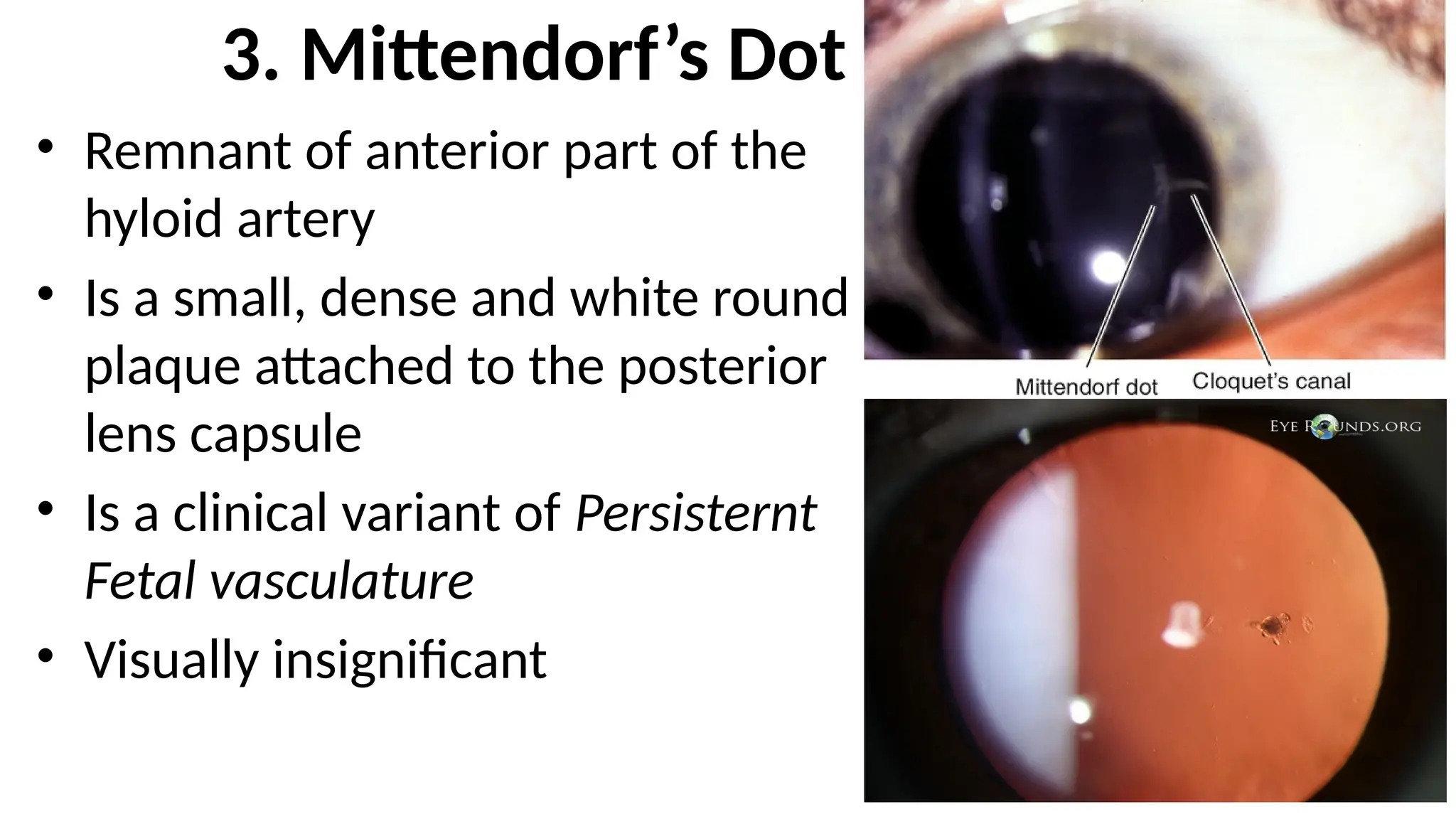
3. Mittendorf’s Dot
• Remnant of anterior part of the
hyloid artery
• Is a small, dense and white round
plaque attached to the posterior
lens capsule
• Is a clinical variant of Persisternt
Fetal vasculature
• Visually insignificant
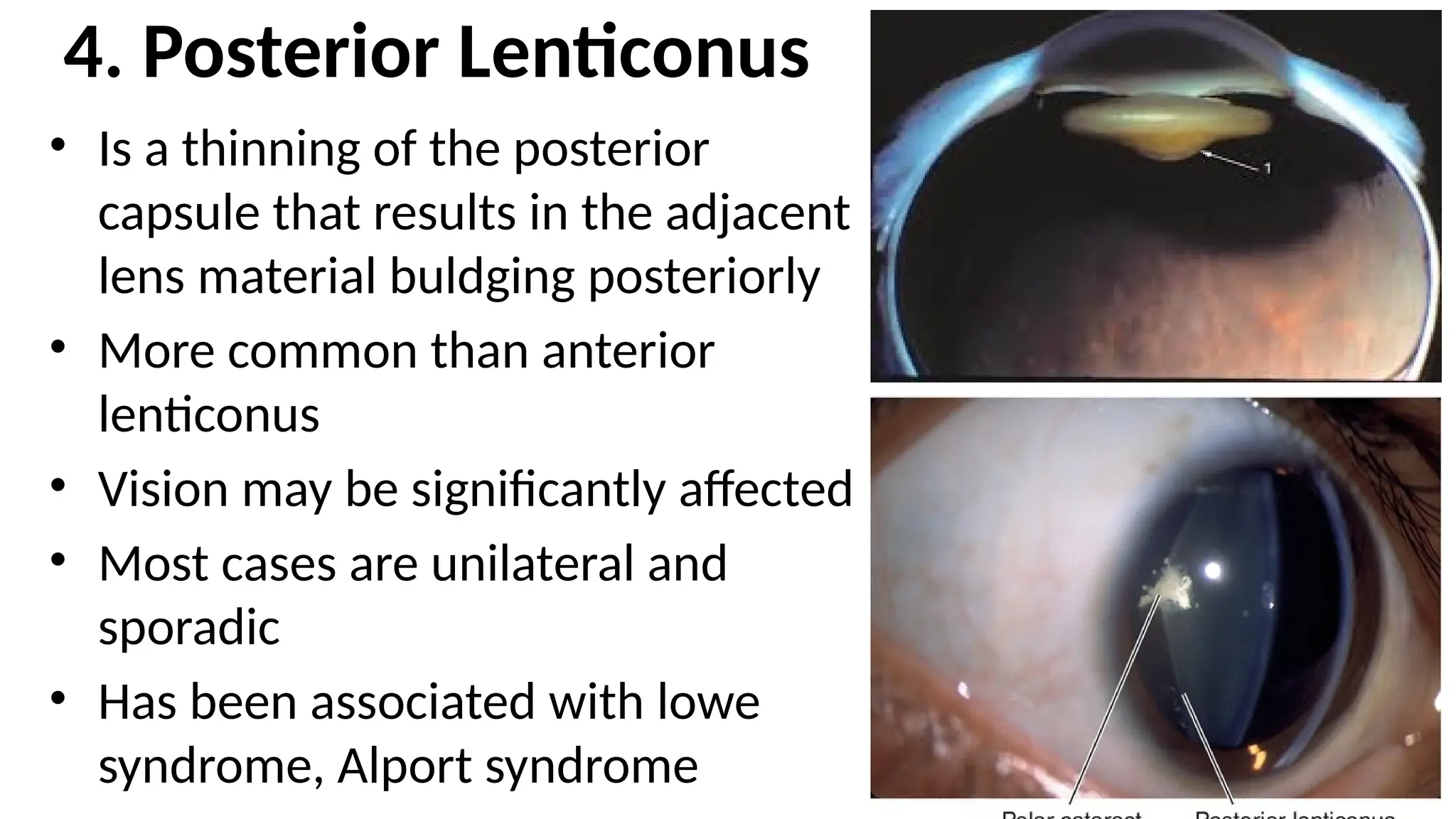
4. Posterior Lenticonus
• Is a thinning of the posterior
capsule that results in the adjacent
lens material buldging posteriorly
• More common than anterior
lenticonus
• Vision may be significantly affected
• Most cases are unilateral and
sporadic
• Has been associated with lowe
syndrome, Alport syndrome
Total cataract
• General opacity of all lens fibers
• Lamellar and nuclear cataracts progress to total cataract
• Suspect posterior lenticonus if minimal opacity progress
in short time to total cataract or suspect persistent fetal
vasculature
• Electrolyte imbalance in severe dehydration and diarrhea
• Rubella and Downs syndrome
1. Congenital morgagnian cataract
• Special type of cataract
• Lens fibers liquify but nucleus
remains intact
• Nucleus moves within lens
capsule depending on gravity
• Rarely if present late, fluid gets
absorbed leading to fusion of
anterior and posterior capsule
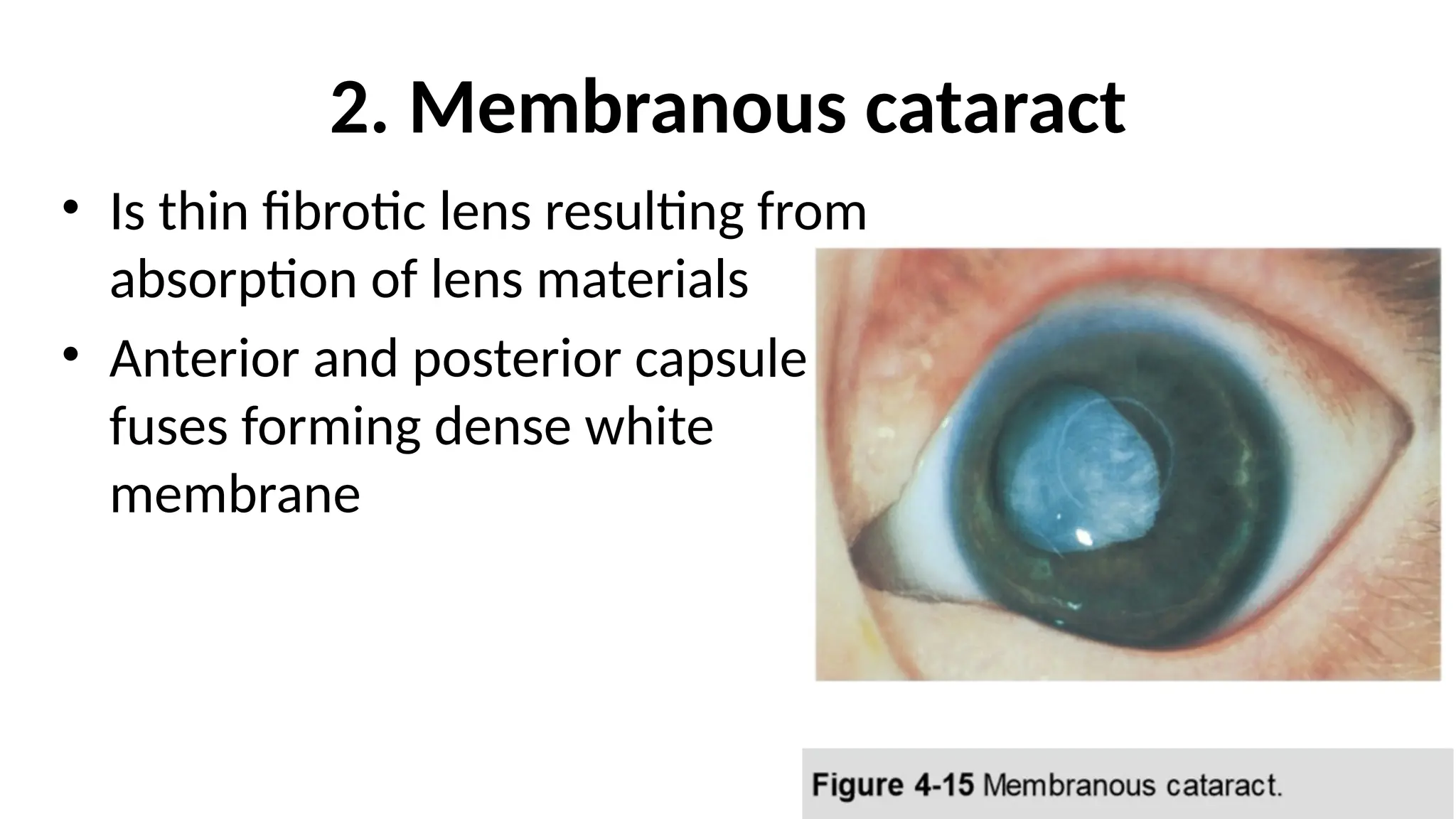
2. Membranous cataract
• Is thin fibrotic lens resulting from
absorption of lens materials
• Anterior and posterior capsule
fuses forming dense white
membrane
• Has been assosciated with trauma, posterior or
anterior capsule defects, congenital rubella,
Hallermann-Streiff syndrome, persistent fetal
casculature, Lowe’s syndrome and aniridia
Miscellaneous Cataracts
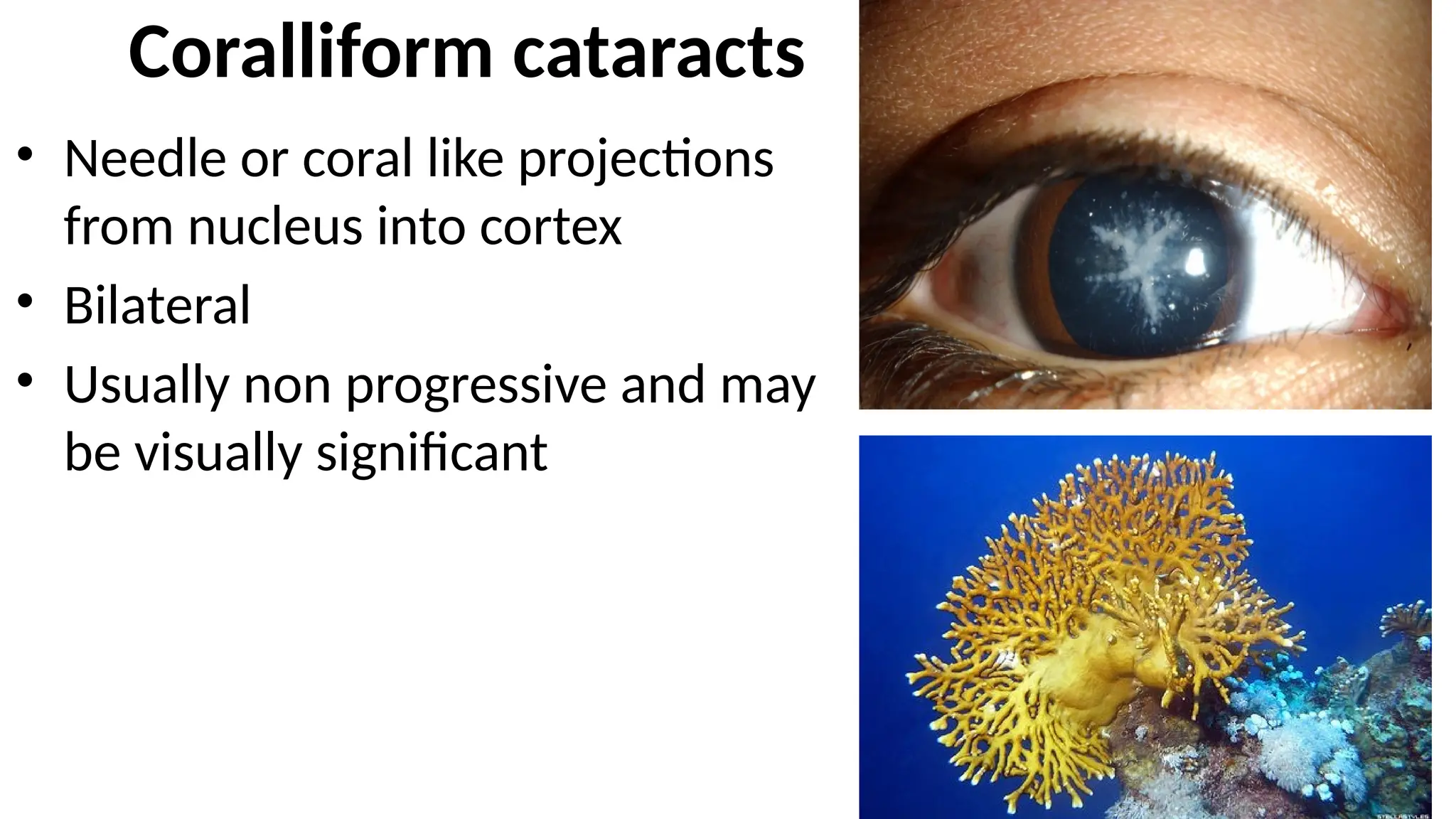
Coralliform cataracts
• Needle or coral like projections
from nucleus into cortex
• Bilateral
• Usually non progressive and may
be visually significant
Floriform Cataract
• Uncommon morphological form
• Autosomal dominant
• Resemble the petal of a flower
Sectoral Cataract
• Wedge shaped cataract
• May be specific to Stickler Syndrome and Conradi-
Hunermann Syndrome
Persistent fetal Vasculature
• Common cause of unilateral cataract
• Associated with microphthalmos,
elongated ciliary process, shallow AC,
retrolental plauqe, cataract, retinal
detachment
• Suspect Norrie’s disease in B/L persistent
vasulature
Steroid induced Cataract
• Children are more susceptible than adults
• Mechanism:
– Increase glucose levels
– Inhibition of Na+- k+ ATPase pump
– Loss of ATP
– Increased cation permeability
– Have little effect on vision and do not usually require
surgery
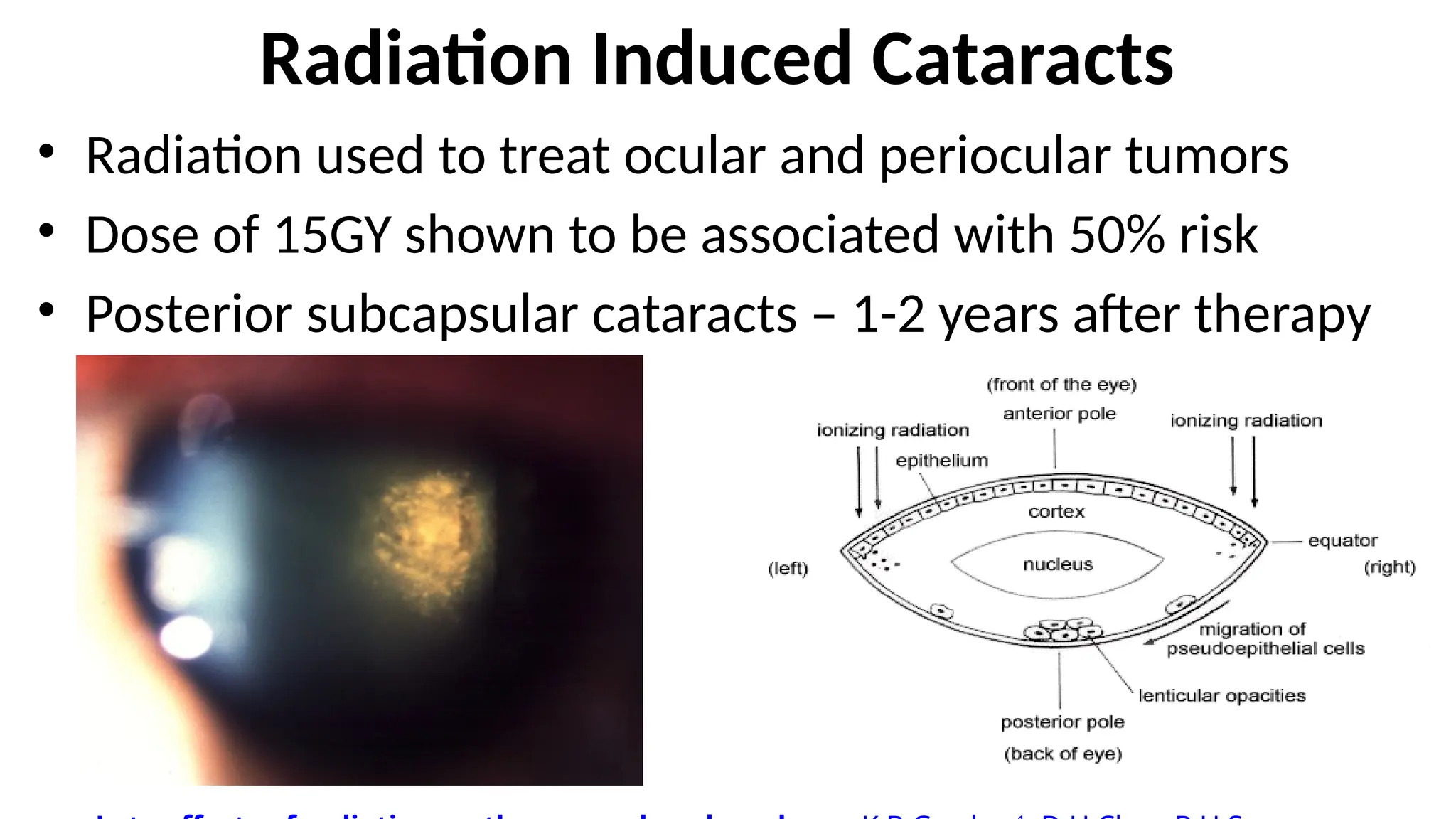
Radiation Induced Cataracts
• Radiation used to treat ocular and periocular tumors
• Dose of 15GY shown to be associated with 50% risk
• Posterior subcapsular cataracts – 1-2 years after therapy
1
Laser Photo coagulation
• Used to ablate avascular retina of infants with threshold
retinopathy of prematurity
• Occurs after few weeks after laser treatment
• Visually insignificant opacities to total opacification of
lens
• Anterior/ Posterior subcapsular cataract, nuclear
cataract
Traumatic Cataract
• Birth trauma
• Child Abuse – Battered Baby Syndrome
• Closed globe or Open globe injury
Rosette cataract
Metabolic Cataract
Wilson’s disease Diabetes
Sunflower cataract Snowflake cataract
Galactosemia
Oil droplet central opacity
Fabry’s Disease
Myotonic Dystrophy
Christmas Tree opacity
Cart wheel cataract: mannosidosis
Hypoglycemia and hypocalcemia
• Lamellar cataracts develop in hypoglycemic or
hypocalcemic condition
• Hypoglycemia common in Low Birth Weight Babies
• Hypocalcemia – hypoparathyroidism or
pseudohypoparathyroidism
Cataract associated with infections
• Congenital cataract occurs in intra uterine with
– Rubella
– Cytomegalovirus
– Toxoplasmosis
– HSV
– Varicella
– Syphillis
Congenital Rubella Syndrome
• Infection occurs in 1st
trimester of pregnancy
• Traid of congenital heart disease, hearing loss
and congenital cataract
• Pearly white nuclear cataract -> complete
cataract and the cortex may liquify
• Other ocular manifestation
– Microphthalmia
– Cloudy cornea
– Iris atrophy
– Congenital glaucoma
– Pigmentary maculopathy
Complicated Cataract
• Result of the chornic ocular
inflammation or secondary to the
chronic use of steroids
• Juvenile idiopathic arthritis (IJA)
• Chronic anterior uveitis
Inherited with systemic abnormalities
• Assosciated with number of syndrome – systemic
disorders as well as other ocular anomalies
• Chromosomal abnormalities
– Trisomy 21 (Down’s syndrome)
– Trisomy 13 (Patau’s syndrome)
– Trisomy 18 (Edward’s syndrome)
– XO (Turner’s syndrome)
• Skeletal disease
– Conradi-Hunermann syndrome
– Stickler syndrome
– Bardet-biedl syndrome
– Weil marchesani syndrome
• Central nervous system abnormalities
– Norrie’s disease
– Cerebro-oculo-facial-skeletal syndrome
– Myotonic dystrophy
• Renel disease
– Lowe’s syndrome
– Alport syndrome
Cataract assosciated with ocular developmental anomalies
• Persistent hyperplastiv primary vitreous (PHPV)
• Aniridia
• Posterior lenticonus
• Peter’s anomaly
• Retinopathy of prematurity
• Anterior chamber cleavage syndrome
• Introcular tumor
Approach of pediatric cataract
Diagnosis and pre-operative work up by careful history
taking, examinations and investigation
History
• Detailed history of ocular complaints
– Duration of symptoms
• Previous ocular surgery/treatment
• Systemic complaints
• History of drug intake/radiation exposure/trauma
• Presence of nystagmus, squint
• Maternal history – antenatal history, history of drug
intake/ radiation exposure, fever
• Birth history
• Developmental history
• Similar family history (siblings/parents)
Examination
• General physical and systemic examinations : for metabolic and
associated congenital ocular and systemic anomalies
• Ocular examinations:
– Assessment of visual function: VA, retinoscopy/refraction, alignment,
nystagmus, EOM
– Fixation behavious
– Pupillary reaction
– Anterior segment biomicroscopy
– Posterior segment evaluation : FEUM, USG B-scan
– Tonometry, corneal diameter, keratometry
– Axial length measurement
Signs and symptoms
• Symptoms :
– Informant – usually parents
– History of white spot in pupillary area
– Child is usually brought with history of dimunition of vision/
does not recognize objects and parents
– Unsteady eyes
– Deviation of eye
– Associated symptoms of systemic disease, if rpesent
• Signs :
– Dimunished vision (at times it is difficult to establish in
very young children)
– Lenticular opacity
– Nystagmus
– Deviation of eye
– There may be other ocular and systemic abnormalities in
cases of rubella nuclear cataract
Laboratory Investigations
• For all non-hereditary, idiopathic, bilateral cases
– TORCH
– VDRL
– Urine for reducing substance
• Serum glucose, calcium, phosphorus, alkaline
phosphatase
• Thyroid function tests
• Karyotyping
Summary
• Pediatric cataract is one of the important causes of blindness
• Represents a diverse spectrum of morphologies, etiologies and
clinical presentations
• Determination of the visual significance of congenital cataracts
depends upon measurements of the size, location and density of
opacity, duration of visual deprivation and assessment of the red
reflex
• Early detection and intervention to prevent irreversible amblyopia
and permanent blindness
Reference
1. Clinical Ophthalmology-Myron Yanoff
2. American Academy of ophthalmolog (lens and
cataract,Pediatic opthalmology and strabismus)
3. Albert and Jakobiec
4. Clinical Ophthalmology -Jack J. Kanski
Thank you

Congenital Cataract, Dr. Prabhat Devkota.pptx

  • 1.
    CONGENITAL CATARACT DR. PRABHATDEVKOTA MBBS(TU), MD(NAMS)
  • 2.
    Introduction • Latin wordcataracta : “waterfall” • Cataract is defined as any opacity of the crystalline lens of the eye, which impedes the image clarity causing reduced visual acuity and impaired contrast sensitivity • One of the most important causes of preventable blindness and is responsible for 5-20% of pediatric blindness worldwide • May be congenital or acquired, unilateral or bilateral and in the majority of cases is treatable Gilbert C, Foster A. Childhood blindness in the context of VISION 2020—the right to sight. Bull World Health Organ
  • 3.
  • 6.
    Pediatric cataract • Anyopacification of the lens and its capsule in children less than 15 years of age is defined as pediatric cataract • Can be : – Isolated or associated with a systemic condition or other ocular anomalies – Congenital or acquired – Unilateral or bilateral – Inherited or sporadic – Partial or complete – Stable or progressive
  • 7.
    Epidemology • An estimated19 million children are visually impaired and 1.5 millions are blind with 1 million children living in Asia • Prevalance of pediatric cataract range from 1.2 to 6 cases per 10,000 births • In Nepal (as in other developing countires), cataract is a leading cause of blindness in children
  • 8.
    • Nepal blindnesssurvey from 1978 to 1980, congenital cataract accounted for 16.3% of blindness detected in children under the age of 15 years (Brilliant et al, 1985) • Epidemology of Blindness in Nepal 2012 survey has suggested that the prevalence of childhood blindness has reduced from 0.68% in 1981 to 0.4% in 2011 (Sapkota, 2012)
  • 9.
    Classification • Based on: Age of onset Laterality Morphology
  • 10.
    According to AGEOF ONSET • Congenital cataract – Present since birth • Developmental cataract – Present during childhood before age of 15 years
  • 11.
    According to LATERALITY –Unilateral – Bilateral • 1/3rd - Idiopathic- may be unilateral or bilateral • 1/3rd – Inherited – usually billateral • 1/3rd – associated with systemic disease – usually billateral
  • 12.
    Bilateral Cataracts 1. Idiopathic 2.Hereditary 3. Genetic disease – Downs syndrome, Marfan syndrome, trisomy 13-15, Alport syndrome, Myotonic dystrophy, fabrys disease 4. Metabolic disease – Galactosemia, hypoglycemia, hypoparathyroidism 5. Maternal infection – Rubella, CMV, Varicella, Syphillis, Toxoplasmosis 6. Ocular anomalies – Aniridia, anterior segment dysgenesis syndrome 7. Toxic – Corticosteroids, radiation (may be unilateral)
  • 13.
    Unilateral Cataract 1. Idiopathic 2.Ocular anomalies – Persistent fetal vasculature – Anterior segment dysgenesis – Posterior lenticonus – Posterior pole tumors 3. Traumatic (r/o child abuse) 4. Rubella 5. Masked bilateral cataract
  • 14.
  • 16.
    Anterior Cataract Anterior PolarCataract Anterior Pyramidal Cataract Anterior Subcapsular Cataract Anterior Lenticonus
  • 17.
    1. Anterior Polarcataract • Opacities that involves anterior subcapsular cortex and capsule of anterior pole of lens • Present as a small white dot • Are thought to arise from – Imperfect separation of lens vesicle from surface ectoderm – Metaplasia of anterior epithelial cells • Usually congenital, non progressive, small ,bilateral and symmetric
  • 18.
    • Does notimpair vision significantly • Associated with ocular abnormalities like – Microphthalmos – Aniridia – Persistant pupillary membrane – Anterior lenticonus
  • 19.
    2. Anterior PyramidalCataract • More severe form of anterior polar cataract • Are conical opacities that project into anterior chamber from anterior lens capsule • Tends to be larger, elevated and visually more significant • Are usually congenital, bilateral, symmeterical
  • 21.
    3. Anterior subcapsularcataract • Usually developmental • Associated with acquired diseases ,trauma, uveitis, irradiation, Alport syndrome or atopic skin disease • The opacities vary between very subtle to dense
  • 22.
    4. Anterior lenticonus •Associated with Alport syndrome, Waardenburg syndrome, Lowe syndrome • X linked dominant • Progressive hereditary nephrtis, hearing impairment • Anterior lenticonus < posterior lenticonus
  • 23.
    Central cataract Nuclear Cataract LamellarCataract Central Pulverant Cataract Sutural Cataract Cortical Cataract Cerulean Cataract
  • 24.
    1. Nuclear cataract •These are opacities of embryonic and/or fetal nucleus, between the Y sutures • Can be inherited or sporadic • Usually billateral presents with a central white opacities approximately 3.5mm in diameter surrounded by clear cortex • Density and size can vary
  • 25.
    • Are usuallystable but can progress • With time, the cortex may become diffusely opacified, or radial opacification (riders) of the cortex may occur
  • 26.
    2. Lamellar cataract •Zonular cataract • Most common type • It is opacification of specific layers or zones of the lens material • Opacified layer is between adjacent clear lamella • Are usually bilateral and may be aymmetric • Does not tend to progress with time
  • 27.
    • Additional arcuateopacities spread from equator of lamellar cataract – Riders
  • 28.
    3. Central Pulverulentcataract • Powdery disc-like opacity involving the embryonal and fetal nucleus with many tiny white dots in the lamellar portion of the lens • Is usually bilateral, nonprogressive and only rarely affects vision • May also occur in transient metabolic changes such as – Galactosemia – Hypolycemia
  • 29.
    4. Sutural Cataract •Opacification of Y-sutures of the fetal nucleus • May be unilateral or bilateral • Are often stationary and are usually not visually significant • May be X-linked recessive or autosomal dominant • Has radiating spoke-like branches or knobs
  • 30.
    5. Cortical cataract •are usually in children • Nucleus is not involved and the opacity is limited to the cortex
  • 31.
    6. Cerulean cataract •Also known as Blue dot cataract • Blue and white opacification scattered in the nucleus and cortex • Developmental cataract • Usually asymptomatic until 18- 24 months of age • Slowly progressive
  • 32.
    • Cerulean cataractthat are elongated or club-shaped and concentrated in a ring around the equator of the lens are referred to as coronary cataracts
  • 33.
    Posterior cataract Posterior SubcapsularCataract Posterior Polar Cataract Mittendorf’s Dot Posterior lenticonus
  • 34.
    1. Posterior subcapsularcataract • Less common in children than in adults • Usually acquired and are often bilateral • PSCs tends to progress, visually significant
  • 35.
    • Often havea frosted glass appearance, which occurs immediately anterior to the posterior capsule • Causes includes – Corticosteriod use – Uveitis – Retinal abnormalities – Radiation exposure – And trauma
  • 36.
    2. Posterior PolarCataract • Are usually a small, dense, white, central opacity of the posterior lens • More profound decrease in vision as compared to anterior polar cataract • May be bilateral or unilateral • May be familial or sporadic
  • 37.
    3. Mittendorf’s Dot •Remnant of anterior part of the hyloid artery • Is a small, dense and white round plaque attached to the posterior lens capsule • Is a clinical variant of Persisternt Fetal vasculature • Visually insignificant
  • 38.
    4. Posterior Lenticonus •Is a thinning of the posterior capsule that results in the adjacent lens material buldging posteriorly • More common than anterior lenticonus • Vision may be significantly affected • Most cases are unilateral and sporadic • Has been associated with lowe syndrome, Alport syndrome
  • 39.
    Total cataract • Generalopacity of all lens fibers • Lamellar and nuclear cataracts progress to total cataract • Suspect posterior lenticonus if minimal opacity progress in short time to total cataract or suspect persistent fetal vasculature • Electrolyte imbalance in severe dehydration and diarrhea • Rubella and Downs syndrome
  • 40.
    1. Congenital morgagniancataract • Special type of cataract • Lens fibers liquify but nucleus remains intact • Nucleus moves within lens capsule depending on gravity • Rarely if present late, fluid gets absorbed leading to fusion of anterior and posterior capsule
  • 41.
    2. Membranous cataract •Is thin fibrotic lens resulting from absorption of lens materials • Anterior and posterior capsule fuses forming dense white membrane
  • 42.
    • Has beenassosciated with trauma, posterior or anterior capsule defects, congenital rubella, Hallermann-Streiff syndrome, persistent fetal casculature, Lowe’s syndrome and aniridia
  • 43.
  • 44.
    Coralliform cataracts • Needleor coral like projections from nucleus into cortex • Bilateral • Usually non progressive and may be visually significant
  • 45.
    Floriform Cataract • Uncommonmorphological form • Autosomal dominant • Resemble the petal of a flower
  • 46.
    Sectoral Cataract • Wedgeshaped cataract • May be specific to Stickler Syndrome and Conradi- Hunermann Syndrome
  • 47.
    Persistent fetal Vasculature •Common cause of unilateral cataract • Associated with microphthalmos, elongated ciliary process, shallow AC, retrolental plauqe, cataract, retinal detachment • Suspect Norrie’s disease in B/L persistent vasulature
  • 48.
    Steroid induced Cataract •Children are more susceptible than adults • Mechanism: – Increase glucose levels – Inhibition of Na+- k+ ATPase pump – Loss of ATP – Increased cation permeability – Have little effect on vision and do not usually require surgery
  • 49.
    Radiation Induced Cataracts •Radiation used to treat ocular and periocular tumors • Dose of 15GY shown to be associated with 50% risk • Posterior subcapsular cataracts – 1-2 years after therapy
  • 50.
  • 51.
    Laser Photo coagulation •Used to ablate avascular retina of infants with threshold retinopathy of prematurity • Occurs after few weeks after laser treatment • Visually insignificant opacities to total opacification of lens • Anterior/ Posterior subcapsular cataract, nuclear cataract
  • 52.
    Traumatic Cataract • Birthtrauma • Child Abuse – Battered Baby Syndrome • Closed globe or Open globe injury Rosette cataract
  • 53.
    Metabolic Cataract Wilson’s diseaseDiabetes Sunflower cataract Snowflake cataract
  • 54.
    Galactosemia Oil droplet centralopacity Fabry’s Disease
  • 55.
    Myotonic Dystrophy Christmas Treeopacity Cart wheel cataract: mannosidosis
  • 56.
    Hypoglycemia and hypocalcemia •Lamellar cataracts develop in hypoglycemic or hypocalcemic condition • Hypoglycemia common in Low Birth Weight Babies • Hypocalcemia – hypoparathyroidism or pseudohypoparathyroidism
  • 57.
    Cataract associated withinfections • Congenital cataract occurs in intra uterine with – Rubella – Cytomegalovirus – Toxoplasmosis – HSV – Varicella – Syphillis
  • 58.
    Congenital Rubella Syndrome •Infection occurs in 1st trimester of pregnancy • Traid of congenital heart disease, hearing loss and congenital cataract • Pearly white nuclear cataract -> complete cataract and the cortex may liquify • Other ocular manifestation – Microphthalmia – Cloudy cornea – Iris atrophy – Congenital glaucoma – Pigmentary maculopathy
  • 59.
    Complicated Cataract • Resultof the chornic ocular inflammation or secondary to the chronic use of steroids • Juvenile idiopathic arthritis (IJA) • Chronic anterior uveitis
  • 60.
    Inherited with systemicabnormalities • Assosciated with number of syndrome – systemic disorders as well as other ocular anomalies • Chromosomal abnormalities – Trisomy 21 (Down’s syndrome) – Trisomy 13 (Patau’s syndrome) – Trisomy 18 (Edward’s syndrome) – XO (Turner’s syndrome)
  • 61.
    • Skeletal disease –Conradi-Hunermann syndrome – Stickler syndrome – Bardet-biedl syndrome – Weil marchesani syndrome • Central nervous system abnormalities – Norrie’s disease – Cerebro-oculo-facial-skeletal syndrome – Myotonic dystrophy • Renel disease – Lowe’s syndrome – Alport syndrome
  • 62.
    Cataract assosciated withocular developmental anomalies • Persistent hyperplastiv primary vitreous (PHPV) • Aniridia • Posterior lenticonus • Peter’s anomaly • Retinopathy of prematurity • Anterior chamber cleavage syndrome • Introcular tumor
  • 63.
  • 64.
    Diagnosis and pre-operativework up by careful history taking, examinations and investigation History • Detailed history of ocular complaints – Duration of symptoms • Previous ocular surgery/treatment • Systemic complaints • History of drug intake/radiation exposure/trauma • Presence of nystagmus, squint
  • 65.
    • Maternal history– antenatal history, history of drug intake/ radiation exposure, fever • Birth history • Developmental history • Similar family history (siblings/parents)
  • 66.
    Examination • General physicaland systemic examinations : for metabolic and associated congenital ocular and systemic anomalies • Ocular examinations: – Assessment of visual function: VA, retinoscopy/refraction, alignment, nystagmus, EOM – Fixation behavious – Pupillary reaction – Anterior segment biomicroscopy – Posterior segment evaluation : FEUM, USG B-scan – Tonometry, corneal diameter, keratometry – Axial length measurement
  • 67.
    Signs and symptoms •Symptoms : – Informant – usually parents – History of white spot in pupillary area – Child is usually brought with history of dimunition of vision/ does not recognize objects and parents – Unsteady eyes – Deviation of eye – Associated symptoms of systemic disease, if rpesent
  • 68.
    • Signs : –Dimunished vision (at times it is difficult to establish in very young children) – Lenticular opacity – Nystagmus – Deviation of eye – There may be other ocular and systemic abnormalities in cases of rubella nuclear cataract
  • 69.
    Laboratory Investigations • Forall non-hereditary, idiopathic, bilateral cases – TORCH – VDRL – Urine for reducing substance • Serum glucose, calcium, phosphorus, alkaline phosphatase • Thyroid function tests • Karyotyping
  • 70.
    Summary • Pediatric cataractis one of the important causes of blindness • Represents a diverse spectrum of morphologies, etiologies and clinical presentations • Determination of the visual significance of congenital cataracts depends upon measurements of the size, location and density of opacity, duration of visual deprivation and assessment of the red reflex • Early detection and intervention to prevent irreversible amblyopia and permanent blindness
  • 71.
    Reference 1. Clinical Ophthalmology-MyronYanoff 2. American Academy of ophthalmolog (lens and cataract,Pediatic opthalmology and strabismus) 3. Albert and Jakobiec 4. Clinical Ophthalmology -Jack J. Kanski
  • 72.

Editor's Notes

  • #2 Visual outcome of cataract surgery in children have been poorer than in adults as blindness on children with cataract is not only attributed to cataract but also to visual deprivation from early onset and delayed presentation and thus delayed surgery, complications of surgery and associated ocular abnormalities
  • #3 The development of the lens begins early in embryogenesis, specifically during the fourth week of gestation. The process involves several key steps: Lens Placode Formation: The development of the lens starts with the thickening of the surface ectoderm, forming the lens placode, adjacent to the developing optic vesicle. Lens Vesicle Formation: The lens placode invaginates to form a lens pit, which eventually pinches off from the surface ectoderm to create a hollow sphere known as the lens vesicle. Differentiation of Lens Cells: The cells at the posterior side of the lens vesicle elongate towards the center, becoming primary lens fibers. These fibers fill the hollow vesicle, transforming it into a solid structure. The anterior cells remain as the lens epithelium, which continues to produce secondary lens fibers throughout life. Maturation: The lens continues to grow throughout life, adding layers of secondary lens fibers produced by the lens epithelium. The transparency and precise arrangement of these fibers are crucial for the lens's function.
  • #8 *10 times higher in low-income economies compared with high-income economies Due to inadequate health care system, malnutrition and higher rates of perinatal infections, for EG RUBELLA
  • #12 ***AD, AR, X-linked
  • #14 The position of lens opacity is largly determined by the anatomy of the lens and the timing and nature of the insult that caused the abnormality by altering the embryogenesis
  • #18 Due to which it
  • #19 ****If surgery is required for visual rehabilitation, the fibrous tissue is difficult to remove with a vitreous cutter
  • #20 Sometimes it is associated with progressive cortical opacities
  • #22 ***Defective collagen IV -> increased capsular fragility -> progressive forward buldging at weakest point -> capsular rupture Oildroplet reflection on retroillumination
  • #24 *The fetal nuclear cataract is the most common congenital cataract **Which can be a/s with microphthalmia and aphakia glaucoma
  • #26 ***Fibers become opacified in response to a specific insult during the most active metabolic stage and pushed deeper in the cortex as normal lens fibers are laid down around it A- slit- lamp view showing a lamellar opacity surrounding clear nucleus B- retroillumination shown the disc shaped opacity
  • #27 Horse shoe shaped riders
  • #28 Histoically known as Coppock or Nettleship cataracts Commonly associated with autosomal dominant inheritance and is caused by a mutation in the gamma crystalline
  • #29 Aka stellate cataract Single or double sutural cataract
  • #31 Latin word “caeruleus which means dark blue Progression of cerulean cataract is slow and may not become significant until the third or fourth decade of life
  • #32 Opacity like a crown or corona
  • #35 Retinoblastoma, NF 2
  • #36 Familial is bilateral and autosomal dominant pattern Sporadic cases are unilateral and a/w remenant of tunica vasculosa lentis and lentiglobus/conus BULLS EYE appearance of polar cataract
  • #37 Is a small, dense and white round plaque attached to the posterior lens capsule nasally and inferiorly to its posterior pole
  • #38 Rarely, the posterior capsule may rupture causing a total white cataract The posterior capsule defect tends to cause a large amount of astigmatism, which may be irregular in nature
  • #39 Loss of red reflex
  • #40 Can be confirmed by shifting the head of the patient
  • #41 Aka partially absorbed cataract
  • #44 Accumulation of crstals -> calcium salts ? Cholesterol crystals ?
  • #46 Wedge shaped cataract with cortical involvement Visually insignificant sectoral cataract Stickler syndrome is hereditary progressiove artho-ophthalmopathy (radial perivascular retinal lattice degeneration, RRD, cataract)
  • #47 MPPC – microphthalmia, PHPv, posterior lenticonus and Coloboma
  • #48 Common is posterior subcapsular opacities due to aberrant differentiation and migration of epithelial cells
  • #49 Because radiation is especially harmful to dividing cells, exposed cells at the equator are most prone to damage. For unknown reasons, damaged cells move toward the rear of the lens before converging on the center. Free radical formation and oxidative damage Depends upon the radiation dose, duration
  • #52 Rosette cataract : Fine fluid droplets arranged between radiating lens fibers lying beneath capsule
  • #53 Sunflower cataract is characterized by thin, centralized opacification under the anterior capsule with secondary opacifications in the surrounding area arranged in a ray-like structure Young diabetic cataract is characterized by variable morphology. It could be typical cortical “SNOWFLAKE OPACITIES” diffuse anterior and/or posterior subcapsular or a combination of both
  • #54 The posterior subcapsular cataract comprises linear opacities in the posterior subcapsular area and have spoke-like, usually referred as a FABRY CATARACT
  • #57 Infectious etiology may play role in cataract formation during embryogenesis Esp in developing countries like ours… Ocular manifestation of TORCH infections include chorioretinitis, microphthalmos, keratitis, iridocyclitis, iris atrophy, glaucoma, optic neuritis and retinitis
  • #58 RNA togavirus family Live virus recovered from the lens as late as 3 years after birth
  • #59 Polychromatic lusture and bread crumbs appearance in slit lamp is characterized Use of systemic antimetablities has lead to less incidence than before due to steroids
  • #66 General physicial and systemic examinations : with reference to metabolic and associated congenital ocular and systemic anomalies – r/o dysmorphic features, systemic manifestation Anterior segment biomicroscopy (to r/o other eye defects, to define morphology of cataract)
  • #69 Optional : urine for amino acid (alport’s), red cell galactokinase (reducing substance for galactosemia), sodium nitroprussside test, copper level (wilson’s disease)