

LIMBUS…
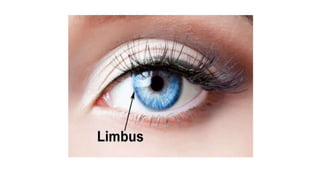
• The limbus forms the border between the transparent cornea and
opaque sclera, contains the pathways of aqueous humour outflow,
and is the site of surgical incisions for cataract and glaucoma
Anatomical Limbus: Circumcorneal transitional zone of the
conjunctivocorneal & corneoscleral junction
Conjunctivo-corneal junction:
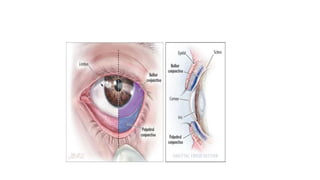
• Bulbar conjunctiva is firmly adherent to underlying structures
• Substantia propria of the conjunctiva stops here but its epithelium
continues with that of the cornea.
Sclero-corneal junction:
• Transparent corneal lamellae become continuous
• With the oblique, circular and opaque fibres of sclera
CONTINUE….
• In the area near limbus, the conjunctiva, tenon’s capsule & the
episcleral tissue are fused into a dense tissue which is strongly
adherent to corneo scleral junction.It is preferred site for obtaining a
firm hold of the eyeball during ocular surgery.
• The limbus is a common site for the occurrence of corneal epithelial
neoplasm.
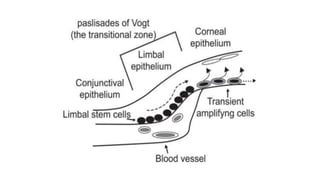
• The Limbus contains radially oriented fibrovascular ridge known as
the palisades of Vogt that may harbour a stem cell population. The
palisades of Vogt are more common in the superior and inferior
quadrants around the eye
CONTINUE…
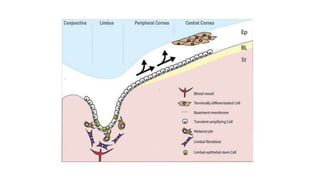
• Limbal epithelial stem cells reside in the basal layer of the epithelium,
which undulates at the limbus.
• Daughter transient amplifying cells (TACs) divide and migrate towards
the central cornea to replenish the epithelium, which rests on
Bowmans layer .
• The stroma of the limbal epithelial stem cell niche is populated with
fibroblasts and melanocytes and also has a blood supply.
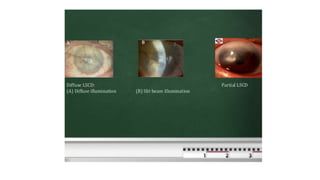
• LESC deficiency can occur as a result of primary or acquired insults.
Partial or full LESC deficiency leads to deleterious effects on corneal
wound healing and surface integrity .
• Deficiency can arise following injuries including chemical or thermal
burns and through diseases such as aniridia and Stevens Johnson
syndrome .
• As a result of LESC deficiency conjunctivalisation , neovascularization ,
chronic inflammation, recurrent erosions, ulceration and stromal
scarring can occur causing painful vision loss .
• Long term restoration of visual function requires renewal of the
corneal epithelium, through replacement of the stem cell population
has traditionally been achieved by grafting limbal auto- or allografts .
• Recently it has been demonstrated that other stem cell populations
including human embryonic stem cell and hair follicle stem cell can be
driven towards a corneal epithelial-like phenotype.
• These exciting data may lead to alternative therapeutic strategies in
the future for patients blinded by ocular surface disease cause by
failure of LESC function.
SCLERA
INTRODUCTION
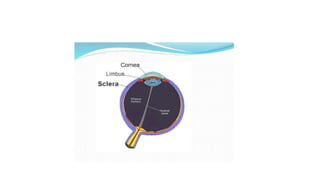
• The sclera forms the posterior opaque 5/6 part of the external fibrous
tunic of the eyeball.
• Its whole outer surface is covered by tenon’s capsule and also by the
bulbar conjunctiva in the anterior part.
• Its inner surface lies in contact with the choroid with a potential
suprachoroidal space in bertween.
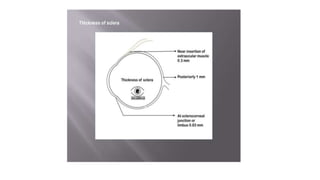
• Sclera is thickest posteriorly(1mm) and gradually becomes thin when
traced anteriorly.
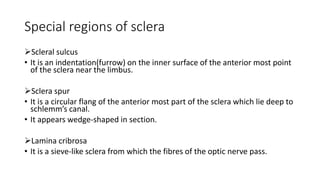
Special regions of sclera
Scleral sulcus
• It is an indentation(furrow) on the inner surface of the anterior most point
of the sclera near the limbus.
Sclera spur
• It is a circular flang of the anterior most part of the sclera which lie deep to
schlemm’s canal.
• It appears wedge-shaped in section.
Lamina cribrosa
• It is a sieve-like sclera from which the fibres of the optic nerve pass.
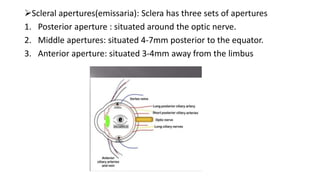
Scleral apertures(emissaria): Sclera has three sets of apertures
1. Posterior aperture : situated around the optic nerve.
2. Middle apertures: situated 4-7mm posterior to the equator.
3. Anterior aperture: situated 3-4mm away from the limbus
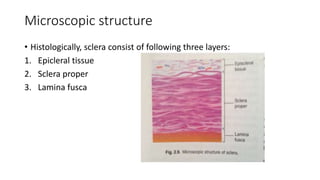
Microscopic structure
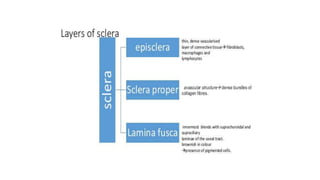
• Histologically, sclera consist of following three layers:
1. Epicleral tissue
2. Sclera proper
3. Lamina fusca
Episcleral tissue
• It is a thin, dense vascularised layer of the connective tissue which
covers the sclera proper.
• Anteriorly it becomes continuous with the tenon’s capsule
Sclera proper
• It is an avascular structure which consist of dense bundles of
collagens fibres crossing each other in all direction.
• Variability in collagen fiber diameter, interlacing in bundles of
collagen, and relative deficiency in water-binding substances accounts
for the scleral dull-white color.
• This arrangement makes the sclera opaque in contrast to cornea.
• Mucopolysaccharides are present in the interfibrillar space of the
collagen fibre.
• Few fibroblasts are also present in this layer.
Lamina fusca
• It is the innermost part of sclera which blends with suprachoroidal
and supraciliary lamina of the uveal tract.
• It is brownish in colour owing to the presence of pigment cells.
Blood supply
• The episclera receives its blood supply from the anterior ciliary arteries,
anterior to the insertions of the rectus muscles and the long and short
posterior ciliary arteries.
Nerve Supply
• The sclera is supplied by the branches from the long ciliary nerves
anteriorly and short ciliary nerves behind the equator. Rich in nerve supply
so causes pain- inflammation, stretching due to oedema and movement of
eye
Function
• Protects intraocular components from trauma, light, and mechanical
displacement
• Withstands the considerable expansive force generated by the
intraocular pressure maintaining the shape of the globe
• Provides attachment sites for the extraocular muscles.
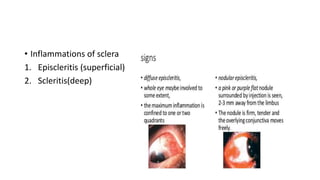
• Inflammations of sclera
1. Episcleritis (superficial)
2. Scleritis(deep)

Limbus

  • 3.
    LIMBUS… • The limbusforms the border between the transparent cornea and opaque sclera, contains the pathways of aqueous humour outflow, and is the site of surgical incisions for cataract and glaucoma
  • 5.
    Anatomical Limbus: Circumcornealtransitional zone of the conjunctivocorneal & corneoscleral junction Conjunctivo-corneal junction: • Bulbar conjunctiva is firmly adherent to underlying structures • Substantia propria of the conjunctiva stops here but its epithelium continues with that of the cornea. Sclero-corneal junction: • Transparent corneal lamellae become continuous • With the oblique, circular and opaque fibres of sclera
  • 12.
    CONTINUE…. • In thearea near limbus, the conjunctiva, tenon’s capsule & the episcleral tissue are fused into a dense tissue which is strongly adherent to corneo scleral junction.It is preferred site for obtaining a firm hold of the eyeball during ocular surgery. • The limbus is a common site for the occurrence of corneal epithelial neoplasm. • The Limbus contains radially oriented fibrovascular ridge known as the palisades of Vogt that may harbour a stem cell population. The palisades of Vogt are more common in the superior and inferior quadrants around the eye
  • 13.
    CONTINUE… • Limbal epithelialstem cells reside in the basal layer of the epithelium, which undulates at the limbus. • Daughter transient amplifying cells (TACs) divide and migrate towards the central cornea to replenish the epithelium, which rests on Bowmans layer . • The stroma of the limbal epithelial stem cell niche is populated with fibroblasts and melanocytes and also has a blood supply.
  • 17.
    • LESC deficiencycan occur as a result of primary or acquired insults. Partial or full LESC deficiency leads to deleterious effects on corneal wound healing and surface integrity . • Deficiency can arise following injuries including chemical or thermal burns and through diseases such as aniridia and Stevens Johnson syndrome . • As a result of LESC deficiency conjunctivalisation , neovascularization , chronic inflammation, recurrent erosions, ulceration and stromal scarring can occur causing painful vision loss .
  • 18.
    • Long termrestoration of visual function requires renewal of the corneal epithelium, through replacement of the stem cell population has traditionally been achieved by grafting limbal auto- or allografts . • Recently it has been demonstrated that other stem cell populations including human embryonic stem cell and hair follicle stem cell can be driven towards a corneal epithelial-like phenotype. • These exciting data may lead to alternative therapeutic strategies in the future for patients blinded by ocular surface disease cause by failure of LESC function.
  • 21.
  • 22.
    INTRODUCTION • The scleraforms the posterior opaque 5/6 part of the external fibrous tunic of the eyeball. • Its whole outer surface is covered by tenon’s capsule and also by the bulbar conjunctiva in the anterior part. • Its inner surface lies in contact with the choroid with a potential suprachoroidal space in bertween. • Sclera is thickest posteriorly(1mm) and gradually becomes thin when traced anteriorly.
  • 24.
    Special regions ofsclera Scleral sulcus • It is an indentation(furrow) on the inner surface of the anterior most point of the sclera near the limbus. Sclera spur • It is a circular flang of the anterior most part of the sclera which lie deep to schlemm’s canal. • It appears wedge-shaped in section. Lamina cribrosa • It is a sieve-like sclera from which the fibres of the optic nerve pass.
  • 25.
    Scleral apertures(emissaria): Sclerahas three sets of apertures 1. Posterior aperture : situated around the optic nerve. 2. Middle apertures: situated 4-7mm posterior to the equator. 3. Anterior aperture: situated 3-4mm away from the limbus
  • 27.
    Microscopic structure • Histologically,sclera consist of following three layers: 1. Epicleral tissue 2. Sclera proper 3. Lamina fusca
  • 28.
    Episcleral tissue • Itis a thin, dense vascularised layer of the connective tissue which covers the sclera proper. • Anteriorly it becomes continuous with the tenon’s capsule
  • 30.
    Sclera proper • Itis an avascular structure which consist of dense bundles of collagens fibres crossing each other in all direction. • Variability in collagen fiber diameter, interlacing in bundles of collagen, and relative deficiency in water-binding substances accounts for the scleral dull-white color. • This arrangement makes the sclera opaque in contrast to cornea. • Mucopolysaccharides are present in the interfibrillar space of the collagen fibre. • Few fibroblasts are also present in this layer.
  • 31.
    Lamina fusca • Itis the innermost part of sclera which blends with suprachoroidal and supraciliary lamina of the uveal tract. • It is brownish in colour owing to the presence of pigment cells.
  • 32.
    Blood supply • Theepisclera receives its blood supply from the anterior ciliary arteries, anterior to the insertions of the rectus muscles and the long and short posterior ciliary arteries. Nerve Supply • The sclera is supplied by the branches from the long ciliary nerves anteriorly and short ciliary nerves behind the equator. Rich in nerve supply so causes pain- inflammation, stretching due to oedema and movement of eye
  • 33.
    Function • Protects intraocularcomponents from trauma, light, and mechanical displacement • Withstands the considerable expansive force generated by the intraocular pressure maintaining the shape of the globe • Provides attachment sites for the extraocular muscles.
  • 34.
    • Inflammations ofsclera 1. Episcleritis (superficial) 2. Scleritis(deep)