Ancient Egypt “The Gift of the Nile”
Geography Herodotus called Egypt the “Gift of the Nile” Each year the Nile overflowed its banks, leaving behind a thick layer of nutrient rich soil the Egyptians called “black gold” The Nile is approximately 4,000 miles long and empties into the Mediterranean Sea Without the Nile, civilization in Egypt would not have been possible
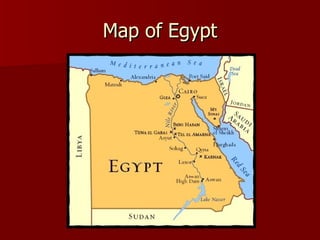
Map of Egypt
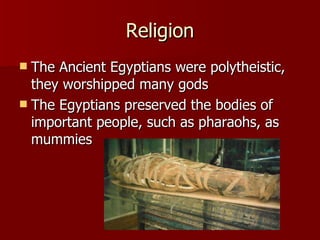
Religion The Ancient Egyptians were polytheistic, they worshipped many gods The Egyptians preserved the bodies of important people, such as pharaohs, as mummies
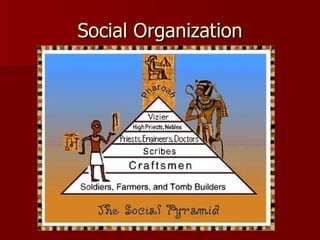
Social Organization
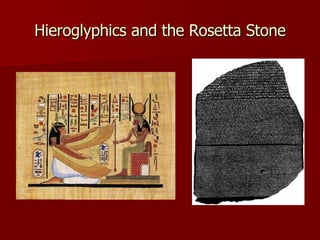
System of Writing Hieroglyphics, a form of writing that used pictures and abstract symbols and was developed around 3,000 B.C. The Rosetta Stone, discovered in 1799 revealed many secrets that were previously unknown about   Egyptian life and culture. It took   nearly 16 years to translate.
Hieroglyphics and the Rosetta Stone
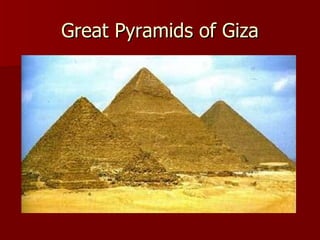
Egyptian Achievements Pyramids were built as tombs for the Pharaoh. The size of the pyramid was symbolic of the pharaohs wealth and power The largest pyramid at Giza, covered 13 acres and was built from 2.3 million stones each weighing 2-5 tons The Egyptians made many advances in math and engineering
Great Pyramids of Giza
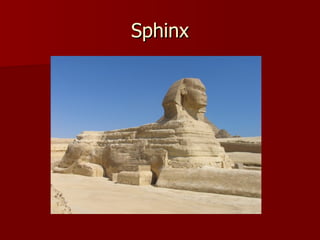
Sphinx
Giza Virtual Tour http:// www.egyptvoyager.com/pyramids_giza_virtual.htm

Ancient Egypt

  • 1.
    Ancient Egypt “TheGift of the Nile”
  • 2.
    Geography Herodotus calledEgypt the “Gift of the Nile” Each year the Nile overflowed its banks, leaving behind a thick layer of nutrient rich soil the Egyptians called “black gold” The Nile is approximately 4,000 miles long and empties into the Mediterranean Sea Without the Nile, civilization in Egypt would not have been possible
  • 3.
  • 4.
    Religion The AncientEgyptians were polytheistic, they worshipped many gods The Egyptians preserved the bodies of important people, such as pharaohs, as mummies
  • 5.
  • 6.
    System of WritingHieroglyphics, a form of writing that used pictures and abstract symbols and was developed around 3,000 B.C. The Rosetta Stone, discovered in 1799 revealed many secrets that were previously unknown about Egyptian life and culture. It took nearly 16 years to translate.
  • 7.
    Hieroglyphics and theRosetta Stone
  • 8.
    Egyptian Achievements Pyramidswere built as tombs for the Pharaoh. The size of the pyramid was symbolic of the pharaohs wealth and power The largest pyramid at Giza, covered 13 acres and was built from 2.3 million stones each weighing 2-5 tons The Egyptians made many advances in math and engineering
  • 9.
  • 10.
  • 11.
    Giza Virtual Tourhttp:// www.egyptvoyager.com/pyramids_giza_virtual.htm