INDICATIONS FOR ICU
ADMISSION
Surg SLT LO Majolagbe
DEPT OF ANAESTHESIA /
INTENSIVE CARE
NNRH OJO
1
OUTLINE
1. Introduction
2. Types of ICU
3. Functions of the ICU
4. Admission Criteria
5. Discharge Criteria
2
INTRODUCTION
1. Intensive Care Units (ICU) are specialist wards with a
concentration of expertise and resources for the
management of critically ill patients.
2. These resources include provision of organ support,
expertise and knowledge in management of critical
illness and close monitoring of physiological
variables.
3
INTRODUCTION
1. In intensive care there is a high level clinical input
and high staff-to-patient ratio.
2. As a result, intensive care is an expensive and high-
demand resource.
4
INTRODUCTION
Intensive care units (ICU), also called critical care
units, are sections within a hospital that look after
patients who have reversible life-
threatening conditions who need constant, close
monitoring and support from equipment and
medication, as well as skilled nursing care.
5
INTRODUCTION
The ICU is a designated ward in a hospital which is
specially staffed and equipped to provide observation,
care and treatment to patients with actual or potential
life threatening illnesses, injuries or complications, from
which recovery is possible.
6
INTRODUCTION
Misconceptions About ICU
1. For managing VIPs
2. For managing moribund Patients
3. For managing all patients with emergency conditions like
emergency unit
4. For managing ALL unconscious patients
5. It is not an Amenity ward, Palliative care nor for Geriatric care.
7
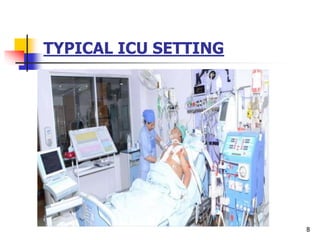
TYPICAL ICU SETTING
8
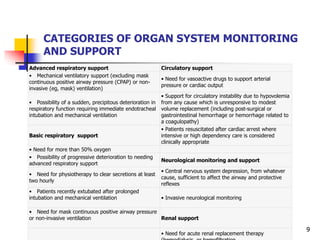
CATEGORIES OF ORGAN SYSTEM MONITORING
AND SUPPORT
Advanced respiratory support Circulatory support
• Mechanical ventilatory support (excluding mask
continuous positive airway pressure (CPAP) or non-
invasive (eg, mask) ventilation)
• Need for vasoactive drugs to support arterial
pressure or cardiac output
• Possibility of a sudden, precipitous deterioration in
respiratory function requiring immediate endotracheal
intubation and mechanical ventilation
• Support for circulatory instability due to hypovolemia
from any cause which is unresponsive to modest
volume replacement (including post-surgical or
gastrointestinal hemorrhage or hemorrhage related to
a coagulopathy)
Basic respiratory support
• Patients resuscitated after cardiac arrest where
intensive or high dependency care is considered
clinically appropriate
• Need for more than 50% oxygen
• Possibility of progressive deterioration to needing
advanced respiratory support
Neurological monitoring and support
• Need for physiotherapy to clear secretions at least
two hourly
• Central nervous system depression, from whatever
cause, sufficient to affect the airway and protective
reflexes
• Patients recently extubated after prolonged
intubation and mechanical ventilation • Invasive neurological monitoring
• Need for mask continuous positive airway pressure
or non-invasive ventilation Renal support
• Need for acute renal replacement therapy
9
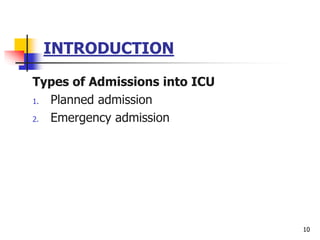
INTRODUCTION
Types of Admissions into ICU
1. Planned admission
2. Emergency admission
10
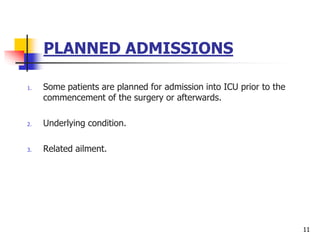
PLANNED ADMISSIONS
1. Some patients are planned for admission into ICU prior to the
commencement of the surgery or afterwards.
2. Underlying condition.
3. Related ailment.
11
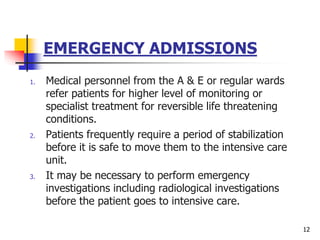
EMERGENCY ADMISSIONS
1. Medical personnel from the A & E or regular wards
refer patients for higher level of monitoring or
specialist treatment for reversible life threatening
conditions.
2. Patients frequently require a period of stabilization
before it is safe to move them to the intensive care
unit.
3. It may be necessary to perform emergency
investigations including radiological investigations
before the patient goes to intensive care.
12
EMERGENCY ADMISSIONS
1. Patients at high risk of morbidity and mortality following
planned surgery may require admission to intensive care for
respiratory and cardiovascular support or increased monitoring
in order to prevent or identify (and hopefully intervene early)
postoperative complications.
2. Undergoing surgical procedures can produce immense
physiological strain for a variety of reasons including tissue
damage, bleeding, fluid shifts, metabolic disturbance,
inflammatory response, altered ventilatory mechanics and
postoperative pain.
13
TYPES OF ICU
ICUs can be categorized based on operation or patient group.
Types Of ICU Based On Operation Are.
1. Open units -Primary physician is responsible for admission,
treatment and discharge of the patient
2. Closed units– Responsibility for admission, treatment and
discharge of the patient is transferred to a specialized ICU team.
14
TYPES OF ICU
Types Of ICU Based On Patient Group.
1. General ICU: attend to surgical, medical,
obstetric/gynecological, hematological and burns patients.
2. Specialized types of ICUs: attend to specific group of
patients. These include: Neonatal intensive care unit (NICU),
Special Care Baby unit (SCBU), Pediatric Intensive Care Unit
(PICU), Coronary Care Unit CCU), Cardiac Surgery Intensive
Care Unit (CSICU), Cardio-Vascular Intensive Care Unit (CVICU),
Mobile Intensive Care Unit (MICU), Medical Surgical Intensive
Care Unit (MSICU), Surgical Intensive Care Unit (SICU), Neuro
Intensive Care Unit (NICU), Burn Wounds Intensive Care Unit
(BWICU), Trauma Intensive care Unit (TICU), Respiratory
Intensive Care Unit (RICU).
15
FUNCTIONS OF THE ICU
1. Monitoring in ICU can be achieved by non-
invasive or invasive method, continuously or intermittently
depending on the requirement of the patient.
2. These settings are not seen in any other place in the hospital.
16
FUNCTIONS OF THE ICU
Non-invasive monitoring does not require any device to be
inserted into the body and therefore does not breach the skin.
This is achieved by:
1. Electrocardiography (ECG), heart rate, rhythm
2. Non-invasive blood pressure (NiBP) using a
sphygmomanometer cuff attached to the ICU monitor or
manual BP apparatus
3. Body temperature
4. RR and ETCO2
5. Pulse oximetry (O2 saturation reading and heart rate)
6. Urine output
7. Level of consciousness (LOC) using the Glasgow coma scale
(GCS)
17
FUNCTIONS OF THE ICU
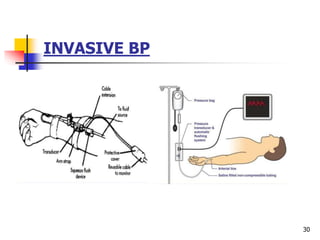
Invasive monitoring is achieved by the insertion of an arterial,
central or pulmonary artery catheter. Arterial and central lines are
used most commonly in ICU patients.
This monitoring provides:
1. Continuous and more accurate measurement of vital signs
2. Allows for adjustment of treatments in more appropriate
manner
3. Provides continuous access for regular blood samples
18
FUNCTIONS OF THE ICU
Invasive monitoring in an ICU includes:
1. arterial blood pressure,
2. central venous pressure (CVP) measurement,
3. pulmonary artery catheterization,
4. arterial blood gas (ABG) analysis
5. measurement of intracranial pressure (ICP) and
6. intra-abdominal pressure (IAP).
19
FUNCTIONS OF THE ICU
Bedside Investigations In ICU
1. Also called bedside testing or point-of-care
testing, increase the likelihood that ICU care team will receive
the results quicker, which allows for better immediate clinical
management decisions to be made.
2. Bedside testing is often accomplished through the use of
transportable, portable, and handheld instruments.
3. RBS check, PCV, blood gases and electrolytes analysis, rapid
coagulation testing (PT / INR) , rapid cardiac markers
diagnostics, drugs of abuse screening, urinalysis.
20
FUNCTIONS OF THE ICU
Hemodynamic Support.
1. ICU patients may require intravenous fluids as well as
administration of inotropes and vasoactive medications.
2. Vasoactive drugs are the mainstay of hemodynamic
management of vasodilatory shock when fluids fail to restore
tissue perfusion. Vasopressor agents increase mean arterial
pressure (MAP), which increases organ perfusion pressure and
preserves distribution of cardiac output to the organs.
21
FUNCTIONS OF THE ICU
Sedation And Analgesia
Sedation is required in some ICU procedures like
Mechanical ventilation. Pain control is an essential
component of care for critically ill patients. Acute pain
(especially abdominal or thoracic pain) interferes
with breathing patterns and can interfere with delivery
of adequate tidal volume.
22
FUNCTIONS OF THE ICU
Treatment Of Underlying Illness
As the failing organs are supported and the patient closely
monitored, underlying illness is also concurrently treated.
Enteral / Parenteral Nutrition
Nutrition of the critically ill patient is of paramount
importance in the ICU. Feeding unconscious patients in
ICU can be via nasogastric tubes; Intravenous fluids and
Total parenteral nutrition (TPN).
23
FUNCTIONS OF THE ICU
Mechanical Ventilation
Mechanical ventilation is a supportive therapy used to assist
patients who are unable to maintain adequate oxygenation or
carbon dioxide elimination. These patients usually exhibit signs
of acute respiratory failure and are not candidates for less invasive
methods of respiratory support.
24
FUNCTIONS OF THE ICU
Anti-embolism (TED) Stockings
1. Anti-embolism stockings are long, tight fitting “socks” that keep
mild graduated pressure on the legs.
2. This help the blood to constantly move in the leg providing
good circulation; therefore, preventing blood from sitting idle
which can lead to blood clots in the deep veins of the leg.
3. These are used along with medications, to reduce the risk of
Deep Vein Thrombosis ICU patients.
25
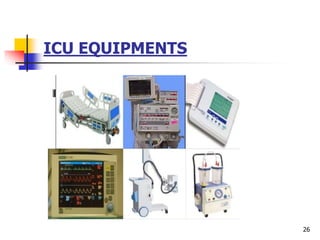
ICU EQUIPMENTS
26
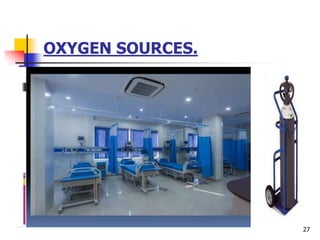
OXYGEN SOURCES.
27
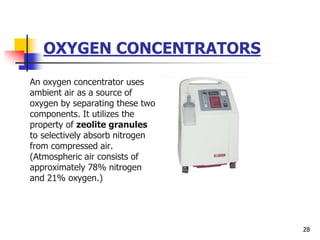
OXYGEN CONCENTRATORS
An oxygen concentrator uses
ambient air as a source of
oxygen by separating these two
components. It utilizes the
property of zeolite granules
to selectively absorb nitrogen
from compressed air.
(Atmospheric air consists of
approximately 78% nitrogen
and 21% oxygen.)
28
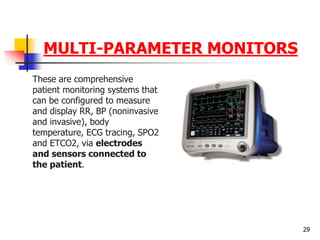
MULTI-PARAMETER MONITORS
These are comprehensive
patient monitoring systems that
can be configured to measure
and display RR, BP (noninvasive
and invasive), body
temperature, ECG tracing, SPO2
and ETCO2, via electrodes
and sensors connected to
the patient.
29
INVASIVE BP
30
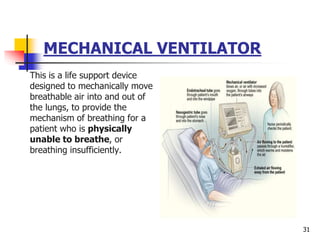
MECHANICAL VENTILATOR
This is a life support device
designed to mechanically move
breathable air into and out of
the lungs, to provide the
mechanism of breathing for a
patient who is physically
unable to breathe, or
breathing insufficiently.
31
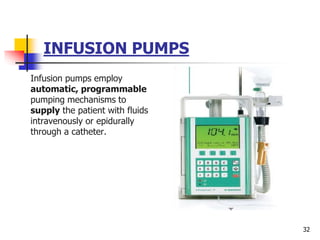
INFUSION PUMPS
Infusion pumps employ
automatic, programmable
pumping mechanisms to
supply the patient with fluids
intravenously or epidurally
through a catheter.
32
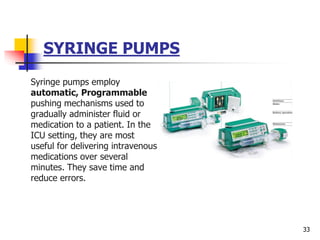
SYRINGE PUMPS
Syringe pumps employ
automatic, Programmable
pushing mechanisms used to
gradually administer fluid or
medication to a patient. In the
ICU setting, they are most
useful for delivering intravenous
medications over several
minutes. They save time and
reduce errors.
33
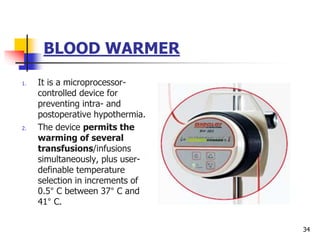
BLOOD WARMER
1. It is a microprocessor-
controlled device for
preventing intra- and
postoperative hypothermia.
2. The device permits the
warming of several
transfusions/infusions
simultaneously, plus user-
definable temperature
selection in increments of
0.5° C between 37° C and
41° C.
34
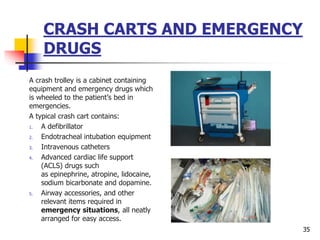
CRASH CARTS AND EMERGENCY
DRUGS
A crash trolley is a cabinet containing
equipment and emergency drugs which
is wheeled to the patient’s bed in
emergencies.
A typical crash cart contains:
1. A defibrillator
2. Endotracheal intubation equipment
3. Intravenous catheters
4. Advanced cardiac life support
(ACLS) drugs such
as epinephrine, atropine, lidocaine,
sodium bicarbonate and dopamine.
5. Airway accessories, and other
relevant items required in
emergency situations, all neatly
arranged for easy access.
35
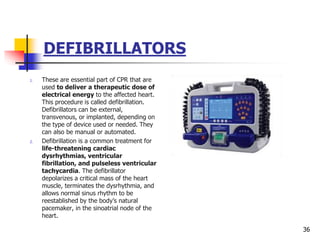
DEFIBRILLATORS
1. These are essential part of CPR that are
used to deliver a therapeutic dose of
electrical energy to the affected heart.
This procedure is called defibrillation.
Defibrillators can be external,
transvenous, or implanted, depending on
the type of device used or needed. They
can also be manual or automated.
2. Defibrillation is a common treatment for
life-threatening cardiac
dysrhythmias, ventricular
fibrillation, and pulseless ventricular
tachycardia. The defibrillator
depolarizes a critical mass of the heart
muscle, terminates the dysrhythmia, and
allows normal sinus rhythm to be
reestablished by the body’s natural
pacemaker, in the sinoatrial node of the
heart.
36
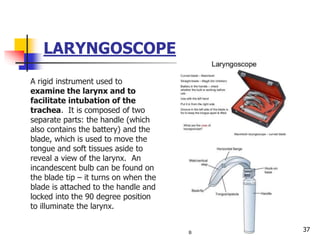
LARYNGOSCOPE
A rigid instrument used to
examine the larynx and to
facilitate intubation of the
trachea. It is composed of two
separate parts: the handle (which
also contains the battery) and the
blade, which is used to move the
tongue and soft tissues aside to
reveal a view of the larynx. An
incandescent bulb can be found on
the blade tip – it turns on when the
blade is attached to the handle and
locked into the 90 degree position
to illuminate the larynx.
37
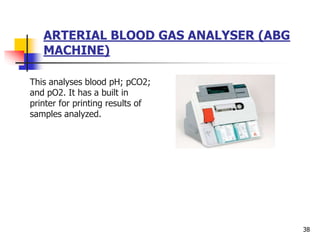
ARTERIAL BLOOD GAS ANALYSER (ABG
MACHINE)
This analyses blood pH; pCO2;
and pO2. It has a built in
printer for printing results of
samples analyzed.
38
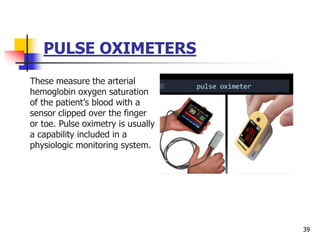
PULSE OXIMETERS
These measure the arterial
hemoglobin oxygen saturation
of the patient’s blood with a
sensor clipped over the finger
or toe. Pulse oximetry is usually
a capability included in a
physiologic monitoring system.
39
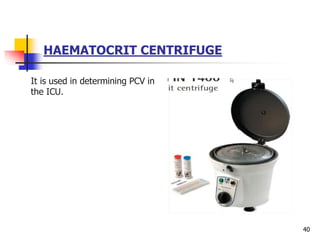
HAEMATOCRIT CENTRIFUGE
It is used in determining PCV in
the ICU.
40
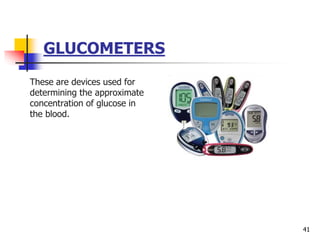
GLUCOMETERS
These are devices used for
determining the approximate
concentration of glucose in
the blood.
41
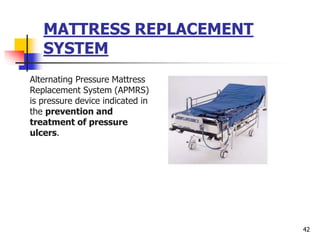
MATTRESS REPLACEMENT
SYSTEM
Alternating Pressure Mattress
Replacement System (APMRS)
is pressure device indicated in
the prevention and
treatment of pressure
ulcers.
42
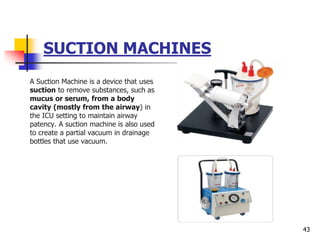
SUCTION MACHINES
A Suction Machine is a device that uses
suction to remove substances, such as
mucus or serum, from a body
cavity (mostly from the airway) in
the ICU setting to maintain airway
patency. A suction machine is also used
to create a partial vacuum in drainage
bottles that use vacuum.
43
WHO SHOULD BE ADMITTED TO ICU?
1. The Intensive Care Unit is an expensive resource area and
should be reserved for patients with reversible medical
conditions with a reasonable prospect of substantial recovery.
2. Because ICU beds are expensive to run and are limited in
number the ICU admission decision may be based models:
3. Prioritization model
Diagnosis, and
Objective parameters models
4. These are used to avoid blocking the chance of those patients
with a reasonable prospect of substantial recovery.
44
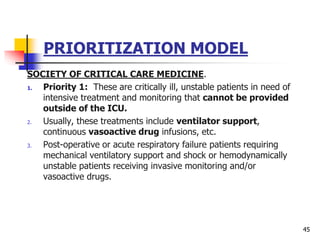
PRIORITIZATION MODEL
SOCIETY OF CRITICAL CARE MEDICINE.
1. Priority 1: These are critically ill, unstable patients in need of
intensive treatment and monitoring that cannot be provided
outside of the ICU.
2. Usually, these treatments include ventilator support,
continuous vasoactive drug infusions, etc.
3. Post-operative or acute respiratory failure patients requiring
mechanical ventilatory support and shock or hemodynamically
unstable patients receiving invasive monitoring and/or
vasoactive drugs.
45
PRIORITIZATION MODEL
Priority 2: These patients require intensive monitoring and
may potentially need immediate intervention. No
therapeutic limits are generally stipulated for these
patients. Examples include patients with chronic comorbid
conditions who develop acute severe medical or surgical
illness.
46
PRIORITIZATION MODEL
1. Priority 3: These unstable patients are critically ill but have
a reduced likelihood of recovery because of underlying
disease or nature of their acute illness.
2. Priority 3 patients may receive intensive treatment to relieve
acute illness but limits on therapeutic efforts may be set such
as no intubation or cardiopulmonary resuscitation.
3. Examples include patients with metastatic malignancy
complicated by infection.
47
PRIORITIZATION MODEL
Priority 4: These are patients who are generally not
appropriate for ICU admission. Admission of these patients
should be on an individual basis, under unusual circumstances and
at the discretion of the ICU Director. These patients can be placed
in two categories.
48
PRIORITIZATION MODEL
A. Little or no anticipated benefit from ICU care based on low risk
of active intervention that could not safely be administered in a
non-ICU setting (too well to benefit from ICU care). Examples
include patients with peripheral vascular surgery,
hemodynamically stable diabetic ketoacidosis, mild
congestive heart failure, conscious drug overdose, etc.
49
PRIORITIZATION MODEL
B. Patients with terminal and irreversible illness facing
imminent death (too sick to benefit from ICU
care).
For example: severe irreversible brain damage,
irreversible multi-organ system failure,
metastatic cancer unresponsive to chemotherapy
and/or radiation therapy, brain dead non-organ
donors, patients in a persistent vegetative state.
50
DIAGNOSIS MODEL
 Patient who need ICU care due to some
specific diagnosis.
51
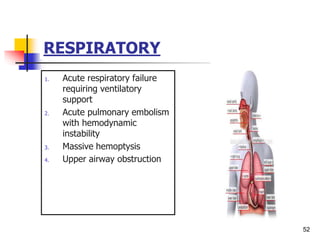
RESPIRATORY
1. Acute respiratory failure
requiring ventilatory
support
2. Acute pulmonary embolism
with hemodynamic
instability
3. Massive hemoptysis
4. Upper airway obstruction
52
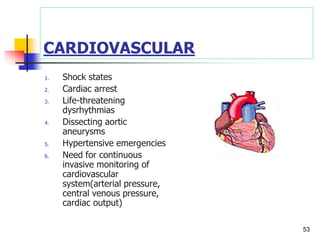
CARDIOVASCULAR
1. Shock states
2. Cardiac arrest
3. Life-threatening
dysrhythmias
4. Dissecting aortic
aneurysms
5. Hypertensive emergencies
6. Need for continuous
invasive monitoring of
cardiovascular
system(arterial pressure,
central venous pressure,
cardiac output)
53
NEUROLOGICAL
1. Severe head trauma
2. CVA with respiratory compromise
3. Status epilepticus
4. Meningitis with altered mental status or respiratory
compromise
5. Acutely altered sensorium with the potential for airway
compromise
6. Progressive neuromuscular dysfunction requiring respiratory
support and / or cardiovascular monitoring (myasthenia gravis,
Gullain-Barre syndrome)
54
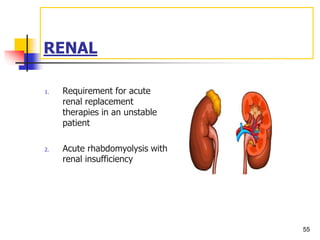
RENAL
1. Requirement for acute
renal replacement
therapies in an unstable
patient
2. Acute rhabdomyolysis with
renal insufficiency
55
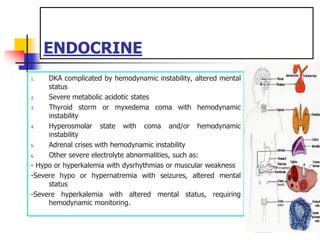
ENDOCRINE
1. DKA complicated by hemodynamic instability, altered mental
status
2. Severe metabolic acidotic states
3. Thyroid storm or myxedema coma with hemodynamic
instability
4. Hyperosmolar state with coma and/or hemodynamic
instability
5. Adrenal crises with hemodynamic instability
6. Other severe electrolyte abnormalities, such as:
- Hypo or hyperkalemia with dysrhythmias or muscular weakness
-Severe hypo or hypernatremia with seizures, altered mental
status
-Severe hyperkalemia with altered mental status, requiring
hemodynamic monitoring.
56
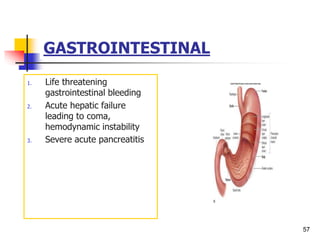
GASTROINTESTINAL
1. Life threatening
gastrointestinal bleeding
2. Acute hepatic failure
leading to coma,
hemodynamic instability
3. Severe acute pancreatitis
57
HEMATOLOGY
1. Severe coagulopathy
and/or bleeding diathesis
2. Severe anemia resulting in
hemodynamic and/or
respiratory compromise
3. Severe complications of
sickle cell crisis
4. Hematological
malignancies with multi-
organ failure
58
OBSTETRIC
1. Medical conditions complicating pregnancy
2. Severe pregnancy induced hypertension/eclampsia
3. Obstetric hemorrhage
4. Amniotic fluid embolism
59
MULTI-SYSTEM
1. Severe sepsis or septic shock
2. Multi-organ dysfunction syndrome
3. Polytrauma
4. Hemorrhagic fevers
5. Drug overdose with potential acute decompensation of major
organ systems
6. Environmental injuries (lightning, near drowning, severe
hypo/hyperthermia)
7. Severe burns
60
SURGICAL
High risk patients in the peri-operative period
Post-operative patients requiring continuous hemodynamic
monitoring/ ventilatory support, usually following:
1. Vascular surgery
2. Thoracic surgery
3. Airway surgery
4. Craniofacial surgery
5. Major orthopedic and spine surgery
6. General surgery with major blood loss
7. Neurosurgical procedures
61
OBJECTIVES PARAMETERS
MODEL
Physical Findings (Acute Onset)
1. Unequal pupils with LOC
2. GCS < 8
3. Burns > 10%BSA
4. Anuria
5. Airway obstruction
6. Continuous seizures
7. Cyanosis
8. Cardiac tamponade
62
OBJECTIVES PARAMETERS
MODEL
Laboratory Values
1. Sodium < 110 or > 170mmol/L
2. Potassium <2.0 or > 7.0mmol/L
3. PaO2 < 50mmhg
4. pH < 7.1 or > 7.7
5. Glucose > 800 mg/dL
6. Calcium > 15 mg/dL
7. toxic drug level with respiratory compromise
63
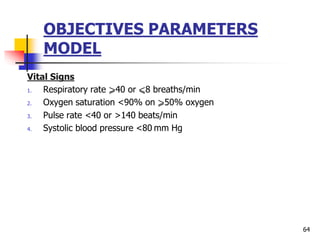
OBJECTIVES PARAMETERS
MODEL
Vital Signs
1. Respiratory rate ⩾40 or ⩽8 breaths/min
2. Oxygen saturation <90% on ⩾50% oxygen
3. Pulse rate <40 or >140 beats/min
4. Systolic blood pressure <80 mm Hg
64
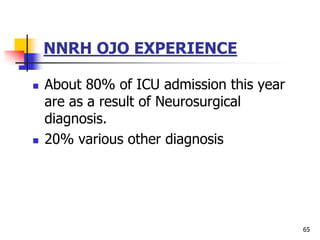
NNRH OJO EXPERIENCE
 About 80% of ICU admission this year
are as a result of Neurosurgical
diagnosis.
 20% various other diagnosis
65
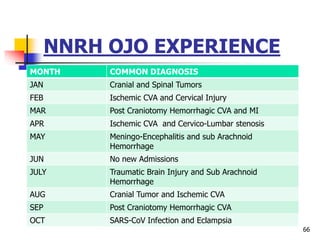
NNRH OJO EXPERIENCE
MONTH COMMON DIAGNOSIS
JAN Cranial and Spinal Tumors
FEB Ischemic CVA and Cervical Injury
MAR Post Craniotomy Hemorrhagic CVA and MI
APR Ischemic CVA and Cervico-Lumbar stenosis
MAY Meningo-Encephalitis and sub Arachnoid
Hemorrhage
JUN No new Admissions
JULY Traumatic Brain Injury and Sub Arachnoid
Hemorrhage
AUG Cranial Tumor and Ischemic CVA
SEP Post Craniotomy Hemorrhagic CVA
OCT SARS-CoV Infection and Eclampsia
66
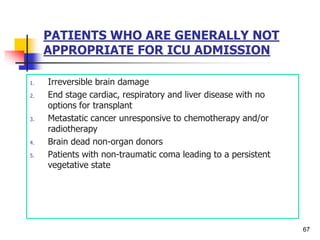
PATIENTS WHO ARE GENERALLY NOT
APPROPRIATE FOR ICU ADMISSION
1. Irreversible brain damage
2. End stage cardiac, respiratory and liver disease with no
options for transplant
3. Metastatic cancer unresponsive to chemotherapy and/or
radiotherapy
4. Brain dead non-organ donors
5. Patients with non-traumatic coma leading to a persistent
vegetative state
67
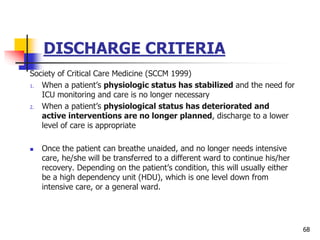
DISCHARGE CRITERIA
Society of Critical Care Medicine (SCCM 1999)
1. When a patient’s physiologic status has stabilized and the need for
ICU monitoring and care is no longer necessary
2. When a patient’s physiological status has deteriorated and
active interventions are no longer planned, discharge to a lower
level of care is appropriate
 Once the patient can breathe unaided, and no longer needs intensive
care, he/she will be transferred to a different ward to continue his/her
recovery. Depending on the patient’s condition, this will usually either
be a high dependency unit (HDU), which is one level down from
intensive care, or a general ward.
68
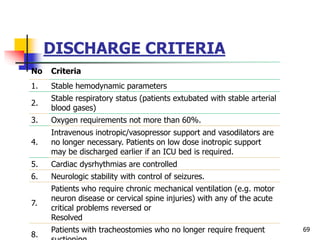
DISCHARGE CRITERIA
No Criteria
1. Stable hemodynamic parameters
2.
Stable respiratory status (patients extubated with stable arterial
blood gases)
3. Oxygen requirements not more than 60%.
4.
Intravenous inotropic/vasopressor support and vasodilators are
no longer necessary. Patients on low dose inotropic support
may be discharged earlier if an ICU bed is required.
5. Cardiac dysrhythmias are controlled
6. Neurologic stability with control of seizures.
7.
Patients who require chronic mechanical ventilation (e.g. motor
neuron disease or cervical spine injuries) with any of the acute
critical problems reversed or
Resolved
8.
Patients with tracheostomies who no longer require frequent 69
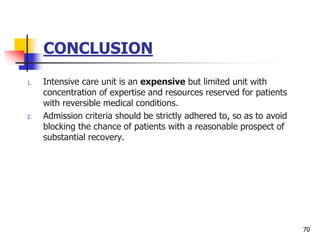
CONCLUSION
1. Intensive care unit is an expensive but limited unit with
concentration of expertise and resources reserved for patients
with reversible medical conditions.
2. Admission criteria should be strictly adhered to, so as to avoid
blocking the chance of patients with a reasonable prospect of
substantial recovery.
70
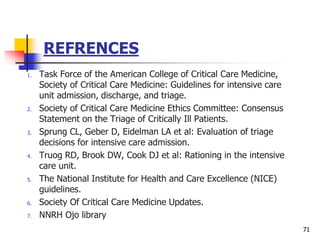
REFRENCES
1. Task Force of the American College of Critical Care Medicine,
Society of Critical Care Medicine: Guidelines for intensive care
unit admission, discharge, and triage.
2. Society of Critical Care Medicine Ethics Committee: Consensus
Statement on the Triage of Critically Ill Patients.
3. Sprung CL, Geber D, Eidelman LA et al: Evaluation of triage
decisions for intensive care admission.
4. Truog RD, Brook DW, Cook DJ et al: Rationing in the intensive
care unit.
5. The National Institute for Health and Care Excellence (NICE)
guidelines.
6. Society Of Critical Care Medicine Updates.
7. NNRH Ojo library
71
SOURCE OF IMAGES
1. Google Images
2. https://www.ncbi.nlm.nih.gov/pmc/articles/PMC1115908/
3. https://www.researchgate.net/figure/Indications-for-ICU
4. https://jiddamohd.wordpress.com/2015/12/17/introduction-to-
icu
5. NNRH Ojo Photo library
72
THANK YOU FOR YOUR
RAPT ATTENTION
73
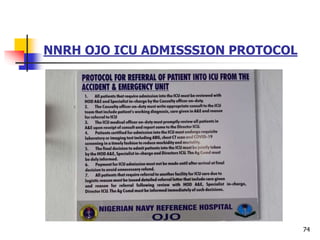
NNRH OJO ICU ADMISSSION PROTOCOL
74
CRITICAL CARE OUTREACH
SERVICES
The National Institute for Health and Care Excellence (NICE)
identified the need to establish outreach services.
Outreach teams are established to:
1. Avert admissions to ICU
2. Support staff in the ward arears
3. Provide education programs for ward based staff
4. Support critical care patients following transfer from ICU in
order to avert readmissions
5. Provide follow-up services on discharge from hospital, to
determine impact of critical care on the patient
75
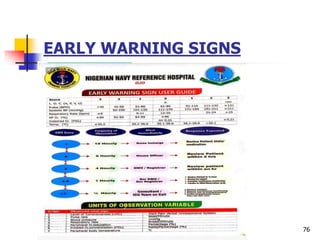
EARLY WARNING SIGNS
76

INDICATION FOR ICU ADMISSION.pptx

  • 1.
    INDICATIONS FOR ICU ADMISSION SurgSLT LO Majolagbe DEPT OF ANAESTHESIA / INTENSIVE CARE NNRH OJO 1
  • 2.
    OUTLINE 1. Introduction 2. Typesof ICU 3. Functions of the ICU 4. Admission Criteria 5. Discharge Criteria 2
  • 3.
    INTRODUCTION 1. Intensive CareUnits (ICU) are specialist wards with a concentration of expertise and resources for the management of critically ill patients. 2. These resources include provision of organ support, expertise and knowledge in management of critical illness and close monitoring of physiological variables. 3
  • 4.
    INTRODUCTION 1. In intensivecare there is a high level clinical input and high staff-to-patient ratio. 2. As a result, intensive care is an expensive and high- demand resource. 4
  • 5.
    INTRODUCTION Intensive care units(ICU), also called critical care units, are sections within a hospital that look after patients who have reversible life- threatening conditions who need constant, close monitoring and support from equipment and medication, as well as skilled nursing care. 5
  • 6.
    INTRODUCTION The ICU isa designated ward in a hospital which is specially staffed and equipped to provide observation, care and treatment to patients with actual or potential life threatening illnesses, injuries or complications, from which recovery is possible. 6
  • 7.
    INTRODUCTION Misconceptions About ICU 1.For managing VIPs 2. For managing moribund Patients 3. For managing all patients with emergency conditions like emergency unit 4. For managing ALL unconscious patients 5. It is not an Amenity ward, Palliative care nor for Geriatric care. 7
  • 8.
  • 9.
    CATEGORIES OF ORGANSYSTEM MONITORING AND SUPPORT Advanced respiratory support Circulatory support • Mechanical ventilatory support (excluding mask continuous positive airway pressure (CPAP) or non- invasive (eg, mask) ventilation) • Need for vasoactive drugs to support arterial pressure or cardiac output • Possibility of a sudden, precipitous deterioration in respiratory function requiring immediate endotracheal intubation and mechanical ventilation • Support for circulatory instability due to hypovolemia from any cause which is unresponsive to modest volume replacement (including post-surgical or gastrointestinal hemorrhage or hemorrhage related to a coagulopathy) Basic respiratory support • Patients resuscitated after cardiac arrest where intensive or high dependency care is considered clinically appropriate • Need for more than 50% oxygen • Possibility of progressive deterioration to needing advanced respiratory support Neurological monitoring and support • Need for physiotherapy to clear secretions at least two hourly • Central nervous system depression, from whatever cause, sufficient to affect the airway and protective reflexes • Patients recently extubated after prolonged intubation and mechanical ventilation • Invasive neurological monitoring • Need for mask continuous positive airway pressure or non-invasive ventilation Renal support • Need for acute renal replacement therapy 9
  • 10.
    INTRODUCTION Types of Admissionsinto ICU 1. Planned admission 2. Emergency admission 10
  • 11.
    PLANNED ADMISSIONS 1. Somepatients are planned for admission into ICU prior to the commencement of the surgery or afterwards. 2. Underlying condition. 3. Related ailment. 11
  • 12.
    EMERGENCY ADMISSIONS 1. Medicalpersonnel from the A & E or regular wards refer patients for higher level of monitoring or specialist treatment for reversible life threatening conditions. 2. Patients frequently require a period of stabilization before it is safe to move them to the intensive care unit. 3. It may be necessary to perform emergency investigations including radiological investigations before the patient goes to intensive care. 12
  • 13.
    EMERGENCY ADMISSIONS 1. Patientsat high risk of morbidity and mortality following planned surgery may require admission to intensive care for respiratory and cardiovascular support or increased monitoring in order to prevent or identify (and hopefully intervene early) postoperative complications. 2. Undergoing surgical procedures can produce immense physiological strain for a variety of reasons including tissue damage, bleeding, fluid shifts, metabolic disturbance, inflammatory response, altered ventilatory mechanics and postoperative pain. 13
  • 14.
    TYPES OF ICU ICUscan be categorized based on operation or patient group. Types Of ICU Based On Operation Are. 1. Open units -Primary physician is responsible for admission, treatment and discharge of the patient 2. Closed units– Responsibility for admission, treatment and discharge of the patient is transferred to a specialized ICU team. 14
  • 15.
    TYPES OF ICU TypesOf ICU Based On Patient Group. 1. General ICU: attend to surgical, medical, obstetric/gynecological, hematological and burns patients. 2. Specialized types of ICUs: attend to specific group of patients. These include: Neonatal intensive care unit (NICU), Special Care Baby unit (SCBU), Pediatric Intensive Care Unit (PICU), Coronary Care Unit CCU), Cardiac Surgery Intensive Care Unit (CSICU), Cardio-Vascular Intensive Care Unit (CVICU), Mobile Intensive Care Unit (MICU), Medical Surgical Intensive Care Unit (MSICU), Surgical Intensive Care Unit (SICU), Neuro Intensive Care Unit (NICU), Burn Wounds Intensive Care Unit (BWICU), Trauma Intensive care Unit (TICU), Respiratory Intensive Care Unit (RICU). 15
  • 16.
    FUNCTIONS OF THEICU 1. Monitoring in ICU can be achieved by non- invasive or invasive method, continuously or intermittently depending on the requirement of the patient. 2. These settings are not seen in any other place in the hospital. 16
  • 17.
    FUNCTIONS OF THEICU Non-invasive monitoring does not require any device to be inserted into the body and therefore does not breach the skin. This is achieved by: 1. Electrocardiography (ECG), heart rate, rhythm 2. Non-invasive blood pressure (NiBP) using a sphygmomanometer cuff attached to the ICU monitor or manual BP apparatus 3. Body temperature 4. RR and ETCO2 5. Pulse oximetry (O2 saturation reading and heart rate) 6. Urine output 7. Level of consciousness (LOC) using the Glasgow coma scale (GCS) 17
  • 18.
    FUNCTIONS OF THEICU Invasive monitoring is achieved by the insertion of an arterial, central or pulmonary artery catheter. Arterial and central lines are used most commonly in ICU patients. This monitoring provides: 1. Continuous and more accurate measurement of vital signs 2. Allows for adjustment of treatments in more appropriate manner 3. Provides continuous access for regular blood samples 18
  • 19.
    FUNCTIONS OF THEICU Invasive monitoring in an ICU includes: 1. arterial blood pressure, 2. central venous pressure (CVP) measurement, 3. pulmonary artery catheterization, 4. arterial blood gas (ABG) analysis 5. measurement of intracranial pressure (ICP) and 6. intra-abdominal pressure (IAP). 19
  • 20.
    FUNCTIONS OF THEICU Bedside Investigations In ICU 1. Also called bedside testing or point-of-care testing, increase the likelihood that ICU care team will receive the results quicker, which allows for better immediate clinical management decisions to be made. 2. Bedside testing is often accomplished through the use of transportable, portable, and handheld instruments. 3. RBS check, PCV, blood gases and electrolytes analysis, rapid coagulation testing (PT / INR) , rapid cardiac markers diagnostics, drugs of abuse screening, urinalysis. 20
  • 21.
    FUNCTIONS OF THEICU Hemodynamic Support. 1. ICU patients may require intravenous fluids as well as administration of inotropes and vasoactive medications. 2. Vasoactive drugs are the mainstay of hemodynamic management of vasodilatory shock when fluids fail to restore tissue perfusion. Vasopressor agents increase mean arterial pressure (MAP), which increases organ perfusion pressure and preserves distribution of cardiac output to the organs. 21
  • 22.
    FUNCTIONS OF THEICU Sedation And Analgesia Sedation is required in some ICU procedures like Mechanical ventilation. Pain control is an essential component of care for critically ill patients. Acute pain (especially abdominal or thoracic pain) interferes with breathing patterns and can interfere with delivery of adequate tidal volume. 22
  • 23.
    FUNCTIONS OF THEICU Treatment Of Underlying Illness As the failing organs are supported and the patient closely monitored, underlying illness is also concurrently treated. Enteral / Parenteral Nutrition Nutrition of the critically ill patient is of paramount importance in the ICU. Feeding unconscious patients in ICU can be via nasogastric tubes; Intravenous fluids and Total parenteral nutrition (TPN). 23
  • 24.
    FUNCTIONS OF THEICU Mechanical Ventilation Mechanical ventilation is a supportive therapy used to assist patients who are unable to maintain adequate oxygenation or carbon dioxide elimination. These patients usually exhibit signs of acute respiratory failure and are not candidates for less invasive methods of respiratory support. 24
  • 25.
    FUNCTIONS OF THEICU Anti-embolism (TED) Stockings 1. Anti-embolism stockings are long, tight fitting “socks” that keep mild graduated pressure on the legs. 2. This help the blood to constantly move in the leg providing good circulation; therefore, preventing blood from sitting idle which can lead to blood clots in the deep veins of the leg. 3. These are used along with medications, to reduce the risk of Deep Vein Thrombosis ICU patients. 25
  • 26.
  • 27.
  • 28.
    OXYGEN CONCENTRATORS An oxygenconcentrator uses ambient air as a source of oxygen by separating these two components. It utilizes the property of zeolite granules to selectively absorb nitrogen from compressed air. (Atmospheric air consists of approximately 78% nitrogen and 21% oxygen.) 28
  • 29.
    MULTI-PARAMETER MONITORS These arecomprehensive patient monitoring systems that can be configured to measure and display RR, BP (noninvasive and invasive), body temperature, ECG tracing, SPO2 and ETCO2, via electrodes and sensors connected to the patient. 29
  • 30.
  • 31.
    MECHANICAL VENTILATOR This isa life support device designed to mechanically move breathable air into and out of the lungs, to provide the mechanism of breathing for a patient who is physically unable to breathe, or breathing insufficiently. 31
  • 32.
    INFUSION PUMPS Infusion pumpsemploy automatic, programmable pumping mechanisms to supply the patient with fluids intravenously or epidurally through a catheter. 32
  • 33.
    SYRINGE PUMPS Syringe pumpsemploy automatic, Programmable pushing mechanisms used to gradually administer fluid or medication to a patient. In the ICU setting, they are most useful for delivering intravenous medications over several minutes. They save time and reduce errors. 33
  • 34.
    BLOOD WARMER 1. Itis a microprocessor- controlled device for preventing intra- and postoperative hypothermia. 2. The device permits the warming of several transfusions/infusions simultaneously, plus user- definable temperature selection in increments of 0.5° C between 37° C and 41° C. 34
  • 35.
    CRASH CARTS ANDEMERGENCY DRUGS A crash trolley is a cabinet containing equipment and emergency drugs which is wheeled to the patient’s bed in emergencies. A typical crash cart contains: 1. A defibrillator 2. Endotracheal intubation equipment 3. Intravenous catheters 4. Advanced cardiac life support (ACLS) drugs such as epinephrine, atropine, lidocaine, sodium bicarbonate and dopamine. 5. Airway accessories, and other relevant items required in emergency situations, all neatly arranged for easy access. 35
  • 36.
    DEFIBRILLATORS 1. These areessential part of CPR that are used to deliver a therapeutic dose of electrical energy to the affected heart. This procedure is called defibrillation. Defibrillators can be external, transvenous, or implanted, depending on the type of device used or needed. They can also be manual or automated. 2. Defibrillation is a common treatment for life-threatening cardiac dysrhythmias, ventricular fibrillation, and pulseless ventricular tachycardia. The defibrillator depolarizes a critical mass of the heart muscle, terminates the dysrhythmia, and allows normal sinus rhythm to be reestablished by the body’s natural pacemaker, in the sinoatrial node of the heart. 36
  • 37.
    LARYNGOSCOPE A rigid instrumentused to examine the larynx and to facilitate intubation of the trachea. It is composed of two separate parts: the handle (which also contains the battery) and the blade, which is used to move the tongue and soft tissues aside to reveal a view of the larynx. An incandescent bulb can be found on the blade tip – it turns on when the blade is attached to the handle and locked into the 90 degree position to illuminate the larynx. 37
  • 38.
    ARTERIAL BLOOD GASANALYSER (ABG MACHINE) This analyses blood pH; pCO2; and pO2. It has a built in printer for printing results of samples analyzed. 38
  • 39.
    PULSE OXIMETERS These measurethe arterial hemoglobin oxygen saturation of the patient’s blood with a sensor clipped over the finger or toe. Pulse oximetry is usually a capability included in a physiologic monitoring system. 39
  • 40.
    HAEMATOCRIT CENTRIFUGE It isused in determining PCV in the ICU. 40
  • 41.
    GLUCOMETERS These are devicesused for determining the approximate concentration of glucose in the blood. 41
  • 42.
    MATTRESS REPLACEMENT SYSTEM Alternating PressureMattress Replacement System (APMRS) is pressure device indicated in the prevention and treatment of pressure ulcers. 42
  • 43.
    SUCTION MACHINES A SuctionMachine is a device that uses suction to remove substances, such as mucus or serum, from a body cavity (mostly from the airway) in the ICU setting to maintain airway patency. A suction machine is also used to create a partial vacuum in drainage bottles that use vacuum. 43
  • 44.
    WHO SHOULD BEADMITTED TO ICU? 1. The Intensive Care Unit is an expensive resource area and should be reserved for patients with reversible medical conditions with a reasonable prospect of substantial recovery. 2. Because ICU beds are expensive to run and are limited in number the ICU admission decision may be based models: 3. Prioritization model Diagnosis, and Objective parameters models 4. These are used to avoid blocking the chance of those patients with a reasonable prospect of substantial recovery. 44
  • 45.
    PRIORITIZATION MODEL SOCIETY OFCRITICAL CARE MEDICINE. 1. Priority 1: These are critically ill, unstable patients in need of intensive treatment and monitoring that cannot be provided outside of the ICU. 2. Usually, these treatments include ventilator support, continuous vasoactive drug infusions, etc. 3. Post-operative or acute respiratory failure patients requiring mechanical ventilatory support and shock or hemodynamically unstable patients receiving invasive monitoring and/or vasoactive drugs. 45
  • 46.
    PRIORITIZATION MODEL Priority 2:These patients require intensive monitoring and may potentially need immediate intervention. No therapeutic limits are generally stipulated for these patients. Examples include patients with chronic comorbid conditions who develop acute severe medical or surgical illness. 46
  • 47.
    PRIORITIZATION MODEL 1. Priority3: These unstable patients are critically ill but have a reduced likelihood of recovery because of underlying disease or nature of their acute illness. 2. Priority 3 patients may receive intensive treatment to relieve acute illness but limits on therapeutic efforts may be set such as no intubation or cardiopulmonary resuscitation. 3. Examples include patients with metastatic malignancy complicated by infection. 47
  • 48.
    PRIORITIZATION MODEL Priority 4:These are patients who are generally not appropriate for ICU admission. Admission of these patients should be on an individual basis, under unusual circumstances and at the discretion of the ICU Director. These patients can be placed in two categories. 48
  • 49.
    PRIORITIZATION MODEL A. Littleor no anticipated benefit from ICU care based on low risk of active intervention that could not safely be administered in a non-ICU setting (too well to benefit from ICU care). Examples include patients with peripheral vascular surgery, hemodynamically stable diabetic ketoacidosis, mild congestive heart failure, conscious drug overdose, etc. 49
  • 50.
    PRIORITIZATION MODEL B. Patientswith terminal and irreversible illness facing imminent death (too sick to benefit from ICU care). For example: severe irreversible brain damage, irreversible multi-organ system failure, metastatic cancer unresponsive to chemotherapy and/or radiation therapy, brain dead non-organ donors, patients in a persistent vegetative state. 50
  • 51.
    DIAGNOSIS MODEL  Patientwho need ICU care due to some specific diagnosis. 51
  • 52.
    RESPIRATORY 1. Acute respiratoryfailure requiring ventilatory support 2. Acute pulmonary embolism with hemodynamic instability 3. Massive hemoptysis 4. Upper airway obstruction 52
  • 53.
    CARDIOVASCULAR 1. Shock states 2.Cardiac arrest 3. Life-threatening dysrhythmias 4. Dissecting aortic aneurysms 5. Hypertensive emergencies 6. Need for continuous invasive monitoring of cardiovascular system(arterial pressure, central venous pressure, cardiac output) 53
  • 54.
    NEUROLOGICAL 1. Severe headtrauma 2. CVA with respiratory compromise 3. Status epilepticus 4. Meningitis with altered mental status or respiratory compromise 5. Acutely altered sensorium with the potential for airway compromise 6. Progressive neuromuscular dysfunction requiring respiratory support and / or cardiovascular monitoring (myasthenia gravis, Gullain-Barre syndrome) 54
  • 55.
    RENAL 1. Requirement foracute renal replacement therapies in an unstable patient 2. Acute rhabdomyolysis with renal insufficiency 55
  • 56.
    ENDOCRINE 1. DKA complicatedby hemodynamic instability, altered mental status 2. Severe metabolic acidotic states 3. Thyroid storm or myxedema coma with hemodynamic instability 4. Hyperosmolar state with coma and/or hemodynamic instability 5. Adrenal crises with hemodynamic instability 6. Other severe electrolyte abnormalities, such as: - Hypo or hyperkalemia with dysrhythmias or muscular weakness -Severe hypo or hypernatremia with seizures, altered mental status -Severe hyperkalemia with altered mental status, requiring hemodynamic monitoring. 56
  • 57.
    GASTROINTESTINAL 1. Life threatening gastrointestinalbleeding 2. Acute hepatic failure leading to coma, hemodynamic instability 3. Severe acute pancreatitis 57
  • 58.
    HEMATOLOGY 1. Severe coagulopathy and/orbleeding diathesis 2. Severe anemia resulting in hemodynamic and/or respiratory compromise 3. Severe complications of sickle cell crisis 4. Hematological malignancies with multi- organ failure 58
  • 59.
    OBSTETRIC 1. Medical conditionscomplicating pregnancy 2. Severe pregnancy induced hypertension/eclampsia 3. Obstetric hemorrhage 4. Amniotic fluid embolism 59
  • 60.
    MULTI-SYSTEM 1. Severe sepsisor septic shock 2. Multi-organ dysfunction syndrome 3. Polytrauma 4. Hemorrhagic fevers 5. Drug overdose with potential acute decompensation of major organ systems 6. Environmental injuries (lightning, near drowning, severe hypo/hyperthermia) 7. Severe burns 60
  • 61.
    SURGICAL High risk patientsin the peri-operative period Post-operative patients requiring continuous hemodynamic monitoring/ ventilatory support, usually following: 1. Vascular surgery 2. Thoracic surgery 3. Airway surgery 4. Craniofacial surgery 5. Major orthopedic and spine surgery 6. General surgery with major blood loss 7. Neurosurgical procedures 61
  • 62.
    OBJECTIVES PARAMETERS MODEL Physical Findings(Acute Onset) 1. Unequal pupils with LOC 2. GCS < 8 3. Burns > 10%BSA 4. Anuria 5. Airway obstruction 6. Continuous seizures 7. Cyanosis 8. Cardiac tamponade 62
  • 63.
    OBJECTIVES PARAMETERS MODEL Laboratory Values 1.Sodium < 110 or > 170mmol/L 2. Potassium <2.0 or > 7.0mmol/L 3. PaO2 < 50mmhg 4. pH < 7.1 or > 7.7 5. Glucose > 800 mg/dL 6. Calcium > 15 mg/dL 7. toxic drug level with respiratory compromise 63
  • 64.
    OBJECTIVES PARAMETERS MODEL Vital Signs 1.Respiratory rate ⩾40 or ⩽8 breaths/min 2. Oxygen saturation <90% on ⩾50% oxygen 3. Pulse rate <40 or >140 beats/min 4. Systolic blood pressure <80 mm Hg 64
  • 65.
    NNRH OJO EXPERIENCE About 80% of ICU admission this year are as a result of Neurosurgical diagnosis.  20% various other diagnosis 65
  • 66.
    NNRH OJO EXPERIENCE MONTHCOMMON DIAGNOSIS JAN Cranial and Spinal Tumors FEB Ischemic CVA and Cervical Injury MAR Post Craniotomy Hemorrhagic CVA and MI APR Ischemic CVA and Cervico-Lumbar stenosis MAY Meningo-Encephalitis and sub Arachnoid Hemorrhage JUN No new Admissions JULY Traumatic Brain Injury and Sub Arachnoid Hemorrhage AUG Cranial Tumor and Ischemic CVA SEP Post Craniotomy Hemorrhagic CVA OCT SARS-CoV Infection and Eclampsia 66
  • 67.
    PATIENTS WHO AREGENERALLY NOT APPROPRIATE FOR ICU ADMISSION 1. Irreversible brain damage 2. End stage cardiac, respiratory and liver disease with no options for transplant 3. Metastatic cancer unresponsive to chemotherapy and/or radiotherapy 4. Brain dead non-organ donors 5. Patients with non-traumatic coma leading to a persistent vegetative state 67
  • 68.
    DISCHARGE CRITERIA Society ofCritical Care Medicine (SCCM 1999) 1. When a patient’s physiologic status has stabilized and the need for ICU monitoring and care is no longer necessary 2. When a patient’s physiological status has deteriorated and active interventions are no longer planned, discharge to a lower level of care is appropriate  Once the patient can breathe unaided, and no longer needs intensive care, he/she will be transferred to a different ward to continue his/her recovery. Depending on the patient’s condition, this will usually either be a high dependency unit (HDU), which is one level down from intensive care, or a general ward. 68
  • 69.
    DISCHARGE CRITERIA No Criteria 1.Stable hemodynamic parameters 2. Stable respiratory status (patients extubated with stable arterial blood gases) 3. Oxygen requirements not more than 60%. 4. Intravenous inotropic/vasopressor support and vasodilators are no longer necessary. Patients on low dose inotropic support may be discharged earlier if an ICU bed is required. 5. Cardiac dysrhythmias are controlled 6. Neurologic stability with control of seizures. 7. Patients who require chronic mechanical ventilation (e.g. motor neuron disease or cervical spine injuries) with any of the acute critical problems reversed or Resolved 8. Patients with tracheostomies who no longer require frequent 69
  • 70.
    CONCLUSION 1. Intensive careunit is an expensive but limited unit with concentration of expertise and resources reserved for patients with reversible medical conditions. 2. Admission criteria should be strictly adhered to, so as to avoid blocking the chance of patients with a reasonable prospect of substantial recovery. 70
  • 71.
    REFRENCES 1. Task Forceof the American College of Critical Care Medicine, Society of Critical Care Medicine: Guidelines for intensive care unit admission, discharge, and triage. 2. Society of Critical Care Medicine Ethics Committee: Consensus Statement on the Triage of Critically Ill Patients. 3. Sprung CL, Geber D, Eidelman LA et al: Evaluation of triage decisions for intensive care admission. 4. Truog RD, Brook DW, Cook DJ et al: Rationing in the intensive care unit. 5. The National Institute for Health and Care Excellence (NICE) guidelines. 6. Society Of Critical Care Medicine Updates. 7. NNRH Ojo library 71
  • 72.
    SOURCE OF IMAGES 1.Google Images 2. https://www.ncbi.nlm.nih.gov/pmc/articles/PMC1115908/ 3. https://www.researchgate.net/figure/Indications-for-ICU 4. https://jiddamohd.wordpress.com/2015/12/17/introduction-to- icu 5. NNRH Ojo Photo library 72
  • 73.
    THANK YOU FORYOUR RAPT ATTENTION 73
  • 74.
    NNRH OJO ICUADMISSSION PROTOCOL 74
  • 75.
    CRITICAL CARE OUTREACH SERVICES TheNational Institute for Health and Care Excellence (NICE) identified the need to establish outreach services. Outreach teams are established to: 1. Avert admissions to ICU 2. Support staff in the ward arears 3. Provide education programs for ward based staff 4. Support critical care patients following transfer from ICU in order to avert readmissions 5. Provide follow-up services on discharge from hospital, to determine impact of critical care on the patient 75
  • 76.