By Amna Amir
3rd year student at AMC rawp,
Pakistan.
Definition of Prevention:
“Actions aimed at eliminating or minimizing
the impact of disease and disability or if has
already occurred then retarding its progression, is
termed as Prevention”
Levels of Prevention:
 The concept of prevention is best defined in context of
levels,traditionally called primary,secondary and tertiary
prevention. A fourth level,called primordial prevention,was
later added.
 Primordial prevention.
 Primary prevention.
 Secondary prevention.
 Tertiary prevention.
Primordial prevention:
“Prevention of emergence or development of risk
factors in a population in which they have yet not
appeared.”
 Mainly associated with chronic diseases
 Has to start in childhood when health risk behaviour
begins
 Example :
Many adult health problems e.g. obesity,hypertension have
their origins in childhood because this is the time when
lifestyles are formed (for example smoking,eating
patterns,physical exercise)
 Intervention – Individual and mass education
 National programmes and policies on:
 Food and nutrition
 Against smoking and drugs
 To promote regular physical activity
 Who is responsible ?
Primary Prevention:
“Action taken prior to the onset of disease, which
removes the possibility that a disease will ever occur, is
called primary prevention”
 Approaches for primary prevention (WHO):
A. Population (mass) strategy:
 Directed at whole population irrespective of individual risk levels
 Involves socio-economic,behavioral and lifestyle changes
B. High risk strategy:
 To individuals at special risk
Holistic approach
 Example:
 Controlling diseases like cholera, typhoid, dysentry,
plague, tuberculosis, by raising standards of living
 Modes of intervention:
 Health promotion
 Specific protection
Health Promotion:
is a process of enabling people to increase control
over and to improve health by
 Health education
 Environmental modifications
 Nutritional interventions
 Lifestyle and behavioural changes
 Not directed against any particular disease.
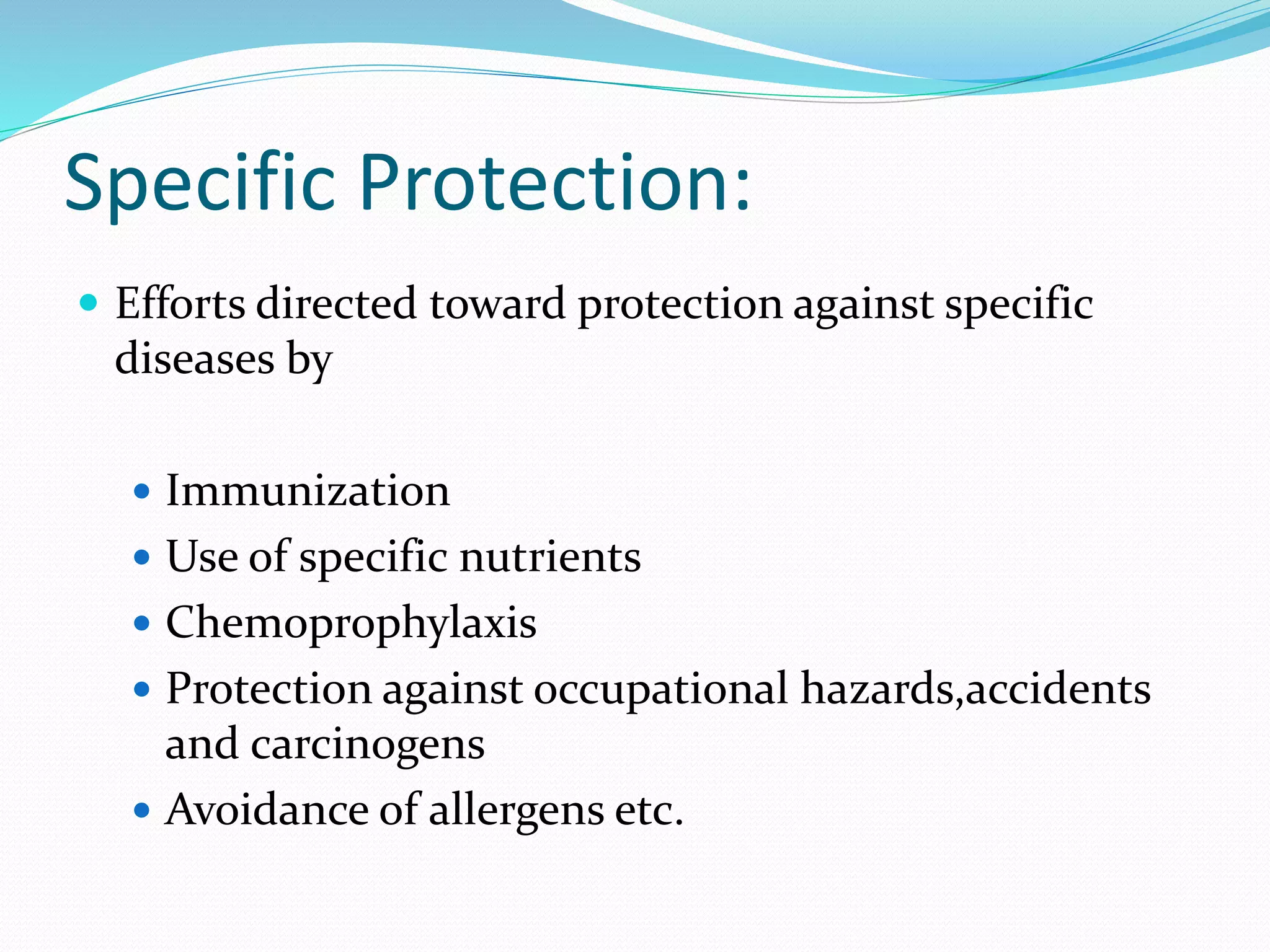
Specific Protection:
 Efforts directed toward protection against specific
diseases by
 Immunization
 Use of specific nutrients
 Chemoprophylaxis
 Protection against occupational hazards,accidents
and carcinogens
 Avoidance of allergens etc.
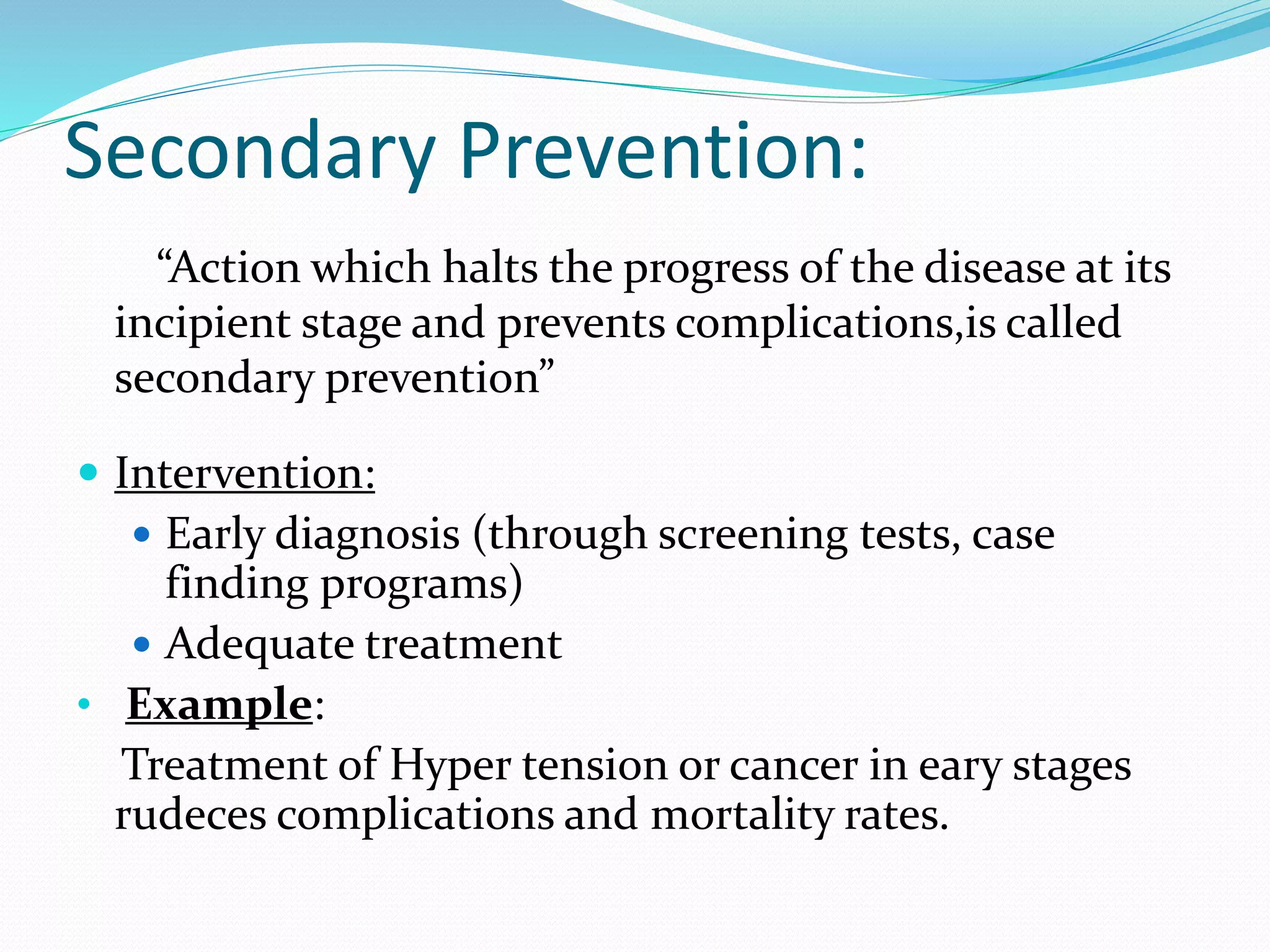
Secondary Prevention:
“Action which halts the progress of the disease at its
incipient stage and prevents complications,is called
secondary prevention”
 Intervention:
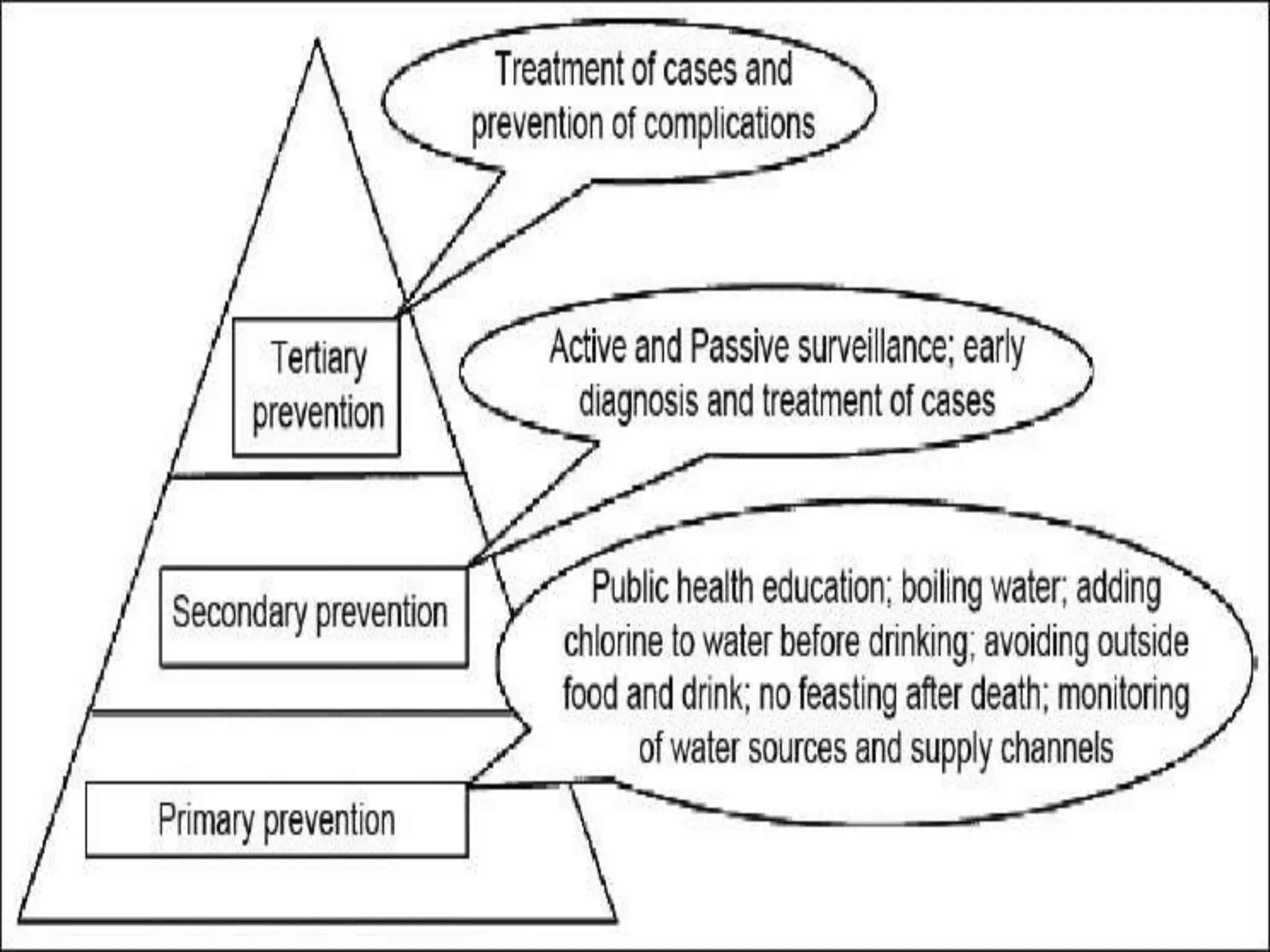
 Early diagnosis (through screening tests, case
finding programs)
 Adequate treatment
• Example:
Treatment of Hyper tension or cancer in eary stages
rudeces complications and mortality rates.
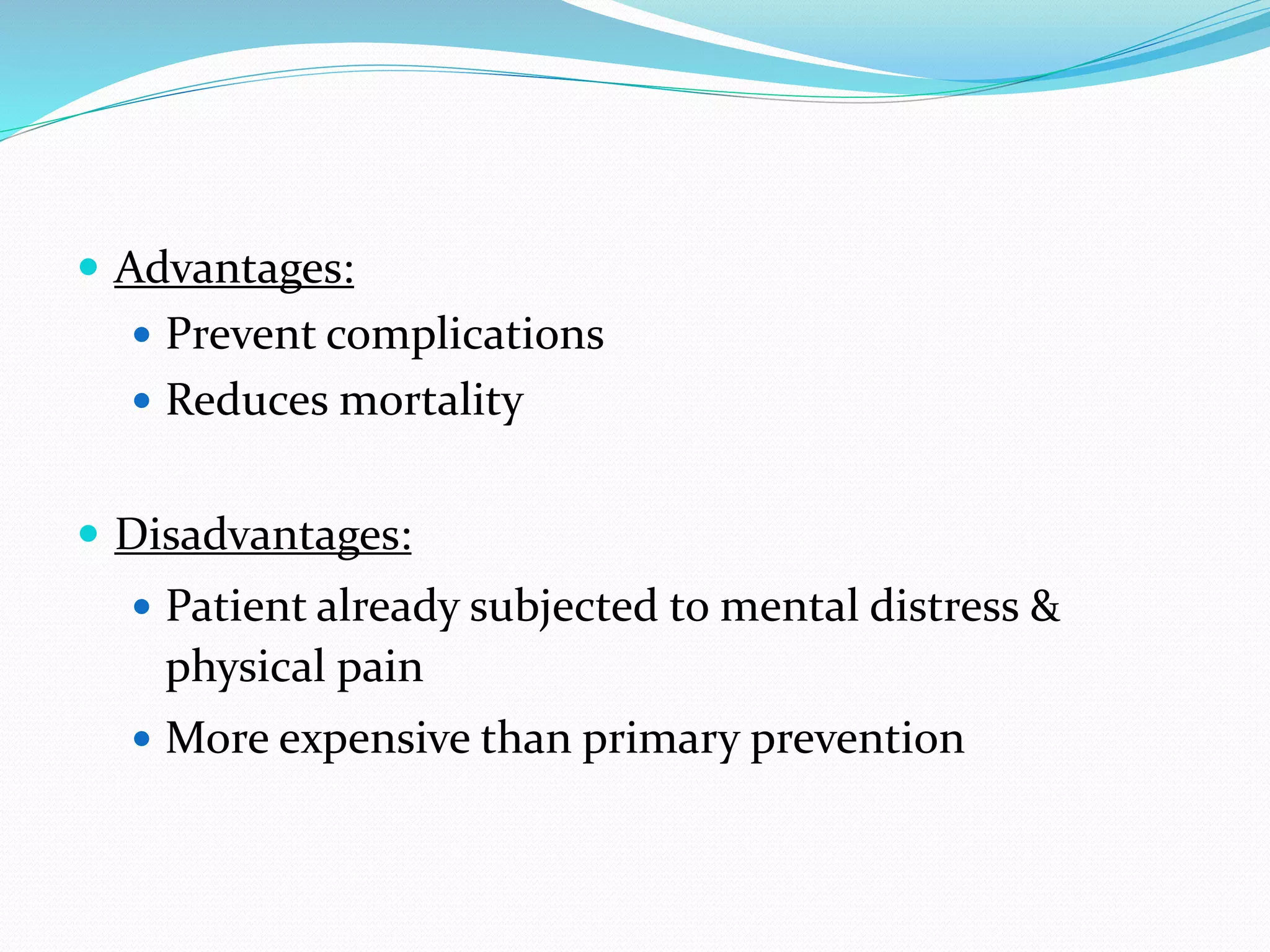
 Advantages:
 Prevent complications
 Reduces mortality
 Disadvantages:
 Patient already subjected to mental distress &
physical pain
 More expensive than primary prevention
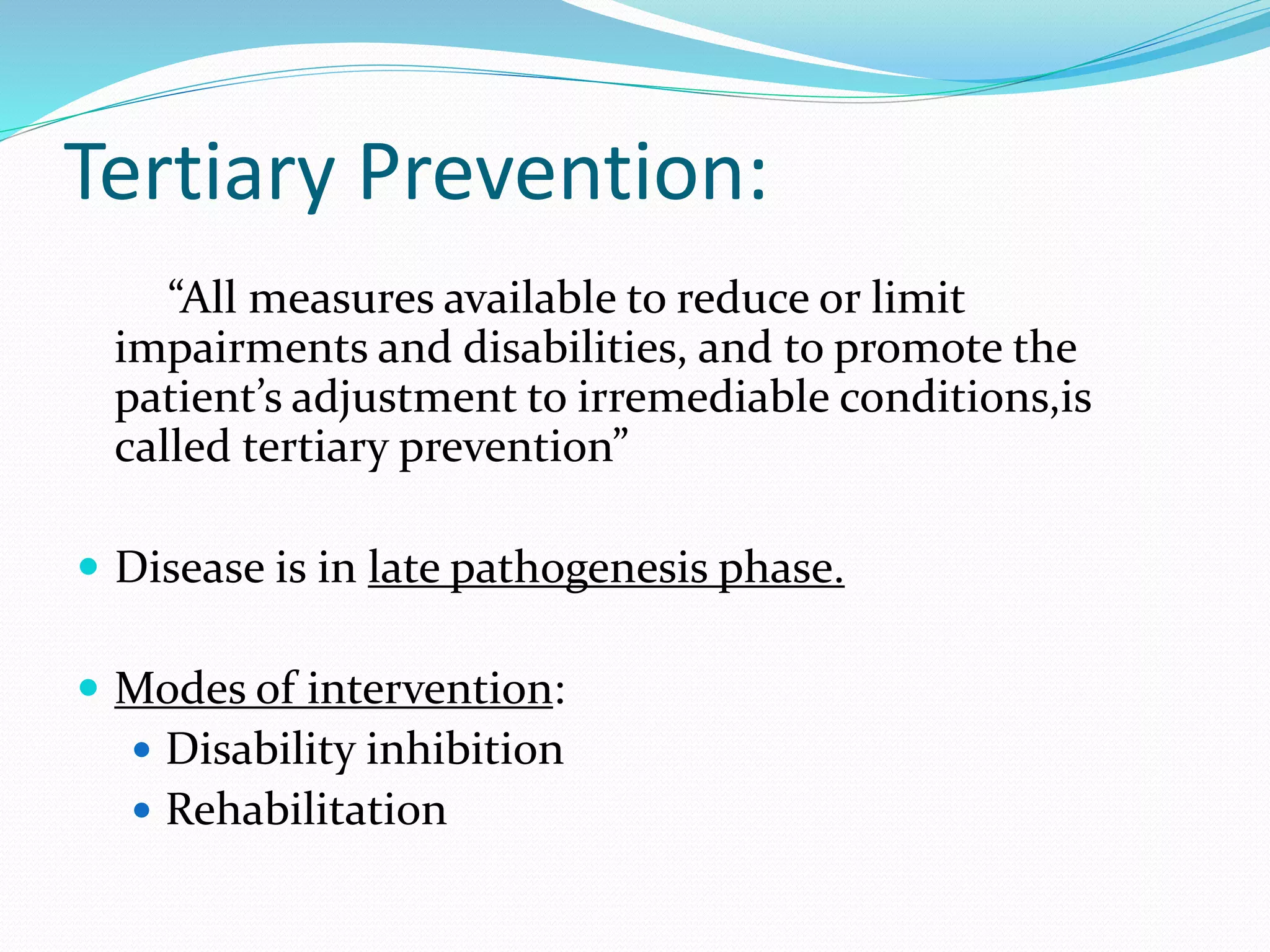
Tertiary Prevention:
“All measures available to reduce or limit
impairments and disabilities, and to promote the
patient’s adjustment to irremediable conditions,is
called tertiary prevention”
 Disease is in late pathogenesis phase.
 Modes of intervention:
 Disability inhibition
 Rehabilitation
Disability inhibition:
 To prevent or halt the transition of disease process
from impairment to handicap.
Disease impairment disability handicap
 Impairment: any loss or abnormality of psychological,
physiological or anatomic structure or function
 Disability: any restriction or lack of ability to perform an
activity in the manner considered normal for a human being
 Handicap: disadvantage for a given individual, resulting from
impairment or disability, that limits or prevents the fulfillment of
a role that is normal for that individual


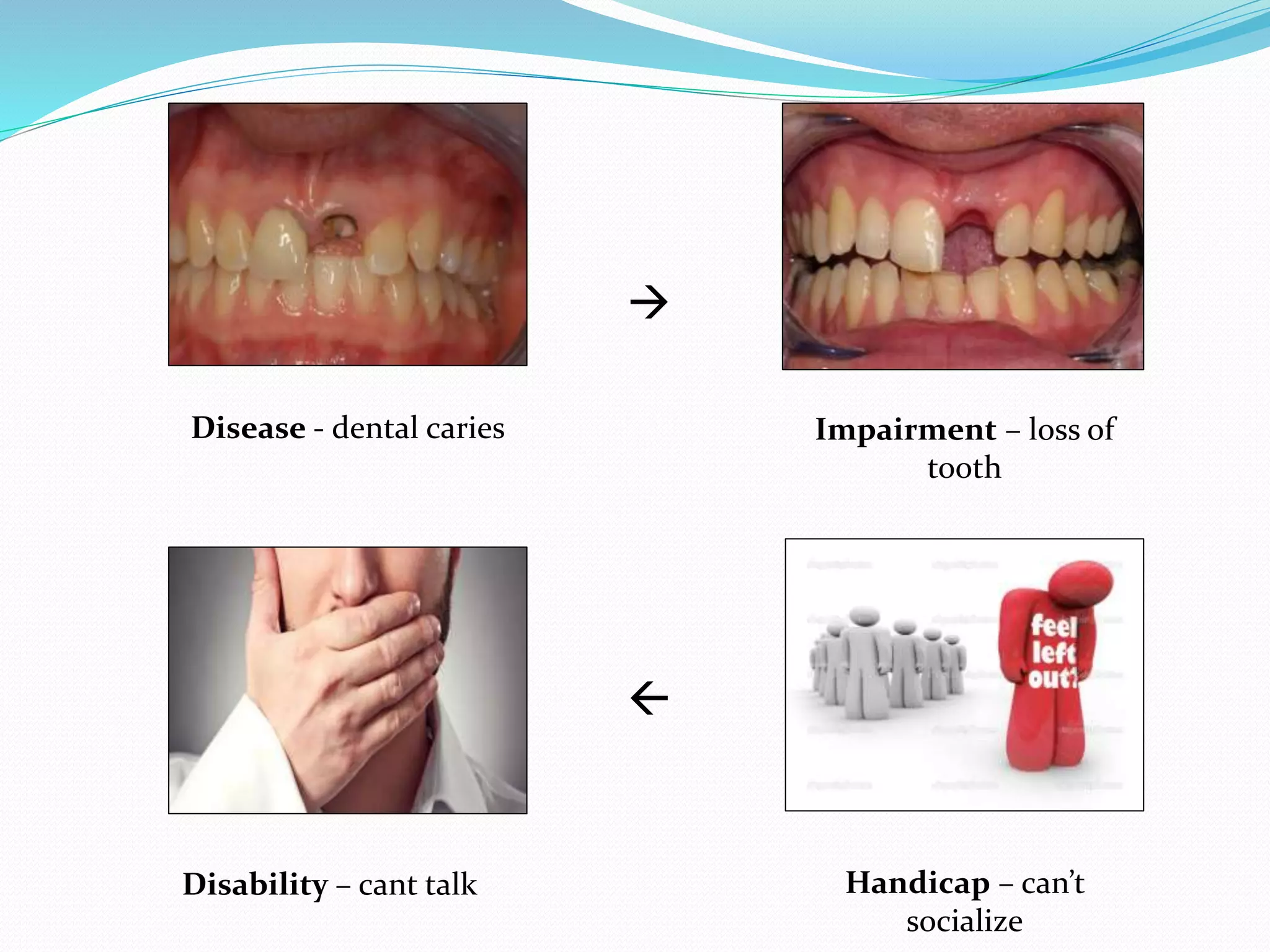
Disease - dental caries Impairment – loss of
tooth
Disability – cant talk Handicap – can’t
socialize
Rehabilitation
 “ The combined and coordinated use of medical,
educational, social and vocational measures for
training and retraining the individual to the highest
possible levels of functional ability ”
 Examples of rehabilitation:
 Establishing schools for blind
 Provision of aids for crippled
 Exercises in neurological disorders
 Prosthetic restoration of lost tooth
 Requires cooperation from different sections of society
Conclusion:
 ‘Prevention is better than cure’
 Prevention can be achieved in any stage of disease and
 in Primordial or primary prevention,it is most effective
and economical.
THANK YOU

concepts of prevention in dentistry

  • 1.
    By Amna Amir 3rdyear student at AMC rawp, Pakistan.
  • 2.
    Definition of Prevention: “Actionsaimed at eliminating or minimizing the impact of disease and disability or if has already occurred then retarding its progression, is termed as Prevention”
  • 3.
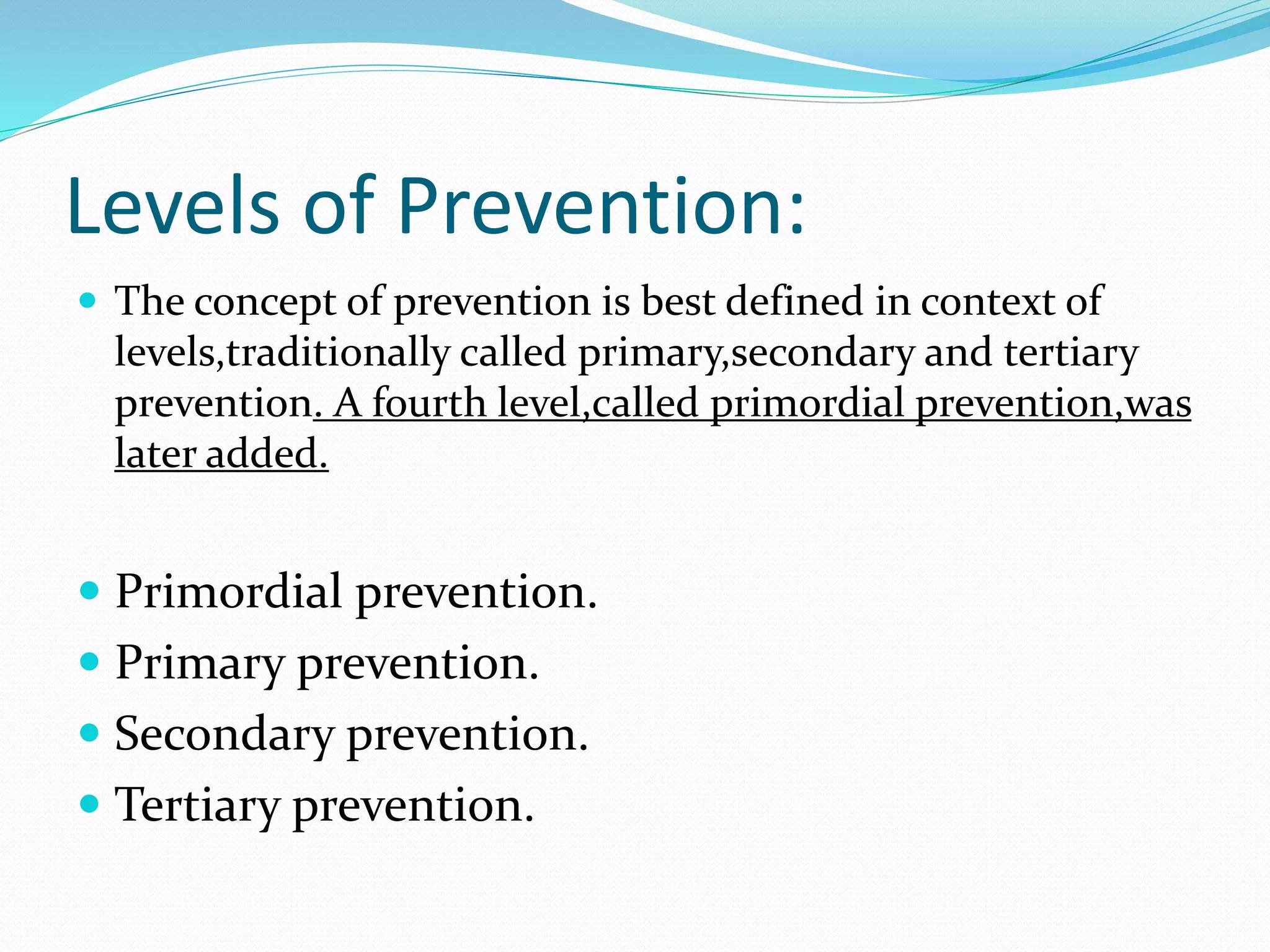
    Levels of Prevention: The concept of prevention is best defined in context of levels,traditionally called primary,secondary and tertiary prevention. A fourth level,called primordial prevention,was later added.  Primordial prevention.  Primary prevention.  Secondary prevention.  Tertiary prevention.
  • 4.
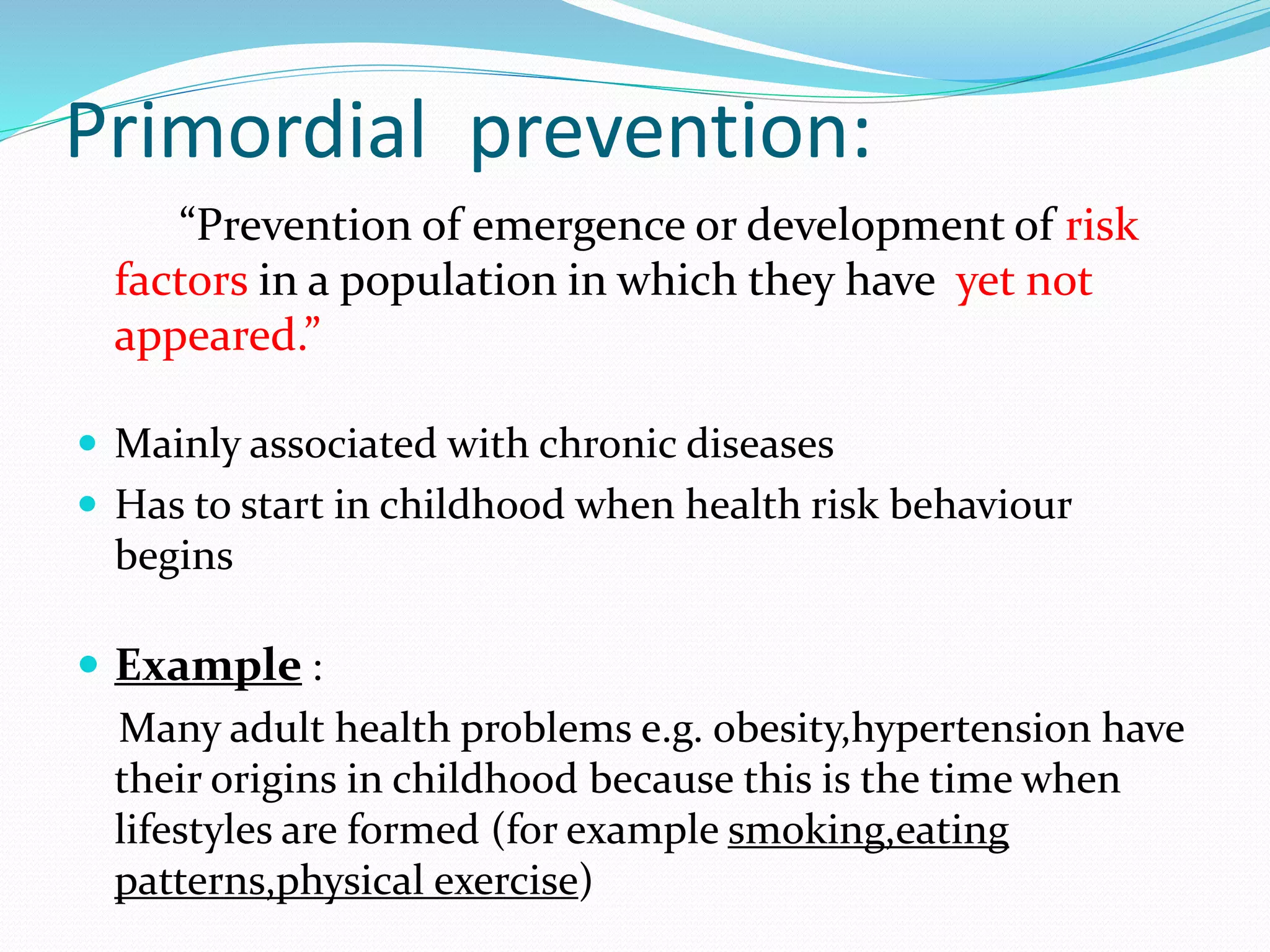
    Primordial prevention: “Prevention ofemergence or development of risk factors in a population in which they have yet not appeared.”  Mainly associated with chronic diseases  Has to start in childhood when health risk behaviour begins  Example : Many adult health problems e.g. obesity,hypertension have their origins in childhood because this is the time when lifestyles are formed (for example smoking,eating patterns,physical exercise)
  • 5.
     Intervention –Individual and mass education  National programmes and policies on:  Food and nutrition  Against smoking and drugs  To promote regular physical activity  Who is responsible ?
  • 6.
    Primary Prevention: “Action takenprior to the onset of disease, which removes the possibility that a disease will ever occur, is called primary prevention”  Approaches for primary prevention (WHO): A. Population (mass) strategy:  Directed at whole population irrespective of individual risk levels  Involves socio-economic,behavioral and lifestyle changes B. High risk strategy:  To individuals at special risk Holistic approach
  • 7.
     Example:  Controllingdiseases like cholera, typhoid, dysentry, plague, tuberculosis, by raising standards of living  Modes of intervention:  Health promotion  Specific protection
  • 8.
    Health Promotion: is aprocess of enabling people to increase control over and to improve health by  Health education  Environmental modifications  Nutritional interventions  Lifestyle and behavioural changes  Not directed against any particular disease.
  • 9.
    Specific Protection:  Effortsdirected toward protection against specific diseases by  Immunization  Use of specific nutrients  Chemoprophylaxis  Protection against occupational hazards,accidents and carcinogens  Avoidance of allergens etc.
  • 10.
    Secondary Prevention: “Action whichhalts the progress of the disease at its incipient stage and prevents complications,is called secondary prevention”  Intervention:  Early diagnosis (through screening tests, case finding programs)  Adequate treatment • Example: Treatment of Hyper tension or cancer in eary stages rudeces complications and mortality rates.
  • 11.
     Advantages:  Preventcomplications  Reduces mortality  Disadvantages:  Patient already subjected to mental distress & physical pain  More expensive than primary prevention
  • 12.
    Tertiary Prevention: “All measuresavailable to reduce or limit impairments and disabilities, and to promote the patient’s adjustment to irremediable conditions,is called tertiary prevention”  Disease is in late pathogenesis phase.  Modes of intervention:  Disability inhibition  Rehabilitation
  • 13.
    Disability inhibition:  Toprevent or halt the transition of disease process from impairment to handicap. Disease impairment disability handicap  Impairment: any loss or abnormality of psychological, physiological or anatomic structure or function  Disability: any restriction or lack of ability to perform an activity in the manner considered normal for a human being  Handicap: disadvantage for a given individual, resulting from impairment or disability, that limits or prevents the fulfillment of a role that is normal for that individual
  • 14.
      Disease - dentalcaries Impairment – loss of tooth Disability – cant talk Handicap – can’t socialize
  • 15.
    Rehabilitation  “ Thecombined and coordinated use of medical, educational, social and vocational measures for training and retraining the individual to the highest possible levels of functional ability ”  Examples of rehabilitation:  Establishing schools for blind  Provision of aids for crippled  Exercises in neurological disorders  Prosthetic restoration of lost tooth  Requires cooperation from different sections of society
  • 17.
    Conclusion:  ‘Prevention isbetter than cure’  Prevention can be achieved in any stage of disease and  in Primordial or primary prevention,it is most effective and economical.
  • 18.