WELCOME TO MY
PRESENTATION
THE GENERATION OF
COMPUTER
1G
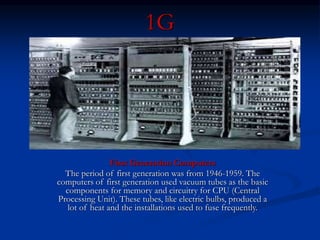
First Generation Computers
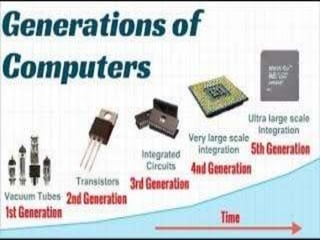
The period of first generation was from 1946-1959. The
computers of first generation used vacuum tubes as the basic
components for memory and circuitry for CPU (Central
Processing Unit). These tubes, like electric bulbs, produced a
lot of heat and the installations used to fuse frequently.
2G
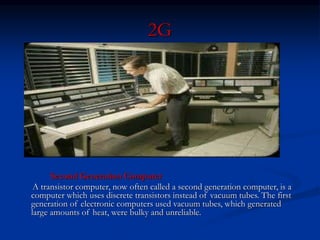
Second Generation Computer
A transistor computer, now often called a second generation computer, is a
computer which uses discrete transistors instead of vacuum tubes. The first
generation of electronic computers used vacuum tubes, which generated
large amounts of heat, were bulky and unreliable.
3G
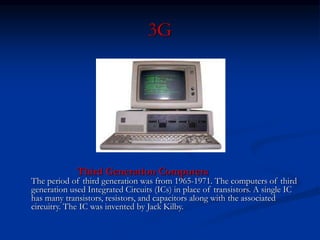
Third Generation Computers
The period of third generation was from 1965-1971. The computers of third
generation used Integrated Circuits (ICs) in place of transistors. A single IC
has many transistors, resistors, and capacitors along with the associated
circuitry. The IC was invented by Jack Kilby.
4G
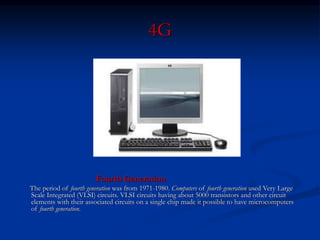
Fourth Generation
The period of fourth generation was from 1971-1980. Computers of fourth generation used Very Large
Scale Integrated (VLSI) circuits. VLSI circuits having about 5000 transistors and other circuit
elements with their associated circuits on a single chip made it possible to have microcomputers
of fourth generation.
5G
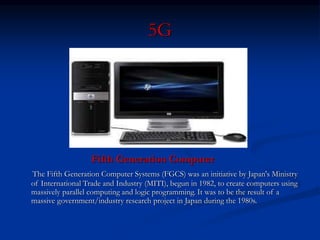
Fifth Generation Computer
The Fifth Generation Computer Systems (FGCS) was an initiative by Japan's Ministry
of International Trade and Industry (MITI), begun in 1982, to create computers using
massively parallel computing and logic programming. It was to be the result of a
massive government/industry research project in Japan during the 1980s.
6G
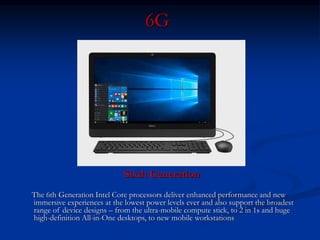
Sixth Generation
The 6th Generation Intel Core processors deliver enhanced performance and new
immersive experiences at the lowest power levels ever and also support the broadest
range of device designs – from the ultra-mobile compute stick, to 2 in 1s and huge
high-definition All-in-One desktops, to new mobile workstations
THANKS
FOR WATCHING

Computer presentation

  • 1.
  • 2.
  • 4.
    1G First Generation Computers Theperiod of first generation was from 1946-1959. The computers of first generation used vacuum tubes as the basic components for memory and circuitry for CPU (Central Processing Unit). These tubes, like electric bulbs, produced a lot of heat and the installations used to fuse frequently.
  • 5.
    2G Second Generation Computer Atransistor computer, now often called a second generation computer, is a computer which uses discrete transistors instead of vacuum tubes. The first generation of electronic computers used vacuum tubes, which generated large amounts of heat, were bulky and unreliable.
  • 6.
    3G Third Generation Computers Theperiod of third generation was from 1965-1971. The computers of third generation used Integrated Circuits (ICs) in place of transistors. A single IC has many transistors, resistors, and capacitors along with the associated circuitry. The IC was invented by Jack Kilby.
  • 7.
    4G Fourth Generation The periodof fourth generation was from 1971-1980. Computers of fourth generation used Very Large Scale Integrated (VLSI) circuits. VLSI circuits having about 5000 transistors and other circuit elements with their associated circuits on a single chip made it possible to have microcomputers of fourth generation.
  • 8.
    5G Fifth Generation Computer TheFifth Generation Computer Systems (FGCS) was an initiative by Japan's Ministry of International Trade and Industry (MITI), begun in 1982, to create computers using massively parallel computing and logic programming. It was to be the result of a massive government/industry research project in Japan during the 1980s.
  • 9.
    6G Sixth Generation The 6thGeneration Intel Core processors deliver enhanced performance and new immersive experiences at the lowest power levels ever and also support the broadest range of device designs – from the ultra-mobile compute stick, to 2 in 1s and huge high-definition All-in-One desktops, to new mobile workstations
  • 10.