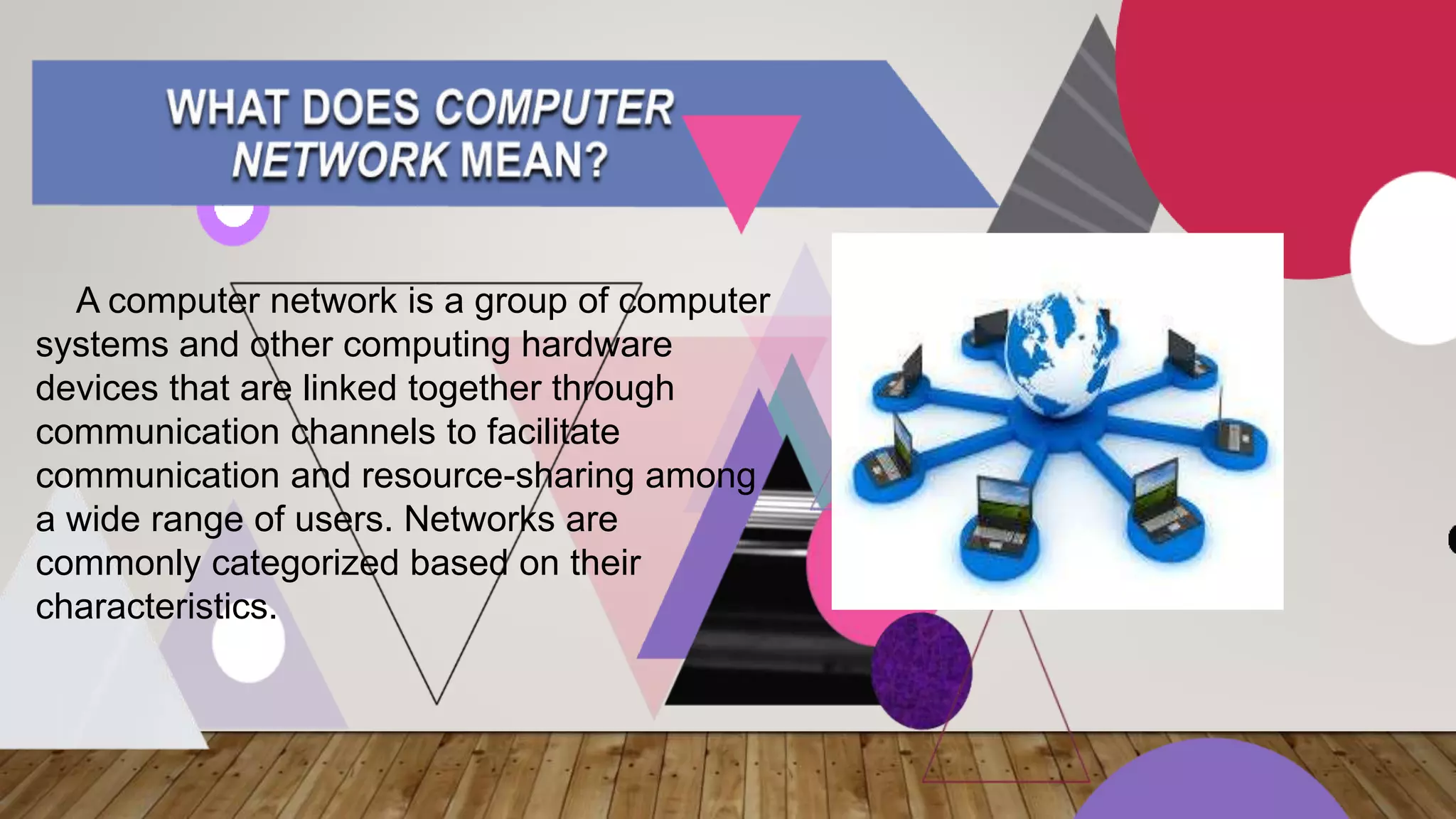
A computer network is a group of computer
systems and other computing hardware
devices that are linked together through
communication channels to facilitate
communication and resource-sharing among
a wide range of users. Networks are
commonly categorized based on their
characteristics.
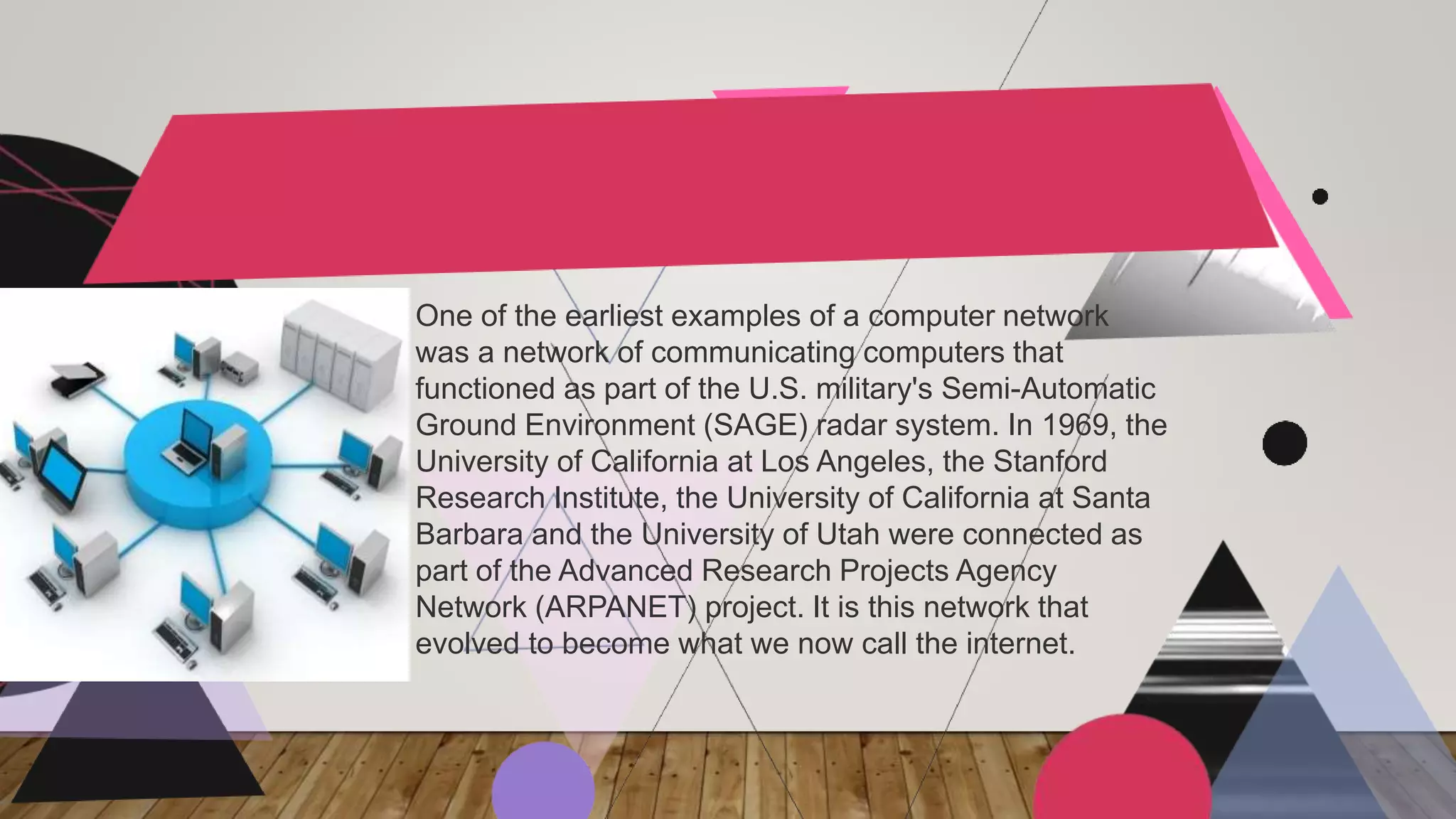
One of the earliest examples of a computer network
was a network of communicating computers that
functioned as part of the U.S. military's Semi-Automatic
Ground Environment (SAGE) radar system. In 1969, the
University of California at Los Angeles, the Stanford
Research Institute, the University of California at Santa
Barbara and the University of Utah were connected as
part of the Advanced Research Projects Agency
Network (ARPANET) project. It is this network that
evolved to become what we now call the internet.
•Facilitate communication via email, video conferencing,
instant messaging, etc.
•Enable multiple users to share a single hardware device
like a printer or scanner
•Enable file sharing across the network
•Allow for the sharing of software or operating programs
on remote systems
•Make information easier to access and maintain among
network users
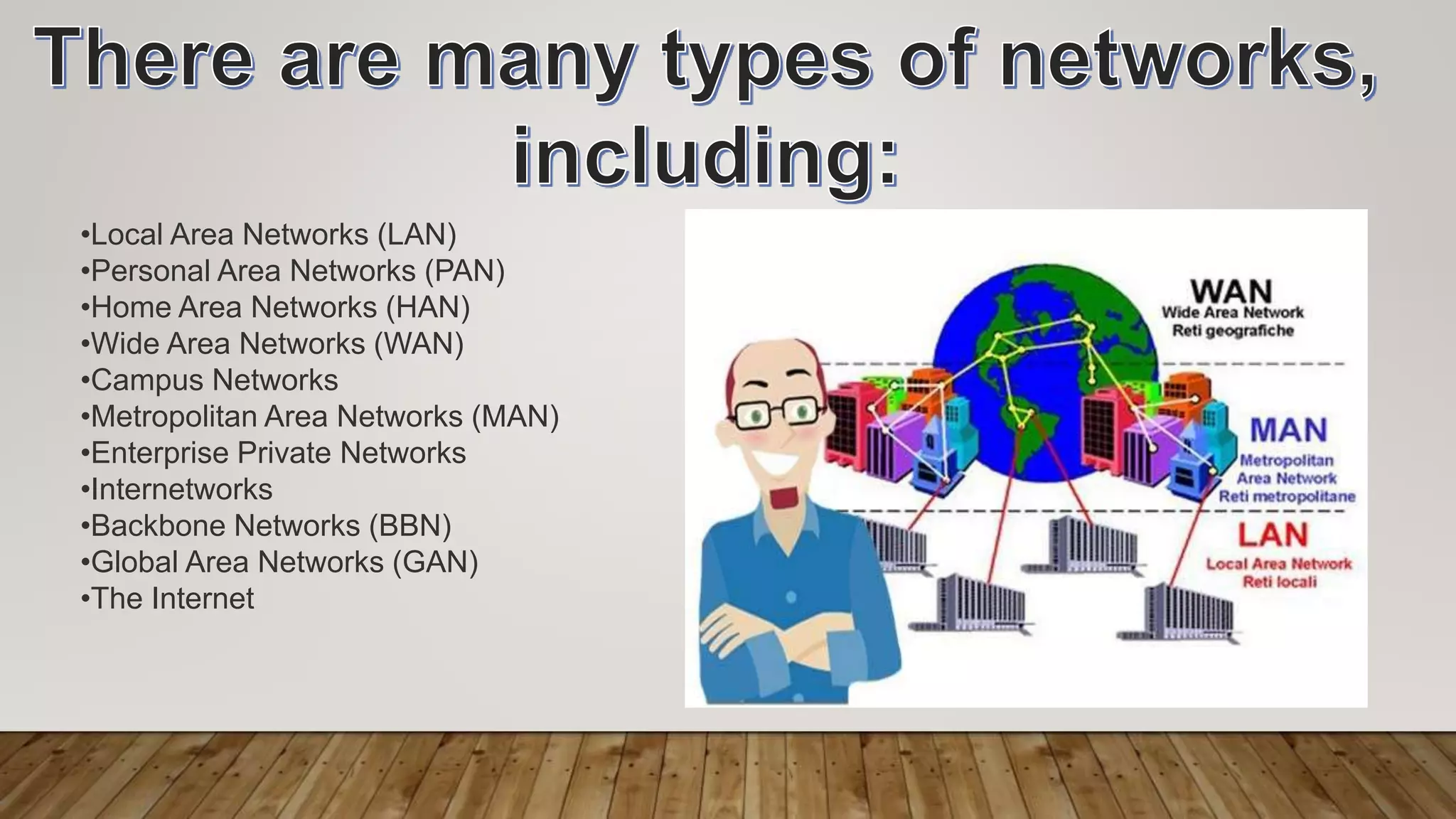
•Local Area Networks (LAN)
•Personal Area Networks (PAN)
•Home Area Networks (HAN)
•Wide Area Networks (WAN)
•Campus Networks
•Metropolitan Area Networks (MAN)
•Enterprise Private Networks
•Internetworks
•Backbone Networks (BBN)
•Global Area Networks (GAN)
•The Internet
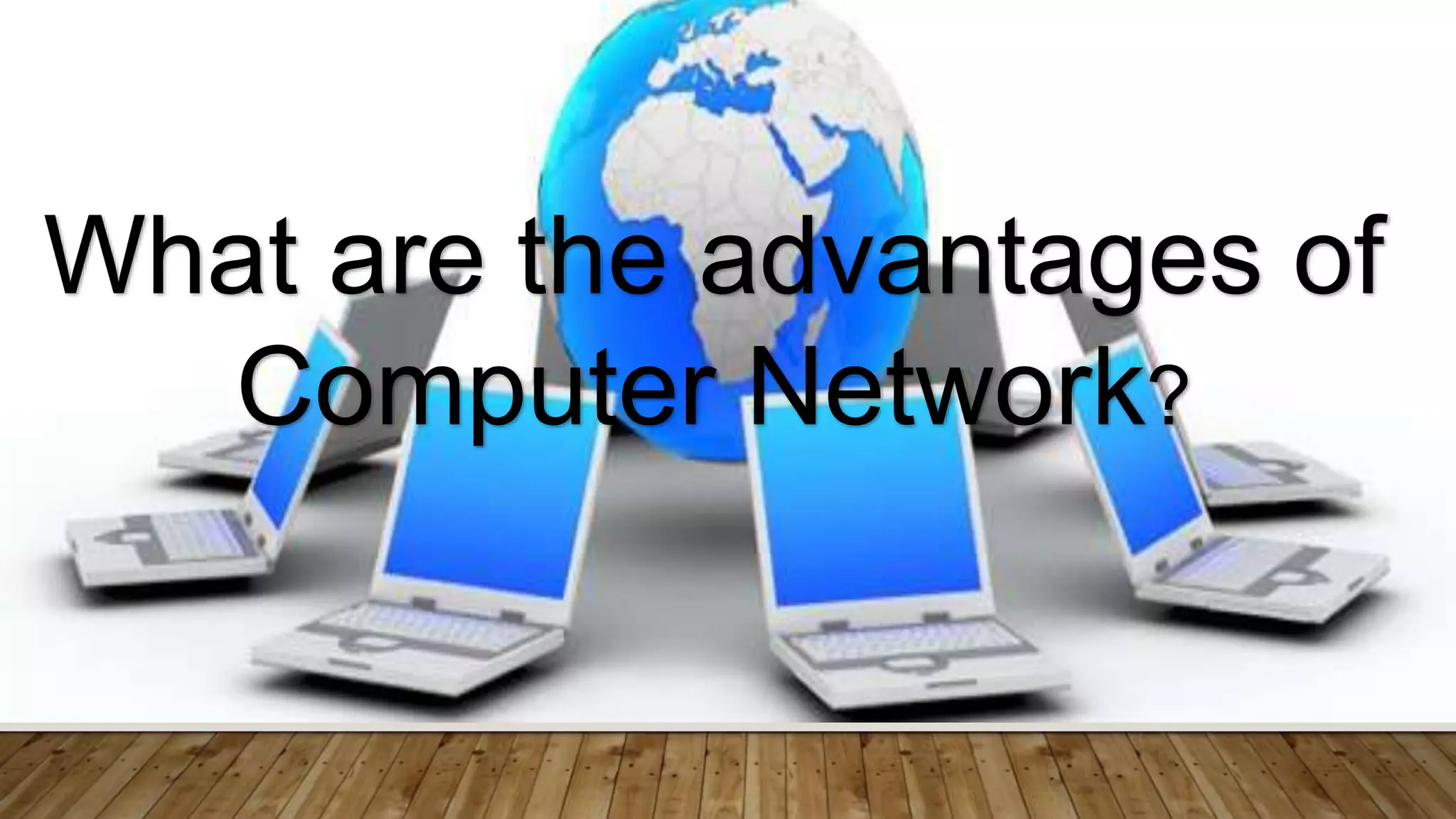
What are the advantages of
Computer Network?
Here, in no particular order, are some of the specific advantages generally associated with networking:
• Connectivity and Communication
• Data Sharing
• Hardware Sharing
• Internet Access
• Internet Access Sharing
• Data Security and Management
• Performance Enhancement and
Balancing
• Entertainment
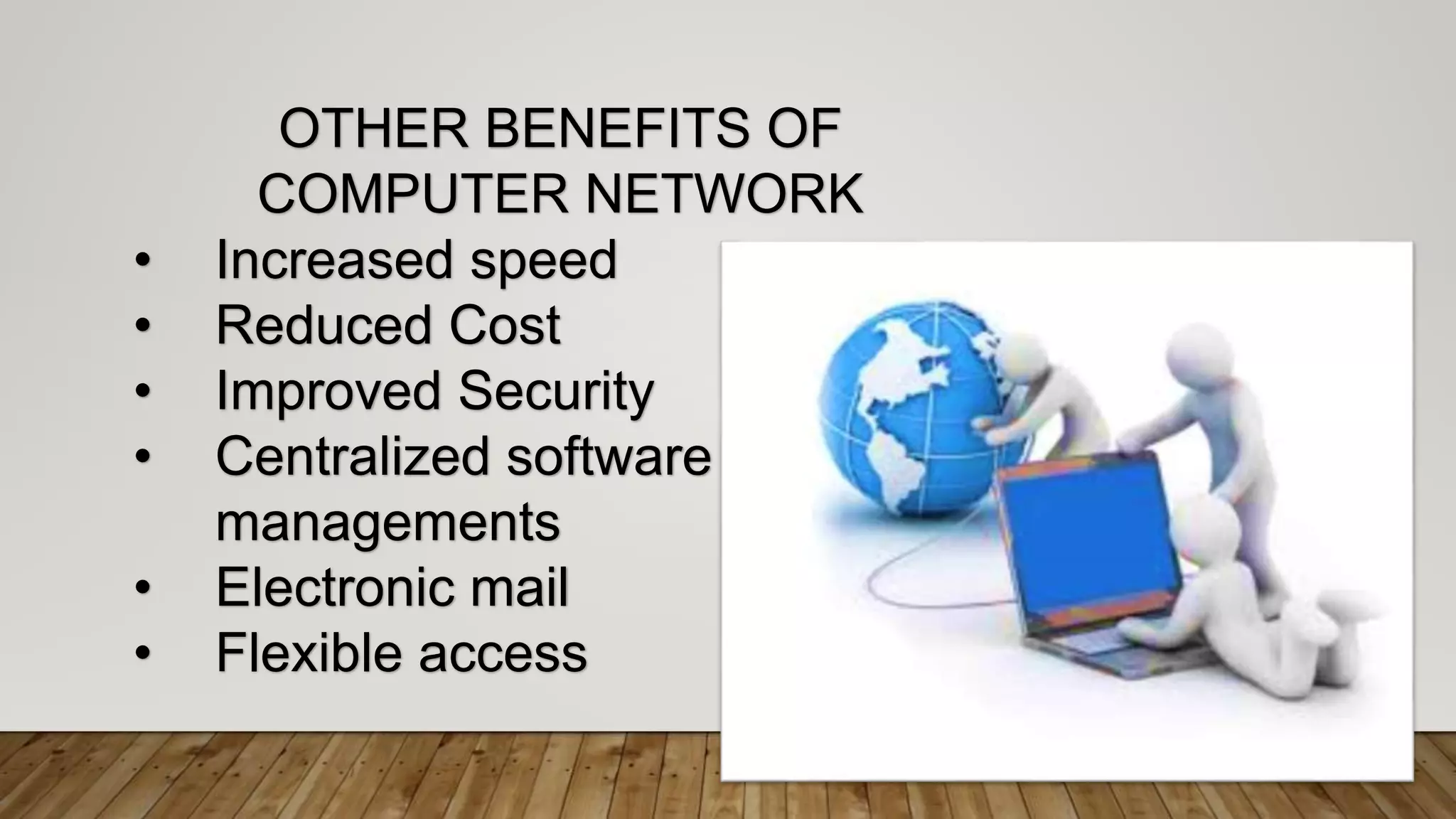
OTHER BENEFITS OF
COMPUTER NETWORK
• Increased speed
• Reduced Cost
• Improved Security
• Centralized software
managements
• Electronic mail
• Flexible access
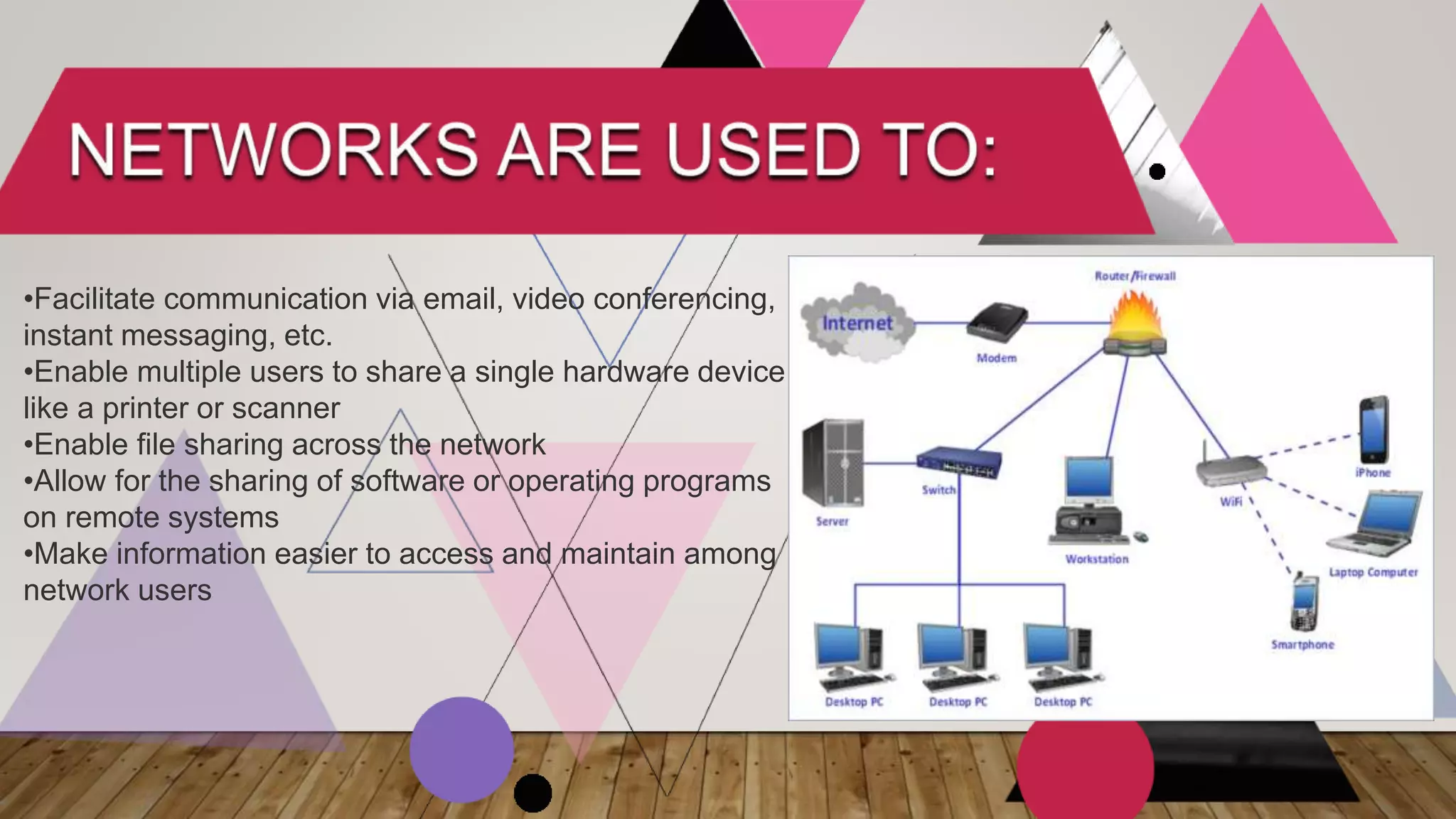
A network connects computers, mobile phones, peripherals, and even devices.
Switches, routers, and wireless access points are the essential networking
basics. Through them, devices connected to your network can communicate
with one another and with other networks, like the Internet.
Computer network
Computer network

Computer network

  • 2.
    A computer networkis a group of computer systems and other computing hardware devices that are linked together through communication channels to facilitate communication and resource-sharing among a wide range of users. Networks are commonly categorized based on their characteristics.
  • 3.
    One of theearliest examples of a computer network was a network of communicating computers that functioned as part of the U.S. military's Semi-Automatic Ground Environment (SAGE) radar system. In 1969, the University of California at Los Angeles, the Stanford Research Institute, the University of California at Santa Barbara and the University of Utah were connected as part of the Advanced Research Projects Agency Network (ARPANET) project. It is this network that evolved to become what we now call the internet.
  • 4.
    •Facilitate communication viaemail, video conferencing, instant messaging, etc. •Enable multiple users to share a single hardware device like a printer or scanner •Enable file sharing across the network •Allow for the sharing of software or operating programs on remote systems •Make information easier to access and maintain among network users
  • 5.
    •Local Area Networks(LAN) •Personal Area Networks (PAN) •Home Area Networks (HAN) •Wide Area Networks (WAN) •Campus Networks •Metropolitan Area Networks (MAN) •Enterprise Private Networks •Internetworks •Backbone Networks (BBN) •Global Area Networks (GAN) •The Internet
  • 6.
    What are theadvantages of Computer Network?
  • 7.
    Here, in noparticular order, are some of the specific advantages generally associated with networking: • Connectivity and Communication • Data Sharing • Hardware Sharing • Internet Access • Internet Access Sharing • Data Security and Management • Performance Enhancement and Balancing • Entertainment
  • 8.
    OTHER BENEFITS OF COMPUTERNETWORK • Increased speed • Reduced Cost • Improved Security • Centralized software managements • Electronic mail • Flexible access
  • 9.
    A network connectscomputers, mobile phones, peripherals, and even devices. Switches, routers, and wireless access points are the essential networking basics. Through them, devices connected to your network can communicate with one another and with other networks, like the Internet.