COMPUTER CONTROL OF POWER SYSTEMS
HIERARCHY OF POWER SYSTEM OPERATION AND CONTROL IN INDIA & SCADA
KAUSIK BHAUMIK
M. TECH.(POWER SYSTEM)
AMITY UNIVERSITY
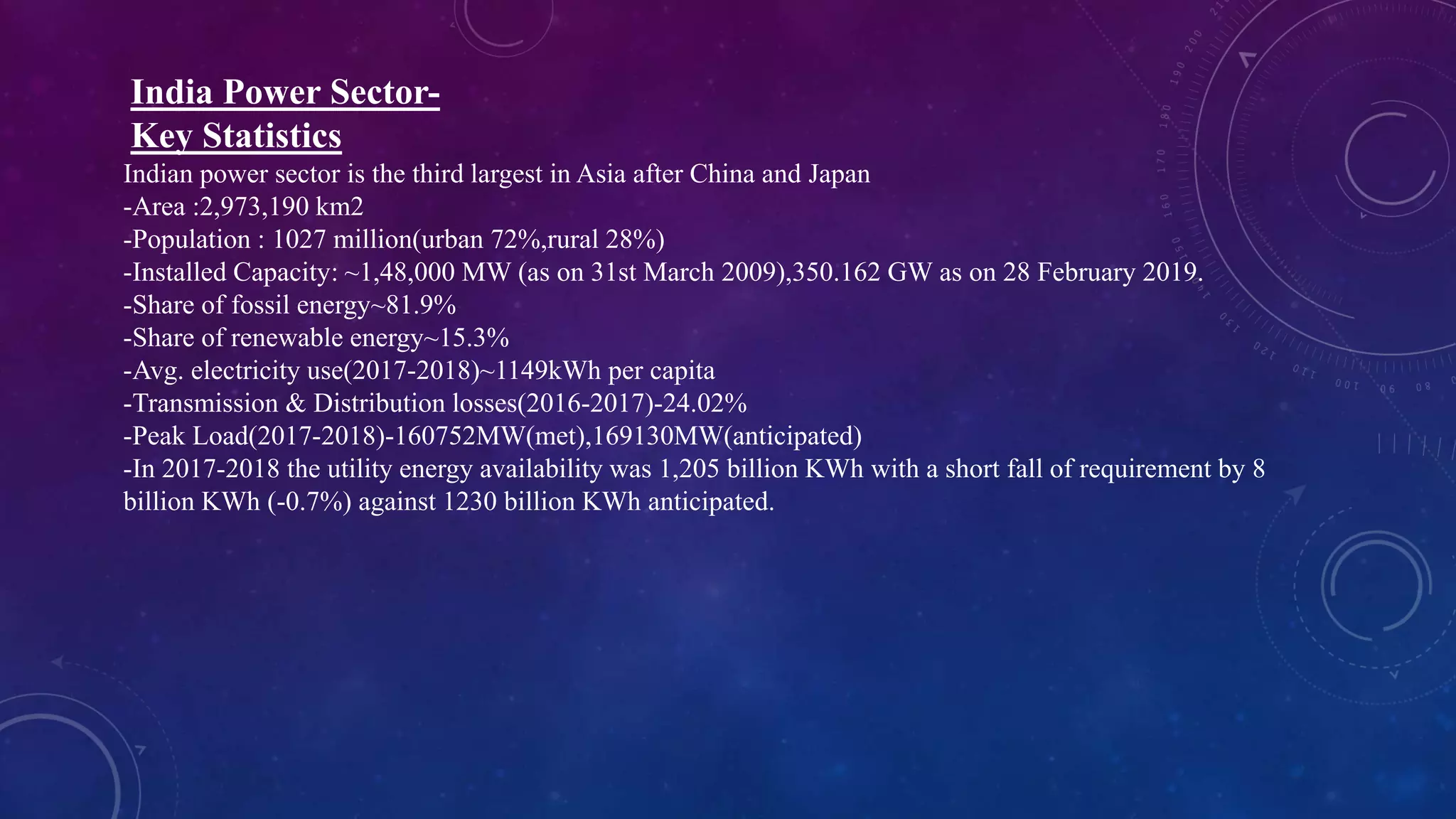
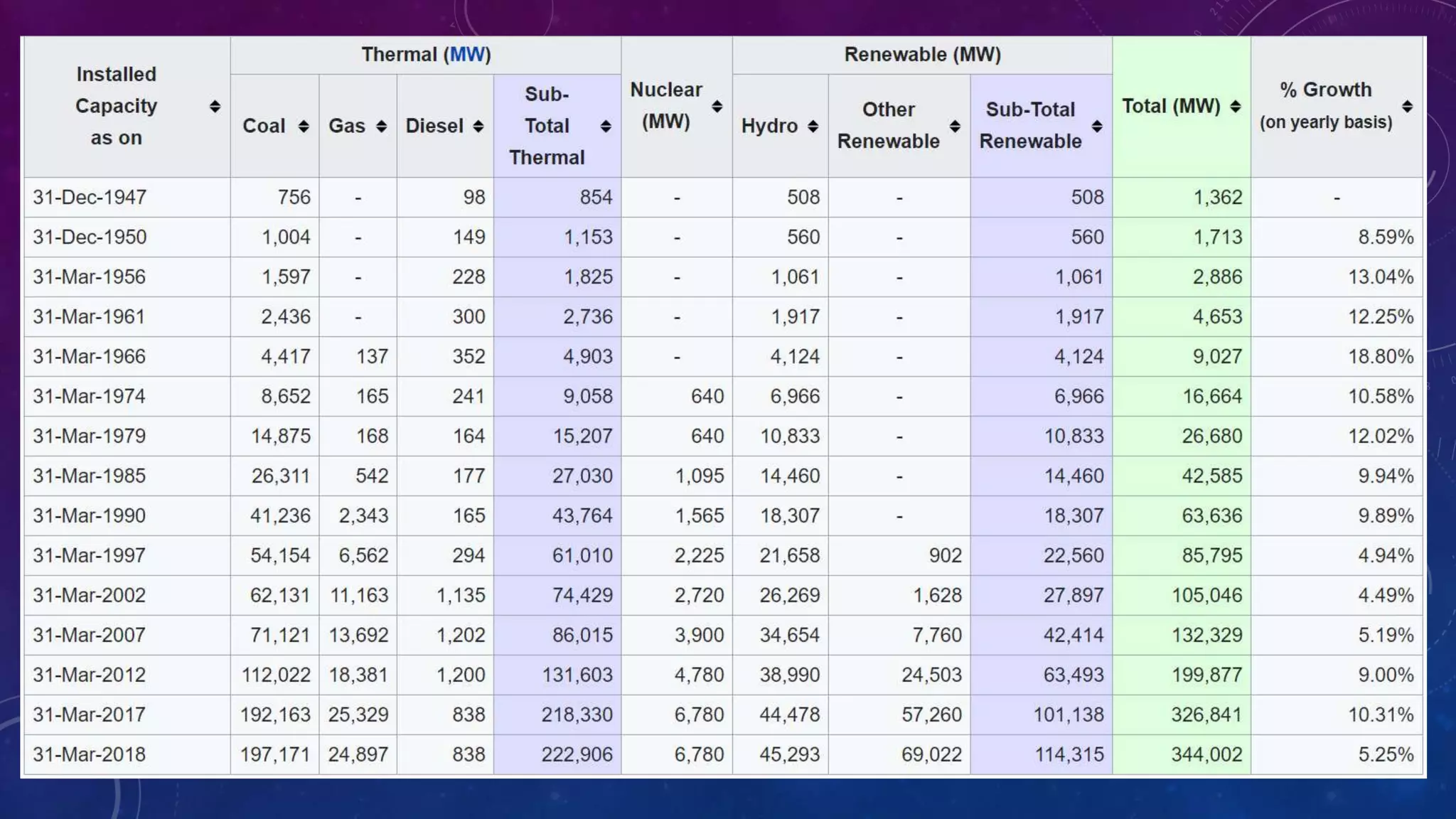
India Power Sector-
Key Statistics
Indian power sector is the third largest in Asia after China and Japan
-Area :2,973,190 km2
-Population : 1027 million(urban 72%,rural 28%)
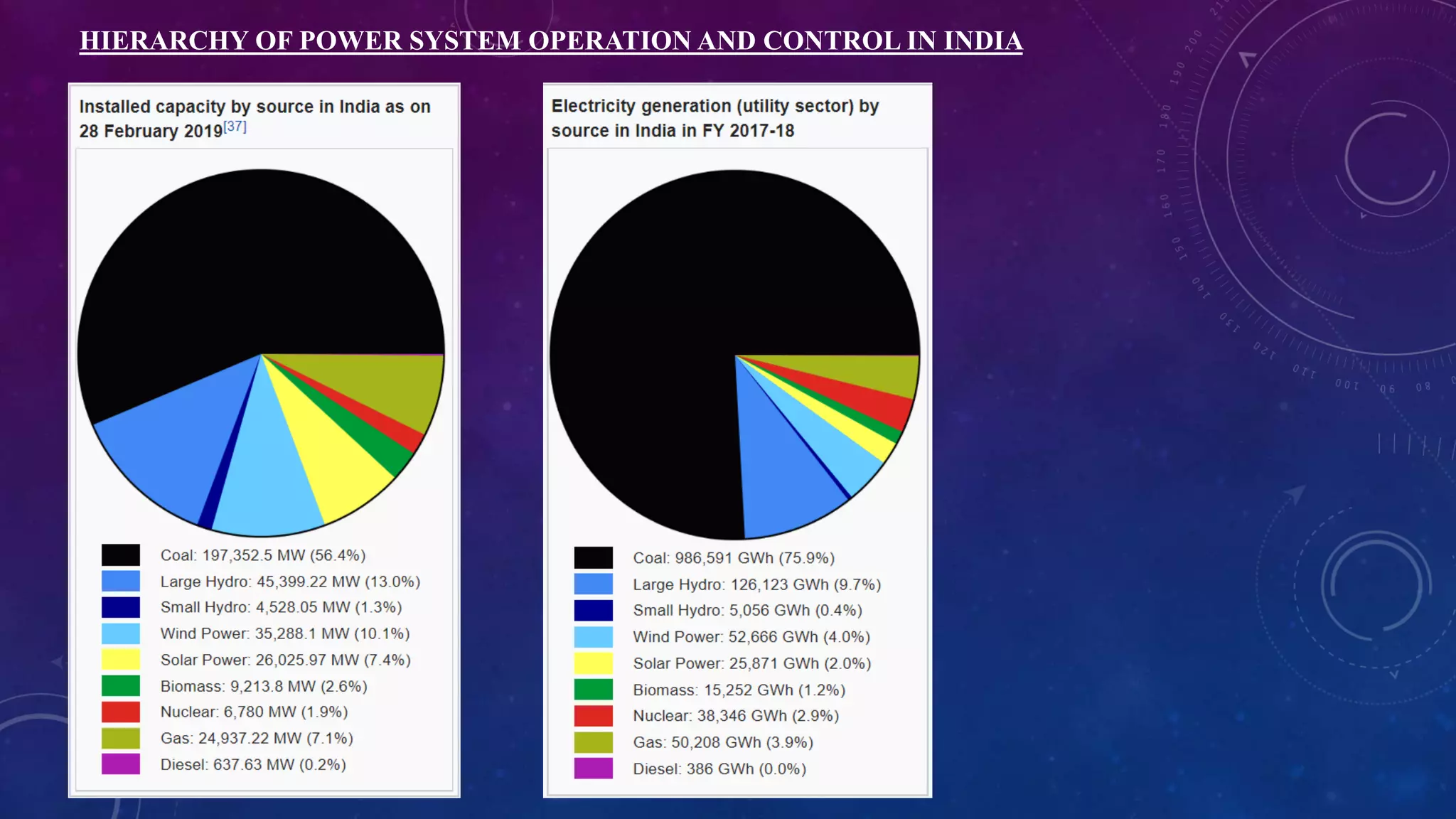
-Installed Capacity: ~1,48,000 MW (as on 31st March 2009),350.162 GW as on 28 February 2019.
-Share of fossil energy~81.9%
-Share of renewable energy~15.3%
-Avg. electricity use(2017-2018)~1149kWh per capita
-Transmission & Distribution losses(2016-2017)-24.02%
-Peak Load(2017-2018)-160752MW(met),169130MW(anticipated)
-In 2017-2018 the utility energy availability was 1,205 billion KWh with a short fall of requirement by 8
billion KWh (-0.7%) against 1230 billion KWh anticipated.
CHALLENGES:-
1. No method of large scale storage of electrical energy has been
devised so far. electrical energy must be generated and
supplied instantaneously.
2. The active power and reactive power demand changes from
instant to instant. power system has to meet this varying
demand all the time.
3. The overall cost must be kept minimum.
4. Environment factor.
5. Quality.
Functions of energy control centre (EEC)
1. Load forecasting: Long term, medium term and short term.
2. Planning of increase in generation capacity, transmission capacity and
distribution capacity.
3. System monitoring and panning of maintenance and repair.
4. State estimation.
5. Unit commitment and economic dispatch.
6. Automatic generation control.
7. Reactive power management.
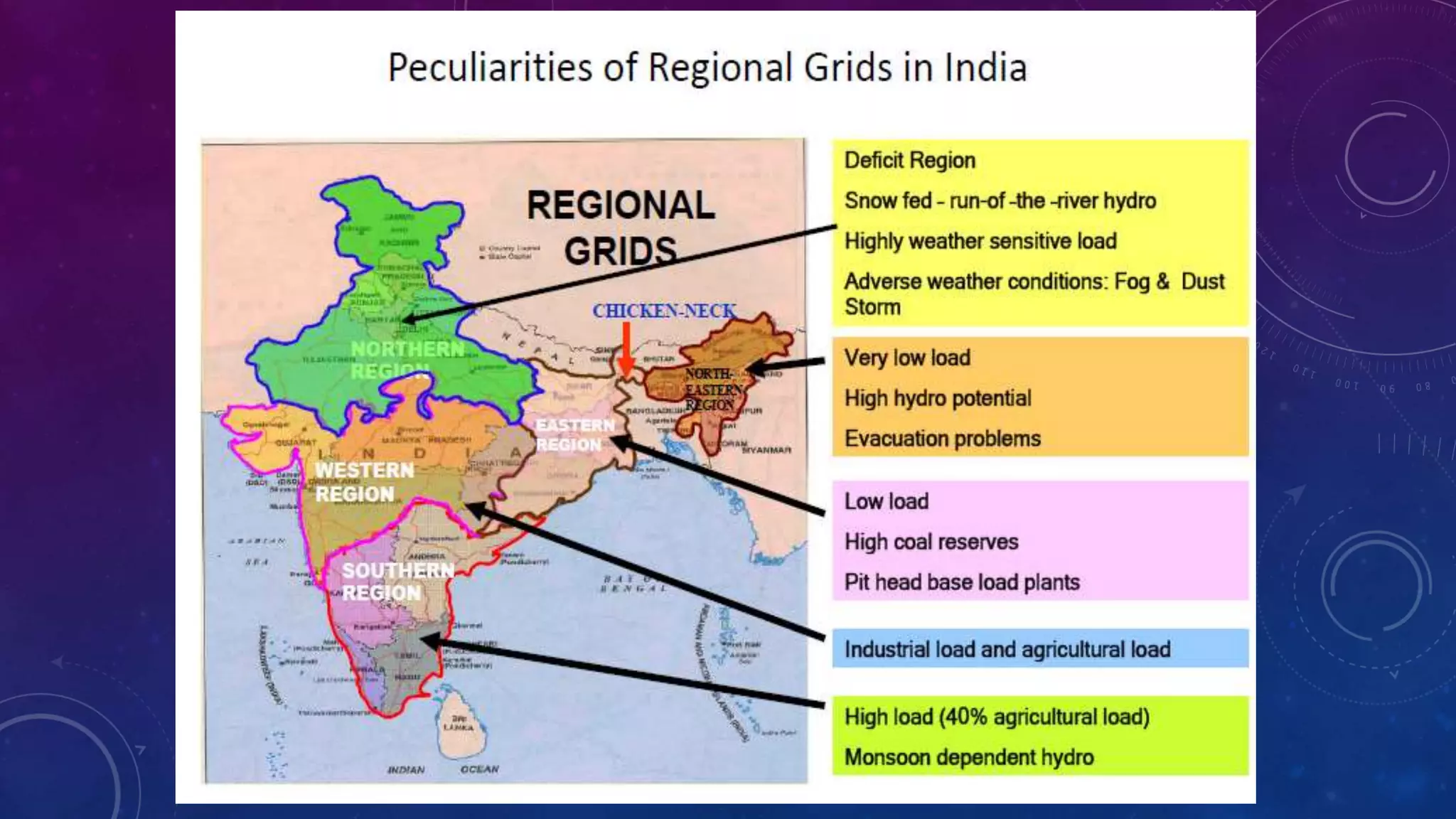
HIERARCHY OF POWER SYSTEM OPERATION AND CONTROL IN INDIA
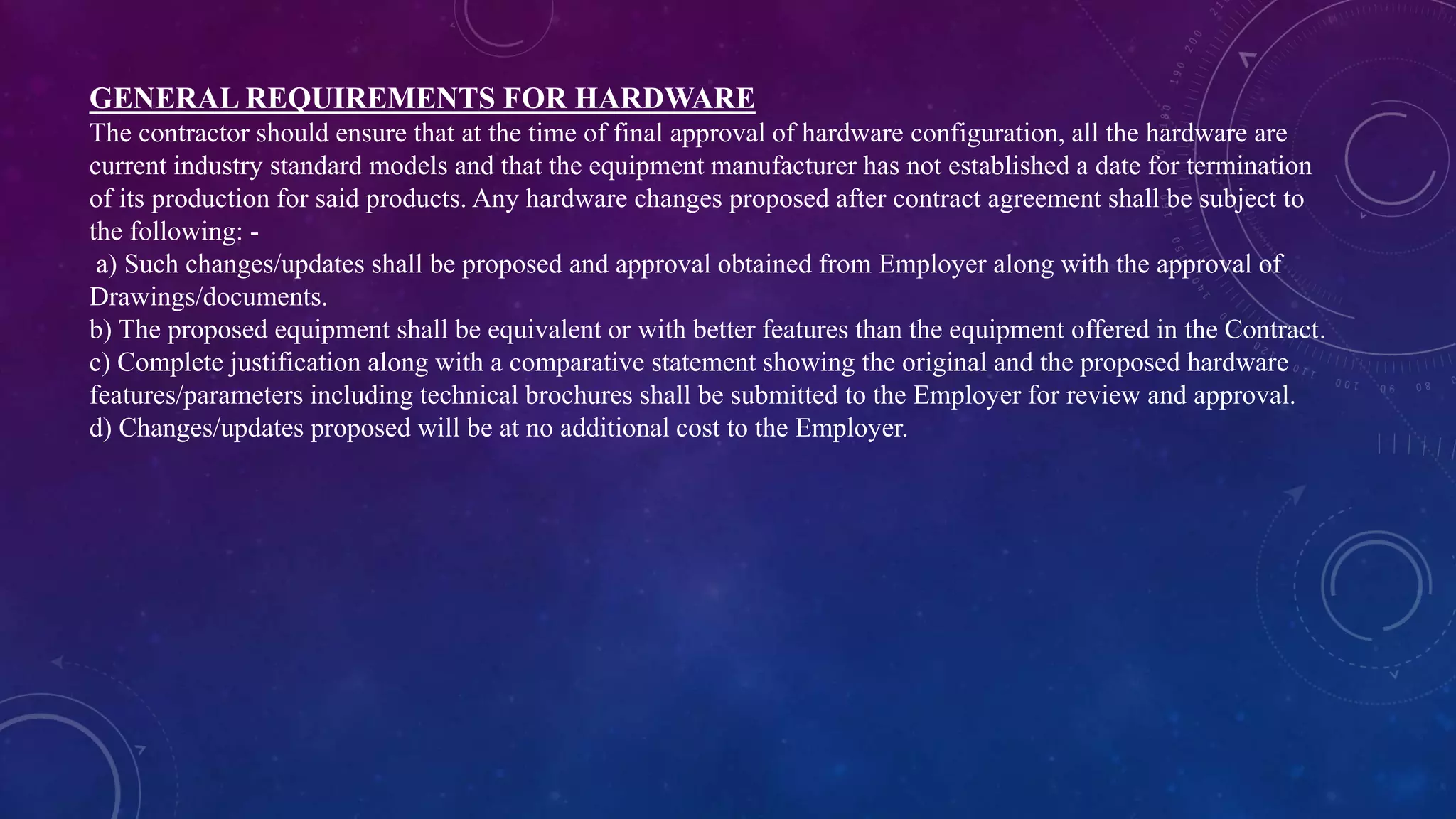
GENERAL REQUIREMENTS FOR HARDWARE
The contractor should ensure that at the time of final approval of hardware configuration, all the hardware are
current industry standard models and that the equipment manufacturer has not established a date for termination
of its production for said products. Any hardware changes proposed after contract agreement shall be subject to
the following: -
a) Such changes/updates shall be proposed and approval obtained from Employer along with the approval of
Drawings/documents.
b) The proposed equipment shall be equivalent or with better features than the equipment offered in the Contract.
c) Complete justification along with a comparative statement showing the original and the proposed hardware
features/parameters including technical brochures shall be submitted to the Employer for review and approval.
d) Changes/updates proposed will be at no additional cost to the Employer.
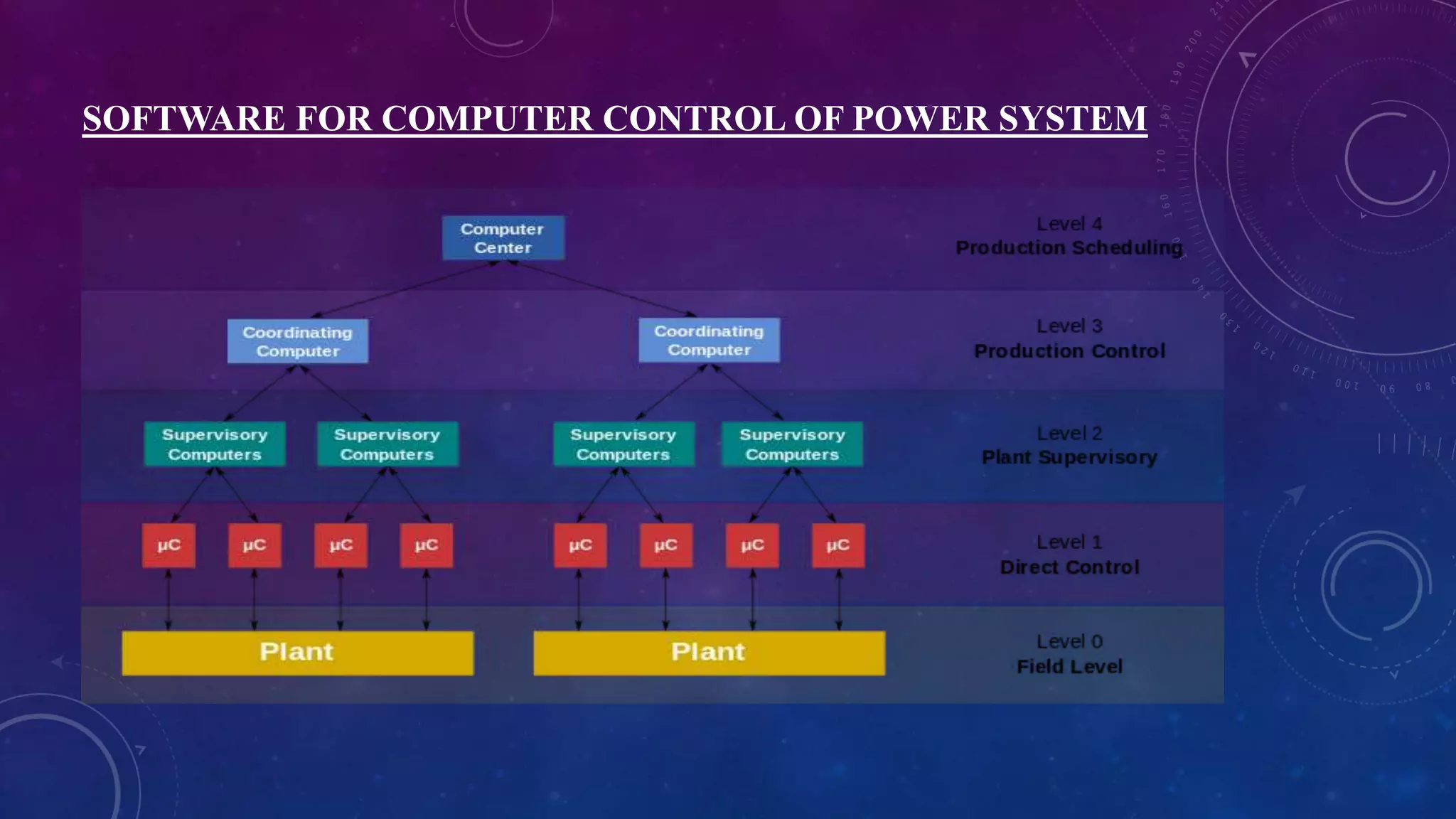
SOFTWARE FOR COMPUTER CONTROL OF POWER SYSTEM
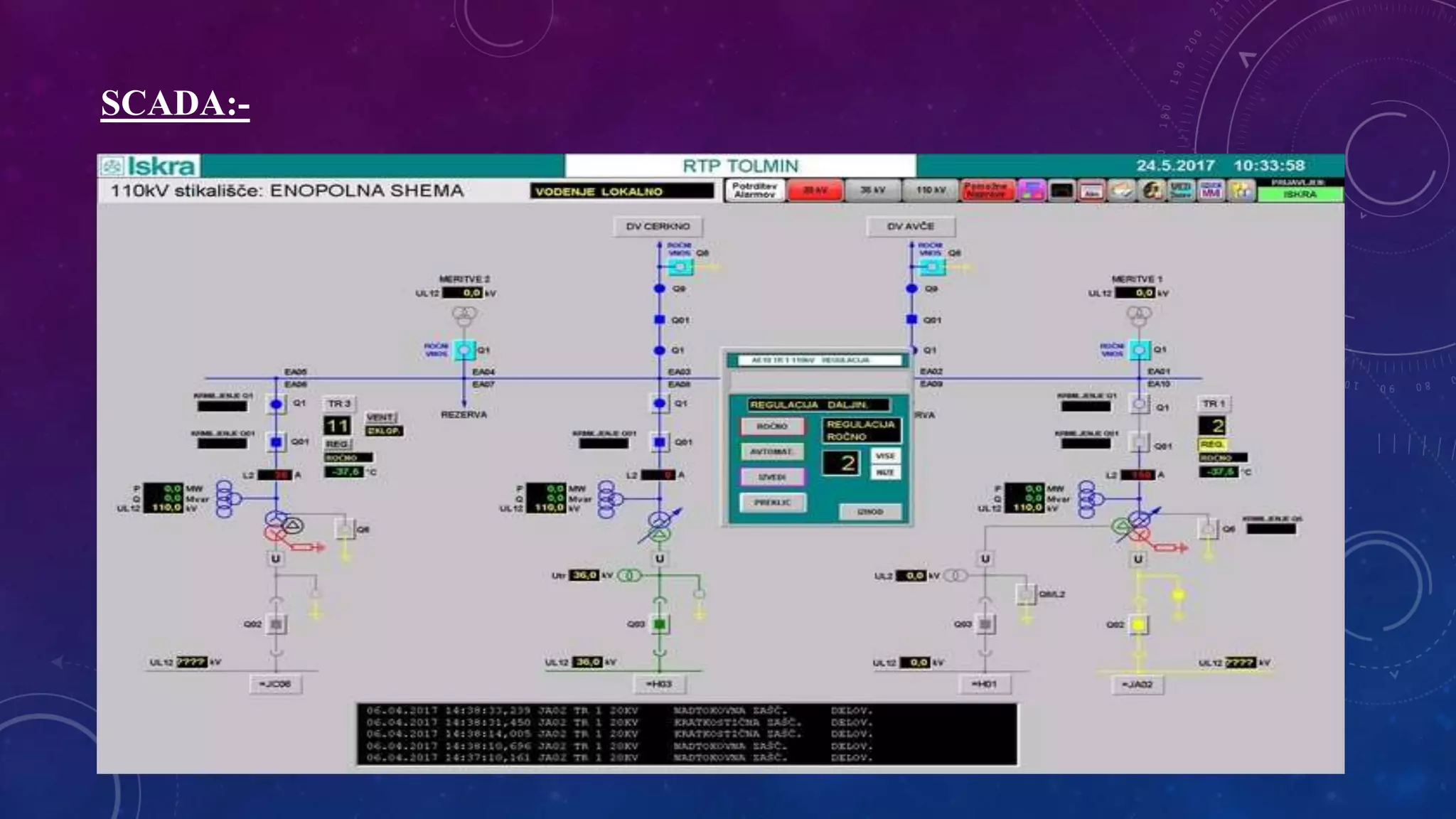
SCADA:-
COMPONENTS OF SCADA:-
1.Sensors:(eitherdigitaloranalogue)andcontrolrelaysthatdirectlyinterface with
themanaged system.
2. Remote terminal units(RTUs):These are smallcomputerizedunits
deployedin thefieldatspecificsitesandlocations.RTUsserveaslocalcollection
pointsfor gatheringreportsfromsensorsanddeliveringcommandstocontrol
relays.
3.ScadaMasterunits:- Thesearelargercomputerconsoles thatserveasthe central
processor fortheSCADAsystem.Masterunitsprovide ahuman interfacetothe
systemandautomaticallyregulatethemanagedsystemin responsetosensorinputs.
4.Communicationlinks:thatconnectstheSCADAmasterunittothe RTUs inthe
field.
5.Software:

Computer control of power system.

  • 1.
    COMPUTER CONTROL OFPOWER SYSTEMS HIERARCHY OF POWER SYSTEM OPERATION AND CONTROL IN INDIA & SCADA KAUSIK BHAUMIK M. TECH.(POWER SYSTEM) AMITY UNIVERSITY
  • 2.
    India Power Sector- KeyStatistics Indian power sector is the third largest in Asia after China and Japan -Area :2,973,190 km2 -Population : 1027 million(urban 72%,rural 28%) -Installed Capacity: ~1,48,000 MW (as on 31st March 2009),350.162 GW as on 28 February 2019. -Share of fossil energy~81.9% -Share of renewable energy~15.3% -Avg. electricity use(2017-2018)~1149kWh per capita -Transmission & Distribution losses(2016-2017)-24.02% -Peak Load(2017-2018)-160752MW(met),169130MW(anticipated) -In 2017-2018 the utility energy availability was 1,205 billion KWh with a short fall of requirement by 8 billion KWh (-0.7%) against 1230 billion KWh anticipated.
  • 3.
    CHALLENGES:- 1. No methodof large scale storage of electrical energy has been devised so far. electrical energy must be generated and supplied instantaneously. 2. The active power and reactive power demand changes from instant to instant. power system has to meet this varying demand all the time. 3. The overall cost must be kept minimum. 4. Environment factor. 5. Quality.
  • 4.
    Functions of energycontrol centre (EEC) 1. Load forecasting: Long term, medium term and short term. 2. Planning of increase in generation capacity, transmission capacity and distribution capacity. 3. System monitoring and panning of maintenance and repair. 4. State estimation. 5. Unit commitment and economic dispatch. 6. Automatic generation control. 7. Reactive power management.
  • 5.
    HIERARCHY OF POWERSYSTEM OPERATION AND CONTROL IN INDIA
  • 8.
    GENERAL REQUIREMENTS FORHARDWARE The contractor should ensure that at the time of final approval of hardware configuration, all the hardware are current industry standard models and that the equipment manufacturer has not established a date for termination of its production for said products. Any hardware changes proposed after contract agreement shall be subject to the following: - a) Such changes/updates shall be proposed and approval obtained from Employer along with the approval of Drawings/documents. b) The proposed equipment shall be equivalent or with better features than the equipment offered in the Contract. c) Complete justification along with a comparative statement showing the original and the proposed hardware features/parameters including technical brochures shall be submitted to the Employer for review and approval. d) Changes/updates proposed will be at no additional cost to the Employer.
  • 9.
    SOFTWARE FOR COMPUTERCONTROL OF POWER SYSTEM
  • 10.
  • 11.
    COMPONENTS OF SCADA:- 1.Sensors:(eitherdigitaloranalogue)andcontrolrelaysthatdirectlyinterfacewith themanaged system. 2. Remote terminal units(RTUs):These are smallcomputerizedunits deployedin thefieldatspecificsitesandlocations.RTUsserveaslocalcollection pointsfor gatheringreportsfromsensorsanddeliveringcommandstocontrol relays. 3.ScadaMasterunits:- Thesearelargercomputerconsoles thatserveasthe central processor fortheSCADAsystem.Masterunitsprovide ahuman interfacetothe systemandautomaticallyregulatethemanagedsystemin responsetosensorinputs. 4.Communicationlinks:thatconnectstheSCADAmasterunittothe RTUs inthe field. 5.Software: