Utopian Communities
Emergence
• Utopias emerged from utopian spirit of the
  age
• Various reformers from high-minded to
  “lunatic fringe”
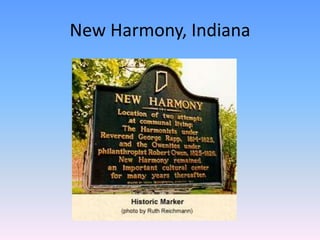
New Harmony, Indiana

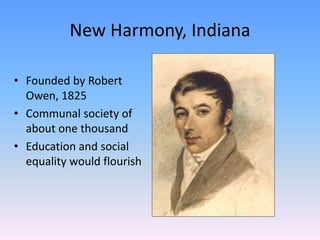
• Founded by Robert
  Owen, 1825
• Communal society of
  about one thousand
• Education and social
  equality would flourish
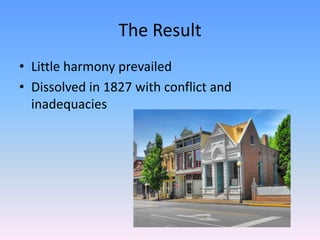
The Result
• Little harmony prevailed
• Dissolved in 1827 with conflict and
  inadequacies
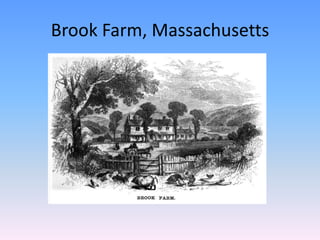
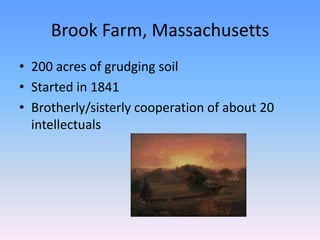
Brook Farm, Massachusetts
• 200 acres of grudging soil
• Started in 1841
• Brotherly/sisterly cooperation of about 20
  intellectuals
Committed to Transcendentalism
• Truth “transcends” senses
• Knowledge from inner light that illuminates
  highest truth
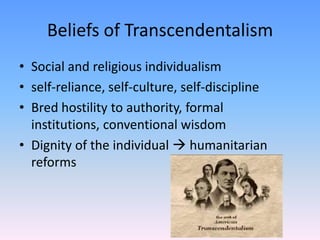
Beliefs of Transcendentalism
• Social and religious individualism
• self-reliance, self-culture, self-discipline
• Bred hostility to authority, formal
  institutions, conventional wisdom
• Dignity of the individual  humanitarian
  reforms
The Result
• Prospered until 1846
• Large communal building lost by fire
• Collapsed in debt
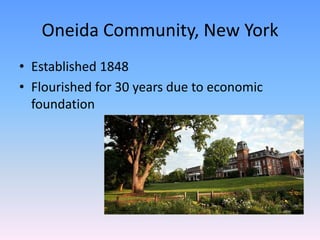
Oneida Community, New York
• Established 1848
• Flourished for 30 years due to economic
  foundation
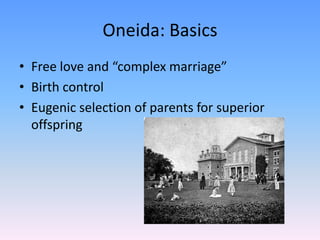
Oneida: Basics
• Free love and “complex marriage”
• Birth control
• Eugenic selection of parents for superior
  offspring
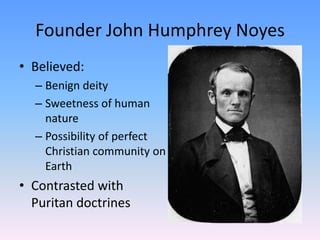
Founder John Humphrey Noyes
• Believed:
  – Benign deity
  – Sweetness of human
    nature
  – Possibility of perfect
    Christian community on
    Earth
• Contrasted with
  Puritan doctrines
Noyes’s Doctrines
• Key to utopia/happiness: suppression of
  selfishness
  – No private property…
…no exclusive emotional relationships
• Which bred
  jealousy, quarreling, covetousness…
…material things and sexual partners
               shared
• free to love in “complex marriages”
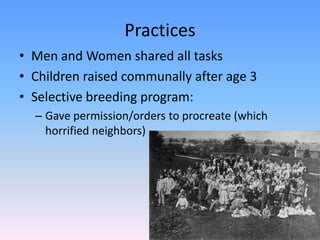
Practices
• Men and Women shared all tasks
• Children raised communally after age 3
• Selective breeding program:
  – Gave permission/orders to procreate (which
    horrified neighbors)
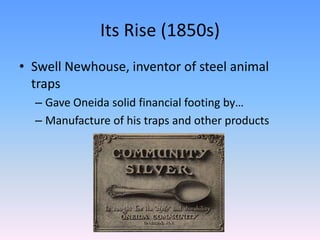
Its Rise (1850s)
• Swell Newhouse, inventor of steel animal
  traps
  – Gave Oneida solid financial footing by…
  – Manufacture of his traps and other products
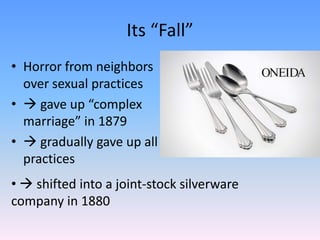
Its “Fall”
• Horror from neighbors
  over sexual practices
•  gave up “complex
  marriage” in 1879
•  gradually gave up all
  practices
•  shifted into a joint-stock silverware
company in 1880
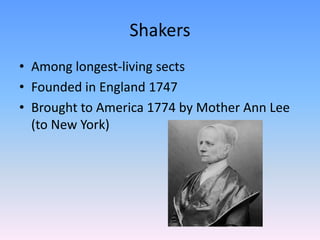
Shakers
• Among longest-living sects
• Founded in England 1747
• Brought to America 1774 by Mother Ann Lee
  (to New York)
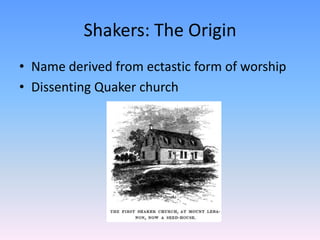
Shakers: The Origin
• Name derived from ectastic form of worship
• Dissenting Quaker church
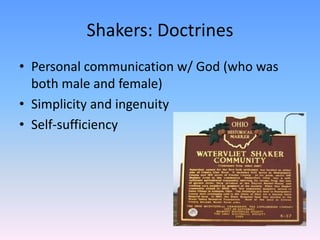
Shakers: Doctrines
• Personal communication w/ God (who was
  both male and female)
• Simplicity and ingenuity
• Self-sufficiency
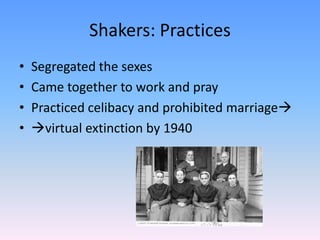
Shakers: Practices
•   Segregated the sexes
•   Came together to work and pray
•   Practiced celibacy and prohibited marriage
•   virtual extinction by 1940

Utopian Communities

  • 1.
  • 2.
    Emergence • Utopias emergedfrom utopian spirit of the age • Various reformers from high-minded to “lunatic fringe”
  • 3.
  • 4.
    New Harmony, Indiana •Founded by Robert Owen, 1825 • Communal society of about one thousand • Education and social equality would flourish
  • 5.
    The Result • Littleharmony prevailed • Dissolved in 1827 with conflict and inadequacies
  • 6.
  • 7.
    Brook Farm, Massachusetts •200 acres of grudging soil • Started in 1841 • Brotherly/sisterly cooperation of about 20 intellectuals
  • 8.
    Committed to Transcendentalism •Truth “transcends” senses • Knowledge from inner light that illuminates highest truth
  • 9.
    Beliefs of Transcendentalism •Social and religious individualism • self-reliance, self-culture, self-discipline • Bred hostility to authority, formal institutions, conventional wisdom • Dignity of the individual  humanitarian reforms
  • 10.
    The Result • Prospereduntil 1846 • Large communal building lost by fire • Collapsed in debt
  • 11.
    Oneida Community, NewYork • Established 1848 • Flourished for 30 years due to economic foundation
  • 12.
    Oneida: Basics • Freelove and “complex marriage” • Birth control • Eugenic selection of parents for superior offspring
  • 13.
    Founder John HumphreyNoyes • Believed: – Benign deity – Sweetness of human nature – Possibility of perfect Christian community on Earth • Contrasted with Puritan doctrines
  • 14.
    Noyes’s Doctrines • Keyto utopia/happiness: suppression of selfishness – No private property…
  • 15.
    …no exclusive emotionalrelationships • Which bred jealousy, quarreling, covetousness…
  • 16.
    …material things andsexual partners shared • free to love in “complex marriages”
  • 17.
    Practices • Men andWomen shared all tasks • Children raised communally after age 3 • Selective breeding program: – Gave permission/orders to procreate (which horrified neighbors)
  • 18.
    Its Rise (1850s) •Swell Newhouse, inventor of steel animal traps – Gave Oneida solid financial footing by… – Manufacture of his traps and other products
  • 19.
    Its “Fall” • Horrorfrom neighbors over sexual practices •  gave up “complex marriage” in 1879 •  gradually gave up all practices •  shifted into a joint-stock silverware company in 1880
  • 20.
    Shakers • Among longest-livingsects • Founded in England 1747 • Brought to America 1774 by Mother Ann Lee (to New York)
  • 21.
    Shakers: The Origin •Name derived from ectastic form of worship • Dissenting Quaker church
  • 22.
    Shakers: Doctrines • Personalcommunication w/ God (who was both male and female) • Simplicity and ingenuity • Self-sufficiency
  • 23.
    Shakers: Practices • Segregated the sexes • Came together to work and pray • Practiced celibacy and prohibited marriage • virtual extinction by 1940